talk-data.com talk-data.com

Topic

Cyber Security

cybersecurity information_security data_security privacy

2078

tagged

Activity Trend

297 peak/qtr
2020-Q1 2026-Q1

Activities

2078 activities · Newest first

Tableau Cookbook for Experienced Professionals

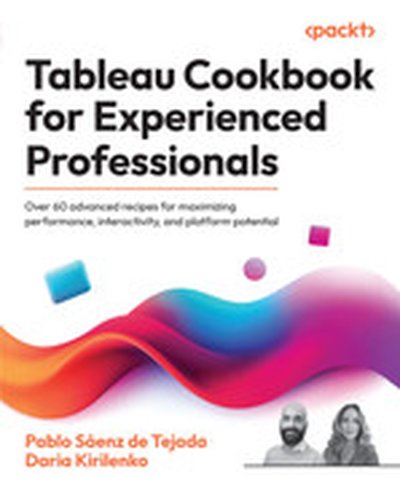
This book takes an advanced dive into using Tableau for professional data visualization and analytics. You will learn techniques for crafting highly interactive dashboards, optimizing their performance, and leveraging Tableau's APIs and server features. With a focus on real-world applications, this resource serves as a guide for professionals aiming to master advanced Tableau skills. What this Book will help me do Build robust, high-performing Tableau data models for enterprise analytics. Use advanced geospatial techniques to create dynamic, data-rich mapping visualizations. Leverage APIs and developer tools to integrate Tableau with other platforms. Optimize Tableau dashboards for performance and interactivity. Apply best practices for content management and data security in Tableau implementations. Author(s) Pablo Sáenz de Tejada and Daria Kirilenko are seasoned Tableau experts with vast professional experience in implementing advanced analytics solutions. Pablo specializes in enterprise-level dashboard design and has trained numerous professionals globally. Daria focuses on integrating Tableau into complex data ecosystems, bringing a practical and innovative approach to analytics. Who is it for? This book is tailored for professionals such as Tableau developers, data analysts, and BI consultants who already have a foundational knowledge of Tableau. It is ideal for those seeking to deepen their skills and gain expertise in tackling advanced data visualization challenges. Whether you work in corporate analytics or enjoy exploring data in your own projects, this book will enhance your Tableau proficiency.

Summary In this episode of the Data Engineering Podcast Viktor Kessler, co-founder of Vakmo, talks about the architectural patterns in the lake house enabled by a fast and feature-rich Iceberg catalog. Viktor shares his journey from data warehouses to developing the open-source project, Lakekeeper, an Apache Iceberg REST catalog written in Rust that facilitates building lake houses with essential components like storage, compute, and catalog management. He discusses the importance of metadata in making data actionable, the evolution of data catalogs, and the challenges and innovations in the space, including integration with OpenFGA for fine-grained access control and managing data across formats and compute engines.

Announcements Hello and welcome to the Data Engineering Podcast, the show about modern data managementData migrations are brutal. They drag on for months—sometimes years—burning through resources and crushing team morale. Datafold's AI-powered Migration Agent changes all that. Their unique combination of AI code translation and automated data validation has helped companies complete migrations up to 10 times faster than manual approaches. And they're so confident in their solution, they'll actually guarantee your timeline in writing. Ready to turn your year-long migration into weeks? Visit dataengineeringpodcast.com/datafold today for the details.Your host is Tobias Macey and today I'm interviewing Viktor Kessler about architectural patterns in the lakehouse that are unlocked by a fast and feature-rich Iceberg catalogInterview IntroductionHow did you get involved in the area of data management?Can you describe what LakeKeeper is and the story behind it? What is the core of the problem that you are addressing?There has been a lot of activity in the catalog space recently. What are the driving forces that have highlighted the need for a better metadata catalog in the data lake/distributed data ecosystem?How would you characterize the feature sets/problem spaces that different entrants are focused on addressing?Iceberg as a table format has gained a lot of attention and adoption across the data ecosystem. The REST catalog format has opened the door for numerous implementations. What are the opportunities for innovation and improving user experience in that space?What is the role of the catalog in managing security and governance? (AuthZ, auditing, etc.)What are the channels for propagating identity and permissions to compute engines? (how do you avoid head-scratching about permission denied situations)Can you describe how LakeKeeper is implemented?How have the design and goals of the project changed since you first started working on it?For someone who has an existing set of Iceberg tables and catalog, what does the migration process look like?What new workflows or capabilities does LakeKeeper enable for data teams using Iceberg tables across one or more compute frameworks?What are the most interesting, innovative, or unexpected ways that you have seen LakeKeeper used?What are the most interesting, unexpected, or challenging lessons that you have learned while working on LakeKeeper?When is LakeKeeper the wrong choice?What do you have planned for the future of LakeKeeper?Contact Info LinkedInParting Question From your perspective, what is the biggest gap in the tooling or technology for data management today?Closing Announcements Thank you for listening! Don't forget to check out our other shows. Podcast.init covers the Python language, its community, and the innovative ways it is being used. The AI Engineering Podcast is your guide to the fast-moving world of building AI systems.Visit the site to subscribe to the show, sign up for the mailing list, and read the show notes.If you've learned something or tried out a project from the show then tell us about it! Email [email protected] with your story.Links LakeKeeperSAPMicrosoft AccessMicrosoft ExcelApache IcebergPodcast EpisodeIceberg REST CatalogPyIcebergSparkTrinoDremioHive MetastoreHadoopNATSPolarsDuckDBPodcast EpisodeDataFusionAtlanPodcast EpisodeOpen MetadataPodcast EpisodeApache AtlasOpenFGAHudiPodcast EpisodeDelta LakePodcast EpisodeLance Table FormatPodcast EpisodeUnity CatalogPolaris CatalogApache GravitinoPodcast Episode KeycloakOpen Policy Agent (OPA)Apache RangerApache NiFiThe intro and outro music is from The Hug by The Freak Fandango Orchestra / CC BY-SA

Supported by Our Partners • WorkOS — The modern identity platform for B2B SaaS. •⁠ Modal⁠ — The cloud platform for building AI applications • Vanta — Automate compliance and simplify security with Vanta. — What is it like to work at Amazon as a software engineer? Dave Anderson spent over 12 years at Amazon working closely with engineers on his teams: starting as an Engineering Manager (or, SDM in Amazon lingo) and eventually becoming a Director of Engineering. In this episode, he shares a candid look into Amazon’s engineering culture—from how promotions work to why teams often run like startups. We get into the hiring process, the role of bar raisers, the pros and cons of extreme frugality, and what it takes to succeed inside one of the world’s most operationally intense companies.  We also look at how engineering actually works day to day at Amazon—from the tools teams choose to the way they organize and deliver work.  We also discuss: • The levels at Amazon, from SDE L4 to Distinguished Engineer and VP • Why engineering managers at Amazon need to write well • The “Bar Raiser” role in Amazon interview loops  • Why Amazon doesn’t care about what programming language you use in interviews • Amazon’s oncall process • The pros and cons of Amazon’s extreme frugality  • What to do if you're getting negative performance feedback • The importance of having a strong relationship with your manager • The surprising freedom Amazon teams have to choose their own stack, tools, and ways of working – and how a team chose to use Lisp (!) • Why startups love hiring former Amazon engineers • Dave’s approach to financial independence and early retirement • And more! — Timestamps (00:00) Intro (02:08) An overview of Amazon’s levels for devs and engineering managers (07:04) How promotions work for developers at Amazon, and the scope of work at each level (12:29) Why managers feel pressure to grow their teams (13:36) A step-by-step, behind-the-scenes glimpse of the hiring process  (23:40) The wide variety of tools used at Amazon (26:27) How oncall works at Amazon (32:06) The general approach to handling outages (severity 1-5) (34:40) A story from Uber illustrating the Amazon outage mindset (37:30) How VPs assist with outages (41:38) The culture of frugality at Amazon   (47:27) Amazon’s URA target—and why it’s mostly not a big deal  (53:37) How managers handle the ‘least effective’ employees (58:58) Why other companies are also cutting lower performers (59:55) Dave’s advice for engineers struggling with performance feedback  (1:04:20) Why good managers are expected to bring talent with them to a new org (1:06:21) Why startups love former Amazon engineers (1:16:09) How Dave planned for an early retirement  (1:18:10) How a LinkedIn post turned into Scarlet Ink  — The Pragmatic Engineer deepdives relevant for this episode: • Inside Amazon’s engineering culture • A day in the life of a senior manager at Amazon • Amazon’s Operational Plan process with OP1 and OP2 — See the transcript and other references from the episode at ⁠⁠https://newsletter.pragmaticengineer.com/podcast⁠⁠ — Production and marketing by ⁠⁠⁠⁠⁠⁠⁠⁠https://penname.co/⁠⁠⁠⁠⁠⁠⁠⁠. For inquiries about sponsoring the podcast, email [email protected].

Get full access to The Pragmatic Engineer at newsletter.pragmaticengineer.com/subscribe

APIs dominate the web, accounting for the majority of all internet traffic. And more AI means more APIs, because they act as an important mechanism to move data into and out of AI applications, AI agents, and large language models (LLMs). So how can you make sure all of these APIs are secure? In this session, we’ll take you through OWASP’s top 10 API and LLM security risks, and show you how to mitigate these risks using Google Cloud’s security portfolio, including Apigee, Model Armor, Cloud Armor, Google Security Operations, and Security Command Center.

This panel explores the potential of cloud technologies for operational technology (OT) and the critical need for proactive cybersecurity measures. The convergence of OT and IT, driven by cloud adoption, presents both opportunities and challenges. Panelists will examine the benefits of cloud-based OT, such as increased efficiency, scalability, data-driven insights, and resilience, along with the opportunity to build with security in mind.

Learn how to manage security controls and licenses for thousands of users, and tie it all together with APIs. We’ll show you ways to manage developer access more efficiently, build custom management integrations, and keep your CISO happy at the same time. We’ll also demo the new Gemini Code Assist integration with Apigee, which lets developers use Gemini Code Assist chat to generate context-aware OpenAPI specifications that reuse components from other APIs in their organization for efficiency and reference organizational security standards.

Test your incident response skills in the Security Tabletop Workshop, an exercise that simulates a realistic cyberattack to assess and improve an organization’s security posture. Tabletop exercises are a critical component of any cybersecurity strategy, helping your team reduce the impact of cyberattacks, evaluate response strategies, address gaps, foster collaboration, and clarify roles during a crisis.

Take part in the new SOC Experience – a view into real-world attack scenarios. Learn about the latest hacker tactics and how Google equips cybersecurity teams with the data, AI, and scalable analytics to detect and remediate attacks.

Experience what a real cyberattack is like in ThreatSpace, a digital training ground on Google Cloud. While the Mandiant red team tries to break into your system, the Mandiant incident response team guides you through the investigation. Use Google Security Operations and Threat Intelligence tools to uncover how the attackers got in and what they’ve done. Extra points if you can catch the bad guys!

Dive deep into how governance, security, and sharing are innately integrated in BigQuery to power data and AI use cases across your organization. Learn about new innovations that further enhance data governance, security, and collaboration across data and AI assets, without you having to leave BigQuery. Find out how data governance leaders at Walmart and Box are using BigQuery to securely scale data and AI across their organizations.

session
by Jian Zhen (Google Cloud) , Sunil Ramakrishnappa (The Coca-Cola Company) , Chris Hamilton (Google Cloud) , Ivo Borisov (The Coca-Cola Company)

If you’re responsible for website security and looking to protect against automated bot attacks, account takeovers, authentication fraud, and you’re also looking to reduce the costs of SMS fraud, stolen credit cards, and other transaction fraud mechanisms, this session is for you. We’ll cover the most recent advancements in reCAPTCHA, explore use cases in several large deployments across different industry verticals, learn from an actual customer using reCAPTCHA to protect their website, and dive into the technical details with reCAPTCHA engineering.

Operational technology (OT) systems are the backbone of critical industries, yet they’re increasingly targeted by sophisticated adversaries. In this session, threat intelligence experts from Honeywell and Google explore the evolving OT threat landscape, highlighting real-world attack scenarios and future potential risks. Learn how advanced threat intelligence enables organizations to move from reactive to proactive defense strategies.

Many organizations are scrambling to adopt Aritificial Intelligence tools across their teams, and like any new technology rollout, they are encountering challenges- both expected and unexpected. CME Group recently rolled out Gemini Code Assist to one of their large software development organizations and are excited to share takeaways around people, process, and tools. The topics include: compliance and information security considerations, 
managing rollout and adoption: starting small and scaling, and how these tools can help reshape the workday of your teams. No matter where you are in your AI adoption journey, you're sure to learn something new!

Take part in the new SOC Experience – a view into real-world attack scenarios. Learn about the latest hacker tactics and how Google equips cybersecurity teams with the data, AI, and scalable analytics to detect and remediate attacks.

Hear how the revolutionary strategies and cutting-edge technologies are transforming organizations to navigate an unpredictable cybersecurity landscape. Discover how emerging trends and innovative solutions are shaping the way we protect our digital assets. Learn more about the latest advancements in borderless IT, Zero Trust, multi-cloud environments, and AI-driven security. It’s an engaging and insightful journey into the latest in cybersecurity.

This Session is hosted by a Google Cloud Next Sponsor.
Visit your registration profile at g.co/cloudnext to opt out of sharing your contact information with the sponsor hosting this session.

This session explores building sensitive data protection directly into Retrieval-Augmented Generation (RAG) architectures. We'll demonstrate how to leverage Cloud Data Loss Prevention (Cloud DLP) and the Faker Library to anonymize sensitive data within the RAG pipeline. The session will cover techniques for reversible transformations using Memorystore and Firestore for data mapping, and discuss integrating these methods with Large Language Models (LLMs) like Gemini via LangChain and Vertex AI Search. Learn how to create secure and compliant AI solutions that protect sensitive data and adhere to regulations like the EU AI Act.

Google Threat Intelligence’s Capture the Flag game uses real-world data, including Cybersecurity & Infrastructure Security Agency (CISA) advisories, ransom notes, and information from the dark web, to simulate a threat hunt. Test your cybersecurity skills by navigating clues, analyzing evidence, and solving puzzles to capture the flags with Google Threat Intelligence.

Test your incident response skills in the Security Tabletop Workshop, an exercise that simulates a realistic cyberattack to assess and improve an organization’s security posture. Tabletop exercises are a critical component of any cybersecurity strategy, helping your team reduce the impact of cyberattacks, evaluate response strategies, address gaps, foster collaboration, and clarify roles during a crisis.