talk-data.com talk-data.com

Topic

Cyber Security

cybersecurity information_security data_security privacy

2078

tagged

Activity Trend

297 peak/qtr
2020-Q1 2026-Q1

Activities

2078 activities · Newest first

Implementing IBM InfoSphere BigInsights on IBM System x

As world activities become more integrated, the rate of data growth has been increasing exponentially. And as a result of this data explosion, current data management methods can become inadequate. People are using the term big data (sometimes referred to as Big Data) to describe this latest industry trend. IBM® is preparing the next generation of technology to meet these data management challenges. To provide the capability of incorporating big data sources and analytics of these sources, IBM developed a stream-computing product that is based on the open source computing framework Apache Hadoop. Each product in the framework provides unique capabilities to the data management environment, and further enhances the value of your data warehouse investment. In this IBM Redbooks® publication, we describe the need for big data in an organization. We then introduce IBM InfoSphere® BigInsights™ and explain how it differs from standard Hadoop. BigInsights provides a packaged Hadoop distribution, a greatly simplified installation of Hadoop and corresponding open source tools for application development, data movement, and cluster management. BigInsights also brings more options for data security, and as a component of the IBM big data platform, it provides potential integration points with the other components of the platform. A new chapter has been added to this edition. Chapter 11 describes IBM Platform Symphony®, which is a new scheduling product that works with IBM Insights, bringing low-latency scheduling and multi-tenancy to IBM InfoSphere BigInsights. The book is designed for clients, consultants, and other technical professionals.
IBM FileNet Content Manager Implementation Best Practices and Recommendations

IBM® FileNet® Content Manager Version 5.2 provides full content lifecycle and extensive document management capabilities for digital content. IBM FileNet Content Manager is tightly integrated with the family of IBM FileNet products based on the IBM FileNet P8 technical platform. IBM FileNet Content Manager serves as the core content management, security management, and storage management engine for the products. This IBM Redbooks® publication covers the implementation best practices and recommendations for solutions that use IBM FileNet Content Manager. It introduces the functions and features of IBM FileNet Content Manager, common use cases of the product, and a design methodology that provides implementation guidance from requirements analysis through production use of the solution. We address administrative topics of an IBM FileNet Content Manager solution, including deployment, system administration and maintenance, and troubleshooting. Implementation topics include system architecture design with various options for scaling an IBM FileNet Content Manager system, capacity planning, and design of repository design logical structure, security practices, and application design. An important implementation topic is business continuity. We define business continuity, high availability, and disaster recovery concepts and describe options for those when implementing IBM FileNet Content Manager solutions. Many solutions are essentially a combination of information input (ingestion), storage, information processing, and presentation and delivery. We discuss some solution building blocks that designers can combine to build an IBM FileNet Content Manager solution. This book is intended to be used in conjunction with product manuals and online help to provide guidance to architects and designers about implementing IBM FileNet Content Manager solutions. Many of the features and practices described in the book also apply to previous versions of IBM FileNet Content Manager.

Handbook of Statistics

Statistical learning and analysis techniques have become extremely important today, given the tremendous growth in the size of heterogeneous data collections and the ability to process it even from physically distant locations. Recent advances made in the field of machine learning provide a strong framework for robust learning from the diverse corpora and continue to impact a variety of research problems across multiple scientific disciplines. The aim of this handbook is to familiarize beginners as well as experts with some of the recent techniques in this field. The Handbook is divided in two sections: Theory and Applications, covering machine learning, data analytics, biometrics, document recognition and security. very relevant to current research challenges faced in various fields self-contained reference to machine learning emphasis on applications-oriented techniques

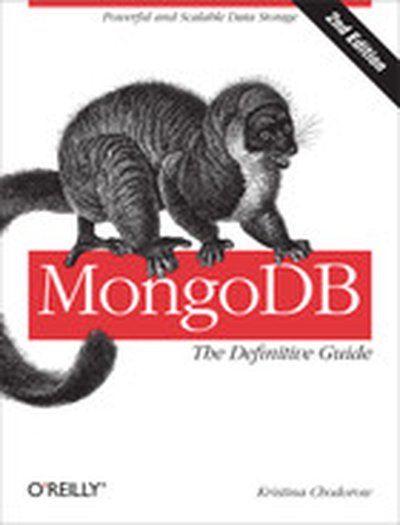
MongoDB: The Definitive Guide, 2nd Edition

Manage the huMONGOus amount of data collected through your web application with MongoDB. This authoritative introduction—written by a core contributor to the project—shows you the many advantages of using document-oriented databases, and demonstrates how this reliable, high-performance system allows for almost infinite horizontal scalability. This updated second edition provides guidance for database developers, advanced configuration for system administrators, and an overview of the concepts and use cases for other people on your project. Ideal for NoSQL newcomers and experienced MongoDB users alike, this guide provides numerous real-world schema design examples. Get started with MongoDB core concepts and vocabulary Perform basic write operations at different levels of safety and speed Create complex queries, with options for limiting, skipping, and sorting results Design an application that works well with MongoDB Aggregate data, including counting, finding distinct values, grouping documents, and using MapReduce Gather and interpret statistics about your collections and databases Set up replica sets and automatic failover in MongoDB Use sharding to scale horizontally, and learn how it impacts applications Delve into monitoring, security and authentication, backup/restore, and other administrative tasks

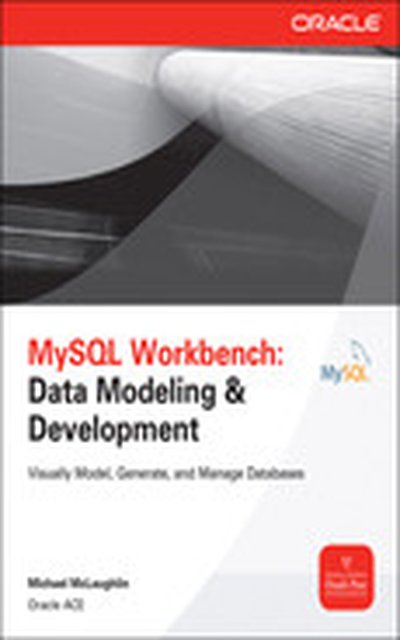
MySQL Workbench: Data Modeling & Development

The only Oracle Press guide to MySQL Workbench explains how to design and model MySQL databases. MySQL Workbench Data Modeling and Development helps developers learn how to effectively use this powerful product for database modeling, reverse engineering, and interaction with the database without writing SQL statements. MySQL Workbench is a graphical user interface that can be used to create and maintain MySQL databases without coding. The book covers the interface and explains how to accomplish each step by illustrating best practices visually. Clear examples, instructions, and explanations reveal, in a single volume, the art of database modeling. This Oracle Press guide shows you how to get the tool to do what you want. Annotated screen shots demonstrate all interactions with the tool, and text explains the how, what, and why of each step. Complete coverage Installation and Configuration; Creating and Managing Connections; Data Modeling Concepts; Creating an ERD; Defining the Physical Schemata; Creating and Managing Tables; Creating and Managing Relationships; Creating and Managing Views; Creating and Managing Routines; Creating and Managing Routine Groups; Creating and Managing User & Groups; Creating and Managing SQL Scripts; Generating SQL Scripts; Forward Engineering a Data Model; Synchronize a Model with a Database; Reverse Engineering a Database; Managing Differences in the Data Catalog; Creating and Managing Model Notes; Editing Table Data; Editing Generated Scripts; Creating New Instances; Managing Import and Export; Managing Security; Managing Server Instances

A Practical Guide to Managing Reference Data with IBM InfoSphere Master Data Management Reference Data Management Hub

IBM® InfoSphere® Master Data Management Reference Data Management Hub (InfoSphere MDM Ref DM Hub) is designed as a ready-to-run application that provides the governance, process, security, and audit control for managing reference data as an enterprise standard, resulting in fewer errors, reduced business risk and cost savings. This IBM Redbooks® publication describes where InfoSphere MDM Ref DM Hub fits into information management reference architecture. It explains the end-to-end process of an InfoSphere MDM Ref DM Hub implementation including the considerations of planning a reference data management project, requirements gathering and analysis, model design in detail, and integration considerations and scenarios. It then shows implementation examples and the ongoing administration tasks. This publication can help IT professionals who are interested or have a need to manage reference data efficiently and implement an InfoSphere MDM Ref DM Hub solution with ease.

Microsoft SQL Server 2012 Reporting Services

Use your SQL Server skills to create and manage key data reports Deliver interactive business intelligence reports using SQL Server 2012 Reporting Services, and help facilitate real-time decision making throughout the enterprise. SQL Server expert Stacia Misner shows you in detail how to design, manage, and access custom reports that capture data from multiple sources. This book is ideal for experienced SQL Server developers, whether you’re new to Reporting Services or upgrading from an earlier version. Discover how to: Use the latest features, including the Power View ad hoc reporting tool Design reports by understanding how your audience accesses and uses data Add interactive features to help end users sort and filter data Create rich data visualization with charts, gauges, indictors, and data maps Configure your report server, provide security, and monitor report contents Use SharePoint or Report Manager to search and access reports online Create a library of report parts that clients can use for ad hoc reporting Build and manage reports using Reporting Services as a development platform

MySQL, 5th Edition

MySQL, Fifth Edition by Paul DuBois The definitive guide to using, programming and administering MySQL 5.5 and MySQL 5.6 MySQL provides a comprehensive guide to effectively using and administering the MySQL database management system (DBMS). Author Paul DuBois describes everything from the basics of getting information into a database and formulating queries, to using MySQL with PHP or Perl to generate dynamic web pages, to writing your own programs that access MySQL databases, to administering MySQL servers. The book also includes a comprehensive reference section providing detailed information on MySQL’s structure, language, syntax, and APIs. The fifth edition of this bestselling book has been meticulously revised and updated to thoroughly cover the latest features and capabilities of MySQL 5.5, as well as to add new coverage of features introduced with MySQL 5.6. MySQL is an open source relational database management system (DBMS) that has experienced a phenomenal growth in popularity and use. Known for its speed and ease of use, MySQL has proven itself to be particularly well-suited for developing database-backed websites and applications. MySQL runs on anything from modest hardware all the way up to enterprise servers, and its performance rivals any database system put up against it. Paul DuBois’ MySQL, Fifth Edition, is the definitive guide to fully exploiting all the power and versatility of MySQL 5.5 and MySQL 5.6 Contents at a Glance Part I: General MySQL Use Chapter 1 Getting Started with MySQL Chapter 2 Using SQL to Manage Data Chapter 3 Data Types Chapter 4 Views and Stored Programs Chapter 5 Query Optimization Part II: Using MySQL Programming Interfaces Chapter 6 Introduction to MySQL Programming Chapter 7 Writing MySQL Programs Using C Chapter 8 Writing MySQL Programs Using Perl DBI Chapter 9 Writing MySQL Programs Using PHP Part III: MySQL Administration Chapter 10 Introduction to MySQL Administration Chapter 11 The MySQL Data Directory Chapter 12 General MySQL Administration Chapter 13 Security and Access Control Chapter 14 Database Maintenance, Backups, and Replication Part IV: Appendixes Appendix A Software Required to Use This Book Appendix B Data Type Reference Appendix C Operator and Function Reference Appendix D System, Status, and User Variable Reference Appendix E SQL Syntax Reference Appendix F MySQL Program Reference Online Appendixes: Appendix G C API Reference Appendix H Perl DBI API Reference Appendix I PHP API Reference .

Cyberethics: Morality and Law in Cyberspace, 5th Edition

The Internet and widespread use of blogging, email, social media and e-commerce have foregrounded new, complex moral issues and dilemmas. Likewise, modern technologies and social networks have brought numerous challenges to legal systems, which have difficulty keeping up with borderless global information technologies. The fully revised and updated Fifth Edition of Cyberethics: Morality and Law in Cyberspace offers an in-depth and comprehensive examination of the social costs and moral issues emerging from ever-expanding use of the Internet and new information technologies. Focusing heavily on content control, free speech, intellectual property, and security, Cyberethics: Morality and Law in Cyberspace provides legal and philosophical discussions of these critical issues.

The updated Fifth Edition includes new sections on Floridi’s Macroethics, gatekeepers and search engines, censorship, anti-piracy legislation, patents, and smartphones. Real-life case studies, including all-new examples focusing on Google, Facebook, video games, reader’s rights, and the Lulz Sec Hackers, provide real-world context. Ideal for undergraduate computer ethics courses as well as a general readership, Cyberethics is an excellent resource for students and laypeople alike.

Key Features: •Additional and revised content on P2P networks, hacktivists, cybercrime, a user's ability to control and monitor cookies in IE, mobilization data, online surveillance, threats posed by social networking, invasive commercial initiatives, Wikileaks, and more. •Examines the threat of the Internet on our privacy as consumers and employees, with a focus on covert information gathering, the use of "Cookies" and spyware. •End-of-chapter questions and case studies encourage critical thinking •Discusses the common ethical and public policy problems that have arisen and how technology or law would propose to solve these issues •Provides an unbiased review of Internet governance regulations

Managing Security and Compliance in Cloud or Virtualized Data Centers Using IBM PowerSC

IBM® PowerSC provides a security and compliance solution that is optimized for virtualized environments on IBM Power Systems™ servers, running IBM PowerVM® and IBM AIX®. Security control and compliance are some of the key components that are needed to defend the virtualized data center and cloud infrastructure against ever evolving new threats. The IBM business-driven approach to enterprise security used in conjunction with solutions such as PowerSC makes IBM the premier security vendor in the market today. This IBM Redbooks® deliverable helps IT and Security managers, architects, and consultants to strengthen their security and compliance posture in a virtualized environment running IBM PowerVM.

Using Social Media for Global Security

Essential reading for cybersecurity professionals, security analysts, policy experts, decision-makers, activists, and law enforcement! During the Arab Spring movements, the world witnessed the power of social media to dramatically shape events. Now this timely book shows government decision-makers, security analysts, and activists how to use the social world to improve security locally, nationally, and globally--and cost-effectively. Authored by two technology/behavior/security professionals, Using Social Media for Global Security offers pages of instruction and detail on cutting-edge social media technologies, analyzing social media data, and building crowdsourcing platforms. The book teaches how to collect social media data and analyze it to map the social networks of terrorists and sex traffickers, and forecast attacks and famines. You will learn how to coalesce communities through social media to help catch murderers, coordinate disaster relief, and collect intelligence about drug smuggling from hard-to-reach areas. Also highlighting dramatic case studies drawn from the headlines, this crucial book is a must-read. Illustrates linguistic, correlative, and network analysis of OSINT Examines using crowdsourcing technologies to work and engage with populations globally to solve security problems Explores how to ethically deal with social media data without compromising people's rights to privacy and freedom of expression Shows activists fighting against oppressive regimes how they can protect their identities online If you're responsible for maintaining local, national or global security, you'll want to read Using Social Media for Global Security.

IMS 12 Selected Performance Topics

IBM® Information Management System (IMS™) provides leadership in performance, reliability, and security to help you implement the most strategic and critical enterprise applications. IMS, IMS utilities, and IMS tools continue to evolve to provide value and meet the needs of enterprise customers. With IMS 12, integration and open access improvements provide flexibility and support business growth requirements. Scalability improvements have been made to the well-known performance, efficiency, availability, and resilience of IMS by using 64-bit storage. In this IBM Redbooks® publication we provide IMS performance monitoring and tuning information by describing the key IMS performance functions and by showing how to monitor and tune them with traditional and new strategic applications. This book is for database administrators and system programmers. We summarize methods and tools for monitoring and tuning IMS systems, describe IMS system-wide performance, database, and transaction considerations. Based on lab measurements, we provide information about recent performance enhancements that are available with IMS 12, and advice about setting performance-related parameters.

Logging and Log Management

Logging and Log Management: The Authoritative Guide to Understanding the Concepts Surrounding Logging and Log Management introduces information technology professionals to the basic concepts of logging and log management. It provides tools and techniques to analyze log data and detect malicious activity. The book consists of 22 chapters that cover the basics of log data; log data sources; log storage technologies; a case study on how syslog-ng is deployed in a real environment for log collection; covert logging; planning and preparing for the analysis log data; simple analysis techniques; and tools and techniques for reviewing logs for potential problems. The book also discusses statistical analysis; log data mining; visualizing log data; logging laws and logging mistakes; open source and commercial toolsets for log data collection and analysis; log management procedures; and attacks against logging systems. In addition, the book addresses logging for programmers; logging and compliance with regulations and policies; planning for log analysis system deployment; cloud logging; and the future of log standards, logging, and log analysis. This book was written for anyone interested in learning more about logging and log management. These include systems administrators, junior security engineers, application developers, and managers. Comprehensive coverage of log management including analysis, visualization, reporting and more Includes information on different uses for logs -- from system operations to regulatory compliance Features case Studies on syslog-ng and actual real-world situations where logs came in handy in incident response Provides practical guidance in the areas of report, log analysis system selection, planning a log analysis system and log data normalization and correlation

IBM zEnterprise EC12 Technical Introduction

In a smarter planet, information-centric processes are exploding in growth. The mainframe has always been the IT industry's leading platform for transaction processing, consolidated and secure data serving, and support for available enterprise-wide applications. IBM® has extended the mainframe platform to help large enterprises reshape their client experiences through information-centric computing and to deliver on key business initiatives. IBM zEnterprise® is recognized as the most reliable and trusted system, and the most secure environment for core business operations. The new zEnterprise System consists of the IBM zEnterprise EC12 (zEC12), an updated IBM zEnterprise Unified Resource Manager, and the IBM zEnterprise BladeCenter® Extension (zBX) Model 003. This IBM Redbooks® publication describes the zEC12, with its improved scalability, performance, security, resiliency, availability, and virtualization. The zEC12 has no peer as a trusted platform that also provides the most efficient transaction processing and database management. With efficiency at scale delivering significant cost savings on core processes, resources can be freed up to focus on developing new services to drive growth. This book provides a technical overview of the zEC12, zBX Model 003, and Unified Resource Manager. This publication is intended for IT managers, architects, consultants, and anyone else who wants to understand the elements of the zEnterprise System. For this introduction to the zEC12, readers are not expected to be familiar with current IBM System z® technology and terminology.

Pro SQL Database for Windows Azure: SQL Server in the Cloud, Second Edition

Pro SQL Database for Windows Azure, 2nd Edition shows how to create enterprise-level database deployments without the usual investment in datacenter and other infrastructure. Take advantage instead of Microsoft's worldwide backbone for cloud computing that delivers all the power of SQL Server in the form of the cloud-based SQL Database for Windows Azure. You can create and deploy a database in mere minutes that is accessible worldwide and takes advantage of SQL Database's high-availability features to protect your data while ensuring 99.9% uptime. SQL Azure is ideally suited for startups, who can benefit from instant access to a robust and secure web-accessible database platform for use in rapidly deploying new products to market. SQL Azure is also ideal for small and mid-sized businesses, giving them the same ability to deploy SQL Server as any large enterprise, but without the management overhead. Even large enterprises find SQL Azure useful in creating failover environments, development environments, extra capacity to handle surges in demand, and more. Pro SQL Database for Windows Azure covers the very latest in Microsoft's fast-moving, cloud platform, showing how to program and administer it in a variety of cloud computing scenarios. You'll learn to program SQL Azure from ASP.NET, from WinForms, and from SQL Reporting Services. You'll learn to manage the platform by planning for scalability, troubleshooting performance issues, and implementing strong security. You'll learn the unique aspects of SQL Azure such as sharding and federation support that combine to place SQL Azure a step above and ahead of the competiton. Shows how to use SQL Azure from classic Windows applications, ASP.NET and Windows Communication Foundation Covers management, performance, scalability, and troubleshooting Addresses the all-important issue of securing your data Helps you properly design for high-performance in a cloud environment Helps you adopt the new Federations feature in SQL Azure What you'll learn Create and manage SQL Database for Windows Azure databases Access SQL Azure from WinForms, ASP.NET, Reporting Services, and more Optimize database design for Azure's distributed cloud platform Share data between databases using SQL Database's Data Synch Service Secure data from intrusion and unauthorized access Learn strategies for data migration and backup Who this book is for Pro SQL Database for Windows Azure, 2nd Edition is aimed at developers and database administrators desiring instant access to a fully-capable SQL Server database environment without the pain of sorting out and managing the physical infrastructure.

IBM InfoSphere Information Server Deployment Architectures

Typical deployment architectures introduce challenges to fully using the shared metadata platform across products, environments, and servers. Data privacy and information security requirements add even more levels of complexity. IBM® InfoSphere® Information Server provides a comprehensive, metadata-driven platform for delivering trusted information across heterogeneous systems. This IBM Redbooks® publication presents guidelines and criteria for the successful deployment of InfoSphere Information Server components in typical logical infrastructure topologies that use shared metadata capabilities of the platform, and support development lifecycle, data privacy, information security, high availability, and performance requirements. This book can help you evaluate information requirements to determine an appropriate deployment architecture, based on guidelines that are presented here, and that can fulfill specific use cases. It can also help you effectively use the functionality of your Information Server product modules and components to successfully achieve your business goals. This book is for IT architects, information management and integration specialists, and system administrators who are responsible for delivering the full suite of information integration capabilities of InfoSphere Information Server.

Data Insights

Data Insights: New Ways to Visualize and Make Sense of Data offers thought-provoking insights into how visualization can foster a clearer and more comprehensive understanding of data. The book offers perspectives from people with different backgrounds, including data scientists, statisticians, painters, and writers. It argues that all data is useless, or misleading, if we do not know what it means.Organized into seven chapters, the book explores some of the ways that data visualization and other emerging approaches can make data meaningful and therefore useful. It also discusses some fundamental ideas and basic questions in the data lifecycle; the process of interactions between people, data, and displays that lead to better questions and more useful answers; and the fundamentals, origins, and purposes of the basic building blocks that are used in data visualization. The reader is introduced to tried and true approaches to understanding users in the context of user interface design, how communications can get distorted, and how data visualization is related to thinking machines. Finally, the book looks at the future of data visualization by assessing its strengths and weaknesses. Case studies from business analytics, healthcare, network monitoring, security, and games, among others, as well as illustrations, thought-provoking quotes, and real-world examples are included.This book will prove useful to computer professionals, technical marketing professionals, content strategists, Web and product designers, and researchers. Demonstrates, with a variety of case studies, how visualizations can foster a clearer and more comprehensive understanding of data Answers the question, "How can data visualization help me?" with discussions of how it fits into a wide array of purposes and situations Makes the case that data visualization is not just about technology; it also involves a deeply human process

Pro SQL Server 2012 Practices

Pro SQL Server 2012 Practices Edition is an anthology of high-end wisdom from a group of accomplished database administrators who are quietly but relentlessly pushing the performance and feature envelope of Microsoft SQL Server 2012. With an emphasis upon performance—but also branching into release management, auditing, and other issues—the book helps you deliver the most value for your company's investment in Microsoft's flagship database system Goes beyond the manual to cover good techniques and best practices Delivers knowledge usually gained only by hard experience Focuses upon performance, scalability, reliability Helps achieve the predictability needed to be in control at all times What you'll learn Migrate to the new Extended Events framework for troubleshooting performance problems Automate the tracking of key performance indicators such as available disk space, cpu utilization, index fragmentation, and more Design performance into your database and its applications from the very beginning Manage staged releases from development to test through to production Diagnose resource and performance problems via dynamic management views Analyze I/O patterns and plan reliably to obtain the performance you need Who this book is for Pro SQL Server 2012 Practices is aimed at SQL Server professionals who want to further their careers through expert-level practices in performance management, scalability, predictability, and security.

Oracle 11g Anti-hacker's Cookbook

Oracle 11g Anti-hacker's Cookbook is your comprehensive guide to fortify your Oracle database against potential threats. Through over fifty practical recipes, you'll discover proven methodologies for protecting sensitive data and implementing advanced security measures featured in Oracle 11g R2. This book is essential for mastering robust database security practices. What this Book will help me do Effectively configure secure servers and operating systems for Oracle Database setups. Implement encryption using Oracle Cryptographic API and Transparent Data Encryption to secure sensitive data. Develop and deploy a thorough audit strategy utilizing Oracle's built-in auditing tools. Leverage Oracle Vault and Virtual Private Database (VPD) to control access and protect data. Recognize and defend against database attacks, including man-in-the-middle, sniffing, and brute-force scenarios. Author(s) Adrian Neagu is a seasoned Oracle Database expert with extensive experience in database security and performance tuning. He has spent years implementing, securing, and enhancing database systems for organizations all over the world. Adrian is passionate about educating others and distills complex security concepts into straightforward, actionable advice in this book. Who is it for? This book is ideal for Oracle Database Administrators, Security Managers, and Auditors who aim to enhance the security of their Oracle systems and protect sensitive data from threats. If you have a fundamental understanding of database operations and security principles, this book will guide you toward advanced proficiency. It is particularly invaluable for professionals dedicated to preventing unauthorized access and safeguarding data integrity.

Microsoft SQL Server 2012 Master Data Services 2/E, 2nd Edition

Deploy and Maintain an Integrated MDS Architecture Harness your master data and grow revenue while reducing administrative costs. Thoroughly revised to cover the latest MDS features, Microsoft SQL Server 2012 Master Data Services, Second Edition shows how to implement and manage a centralized, customer-focused MDS framework. See how to accurately model business processes, load and cleanse data, enforce business rules, eliminate redundancies, and publish data to external systems. Security, SOA and Web services, and legacy data integration are also covered in this practical guide. Install Microsoft SQL Server 2012 Master Data Services Build custom MDS models and entityspecific staging tables Load and cleanse data from disparate sources Logically group assets into collections and hierarchies Ensure integrity using versioning and business rules Configure security at functional, object, and attribute levels Extend functionality with SOA and Web services Facilitate collaboration using the MDS Excel Add-In Export data to subscribing systems through SQL views