talk-data.com talk-data.com

Topic

SQL

Structured Query Language (SQL)

database_language data_manipulation data_definition programming_language

103

tagged

Activity Trend

107 peak/qtr
2020-Q1 2026-Q1

Activities

Showing filtered results

Filtering by: O'Reilly SQL Books ×
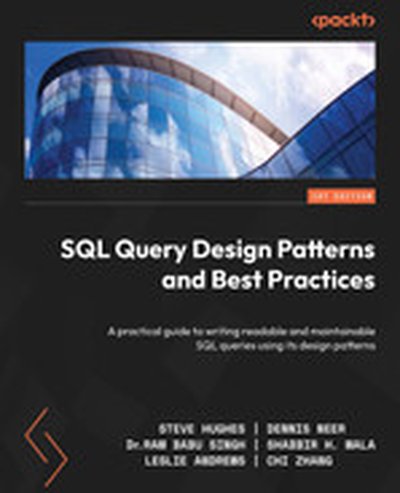
SQL Query Design Patterns and Best Practices

This book, "SQL Query Design Patterns and Best Practices," provides a thorough and practical exploration of SQL query techniques that focus on efficiency, clarity, and maintainability. By learning and applying the patterns and methodologies outlined in this guide, readers will enhance their ability to solve complex data problems, optimize query performance, and work effectively with modern data platforms. What this Book will help me do Learn how to write efficient SQL queries by optimizing result sets, enabling better handling of large datasets. Master advanced SQL techniques, including the use of common table expressions and window functions for solving real-world challenges. Gain insights into query optimization with tools like query execution plans and indexes to boost database performance. Understand the interaction of modern data types such as JSON and their integration in SQL workflows. Organize and document SQL queries effectively using tools such as Jupyter notebooks for collaborative and reproducible work. Author(s) The authors of this book are seasoned SQL professionals with rich experience in database management and optimization. Steven Hughes, Ram Babu Singh, Shabbir Mala, and others bring their deep knowledge in SQL query practices and real-world problem-solving to this guide. With a commitment to helping readers harness the power of SQL, the authors have crafted content that is both technically robust and approachable for learners. Who is it for? This book is designed for SQL practitioners ranging from beginners to intermediate levels, including SQL developers, data analysts, and database enthusiasts. If you aim to refine your SQL skills, optimize query designs, and tackle complex data challenges, this book will serve as your reliable companion. Novice readers will quickly build a strong foundation, while experienced professionals will find valuable techniques to enhance their workflow.
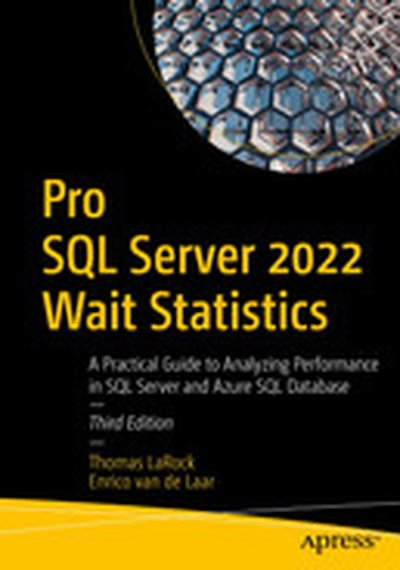
Pro SQL Server 2022 Wait Statistics: A Practical Guide to Analyzing Performance in SQL Server and Azure SQL Database

Use this practical guide to analyze and troubleshoot SQL Server performance using wait statistics. You'll learn to identify precisely why your queries are running slowly. And you'll know how to measure the amount of time consumed by each bottleneck so you can focus attention on making the largest improvements first. This edition is updated to cover analysis of wait statistics current with SQL Server 2022. Whether you are new to wait statistics, or already familiar with them, this book provides a deeper understanding on how wait statistics are generated and what they mean for your SQL Server instance’s performance. The book goes beyond the most common wait types into the more complex and performance-threatening wait types. You’ll learn about per-query wait statistics and session-based wait statistics, and the types of problems they can help you solve. The different wait types are categorized by their area of impact, including CPU, IO, Latching, Locking, and many more. Clear examples are included to help you gain practical knowledge of why and how specific wait times increase or decrease, how they impact your SQL Server’s performance, and what you can do to improve performance. After reading this book, you won’t want to be without the valuable information that wait statistics provide regarding where you should be spending your limited tuning time to maximize performance and value to your business. What You'll Learn Understand how the SQL Server engine processes requests Identify resource bottlenecks in a running SQL Server instance Locate wait statistics information inside DMVs and Query Store Analyze the root cause of sub-optimal performance Diagnose I/O contention and locking contention Benchmark SQL Server performance Improve database performance by lowering overall wait time Who This Book Is For Database administrators who want to identify and resolve performance bottlenecks, those who want to learn more about how the SQL Server engine accesses and uses resources inside SQL Server, and administrators concerned with achieving—and knowing they have achieved—optimal performance

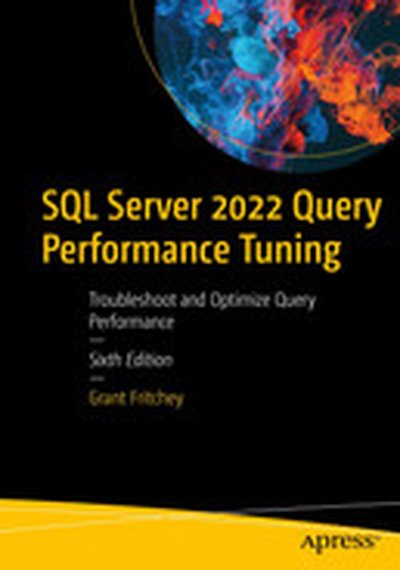
SQL Server 2022 Query Performance Tuning: Troubleshoot and Optimize Query Performance

Troubleshoot slow-performing queries and make them run faster. Database administrators and SQL developers are constantly under pressure to provide more speed. This new edition has been redesigned and rewritten from scratch based on the last 15 years of learning, knowledge, and experience accumulated by the author. The book Includes expanded information on using extended events, automatic execution plan correction, and other advanced features now available in SQL Server. These modern features are covered while still providing the necessary fundamentals to better understand how statistics and indexes affect query performance. The book gives you knowledge and tools to help you identify poorly performing queries and understand the possible causes of that poor performance. The book also provides mechanisms for resolving the issues identified, whether on-premises, in containers, or on cloud platform providers. You’ll learn about key fundamentals, such as statistics, data distribution, cardinality, and parameter sniffing. You’ll learn to analyze and design your indexes and your queries using best practices that ward off performance problems before they occur. You’ll also learn to use important modern features, such as Query Store to manage and control execution plans, the automated performance tuning feature set, and memory-optimized OLTP tables and procedures. You will be able to troubleshoot in a systematic way. Query tuning doesn’t have to be difficult. This book helps you to make it much easier. What You Will Learn Use Query Store to understand and easily change query performance Recognize and eliminate bottlenecks leading to slow performance Tune queries whether on-premises, in containers, or on cloud platform providers Implement best practices in T-SQL to minimize performance risk Design in the performance that you need through careful query and index design Understand how built-in, automatic tuning can assist your performance enhancement efforts Protect query performance during upgrades to the newer versions of SQL Server Who This Book Is For Developers and database administrators with responsibility for query performance in SQL Server environments, and anyone responsible for writing or creating T-SQL queries and in need of insight into bottlenecks (including how to identify them, understand them, and eliminate them)

SQL Antipatterns, Volume 1

SQL is the ubiquitous language for software developers working with structured data. Most developers who rely on SQL are experts in their favorite language (such as Java, Python, or Go), but they're not experts in SQL. They often depend on antipatterns - solutions that look right but become increasingly painful to work with as you uncover their hidden costs. Learn to identify and avoid many of these common blunders. Refactor an inherited nightmare into a data model that really works. Updated for the current versions of MySQL and Python, this new edition adds a dozen brand new mini-antipatterns for quick wins. No matter which platform, framework, or language you use, the database is the foundation of your application, and the SQL database language is the standard for working with it. Antipatterns are solutions that look simple at the surface, but soon mire you down with needless work. Learn to identify these traps, and craft better solutions for the often-asked questions in this book. Avoid the mistakes that lead to poor performance and quality, and master the principles that make SQL a powerful and flexible tool for handling data and logic. Dive deep into SQL and database design, and learn to recognize the most common missteps made by software developers in database modeling, SQL query logic, and code design of data-driven applications. See practical examples of misconceptions about SQL that can lure software projects astray. Find the greatest value in each group of data. Understand why an intersection table may be your new best friend. Store passwords securely and don't reinvent the wheel. Handle NULL values like a pro. Defend your web applications against the security weakness of SQL injection. Use SQL the right way - it can save you from headaches and needless work, and let your application really shine! What You Need: The SQL examples use the MySQL 8.0 flavor, but other popular brands of RDBMS are mentioned. Other code examples use Python 3.9+ or Ruby 2.7+.

Business Intelligence with Databricks SQL

Discover the power of business intelligence through Databricks SQL. This comprehensive guide explores the features and tools of the Databricks Lakehouse Platform, emphasizing how it leverages data lakes and warehouses for scalable analytics. You'll gain hands-on experience with Databricks SQL, enabling you to manage data efficiently and implement cutting-edge analytical solutions. What this Book will help me do Comprehend the core features of Databricks SQL and its role in the Lakehouse architecture. Master the use of Databricks SQL for conducting scalable and efficient data queries. Implement data management techniques, including security and cataloging, with Databricks. Optimize data performance using Delta Lake and Photon technologies with Databricks SQL. Compose advanced SQL scripts for robust data ingestion and analytics workflows. Author(s) Vihag Gupta, acclaimed data engineer and BI expert, brings a wealth of experience in large-scale data analytics to this work. With a career deeply rooted in cutting-edge data warehousing technologies, Vihag combines expertise with an approachable teaching style. This book reflects his commitment to empowering data professionals with tools for next-gen analytics. Who is it for? Ideal for data engineers, business intelligence analysts, and warehouse administrators aiming to enhance their practice with Databricks SQL. This book suits those with fundamental knowledge of SQL and data platforms seeking to adopt Lakehouse methodologies. Whether a novice to Databricks or looking to master advanced features, this guide will support professional growth.

SQL for Data Analytics - Third Edition

SQL for Data Analytics is an accessible guide to helping readers efficiently use SQL for data analytics tasks. You will learn the ins and outs of writing SQL queries, preparing datasets, and utilizing advanced features like geospatial data handling and window functions. Demystify the process of harnessing SQL to tackle analytical data challenges in a structured and hands-on way. What this Book will help me do Become proficient in preparing and managing datasets using SQL. Learn to write efficient SQL queries for summarizing and analyzing data. Master advanced SQL features, including window functions and JSON handling. Optimize SQL queries and automate analytical tasks for efficiency. Gain practical experience analyzing data with real-world scenarios. Author(s) The authors, Jun Shan, Matt Goldwasser, Upom Malik, and Benjamin Johnston, are experienced professionals in data analytics and database management. They bring a blend of technical expertise and practical insights to teaching SQL for analytics. Their collective knowledge ensures that the book caters to all levels, from foundational concepts to advanced techniques. Who is it for? This book is ideal for database engineers transitioning into analytics, backend engineers looking to deepen their understanding of production data, and data scientists or business analysts seeking to boost their SQL analytics skills. Readers should have a basic grasp of SQL and familiarity with statistics and linear algebra to fully benefit from the contents.

SQL Server Query Tuning and Optimization

In "SQL Server Query Tuning and Optimization", you will learn how to improve the performance of your SQL Server 2022 queries and applications by understanding query engine internals and adopting effective optimization techniques. This book combines practical knowledge with deep insights into query processing to help you achieve efficient and fast query execution. What this Book will help me do Gain practical experience in using the Query Store to detect and address underperforming queries. Understand the workings of the SQL Server query optimizer and how it chooses execution plans. Learn how to use indexing strategies, such as columnstore indexes, to enhance query performance. Acquire skills to troubleshoot and fix issues related to cardinality estimation and plan caching. Master intelligent query processing features and apply them in real-world SQL Server applications. Author(s) Benjamin Nevarez is an experienced database professional renowned for his expertise in SQL Server performance tuning and optimization. With years of practical experience under his belt and a passion for helping others grasp complex technical concepts, Benjamin has authored several books on SQL Server and frequently speaks at technical conferences worldwide. His writing reflects a hands-on approach and includes real-world examples to make learning intuitive and effective. Who is it for? This book is ideal for SQL Server developers facing challenges with slow query execution and looking to enhance application performance. It is also suited for database administrators responsible for diagnosing and resolving performance issues. Database architects who design SQL Server applications for diverse workloads will find practical solutions. Whether you're looking to optimize existing queries or build high-performance applications, this book is for you.

SQL in a Nutshell, 4th Edition

For programmers, analysts, and database administrators, this Nutshell guide is the essential reference for the SQL language used in today's most popular database products. This new fourth edition clearly documents SQL commands according to the latest ANSI/ISO standard and details how those commands are implemented in Microsoft SQL Server 2019 and Oracle 19c, as well as in the MySQL 8, MariaDB 10.5, and PostgreSQL 14 open source database products. You'll also get a concise overview of the relational database management system (RDBMS) model and a clear-cut explanation of foundational RDBMS concepts--all packed into a succinct, comprehensive, and easy-to-use format. Sections include: Background on the relational database model, including current and previous SQL standards Fundamental concepts necessary for understanding relational databases and SQL commands An alphabetical command reference to SQL statements, according to the SQL:2016 ANSI standard The implementation of each command by MySQL, Oracle, PostgreSQL, and SQL Server An alphabetical reference of the ANSI SQL:2016 functions and constructs as well as the vendor implementations Platform-specific functions unique to each implementation

SQL Server Advanced Troubleshooting and Performance Tuning

This practical book provides a comprehensive overview of troubleshooting and performance tuning best practices for Microsoft SQL Server. Database engineers, including database developers and administrators, will learn how to identify performance issues, troubleshoot the system in a holistic fashion, and properly prioritize tuning efforts to attain the best system performance possible. Author Dmitri Korotkevitch, Microsoft Data Platform MVP and Microsoft Certified Master (MCM), explains the interdependencies between SQL Server database components. You'll learn how to quickly diagnose your system and discover the root cause of any issue. Techniques in this book are compatible with all versions of SQL Server and cover both on-premises and cloud-based SQL Server installations. Discover how performance issues present themselves in SQL Server Learn about SQL Server diagnostic tools, methods, and technologies Perform health checks on SQL Server installations Learn the dependencies between SQL Server components Tune SQL Server to improve performance and reduce bottlenecks Detect poorly optimized queries and inefficiencies in query execution plans Find inefficient indexes and common database design issues Use these techniques with Microsoft Azure SQL databases, Azure SQL Managed Instances, and Amazon RDS for SQL Server

Practical SQL, 2nd Edition

Practical SQL is an approachable and fast-paced guide to SQL (Structured Query Language), the standard programming language for defining, organizing, and exploring data in relational databases. Anthony DeBarros, a journalist and data analyst, focuses on using SQL to find the story within your data. The examples and code use the open-source database PostgreSQL and its companion pgAdmin interface, and the concepts you learn will apply to most database management systems, including MySQL, Oracle, SQLite, and others.* You’ll first cover the fundamentals of databases and the SQL language, then build skills by analyzing data from real-world datasets such as US Census demographics, New York City taxi rides, and earthquakes from US Geological Survey. Each chapter includes exercises and examples that teach even those who have never programmed before all the tools necessary to build powerful databases and access information quickly and efficiently. You’ll learn how to: •Create databases and related tables using your own data •Aggregate, sort, and filter data to find patterns •Use functions for basic math and advanced statistical operations •Identify errors in data and clean them up •Analyze spatial data with a geographic information system (PostGIS) •Create advanced queries and automate tasks This updated second edition has been thoroughly revised to reflect the latest in SQL features, including additional advanced query techniques for wrangling data. This edition also has two new chapters: an expanded set of instructions on for setting up your system plus a chapter on using PostgreSQL with the popular JSON data interchange format. Learning SQL doesn’t have to be dry and complicated. Practical SQL delivers clear examples with an easy-to-follow approach to teach you the tools you need to build and manage your own databases. * Microsoft SQL Server employs a variant of the language called T-SQL, which is not covered by Practical SQL.

The Language of SQL, 3rd Edition

Get Started Fast with SQL! The only book you need to gain a quick working knowledge of SQL and relational databases. Many SQL texts attempt to serve as an encyclopedic reference on SQL syntaxan approach that is often counterproductive because that information is readily available in online references published by the major database vendors. For SQL beginners, its more important for a book to focus on general concepts and to offer clear explanations and examples of what various SQL statements can accomplish. This is that book. Several features make The Language of SQL unique among introductory SQL books. First, you will not be required to download software or sit with a computer as you read the text. The intent of this book is to provide examples of SQL usage that can be understood simply by reading. Second, topics are organized in an intuitive and logical sequence. SQL keywords are introduced one at a time, allowing you to grow your understanding as you encounter new terms and concepts. Finally, this book covers the syntax of the latest releases of three widely used databases: Microsoft SQL Server 2019, MySQL 8.0, and Oracle 18c. Special Database Differences sidebars clearly show you any differences in syntax among these three databases, and instructions are included on how to obtain and install free versions of the databases. Use SQL to retrieve data from relational databases Apply functions and calculations to data Group and summarize data in a variety of useful ways Use complex logic to retrieve only the data you need Design relational databases so that data retrieval is easy and intuitive Update data and create new tables Use spreadsheets to transform your data into meaningful displays Retrieve data from multiple tables via joins, subqueries, views, and set logic Create, modify, and execute stored procedures Install Microsoft SQL Server, MySQL, or Oracle

Beginning Apache Spark 3: With DataFrame, Spark SQL, Structured Streaming, and Spark Machine Learning Library

Take a journey toward discovering, learning, and using Apache Spark 3.0. In this book, you will gain expertise on the powerful and efficient distributed data processing engine inside of Apache Spark; its user-friendly, comprehensive, and flexible programming model for processing data in batch and streaming; and the scalable machine learning algorithms and practical utilities to build machine learning applications. Beginning Apache Spark 3 begins by explaining different ways of interacting with Apache Spark, such as Spark Concepts and Architecture, and Spark Unified Stack. Next, it offers an overview of Spark SQL before moving on to its advanced features. It covers tips and techniques for dealing with performance issues, followed by an overview of the structured streaming processing engine. It concludes with a demonstration of how to develop machine learning applications using Spark MLlib and how to manage the machine learning development lifecycle. This book is packed with practical examples and code snippets to help you master concepts and features immediately after they are covered in each section. After reading this book, you will have the knowledge required to build your own big data pipelines, applications, and machine learning applications. What You Will Learn Master the Spark unified data analytics engine and its various components Work in tandem to provide a scalable, fault tolerant and performant data processing engine Leverage the user-friendly and flexible programming model to perform simple to complex data analytics using dataframe and Spark SQL Develop machine learning applications using Spark MLlib Manage the machine learning development lifecycle using MLflow Who This Book Is For Data scientists, data engineers and software developers.

SQL in 24 Hours, Sams Teach Yourself, 7th Edition

In just 24 lessons of one hour or less, Sams Teach Yourself SQL in 24 Hours helps you use SQL to build effective databases, efficiently retrieve data, and manage everything from performance to security. This Seventh Edition is thoroughly revised and reorganized for faster learning and a deeper understanding of modern SQL development. Based on standardized SQL throughout, it teaches using new sample code based on the free, easy-to-use Oracle Database Express (XE). You’ll find more hands-on examples than ever, culminating in an all-new Bonus Exercises Workshop with even more real-world practice. This guide’s straightforward, step-by-step approach shows you how to work with database structures, objects, queries, tables, and more. In just hours, you will be applying advanced techniques, from transactions and joins to complex data retrieval using views and subqueries. Step-by-step instructions carefully walk you through the most common SQL tasks. Practical, hands-on examples show you how to apply what you learn. Quizzes and exercises help you test your knowledge and stretch your skills. Notes and tips point out shortcuts and solutions. Learn how to... * Master core relational database concepts, SQL concepts, and language components * Clearly understand your data * Set up databases and plan efficient database designs * Define entities and relationships, establish data structures, and create database objects * “Normalize” raw databases into logically organized tables * Edit relational data and tables and manage transactions * Write effective, well-performing queries * Categorize, summarize, sort, group, and restructure data * Work with dates and times * Join tables in queries, use subqueries, and combine multiple queries * Optimize performance with indexes and other techniques * Administer databases and manage users * Secure databases and data

SQL for Data Scientists

Jump-start your career as a data scientist—l earn to develop datasets for exploration, analysis, and machine learning SQL for Data Scientists: A Beginner's Guide for Building Datasets for Analysis is a resource that’s dedicated to the Structured Query Language (SQL) and dataset design skills that data scientists use most. Aspiring data scientists will learn how to how to construct datasets for exploration, analysis, and machine learning. You can also discover how to approach query design and develop SQL code to extract data insights while avoiding common pitfalls. You may be one of many people who are entering the field of Data Science from a range of professions and educational backgrounds, such as business analytics, social science, physics, economics, and computer science. Like many of them, you may have conducted analyses using spreadsheets as data sources, but never retrieved and engineered datasets from a relational database using SQL, which is a programming language designed for managing databases and extracting data. This guide for data scientists differs from other instructional guides on the subject. It doesn’t cover SQL broadly. Instead, you’ll learn the subset of SQL skills that data analysts and data scientists use frequently. You’ll also gain practical advice and direction on "how to think about constructing your dataset." Gain an understanding of relational database structure, query design, and SQL syntax Develop queries to construct datasets for use in applications like interactive reports and machine learning algorithms Review strategies and approaches so you can design analytical datasets Practice your techniques with the provided database and SQL code In this book, author Renee Teate shares knowledge gained during a 15-year career working with data, in roles ranging from database developer to data analyst to data scientist. She guides you through SQL code and dataset design concepts from an industry practitioner’s perspective, moving your data scientist career forward!

SQL for Data Analysis

With the explosion of data, computing power, and cloud data warehouses, SQL has become an even more indispensable tool for the savvy analyst or data scientist. This practical book reveals new and hidden ways to improve your SQL skills, solve problems, and make the most of SQL as part of your workflow. You'll learn how to use both common and exotic SQL functions such as joins, window functions, subqueries, and regular expressions in new, innovative ways--as well as how to combine SQL techniques to accomplish your goals faster, with understandable code. If you work with SQL databases, this is a must-have reference. Learn the key steps for preparing your data for analysis Perform time series analysis using SQL's date and time manipulations Use cohort analysis to investigate how groups change over time Use SQL's powerful functions and operators for text analysis Detect outliers in your data and replace them with alternate values Establish causality using experiment analysis, also known as A/B testing

SQL Pocket Guide, 4th Edition

If you use SQL in your day-to-day work as a data analyst, data scientist, or data engineer, this popular pocket guide is your ideal on-the-job reference. You'll find many examples that address the language's complexities, along with key aspects of SQL used in Microsoft SQL Server, MySQL, Oracle Database, PostgreSQL, and SQLite. In this updated edition, author Alice Zhao describes how these database management systems implement SQL syntax for both querying and making changes to a database. You'll find details on data types and conversions, regular expression syntax, window functions, pivoting and unpivoting, and more. Quickly look up how to perform specific tasks using SQL Apply the book's syntax examples to your own queries Update SQL queries to work in five different database management systems NEW: Connect Python and R to a relational database NEW: Look up frequently asked SQL questions in the "How Do I?" chapter

Beginning T-SQL: A Step-by-Step Approach

Get a performance-oriented introduction to the T-SQL language underlying the Microsoft SQL Server and Azure SQL database engines. This fourth edition is updated to include SQL Notebooks as well as up-to-date syntax and features for T-SQL on-premises and in the Azure cloud. Exercises and examples now include the WideWorldImporters database, the newest sample database from Microsoft for SQL Server. Also new in this edition is coverage of JSON from T-SQL, news about performance enhancements called Intelligent Query Processing, and an appendix on running SQL Server in a container on macOS or Linux. Beginning T-SQL starts you on the path to mastering T-SQL with an emphasis on best practices. Using the sound coding techniques taught in this book will lead to excellent performance in the queries that you write in your daily work. Important techniques such as windowing functions are covered to help you write fast-executing queries that solve real business problems.The book begins with an introduction to databases, normalization, and to setting up your learning environment. You will learn about the tools you need to use such as SQL Server Management Studio, Azure Data Studio, and SQL Notebooks. Each subsequent chapter teaches an aspect of T-SQL, building on the skills learned in previous chapters. Exercises in most chapters provide an opportunity for the hands-on practice that leads to true learning and distinguishes the competent professional. A stand-out feature in this book is that most chapters end with a Thinking About Performance section. These sections cover aspects of query performance relative to the content just presented, including the new Intelligent Query Processing features that make queries faster without changing code. They will help you avoid beginner mistakes by knowing about and thinking about performance from day 1. What You Will Learn Install a sandboxed SQL Server instance for learning Understand how relational databases are designed Create objects such as tables and stored procedures Query a SQL Server table Filter and order the results of a query Query and work with specialized data types such as XML and JSON Apply modern features such as window functions Choose correct techniques so that your queries perform well Who This Book Is For Anyone who wants to learn T-SQL from the beginning or improve their T-SQL skills; those who need T-SQL as an additional skill; and those who write queries such as application developers, database administrators, business intelligence developers, and data scientists. The book is also helpful for anyone who must retrieve data from a SQL Server database.

SQL Cookbook, 2nd Edition

You may know SQL basics, but are you taking advantage of its expressive power? This second edition applies a highly practical approach to Structured Query Language (SQL) so you can create and manipulate large stores of data. Based on real-world examples, this updated cookbook provides a framework to help you construct solutions and executable examples in several flavors of SQL, including Oracle, DB2, SQL Server, MySQL, and PostgreSQL. SQL programmers, analysts, data scientists, database administrators, and even relatively casual SQL users will find SQL Cookbook to be a valuable problem-solving guide for everyday issues. No other resource offers recipes in this unique format to help you tackle nagging day-to-day conundrums with SQL. The second edition includes: Fully revised recipes that recognize the greater adoption of window functions in SQL implementations Additional recipes that reflect the widespread adoption of common table expressions (CTEs) for more readable, easier-to-implement solutions New recipes to make SQL more useful for people who aren't database experts, including data scientists Expanded solutions for working with numbers and strings Up-to-date SQL recipes throughout the book to guide you through the basics

SQL Injection Strategies

SQL Injection Strategies is the go-to guide for understanding and mastering the concepts and practical aspects of SQL injection. You will comprehensively learn about the processes to identify vulnerabilities in web applications and databases, how to safely test for SQL injection, and strategies to defend against such attacks. The book balances theory and practice effectively, offering tools and techniques for both learning and application. What this Book will help me do Gain a firm understanding of what SQL injection is and how it affects web and mobile applications. Learn to set up a safe and effective environment for practicing SQL injection techniques. Discover manual and tool-assisted methods for testing and performing SQL injection. Understand defense measures to mitigate and defend against SQL injection vulnerabilities. Be able to apply SQL injection knowledge to secure various systems including web, mobile, and IoT platforms. Author(s) None Galluccio, Gabriele Lombari, and their co-authors are seasoned professionals with extensive experience in cybersecurity and web application development. Their expertise in identifying system vulnerabilities and devising comprehensive defense mechanisms is well-recognized. This book reflects their commitment to teaching practical security techniques needed in today's technology-driven world. Who is it for? This book is designed for penetration testers, cybersecurity enthusiasts, ethical hackers, and technology practitioners seeking to understand SQL injection. Beginners with no prior experience in SQL injection as well as intermediate-level users looking to deepen their knowledge will find value. It's ideal for anyone looking for practical, hands-on guidance in securing applications and learning about common vulnerabilities.

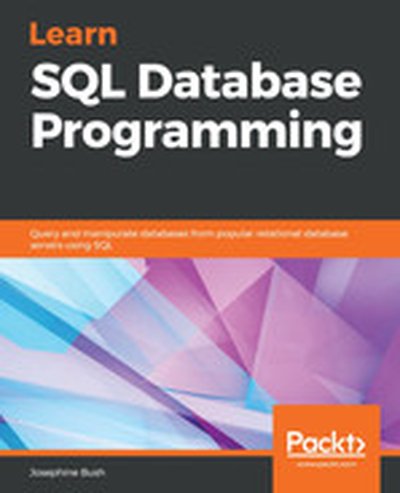
Learn SQL Database Programming

Learn SQL Database Programming is your comprehensive guide to mastering SQL and its applications in database management. With step-by-step instructions, you'll gain confidence in querying and manipulating data, covering both fundamental and advanced SQL techniques. By working through this book, you'll acquire in-demand skills for organizing, analyzing, and presenting data effectively. What this Book will help me do Install and configure MySQL tools to create and manage databases efficiently. Utilize SQL commands to query and retrieve data from simple or complex datasets. Manipulate data securely using commands like INSERT, UPDATE, and DELETE. Master advanced SQL techniques including joins, subqueries, and flow controls. Apply best practices in SQL queries to design databases with optimal performance. Author(s) Josephine Bush is an experienced database developer and technical educator with a strong background in SQL programming. She has years of practical experience working with relational databases, and her teaching is grounded in real-world applications. She excels at explaining complex concepts clearly and emphasizing hands-on learning. Who is it for? This book is ideal for business analysts, aspiring SQL developers, database administrators, and students entering the field of SQL programming. It caters to beginners with no prior SQL experience, providing a structured and practical approach to learning. If you're eager to organize data or administer databases effectively, this book is for you.