talk-data.com talk-data.com

Topic

SQL

Structured Query Language (SQL)

database_language data_manipulation data_definition programming_language

780

tagged

Activity Trend

107 peak/qtr
2020-Q1 2026-Q1

Activities

Showing filtered results

Filtering by: O'Reilly Data Engineering Books ×
Cracking the Data Engineering Interview

"Cracking the Data Engineering Interview" is your essential guide to mastering the data engineering interview process. This book offers practical insights and techniques to build your resume, refine your skills in Python, SQL, data modeling, and ETL, and confidently tackle over 100 mock interview questions. Gain the knowledge and confidence to land your dream role in data engineering. What this Book will help me do Craft a compelling data engineering portfolio to stand out to employers. Refresh and deepen understanding of essential topics like Python, SQL, and ETL. Master over 100 interview questions that cover both technical and behavioral aspects. Understand data engineering concepts such as data modeling, security, and CI/CD. Develop negotiation, networking, and personal branding skills crucial for job applications. Author(s) None Bryan and None Ransome are seasoned authors with a wealth of experience in data engineering and professional development. Drawing from their extensive industry backgrounds, they provide actionable strategies for aspiring data engineers. Their approachable writing style and real-world insights make complex topics accessible to readers. Who is it for? This book is ideal for aspiring data engineers looking to navigate the job application process effectively. Readers should be familiar with data engineering fundamentals, including Python, SQL, cloud data platforms, and ETL processes. It's tailored for professionals aiming to enhance their portfolios, tackle challenging interviews, and boost their chances of landing a data engineering role.
Learn PostgreSQL - Second Edition

Learn PostgreSQL, a comprehensive guide to mastering PostgreSQL 16, takes readers on a journey from the fundamentals to advanced concepts, such as replication and database optimization. With hands-on exercises and practical examples, this book provides all you need to confidently use, manage, and build secure and scalable databases. What this Book will help me do Master the essentials of PostgreSQL 16, including advanced SQL features and performance tuning. Understand database replication methods and manage a scalable architecture. Enhance database security through roles, schemas, and strict privilege management. Learn how to personalize your experience with custom extensions and functions. Acquire practical skills in backup, restoration, and disaster recovery planning. Author(s) Luca Ferrari and Enrico Pirozzi are experienced database engineers and PostgreSQL enthusiasts with years of experience using and teaching PostgreSQL technology. They specialize in creating learning content that is practical and focused on real-world situations. Their writing emphasizes clarity and systematically equips readers with professional skills. Who is it for? This book is perfect for database professionals, software developers, and system administrators looking to develop their PostgreSQL expertise. Beginners with an interest in databases will also find this book highly approachable. Ideal for readers seeking to improve their database scalability and robustness. If you aim to hone practical PostgreSQL skills, this guide is essential.

Geospatial Analysis with SQL

"Geospatial Analysis with SQL" is a practical guide that teaches you how to use SQL for geospatial data analysis. With direct, actionable guidance, you will learn to explore and analyze data using geospatial techniques without needing additional programming. This book equips you with the knowledge to solve location-based queries and perform advanced geospatial operations. What this Book will help me do Master the fundamentals of geospatial analysis and learn the importance of location-based data. Develop skills in creating and manipulating spatial database objects in SQL. Gain proficiency in using tools such as PostGIS and QGIS for geospatial data analysis. Learn techniques to visualize spatial data effectively and communicate results. Perform both single-layer and multi-layer spatial analysis for complex real-world scenarios. Author(s) Bonny P. McClain, the author of "Geospatial Analysis with SQL", brings extensive experience as a spatial data analyst and GIS expert. Bonny specializes in helping practitioners make data-driven insights through geospatial techniques. With a passion for teaching, Bonny's goal is to make complex concepts accessible and practical for analysts and developers alike. Who is it for? This book is ideal for GIS analysts, data analysts, and data scientists who have a basic understanding of SQL and geospatial concepts and want to expand their analytical capabilities. Readers looking to perform professional-grade geospatial analysis using SQL will find this book especially valuable. It caters to professionals wishing to use their SQL skills to understand and work with spatial datasets effectively.

Learning and Operating Presto

The Presto community has mushroomed since its origins at Facebook in 2012. But ramping up this open source distributed SQL query engine can be challenging even for the most experienced engineers. With this practical book, data engineers and architects, platform engineers, cloud engineers, and software engineers will learn how to use Presto operations at your organization to derive insights on datasets wherever they reside. Authors Angelica Lo Duca, Tim Meehan, Vivek Bharathan, and Ying Su explain what Presto is, where it came from, and how it differs from other data warehousing solutions. You'll discover why Facebook, Uber, Alibaba Cloud, Hewlett Packard Enterprise, IBM, Intel, and many more use Presto and how you can quickly deploy Presto in production. With this book, you will: Learn how to install and configure Presto Use Presto with business intelligence tools Understand how to connect Presto to a variety of data sources Extend Presto for real-time business insight Learn how to apply best practices and tuning Get troubleshooting tips for logs, error messages, and more Explore Presto's architectural concepts and usage patterns Understand Presto security and administration

Leveling Up with SQL: Advanced Techniques for Transforming Data into Insights

Learn to write SQL queries to select and analyze data, and improve your ability to manipulate data. This book will help you take your existing skills to the next level. Author Mark Simon kicks things off with a quick review of basic SQL knowledge, followed by a demonstration of how efficient SQL databases are designed and how to extract just the right data from them. You’ll then learn about each individual table’s structure and how to work with the relationships between tables. As you progress through the book, you will learn more sophisticated techniques such as using common table expressions and subqueries, analyzing your data using aggregate and windowing functions, and how to save queries in the form of views and other methods. This book employs an accessible approach to work through a realistic sample, enabling you to learn concepts as they arise to improve parts of the database or to work with the data itself. After completing this book, you will have a more thorough understanding of database structure and how to use advanced techniques to extract, manage, and analyze data. What Will You Learn Gain a stronger understanding of database design principles, especially individual tables Understand the relationships between tables Utilize techniques such as views, subqueries, common table expressions, and windowing functions Who Is This Book For: SQL Databases users who want to improve their knowledge and techniques.

Serverless Machine Learning with Amazon Redshift ML

Serverless Machine Learning with Amazon Redshift ML provides a hands-on guide to using Amazon Redshift Serverless and Redshift ML for building and deploying machine learning models. Through SQL-focused examples and practical walkthroughs, you will learn efficient techniques for cloud data analytics and serverless machine learning. What this Book will help me do Grasp the workflow of building machine learning models with Redshift ML using SQL. Learn to handle supervised learning tasks like classification and regression. Apply unsupervised learning techniques, such as K-means clustering, in Redshift ML. Develop time-series forecasting models within Amazon Redshift. Understand how to operationalize machine learning in serverless cloud architecture. Author(s) Debu Panda, Phil Bates, Bhanu Pittampally, and Sumeet Joshi are seasoned professionals in cloud computing and machine learning technologies. They combine deep technical knowledge with teaching expertise to guide learners through mastering Amazon Redshift ML. Their collaborative approach ensures that the content is accessible, engaging, and practically applicable. Who is it for? This book is perfect for data scientists, machine learning engineers, and database administrators using or intending to use Amazon Redshift. It's tailored for professionals with basic knowledge of machine learning and SQL who aim to enhance their efficiency and specialize in serverless machine learning within cloud architectures.

High-Performance Data Architectures

By choosing the right database, you can maximize your business potential, improve performance, increase efficiency, and gain a competitive edge. This insightful report examines the benefits of using a simplified data architecture containing cloud-based HTAP (hybrid transactional and analytical processing) database capabilities. You'll learn how this data architecture can help data engineers and data decision makers focus on what matters most: growing your business. Authors Joe McKendrick and Ed Huang explain how cloud native infrastructure supports enterprise businesses and operations with a much more agile foundation. Just one layer up from the infrastructure, cloud-based databases are a crucial part of data management and analytics. Learn how distributed SQL databases containing HTAP capabilities provide more efficient and streamlined data processing to improve cost efficiency and expedite business operations and decision making. This report helps you: Explore industry trends in database development Learn the benefits of a simplified data architecture Comb through the complex and crowded database choices on the market Examine the process of selecting the right database for your business Learn the latest innovations database for improving your company's efficiency and performance

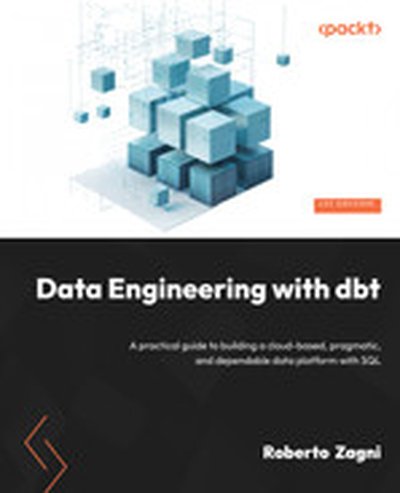
Data Engineering with dbt

Data Engineering with dbt provides a comprehensive guide to building modern, reliable data platforms using dbt and SQL. You'll gain hands-on experience building automated ELT pipelines, using dbt Cloud with Snowflake, and embracing patterns for scalable and maintainable data solutions. What this Book will help me do Set up and manage a dbt Cloud environment and create reliable ELT pipelines. Integrate Snowflake with dbt to implement robust data engineering workflows. Transform raw data into analytics-ready data using dbt's features and SQL. Apply advanced dbt functionality such as macros and Jinja for efficient coding. Ensure data accuracy and platform reliability with built-in testing and monitoring. Author(s) None Zagni is a seasoned data engineering professional with a wealth of experience in designing scalable data platforms. Through practical insights and real-world applications, Zagni demystifies complex data engineering practices. Their approachable teaching style makes technical concepts accessible and actionable. Who is it for? This book is perfect for data engineers, analysts, and analytics engineers looking to leverage dbt for data platform development. If you're a manager or decision maker interested in fostering efficient data workflows or a professional with basic SQL knowledge aiming to deepen your expertise, this resource will be invaluable.

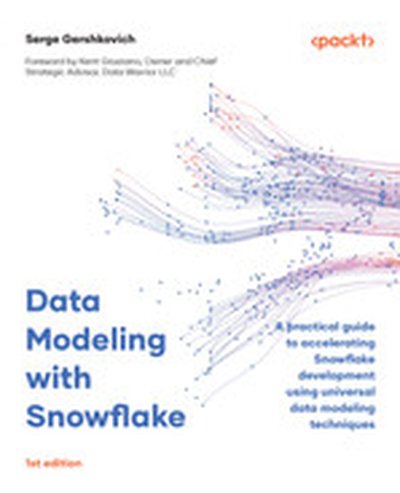
Data Modeling with Snowflake

This comprehensive guide, "Data Modeling with Snowflake", is your go-to resource for mastering the art of efficient data modeling tailored to the capabilities of the Snowflake Data Cloud. In this book, you will learn how to design agile and scalable data solutions by effectively leveraging Snowflake's unique architecture and advanced features. What this Book will help me do Understand the core principles of data modeling and how they apply to Snowflake's cloud-native environment. Learn to use Snowflake's features, such as time travel and zero-copy cloning, to create efficient data solutions. Gain hands-on experience with SQL recipes that outline practical approaches to transforming and managing Snowflake data. Discover techniques for modeling structured and semi-structured data for real-world business needs. Learn to integrate universal modeling frameworks like Star Schema and Data Vault into Snowflake implementations for scalability and maintainability. Author(s) The author, Serge Gershkovich, is a seasoned expert in database design and Snowflake architecture. With years of experience in the data management field, Serge has dedicated himself to making complex technical subjects approachable to professionals at all levels. His insights in this book are informed by practical applications and real-world experience. Who is it for? This book is targeted at data professionals, ranging from newcomers to database design to seasoned SQL developers seeking to specialize in Snowflake. If you are looking to understand and apply data modeling practices effectively within Snowflake's architecture, this book is for you. Whether you're refining your modeling skills or getting started with Snowflake, it provides the practical knowledge you need to succeed.

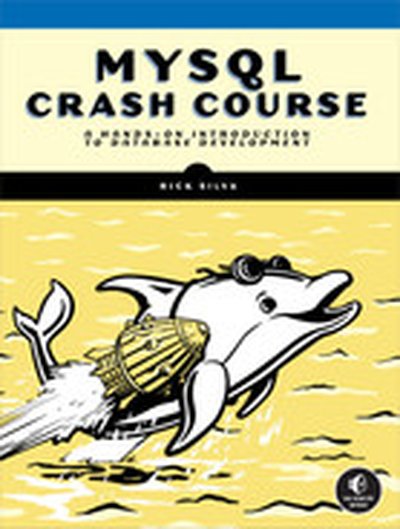
MySQL Crash Course

MySQL Crash Course is a fast-paced, no-nonsense introduction to relational database development. It’s filled with practical examples and expert advice that will have you up and running quickly. You’ll learn the basics of SQL, how to create a database, craft SQL queries to extract data, and work with events, procedures, and functions. You’ll see how to add constraints to tables to enforce rules about permitted data and use indexes to accelerate data retrieval. You’ll even explore how to call MySQL from PHP, Python, and Java. Three final projects will show you how to build a weather database from scratch, use triggers to prevent errors in an election database, and use views to protect sensitive data in a salary database. You’ll also learn how to: •Query database tables for specific information, order the results, comment SQL code, and deal with null values •Define table columns to hold strings, integers, and dates, and determine what data types to use •Join multiple database tables as well as use temporary tables, common table expressions, derived tables, and subqueries •Add, change, and remove data from tables, create views based on specific queries, write reusable stored routines, and automate and schedule events The perfect quick-start resource for database developers, MySQL Crash Course will arm you with the tools you need to build and manage fast, powerful, and secure MySQL-based data storage systems.

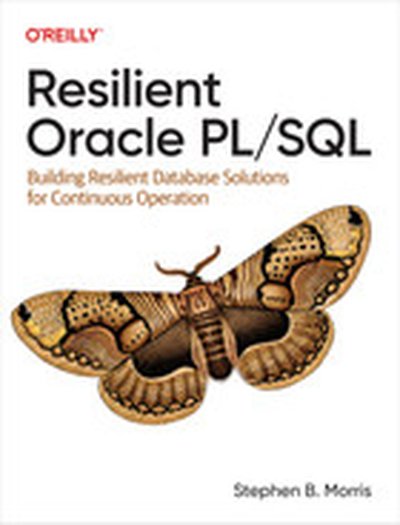
Resilient Oracle PL/SQL

As legacy and other critical systems continue to migrate online, the need for continuous operation is imperative. Code has to handle data issues as well as hard external problems today, including outages of networks, storage systems, power, and ancillary systems. This practical guide provides system administrators, DevSecOps engineers, and cloud architects with a concise yet comprehensive overview on how to use PL/SQL to develop resilient database solutions. Integration specialist Stephen B Morris helps you understand the language, build a PL/SQL toolkit, and collect a suite of reusable components and patterns. You'll dive into the benefits of synthesizing the toolkit with a requirements-driven, feature-oriented approach and learn how to produce resilient solutions by synthesizing the PL/SQL toolkit in conjunction with a scale of resilience. Build solid PL/SQL solutions while avoiding common PL/SQL antipatterns Learn why embedding complex business logic in SQL is often a brittle proposition Learn how to recognize and improve weak PL/SQL code Verify PL/SQL code by running data-driven, in-database tests Understand the safe operation, maintenance, and modification of complex PL/SQL systems Learn the benefits of thinking about features rather than just use cases Define good requirements for PL/SQL and hybrid solutions involving PL/SQL and high level languages

Azure SQL Hyperscale Revealed: High-performance Scalable Solutions for Critical Data Workloads

Take a deep dive into the Azure SQL Database Hyperscale Service Tier and discover a new form of cloud architecture from Microsoft that supports massive databases. The new horizontally scalable architecture, formerly code-named Socrates, allows you to decouple compute nodes from storage layers. This radically different approach dramatically increases the scalability of the service. This book shows you how to leverage Hyperscale to provide next-level scalability, high throughput, and fast performance from large databases in your environment. The book begins by showing how Hyperscale helps you eliminate many of the problems of traditional high-availability and disaster recovery architecture. You’ll learn how Hyperscale overcomes storage capacity limitations and issues with scale-up times and costs. With Hyperscale, your costs do not increase linearly with database size and you can manage more data than ever at a lower cost. The book teaches you how todeploy, configure, and monitor an Azure SQL Hyperscale database in a production environment. The book also covers migrating your current workloads from traditional architecture to Azure SQL Hyperscale. What You Will Learn Understand the advantages of Hyperscale over traditional architecture Deploy a Hyperscale database on the Azure cloud (interactively and with code) Configure the advanced features of the Hyperscale database tier Monitor and scale database performance to suit your needs Back up and restore your Azure SQL Hyperscale databases Implement disaster recovery and failover capability Compare performance of Hyperscale vs traditional architecture Migrate existing databases to the Hyperscale service tier Who This Book Is For SQL architects, data engineers, and DBAs who want the most efficient and cost-effective cloud technologies to run their critical data workloads, and those seeking rapid scalability and high performance and throughput while utilizing large databases

Expert Performance Indexing in Azure SQL and SQL Server 2022: Toward Faster Results and Lower Maintenance Both on Premises and in the Cloud

Take a deep dive into perhaps the single most important facet of query performance—indexes—and how to best use them. Newly updated for SQL Server 2022 and Azure SQL, this fourth edition includes new guidance and features related to columnstore indexes, improved and consolidated content on Query Store, deeper content around Intelligent Query Processing, and other updates to help you optimize query execution and make performance improvements to even the most challenging workloads. The book begins with explanations of the types of indexes and how they are stored in a database. Moving further into the book, you will learn how statistics are critical for optimal index usage and how the Index Advisor can assist in reviewing and optimizing index health. This book helps you build a clear understanding of how indexes work, how to implement and use them, and the many options available to tame even the most large and complex workloads. What You Will Learn Properly index row store, columnstore, and memory-optimized tables Make use of Intelligent Query Processing for faster query results Review statistics to understand indexing choices made by the optimizer Apply indexing strategies such as covering indexes, included columns, and index intersections Recognize and remove unnecessary indexes Design effective indexes for full-text, spatial, and XML data types Who This Book Is For Azure SQL and SQL Server administrators and developers who are ready to improve the performance of their database environment by thoughtfully building indexes to speed up queries that matter the most and make a difference to the business

Modern Oracle Database Programming: Level Up Your Skill Set to Oracle's Latest and Most Powerful Features in SQL, PL/SQL, and JSON

Level up your skill set to the latest that Oracle Database can offer. This book introduces features that are not well known that can transform your development efforts. You’ll discover built-in functionality that can save you massive amounts of time that otherwise would be spent reinventing the wheel. You’ll find that what used to take a lot of programming some years ago can be done with less code in a more reliable way today. Anyone using Oracle Database without the knowledge in this book is leaving valuable functionality–that their company has paid for–on the table, and this book opens the door to that functionality so that you can deliver reliable and performant solutions faster and more easily than ever. Part I looks at features in SQL and PL/SQL that are underused and not well known. You’ll learn about new join types, pattern matching across rows, Top N pagination (useful in reporting!), qualified expressions, and enhancements to iterators that reduce code complexity and make your logic easier to understand. Part II covers how and when to invoke PL/SQL from SQL while maintaining performance. You'll learn about SQL macro functions for creating reusable SQL fragments, polymorphic table functions with return types determined by incoming argument types, and constructing and parsing JSON documents for data interchange with other systems. Part III introduces a vast array of built-in functionality that Oracle provides that is just waiting to be used. Edition-based redefinition enables zero-downtime application and schema upgrades. Data redaction enables easier compliance with privacy laws and similar regulations by protecting sensitive data from those who have no need to see it. Virtual private databases provide the appearance of giving each user their own database, again helping to secure sensitive data. These features are just a taste of what the book provides. Soon you’ll be improving your skillsand wondering why you ever worked so hard to solve problems that Oracle Database already solves for you. What You Will Learn Write more powerful code by incorporating underused features in SQL and PL/SQL Optimize your integration between SQL and PL/SQL for best performance Take advantage of enhanced set operators, lateral joins, row-based pattern matching, and other advanced features in SQL Make your code easier to understand through your use of newer PL/SQL features, such as qualified expressions and iterator enhancements Integrate with web services and external data sources directly from the database Create and parse JSON documents for easy data exchange and flexible schema design Who This Book Is For Any developer who is writing SQL or PL/SQL, PL/SQL experts who want to level up their knowledgeand skills to the latest features that Oracle Database provides, and developers who don’t want to write their own solutions only to find out later that they’ve wasted their time by building something that Oracle Database provides out of the box

IBM Software Systems Integration: With IBM MQ Series for JMS, IBM FileNet Case Manager, and IBM Business Automation Workflow

Examine the working details for real-world Java programs used for system integration with IBM Software, applying various API libraries (as used by Banking and Insurance companies). This book includes the step-by-step procedure to use the IBM FileNet Case Manager 5.3.3 Case Builder solution and the similar IBM System, IBM Business Automation Workflow to create an Audit System. You'll learn how to implement the workflow with a client Java Message Service (JMS) java method developed with Workflow Custom Operations System Step components. Using IBM Cognos Analytics Version 11.2, you'll be able to create new views for IBM Case Manager Analytics for custom time dimensions. The book also explains the SQL code and procedures required to create example Online Analytical Processing (OLAP) cubes with multi-level time dimensions for IBM Case Manager analytics. IBM Software Systems Integration features the most up to date systems software procedures using tested API calls. What You Will Learn Review techniques for generating custom IBM JMS code Create a new custom view for a multi-level time dimension See how a java program can provide the IBM FileNet document management API calls for content store folder and document replication Configure Java components for content engine events Who This Book Is ForIT consultants, Systems and Solution Architects.

Pro Oracle SQL Development: Best Practices for Writing Advanced Queries

Write SQL statements that are more powerful, simpler, and faster using the advanced features of Oracle SQL. This updated second edition includes the newest advanced features: improved data structures (such as more JSON support and more table options), improved automated processes (such as automatic indexing), and improved SQL language extensions (such as polymorphic table functions, SQL macros, and the multilingual engine). Pro Oracle SQL Development is for anyone who already knows Oracle SQL and is ready to take their skills to the next level. This book provides a clearer way of thinking about SQL by building sets, and it provides practical advice for using complex features while avoiding anti-patterns that lead to poor performance and wrong results. Relevant theories, real-world best practices, and style guidelines help you get the most out of Oracle SQL. Many developers, testers, analysts, and administrators use Oracle databases frequently, but their queries are limited because they do not take advantage of Oracle’s advanced features. This book inspires you to achieve more with your Oracle SQL statements by creating your own style for writing simple, yet powerful, SQL. It teaches you how to think about and solve performance problems in Oracle SQL, and it covers enough advanced topics to put you on the path to becoming an Oracle expert. What You'll Learn Solve challenging problems with declarative SQL instead of procedural languages Write SQL statements that are large and powerful, but also elegant and fast Create development environments that are simple, scalable, and conducive to learning Visualize and understand SQL more intuitively Apply advanced syntax, objects, and architecture Avoid SQL anti-patterns that accumulate technical debt Tune SQL statements with multiple strategies that can significantly improve performance Who This Book Is For Developers, testers, analysts, and administrators who want to harness the full power of Oracle SQL to solve their problems as simply and as quickly as possible; traditional database professionals looking for new ways of thinking about the language they have used for so long; and modern full stack developers who need an explanation of how a database can be much more than simply a place to store data

Oracle Autonomous Database in Enterprise Architecture

Explore the capabilities of Oracle Autonomous Database (ADB) to improve enterprise-level data management. Through this book, you will dive deep into deploying, managing, and securing ADBs using Oracle Cloud Infrastructure (OCI). Gain hands-on experience with high-availability setups, data migration methods, and advanced security measures to elevate your enterprise architecture. What this Book will help me do Understand the key considerations for planning, migrating, and maintaining Oracle Autonomous Databases. Learn to implement high availability solutions using Autonomous Data Guard in ADB environments. Master the configuration of backup, restore, and disaster recovery strategies within OCI. Implement advanced security practices including encryption and IAM policy management. Gain proficiency in leveraging ADB features like APEX, SQL Developer Web, and REST APIs for rapid application development. Author(s) The authors None Sharma, Krishnakumar KM, and None Panda are experts in database systems, particularly in Oracle technologies. With years of hands-on experience implementing enterprise solutions and training professionals, they have pooled their knowledge to craft a resource-rich guide filled with practical advice. Who is it for? This book is ideal for cloud architects, database administrators, and implementation consultants seeking to leverage Oracle's Autonomous Database for enhanced automation, security, and scalability. It is well-suited for professionals with foundational knowledge of Linux, OCI, and databases. Aspiring cloud engineers and students aiming to understand modern database management will also benefit greatly.

Cyber Resiliency with Splunk Enterprise and IBM FlashSystem Storage Safeguarded Copy with IBM Copy Services Manager

The focus of this document is to highlight early threat detection by using Splunk Enterprise and proactively start a cyber resilience workflow in response to a cyberattack or malicious user action. The workflow uses IBM® Copy Services Manager (CSM) as orchestration software to invoke the IBM FlashSystem® storage Safeguarded Copy function, which creates an immutable copy of the data in an air-gapped form on the same IBM FlashSystem Storage for isolation and eventual quick recovery. This document explains the steps that are required to enable and forward IBM FlashSystem audit logs and set a Splunk forwarder configuration to forward local event logs to Splunk Enterprise. This document also describes how to create various alerts in Splunk Enterprise to determine a threat, and configure and invoke an appropriate response to the detected threat in Splunk Enterprise. This document explains the lab setup configuration steps that are involved in configuring various components like Splunk Enterprise, Splunk Enterprise config files for custom apps, IBM CSM, and IBM FlashSystem Storage. The last steps in the lab setup section demonstrate the automated Safeguarded Copy creation and validation steps. This document also describes brief steps for configuring various components and integrating them. This document demonstrates a use case for protecting a Microsoft SQL database (DB) volume that is created on IBM FlashSystem Storage. When a threat is detected on the Microsoft SQL DB volume, Safeguarded Copy starts on an IBM FlashSystem Storage volume. The Safeguarded Copy creates an immutable copy of the data, and the same data volume can be recovered or restored by using IBM CSM. This publication does not describe the installation procedures for Splunk Enterprise, Splunk Forwarder for IBM CSM, th Microsoft SQL server, or the IBM FlashSystem Storage setup. It is assumed that the reader of the book has a basic understanding of system, Windows, and DB administration; storage administration; and has access to the required software and documentation that is used in this document.

Pro SQL Server 2022 Administration: A Guide for the Modern DBA

Get your daily work done efficiently using this comprehensive guide for SQL Server DBAs that covers all that a practicing database administrator needs to know. Updated for SQL Server 2022, this edition includes coverage of new features, such as Ledger, which provides an immutable record of table history to protect you against malicious data tampering, and integration with cloud providers to support hybrid cloud scenarios. You’ll also find new content on performance optimizations, such as query pan feedback, and security controls, such as new database roles, which are restructured for modern ways of working. Coverage also includes Query Store, installation on Linux, and the use of containerized SQL. Pro SQL Server 2022 Administration takes DBAs on a journey that begins with planning their SQL Server deployment and runs through installing and configuring the instance, administering and optimizing database objects, and ensuring that data issecure and highly available. Readers will learn how to perform advanced maintenance and tuning techniques, and discover SQL Server's hybrid cloud functionality. This book teaches you how to make the most of new SQL Server 2022 functionality, including integration for hybrid cloud scenarios. The book promotes best-practice installation, shows how to configure for scalability and high availability, and demonstrates the gamut of database-level maintenance tasks, such as index maintenance, database consistency checks, and table optimizations. What You Will Learn Integrate SQL Server with Azure for hybrid cloud scenarios Audit changes and prevent malicious data changes with SQL Server’s Ledger Secure and encrypt data to protect against embarrassing data breaches Ensure 24 x 7 x 365 access through high availability and disaster recovery features in today’s hybrid world Use Azure tooling, including Arc, to gain insight into and manage your SQL Server enterprise Install and configure SQL Server on Windows, Linux, and in containers Perform routine maintenance tasks, such as backups and database consistency checks Optimize performance and undertake troubleshooting in the Database Engine Who This Book Is For SQL Server DBAs who manage on-premise installations of SQL Server. This book is also useful for DBAs who wish to learn advanced features, such as integration with Azure, Query Store, Extended Events, and Policy-Based Management, or those who need to install SQL Server in a variety of environments.

Introducing RavenDB: The Database for Modern Data Persistence

Simplify your first steps with the RavenDB NoSQL Document Database. This book takes a task-oriented approach by showing common problems, potential solutions, brief explanations of how those solutions work, and the mechanisms used. Based on real-world examples, the recipes in this book will show you how to solve common problems with Raven Query Language and will highlight reasons why RavenDB is a great choice for fast prototyping solutions that can sustain increasing amounts of data as your application grows. Introducing RavenDB includes code and query examples that address real-life challenges you’ll encounter when using RavenDB, helping you learn the basics of the Raven Query Language more quickly and efficiently. In many cases, you’ll be able to copy and paste the examples into your own code, making only minor modifications to suit your application. RavenDB supports many advanced features, such full-text search, graph queries, and timeseries; recipes in the latter portion of the book will help you understand those advanced features and how they might be applied to your own code and applications. After reading this book, you will be able to employ RavenDB’s powerful features in your own projects. What You Will Learn Set up and start working with RavenDB Model your objects for persistence in a NoSQL document database Write basic and advanced queries in the Raven Query Language Index your data using map/reduce techniques Implement techniques leading to highly performant systems Efficiently aggregate data and query on those aggregations Who This Book Is For Developers accustomed to relational databases who are about to enter a world of NoSQL databases. The book is also for experienced programmers who have used other non-relational databases and want to learn RavenDB. It will also prove useful for developers who want to move away from using Object-Relational Modeling frameworks and start working with a persistence solution that can store object graphs directly.