talk-data.com talk-data.com

Event

O'Reilly Data Engineering Books

2001-10-19 – 2027-05-25 Oreilly Visit website ↗

Activities tracked

615

Collection of O'Reilly books on Data Engineering.

Filtering by: Cyber Security ×

Sessions & talks

Showing 76–100 of 615 · Newest first

Search within this event →
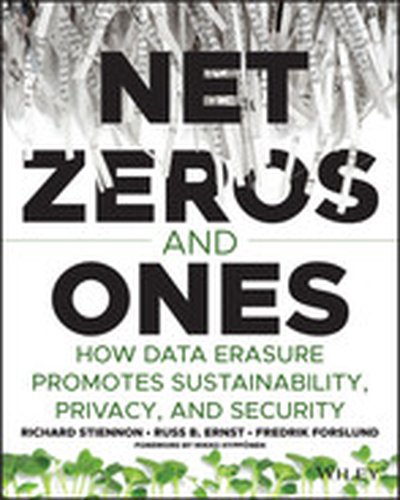
Net Zeros and Ones

Design, implement, and integrate a complete data sanitization program In Net Zeros and Ones: How Data Erasure Promotes Sustainability, Privacy, and Security, a well-rounded team of accomplished industry veterans delivers a comprehensive guide to managing permanent and sustainable data erasure while complying with regulatory, legal, and industry requirements. In the book, you’ll discover the why, how, and when of data sanitization, including why it is a crucial component in achieving circularity within IT operations. You will also learn about future-proofing yourself against security breaches and data leaks involving your most sensitive information—all while being served entertaining industry anecdotes and commentary from leading industry personalities. The authors also discuss: Several new standards on data erasure, including the soon-to-be published standards by the IEEE and ISO How data sanitization strengthens a sustainability or Environmental, Social, and Governance (ESG) program How to adhere to data retention policies, litigation holds, and regulatory frameworks that require certain data to be retained for specific timeframes An ideal resource for ESG, data protection, and privacy professionals, Net Zeros and Ones will also earn a place in the libraries of application developers and IT asset managers seeking a one-stop explanation of how data erasure fits into their data and asset management programs.

Snowflake SnowPro Core Certification Study Guide

Prepare smarter, faster, and better with the premier study guide for Snowflake SnowPro Core certification Snowflake, a cloud-based data warehousing platform, has steadily gained popularity since its 2014 launch. Snowflake offers several certification exams, of which the SnowPro Core certification is the foundational exam. The SnowPro Core Certification validates an individual's grasp of Snowflake as a cloud data warehouse, its architectural fundamentals, and the ability to design, implement, and maintain secure, scalable Snowflake systems. The Snowflake SnowPro Core Certification Study Guide delivers comprehensive coverage of every relevant exam topic on the Snowflake SnowPro Core Certification test. Prepare efficiently and effectively for the exam with online practice tests and flashcards, a digital glossary, and concise and easy-to-follow instruction from the subject-matter experts at Sybex. You'll gain the necessary knowledge to help you succeed in the exam and will be able to apply the acquired practical skills to real-world Snowflake solutions. This Study Guide includes: Comprehensive understanding of Snowflake's unique shared data, multi-cluster architecture Guidance on loading structured and semi-structured data into Snowflake Utilizing data sharing, cloning, and time travel features Managing performance through clustering keys, scaling compute up, down & across Steps to account management and security configuration including RBAC & MFA All the info you need to obtain a highly valued credential for a rapidly growing new database software solution Access to the Sybex online learning center, with chapter review questions, full-length practice exams, hundreds of electronic flashcards, and a glossary of key terms Perfect for anyone considering a new career in cloud-based data warehouse solutions and related fields, Snowflake SnowPro Core Certification Study Guide is also a must-read for veteran database professionals seeking an understanding of one of the newest and fastest-growing niches in data.

An Ethical Guide to Cyber Anonymity

"An Ethical Guide to Cyber Anonymity" is a comprehensive resource for understanding and safeguarding your privacy while navigating the internet. By the end of this book, you will have gained the skills and knowledge to maintain your cyber anonymity, ensuring your activities online remain private and secure. What this Book will help me do Understand the fundamental concepts of cyber anonymity and internet privacy. Learn practical methods to protect your identity from being compromised online. Gain expertise in configuring tools to achieve a secure and anonymous online presence. Identify and mitigate risks associated with privacy threats from various entities. Master techniques to ensure safe and private internet usage for yourself and others. Author(s) Kushantha Gunawardana is a seasoned expert in cybersecurity with years of experience in dealing with cyber anonymity and data protection. With a passion for educating others, Kushantha translates complex technical ideas into accessible and actionable knowledge. Their approach combines in-depth technical expertise with a focus on ethical practices and real-world applications. Who is it for? This book is ideal for journalists, ethical hackers, and cybersecurity professionals who are striving to protect their anonymity online. It is also a great resource for security-aware individuals looking to safeguard their personal privacy. Beginners or intermediates in the field of web privacy who aim to strengthen their understanding will find this book highly valuable. Parents wishing to protect their family's online identity can also benefit from its guidance.

Cybersecurity and Privacy Law Handbook

Cybersecurity and privacy compliance are critical to protecting organizations from data breaches and fines. In the "Cybersecurity and Privacy Law Handbook," you'll find practical, beginner-friendly guidance to understand standards, identify gaps, and implement policies to secure your workplace effectively. What this Book will help me do Understand international cybersecurity standards such as ISO27001 and NIST. Identify and analyze security gaps using gap analysis and business impact methodologies. Ensure compliance with privacy laws like GDPR, HIPAA, and FTC regulations. Develop and implement effective cybersecurity policies and procedures. Navigate complex US-specific privacy regulations and their implications. Author(s) None Rocchi is an experienced author and practitioner in cybersecurity and privacy. With extensive knowledge in international compliance standards, they excel in breaking down complex topics into digestible and actionable content. Their practical and approachable writing style makes tackling the technical and legal facets of cybersecurity straightforward and engaging. Who is it for? This book is tailored for professionals new to cybersecurity and privacy who wish to understand and implement fundamental practices in this domain. It is ideal for managers, students, or experts from other fields looking to manage security functions effectively. No prior deep technical knowledge is required, making it friendly for beginners.

Oracle Autonomous Database in Enterprise Architecture

Explore the capabilities of Oracle Autonomous Database (ADB) to improve enterprise-level data management. Through this book, you will dive deep into deploying, managing, and securing ADBs using Oracle Cloud Infrastructure (OCI). Gain hands-on experience with high-availability setups, data migration methods, and advanced security measures to elevate your enterprise architecture. What this Book will help me do Understand the key considerations for planning, migrating, and maintaining Oracle Autonomous Databases. Learn to implement high availability solutions using Autonomous Data Guard in ADB environments. Master the configuration of backup, restore, and disaster recovery strategies within OCI. Implement advanced security practices including encryption and IAM policy management. Gain proficiency in leveraging ADB features like APEX, SQL Developer Web, and REST APIs for rapid application development. Author(s) The authors None Sharma, Krishnakumar KM, and None Panda are experts in database systems, particularly in Oracle technologies. With years of hands-on experience implementing enterprise solutions and training professionals, they have pooled their knowledge to craft a resource-rich guide filled with practical advice. Who is it for? This book is ideal for cloud architects, database administrators, and implementation consultants seeking to leverage Oracle's Autonomous Database for enhanced automation, security, and scalability. It is well-suited for professionals with foundational knowledge of Linux, OCI, and databases. Aspiring cloud engineers and students aiming to understand modern database management will also benefit greatly.

Optimized Inferencing and Integration with AI on IBM zSystems: Introduction, Methodology, and Use Cases

In today's fast-paced, ever-growing digital world, you face various new and complex business problems. To help resolve these problems, enterprises are embedding artificial intelligence (AI) into their mission-critical business processes and applications to help improve operations, optimize performance, personalize the user experience, and differentiate themselves from the competition. Furthermore, the use of AI on the IBM® zSystems platform, where your mission-critical transactions, data, and applications are installed, is a key aspect of modernizing business-critical applications while maintaining strict service-level agreements (SLAs) and security requirements. This colocation of data and AI empowers your enterprise to optimally and easily deploy and infuse AI capabilities into your enterprise workloads with the most recent and relevant data available in real time, which enables a more transparent, accurate, and dependable AI experience. This IBM Redpaper publication introduces and explains AI technologies and hardware optimizations, such as IBM zSystems Integrated Accelerator for AI, and demonstrates how to leverage certain capabilities and components to enable solutions in business-critical use cases, such as fraud detection and credit risk scoring on the platform. Real-time inferencing with AI models, a capability that is critical to certain industries and use cases such as fraud detection, now can be implemented with optimized performance thanks to innovations like IBM zSystems Integrated Accelerator for AI embedded in the Telum chip within IBM z16™. This publication also describes and demonstrates the implementation and integration of the two end-to-end solutions (fraud detection and credit risk), from developing and training the AI models to deploying the models in an IBM z/OS® V2R5 environment on IBM z16 hardware, and to integrating AI functions into an application, for example an IBM z/OS Customer Information Control System (IBM CICS®) application. We describe performance optimization recommendations and considerations when leveraging AI technology on the IBM zSystems platform, including optimizations for micro-batching in IBM Watson® Machine Learning for z/OS (WMLz). The benefits that are derived from the solutions also are described in detail, which includes how the open-source AI framework portability of the IBM zSystems platform enables model development and training to be done anywhere, including on IBM zSystems, and the ability to easily integrate to deploy on IBM zSystems for optimal inferencing. You can uncover insights at the transaction level while taking advantage of the speed, depth, and securability of the platform. This publication is intended for technical specialists, site reliability engineers, architects, system programmers, and systems engineers. Technologies that are covered include TensorFlow Serving, WMLz, IBM Cloud Pak® for Data (CP4D), IBM z/OS Container Extensions (zCX), IBM Customer Information Control System (IBM CICS), Open Neural Network Exchange (ONNX), and IBM Deep Learning Compiler (zDLC).

Pro SQL Server 2022 Administration: A Guide for the Modern DBA

Get your daily work done efficiently using this comprehensive guide for SQL Server DBAs that covers all that a practicing database administrator needs to know. Updated for SQL Server 2022, this edition includes coverage of new features, such as Ledger, which provides an immutable record of table history to protect you against malicious data tampering, and integration with cloud providers to support hybrid cloud scenarios. You’ll also find new content on performance optimizations, such as query pan feedback, and security controls, such as new database roles, which are restructured for modern ways of working. Coverage also includes Query Store, installation on Linux, and the use of containerized SQL. Pro SQL Server 2022 Administration takes DBAs on a journey that begins with planning their SQL Server deployment and runs through installing and configuring the instance, administering and optimizing database objects, and ensuring that data issecure and highly available. Readers will learn how to perform advanced maintenance and tuning techniques, and discover SQL Server's hybrid cloud functionality. This book teaches you how to make the most of new SQL Server 2022 functionality, including integration for hybrid cloud scenarios. The book promotes best-practice installation, shows how to configure for scalability and high availability, and demonstrates the gamut of database-level maintenance tasks, such as index maintenance, database consistency checks, and table optimizations. What You Will Learn Integrate SQL Server with Azure for hybrid cloud scenarios Audit changes and prevent malicious data changes with SQL Server’s Ledger Secure and encrypt data to protect against embarrassing data breaches Ensure 24 x 7 x 365 access through high availability and disaster recovery features in today’s hybrid world Use Azure tooling, including Arc, to gain insight into and manage your SQL Server enterprise Install and configure SQL Server on Windows, Linux, and in containers Perform routine maintenance tasks, such as backups and database consistency checks Optimize performance and undertake troubleshooting in the Database Engine Who This Book Is For SQL Server DBAs who manage on-premise installations of SQL Server. This book is also useful for DBAs who wish to learn advanced features, such as integration with Azure, Query Store, Extended Events, and Policy-Based Management, or those who need to install SQL Server in a variety of environments.

SQL Server 2022 Revealed: A Hybrid Data Platform Powered by Security, Performance, and Availability

Know how to use the new capabilities and cloud integrations in SQL Server 2022. This book covers the many innovative integrations with the Azure Cloud that make SQL Server 2022 the most cloud-connected edition ever. The book covers cutting-edge features such as the blockchain-based Ledger for creating a tamper-evident record of changes to data over time that you can rely on to be correct and reliable. You'll learn about built-in Query Intelligence capabilities to help you to upgrade with confidence that your applications will perform at least as fast after the upgrade than before. In fact, you'll probably see an increase in performance from the upgrade, with no code changes needed. Also covered are innovations such as contained availability groups and data virtualization with S3 object storage. New cloud integrations covered in this book include Microsoft Azure Purview and the use of Azure SQL for high availability and disaster recovery. The bookcovers Azure Synapse Link with its built-in capabilities to take changes and put them into Synapse automatically. Anyone building their career around SQL Server will want this book for the valuable information it provides on building SQL skills from edge to the cloud. ​ What You Will Learn Know how to use all of the new capabilities and cloud integrations in SQL Server 2022 Connect to Azure for disaster recovery, near real-time analytics, and security Leverage the Ledger to create a tamper-evident record of data changes over time Upgrade from prior releases and achieve faster and more consistent performance with no code changes Access data and storage in different and new formats, such as Parquet and S3, without moving the data and using your existing T-SQL skills Explore new application scenarios using innovations with T-SQL in areassuch as JSON and time series Who This Book Is For SQL Server professionals who want to upgrade their skills to the latest edition of SQL Server; those wishing to take advantage of new integrations with Microsoft Azure Purview (governance), Azure Synapse (analytics), and Azure SQL (HA and DR); and those in need of the increased performance and security offered by Query Intelligence and the new Ledger

Architecting Solutions with SAP Business Technology Platform

Gain a comprehensive understanding of SAP Business Technology Platform (SAP BTP) and its role in the intelligent enterprise. This book provides you with the knowledge and skills to design and implement effective architectural solutions. You'll explore integration strategies, extensibility options, and data processing methods to innovate and enhance your organization's SAP ecosystem. What this Book will help me do Architect enterprise solutions with SAP BTP to address key integration challenges. Leverage SAP BTP tools for process automation and effective solution extensibility. Understand non-functional requirements such as operability and security. Drive innovation by integrating SAP's intelligent technologies into your designs. Utilize SAP BTP to derive actionable insights from business data for value generation. Author(s) Serdar Simsekler and None Du are experienced professionals in the field of SAP architecture and technology. They bring years of expertise in building enterprise solutions leveraging the latest SAP innovations. Their approachable writing style aims to connect technical concepts with practical enterprise applications, ensuring readers can directly apply the knowledge gained. Who is it for? This book is intended for technical architects, solution architects, and enterprise architects who are working with or intending to adopt SAP Business Technology Platform. It is ideal for those seeking to enhance their understanding of SAP's solution ecosystem and deliver innovative systems. A foundational knowledge of IT systems and basic cloud concepts is assumed, as is familiarity with the SAP framework.

Serverless ETL and Analytics with AWS Glue

Discover how to harness AWS Glue for your ETL and data analysis workflows with "Serverless ETL and Analytics with AWS Glue." This comprehensive guide introduces readers to the capabilities of AWS Glue, from building data lakes to performing advanced ETL tasks, allowing you to create efficient, secure, and scalable data pipelines with serverless technology. What this Book will help me do Understand and utilize various AWS Glue features for data lake and ETL pipeline creation. Leverage AWS Glue Studio and DataBrew for intuitive data preparation workflows. Implement effective storage optimization techniques for enhanced data analytics. Apply robust data security measures, including encryption and access control, to protect data. Integrate AWS Glue with machine learning tools like SageMaker to build intelligent models. Author(s) The authors of this book include experts across the fields of data engineering and AWS technologies. With backgrounds in data analytics, software development, and cloud architecture, they bring a depth of practical experience. Their approach combines hands-on tutorials with conceptual clarity, ensuring a blend of foundational knowledge and actionable insights. Who is it for? This book is designed for ETL developers, data engineers, and data analysts who are familiar with data management concepts and want to extend their skills into serverless cloud solutions. If you're looking to master AWS Glue for building scalable and efficient ETL pipelines or are transitioning existing systems to the cloud, this book is ideal for you.

Building the Snowflake Data Cloud: Monetizing and Democratizing Your Data

Implement the Snowflake Data Cloud using best practices and reap the benefits of scalability and low-cost from the industry-leading, cloud-based, data warehousing platform. This book provides a detailed how-to explanation, and assumes familiarity with Snowflake core concepts and principles. It is a project-oriented book with a hands-on approach to designing, developing, and implementing your Data Cloud with security at the center. As you work through the examples, you will develop the skill, knowledge, and expertise to expand your capability by incorporating additional Snowflake features, tools, and techniques. Your Snowflake Data Cloud will be fit for purpose, extensible, and at the forefront of both Direct Share, Data Exchange, and Snowflake Marketplace. Building the Snowflake Data Cloud helps you transform your organization into monetizing the value locked up within your data. As the digital economy takes hold, with data volume, velocity, and variety growing at exponential rates, you need tools and techniques to quickly categorize, collate, summarize, and aggregate data. You also need the means to seamlessly distribute to release value. This book shows how Snowflake provides all these things and how to use them to your advantage. The book helps you succeed by delivering faster than you can deliver with legacy products and techniques. You will learn how to leverage what you already know, and what you don’t, all applied in a Snowflake Data Cloud context. After reading this book, you will discover and embrace the future where the Data Cloud is central. You will be able to position your organization to take advantage by identifying, adopting, and preparing your tooling for the coming wave of opportunity around sharing and monetizing valuable, corporate data. What You Will Learn Understand why Data Cloud is important tothe success of your organization Up-skill and adopt Snowflake, leveraging the benefits of cloud platforms Articulate the Snowflake Marketplace and identify opportunities to monetize data Identify tools and techniques to accelerate integration with Data Cloud Manage data consumption by monitoring and controlling access to datasets Develop data load and transform capabilities for use in future projects Who This Book Is For Solution architects seeking implementation patterns to integrate with a Data Cloud; data warehouse developers looking for tips, tools, and techniques to rapidly deliver data pipelines; sales managers who want to monetize their datasets and understand the opportunities that Data Cloud presents; and anyone who wishes to unlock value contained within their data silos

Building a Red Hat OpenShift Environment on IBM Z

Cybersecurity is the most important arm of defense against cyberattacks. With the recent increase in cyberattacks, corporations must focus on how they are combating these new high-tech threats. When establishing best practices, a corporation must focus on employees' access to specific workspaces and information. IBM Z® focuses on allowing high processing virtual environments while maintaining a high level of security in each workspace. Organizations not only need to adjust their approach to security, but also their approach to IT environments. To meet new customer needs and expectations, organizations must take a more agile approach to their business. IBM® Z allows companies to work with hybrid and multi-cloud environments that allows more ease of use for the user and efficiency overall. Working with IBM Z, organizations can also work with many databases that are included in IBM Cloud Pak® for Data. IBM Cloud Pak for Data allows organizations to make more informed decisions with improved data usage. Along with the improved data usage, organizations can see the effects from working in a Red Hat OpenShift environment. Red Hat OpenShift is compatible across many hardware services and allows the user to run applications in the most efficient manner. The purpose of this IBM Redbooks® publication is to: Introduce IBM Z and LinuxONE platforms and how they work with the Red Hat OpenShift environment and IBMCloud Pak for Data Provide examples and the uses of IBM Z with Cloud Paks for Data that show data gravity, consistent development experience, and consolidation and business resiliency The target audience for this book is IBM Z Technical Specialists, IT Architects, and System Administrators.

Proactive EarlyThreat Detection and Securing Oracle Database with IBM QRadar, IBM Security Guardium Data Protection, and IBM Copy Services Manager by using IBM FlashSystem Safeguarded Copy

This IBM® blueprint publication focuses on early threat detection within a database environment by using IBM Security Guardium® Data Protection and IBM QRadar®. It also highlights how to proactively start a cyber resilience workflow in response to a cyberattack or potential malicious user actions. The workflow that is presented here uses IBM Copy Services Manager as orchestration software to start IBM FlashSystem® Safeguarded Copy functions. The Safeguarded Copy creates an immutable copy of the data in an air-gapped form on the same IBM FlashSystem for isolation and eventual quick recovery. This document describes how to enable and forward Oracle database user activities (by using IBM Security Guardium Data Protection) and IBM FlashSystem audit logs by using IBM FlashSystem to IBM QRadar. This document also describes how to create various rules to determine a threat, and configure and launch a suitable response to the detected threat in IBM QRadar. The document also outlines the steps that are involved to create a Scheduled Task by using IBM Copy Services Manager with various actions.

Learn dbatools in a Month of Lunches

If you work with SQL Server, dbatools is a lifesaver. This book will show you how to use this free and open source PowerShell module to automate just about every SQL server task you can imagine—all in just one month! In Learn dbatools in a Month of Lunches you will learn how to: Perform instance-to-instance and customized migrations Automate security audits, tempdb configuration, alerting, and reporting Schedule and monitor PowerShell tasks in SQL Server Agent Bulk-import any type of data into SQL Server Install dbatools in secure environments Written by a group of expert authors including dbatools creator Chrissy LeMaire, Learn dbatools in a Month of Lunches teaches you techniques that will make you more effective—and efficient—than you ever thought possible. In twenty-eight lunchbreak lessons, you’ll learn the most important use cases of dbatools and the favorite functions of its core developers. Stabilize and standardize your SQL server environment, and simplify your tasks by building automation, alerting, and reporting with this powerful tool. About the Technology For SQL Server DBAs, automation is the key to efficiency. Using the open-source dbatools PowerShell module, you can easily execute tasks on thousands of database servers at once—all from the command line. dbatools gives you over 500 pre-built commands, with countless new options for managing SQL Server at scale. There’s nothing else like it. About the Book Learn dbatools in a Month of Lunches teaches you how to automate SQL Server using the dbatools PowerShell module. Each 30-minute lesson introduces a new automation that will make your daily duties easier. Following the expert advice of dbatools creator Chrissy LeMaire and other top community contributors, you’ll learn to script everything from backups to disaster recovery. What's Inside Performing instance-to-instance and customized migrations Automating security audits, best practices, and standardized configurations Administering SQL Server Agent including running PowerShell scripts effectively Bulk-importing many types of data into SQL Server Executing advanced tasks and increasing efficiency for everyday administration About the Reader For DBAs, accidental DBAs, and systems engineers who manage SQL Server. About the Authors Chrissy LeMaire is a GitHub Star and the creator of dbatools. Rob Sewell is a data engineer and a passionate automator. Jess Pomfret and Cláudio Silva are data platform architects. All are Microsoft MVPs. Quotes All SQL Server professionals should learn dbatools. With its combination of knowledge transfer, anecdotes, and hands-on labs, this book is the perfect way. - From the Foreword by Anna Hoffman, Databases Product Management, Microsoft Excellent guide for dbatools with lots of practical tips! Required reading for anyone interested in dbatools. - Ruben Vandeginste, PeopleWare A must-have for any SQL server developer. - Raushan Kumar Jha, Microsoft If you want to automate all vital aspects of SQL Server, wait no more! Learn dbatools in a month, with guidance from the best minds in the business. - Ranjit Sahai, RAM Consulting

IBM TS7700 Release 5.2.2 Guide

This IBM® Redbooks® publication covers IBM TS7700 R5.2. The IBM TS7700 is part of a family of IBM Enterprise tape products. This book is intended for system architects and storage administrators who want to integrate their storage systems for optimal operation. Building on 25 years of experience, the R5.2 release includes many features that enable improved performance, usability, and security. Highlights include IBM TS7700 Advanced Object Store, an all flash TS7770, grid resiliency enhancements, and Logical WORM retention. By using the same hierarchical storage techniques, the TS7700 (TS7770 and TS7760) can also off load to object storage. Because object storage is cloud-based and accessible from different regions, the TS7700 Cloud Storage Tier support essentially allows the cloud to be an extension of the grid. As of this writing, the TS7700C supports the ability to off load to IBM Cloud® Object Storage, Amazon S3, and RSTOR. This publication explains features and concepts that are specific to the IBM TS7700 as of release R5.2. The R5.2 microcode level provides IBM TS7700 Cloud Storage Tier enhancements, IBM DS8000® Object Storage enhancements, Management Interface dual control security, and other smaller enhancements. The R5.2 microcode level can be installed on the IBM TS7770 and IBM TS7760 models only. Note: The latest Release 5.2 was split into two phases: R5.2 Phase 1 (also referred to as and ) R5.2 Phase 2 ( and R) TS7700 provides tape virtualization for the IBM z environment. Off loading to physical tape behind a TS7700 is used by hundreds of organizations around the world. Tape virtualization can help satisfy the following requirements in a data processing environment. New and existing capabilities of the TS7700 5.2.2 release includes the following highlights: Eight-way Grid Cloud, which consists of up to three generations of TS7700 Synchronous and asynchronous replication of virtual tape and TCT objects Grid access to all logical volume and object data that is independent of where it exists An all-flash TS7770 option for improved performance Full Advanced Object Store Grid Cloud support of DS8000 Transparent Cloud Tier Full AES256 encryption for data that is in-flight and at-rest Tight integration with IBM Z® and DFSMS policy management DS8000 Object Store AES256 in-flight encryption and compression Regulatory compliance through Logical WORM and LWORM Retention support Cloud Storage Tier support for archive, logical volume version, and disaster recovery Optional integration with physical tape 16 Gb IBM FICON® throughput that exceeds 5 GBps per TS7700 cluster Grid Resiliency Support with Control Unit Initiated Reconfiguration (CUIR) support IBM Z hosts view up to 3,968 common devices per TS7700 grid TS7770 Cache On-demand feature that is based capacity licensing TS7770 support of SSD within the VED server The TS7700T writes data by policy to physical tape through attachment to high-capacity, high-performance IBM TS1160, IBM TS1150, and IBM TS1140 tape drives that are installed in an IBM TS4500 or TS3500 tape library. The TS7770 models are based on high-performance and redundant IBM POWER9™ technology. They provide improved performance for most IBM Z tape workloads when compared to the previous generations of IBM TS7700.

Fundamentals of Data Engineering

Data engineering has grown rapidly in the past decade, leaving many software engineers, data scientists, and analysts looking for a comprehensive view of this practice. With this practical book, you'll learn how to plan and build systems to serve the needs of your organization and customers by evaluating the best technologies available through the framework of the data engineering lifecycle. Authors Joe Reis and Matt Housley walk you through the data engineering lifecycle and show you how to stitch together a variety of cloud technologies to serve the needs of downstream data consumers. You'll understand how to apply the concepts of data generation, ingestion, orchestration, transformation, storage, and governance that are critical in any data environment regardless of the underlying technology. This book will help you: Get a concise overview of the entire data engineering landscape Assess data engineering problems using an end-to-end framework of best practices Cut through marketing hype when choosing data technologies, architecture, and processes Use the data engineering lifecycle to design and build a robust architecture Incorporate data governance and security across the data engineering lifecycle

Advanced Analytics with PySpark

The amount of data being generated today is staggering and growing. Apache Spark has emerged as the de facto tool to analyze big data and is now a critical part of the data science toolbox. Updated for Spark 3.0, this practical guide brings together Spark, statistical methods, and real-world datasets to teach you how to approach analytics problems using PySpark, Spark's Python API, and other best practices in Spark programming. Data scientists Akash Tandon, Sandy Ryza, Uri Laserson, Sean Owen, and Josh Wills offer an introduction to the Spark ecosystem, then dive into patterns that apply common techniques-including classification, clustering, collaborative filtering, and anomaly detection, to fields such as genomics, security, and finance. This updated edition also covers NLP and image processing. If you have a basic understanding of machine learning and statistics and you program in Python, this book will get you started with large-scale data analysis. Familiarize yourself with Spark's programming model and ecosystem Learn general approaches in data science Examine complete implementations that analyze large public datasets Discover which machine learning tools make sense for particular problems Explore code that can be adapted to many uses

Elasticsearch 8.x Cookbook - Fifth Edition

"Elasticsearch 8.x Cookbook" is your go-to resource for harnessing the full potential of Elasticsearch 8. This book provides over 180 hands-on recipes to help you efficiently implement, customize, and scale Elasticsearch solutions in your enterprise. Whether you're handling complex queries, analytics, or cluster management, you'll find practical insights to enhance your capabilities. What this Book will help me do Understand the advanced features of Elasticsearch 8.x, including X-Pack, for improving functionality and security. Master advanced indexing and query techniques to perform efficient and scalable data operations. Implement and manage Elasticsearch clusters effectively including monitoring performance via Kibana. Integrate Elasticsearch seamlessly into Java, Scala, Python, and big data environments. Develop custom plugins and extend Elasticsearch to meet unique project requirements. Author(s) Alberto Paro is a seasoned Elasticsearch expert with years of experience in search technologies and enterprise solution development. As a professional developer and consultant, he has worked with numerous organizations to implement Elasticsearch at scale. Alberto brings his deep technical knowledge and hands-on approach to this book, ensuring readers gain practical insights and skills. Who is it for? This book is perfect for software engineers, data professionals, and developers working with Elasticsearch in enterprise environments. If you're seeking to advance your Elasticsearch knowledge, enhance your query-writing abilities, or seek to integrate it into big data workflows, this book will be invaluable. Regardless of whether you're deploying Elasticsearch in e-commerce, applications, or for analytics, you'll find the content purposeful and engaging.

IBM z16 Technical Introduction

This IBM® Redbooks® publication introduces the latest member of the IBM Z® platform that is built with the IBM Telum processor: the IBM z16 server. The IBM Z platform is recognized for its security, resiliency, performance, and scale. It is relied on for mission-critical workloads and as an essential element of hybrid cloud infrastructures. The IBM z16 server adds capabilities and value with innovative technologies that are needed to accelerate the digital transformation journey. This book explains how the IBM z16 server uses innovations and traditional IBM Z strengths to satisfy the growing demand for cloud, analytics, and a more flexible infrastructure. With the IBM z16 servers as the base, applications can run in a trusted, reliable, and secure environment that improves operations and lessens business risk.

PostgreSQL 14 Administration Cookbook

PostgreSQL 14 Administration Cookbook provides a hands-on guide to mastering the administration of PostgreSQL 14. With over 175 recipes, this book equips you with practical techniques to manage, secure, and optimize your PostgreSQL databases, ensuring they are robust and high-performing. What this Book will help me do Master managing PostgreSQL databases both on-premises and in the cloud efficiently. Implement effective backup and recovery strategies to secure your data. Leverage the latest features of PostgreSQL 14 to enhance your database workflows. Understand and apply best practices for maintaining high availability and performance. Troubleshoot real-world challenges with guided solutions and expert insights. Author(s) Simon Riggs and Gianni Ciolli are seasoned database experts with years of experience working with PostgreSQL. Simon is a PostgreSQL core team member, contributing his technical knowledge towards building robust database solutions, while Gianni brings a wealth of expertise in database administration and support. Together, they share a passion for making complex database concepts accessible and actionable. Who is it for? This book is for database administrators, data architects, and developers who manage PostgreSQL databases and are looking to deepen their knowledge. It is suitable for professionals with some experience in PostgreSQL who aim to maximize their database's performance and security, as well as for those new to the system seeking a comprehensive start. Readers with an interest in practical, problem-solving approaches to database management will greatly benefit from this cookbook.

Grokking Streaming Systems

A friendly, framework-agnostic tutorial that will help you grok how streaming systems work—and how to build your own! In Grokking Streaming Systems you will learn how to: Implement and troubleshoot streaming systems Design streaming systems for complex functionalities Assess parallelization requirements Spot networking bottlenecks and resolve back pressure Group data for high-performance systems Handle delayed events in real-time systems Grokking Streaming Systems is a simple guide to the complex concepts behind streaming systems. This friendly and framework-agnostic tutorial teaches you how to handle real-time events, and even design and build your own streaming job that’s a perfect fit for your needs. Each new idea is carefully explained with diagrams, clear examples, and fun dialogue between perplexed personalities! About the Technology Streaming systems minimize the time between receiving and processing event data, so they can deliver responses in real time. For applications in finance, security, and IoT where milliseconds matter, streaming systems are a requirement. And streaming is hot! Skills on platforms like Spark, Heron, and Kafka are in high demand. About the Book Grokking Streaming Systems introduces real-time event streaming applications in clear, reader-friendly language. This engaging book illuminates core concepts like data parallelization, event windows, and backpressure without getting bogged down in framework-specific details. As you go, you’ll build your own simple streaming tool from the ground up to make sure all the ideas and techniques stick. The helpful and entertaining illustrations make streaming systems come alive as you tackle relevant examples like real-time credit card fraud detection and monitoring IoT services. What's Inside Implement and troubleshoot streaming systems Design streaming systems for complex functionalities Spot networking bottlenecks and resolve backpressure Group data for high-performance systems About the Reader No prior experience with streaming systems is assumed. Examples in Java. About the Authors Josh Fischer and Ning Wang are Apache Committers, and part of the committee for the Apache Heron distributed stream processing engine. Quotes Very well-written and enjoyable. I recommend this book to all software engineers working on data processing. - Apoorv Gupta, Facebook Finally, a much-needed introduction to streaming systems—a must-read for anyone interested in this technology. - Anupam Sengupta, Red Hat Tackles complex topics in a very approachable manner. - Marc Roulleau, GIRO A superb resource for helping you grasp the fundamentals of open-source streaming systems. - Simon Verhoeven, Cronos Explains all the main streaming concepts in a friendly way. Start with this one! - Cicero Zandona, Calypso Technologies

Simplify Big Data Analytics with Amazon EMR

Simplify Big Data Analytics with Amazon EMR is a thorough guide to harnessing Amazon's EMR service for big data processing and analytics. From distributed computation pipelines to real-time streaming analytics, this book provides hands-on knowledge and actionable steps for implementing data solutions efficiently. What this Book will help me do Understand the architecture and key components of Amazon EMR and how to deploy it effectively. Learn to configure and manage distributed data processing pipelines using Amazon EMR. Implement security and data governance best practices within the Amazon EMR ecosystem. Master batch ETL and real-time analytics techniques using technologies like Apache Spark. Apply optimization and cost-saving strategies to scalable data solutions. Author(s) Sakti Mishra is a seasoned data professional with extensive expertise in deploying scalable analytics solutions on cloud platforms like AWS. With a background in big data technologies and a passion for teaching, Sakti ensures practical insights accompany every concept. Readers will find his approach thorough, hands-on, and highly informative. Who is it for? This book is perfect for data engineers, data scientists, and other professionals looking to leverage Amazon EMR for scalable analytics. If you are familiar with Python, Scala, or Java and have some exposure to Hadoop or AWS ecosystems, this book will empower you to design and implement robust data pipelines efficiently.

Getting Started with Elastic Stack 8.0

Discover how to harness the power of the Elastic Stack 8.0 to manage, analyze, and secure complex data environments. You will learn to combine components such as Elasticsearch, Kibana, Logstash, and more to build scalable and effective solutions for your organization. By focusing on hands-on implementations, this book ensures you can apply your knowledge to real-world use cases. What this Book will help me do Set up and manage Elasticsearch clusters tailored to various architecture scenarios. Utilize Logstash and Elastic Agent to ingest and process diverse data sources efficiently. Create interactive dashboards and data models in Kibana, enabling business intelligence insights. Implement secure and effective search infrastructures for enterprise applications. Deploy Elastic SIEM to fortify your organization's security against modern cybersecurity threats. Author(s) Asjad Athick is a seasoned technologist and author with expertise in developing scalable data solutions. With years of experience working with the Elastic Stack, Asjad brings a pragmatic approach to teaching complex architectures. His dedication to explaining technical concepts in an accessible manner makes this book a valuable resource for learners. Who is it for? This book is ideal for developers seeking practical knowledge in search, observability, and security solutions using Elastic Stack. Solutions architects who aim to design scalable data platforms will also benefit greatly. Even tech leads or managers keen to understand the Elastic Stack's impact on their operations will find the insights valuable. No prior experience with Elastic Stack is needed.

IBM TS4500 R8 Tape Library Guide

The IBM® TS4500 (TS4500) tape library is a next-generation tape solution that offers higher storage density and better integrated management than previous solutions. This IBM Redbooks® publication gives you a close-up view of the new IBM TS4500 tape library. In the TS4500, IBM delivers the density that today's and tomorrow's data growth requires. It has the cost-effectiveness and the manageability to grow with business data needs, while you preserve investments in IBM tape library products. Now, you can achieve a low per-terabyte cost and high density, with up to 13 PB of data (up to 39 PB compressed) in a single 10 square-foot library by using LTO Ultrium 9 cartridges or 11 PB with 3592 cartridges. The TS4500 offers the following benefits: Support of the IBM Linear Tape-Open (LTO) Ultrium 9 tape drive: Store up to 1.04 EB 2.5:1 compressed per library with IBM LTO 9 cartridges. High availability: Dual active accessors with integrated service bays reduce inactive service space by 40%. The Elastic Capacity option can be used to eliminate inactive service space. Flexibility to grow: The TS4500 library can grow from the right side and the left side of the first L frame because models can be placed in any active position. Increased capacity: The TS4500 can grow from a single L frame up to another 17 expansion frames with a capacity of over 23,000 cartridges. High-density (HD) generation 1 frames from the TS3500 library can be redeployed in a TS4500. Capacity on demand (CoD): CoD is supported through entry-level, intermediate, and base-capacity configurations. Advanced Library Management System (ALMS): ALMS supports dynamic storage management, which enables users to create and change logical libraries and configure any drive for any logical library. Support for IBM TS1160 while also supporting TS1155, TS1150, and TS1140 tape drive. The TS1160 gives organizations an easy way to deliver fast access to data, improve security, and provide long-term retention, all at a lower cost than disk solutions. The TS1160 offers high-performance, flexible data storage with support for data encryption. Also, this enhanced fifth-generation drive can help protect investments in tape automation by offering compatibility with existing automation. Store up to 1.05 EB 3:1 compressed per library with IBM 3592 cartridges Integrated TS7700 back-end Fibre Channel (FC) switches are available. Up to four library-managed encryption (LME) key paths per logical library are available. This book describes the TS4500 components, feature codes, specifications, supported tape drives, encryption, new integrated management console (IMC), command-line interface (CLI), and REST over SCSI (RoS) to obtain status information about library components. You learn how to accomplish the following tasks: Improve storage density with increased expansion frame capacity up to 2.4 times, and support 33% more tape drives per frame

Data Lakehouse in Action

"Data Lakehouse in Action" provides a comprehensive exploration of the Data Lakehouse architecture, a modern solution for scalable and effective large-scale analytics. This book guides you through understanding the principles and components of the architecture, and its implementation using cloud platforms like Azure. Learn the practical techniques for designing robust systems tailored to organizational needs and maturity. What this Book will help me do Understand the evolution and need for modern data architecture patterns like Data Lakehouse. Learn how to design systems for data ingestion, storage, processing, and serving in a Data Lakehouse. Develop best practices for data governance and security in the Data Lakehouse architecture. Discover various analytics workflows enabled by the Data Lakehouse, including real-time and batch approaches. Implement practical Data Lakehouse patterns on a cloud platform, and integrate them with macro-patterns such as Data Mesh. Author(s) Pradeep Menon is a seasoned data architect and engineer with extensive experience implementing data analytics solutions for leading companies. With a penchant for simplifying complex architectures, Pradeep has authored several technical publications and frequently shares his expertise at industry conferences. His hands-on approach and passion for teaching shine through in his practical guides. Who is it for? This book is ideal for data professionals including architects, engineers, and data strategists eager to enhance their knowledge in modern analytics platforms. If you have a basic understanding of data architecture and are curious about implementing systems governed by the Data Lakehouse paradigm, this book is for you. It bridges foundational concepts with advanced practices, making it suitable for learners aiming to contribute effectively to their organization's analytics efforts.