talk-data.com talk-data.com

Topic

Analytics

data_analysis insights metrics

528

tagged

Activity Trend

398 peak/qtr
2020-Q1 2026-Q1

Activities

Showing filtered results

Filtering by: O'Reilly Data Science Books ×
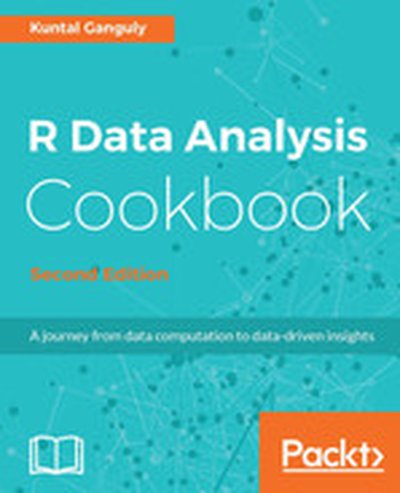
R Data Analysis Cookbook, Second Edition - Second Edition

R Data Analysis Cookbook, Second Edition, is your companion for mastering various data analysis techniques using R. Combining powerful R libraries like ggplot2, this book guides you through tasks such as data mining, visualization, and even advanced concepts like time series analysis. Whether you're cleaning and formatting data or generating actionable insights, this book offers hands-on recipes to upskill efficiently. What this Book will help me do Learn how to acquire, prepare, and visualize datasets using popular R libraries. Master exploratory data analysis concepts to discover insights in any data. Get introduced to machine learning algorithms in R such as regression and classification. Develop advanced skills like social network analysis, recommendation systems, and geospatial analysis. Learn to generate dynamic reports and interactive dashboards using tools like Shiny. Author(s) Kuntal Ganguly and Viswa Viswanathan bring a wealth of experience in data science, analytics, and R programming to this book. Their passion for teaching complex topics with clarity and practical insight shines throughout. The co-authors incorporate years of technical expertise to guide readers step-by-step in solving real-world data analysis challenges. Who is it for? This book is ideal for data scientists, analysts, or enthusiasts taking their first or next steps with R. It caters to professionals with a beginner or intermediate understanding of statistics and programming who are seeking practical examples and solutions to complex data tasks. If you want actionable knowledge to address real-world analytics challenges, this book is for you.
Infonomics

Infonomics is the theory, study, and discipline of asserting economic significance to information. It strives to apply economic and asset management principles to the valuation, handling, and deployment of information assets. This for the chief data officers and other leaders in their struggle to help their organizations become infosavvy. "Doug Laney masterfully weaves together a collection of great examples with a solid framework to guide readers on how to gain competitive advantage through what he labels "the unruly asset" – data. The framework is comprehensive, the advice practical and the success stories global and across industries and applications." Liz Rowe, Chief Data Officer, State of New Jersey "A must read for anybody who wants to survive in a data centric world." Shaun Adams, Head of Data Science, Betterbathrooms.com "Phenomenal! An absolute must read for data practitioners, business leaders and technology strategists. Doug's lucid style has a set a new standard in providing intelligible material in the field of information economics. His passion and knowledge on the subject exudes thru his literature and inspires individuals like me." Ruchi Rajasekhar, Principal Data Architect, MISO Energy "I highly recommend Infonomics to all aspiring analytics leaders. Doug Laney’s work gives readers a deeper understanding of how and why information should be monetized and managed as an enterprise asset. Laney’s assertion that accounting should recognize information as a capital asset is quite convincing and one I agree with. Infonomics enjoyably echoes that sentiment!" Matt Green, independent business analytics consultant, Atlanta area "If you care about the digital economy, and you should, read this book." Tanya Shuckhart, Analyst Relations Lead, IRI Worldwide

Competing on Analytics: Updated, with a New Introduction

The New Edition of a Business Classic This landmark work, the first to introduce business leaders to analytics, reveals how analytics are rewriting the rules of competition. Updated with fresh content, Competing on Analytics provides the road map for becoming an analytical competitor, showing readers how to create new strategies for their organizations based on sophisticated analytics. Introducing a five-stage model of analytical competition, Davenport and Harris describe the typical behaviors, capabilities, and challenges of each stage. They explain how to assess your company’s capabilities and guide it toward the highest level of competition. With equal emphasis on two key resources, human and technological, this book reveals how even the most highly analytical companies can up their game. With an emphasis on predictive, prescriptive, and autonomous analytics for marketing, supply chain, finance, M&A, operations, R&D, and HR, the book contains numerous new examples from different industries and business functions, such as Disney’s vacation experience, Google’s HR, UPS’s logistics, the Chicago Cubs’ training methods, and Firewire Surfboards’ customization. Additional new topics and research include: Data scientists and what they do Big data and the changes it has wrought Hadoop and other open-source software for managing and analyzing data Data products—new products and services based on data and analytics Machine learning and other AI technologies The Internet of Things and its implications New computing architectures, including cloud computing Embedding analytics within operational systems Visual analytics The business classic that turned a generation of leaders into analytical competitors, Competing on Analytics is the definitive guide for transforming your company’s fortunes in the age of analytics and big data.

Advanced Analytics with R and Tableau

In "Advanced Analytics with R and Tableau," you will learn how to combine the statistical computing power of R with the excellent data visualization capabilities of Tableau to perform advanced analysis and present your findings effectively. This book guides you through practical examples to understand topics such as classification, clustering, and predictive analytics while creating compelling visual dashboards. What this Book will help me do Integrate advanced statistical computations in R with Tableau's visual analysis for comprehensive analytics. Master making R function calls from Tableau through practical applications such as RServe integration. Develop predictive and classification models in R, visualized wonderfully in Tableau dashboards. Understand clustering and unsupervised learning concepts, applied to real-world datasets for business insights. Leverage the combination of Tableau and R for making impactful, data-driven decisions in your organization. Author(s) Ruben Oliva Ramos, Jen Stirrup, and Roberto Rösler are accomplished professionals with extensive experience in data science and analytics. Their combined expertise brings practical insights into combining R and Tableau for advanced analytics. Advocates for hands-on learning, they emphasize clarity and actionable knowledge in their writing. Who is it for? "Advanced Analytics with R and Tableau" is ideal for business analysts, data scientists, and Tableau professionals eager to expand their capabilities into advanced analytics. Readers should be familiar with Tableau and have basic knowledge of R, though the book starts with accessible examples. If you're looking to enhance your analytics with R's statistical power seamlessly integrated into Tableau, this book is for you.
Mastering Predictive Analytics with R, Second Edition - Second Edition

This comprehensive guide dives into predictive analytics with R, exploring the powerful functionality and vast ecosystem of packages available in this programming language. By studying this book, you will gain mastery over predictive modeling techniques and learn how to apply machine learning to real-world problems efficiently and effectively. What this Book will help me do Develop proficiency in predictive modeling processes, from data preparation to model evaluation. Gain hands-on experience with R's diverse packages for machine learning. Understand the theoretical foundations and practical applications of various predictive models. Learn advanced techniques such as deep learning implementations of word embeddings and recurrent neural networks. Acquire the ability to handle large datasets using R for scalable predictive analytics workflows. Author(s) James D. Miller and Rui Miguel Forte are experts in data science and predictive analytics with decades of combined experience in the field. They bring practical insights from their work in both academia and industry. Their clear and engaging writing style aims at making complex concepts accessible to readers by integrating theoretical knowledge with real-world applications. Who is it for? This book is ideal for budding data scientists, predictive modelers, or quantitative analysts with some basic knowledge of R and statistics. Advanced learners aiming to refine their expertise in predictive analytics and those wishing to explore the functionality of R for applied machine learning will also greatly benefit from this resource. The book is suitable for professionals and enthusiasts keen to expand their understanding of predictive modeling and learn advanced techniques.

Analytics

For years, organizations have struggled to make sense out of their data. IT projects designed to provide employees with dashboards, KPIs, and business-intelligence tools often take a year or more to reach the finish line...if they get there at all. This has always been a problem. Today, though, it's downright unacceptable. The world changes faster than ever. Speed has never been more important. By adhering to antiquated methods, firms lose the ability to see nascent trends—and act upon them until it's too late. But what if the process of turning raw data into meaningful insights didn't have to be so painful, time-consuming, and frustrating? What if there were a better way to do analytics? Fortunately, you're in luck... Analytics: The Agile Way is the eighth book from award-winning author and Arizona State University professor Phil Simon. Analytics: The Agile Way demonstrates how progressive organizations such as Google, Nextdoor, and others approach analytics in a fundamentally different way. They are applying the same Agile techniques that software developers have employed for years. They have replaced large batches in favor of smaller ones...and their results will astonish you. Through a series of case studies and examples, Analytics: The Agile Way demonstrates the benefits of this new analytics mind-set: superior access to information, quicker insights, and the ability to spot trends far ahead of your competitors.

Practical Predictive Analytics

Dive into the world of predictive analytics with 'Practical Predictive Analytics.' This comprehensive guide walks you through analyzing current and historical data to predict future outcomes. Using tools like R and Spark, you will master practical skills, solve real-world challenges, and apply predictive analytics across domains like marketing, healthcare, and retail. What this Book will help me do Learn the six steps for successfully implementing predictive analytics projects. Acquire practical skills in data cleaning, input, and model deployment using tools like R and Spark. Understand core predictive analytics algorithms and their applications in various industries. Apply data analytics techniques to solve problems in fields such as healthcare and marketing. Master methods for handling big data analytics using Databricks and Spark for effective prediction. Author(s) The author, None Winters, is an experienced data scientist and technical educator. With extensive background in predictive analytics, Winters specializes in applying statistical methods and techniques to real-world consultation scenarios. Winters brings a practical and accessible approach to this text, ensuring that learners can follow along and apply their newfound expertise effectively. Who is it for? This book is ideal for statisticians and analysts with some programming background in languages like R, who want to master predictive analytics skills. It caters to intermediate learners who aim to enhance their ability to solve complex analytical problems. Whether you're looking to advance your career or improve your proficiency in data science, this book will serve as a valuable resource for learning and growth.

Practical Data Science Cookbook, Second Edition - Second Edition

The Practical Data Science Cookbook, Second Edition provides hands-on, practical recipes that guide you through all aspects of the data science process using R and Python. Starting with setting up your programming environment, you'll work through a series of real-world projects to acquire, clean, analyze, and visualize data efficiently. What this Book will help me do Set up R and Python environments effectively for data science tasks. Acquire, clean, and preprocess data tailored to analysis with practical steps. Develop robust predictive and exploratory models for actionable insights. Generate analytic reports and share findings with impactful visualizations. Construct tree-based models and master random forests for advanced analytics. Author(s) Authored by a team of experienced professionals in the field of data science and analytics, this book reflects their collective expertise in tackling complex data challenges using programming. With backgrounds spanning industry and academia, the authors bring a practical, application-focused approach to teaching data science. Who is it for? This book is ideal for aspiring data scientists who want hands-on experience with real-world projects, regardless of prior experience. Beginners will gain step-by-step understanding of data science concepts, while seasoned professionals will appreciate the structured projects and use of R and Python for advanced analytics and modeling.

Advanced Object-Oriented Programming in R: Statistical Programming for Data Science, Analysis and Finance

Learn how to write object-oriented programs in R and how to construct classes and class hierarchies in the three object-oriented systems available in R. This book gives an introduction to object-oriented programming in the R programming language and shows you how to use and apply R in an object-oriented manner. You will then be able to use this powerful programming style in your own statistical programming projects to write flexible and extendable software. After reading Advanced Object-Oriented Programming in R, you'll come away with a practical project that you can reuse in your own analytics coding endeavors. You'll then be able to visualize your data as objects that have state and then manipulate those objects with polymorphic or generic methods. Your projects will benefit from the high degree of flexibility provided by polymorphism, where the choice of concrete method to execute depends on the type of data being manipulated. What You'll Learn Define and use classes and generic functions using R Work with the R class hierarchies Benefit from implementation reuse Handle operator overloading Apply the S4 and R6 classes Who This Book Is For Experienced programmers and for those with at least some prior experience with R programming language.

Introduction to Google Analytics: A Guide for Absolute Beginners

Develop your digital/online marketing skills and learn web analytics to understand the performance of websites and ad campaigns. Approaches covered will be immediately useful for business or nonprofit organizations. If you are completely new to Google Analytics and you want to learn the basics, this guide will introduce you to the content quickly. Web analytics is critical to online marketers as they seek to track return on investment and optimize their websites. Introduction to Google Analytics covers the basics of Google Analytics, starting with creating a blog, and monitoring the number of people who see the blog posts and where they come from. What You'll Learn Understand basic techniques to generate traffic for a blog or website Review the performance of a website or campaign Set up a Shopify account to track ROI Create and maximize AdWords to track conversion Discover opportunities offered by Google, including the Google Individual Qualification Who This Book Is For Those who need to get up to speed on Google Analytics tools and techniques for business or personal use. This book is also suitable as a student reference.

Delivering Embedded Analytics in Modern Applications

Organizations are rapidly consuming more data than ever before, and to drive their competitive advantage, they’re demanding interactive visualizations and interactive analyses of that data be embedded in their applications and business processes. This will enable them to make faster and more effective decisions based on data, not guesses. This practical book examines the considerations that software developers, product managers, and vendors need to take into account when making visualization and analytics a seamlessly integrated part of the applications they deliver, as well as the impact of migrating their applications to modern data platforms. Authors Federico Castanedo (Vodafone Group) and Andy Oram (O’Reilly Media) explore the basic requirements for embedding domain expertise with fast, powerful, and interactive visual analytics that will delight and inform customers more than spreadsheets and custom-generated charts. Particular focus is placed on the characteristics of effective visual analytics for big and fast data. Learn the impact of trends driving embedded analytics Review examples of big data applications and their analytics requirements in retail, direct service, cybersecurity, the Internet of Things, and logistics Explore requirements for embedding visual analytics in modern data environments, including collection, storage, retrieval, data models, speed, microservices, parallelism, and interactivity Take a deep dive into the characteristics of effective visual analytics and criteria for evaluating modern embedded analytics tools Use a self-assessment rating chart to determine the value of your organization’s BI in the modern data setting

R for Everyone: Advanced Analytics and Graphics, 2nd Edition

Statistical Computation for Programmers, Scientists, Quants, Excel Users, and Other Professionals Using the open source R language, you can build powerful statistical models to answer many of your most challenging questions. R has traditionally been difficult for non-statisticians to learn, and most R books assume far too much knowledge to be of help. is the solution. R for Everyone, Second Edition, Drawing on his unsurpassed experience teaching new users, professional data scientist Jared P. Lander has written the perfect tutorial for anyone new to statistical programming and modeling. Organized to make learning easy and intuitive, this guide focuses on the 20 percent of R functionality you'll need to accomplish 80 percent of modern data tasks. Lander's self-contained chapters start with the absolute basics, offering extensive hands-on practice and sample code. You'll download and install R; navigate and use the R environment; master basic program control, data import, manipulation, and visualization; and walk through several essential tests. Then, building on this foundation, you'll construct several complete models, both linear and nonlinear, and use some data mining techniques. After all this you'll make your code reproducible with LaTeX, RMarkdown, and Shiny. By the time you're done, you won't just know how to write R programs, you'll be ready to tackle the statistical problems you care about most. Coverage includes Explore R, RStudio, and R packages Use R for math: variable types, vectors, calling functions, and more Exploit data structures, including data.frames, matrices, and lists Read many different types of data Create attractive, intuitive statistical graphics Write user-defined functions Control program flow with if, ifelse, and complex checks Improve program efficiency with group manipulations Combine and reshape multiple datasets Manipulate strings using R's facilities and regular expressions Create normal, binomial, and Poisson probability distributions Build linear, generalized linear, and nonlinear models Program basic statistics: mean, standard deviation, and t-tests Train machine learning models Assess the quality of models and variable selection Prevent overfitting and perform variable selection, using the Elastic Net and Bayesian methods Analyze univariate and multivariate time series data Group data via K-means and hierarchical clustering Prepare reports, slideshows, and web pages with knitr Display interactive data with RMarkdown and htmlwidgets Implement dashboards with Shiny Build reusable R packages with devtools and Rcpp

Agile Data Science 2.0

Data science teams looking to turn research into useful analytics applications require not only the right tools, but also the right approach if they’re to succeed. With the revised second edition of this hands-on guide, up-and-coming data scientists will learn how to use the Agile Data Science development methodology to build data applications with Python, Apache Spark, Kafka, and other tools. Author Russell Jurney demonstrates how to compose a data platform for building, deploying, and refining analytics applications with Apache Kafka, MongoDB, ElasticSearch, d3.js, scikit-learn, and Apache Airflow. You’ll learn an iterative approach that lets you quickly change the kind of analysis you’re doing, depending on what the data is telling you. Publish data science work as a web application, and affect meaningful change in your organization. Build value from your data in a series of agile sprints, using the data-value pyramid Extract features for statistical models from a single dataset Visualize data with charts, and expose different aspects through interactive reports Use historical data to predict the future via classification and regression Translate predictions into actions Get feedback from users after each sprint to keep your project on track

Business in Real-Time Using Azure IoT and Cortana Intelligence Suite: Driving Your Digital Transformation

Learn how today’s businesses can transform themselves by leveraging real-time data and advanced machine learning analytics. This book provides prescriptive guidance for architects and developers on the design and development of modern Internet of Things (IoT) and Advanced Analytics solutions. In addition, Business in Real-Time Using Azure IoT and Cortana Intelligence Suite offers patterns and practices for those looking to engage their customers and partners through Software-as-a-Service solutions that work on any device. Whether you're working in Health & Life Sciences, Manufacturing, Retail, Smart Cities and Buildings or Process Control, there exists a common platform from which you can create your targeted vertical solutions. Business in Real-Time Using Azure IoT and Cortana Intelligence Suite uses a reference architecture as a road map. Building on Azure’s PaaS services, you'll see how a solution architecture unfolds that demonstrates a complete end-to-end IoT and Advanced Analytics scenario. What You'll Learn: Automate your software product life cycle using PowerShell, Azure Resource Manager Templates, and Visual Studio Team Services Implement smart devices using Node.JS and C# Use Azure Streaming Analytics to ingest millions of events Provide both "Hot" and "Cold" path outputs for real-time alerts, data transformations, and aggregation analytics Implement batch processing using Azure Data Factory Create a new form of Actionable Intelligence (AI) to drive mission critical business processes Provide rich Data Visualizations across a wide variety of mobile and web devices Who This Book is For: Solution Architects, Software Developers, Data Architects, Data Scientists, and CIO/CTA Technical Leadership Professionals

Learning Social Media Analytics with R

Explore the intricacies of using R for social media analytics with 'Learning Social Media Analytics with R'. This comprehensive guide introduces readers to tools and techniques to extract, analyze, and visualize data from popular platforms like Twitter and Facebook. Gain insights into advanced methods such as sentiment analysis, topic modeling, and social network analysis. What this Book will help me do Master the art of leveraging R to retrieve, process, and clean data from major social media platforms. Use actionable insights from sentiment analysis and topic modeling to improve decision-making processes. Develop an understanding of social network structures by analyzing community connections and user interactions. Create impactful data visualizations that showcase trends and insights effectively using the R ecosystem. Integrate advanced R packages such as ggplot2, dplyr, and caret to streamline data analysis workflows. Author(s) The authors of this book, None Sarkar, Karthik Ganapathy, Raghav Bali, and None Sharma, are experts in data science and R programming with extensive experience in the industry. They bring a passion for teaching and a clear, step-by-step methodology to help learners grasp complex concepts. Who is it for? This book is ideal for data scientists, analysts, IT professionals, and social media marketers who aim to gain actionable insights from social data. Whether you're a beginner or have some experience with R, this book is highly approachable and beneficial. Readers will find practical examples and comprehensive tutorials tailored for their level of expertise.

Breaking Data Science Open

Over the past decade, data science has come out of the back office to become a force of change across the entire organization. At the forefront of this change is the open data science movement that advocates the use of open source tools in a powerful, connected ecosystem. This report explores how open data science can help your organization break free from the shackles of proprietary tools, embrace a more open and collaborative work style, and unleash new intelligent applications quickly. Authors Michele Chambers and Christine Doig explain how open source tools have helped bring about many facets of the data science evolution, including collaboration, self-service, and deployment. But you’ll discover that open data science is about more than tools; it’s about a new way of working as an organization. Learn how data science—particularly open data science—has become part of everyday business Understand how open data science engages people from other disciplines, not just statisticians Examine tools and practices that enable data science to be open across technical, operational, and organizational aspects Learn benefits of open data science, including rich resources, agility, transparency, and collective intelligence Explore case studies that demonstrate different ways to implement open data science Discover how open data science can help you break down department barriers and make bold market moves Michele Chambers, Chief Marketing Officer and VP Products at Continuum Analytics, is an entrepreneurial executive with over 25 years of industry experience. Prior to Continuum Analytics, Michele held executive leadership roles at several database and analytic companies, including Netezza, IBM, Revolution Analytics, MemSQL, and RapidMiner. Christine Doig is a senior data scientist at Continuum Analytics, where she's worked on several projects, including MEMEX, a DARPA-funded open data science project to help stop human trafficking. She has 5+ years of experience in analytics, operations research, and machine learning in a variety of industries.

R: Predictive Analysis

Master the art of predictive modeling About This Book Load, wrangle, and analyze your data using the world's most powerful statistical programming language Familiarize yourself with the most common data mining tools of R, such as k-means, hierarchical regression, linear regression, Naïve Bayes, decision trees, text mining and so on. We emphasize important concepts, such as the bias-variance trade-off and over-fitting, which are pervasive in predictive modeling Who This Book Is For If you work with data and want to become an expert in predictive analysis and modeling, then this Learning Path will serve you well. It is intended for budding and seasoned practitioners of predictive modeling alike. You should have basic knowledge of the use of R, although it’s not necessary to put this Learning Path to great use. What You Will Learn Get to know the basics of R’s syntax and major data structures Write functions, load data, and install packages Use different data sources in R and know how to interface with databases, and request and load JSON and XML Identify the challenges and apply your knowledge about data analysis in R to imperfect real-world data Predict the future with reasonably simple algorithms Understand key data visualization and predictive analytic skills using R Understand the language of models and the predictive modeling process In Detail Predictive analytics is a field that uses data to build models that predict a future outcome of interest. It can be applied to a range of business strategies and has been a key player in search advertising and recommendation engines. The power and domain-specificity of R allows the user to express complex analytics easily, quickly, and succinctly. R offers a free and open source environment that is perfect for both learning and deploying predictive modeling solutions in the real world. This Learning Path will provide you with all the steps you need to master the art of predictive modeling with R. We start with an introduction to data analysis with R, and then gradually you’ll get your feet wet with predictive modeling. You will get to grips with the fundamentals of applied statistics and build on this knowledge to perform sophisticated and powerful analytics. You will be able to solve the difficulties relating to performing data analysis in practice and find solutions to working with “messy data”, large data, communicating results, and facilitating reproducibility. You will then perform key predictive analytics tasks using R, such as train and test predictive models for classification and regression tasks, score new data sets and so on. By the end of this Learning Path, you will have explored and tested the most popular modeling techniques in use on real-world data sets and mastered a diverse range of techniques in predictive analytics. This Learning Path combines some of the best that Packt has to offer in one complete, curated package. It includes content from the following Packt products: Data Analysis with R, Tony Fischetti Learning Predictive Analytics with R, Eric Mayor Mastering Predictive Analytics with R, Rui Miguel Forte Style and approach Learn data analysis using engaging examples and fun exercises, and with a gentle and friendly but comprehensive "learn-by-doing" approach. This is a practical course, which analyzes compelling data about life, health, and death with the help of tutorials. It offers you a useful way of interpreting the data that’s specific to this course, but that can also be applied to any other data. This course is designed to be both a guide and a reference for moving beyond the basics of predictive modeling. Downloading the example code for this book. You can download the example code files for all Packt books you have purchased from your account at http://www.PacktPub.com. If you purchased this book elsewhere, you can visit http://www.PacktPub.com/support and register to have the code file.

An Introduction to SAS Visual Analytics

When it comes to business intelligence and analytical capabilities, SAS Visual Analytics is the premier solution for data discovery, visualization, and reporting. An Introduction to SAS Visual Analytics will show you how to make sense of your complex data with the goal of leading you to smarter, data-driven decisions without having to write a single line of code – unless you want to! You will be able to use SAS Visual Analytics to access, prepare, and present your data to anyone anywhere in the world. SAS Visual Analytics automatically highlights key relationships, outliers, clusters, trends and more. These abilities will guide you to critical insights that inspire action from your data. With this book, you will become proficient using SAS Visual Analytics to present data and results in customizable, robust visualizations, as well as guided analyses through auto-charting. With interactive dashboards, charts, and reports, you will create visualizations which convey clear and actionable insights for any size and type of data. This book largely focuses on the version of SAS Visual Analytics on SAS 9.4, although it is available on both 9.4 and SAS Viya platforms. Each version is considered the latest release, with subsequent releases planned to continue on each platform; hence, the Viya version works similarly to the 9.4 version and will look familiar. This book covers new features of each and important differences between the two. With this book, you will learn how to: Build your first report using the SAS Visual Analytics Designer Prepare a dashboard and determine the best layout Effectively use geo-spatial objects to add location analytics to reports Understand and use the elements of data visualizations Prepare and load your data with the SAS Visual Analytics Data Builder Analyze data with a variety of options, including forecasting, word clouds, heat maps, correlation matrix, and more Understand administration activities to keep SAS Visual Analytics humming along Optimize your environment for considerations such as scalability, availability, and efficiency between components of your SAS software deployment and data providers

Statistical Analysis with R For Dummies

Understanding the world of R programming and analysis has never been easier Most guides to R, whether books or online, focus on R functions and procedures. But now, thanks to Statistical Analysis with R For Dummies, you have access to a trusted, easy-to-follow guide that focuses on the foundational statistical concepts that R addresses—as well as step-by-step guidance that shows you exactly how to implement them using R programming. People are becoming more aware of R every day as major institutions are adopting it as a standard. Part of its appeal is that it's a free tool that's taking the place of costly statistical software packages that sometimes take an inordinate amount of time to learn. Plus, R enables a user to carry out complex statistical analyses by simply entering a few commands, making sophisticated analyses available and understandable to a wide audience. Statistical Analysis with R For Dummies enables you to perform these analyses and to fully understand their implications and results. Gets you up to speed on the #1 analytics/data science software tool Demonstrates how to easily find, download, and use cutting-edge community-reviewed methods in statistics and predictive modeling Shows you how R offers intel from leading researchers in data science, free of charge Provides information on using R Studio to work with R Get ready to use R to crunch and analyze your data—the fast and easy way!

Monetizing Your Data

Transforming data into revenue generating strategies and actions Organizations are swamped with data—collected from web traffic, point of sale systems, enterprise resource planning systems, and more , but what to do with it? Monetizing your Data provides a framework and path for business managers to convert ever-increasing volumes of data into revenue generating actions through three disciplines: decision architecture, data science, and guided analytics. There are large gaps between understanding a business problem and knowing which data is relevant to the problem and how to leverage that data to drive significant financial performance. Using a proven methodology developed in the field through delivering meaningful solutions to Fortune 500 companies, this book gives you the analytical tools, methods, and techniques to transform data you already have into information into insights that drive winning decisions. Beginning with an explanation of the analytical cycle, this book guides you through the process of developing value generating strategies that can translate into big returns. The companion website, www.monetizingyourdata.com, provides templates, checklists, and examples to help you apply the methodology in your environment, and the expert author team provides authoritative guidance every step of the way. This book shows you how to use your data to: Monetize your data to drive revenue and cut costs Connect your data to decisions that drive action and deliver value Develop analytic tools to guide managers up and down the ladder to better decisions Turning data into action is key; data can be a valuable competitive advantage, but only if you understand how to organize it, structure it, and uncover the actionable information hidden within it through decision architecture and guided analytics. From multinational corporations to single-owner small businesses, companies of every size and structure stand to benefit from these tools, methods, and techniques; Monetizing your Data walks you through the translation and transformation to help you leverage your data into value creating strategies.