talk-data.com talk-data.com

Topic

Analytics

data_analysis insights metrics

528

tagged

Activity Trend

398 peak/qtr
2020-Q1 2026-Q1

Activities

Showing filtered results

Filtering by: O'Reilly Data Science Books ×
Business Statistics Made Easy in SAS

Learn or refresh core statistical methods for business with SAS® and approach real business analytics issues and techniques using a practical approach that avoids complex mathematics and instead employs easy-to-follow explanations.

Business Statistics Made Easy in SAS® is designed as a user-friendly, practice-oriented, introductory text to teach businesspeople, students, and others core statistical concepts and applications. It begins with absolute core principles and takes you through an overview of statistics, data and data collection, an introduction to SAS®, and basic statistics (descriptive statistics and basic associational statistics). The book also provides an overview of statistical modeling, effect size, statistical significance and power testing, basics of linear regression, introduction to comparison of means, basics of chi-square tests for categories, extrapolating statistics to business outcomes, and some topical issues in statistics, such as big data, simulation, machine learning, and data warehousing.

The book steers away from complex mathematical-based explanations, and it also avoids basing explanations on the traditional build-up of distributions, probability theory and the like, which tend to lose the practice-oriented reader. Instead, it teaches the core ideas of statistics through methods such as careful, intuitive written explanations, easy-to-follow diagrams, step-by-step technique implementation, and interesting metaphors.

With no previous SAS experience necessary, Business Statistics Made Easy in SAS® is an ideal introduction for beginners. It is suitable for introductory undergraduate classes, postgraduate courses such as MBA refresher classes, and for the business practitioner. It is compatible with SAS® University Edition.
Practical Graph Analytics with Apache Giraph

Practical Graph Analytics with Apache Giraph helps you build data mining and machine learning applications using the Apache Foundation’s Giraph framework for graph processing. This is the same framework as used by Facebook, Google, and other social media analytics operations to derive business value from vast amounts of interconnected data points. Graphs arise in a wealth of data scenarios and describe the connections that are naturally formed in both digital and real worlds. Examples of such connections abound in online social networks such as Facebook and Twitter, among users who rate movies from services like Netflix and Amazon Prime, and are useful even in the context of biological networks for scientific research. Whether in the context of business or science, viewing data as connected adds value by increasing the amount of information available to be drawn from that data and put to use in generating new revenue or scientific opportunities. Apache Giraph offers a simple yet flexible programming model targeted to graph algorithms and designed to scale easily to accommodate massive amounts of data. Originally developed at Yahoo!, Giraph is now a top top-level project at the Apache Foundation, and it enlists contributors from companies such as Facebook, LinkedIn, and Twitter. Practical Graph Analytics with Apache Giraph brings the power of Apache Giraph to you, showing how to harness the power of graph processing for your own data by building sophisticated graph analytics applications using the very same framework that is relied upon by some of the largest players in the industry today.

Learning to Love Data Science

Until recently, many people thought big data was a passing fad. "Data science" was an enigmatic term. Today, big data is taken seriously, and data science is considered downright sexy. With this anthology of reports from award-winning journalist Mike Barlow, you’ll appreciate how data science is fundamentally altering our world, for better and for worse. Barlow paints a picture of the emerging data space in broad strokes. From new techniques and tools to the use of data for social good, you’ll find out how far data science reaches. With this anthology, you’ll learn how: Analysts can now get results from their data queries in near real time Indie manufacturers are blurring the lines between hardware and software Companies try to balance their desire for rapid innovation with the need to tighten data security Advanced analytics and low-cost sensors are transforming equipment maintenance from a cost center to a profit center CIOs have gradually evolved from order takers to business innovators New analytics tools let businesses go beyond data analysis and straight to decision-making Mike Barlow is an award-winning journalist, author, and communications strategy consultant. Since launching his own firm, Cumulus Partners, he has represented major organizations in a number of industries.

Data Preparation in the Big Data Era

Preparing and cleaning data is notoriously expensive, prone to error, and time consuming: the process accounts for roughly 80% of the total time spent on analysis. As this O’Reilly report points out, enterprises have already invested billions of dollars in big data analytics, so there’s great incentive to modernize methods for cleaning, combining, and transforming data. Author Federico Castanedo, Chief Data Scientist at WiseAthena.com, details best practices for reducing the time it takes to convert raw data into actionable insights. With these tools and techniques in mind, your organization will be well positioned to translate big data into big decisions. Explore the problems organizations face today with traditional prep and integration Define the business questions you want to address before selecting, prepping, and analyzing data Learn new methods for preparing raw data, including date-time and string data Understand how some cleaning actions (like replacing missing values) affect your analysis Examine data curation products: modern approaches that scale Consider your business audience when choosing ways to deliver your analysis

Dashboards for Excel

The book takes a hands-on approach to developing dashboards, from instructing users on advanced Excel techniques to addressing dashboard pitfalls common in the real world. Dashboards for Excel is your key to creating informative, actionable, and interactive dashboards and decision support systems. Throughout the book, the reader is challenged to think about Excel and data analytics differently—that is, to think outside the cell. This book shows you how to create dashboards in Excel quickly and effectively. In this book, you learn how to: Apply data visualization principles for more effective dashboards Employ dynamic charts and tables to create dashboards that are constantly up-to-date and providing fresh information Use understated yet powerful formulas for Excel development Apply advanced Excel techniques mixing formulas and Visual Basic for Applications (VBA) to create interactive dashboards Create dynamic systems for decision support in your organization Avoid common problems in Excel development and dashboard creation Get started with the Excel data model, PowerPivot, and Power Query

Building a Recommendation System with R

Dive into building recommendation systems with R in this comprehensive guide. You will learn about data mining, machine learning, and how R's powerful libraries and tools can be utilized to create efficient and optimized recommendation engines. By the end of this book, you will have the expertise to develop custom solutions tailored to specific data and user cases. What this Book will help me do Master the foundations of recommendation systems and their applications. Understand and implement essential data preprocessing techniques. Learn to optimize recommendation algorithms for better efficiency. Explore the use of the recommenderlab package in R for building models. Gain hands-on experience through a complete case study building a recommendation engine. Author(s) None Usuelli is a seasoned data scientist and R programming enthusiast passionate about machine learning and data analysis. They have extensive experience in developing recommendation systems for various industries, leveraging the power of R for robust solutions. None's clear teaching approach makes complex concepts accessible to learners of all levels. Who is it for? This book is ideal for developers who already possess a fundamental understanding of R and basic machine learning principles. If you aim to deepen your knowledge in creating advanced recommendation systems and practically apply these concepts, this book is the perfect resource for you. It is an excellent guide for professionals looking to specialize in predictive analytics and systems design.

Data Analysis in the Cloud

Data Analysis in the Cloud introduces and discusses models, methods, techniques, and systems to analyze the large number of digital data sources available on the Internet using the computing and storage facilities of the cloud. Coverage includes scalable data mining and knowledge discovery techniques together with cloud computing concepts, models, and systems. Specific sections focus on map-reduce and NoSQL models. The book also includes techniques for conducting high-performance distributed analysis of large data on clouds. Finally, the book examines research trends such as Big Data pervasive computing, data-intensive exascale computing, and massive social network analysis. Introduces data analysis techniques and cloud computing concepts Describes cloud-based models and systems for Big Data analytics Provides examples of the state-of-the-art in cloud data analysis Explains how to develop large-scale data mining applications on clouds Outlines the main research trends in the area of scalable Big Data analysis

Beginning Big Data with Power BI and Excel 2013

In Beginning Big Data with Power BI and Excel 2013, you will learn to solve business problems by tapping the power of Microsoft’s Excel and Power BI to import data from NoSQL and SQL databases and other sources, create relational data models, and analyze business problems through sophisticated dashboards and data-driven maps. While Beginning Big Data with Power BI and Excel 2013 covers prominent tools such as Hadoop and the NoSQL databases, it recognizes that most small and medium-sized businesses don’t have the Big Data processing needs of a Netflix, Target, or Facebook. Instead, it shows how to import data and use the self-service analytics available in Excel with Power BI. As you’ll see through the book’s numerous case examples, these tools—which you already know how to use—can perform many of the same functions as the higher-end Apache tools many people believe are required to carry out in Big Data projects. Through instruction, insight, advice, and case studies, Beginning Big Data with Power BI and Excel 2013 will show you how to: Import and mash up data from web pages, SQL and NoSQL databases, the Azure Marketplace and other sources. Tap into the analytical power of PivotTables and PivotCharts and develop relational data models to track trends and make predictions based on a wide range of data. Understand basic statistics and use Excel with PowerBI to do sophisticated statistical analysis—including identifying trends and correlations. Use SQL within Excel to do sophisticated queries across multiple tables, including NoSQL databases. Create complex formulas to solve real-world business problems using Data Analysis Expressions (DAX).

Data Analytics in Sports

As any child with a baseball card intuitively knows, sports and statistics go hand-in-hand. Yet, the general media disdain the flood of sports statistics available today: sports are pure and analytic tools are not. Well, if the so-called purists find tools like baseball’s sabermetrics upsetting, then they’d better brace themselves for the new wave of data analytics. In this O’Reilly report, Janine Barlow examines how advanced predictive analytics are impacting the world of sports—from the rise of tools such as Major League Baseball’s Statcast, which collects data on the movement of balls and players, to SportVU, which the National Basketball Association uses to collect spatial analysis data. You’ll also learn: How "Dance Card" makes accurate predictions about NCAA’s "March Madness" tournament Why data is crumbling long-standing myths about performance in soccer How the National Football League is using wearable devices to collect vital health data about its players It’s a new world in sports, where data analytics and related information technologies are changing the experience for teams, players, fans, and investors.

Search-Driven Business Analytics

Compared to the speed and convenience of major web search engines, most business intelligence (BI) products are slow, stiff, and unresponsive. Business leaders today often wait days or weeks to get BI reports on inquiries about customers, products, or markets. But the latest BI products show that a significant change is taking place—a change led by search. This O’Reilly report examines three recent products with intelligent search capabilities: the ThoughtSpot Analytical Search Appliance, Microsoft’s Power BI service, and an offering from Adatao. You’ll learn how these products can provide you with answers and visualizations as quickly as questions come to mind. You’ll investigate: The convergence of BI and search What a search-driven user experience looks like The intelligence required for analytical search Data sources and their associated data modeling requirements Turning on-the-fly calculations into visualizations Applying enterprise scale and security to search

Python Data Analytics: Data Analysis and Science Using Pandas, matplotlib, and the Python Programming Language

Python Data Analytics will help you tackle the world of data acquisition and analysis using the power of the Python language. At the heart of this book lies the coverage of pandas, an open source, BSD-licensed library providing high-performance, easy-to-use data structures and data analysis tools for the Python programming language. Author Fabio Nelli expertly shows the strength of the Python programming language when applied to processing, managing and retrieving information. Inside, you will see how intuitive and flexible it is to discover and communicate meaningful patterns of data using Python scripts, reporting systems, and data export. This book examines how to go about obtaining, processing, storing, managing and analyzing data using the Python programming language. You will use Python and other open source tools to wrangle data and tease out interesting and important trends in that data that will allow you to predict future patterns. Whether you are dealing with sales data, investment data (stocks, bonds, etc.), medical data, web page usage, or any other type of data set, Python can be used to interpret, analyze, and glean information from a pile of numbers and statistics. This book is an invaluable reference with its examples of storing and accessing data in a database; it walks you through the process of report generation; it provides three real world case studies or examples that you can take with you for your everyday analysis needs.

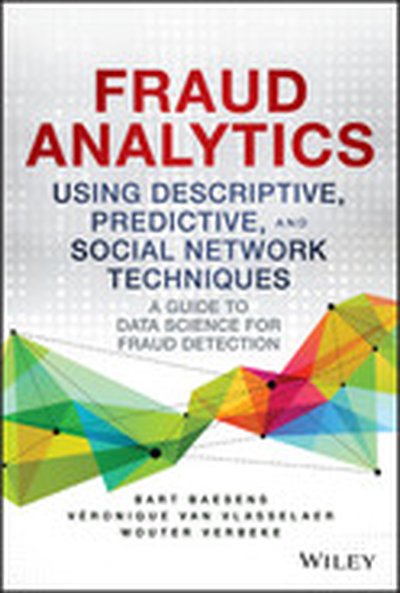
Fraud Analytics Using Descriptive, Predictive, and Social Network Techniques: A Guide to Data Science for Fraud Detection

Detect fraud earlier to mitigate loss and prevent cascading damage Fraud Analytics Using Descriptive, Predictive, and Social Network Techniques is an authoritative guidebook for setting up a comprehensive fraud detection analytics solution. Early detection is a key factor in mitigating fraud damage, but it involves more specialized techniques than detecting fraud at the more advanced stages. This invaluable guide details both the theory and technical aspects of these techniques, and provides expert insight into streamlining implementation. Coverage includes data gathering, preprocessing, model building, and post-implementation, with comprehensive guidance on various learning techniques and the data types utilized by each. These techniques are effective for fraud detection across industry boundaries, including applications in insurance fraud, credit card fraud, anti-money laundering, healthcare fraud, telecommunications fraud, click fraud, tax evasion, and more, giving you a highly practical framework for fraud prevention. It is estimated that a typical organization loses about 5% of its revenue to fraud every year. More effective fraud detection is possible, and this book describes the various analytical techniques your organization must implement to put a stop to the revenue leak. Examine fraud patterns in historical data Utilize labeled, unlabeled, and networked data Detect fraud before the damage cascades Reduce losses, increase recovery, and tighten security The longer fraud is allowed to go on, the more harm it causes. It expands exponentially, sending ripples of damage throughout the organization, and becomes more and more complex to track, stop, and reverse. Fraud prevention relies on early and effective fraud detection, enabled by the techniques discussed here. Fraud Analytics Using Descriptive, Predictive, and Social Network Techniques helps you stop fraud in its tracks, and eliminate the opportunities for future occurrence.

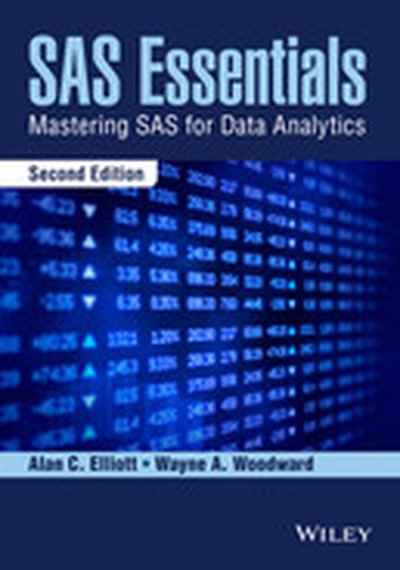
SAS Essentials: Mastering SAS for Data Analytics, 2nd Edition

A step-by-step introduction to using SAS statistical software as a foundational approach to data analysis and interpretation Presenting a straightforward introduction from the ground up, SAS Essentials: Mastering SAS for Data Analytics, Second Edition illustrates SAS using hands-on learning techniques and numerous real-world examples. Keeping different experience levels in mind, the highly-qualified author team has developed the book over 20 years of teaching introductory SAS courses. Divided into two sections, the first part of the book provides an introduction to data manipulation, statistical techniques, and the SAS programming language. The second section is designed to introduce users to statistical analysis using SAS Procedures. Featuring self-contained chapters to enhance the learning process, the Second Edition also includes: Programming approaches for the most up-to-date version of the SAS platform including information on how to use the SAS University Edition Discussions to illustrate the concepts and highlight key fundamental computational skills that are utilized by business, government, and organizations alike New chapters on reporting results in tables and factor analysis Additional information on the DATA step for data management with an emphasis on importing data from other sources, combining data sets, and data cleaning Updated ANOVA and regression examples as well as other data analysis techniques A companion website with the discussed data sets, additional code, and related PowerPoint slides SAS Essentials: Mastering SAS for Data Analytics, Second Edition is an ideal textbook for upper-undergraduate and graduate-level courses in statistics, data analytics, applied SAS programming, and statistical computer applications as well as an excellent supplement for statistical methodology courses. The book is an appropriate reference for researchers and academicians who require a basic introduction to SAS for statistical analysis and for preparation for the Basic SAS Certification Exam.

Emerging Trends in Computational Biology, Bioinformatics, and Systems Biology

Emerging Trends in Computational Biology, Bioinformatics, and Systems Biology discusses the latest developments in all aspects of computational biology, bioinformatics, and systems biology and the application of data-analytics and algorithms, mathematical modeling, and simu- lation techniques. • Discusses the development and application of data-analytical and theoretical methods, mathematical modeling, and computational simulation techniques to the study of biological and behavioral systems, including applications in cancer research, computational intelligence and drug design, high-performance computing, and biology, as well as cloud and grid computing for the storage and access of big data sets. • Presents a systematic approach for storing, retrieving, organizing, and analyzing biological data using software tools with applications to general principles of DNA/RNA structure, bioinformatics and applications, genomes, protein structure, and modeling and classification, as well as microarray analysis. • Provides a systems biology perspective, including general guidelines and techniques for obtaining, integrating, and analyzing complex data sets from multiple experimental sources using computational tools and software. Topics covered include phenomics, genomics, epigenomics/epigenetics, metabolomics, cell cycle and checkpoint control, and systems biology and vaccination research. • Explains how to effectively harness the power of Big Data tools when data sets are so large and complex that it is difficult to process them using conventional database management systems or traditional data processing applications. Discusses the development and application of data-analytical and theoretical methods, mathematical modeling and computational simulation techniques to the study of biological and behavioral systems. Presents a systematic approach for storing, retrieving, organizing and analyzing biological data using software tools with applications. Provides a systems biology perspective including general guidelines and techniques for obtaining, integrating and analyzing complex data sets from multiple experimental sources using computational tools and software.

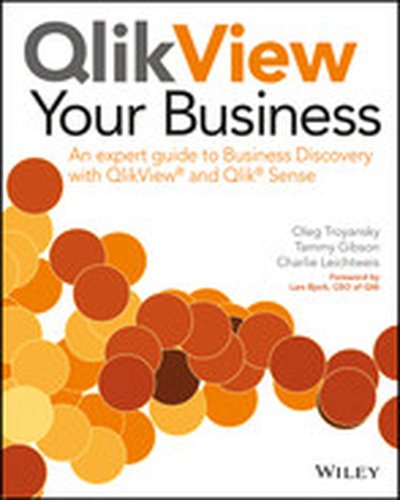
QlikView Your Business

Unlock the meaning of your data with QlikView The Qlik platform was designed to provide a fast and easy data analytics tool, and QlikView Your Business is your detailed, full-color, step-by-step guide to understanding Qlikview's powerful features and techniques so you can quickly start unlocking your data’s potential. This expert author team brings real-world insight together with practical business analytics, so you can approach, explore, and solve business intelligence problems using the robust Qlik toolset and clearly communicate your results to stakeholders using powerful visualization features in QlikView and Qlik Sense. This book starts at the basic level and dives deep into the most advanced QlikView techniques, delivering tangible value and knowledge to new users and experienced developers alike. As an added benefit, every topic presented in the book is enhanced with tips, tricks, and insightful recommendations that the authors accumulated through years of developing QlikView analytics. This is the book for you: If you are a developer whose job is to load transactional data into Qlik BI environment, and who needs to understand both the basics and the most advanced techniques of Qlik data modelling and scripting If you are a data analyst whose job is to develop actionable and insightful QlikView visualizations to share within your organization If you are a project manager or business person, who wants to get a better understanding of the Qlik Business Intelligence platform and its capabilities What You Will Learn: The book covers three common business scenarios - Sales, Profitability, and Inventory Analysis. Each scenario contains four chapters, covering the four main disciplines of business analytics: Business Case, Data Modeling, Scripting, and Visualizations. The material is organized by increasing levels of complexity. Following our comprehensive tutorial, you will learn simple and advanced QlikView and Qlik Sense concepts, including the following: Data Modeling: Transforming Transactional data into Dimensional models Building a Star Schema Linking multiple fact tables using Link Tables Combing multiple tables into a single fact able using Concatenated Fact models Managing slowly changing dimensions Advanced date handling, using the As of Date table Calculating running balances Basic and Advanced Scripting: How to use the Data Load Script language for implementing data modeling techniques How to build and use the QVD data layer Building a multi-tier data architectures Using variables, loops, subroutines, and other script control statements Advanced scripting techniques for a variety of ETL solutions Building Insightful Visualizations in QlikView: Introduction into QlikView sheet objects — List Boxes, Text Objects, Charts, and more Designing insightful Dashboards in QlikView Using advanced calculation techniques, such as Set Analysis and Advanced Aggregation Using variables for What-If Analysis, as well as using variables for storing calculations, colors, and selection filters Advanced visualization techniques - normalized and non-normalized Mekko charts, Waterfall charts, Whale Tail charts, and more Building Insightful Visualizations in Qlik Sense: Introducing Qlik Sense - how it is different from QlikView and what is similar? Creating Sense sheet objects Building and using the Library of Master Items Exploring Qlik Sense unique features — Storytelling, Geo Mapping, and using Extensions Whether you are jus

Building Better Models with JMP Pro

Building Better Models with JMP® Pro provides an example-based introduction to business analytics, with a proven process that guides you in the application of modeling tools and concepts. It gives you the "what, why, and how" of using JMP® Pro for building and applying analytic models. This book is designed for business analysts, managers, and practitioners who may not have a solid statistical background, but need to be able to readily apply analytic methods to solve business problems.

In addition, this book will greatly benefit faculty members who teach any of the following subjects at the lower to upper graduate level: predictive modeling, data mining, and business analytics. Novice to advanced users in business statistics, business analytics, and predictive modeling will find that it provides a peek inside the black box of algorithms and the methods used.

Topics include: regression, logistic regression, classification and regression trees, neural networks, model cross-validation, model comparison and selection, and data reduction techniques. Full of rich examples, Building Better Models with JMP Pro is an applied book on business analytics and modeling that introduces a simple methodology for managing and executing analytics projects. No prior experience with JMP is needed.

Make more informed decisions from your data using this newest JMP book.

IBM Cognos Dynamic Cubes

IBM® Cognos® Business Intelligence (BI) provides a proven enterprise BI platform with an open data strategy. Cognos BI provides customers with the ability to use data from any source, package it into a business model, and make it available to consumers in various interfaces that are tailored to the task. IBM Cognos Dynamic Cubes complements the existing Cognos BI capabilities and continues the tradition of an open data model. It focuses on extending the scalability of the IBM Cognos platform to enable speed-of-thought analytics over terabytes of enterprise data, without having to invest in a new data warehouse appliance. This capability adds a new level of query intelligence so you can unleash the power of your enterprise data warehouse. This IBM Redbooks® publication addresses IBM Cognos Business Intelligence V10.2.2 and specifically, the IBM Cognos Dynamic Cubes capabilities. This book can help you in the following ways: Understand core features of the Cognos Dynamic Cubes capabilities of Cognos BI V10.2 Learn by example with practical scenarios by using the IBM Cognos samples This book uses fictional business scenarios to demonstrate the power and capabilities of IBM Cognos Dynamic Cubes. It primarily focuses on the roles of the modeler, administrator, and IT architect.

Machine Learning with R - Second Edition

Machine Learning with R (Second Edition) provides a thorough introduction to machine learning techniques and their application using the R programming language. You'll gain hands-on experience implementing various algorithms and solving real-world data challenges, making it an invaluable resource for aspiring data scientists and analysts. What this Book will help me do Understand the fundamentals of machine learning and its applications in data analysis. Master the use of R for cleaning, exploring, and visualizing data to prepare it for modeling. Build and apply machine learning models for classification, prediction, and clustering tasks. Evaluate and fine-tune model performance to ensure accurate predictions. Explore advanced topics like text mining, handling social network data, and big data analytics. Author(s) Brett Lantz is a data scientist with significant experience as both a practitioner and communicator in the machine learning field. With a focus on accessibility, he aims to demystify complex concepts for readers interested in data science. His blend of hands-on methods and theoretical insight has made his work a favorite for both beginners and experienced professionals. Who is it for? Ideal for data analysts and aspiring data scientists who have intermediate programming skills and are exploring machine learning. Perfect for R users ready to expand their skill set to include predictive modeling techniques. Also fits those with some experience in machine learning but new to the R environment. Provides insightful guidance for anyone looking to apply machine learning in practical, real-world scenarios.

Predictive Analytics using Rattle and Qlik Sense

Explore the practical applications of predictive analytics with a focus on leveraging Rattle and Qlik Sense in your projects. From setting up your environment to constructing comprehensive data applications, this book provides a complete roadmap for mastering these tools and techniques. Gain valuable insights into your data and elevate your analytical skills for real-world business scenarios. What this Book will help me do Set up your analytics environment with Qlik Sense, R, and Rattle to kick-start your projects. Master visualization techniques and statistical methods to uncover meaningful insights. Develop data-driven predictive models and evaluate their performances effectively. Learn unsupervised and supervised machine learning techniques for diverse data problems. Build data storytelling and dashboards in Qlik Sense to showcase your results compellingly. Author(s) Ferran Garcia Pagans is a seasoned data analyst and author with extensive experience in predictive analytics and data visualization. His deep knowledge of modern analytics tools like Rattle and Qlik Sense enables him to guide professionals in deriving actionable insights from data. He excels in breaking down complex concepts into accessible knowledge, making his work invaluable for learners. Who is it for? This book is perfect for business analysts, data professionals, and enthusiasts looking to enhance their understanding of predictive analytics. It suits those with foundational knowledge of statistics and tools like Excel and R. If your goal is to implement real-world predictive models and data storytelling using Rattle and Qlik Sense, this book is an ideal companion.