Driving impact with analytics goes beyond numbers and graphs; it's about telling a story that resonates. In this session, Brent Dykes, author of "Effective Data Storytelling" & the Founder & Chief Data Storyteller at AnalyticsHero, Lea Pica, author of "Present Beyond Measure" & the Founder at Story-driven by Data, and Andy Cotgreave, co-author of "The Big Book of Dashboards" and Senior Data Evangelist at Tableau, will unveil how to transform data into compelling narratives. They shed light on the art of blending analytics with storytelling, a key to making data-driven insights both understandable and influential within any organization.
 talk-data.com
Topic
Analytics
data_analysis
insights
metrics
4552
tagged
Activity Trend
398
peak/qtr
2020-Q1
2026-Q2
Top Events
O'Reilly Data Science Books
528
O'Reilly Data Engineering Books
395
Moody's Talks - Inside Economics
283
Data Engineering Podcast
227
Data Career Podcast: Helping You Land a Data Analyst Job FAST
187
Data + AI Summit 2025
178
Databricks DATA + AI Summit 2023
170
The Analytics Power Hour
130
DataFramed
103
DATA MINER Big Data Europe Conference 2020
98
Secrets of Data Analytics Leaders
89
Dbt Coalesce 2024
87
The Complete Power BI Interview Guide is your companion to mastering Power BI roles and acing data analyst interviews. With hands-on skills, expert tips, and targeted preparation strategies, this resource equips you to excel in interviews and certifications while navigating the competitive job market. What this Book will help me do Create a powerful professional brand to optimize your resume and online presence. Master essential Power BI skills including data modeling, DAX programming, and visualization. Prepare effectively for interviews with industry-relevant questions, answers, and insights. Gain an edge in the market by understanding hiring procedures and negotiation tactics. Develop comprehensive analytics solutions exemplified with real-world case studies. Author(s) Sandielly Ortega Polanco, Gogula Aryalingam, and Abu Bakar Nisar Alvi bring years of collective experience in data analytics, Power BI, and career mentorship. Their insights are drawn from extensive professional practice and their passion for empowering future data analysts. Together, they provide an approachable and practical guide to securing roles in the competitive landscape of data analytics. Who is it for? This book is ideal for aspiring data analysts, business intelligence developers, or those shifting into Power BI roles who wish to enhance their knowledge and refine their strategies for interview success. It speaks to both newcomers to the field and seasoned professionals aiming to elevate their expertise.
by
Laura Gent Felker
(Salesforce)
,
Omar Khawaja
(Givaudan)
,
Dr. Tiffany Perkins-Munn, MD
(J.P. Morgan Chase (JPMC))
You've just invested in licenses for your favorite analytics tool, but now what? In this session, Laura Gent Felker, GTM Analytics Lead at MongoDB, Tiffany Perkins-Munn, Managing Director & Head of Data & Analytics at JPMC and Omar Khawaja, CDAO & Global Head Data & Analytics at Givaudan will explore best practices when it comes to scaling analytics adoption within the wider organization. They will discuss how to approach change management when it comes to driving analytics adoption, the role of data leaders in driving a culture change around analytics tooling, and a lot more.
In this episode of The Diary of a CDO, Bart Vandenreijt, Chief Data & Analytics Officer at Partenamut, a Belgian health insurer, shares his journey of transforming a disjointed data and analytics team into a business-critical function. In the context of his business background, he discusses how they've overcome challenges, aligned the data strategy with business objectives and been able to secure consistent funding to grow the team. Bart emphasises the value of hands-on, practical solutions, setting realistic expectations, and the pivotal role of his team in driving impactful change.
In this episode of the Data Career Podcast, Avery interviews Ken Jee.
They delve into Ken's unique path into sports analytics, starting from his personal experience as a golfer and his curious inquiry that led to an internship and gradually crafted a niche in sports data science.
✉️ Discover what we wish we knew about landing the dream job
🤖 Data Analytics Answers At Your Finger Tips
Connect with Ken Jee
🤝 Follow on Linkedin
▶️ Ken Jee Official Youtube Channel
▶️ Ken's Nearest Neighbors Podcast
🏀 The Exponential Athlete Podcast
🤝 Ace your data analyst interview with the interview simulator
📩 Get my weekly email with helpful data career tips
📊 Come to my next free “How to Land Your First Data Job” training
🏫 Check out my 10-week data analytics bootcamp
Timestamps:
(09:54) Deep Dive into Golf Analytics (18:16) Ken's Personal Journey into Sports Analytics (24:49) Breaking into Sports Analytics (29:16) The Power of Networking and Creating Opportunities
Connect with Avery:
📺 Subscribe on YouTube
🎙Listen to My Podcast
👔 Connect with me on LinkedIn
🎵 TikTok
Mentioned in this episode: Join the last cohort of 2025! The LAST cohort of The Data Analytics Accelerator for 2025 kicks off on Monday, December 8th and enrollment is officially open!
To celebrate the end of the year, we’re running a special End-of-Year Sale, where you’ll get: ✅ A discount on your enrollment 🎁 6 bonus gifts, including job listings, interview prep, AI tools + more
If your goal is to land a data job in 2026, this is your chance to get ahead of the competition and start strong.
👉 Join the December Cohort & Claim Your Bonuses: https://DataCareerJumpstart.com/daa https://www.datacareerjumpstart.com/daa
by
Malarvizhi Veerappan
(World Bank)
,
Stefaan Verhulst
(NYU Governance Lab)
,
Amy Grace
(Pratt & Whitney)
,
Esther Munyi
(Sasfin)
Driving trust with data is essential to succeeding with analytics. However, time and time again, data quality remains an issue for most organizations today. In this session, Esther Munyi, Chief Data Officer at Sasfin, Amy Grace, Director, Military Engines Digital Strategy at Pratt & Whitney, Stefaan Verhulst, Chief Research & Development Officer, Director of Data Program at NYU Governance Lab, and Malarvizhi Veerappan, Program Manager and Senior Data Scientist at the World Bank will focus on strategies for improving data quality, fostering a culture of trust around data, and balancing robust governance with the need for accessible, high-quality data.
by
Russell Johnson
(Marks & Spencer)
,
Mark Stern
(BetMGM)
,
Denisse Groenendaal-Lopez
(Booking Group)
Creating a culture of continuous learning within analytics functions isn't just beneficial; it's essential. In the session, Russell Johnson, Chief Data Scientist at Marks & Spencer, Denisse Groenendaal-Lopez, Learning & Development Business Partner at Booking Group, and Mark Stern, VP of Business Intelligence & Analytics at BetMGM will address the importance of fostering a learning environment for driving success with analytics. They will provide insights on developing a culture where continuous learning, experimentation, and curiosity are the norms—and strategies leaders can adopt today to drive up excitement around analytics adoption & upskilling.
This week on Experiencing Data, I chat with a new kindred spirit! Recently, I connected with Thabata Romanowski—better known as "T from Data Rocks NZ"—to discuss her experience applying UX design principles to modern analytical data products and dashboards. T walks us through her experience working as a data analyst in the mining sector, sharing the journey of how these experiences laid the foundation for her transition to data visualization. Now, she specializes in transforming complex, industry-specific data sets into intuitive, user-friendly visual representations, and addresses the challenges faced by the analytics teams she supports through her design business. T and I tackle common misconceptions about design in the analytics field, discuss how we communicate and educate non-designers on applying UX design principles to their dashboard and application design work, and address the problem with "pretty charts." We also explore some of the core ideas in T's Design Manifesto, including principles like being purposeful, context-sensitive, collaborative, and humanistic—all aimed at increasing user adoption and business value by improving UX.
Highlights/ Skip to:
I welcome T from Data Rocks NZ onto the show (00:00) T's transition from mining to leading an information design and data visualization consultancy. (01:43) T discusses the critical role of clear communication in data design solutions. (03:39) We address the misconceptions around the role of design in data analytics. (06:54) T explains the importance of journey mapping in understanding users' needs. (15:25) We discuss the challenges of accurately capturing end-user needs. (19:00) T and I discuss the importance of talking directly to end-users when developing data products. (25:56) T shares her 'I like, I wish, I wonder' method for eliciting genuine user feedback. (33:03) T discusses her Data Design Manifesto for creating purposeful, context-aware, collaborative, and human-centered design principles in data. (36:37) We wrap up the conversation and share ways to connect with T. (40:49)
Quotes from Today’s Episode "It's not so much that people…don't know what design is, it's more that they understand it differently from what it can actually do..." - T from Data Rocks NZ (06:59) "I think [misconception about design in technology] is rooted mainly in the fact that data has been very tied to IT teams, to technology teams, and they’re not always up to what design actually does.” - T from Data Rocks NZ (07:42) “If you strip design of function, it becomes art. So, it’s not art… it’s about being functional and being useful in helping people.” - T from Data Rocks NZ (09:06)
"It’s not that people don’t know, really, that the word design exists, or that design applies to analytics and whatnot; it’s more that they have this misunderstanding that it’s about making things look a certain way, when in fact... It’s about function. It’s about helping people do stuff better." - T from Data Rocks NZ (09:19) “Journey Mapping means that you have to talk to people... Data is an inherently human thing. It is something that we create ourselves. So, it’s biased from the start. You can’t fully remove the human from the data" - T from Data Rocks NZ (15:36) “The biggest part of your data product success…happens outside of your technology and outside of your actual analysis. It’s defining who your audience is, what the context of this audience is, and to which purpose do they need that product. - T from Data Rocks NZ (19:08) “[In UX research], a tight, empowered product team needs regular exposure to end customers; there’s nothing that can replace that." - Brian O'Neill (25:58)
“You have two sides [end-users and data team] that are frustrated with the same thing. The side who asked wasn’t really sure what to ask. And then the data team gets frustrated because the users don’t know what they want…Nobody really understood what the problem is. There’s a lot of assumptions happening there. And this is one of the hardest things to let go.” - T from Data Rocks NZ (29:38) “No piece of data product exists in isolation, so understanding what people do with it… is really important.” - T from Data Rocks NZ (38:51)
Links Design Matters Newsletter: https://buttondown.email/datarocksnz Website: https://www.datarocks.co.nz/ LinkedIn: https://www.linkedin.com/company/datarocksnz/ BlueSky: https://bsky.app/profile/datarocksnz.bsky.social Mastodon: https://me.dm/@datarocksnz
APPLYING ARTIFICIAL INTELLIGENCE IN CYBERSECURITY ANALYTICS AND CYBER THREAT DETECTION Comprehensive resource providing strategic defense mechanisms for malware, handling cybercrime, and identifying loopholes using artificial intelligence (AI) and machine learning (ML) Applying Artificial Intelligence in Cybersecurity Analytics and Cyber Threat Detection is a comprehensive look at state-of-the-art theory and practical guidelines pertaining to the subject, showcasing recent innovations, emerging trends, and concerns as well as applied challenges encountered, and solutions adopted in the fields of cybersecurity using analytics and machine learning. The text clearly explains theoretical aspects, framework, system architecture, analysis and design, implementation, validation, and tools and techniques of data science and machine learning to detect and prevent cyber threats. Using AI and ML approaches, the book offers strategic defense mechanisms for addressing malware, cybercrime, and system vulnerabilities. It also provides tools and techniques that can be applied by professional analysts to safely analyze, debug, and disassemble any malicious software they encounter. With contributions from qualified authors with significant experience in the field, Applying Artificial Intelligence in Cybersecurity Analytics and Cyber Threat Detection explores topics such as: Cybersecurity tools originating from computational statistics literature and pure mathematics, such as nonparametric probability density estimation, graph-based manifold learning, and topological data analysis Applications of AI to penetration testing, malware, data privacy, intrusion detection system (IDS), and social engineering How AI automation addresses various security challenges in daily workflows and how to perform automated analyses to proactively mitigate threats Offensive technologies grouped together and analyzed at a higher level from both an offensive and defensive standpoint Providing detailed coverage of a rapidly expanding field, Applying Artificial Intelligence in Cybersecurity Analytics and Cyber Threat Detection is an essential resource for a wide variety of researchers, scientists, and professionals involved in fields that intersect with cybersecurity, artificial intelligence, and machine learning.
by
Hayala Cavenague
(Will Bank)
,
Monique Femme
(PUCRS)
,
Felipe Fiamozzini
,
Luiz Simoes
(Receita Federal do Brasil)
,
Gabriel Lages
Para desvendar os insights do State of Data Brazil 2023, não há ninguém melhor para nos guiar do que aqueles que desempenharam papéis cruciais na condução e acompanhamento desta jornada, nas ultimas edições da pesquisa.
São essas pessoas, que também desempenharam papeis importantes no desenvolvimento e evolução, desta que é, a mais abrangente pesquisa do cenário de dados do nosso país.
Neste episódio do Data Hackers — a maior comunidade de AI e Data Science do Brasil-, prepare-se para se juntar a esses especialistas: Felipe Fiamozzini, Expert Associate Partner na Bain & Company ; e dois dos ganhadores das ultimas edições do Challenge State of Data Brazil: Hayala Cavenague e o Luiz Simoes; que abordaram descobertas mais recentes que moldam o panorama da área de dados no Brasil.
Lembrando que você pode encontrar todos os podcasts da comunidade Data Hackers no Spotify, iTunes, Google Podcast, Castbox e muitas outras plataformas. Caso queira, você também pode ouvir o episódio aqui no post mesmo!
Lembrando que você pode encontrar todos os podcasts da comunidade Data Hackers no Spotify, iTunes, Google Podcast, Castbox e muitas outras plataformas. Caso queira, você também pode ouvir o episódio aqui no post mesmo!
Conheça nosso convidado:
Felipe Fiamozzini, Expert Associate Partner na Bain & Company Hayala Cavenague, Specialist Data Scientist no Will Bank e Statistics PhD; Luiz Simoes, Data Scientist, na Receita Federal do Brasil.
Nossa Bancada Data Hackers:
Monique Femme — Head of Community Management na Data Hackers Gabriel Lages — Co-founder da Data Hackers e Data & Analytics Sr. Director na Hotmart.
Referências:
Baixe o relatório completo do State of Data Brazil 2023 : https://stateofdata.datahackers.com.br/ Inscreva-se na Newsletter Data Hackers:https://www.datahackers.news/ Bain & Company: https://www.bain.com/pt-br/insights/state-of-data-2023_profissionais_dados/?utm_source=linkedin&utm_medium=post+&utm_campaign=state_of_data_2023
Summary
Working with data is a complicated process, with numerous chances for something to go wrong. Identifying and accounting for those errors is a critical piece of building trust in the organization that your data is accurate and up to date. While there are numerous products available to provide that visibility, they all have different technologies and workflows that they focus on. To bring observability to dbt projects the team at Elementary embedded themselves into the workflow. In this episode Maayan Salom explores the approach that she has taken to bring observability, enhanced testing capabilities, and anomaly detection into every step of the dbt developer experience.
Announcements
Hello and welcome to the Data Engineering Podcast, the show about modern data management Data lakes are notoriously complex. For data engineers who battle to build and scale high quality data workflows on the data lake, Starburst powers petabyte-scale SQL analytics fast, at a fraction of the cost of traditional methods, so that you can meet all your data needs ranging from AI to data applications to complete analytics. Trusted by teams of all sizes, including Comcast and Doordash, Starburst is a data lake analytics platform that delivers the adaptability and flexibility a lakehouse ecosystem promises. And Starburst does all of this on an open architecture with first-class support for Apache Iceberg, Delta Lake and Hudi, so you always maintain ownership of your data. Want to see Starburst in action? Go to dataengineeringpodcast.com/starburst and get $500 in credits to try Starburst Galaxy today, the easiest and fastest way to get started using Trino. Dagster offers a new approach to building and running data platforms and data pipelines. It is an open-source, cloud-native orchestrator for the whole development lifecycle, with integrated lineage and observability, a declarative programming model, and best-in-class testability. Your team can get up and running in minutes thanks to Dagster Cloud, an enterprise-class hosted solution that offers serverless and hybrid deployments, enhanced security, and on-demand ephemeral test deployments. Go to dataengineeringpodcast.com/dagster today to get started. Your first 30 days are free! This episode is brought to you by Datafold – a testing automation platform for data engineers that prevents data quality issues from entering every part of your data workflow, from migration to dbt deployment. Datafold has recently launched data replication testing, providing ongoing validation for source-to-target replication. Leverage Datafold's fast cross-database data diffing and Monitoring to test your replication pipelines automatically and continuously. Validate consistency between source and target at any scale, and receive alerts about any discrepancies. Learn more about Datafold by visiting dataengineeringpodcast.com/datafold. Your host is Tobias Macey and today I'm interviewing Maayan Salom about how to incorporate observability into a dbt-oriented workflow and how Elementary can help
Interview
Introduction How did you get involved in the area of data management? Can you start by outlining what elements of observability are most relevant for dbt projects? What are some of the common ad-hoc/DIY methods that teams develop to acquire those insights?
What are the challenges/shortcomings associated with those approaches?
Over the past ~3 years there were numerous data observability systems/products created. What are some of the ways that the specifics of dbt workflows are not covered by those generalized tools?
What are the insights that can be more easily generated by embedding into the dbt toolchain and development cycle?
Can you describe what Elementary is and how it is designed to enhance the development and maintenance work in dbt projects? How is Elementary designed/implemented?
How have the scope and goals of the project changed since you started working on it? What are the engineering ch
by
Michael Brisson
(Moody's Analytics)
,
Steve Cochrane
,
Cris deRitis
,
Mark Zandi
(Moody's Analytics)
,
Marisa DiNatale
(Moody's Analytics)
The Inside Economics team is joined by their Moody's Analytics colleagues, Mike Brisson and Steve Cochrane, to discuss the economic fallout from the tragic collapse of the Francis Scott Key Bridge and the subsequent closure of the Port of Baltimore. Mark Zandi kicks off the show with a rundown of the latest economic data and a healthy debate on the state of household finances ensues. The statistics game proves challenging even with Marisa providing an important hint. Follow Mark Zandi @MarkZandi, Cris deRitis @MiddleWayEcon, and Marisa DiNatale on LinkedIn for additional insight.
Questions or Comments, please email us at [email protected]. We would love to hear from you. To stay informed and follow the insights of Moody's Analytics economists, visit Economic View.
Discover how to implement a modern data mesh architecture using Microsoft Azure's Cloud Adoption Framework. In this book, you'll learn the strategies to decentralize data while maintaining strong governance, turning your current analytics struggles into scalable and streamlined processes. Unlock the potential of data mesh to achieve advanced and democratized analytics platforms. What this Book will help me do Learn to decentralize data governance and integrate data domains effectively. Master strategies for building and implementing data contracts suited to your organization's needs. Explore how to design a landing zone for a data mesh using Azure's Cloud Adoption Framework. Understand how to apply key architecture patterns for analytics, including AI and machine learning. Gain the knowledge to scale analytics frameworks using modern cloud-based platforms. Author(s) None Deswandikar is a seasoned data architect with extensive experience in implementing cutting-edge data solutions in the cloud. With a passion for simplifying complex data strategies, None brings real-world customer experiences into practical guidance. This book reflects None's dedication to helping organizations achieve their data goals with clarity and effectiveness. Who is it for? This book is ideal for chief data officers, data architects, and engineers seeking to transform data analytics frameworks to accommodate advanced workloads. Especially useful for professionals aiming to implement cloud-based data mesh solutions, it assumes familiarity with centralized data systems, data lakes, and data integration techniques. If modernizing your organization's data strategy appeals to you, this book is for you.
In "Extending Power BI with Python and R," you'll learn how to enhance your Power BI reports and analyses by leveraging the advanced analytical capabilities of Python and R. From working with large datasets to creating sophisticated visuals, this book provides practical instructions on powerful techniques that unlock new possibilities in Power BI. What this Book will help me do Configure and optimize Python and R integration in Power BI for enhanced performance. Implement advanced data transformation techniques to overcome Power BI limitations. Develop advanced visualizations using the Grammar of Graphics in Python and R. Analyze data leveraging powerful Python and R algorithms, including machine learning models. Secure your Power BI data with anonymization and pseudonymization techniques. Author(s) None Zavarella is a data analytics expert with years of practical experience in business intelligence and data analytics. With a passion for enhancing data tools with programming languages like Python and R, they bring practical knowledge and technical acumen to this comprehensive resource. They aim to make complex concepts approachable to their readers. Who is it for? This book is aimed at professionals such as business analysts, business intelligence specialists, and data scientists who leverage Power BI for their data solutions. Readers should have a working knowledge of Power BI basics and a desire to extend its capabilities. A familiarity with Python and R programming basics is also beneficial for following the advanced techniques presented.
by
Lasse Benninga
(LaBenni Consulting)
,
Juan Manuel Perafan
(Xebia)
,
Fanny Kassapian
,
Ricardo Angel Granados Lopez
,
Dumky de Wilde
(MotherDuck)
,
Taís Laurindo Pereira
,
Jovan Gligorevic
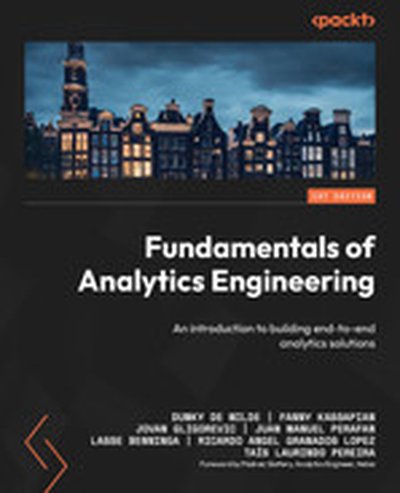
Master the art and science of analytics engineering with 'Fundamentals of Analytics Engineering.' This book takes you on a comprehensive journey from understanding foundational concepts to implementing end-to-end analytics solutions. You'll gain not just theoretical knowledge but practical expertise in building scalable, robust data platforms to meet organizational needs. What this Book will help me do Design and implement effective data pipelines leveraging modern tools like Airbyte, BigQuery, and dbt. Adopt best practices for data modeling and schema design to enhance system performance and develop clearer data structures. Learn advanced techniques for ensuring data quality, governance, and observability in your data solutions. Master collaborative coding practices, including version control with Git and strategies for maintaining well-documented codebases. Automate and manage data workflows efficiently using CI/CD pipelines and workflow orchestrators. Author(s) Dumky De Wilde, alongside six co-authors-experienced professionals from various facets of the analytics field-delivers a cohesive exploration of analytics engineering. The authors blend their expertise in software development, data analysis, and engineering to offer actionable advice and insights. Their approachable ethos makes complex concepts understandable, promoting educational learning. Who is it for? This book is a perfect fit for data analysts and engineers curious about transitioning into analytics engineering. Aspiring professionals as well as seasoned analytics engineers looking to deepen their understanding of modern practices will find guidance. It's tailored for individuals aiming to boost their career trajectory in data engineering roles, addressing fundamental to advanced topics.
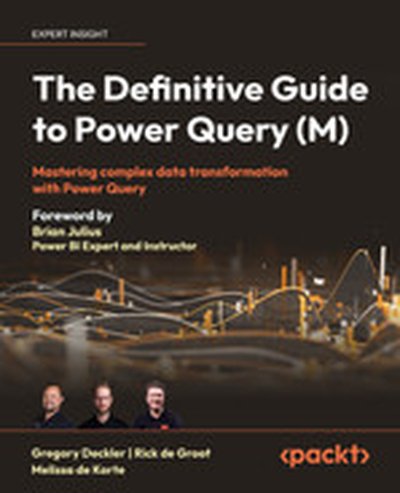
Dive into the comprehensive world of data transformation with "The Definitive Guide to Power Query (M)". This book empowers you with the knowledge and skills necessary to effectively utilize Power Query for complex data transformation tasks. You will develop expertise in practical techniques, advanced M language concepts, and optimization strategies. What this Book will help me do Understand the fundamentals of Power Query and its functionalities. Learn to perform complex data transformations using various Power Query functions. Gain insight into advanced M language structures such as custom functions and nested expressions. Develop skills in error handling and debugging to streamline your data processes. Master performance optimization techniques for efficient data handling with Power Query. Author(s) Gregory Deckler, Rick de Groot, and Melissa de Korte are seasoned professionals in business intelligence and data analytics. With years of experience using Power Query, they bring a wealth of knowledge and practical insight into tackling real-world data problems. Their combined expertise ensures a clear and immersive learning experience for readers, guiding them through fundamental to advanced topics. Who is it for? This book is ideal for business analysts, data professionals, and power users who wish to advance their data transformation capabilities. If you're someone with foundational experience in Power Query looking to become proficient or an industry professional aiming to optimize workflows, this book is tailored to suit your goals.
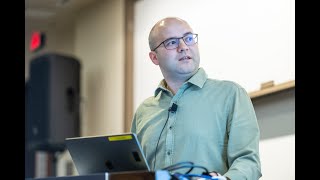
In this episode of The Diary of a CDO, Steve Janoo, the Chief Data Officer for Diageo, discusses his role in driving data, analytics and the digital technology strategy globally for the renowned beverage company. Steve shares insights into his career, transitioning from a CIO to a CDO, and the evolving landscape of data leadership in organisations. From the importance of integrating data across functions to the challenges of prioritisation and managing expectations, Steve provides valuable perspectives for both data and business leaders.

In this episode of the Data Career Podcast, Avery interviews Eric Cuentas, a chemical engineer who turned into a data analyst and career coach.
They discuss obstacles when pursuing career goals and highlight the importance of determining genuine motivations to align with prospective roles.
They also discuss practical ways to overcome fear in the career transition process, emphasising the essentiality of consistent networking and the crucial role of resumes in the job application process.
✉️ Discover what we wish we knew about landing the dream job
🤖 Data Analytics Answers At Your Finger Tips
Connect with Erick Cuentas:
🤝 Connect on Linkedin
🤝 Ace your data analyst interview with the interview simulator
📩 Get my weekly email with helpful data career tips
📊 Come to my next free “How to Land Your First Data Job” training
🏫 Check out my 10-week data analytics bootcamp
Timestamps:
(04:36) - Eric's Unique Career Journey (10:01) - Overcoming Fear in Career Transition (24:34) - The Importance of Job Titles in Career Progression (26:09) - The Job Search Process: Common Mistakes (28:15) - The Reality of Job Rejections (31:37) - The Impact of Networking in Job Search (37:41) - The Impact of Consistent LinkedIn Engagement
Connect with Avery:
📺 Subscribe on YouTube
🎙Listen to My Podcast
👔 Connect with me on LinkedIn
🎵 TikTok
Mentioned in this episode: Join the last cohort of 2025! The LAST cohort of The Data Analytics Accelerator for 2025 kicks off on Monday, December 8th and enrollment is officially open!
To celebrate the end of the year, we’re running a special End-of-Year Sale, where you’ll get: ✅ A discount on your enrollment 🎁 6 bonus gifts, including job listings, interview prep, AI tools + more
If your goal is to land a data job in 2026, this is your chance to get ahead of the competition and start strong.
👉 Join the December Cohort & Claim Your Bonuses: https://DataCareerJumpstart.com/daa https://www.datacareerjumpstart.com/daa