talk-data.com talk-data.com

Topic

Analytics

data_analysis insights metrics

4552

tagged

Activity Trend

398 peak/qtr
2020-Q1 2026-Q1

Activities

4552 activities · Newest first

The 100th celebration episode of the Data Career Podcast features a special panel interview conducted by Avery Smith with prominent data content creators, including Ken Jee, Monica Kay Royal, Richad Nieves-Becker, and Elijah Butler.

Recorded in Charleston, South Carolina, this milestone episode dives into personal experiences in the data field, the relationship with AI, favorite data learning resources, and interview tips.

The discussion provides a unique mix of backgrounds, offering perspectives on succeeding in data careers, the impact of AI, and the importance of continuous learning.

Connect with the panels on LinkedIn:

🤝 Connect with Ken Jee

🤝 Connect with Monica Kay Royal

🤝 Connect with Richad Nieves-Becker

🤝 Connect with Elijah Butler

✉️ Discover what we wish we knew about landing the dream job

🤖 Data Analytics Answers At Your Finger Tips

🤝 Ace your data analyst interview with the interview simulator

📩 Get my weekly email with helpful data career tips

📊 Come to my next free “How to Land Your First Data Job” training

🏫 Check out my 10-week data analytics bootcamp

Timestamps:

(06:05) - Diving into the Panel: Introductions and Insights (09:33) - Exploring Favorite Data Tools and Facing AI Threats (16:58) - Learning Resources and Books for Aspiring Data Professionals (23:26) - Interview Tips: From Connection to Confidence

Connect with Avery:

📺 Subscribe on YouTube

🎙Listen to My Podcast

👔 Connect with me on LinkedIn

📸 Instagram

🎵 TikTok

Mentioned in this episode: Join the last cohort of 2025! The LAST cohort of The Data Analytics Accelerator for 2025 kicks off on Monday, December 8th and enrollment is officially open!

To celebrate the end of the year, we’re running a special End-of-Year Sale, where you’ll get: ✅ A discount on your enrollment 🎁 6 bonus gifts, including job listings, interview prep, AI tools + more

If your goal is to land a data job in 2026, this is your chance to get ahead of the competition and start strong.

👉 Join the December Cohort & Claim Your Bonuses: https://DataCareerJumpstart.com/daa https://www.datacareerjumpstart.com/daa

My guest in this episode is Coert du Plessis, an impressive data and analytics executive, entrepreneur and general lover of life. Coert shares his wealth of knowledge and experience gained through a career and life full of interesting twists and turns. In this wide-ranging conversation, we talk about: Coert’s journey from South African farmland to Australian board roomsHow Coert became the CEO of MaxMineWhy our ability to tackle climate change depends on the mining industryHow to build and sell successful data productsCoert’s approach to building a fulfilling and rewarding career in data and analyticsThe importance of taking risks and running life experiments, and much more.Coert on LinkedIn: https://www.linkedin.com/in/coertdup/ My new book, 'Data-Centric Machine Learning with Python': https://www.packtpub.com/product/data-centric-machine-learning-with-python/9781804618127

Generative AI is fantastic but has a major problem: sometimes it "hallucinates", meaning it makes things up. In a business product like a chatbot, this can be disastrous. Vector databases like Pinecone are one of the solutions to mitigating the problem. Vector databases are a key component to any AI application, as well as things like enterprise search and document search. They have become an essential tool for every business, and with the rise in interest in AI in the last couple of years, the space is moving quickly. In this episode, you'll find out how to make use of vector databases, and find out about the latest developments at Pinecone. Elan Dekel is the VP of Product at Pinecone, where he oversees the development of the Pinecone vector database. He was previously Product Lead for Core Data Serving at Google, where he led teams working on the indexing systems to serve data for Google search, YouTube search, and Google Maps. Before that, he was Founder and CEO of Medico, which was acquired by Everyday Health. In the episode, RIchie and Elan explore LLMs, hallucination in generative models, vector databases and the best use-cases for them, semantic search, business applications of vector databases and semantic search, the tech stack for AI applications, cost considerations when investing in AI projects, emerging roles within the AI space, the future of vector databases and AI, and much more.   Links Mentioned in the Show: Pinecone CanopyPinecone ServerlessLlamaIndexLangchain[Code Along] Semantic Search with PineconeRelated Episode: Expanding the Scope of Generative AI in the Enterprise with Bal Heroor, CEO and Principal at MactoresSign up to RADAR: The Analytics Edition New to DataCamp? Learn on the go using the DataCamp mobile appEmpower your business with world-class data and AI skills with DataCamp for business

Summary

Data lakehouse architectures are gaining popularity due to the flexibility and cost effectiveness that they offer. The link that bridges the gap between data lake and warehouse capabilities is the catalog. The primary purpose of the catalog is to inform the query engine of what data exists and where, but the Nessie project aims to go beyond that simple utility. In this episode Alex Merced explains how the branching and merging functionality in Nessie allows you to use the same versioning semantics for your data lakehouse that you are used to from Git.

Announcements

Hello and welcome to the Data Engineering Podcast, the show about modern data management Dagster offers a new approach to building and running data platforms and data pipelines. It is an open-source, cloud-native orchestrator for the whole development lifecycle, with integrated lineage and observability, a declarative programming model, and best-in-class testability. Your team can get up and running in minutes thanks to Dagster Cloud, an enterprise-class hosted solution that offers serverless and hybrid deployments, enhanced security, and on-demand ephemeral test deployments. Go to dataengineeringpodcast.com/dagster today to get started. Your first 30 days are free! Data lakes are notoriously complex. For data engineers who battle to build and scale high quality data workflows on the data lake, Starburst powers petabyte-scale SQL analytics fast, at a fraction of the cost of traditional methods, so that you can meet all your data needs ranging from AI to data applications to complete analytics. Trusted by teams of all sizes, including Comcast and Doordash, Starburst is a data lake analytics platform that delivers the adaptability and flexibility a lakehouse ecosystem promises. And Starburst does all of this on an open architecture with first-class support for Apache Iceberg, Delta Lake and Hudi, so you always maintain ownership of your data. Want to see Starburst in action? Go to dataengineeringpodcast.com/starburst and get $500 in credits to try Starburst Galaxy today, the easiest and fastest way to get started using Trino. Join us at the top event for the global data community, Data Council Austin. From March 26-28th 2024, we'll play host to hundreds of attendees, 100 top speakers and dozens of startups that are advancing data science, engineering and AI. Data Council attendees are amazing founders, data scientists, lead engineers, CTOs, heads of data, investors and community organizers who are all working together to build the future of data and sharing their insights and learnings through deeply technical talks. As a listener to the Data Engineering Podcast you can get a special discount off regular priced and late bird tickets by using the promo code dataengpod20. Don't miss out on our only event this year! Visit dataengineeringpodcast.com/data-council and use code dataengpod20 to register today! Your host is Tobias Macey and today I'm interviewing Alex Merced, developer advocate at Dremio and co-author of the upcoming book from O'reilly, "Apache Iceberg, The definitive Guide", about Nessie, a git-like versioned catalog for data lakes using Apache Iceberg

Interview

Introduction How did you get involved in the area of data management? Can you describe what Nessie is and the story behind it? What are the core problems/complexities that Nessie is designed to solve? The closest analogue to Nessie that I've seen in the ecosystem is LakeFS. What are the features that would lead someone to choose one or the other for a given use case? Why would someone choose Nessie over native table-level branching in the Apache Iceberg spec? How do the versioning capabilities compare to/augment the data versioning in Iceberg? What are some of the sources of, and challenges in resolving, merge conflicts between table branches? Can you describe the architecture of Nessie? How have the design and goals of the project changed since it was first created? What is involved

Juan Sequeda is a principal data scientist and head of the AI Lab at data.world, and is also the co-host of the fantastic data podcast Catalog and Cocktails.  This episode tackles semantics, semantic web, Juan's research in how raw text-to-SQL performs versus text-to-semantic layer,  and where we both believe AI will make an impact in the world of structured data analytics. For full show notes and to read 6+ years of back issues of the podcast's companion newsletter, head to https://roundup.getdbt.com. The Analytics Engineering Podcast is sponsored by dbt Labs.

podcast_episode
by Dante DeAntonio (Moody's Analytics) , Cris deRitis , Mark Zandi (Moody's Analytics) , Marisa DiNatale (Moody's Analytics)

The Inside Economics team dissects yet another upside surprise in the February jobs report and ponders the mixed messages between the payroll and household surveys. Employment is coming in hot but the unemployment rate rose to its highest level in over a year and wage growth cooled. The team theorizes on why the two surveys are so at odds with each other lately. Finally, they each opine on whether the data are leaning more toward a higher risk of recession or “no landing”. Surprisingly, they’re all in agreement. Follow Mark Zandi @MarkZandi, Cris deRitis @MiddleWayEcon, and Marisa DiNatale on LinkedIn for additional insight.

Questions or Comments, please email us at [email protected]. We would love to hear from you.    To stay informed and follow the insights of Moody's Analytics economists, visit Economic View.

Se você quer descobrir, como a Inteligência Artificial está redefinindo as regras do jogo no mercado de trabalho, e até mesmo, na maneira como trabalhamos e colaboramos…

Neste episódio do Data Hackers — a maior comunidade de AI e Data Science do Brasil-, chamamos o Yara Mascarenhas — CEO do TDC, e Ahirton Lopes — Head of Data TIVIT, para entender, se existe mesmo, uma visão única sobre as oportunidades e desafios que a IA apresenta para todos nós no mercado de trabalho.

Lembrando que você pode encontrar todos os podcasts da comunidade Data Hackers no Spotify, iTunes, Google Podcast, Castbox e muitas outras plataformas.

Conheça nosso convidado:

Yara Mascarenhas — CEO do TDC Ahirton Lopes — Head of Data TIVIT

Nossa Bancada Data Hackers:

Monique Femme — Head of Community Management na Data Hackers Paulo Vasconcellos — Co-founder da Data Hackers e Principal Data Scientist na Hotmart. Gabriel Lages — Co-founder da Data Hackers e Data & Analytics Sr. Director na Hotmart.

Falamos no episódio:

Baixe o relatório completo do State of Data Brazil 2023 : https://stateofdata.datahackers.com.br/ Inscreva-se na Newsletter Data Hackers:  TDC 2024 SUMMIT SÃO PAULO (AI): https://thedevconf.com/tdc/2024/summit-sao-paulo/

Unlock the secret to job hunting success with JobHuntShortcut.com – land interviews without drowning in resumes, learn effective networking, and get $70 off today!

Connect with Asa Howard on LinkedIn.

Mentioned in this episode: Join the last cohort of 2025! The LAST cohort of The Data Analytics Accelerator for 2025 kicks off on Monday, December 8th and enrollment is officially open!

To celebrate the end of the year, we’re running a special End-of-Year Sale, where you’ll get: ✅ A discount on your enrollment 🎁 6 bonus gifts, including job listings, interview prep, AI tools + more

If your goal is to land a data job in 2026, this is your chance to get ahead of the competition and start strong.

👉 Join the December Cohort & Claim Your Bonuses: https://DataCareerJumpstart.com/daa https://www.datacareerjumpstart.com/daa

In this episode of Experiencing Data, I speak with Ellen Chisa, Partner at BoldStart Ventures, about what she’s seeing in the venture capital space around AI-driven products and companies—particularly with all the new GenAI capabilities that have emerged in the last year. Ellen and I first met when we were both engaged in travel tech startups in Boston over a decade ago, so it was great to get her current perspective being on the “other side” of products and companies working as a VC.  Ellen draws on her experience in product management and design to discuss how AI could democratize software creation and streamline backend coding, design integration, and analytics. We also delve into her work at Dark and the future prospects for developer tools and SaaS platforms. Given Ellen’s background in product management, human-centered design, and now VC, I thought she would have a lot to share—and she did!

Highlights/ Skip to: I introduce the show and my guest, Ellen Chisa (00:00) Ellen discusses her transition from product and design to venture capital with BoldStart Ventures. (01:15) Ellen notes a shift from initial AI prototypes to more refined products, focusing on building and testing with minimal data. (03:22) Ellen mentions BoldStart Ventures' focus on early-stage companies providing developer and data tooling for businesses.  (07:00) Ellen discusses what she learned from her time at Dark and Lola about narrowing target user groups for technology products (11:54) Ellen's Insights into the importance of user experience is in product design and the process venture capitalists endure to make sure it meets user needs (15:50) Ellen gives us her take on the impact of AI on creating new opportunities for data tools and engineering solutions, (20:00) Ellen and I explore the future of user interfaces, and how AI tools could enhance UI/UX for end users. (25:28) Closing remarks and the best way to find Ellen on online (32:07)

Quotes from Today’s Episode “It's a really interesting time in the venture market because on top of the Gen AI wave, we obviously had the macroeconomic shift. And so we've seen a lot of people are saying the companies that come out now are going to be great companies because they're a little bit more capital-constrained from the beginning, typically, and they'll grow more thoughtfully and really be thinking about how do they build an efficient business.”- Ellen Chisa (03: 22) 

“We have this big technological shift around AI-enabled companies, and I think one of the things I’ve seen is, if you think back to a year ago, we saw a lot of early prototyping, and so there were like a couple of use cases that came up again and again.”-Ellen Chisa (3:42)

“I don't think I've heard many pitches from founders who consider themselves data scientists first. We definitely get some from ML engineers and people who think about data architecture, for sure..”- Ellen Chisa (05:06)  

“I still prefer GUI interfaces to voice or text usually, but I think that might be an uncanny valley sort of thing where if you think of people who didn’t have technology growing up, they’re more comfortable with the more human interaction, and then you get, like, a chunk of people who are digital natives who prefer it.”- Ellen Chisa (24:51)

[Citing some excellent Boston-area restaurants!] “The Arc browser just shipped a bunch of new functionality, where instead of opening a bunch of tabs, you can say, “Open the recipe pages for Oleana and Sarma,” and it just opens both of them, and so it’s like multiple search queries at once.” - Ellen Chisa (27:22)

“The AI wave of  technology biases towards people who already have products [in the market] and have existing datasets, and so I think everyone [at tech companies] is getting this big, top-down mandate from their executive team, like, ‘Oh, hey, you have to do something with AI now.’”- Ellen Chisa (28:37)

“I think it’s hard to really grasp what an LLM is until you do a fair amount of experimentation on your own. The experience of asking ChatGPT a simple search question compared to the experience of trying to train it to do something specific for you are quite different experiences. Even beyond that, there’s a tool called superwhisper that I like that you can take audio content and end up with transcripts, but you can give it prompts to change your transcripts as you’re going. So, you can record something, and it will give you a different output if you say you’re recording an email compared to [if] you’re recording a journal entry compared to [if] you’re recording the transcript for a podcast.”- Ellen Chisa (30:11)

Links Boldstart ventures: https://boldstart.vc/ LinkedIn: https://www.linkedin.com/in/ellenchisa/ Personal website: https://ellenchisa.com Email: [email protected] 

Summary

Artificial intelligence technologies promise to revolutionize business and produce new sources of value. In order to make those promises a reality there is a substantial amount of strategy and investment required. Colleen Tartow has worked across all stages of the data lifecycle, and in this episode she shares her hard-earned wisdom about how to conduct an AI program for your organization.

Announcements

Hello and welcome to the Data Engineering Podcast, the show about modern data management Dagster offers a new approach to building and running data platforms and data pipelines. It is an open-source, cloud-native orchestrator for the whole development lifecycle, with integrated lineage and observability, a declarative programming model, and best-in-class testability. Your team can get up and running in minutes thanks to Dagster Cloud, an enterprise-class hosted solution that offers serverless and hybrid deployments, enhanced security, and on-demand ephemeral test deployments. Go to dataengineeringpodcast.com/dagster today to get started. Your first 30 days are free! Data lakes are notoriously complex. For data engineers who battle to build and scale high quality data workflows on the data lake, Starburst powers petabyte-scale SQL analytics fast, at a fraction of the cost of traditional methods, so that you can meet all your data needs ranging from AI to data applications to complete analytics. Trusted by teams of all sizes, including Comcast and Doordash, Starburst is a data lake analytics platform that delivers the adaptability and flexibility a lakehouse ecosystem promises. And Starburst does all of this on an open architecture with first-class support for Apache Iceberg, Delta Lake and Hudi, so you always maintain ownership of your data. Want to see Starburst in action? Go to dataengineeringpodcast.com/starburst and get $500 in credits to try Starburst Galaxy today, the easiest and fastest way to get started using Trino. Join us at the top event for the global data community, Data Council Austin. From March 26-28th 2024, we'll play host to hundreds of attendees, 100 top speakers and dozens of startups that are advancing data science, engineering and AI. Data Council attendees are amazing founders, data scientists, lead engineers, CTOs, heads of data, investors and community organizers who are all working together to build the future of data and sharing their insights and learnings through deeply technical talks. As a listener to the Data Engineering Podcast you can get a special discount off regular priced and late bird tickets by using the promo code dataengpod20. Don't miss out on our only event this year! Visit dataengineeringpodcast.com/data-council and use code dataengpod20 to register today! Your host is Tobias Macey and today I'm interviewing Colleen Tartow about the questions to answer before and during the development of an AI program

Interview

Introduction How did you get involved in the area of data management? When you say "AI Program", what are the organizational, technical, and strategic elements that it encompasses?

How does the idea of an "AI Program" differ from an "AI Product"? What are some of the signals to watch for that indicate an objective for which AI is not a reasonable solution?

Who needs to be involved in the process of defining and developing that program?

What are the skills and systems that need to be in place to effectively execute on an AI program?

"AI" has grown to be an even more overloaded term than it already was. What are some of the useful clarifying/scoping questions to address when deciding the path to deployment for different definitions of "AI"? Organizations can easily fall into the trap of green-lighting an AI project before they have done the work of ensuring they have the necessary data and the ability to process it. What are the steps to take to build confidence in the availability of the data?

Even if you are sure that you can get the data, what are t

podcast_episode
by Cris deRitis , Mark Zandi (Moody's Analytics) , Marisa DiNatale (Moody's Analytics)

Amid all the optimism regarding a soft landing for the economy, the Inside Economics team considers what bothers them most about the economy’s near-term prospects. Cris focuses on GDP vs GDI, Marisa on the soft global economy, and Mark on the internals of the labor market. They remain upbeat about the economy, but….   Follow Mark Zandi @MarkZandi, Cris deRitis @MiddleWayEcon, and Marisa DiNatale on LinkedIn for additional insight.

Questions or Comments, please email us at [email protected]. We would love to hear from you.    To stay informed and follow the insights of Moody's Analytics economists, visit Economic View.

Annie Nelson and I chat about her path to data analytics, writing her new book, "How to Become a Data Analyst", bad career advice, rock climbing, and more.

LinkedIn: https://www.linkedin.com/in/annie-nelson-analyst/

TikTok: https://www.tiktok.com/discover/annie-nelson-data-analytics

Book: https://www.amazon.com/How-Become-Data-Analyst-Low-Cost/dp/1394202237

Building Interactive Dashboards in Microsoft 365 Excel

Microsoft 365 Excel introduces enhanced features that transform how business dashboards are built and maintained. This book guides you through creating dynamic, interactive dashboards that leverage these modern capabilities. From understanding the essential principles of effective dashboard design to mastering the latest tools like Power Query and dynamic array functions, you'll make the most of Excel's full potential. What this Book will help me do Understand the purpose and advantages of effective dashboards in business analytics. Use advanced Excel functions and tools such as Power Query and dynamic arrays to handle complex data workflows. Design visually engaging dashboards using charts and data visualizations that communicate key insights. Optimize dashboards for automation and real-time data updates, saving time and effort. Apply best practices and techniques for creating professional-grade Excel dashboards. Author(s) Michael Olafusi is a skilled data analyst and expert in Microsoft Excel, with years of experience leveraging Excel for business intelligence and analytics solutions. He enjoys teaching Excel users how to elevate their skills to create functional and visually impactful tools. Michael's approach combines clarity and practical advice, helping readers build proficiency and confidence. Who is it for? This book is perfect for Excel users who want to create professional dashboards for business decision support. It's especially useful for data analysts, financial analysts, business analysts, and those in similar roles. It requires a basic familiarity with Excel's interface and is ideal for those seeking to enhance their data presentation skills and automate repetitive reporting tasks.

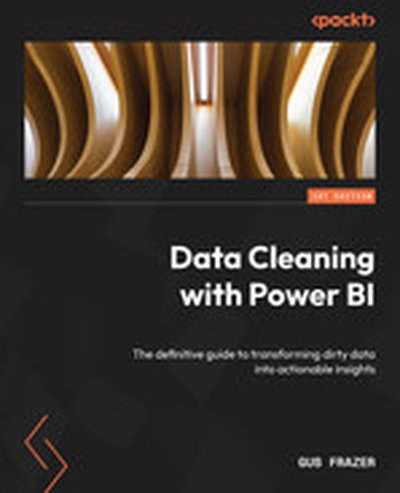
Data Cleaning with Power BI

Delve into the powerful world of data cleaning with Microsoft Power BI in this detailed guide. You'll learn how to connect, transform, and optimize data from various sources, setting a strong foundation for insightful data-driven decisions. Equip yourself with the skills to master data quality, leverage DAX and Power Query, and produce actionable insights with improved efficiency. What this Book will help me do Master connecting to various data sources and importing data effectively into Power BI. Learn to use the Query Editor to clean and transform data efficiently. Understand how to use the M language to perform advanced data transformations. Gain expertise in creating optimized data models and handling relationships within Power BI. Explore insights-driven exploratory data analysis using Power BI's powerful tools. Author(s) None Frazer is an experienced data professional with a deep knowledge of business intelligence tools and analytics processes. With a strong background in data science and years of hands-on experience using Power BI, Frazer brings practical advice to help users improve their data preparation and analysis skills. Known for creating resources that are both comprehensive and approachable, Frazer is dedicated to empowering readers in their data journey. Who is it for? This book is ideal for data analysts, business intelligence professionals, and business analysts who work regularly with data. If you are someone with a basic understanding of BI tools and concepts looking to deepen their skills, especially in Power BI, this book will guide you effectively. It will also help data scientists and other professionals interested in data cleaning to build a robust basis for data quality and analysis. Whether you're addressing common data challenges or seeking to enhance your BI capabilities, this guide is tailored to accommodate your needs.

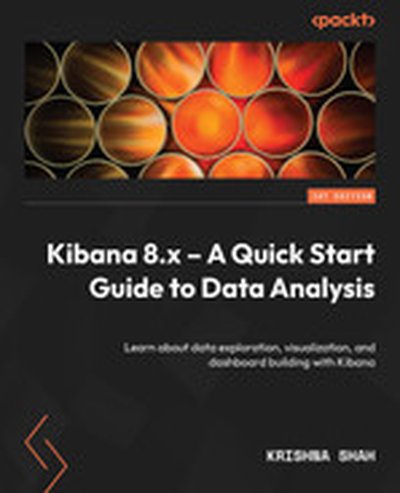
Kibana 8.x – A Quick Start Guide to Data Analysis

Kibana 8.x - A Quick Start Guide to Data Analysis is an essential resource for anyone wanting to harness the robust capabilities of Kibana to analyze, visualize, and make sense of their data. Through clear explanations and practical exercises, this guide breaks down topics like creating dashboards, exploring datasets, and configuring Kibana's powerful features. What this Book will help me do Understand Kibana's interface and functionalities to manage Elasticsearch data. Learn how to create intuitive visualizations and customize dashboards. Explore features such as data discovery and real-time updates for analytics. Optimize and query datasets using ESQL and detailed analytics techniques. Master the process of embedding dashboards and exporting insights. Author(s) None Shah is an experienced data analytics professional with a deep understanding of the Elastic Stack, including Kibana and Elasticsearch. Having spent years working on big data projects, Shah is dedicated to helping technologists turn data into actionable insights. Her writing aims to simplify complex concepts into achievable learning milestones. Who is it for? This book is ideal for data analysts, data engineers, and anyone working extensively with Elasticsearch datasets. If you aim to gain hands-on experience with building interactive dashboards and visualizing data trends, this book is tailored for you. A foundational understanding of Elasticsearch would be beneficial but is not strictly required. Perfect for advancing decision-making with data insights.

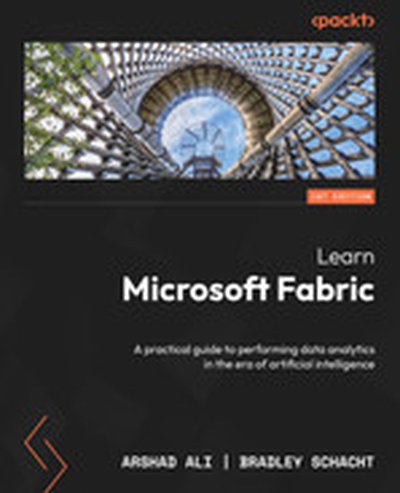
Learn Microsoft Fabric

Dive into the wonders of Microsoft Fabric, the ultimate solution for mastering data analytics in the AI era. Through engaging real-world examples and hands-on scenarios, this book will equip you with all the tools to design, build, and maintain analytics systems for various use cases like lakehouses, data warehouses, real-time analytics, and data science. What this Book will help me do Understand and utilize the key components of Microsoft Fabric for modern analytics. Build scalable and efficient data analytics solutions with medallion architecture. Implement real-time analytics and machine learning models to derive actionable insights. Monitor and administer your analytics platform for high performance and security. Leverage AI-powered assistant Copilot to boost analytics productivity. Author(s) Arshad Ali and None Schacht bring years of expertise in data analytics and system architecture to this book. Arshad is a seasoned professional specialized in AI-integrated analytics platforms, while None Schacht has a proven track record in deploying enterprise data solutions. Together, they provide deep insights and practical knowledge with a structured and approachable teaching method. Who is it for? Ideal for data professionals such as data analysts, engineers, scientists, and AI/ML experts aiming to enhance their data analytics skills and master Microsoft Fabric. It's also suited for students and new entrants to the field looking to establish a firm foundation in analytics systems. Requires a basic understanding of SQL and Spark.

This episode of the Data Career Podcast features Melissa Kings, a former teacher who transitioned into data analytics through the Data Analytics Accelerator bootcamp.

Melissa shares her journey, from deciding to switch careers to successfully landing job offers upon completing the bootcamp.

Melissa highlights the various aspects of the bootcamp, including doing projects, developing portfolios, involved networking, and the positive impact of the supportive community within the bootcamp.

Connect with Melissa Kings :

🤝 Connect on Linkedin

✉️ Discover what we wish we knew about landing the dream job

🤖 Data Analytics Answers At Your Finger Tips

🤝 Ace your data analyst interview with the interview simulator

📩 Get my weekly email with helpful data career tips

📊 Come to my next free “How to Land Your First Data Job” training

🏫 Check out my 10-week data analytics bootcamp

Timestamps: (04:58) - Melissa's Background and Transition into Data Analytics (11:16) - The Power of Networking and Proactive Job Hunting (18:29) - The Importance of Networking in Career Advancement (19:36) - The Journey Through the Data Analytics Accelerator Program (23:52) - The Value of Community in Learning and Career Transition (30:25) - The Impact of the Data Analytics Accelerator Program

Connect with Avery:

📺 Subscribe on YouTube

🎙Listen to My Podcast

👔 Connect with me on LinkedIn

📸 Instagram

🎵 TikTok

Mentioned in this episode: Join the last cohort of 2025! The LAST cohort of The Data Analytics Accelerator for 2025 kicks off on Monday, December 8th and enrollment is officially open!

To celebrate the end of the year, we’re running a special End-of-Year Sale, where you’ll get: ✅ A discount on your enrollment 🎁 6 bonus gifts, including job listings, interview prep, AI tools + more

If your goal is to land a data job in 2026, this is your chance to get ahead of the competition and start strong.

👉 Join the December Cohort & Claim Your Bonuses: https://DataCareerJumpstart.com/daa https://www.datacareerjumpstart.com/daa

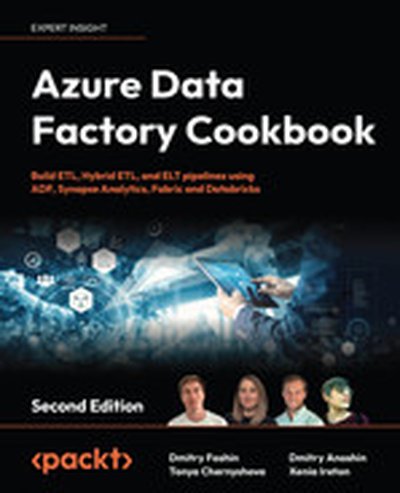
Azure Data Factory Cookbook - Second Edition

This comprehensive guide to Azure Data Factory shows you how to create robust data pipelines and workflows to handle both cloud and on-premises data solutions. Through practical recipes, you will learn to build, manage, and optimize ETL, hybrid ETL, and ELT processes. The book offers detailed explanations to help you integrate technologies like Azure Synapse, Data Lake, and Databricks into your projects. What this Book will help me do Master building and managing data pipelines using Azure Data Factory's latest versions and features. Leverage Azure Synapse and Azure Data Lake for streamlined data integration and analytics workflows. Enhance your ETL/ELT solutions with Microsoft Fabric, Databricks, and Delta tables. Employ debugging tools and workflows in Azure Data Factory to identify and solve data processing issues efficiently. Implement industry-grade best practices for reliable and efficient data orchestration and integration pipelines. Author(s) Dmitry Foshin, Tonya Chernyshova, Dmitry Anoshin, and Xenia Ireton collectively bring years of expertise in data engineering and cloud-based solutions. They are recognized professionals in the Azure ecosystem, dedicated to sharing their knowledge through detailed and actionable content. Their collaborative approach ensures that this book provides practical insights for technical audiences. Who is it for? This book is ideal for data engineers, ETL developers, and professional architects who work with cloud and hybrid environments. If you're looking to upskill in Azure Data Factory or expand your knowledge into related technologies like Synapse Analytics or Databricks, this is for you. Readers should have a foundational understanding of data warehousing concepts to fully benefit from the material.

Remarkable people walk among us. Some of us may be remarkable ourselves. But none of us start out remarkable. The journey to becoming a person that makes a difference in the world is never easy, as with any story that includes a hero, there are struggles, tests and moments of self-doubt. Remarkable people overcome these feats, and when they are in a position to, they give back. But what kind of mindset do these people have, how do they make decisions? What keeps them on their path towards becoming remarkable.  Guy Kawasaki is the chief evangelist of Canva and the creator of Guy Kawasaki’s Remarkable People podcast. He is an executive fellow of the Haas School of Business (UC Berkeley), and adjunct professor of the University of New South Wales. He was the chief evangelist of Apple and a trustee of the Wikimedia Foundation. He has written Wise Guy, The Art of the Start 2.0, The Art of Social Media, Enchantment, and eleven other books. Kawasaki has a BA from Stanford University, an MBA from UCLA, and an honorary doctorate from Babson College. In the episode, Richie and Guy explore the concept of being remarkable, growth, grit and grace, the importance of experiential learning, imposter syndrome, finding your passion, how to network and find remarkable people, dealing with failure, management and encouraging growth, work-life balance, measuring success through benevolent impact and much more.  Links Mentioned in the Show: Think Remarkable by Guy KawasakiGuy Kawasaki’s Remarkable PeopleConnect with Guy on LinkedinCanvaThe Four Agreements: A Practical Guide to Personal Freedom by Don Miguel RuizHow to Change: The Science of Getting from Where You Are to Where You Want to Be by Katy MilkmanRelated Episode: Making Better Decisions using Data & AI with Cassie Kozyrkov, Google's First Chief Decision ScientistSign up to RADAR: The Analytics Edition New to DataCamp? Learn on the go using the DataCamp mobile appEmpower your business with world-class data and AI skills with DataCamp for business