 talk-data.com
Topic
Analytics
4552
tagged
Activity Trend
Top Events
Send us a text This is one of my favorite episodes with Nancy Hensley, when she was CMO at Stats Perform. I've got to get back to my bracket!
Money Ball is back! Nancy Hensley, Chief Marketing Officer for Stats Perform, gives us the latest on data analytics in sports. If you like sports don't listen unless you have time to be entertained. Show Notes · 04:09 What does Money Ball look like now? · 07:30 Mrs Chicago's personal update · 08:40 Fan website: The Analyst · 11:16 Stats Perform for the rest of us · 17:25 Sports tech competitors · 18:34 Monetizing data. $115M for NFL data! What? · 27:44 Broadcaster and Pressbox Linkedin: https://www.linkedin.com/in/nancyhensley/ Website: https://statsperform.com/ Want to be featured as a guest on Making Data Simple? Reach out to us at [email protected] and tell us why you should be next. The Making Data Simple Podcast is hosted by Al Martin, WW VP Technical Sales, IBM, where we explore trending technologies, business innovation, and leadership ... while keeping it simple & fun. Want to be featured as a guest on Making Data Simple? Reach out to us at [email protected] and tell us why you should be next. The Making Data Simple Podcast is hosted by Al Martin, WW VP Technical Sales, IBM, where we explore trending technologies, business innovation, and leadership ... while keeping it simple & fun. Want to be featured as a guest on Making Data Simple? Reach out to us at [email protected] and tell us why you should be next. The Making Data Simple Podcast is hosted by Al Martin, WW VP Technical Sales, IBM, where we explore trending technologies, business innovation, and leadership ... while keeping it simple & fun.
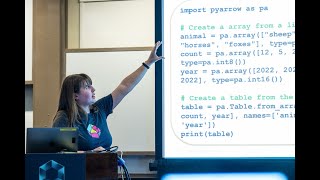
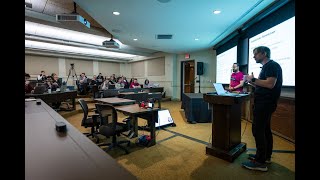
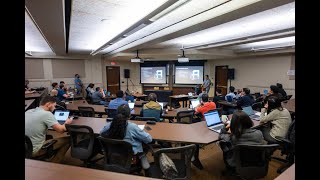
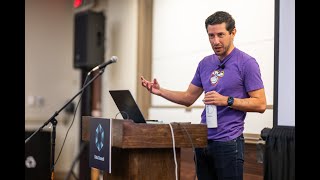
Long-time listeners to this show know that its origin and inspiration was the lobby bar of analytics conferences—the place where analysts casually gather to unwind after a day of slides interspersed with between-session conversations initiated awkwardly and then ended abruptly when the next session begins. Of the many conferences where this occurs, Marketing Analytics Summit (née, eMetrics) is the one in which this show is most deeply rooted. And, we'll be recording an episode in front of a live audience with all of the North America-based co-hosts on Friday, June 7, 2024, in Phoenix, Arizona at the next one! To call that out, including announcing a promo code for any listeners interested in joining us for the event, Michael, Val, and Tim turned on the mics for a bonus episode with a little reminiscing about past experiences at the conference, including Val's mildly disturbing retention of dates and physical artifacts. Visit the show page for, well, not much more than you see here.
Summary
A core differentiator of Dagster in the ecosystem of data orchestration is their focus on software defined assets as a means of building declarative workflows. With their launch of Dagster+ as the redesigned commercial companion to the open source project they are investing in that capability with a suite of new features. In this episode Pete Hunt, CEO of Dagster labs, outlines these new capabilities, how they reduce the burden on data teams, and the increased collaboration that they enable across teams and business units.
Announcements
Hello and welcome to the Data Engineering Podcast, the show about modern data management Dagster offers a new approach to building and running data platforms and data pipelines. It is an open-source, cloud-native orchestrator for the whole development lifecycle, with integrated lineage and observability, a declarative programming model, and best-in-class testability. Your team can get up and running in minutes thanks to Dagster Cloud, an enterprise-class hosted solution that offers serverless and hybrid deployments, enhanced security, and on-demand ephemeral test deployments. Go to dataengineeringpodcast.com/dagster today to get started. Your first 30 days are free! Data lakes are notoriously complex. For data engineers who battle to build and scale high quality data workflows on the data lake, Starburst powers petabyte-scale SQL analytics fast, at a fraction of the cost of traditional methods, so that you can meet all your data needs ranging from AI to data applications to complete analytics. Trusted by teams of all sizes, including Comcast and Doordash, Starburst is a data lake analytics platform that delivers the adaptability and flexibility a lakehouse ecosystem promises. And Starburst does all of this on an open architecture with first-class support for Apache Iceberg, Delta Lake and Hudi, so you always maintain ownership of your data. Want to see Starburst in action? Go to dataengineeringpodcast.com/starburst and get $500 in credits to try Starburst Galaxy today, the easiest and fastest way to get started using Trino. Your host is Tobias Macey and today I'm interviewing Pete Hunt about how the launch of Dagster+ will level up your data platform and orchestrate across language platforms
Interview
Introduction How did you get involved in the area of data management? Can you describe what the focus of Dagster+ is and the story behind it?
What problems are you trying to solve with Dagster+? What are the notable enhancements beyond the Dagster Core project that this updated platform provides? How is it different from the current Dagster Cloud product?
In the launch announcement you tease new capabilities that would be great to explore in turns:
Make data a team sport, enabling data teams across the organization Deliver reliable, high quality data the organization can trust Observe and manage data platform costs Master the heterogeneous collection of technologies—both traditional and Modern Data Stack
What are the business/product goals that you are focused on improving with the launch of Dagster+ What are the most interesting, innovative, or unexpected ways that you have seen Dagster used? What are the most interesting, unexpected, or challenging lessons that you have learned while working on the design and launch of Dagster+? When is Dagster+ the wrong choice? What do you have planned for the future of Dagster/Dagster Cloud/Dagster+?
Contact Info
Twitter LinkedIn
Parting Question
From your perspective, what is the biggest gap in the tooling or technology for data management today?
Closing Announcements
Thank you for listening! Don't forget to check out our other shows. Podcast.init covers the Python language, its community, and the innovative ways it is being used. The Machine Learning Podcast helps you go from idea to production with machine learning. Visit the site to subscribe to the show, sign up for the mailing list, and read the show notes. If y
Matthew Lynley is a bit of a hybrid. He's been a long-time journalist covering enterprise tech, currently in his fantastic AI and data newsletter Supervised, and he's also been a hands-on data practitioner. Matthew has covered the analytics tech stack, but this time Tristan turns the tables to get Matthew's perspective on the rise of Gen AI as a topic in the popular press, what's going on in the space today, and where AI is headed. For full show notes and to read 6+ years of back issues of the podcast's companion newsletter, head to https://roundup.getdbt.com. The Analytics Engineering Podcast is sponsored by dbt Labs.
--- In this episode, we celebrate Women’s History Month by talking to some of the women who made history by leading the development of the Coronavirus Resource Center, or “CRC.” Launched in January 2020, the CRC became the indispensable source for data about COVID-19 for government officials, academics, journalists, and the public, surpassing 2.5 billion website views before winding down last year.
--- Our history-making guests include: Dr. Lauren Gardner, Alton and Sandra Cleveland Professor in the Department of Civil and Systems Engineering at Johns Hopkins Whiting School of Engineering, Beth Blauer, Associate Vice Provost for Public Sector Innovation at Johns Hopkins University and founder of GovEx, Dr. Sara Bertran de Lis, Director of Research and Analytics at GovEx, and Mary Conway Vaughan, Deputy Director of Research and Analytics at GovEx. --- We discuss the origins and ongoing relevance of public-facing data dashboards like the CRC, look at some of the challenges involved in capturing and reporting public data, and unpack if and how the fact that women led most facets of this project impacted the project. We will also hear about how these women balanced their essential work with the uncertainty and chaos that COVID-19 brought to all of our lives.
--- Learn more at govex.jhu.edu --- Fill out our listener survey!
Heidi Shierholz, President of the Economic Policy Institute, joins the podcast to discuss the ongoing skewing of the income distribution. There’s a lengthy list of reasons why more of the economic pie is going to those in the top of the distribution, from less unionization and lax enforcement of labor laws, but you would be surprised to hear what’s not on the list. You may also be surprised that the conversation ends on an upbeat note. Special guest Heidi Shierholz is the president of the Economic Policy Institute (EPI) in Washington, D.C. Prior to joining EPI, she was the Chief Economist at the U.S. Department of Labor during the Obama administration. Throughout her career, Shierholz has provided policymakers and economic commentators with research and analysis on labor market dynamics, labor and employment policy, and the effects of economic policies on low- and middle-income families. She is regularly called upon to testify in congress and her research and commentary on labor and employment policy, inequality, racial and gender disparities in the labor market, worker bargaining power, and other topics have been cited in top broadcast, radio, print, and online news outlets. After receiving her Ph.D. in economics from the University of Michigan, she was an Assistant Professor of Economics at the University of Toronto in Toronto, Ontario. She has an M.S. in statistics from Iowa State University, and a B.A. in mathematics from Grinnell College in Iowa. Check out some of Heidi Shierholz’s recent write-ups: Workers want unions, but the latest data point to obstacles in their path Immigrants are not hurting U.S.-born workers Middle-out economics is good for workers, their families, and the broader economy Follow Mark Zandi @MarkZandi, Cris deRitis @MiddleWayEcon, and Marisa DiNatale on LinkedIn for additional insight.
Questions or Comments, please email us at [email protected]. We would love to hear from you. To stay informed and follow the insights of Moody's Analytics economists, visit Economic View.
Hosted by Simplecast, an AdsWizz company. See pcm.adswizz.com for information about our collection and use of personal data for advertising.
Data engineers who need to hit the ground running will use this book to build skills in Azure Data Factory v2 (ADF). The tutorial-first approach to ADF taken in this book gets you working from the first chapter, explaining key ideas naturally as you encounter them. From creating your first data factory to building complex, metadata-driven nested pipelines, the book guides you through essential concepts in Microsoft’s cloud-based ETL/ELT platform. It introduces components indispensable for the movement and transformation of data in the cloud. Then it demonstrates the tools necessary to orchestrate, monitor, and manage those components. This edition, updated for 2024, includes the latest developments to the Azure Data Factory service: Enhancements to existing pipeline activities such as Execute Pipeline, along with the introduction of new activities such as Script, and activities designed specifically to interact with Azure Synapse Analytics. Improvements to flow control provided by activity deactivation and the Fail activity. The introduction of reusable data flow components such as user-defined functions and flowlets. Extensions to integration runtime capabilities including Managed VNet support. The ability to trigger pipelines in response to custom events. Tools for implementing boilerplate processes such as change data capture and metadata-driven data copying. What You Will Learn Create pipelines, activities, datasets, and linked services Build reusable components using variables, parameters, and expressions Move data into and around Azure services automatically Transform data natively using ADF data flows and Power Query data wrangling Master flow-of-control and triggers for tightly orchestrated pipeline execution Publish and monitor pipelines easily and with confidence Who This Book Is For Data engineers and ETL developers taking their first steps in Azure Data Factory, SQL Server Integration Services users making the transition toward doing ETL in Microsoft’s Azure cloud, and SQL Server database administrators involved in data warehousing and ETL operations
Hear the story of Alex The Analyst like you've never heard it before. In this episode, Avery Smith sits down with Alex Freberg, more commonly known as Alex the Analyst to discuss his journey from no technical background to data analyst superstar.
They talk about Alex's journey from a recreational therapy degree to learning what data analytics is. They also cover what matters most when getting hired as a data analyst. Is it technical skills like SQL and Python? Or is it something much simpler?
Connect with Alex the Analyst :
🤝 Follow on Linkedin
▶️ Subscribe on Youtube
🎒 Learn About Analyst Builder
✉️ Discover what we wish we knew about landing the dream job
🤖 Data Analytics Answers At Your Finger Tips
🤝 Ace your data analyst interview with the interview simulator
📩 Get my weekly email with helpful data career tips
📊 Come to my next free “How to Land Your First Data Job” training
🏫 Check out my 10-week data analytics bootcamp
Timestamps:
(6:01) Alex's Data Career Journey (11:50) Alex's First Portfolio (17:53) Alex's Advice on Getting Hired & Interviews (27:10) How to Become an Analyst in 7 Days
Connect with Avery:
📺 Subscribe on YouTube
🎙Listen to My Podcast
👔 Connect with me on LinkedIn
🎵 TikTok Mentioned in this episode: Join the last cohort of 2025! The LAST cohort of The Data Analytics Accelerator for 2025 kicks off on Monday, December 8th and enrollment is officially open!
To celebrate the end of the year, we’re running a special End-of-Year Sale, where you’ll get: ✅ A discount on your enrollment 🎁 6 bonus gifts, including job listings, interview prep, AI tools + more
If your goal is to land a data job in 2026, this is your chance to get ahead of the competition and start strong.
👉 Join the December Cohort & Claim Your Bonuses: https://DataCareerJumpstart.com/daa a...
Generative AI has made a mark everywhere, including BI platforms, but how can you combine AI and BI together? What effects can this have across organizations? With constituent aspects such as data quality, your AI strategy, and the specific use-case you’re trying to solve, it’s important to get the full picture and tread with intent. What are the subtleties that we need to get right in order for this marriage to work to its full potential? Nick Magnuson is the Head of AI at Qlik, executing the organization’s AI strategy, solution development, and innovation. Prior to Qlik, Nick was the CEO of Big Squid, which was acquired by Qlik in 2021. Nick has previously held executive roles in customer success, product, and engineering in the field of machine learning and predictive analytics. As a practitioner in this field for over 20 years, Nick has published original research in these areas, as well as cognitive bias and other quantitative topics. He has also served as an advisor to other analytics platforms and start-ups. A long-time investment professional, Nick continues to hold his Chartered Financial Analyst designation and is a past member of the Chicago Quantitative Alliance and Society of Quantitative Analysts. In the episode, Richie and Nick explore what Qlik offers, including products like Sense and Staige, how Staige uses AI to enhance customer capabilities, use cases of generative AI, advice on data privacy and security when using AI, data quality and its effect on the success of AI tools, AI strategy and leadership, how data roles are changing and the emergence of new positions, and much more.
Links Mentioned in the Show: QlikQlik StaigeQlik Sense[Skill Track] AI FundamentalsRelated Episode: Adapting to the AI Era with Jason Feifer, Editor in Chief of Entrepreneur MagazineSign up to RADAR: The Analytics Edition
New to DataCamp? Learn on the go using the DataCamp mobile app Empower your business with world-class data and AI skills with DataCamp for business
This week on Experiencing Data, something new as promised at the beginning of the year. Today, I’m exploring the world of embedded analytics with Zalak Trivedi from Sigma Computing—and this is also the first approved Promoted Episode on the podcast. In today’s episode, Zalak shares his journey as the product lead for Sigma’s embedded analytics and reporting solution which seeks to accelerate and simplify the deployment of decision support dashboards to their SAAS companies’ customers. Right there, we have the first challenge that Zalak was willing to dig into with me: designing a platform UX when we have multiple stakeholder and user types. In Sigma’s case, this means Sigma’s buyers, the developers that work at these SAAS companies to integrate Sigma into their products, and then the actual customers of these SAAS companies who will be the final end users of the resulting dashboards. also discuss the challenges of creating products that serve both beginners and experts and how AI is being used in the BI industry.
Highlights/ Skip to:
I introduce Zalak Trivedi from Sigma Computing onto the show (03:15) Zalak shares his journey leading the vision for embedded analytics at Sigma and explains what Sigma looks like when implemented into a customer’s SAAS product . (03:54) Zalak and I discuss the challenge of integrating Sigma's analytics into various companies' software, since they need to account for a variety of stakeholders. (09:53) We explore Sigma's team approach to user experience with product management, design, and technical writing (15:14) Zalak reveals how Sigma leverages telemetry to understand and improve user interactions with their products (19:54) Zalak outlines why Sigma is a faster and more supportive alternative to building your own analytics (27:21) We cover data monetization, specifically looking at how SAAS companies can monetize analytics and insights (32:05) Zalak highlights how Sigma is integratingAI into their BI solution (36:15) Zalak share his customers' current pain points and interests (40:25) We wrap up with final thoughts and ways to connect with Zalak and learn more about Sigma (49:41)
Quotes from Today’s Episode "Something I’m really excited about personally that we are working on is [moving] beyond analytics to help customers build entire data applications within Sigma. This is something we are really excited about as a company, and marching towards [achieving] this year." - Zalak Trivedi (04:04)
“The whole point of an embedded analytics application is that it should look and feel exactly like the application it’s embedded in, and the workflow should be seamless.” - Zalak Trivedi (09:29)
“We [at Sigma] had to switch the way that we were thinking about personas. It was not just about the analysts or the data teams; it was more about how do we give the right tools to the [SAAS] product managers and developers to embed Sigma into their product.” - Zalak Trivedi (11:30) “You can’t not have a design, and you can’t not have a user experience. There’s always an experience with every tool, solution, product that we use, whether it emerged organically as a byproduct, or it was intentionally created through knowledge data... it was intentional” - Brian O’Neill (14:52)
“If we find that [in] certain user experiences,people are tripping up, and they’re not able to complete an entire workflow, we flag that, and then we work with the product managers, or [with] our customers essentially, and figure out how we can actually simplify these experiences.” - Zalak Trivedi (20:54)
“We were able to convince many small to medium businesses and startups to sign up with Sigma. The success they experienced after embedding Sigma was tremendous. Many of our customers managed to monetize their existing data within weeks, or at most, a couple of months, with lean development teams of two to three developers and a few business-side personnel, generating seven-figure income streams from that.” - Zalak Trivedi (32:05)
“At Sigma, our stance is, let’s not just add AI for the sake of adding AI. Let’s really identify [where] in the entire user journey does the intelligence really lie, and where are the different friction points, and let’s enhance those experiences.” - Zalak Trivedi (37:38) “Every time [we at Sigma Computing] think about a new feature or functionality, we have to ensure it works for both the first-degree persona and the second-degree persona, and consider how it will be viewed by these different personas, because that is not the primary persona for which the foundation of the product was built." - Zalak Trivedi (48:08)
Links Sigma Computing: https://sigmacomputing.com
Email: [email protected]
LinkedIn: https://www.linkedin.com/in/trivedizalak/
Sigma Computing Embedded: https://sigmacomputing.com/embedded
About Promoted Episodes on Experiencing Data: https://designingforanalytics.com/promoted
Despite the critical role of analytics in guiding business decisions, organizations continue to face significant challenges in harnessing its full potential. As data sets expand and deadlines shrink, the urgency to scale analytics processes becomes paramount. What data leaders now need to focus on are essential strategies for analytics at scale, including fostering a culture of continuous learning, prioritizing data governance, and leveraging generative AI. Libby Duane Adams is the Chief Advocacy Officer and co-founder of Alteryx. She is responsible for strengthening upskilling and reskilling efforts for Alteryx customers to enable a culture of analytics, scaling the presence of the Alteryx SparkED education program and furthering diversity and inclusion in the workplace. As the former Chief Customer Officer, Libby has helped many Fortune 100 executives to identify and seize market opportunities, outsmart their competitors, and drive more revenue from their current businesses using analytics. In the episode, Richie and Libby explore the differences between analytics and business intelligence, analytics as a team sport, the importance of speed in analytics, generative AI and its implications in analytics, the role of data quality and governance, Alteryx’s AI platform, data skills as a workplace necessity, using AI to automate documentation and insights, success stories and mistakes within analytics, and much more. Links Mentioned in the Show: AlteryxAlteryx SparkED Program[Course] Introduction to AlteryxRelated Episode: From Data Literacy to AI Literacy with Cindi Howson, Chief Data Strategy Officer at ThoughtSpotSign up to RADAR: The Analytics Edition New to DataCamp? Learn on the go using the DataCamp mobile appEmpower your business with world-class data and AI skills with DataCamp for business
This book highlights how optimized big data applications can be used for patient monitoring and clinical diagnosis. In fact, IoT-based applications are data-driven and mostly employ modern optimization techniques. The book also explores challenges, opportunities, and future research directions, discussing the stages of data collection and pre-processing, as well as the associated challenges and issues in data handling and setup.
Summary
A significant portion of data workflows involve storing and processing information in database engines. Validating that the information is stored and processed correctly can be complex and time-consuming, especially when the source and destination speak different dialects of SQL. In this episode Gleb Mezhanskiy, founder and CEO of Datafold, discusses the different error conditions and solutions that you need to know about to ensure the accuracy of your data.
Announcements
Hello and welcome to the Data Engineering Podcast, the show about modern data management Dagster offers a new approach to building and running data platforms and data pipelines. It is an open-source, cloud-native orchestrator for the whole development lifecycle, with integrated lineage and observability, a declarative programming model, and best-in-class testability. Your team can get up and running in minutes thanks to Dagster Cloud, an enterprise-class hosted solution that offers serverless and hybrid deployments, enhanced security, and on-demand ephemeral test deployments. Go to dataengineeringpodcast.com/dagster today to get started. Your first 30 days are free! Data lakes are notoriously complex. For data engineers who battle to build and scale high quality data workflows on the data lake, Starburst powers petabyte-scale SQL analytics fast, at a fraction of the cost of traditional methods, so that you can meet all your data needs ranging from AI to data applications to complete analytics. Trusted by teams of all sizes, including Comcast and Doordash, Starburst is a data lake analytics platform that delivers the adaptability and flexibility a lakehouse ecosystem promises. And Starburst does all of this on an open architecture with first-class support for Apache Iceberg, Delta Lake and Hudi, so you always maintain ownership of your data. Want to see Starburst in action? Go to dataengineeringpodcast.com/starburst and get $500 in credits to try Starburst Galaxy today, the easiest and fastest way to get started using Trino. Join us at the top event for the global data community, Data Council Austin. From March 26-28th 2024, we'll play host to hundreds of attendees, 100 top speakers and dozens of startups that are advancing data science, engineering and AI. Data Council attendees are amazing founders, data scientists, lead engineers, CTOs, heads of data, investors and community organizers who are all working together to build the future of data and sharing their insights and learnings through deeply technical talks. As a listener to the Data Engineering Podcast you can get a special discount off regular priced and late bird tickets by using the promo code dataengpod20. Don't miss out on our only event this year! Visit dataengineeringpodcast.com/data-council and use code dataengpod20 to register today! Your host is Tobias Macey and today I'm welcoming back Gleb Mezhanskiy to talk about how to reconcile data in database environments
Interview
Introduction How did you get involved in the area of data management? Can you start by outlining some of the situations where reconciling data between databases is needed? What are examples of the error conditions that you are likely to run into when duplicating information between database engines?
When these errors do occur, what are some of the problems that they can cause?
When teams are replicating data between database engines, what are some of the common patterns for managing those flows?
How does that change between continual and one-time replication?
What are some of the steps involved in verifying the integrity of data replication between database engines? If the source or destination isn't a traditional database engine (e.g. data lakehouse) how does that change the work involved in verifying the success of the replication? What are the challenges of validating and reconciling data?
Sheer scale and cost of pulling data out, have to do in-place Performance. Pushing databases to the limit,
Listeners of Inside Economics have been demanding a podcast on the nation’s debt, and now they have it. At least one side of it. We talk deficits and debt with Paul Sheard, former Chief Economist of S&P Global. To Mark and team’s surprise, Paul explains why he isn’t worried about the nation’s fiscal trajectory. More views on this to come. For more on Paul Sheard's book: Click Here Follow Mark Zandi @MarkZandi, Cris deRitis @MiddleWayEcon, and Marisa DiNatale on LinkedIn for additional insight.
Questions or Comments, please email us at [email protected]. We would love to hear from you. To stay informed and follow the insights of Moody's Analytics economists, visit Economic View.
In this Diary of a CDO special, guest host Hayley Green is joined by Ibrahim Gokcen, Chief Data and Analytics Officer for Aon. Ibrahim shares his diverse background of leadership roles and how that's shaped the CDO he is today. They delve into Ibrahim's diverse leadership background and its impact on his CDO role today. The conversation highlights the power of data to foster innovation, the critical role of trust in leadership, and the necessity for C-suite executives to understand the connection between business strategy and data strategy. Tune in to learn valuable lessons from Ibrahim's journey.