talk-data.com talk-data.com

Topic

Big Data

data_processing analytics large_datasets

1217

tagged

Activity Trend

28 peak/qtr
2020-Q1 2026-Q1

Activities

1217 activities · Newest first

Solving Business Problems with Informix TimeSeries

The world is becoming more and more instrumented, interconnected, and intelligent in what IBM® terms a smarter planet, with more and more data being collected for analysis. In trade magazines, this trend is called big data. As part of this trend, the following types of time-based information are collected: Large data centers support a corporation or provide cloud services. These data centers need to collect temperature, humidity, and other types of Utility meters (referred to as smart meters) allow utility companies to collect information over a wireless network and to collect more data than ever before. IBM Informix® TimeSeries is optimized for the processing of time-based data and can provide the following benefits: Storage savings: Storage can be optimized when you know the characteristics of your time-based data. Informix TimeSeries often uses one third of the storage space that is required by a standard relational database. Query performance: Informix TimeSeries takes into consideration the type of data to optimize its organization on disk and eliminates the need for some large indexes and additional sorting. For these reasons and more, some queries can easily have an order of magnitude performance improvement compared to standard relational. Simpler queries: Informix TimeSeries includes a large set of specialized functions that allow you to better express the processing that you want to execute. It even provides a toolkit so that you can add proprietary algoritms to the library. This IBM Redbooks® publication is for people who want to implement a solution that revolves around time-based data. It gives you the information that you need to get started and be productive with Informix TimeSeries.
Enterprise Analytics: Optimize Performance, Process, and Decisions Through Big Data

The Definitive Guide to Enterprise-Level Analytics Strategy, Technology, Implementation, and Management Organizations are capturing exponentially larger amounts of data than ever, and now they have to figure out what to do with it. Using analytics, you can harness this data, discover hidden patterns, and use this knowledge to act meaningfully for competitive advantage. Suddenly, you can go beyond understanding “how, when, and where” events have occurred, to understand why – and use this knowledge to reshape the future. Now, analytics pioneer Tom Davenport and the world-renowned experts at the International Institute for Analytics (IIA) have brought together the latest techniques, best practices, and research on analytics in a single primer for maximizing the value of enterprise data. Enterprise Analytics is today’s definitive guide to analytics strategy, planning, organization, implementation, and usage. It covers everything from building better analytics organizations to gathering data; implementing predictive analytics to linking analysis with organizational performance. The authors offer specific insights for optimizing supply chains, online services, marketing, fraud detection, and many other business functions. They support their powerful techniques with many real-world examples, including chapter-length case studies from healthcare, retail, and financial services. Enterprise Analytics will be an invaluable resource for every business and technical professional who wants to make better data-driven decisions: operations, supply chain, and product managers; product, financial, and marketing analysts; CIOs and other IT leaders; data, web, and data warehouse specialists, and many others.

Getting Started with Storm

Even as big data is turning the world upside down, the next phase of the revolution is already taking shape: real-time data analysis. This hands-on guide introduces you to Storm, a distributed, JVM-based system for processing streaming data. Through simple tutorials, sample Java code, and a complete real-world scenario, you’ll learn how to build fast, fault-tolerant solutions that process results as soon as the data arrives. Discover how easy it is to set up Storm clusters for solving various problems, including continuous data computation, distributed remote procedure calls, and data stream processing. Learn how to program Storm components: spouts for data input and bolts for data transformation Discover how data is exchanged between spouts and bolts in a Storm topology Make spouts fault-tolerant with several commonly used design strategies Explore bolts—their life cycle, strategies for design, and ways to implement them Scale your solution by defining each component’s level of parallelism Study a real-time web analytics system built with Node.js, a Redis server, and a Storm topology Write spouts and bolts with non-JVM languages such as Python, Ruby, and Javascript

Information Storage and Management: Storing, Managing, and Protecting Digital Information in Classic, Virtualized, and Cloud Environments, Second Edition

The new edition of a bestseller, now revised and update throughout! This new edition of the unparalleled bestseller serves as a full training course all in one and as the world's largest data storage company, EMC is the ideal author for such a critical resource. They cover the components of a storage system and the different storage system models while also offering essential new material that explores the advances in existing technologies and the emergence of the "Cloud" as well as updates and vital information on new technologies. Features a separate section on emerging area of cloud computing Covers new technologies such as: data de-duplication, unified storage, continuous data protection technology, virtual provisioning, FCoE, flash drives, storage tiering, big data, and more Details storage models such as Network Attached Storage (NAS), Storage Area Network (SAN), Object Based Storage along with virtualization at various infrastructure components Explores Business Continuity and Security in physical and virtualized environment Includes an enhanced Appendix for additional information This authoritative guide is essential for getting up to speed on the newest advances in information storage and management.

Seven Databases in Seven Weeks

Data is getting bigger and more complex by the day, and so are the choices in handling that data. As a modern application developer you need to understand the emerging field of data management, both RDBMS and NoSQL. Seven Databases in Seven Weeks takes you on a tour of some of the hottest open source databases today. In the tradition of Bruce A. Tate's Seven Languages in Seven Weeks, this book goes beyond your basic tutorial to explore the essential concepts at the core each technology. Redis, Neo4J, CouchDB, MongoDB, HBase, Riak and Postgres. With each database, you'll tackle a real-world data problem that highlights the concepts and features that make it shine. You'll explore the five data models employed by these databases-relational, key/value, columnar, document and graph-and which kinds of problems are best suited to each. You'll learn how MongoDB and CouchDB are strikingly different, and discover the Dynamo heritage at the heart of Riak. Make your applications faster with Redis and more connected with Neo4J. Use MapReduce to solve Big Data problems. Build clusters of servers using scalable services like Amazon's Elastic Compute Cloud (EC2). Discover the CAP theorem and its implications for your distributed data. Understand the tradeoffs between consistency and availability, and when you can use them to your advantage. Use multiple databases in concert to create a platform that's more than the sum of its parts, or find one that meets all your needs at once. Seven Databases in Seven Weeks will take you on a deep dive into each of the databases, their strengths and weaknesses, and how to choose the ones that fit your needs. What You Need: To get the most of of this book you'll have to follow along, and that means you'll need a *nix shell (Mac OSX or Linux preferred, Windows users will need Cygwin), and Java 6 (or greater) and Ruby 1.8.7 (or greater). Each chapter will list the downloads required for that database.

Taming The Big Data Tidal Wave: Finding Opportunities in Huge Data Streams with Advanced Analytics

You receive an e-mail. It contains an offer for a complete personal computer system. It seems like the retailer read your mind since you were exploring computers on their web site just a few hours prior.... As you drive to the store to buy the computer bundle, you get an offer for a discounted coffee from the coffee shop you are getting ready to drive past. It says that since you're in the area, you can get 10% off if you stop by in the next 20 minutes.... As you drink your coffee, you receive an apology from the manufacturer of a product that you complained about yesterday on your Facebook page, as well as on the company's web site.... Finally, once you get back home, you receive notice of a special armor upgrade available for purchase in your favorite online video game. It is just what is needed to get past some spots you've been struggling with.... Sound crazy? Are these things that can only happen in the distant future? No. All of these scenarios are possible today! Big data. Advanced analytics. Big data analytics. It seems you can't escape such terms today. Everywhere you turn people are discussing, writing about, and promoting big data and advanced analytics. Well, you can now add this book to the discussion. What is real and what is hype? Such attention can lead one to the suspicion that perhaps the analysis of big data is something that is more hype than substance. While there has been a lot of hype over the past few years, the reality is that we are in a transformative era in terms of analytic capabilities and the leveraging of massive amounts of data. If you take the time to cut through the sometimes-over-zealous hype present in the media, you'll find something very real and very powerful underneath it. With big data, the hype is driven by genuine excitement and anticipation of the business and consumer benefits that analyzing it will yield over time. Big data is the next wave of new data sources that will drive the next wave of analytic innovation in business, government, and academia. These innovations have the potential to radically change how organizations view their business. The analysis that big data enables will lead to decisions that are more informed and, in some cases, different from what they are today. It will yield insights that many can only dream about today. As you'll see, there are many consistencies with the requirements to tame big data and what has always been needed to tame new data sources. However, the additional scale of big data necessitates utilizing the newest tools, technologies, methods, and processes. The old way of approaching analysis just won't work. It is time to evolve the world of advanced analytics to the next level. That's what this book is about. Taming the Big Data Tidal Wave isn't just the title of this book, but rather an activity that will determine which businesses win and which lose in the next decade. By preparing and taking the initiative, organizations can ride the big data tidal wave to success rather than being pummeled underneath the crushing surf. What do you need to know and how do you prepare in order to start taming big data and generating exciting new analytics from it? Sit back, get comfortable, and prepare to find out!

Planning for Big Data

In an age where everything is measurable, understanding big data is an essential. From creating new data-driven products through to increasing operational efficiency, big data has the potential to make your organization both more competitive and more innovative. As this emerging field transitions from the bleeding edge to enterprise infrastructure, it's vital to understand not only the technologies involved, but the organizational and cultural demands of being data-driven. Written by O'Reilly Radar's experts on big data, this anthology describes: The broad industry changes heralded by the big data era What big data is, what it means to your business, and how to start solving data problems The software that makes up the Hadoop big data stack, and the major enterprise vendors' Hadoop solutions The landscape of NoSQL databases and their relative merits How visualization plays an important part in data work

MongoDB in Action

NEWER EDITION AVAILABLE MongoDB in Action, Second Edition is now available. An eBook of this older edition is included at no additional cost when you buy the revised edition! A limited number of pBook copies of this edition are still available. Please contact Manning Support to inquire about purchasing previous edition copies. MongoDB in Action is a comprehensive guide to MongoDB for application developers. The book begins by explaining what makes MongoDB unique and describing its ideal use cases. A series of tutorials designed for MongoDB mastery then leads into detailed examples for leveraging MongoDB in e-commerce, social networking, analytics, and other common applications. About the Technology Big data can mean big headaches. MongoDB is a document-oriented database designed to be flexible, scalable, and very fast, even with big data loads. It's built for high availability, supports rich, dynamic schemas, and lets you easily distribute data across multiple servers. About the Book MongoDB in Action introduces you to MongoDB and the document-oriented database model. This perfectly paced book provides both the big picture you'll need as a developer and enough low-level detail to satisfy a system engineer. Numerous examples will help you develop confidence in the crucial area of data modeling. You'll also love the deep explanations of each feature, including replication, auto-sharding, and deployment. What's Inside Indexes, queries, and standard DB operations Map-reduce for custom aggregations and reporting Schema design patterns Deploying for scale and high availability About the Reader Written for developers. No MongoDB or NoSQL experience required. About the Author Kyle Banker is a software engineer at 10gen where he maintains the official MongoDB drivers for Ruby and C. Quotes Awesome! MongoDB in a nutshell. - Hardy Ferentschik, Red Hat Excellent. Many practical examples. - Curtis Miller, Flatterline Not only the how, but also the why. - Philip Hallstrom, PJKH, LLC Has a developer-centric flavor--an excellent reference. - Rick Wagner, Red Hat A must-read. - Daniel Bretoi, Advanced Energy

IBM InfoSphere Streams: Assembling Continuous Insight in the Information Revolution

In this IBM® Redbooks® publication, we discuss and describe the positioning, functions, capabilities, and advanced programming techniques for IBM InfoSphere™ Streams (V2), a new paradigm and key component of IBM Big Data platform. Data has traditionally been stored in files or databases, and then analyzed by queries and applications. With stream computing, analysis is performed moment by moment as the data is in motion. In fact, the data might never be stored (perhaps only the analytic results). The ability to analyze data in motion is called real-time analytic processing (RTAP). IBM InfoSphere Streams takes a fundamentally different approach to Big Data analytics and differentiates itself with its distributed runtime platform, programming model, and tools for developing and debugging analytic applications that have a high volume and variety of data types. Using in-memory techniques and analyzing record by record enables high velocity. Volume, variety and velocity are the key attributes of Big Data. The data streams that are consumable by IBM InfoSphere Streams can originate from sensors, cameras, news feeds, stock tickers, and a variety of other sources, including traditional databases. It provides an execution platform and services for applications that ingest, filter, analyze, and correlate potentially massive volumes of continuous data streams. This book is intended for professionals that require an understanding of how to process high volumes of streaming data or need information about how to implement systems to satisfy those requirements. See: http://www.redbooks.ibm.com/abstracts/sg247865.html for the IBM InfoSphere Streams (V1) release.

Privacy and Big Data

Much of what constitutes Big Data is information about us. Through our online activities, we leave an easy-to-follow trail of digital footprints that reveal who we are, what we buy, where we go, and much more. This eye-opening book explores the raging privacy debate over the use of personal data, with one undeniable conclusion: once data's been collected, we have absolutely no control over who uses it or how it is used. Personal data is the hottest commodity on the market today—truly more valuable than gold. We are the asset that every company, industry, non-profit, and government wants. Privacy and Big Data introduces you to the players in the personal data game, and explains the stark differences in how the U.S., Europe, and the rest of the world approach the privacy issue. You'll learn about: Collectors: social networking titans that collect, share, and sell user data Users: marketing organizations, government agencies, and many others Data markets: companies that aggregate and sell datasets to anyone Regulators: governments with one policy for commercial data use, and another for providing security

Big Data Glossary

To help you navigate the large number of new data tools available, this guide describes 60 of the most recent innovations, from NoSQL databases and MapReduce approaches to machine learning and visualization tools. Descriptions are based on first-hand experience with these tools in a production environment. This handy glossary also includes a chapter of key terms that help define many of these tool categories: NoSQL Databases—Document-oriented databases using a key/value interface rather than SQL MapReduce—Tools that support distributed computing on large datasets Storage—Technologies for storing data in a distributed way Servers—Ways to rent computing power on remote machines Processing—Tools for extracting valuable information from large datasets Natural Language Processing—Methods for extracting information from human-created text Machine Learning—Tools that automatically perform data analyses, based on results of a one-off analysis Visualization—Applications that present meaningful data graphically Acquisition—Techniques for cleaning up messy public data sources Serialization—Methods to convert data structure or object state into a storable format

Hadoop in Action

Hadoop in Action introduces the subject and teaches you how to write programs in the MapReduce style. It starts with a few easy examples and then moves quickly to show Hadoop use in more complex data analysis tasks. Included are best practices and design patterns of MapReduce programming. About the Technology Big data can be difficult to handle using traditional databases. Apache Hadoop is a NoSQL applications framework that runs on distributed clusters. This lets it scale to huge datasets. If you need analytic information from your data, Hadoop's the way to go. About the Book What's Inside Introduction to MapReduce Examples illustrating ideas in practice Hadoop's Streaming API Other related tools, like Pig and Hive About the Reader This book requires basic Java skills. Knowing basic statistical concepts can help with the more advanced examples. About the Author Chuck Lam is a Senior Engineer at RockYou! He has a PhD in pattern recognition from Stanford University. Quotes A guide for beginners, a source of insight for advanced users. - Philipp K. Janert, Principal Value, LLC A nice mix of the what, why, and how of Hadoop. - Paul Stusiak, Falcon Technologies Corp. Demystifies Hadoop. A great resource! - Rick Wagner, Acxiom Corp. Covers it all! Plus, gives you sweet extras no one else does. - John S. Griffin, Overstock.com An excellent introduction to Hadoop and MapReduce. - Kenneth DeLong, BabyCenter, LLC

Release 2.0: Issue 11

Big Data: when the size and performance requirements for data management become significant design and decision factors for implementing a data management and analysis system. For some organizations, facing hundreds of gigabytes of data for the first time may trigger a need to reconsider data management options. For others, it may take tens or hundreds of terabytes before data size becomes a significant consideration.

Big Data is Dead: Long Live Hot Data 🔥

Over the last decade, Big Data was everywhere. Let's set the record straight on what is and isn't Big Data. We have been consumed by a conversation about data volumes when we should focus more on the immediate task at hand: Simplifying our work.

Some of us may have Big Data, but our quest to derive insights from it is measured in small slices of work that fit on your laptop or in your hand. Easy data is here— let's make the most of it.

📓 Resources Big Data is Dead: https://motherduck.com/blog/big-data-is-dead/ Small Data Manifesto: https://motherduck.com/blog/small-data-manifesto/ Small Data SF: https://www.smalldatasf.com/

➡️ Follow Us LinkedIn: https://linkedin.com/company/motherduck X/Twitter : https://twitter.com/motherduck Blog: https://motherduck.com/blog/


Explore the "Small Data" movement, a counter-narrative to the prevailing big data conference hype. This talk challenges the assumption that data scale is the most important feature of every workload, defining big data as any dataset too large for a single machine. We'll unpack why this distinction is crucial for modern data engineering and analytics, setting the stage for a new perspective on data architecture.

Delve into the history of big data systems, starting with the non-linear hardware costs that plagued early data practitioners. Discover how Google's foundational papers on GFS, MapReduce, and Bigtable led to the creation of Hadoop, fundamentally changing how we scale data processing. We'll break down the "big data tax"—the inherent latency and system complexity overhead required for distributed systems to function, a critical concept for anyone evaluating data platforms.

Learn about the architectural cornerstone of the modern cloud data warehouse: the separation of storage and compute. This design, popularized by systems like Snowflake and Google BigQuery, allows storage to scale almost infinitely while compute resources are provisioned on-demand. Understand how this model paved the way for massive data lakes but also introduced new complexities and cost considerations that are often overlooked.

We examine the cracks appearing in the big data paradigm, especially for OLAP workloads. While systems like Snowflake are still dominant, the rise of powerful alternatives like DuckDB signals a shift. We reveal the hidden costs of big data analytics, exemplified by a petabyte-scale query costing nearly $6,000, and argue that for most use cases, it's too expensive to run computations over massive datasets.

The key to efficient data processing isn't your total data size, but the size of your "hot data" or working set. This talk argues that the revenge of the single node is here, as modern hardware can often handle the actual data queried without the overhead of the big data tax. This is a crucial optimization technique for reducing cost and improving performance in any data warehouse.

Discover the core principles for designing systems in a post-big data world. We'll show that since only 1 in 500 users run true big data queries, prioritizing simplicity over premature scaling is key. For low latency, process data close to the user with tools like DuckDB and SQLite. This local-first approach offers a compelling alternative to cloud-centric models, enabling faster, more cost-effective, and innovative data architectures.

Is BI Too Big for Small Data?

This is a talk about how we thought we had Big Data, and we built everything planning for Big Data, but then it turns out we didn't have Big Data, and while that's nice and fun and seems more chill, it's actually ruining everything, and I am here asking you to please help us figure out what we are supposed to do now.

📓 Resources Big Data is Dead: https://motherduck.com/blog/big-data-... Small Data Manifesto: https://motherduck.com/blog/small-dat... Is Excel Immortal?: https://benn.substack.com/p/is-excel-immortal Small Data SF: https://www.smalldatasf.com/

➡️ Follow Us LinkedIn: / motherduck
X/Twitter : / motherduck
Blog: https://motherduck.com/blog/


Mode founder David Wheeler challenges the data industry's obsession with "big data," arguing that most companies are actually working with "small data," and our tools are failing us. This talk deconstructs the common sales narrative for BI tools, exposing why the promise of finding game-changing insights through data exploration often falls flat. If you've ever built dashboards nobody uses or wondered why your analytics platform doesn't deliver on its promises, this is a must-watch reality check on the modern data stack.

We explore the standard BI demo, where an analyst uncovers a critical insight by drilling into event data. This story sells tools like Tableau and Power BI, but it rarely reflects reality, leading to a "revolving door of BI" as companies swap tools every few years. Discover why the narrative of the intrepid analyst finding a needle in the haystack only works in movies and how this disconnect creates a cycle of failed data initiatives and unused "trashboards."

The presentation traces our belief that "data is the new oil" back to the early 2010s, with examples from Target's predictive analytics and Facebook's growth hacking. However, these successes were built on truly massive datasets. For most businesses, analyzing small data results in noisy charts that offer vague "directional vibes" rather than clear, actionable insights. We contrast the promise of big data analytics with the practical challenges of small data interpretation.

Finally, learn actionable strategies for extracting real value from the data you actually have. We argue that BI tools should shift focus from data exploration to data interpretation, helping users understand what their charts actually mean. Learn why "doing things that don't scale," like manually analyzing individual customer journeys, can be more effective than complex models for small datasets. This talk offers a new perspective for data scientists, analysts, and developers looking for better data analysis techniques beyond the big data hype.

Think Inside the Box: Constraints Drive Data Warehousing Innovation

As a Head of Data or a one-person data team, keeping the lights on for the business while running all things data-related as efficiently as possible is no small feat. This talk will focus on tactics and strategies to manage within and around constraints, including monetary costs, time and resources, and data volumes.

📓 Resources Big Data is Dead: https://motherduck.com/blog/big-data-... Small Data Manifesto: https://motherduck.com/blog/small-dat... Why Small Data?: https://benn.substack.com/p/is-excel-... Small Data SF: https://www.smalldatasf.com/

➡️ Follow Us LinkedIn: / motherduck
X/Twitter : / motherduck
Blog: https://motherduck.com/blog/


Learn how your data team can drive innovation and maximize ROI by embracing constraints, drawing inspiration from SpaceX's revolutionary cost-effective approach. This video challenges the "abundance mindset" prevalent in the modern data stack, where easily scalable cloud data warehouses and a surplus of tools often lead to unmanageable data models and underutilized dashboards. We explore a focused data strategy for extracting maximum value from small data, shifting the paradigm from "more data" to more impact.

To maximize value, data teams must move beyond being order-takers and practice strategic stakeholder management. Discover how to use frameworks like the stakeholder engagement matrix to prioritize high-impact business leaders and align your work with core business goals. This involves speaking the language of business growth models, not technical jargon about data pipelines or orchestration, ensuring your data engineering efforts resonate with key decision-makers and directly contribute to revenue-generating activities.

Embracing constraints is key to innovation and effective data project management. We introduce the Iron Triangle—a fundamental engineering concept balancing scope, cost, and time—as a powerful tool for planning data projects and having transparent conversations with the business. By treating constraints not as limitations but as opportunities, data engineers and analysts can deliver higher-quality data products without succumbing to scope creep or uncontrolled costs.

A critical component of this strategy is understanding the Total Cost of Ownership (TCO), which goes far beyond initial compute costs to include ongoing maintenance, downtime, and the risk of vendor pricing changes. Learn how modern, efficient tools like DuckDB and MotherDuck are designed for cost containment from the ground up, enabling teams to build scalable, cost-effective data platforms. By making the true cost of data requests visible, you can foster accountability and make smarter architectural choices. Ultimately, this guide provides a blueprint for resisting data stack bloat and turning cost and constraints into your greatest assets for innovation.

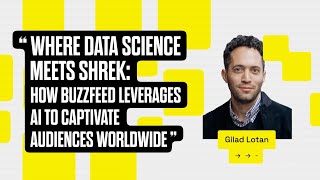
Where Data Science Meets Shrek: How BuzzFeed uses AI

By introducing a range of AI-enhanced products that amplify creativity and interactivity across our platforms, Buzzfeed has been able to connect with the largest global audience of young people online to cement its role as the defining digital media company of the AI era. Notably, some of Buzzfeed's most successful tools and content experiences thrive on the power of small, focused datasets. Still wondering how Shrek fits into the picture? You'll have to watch!

Video from: https://smalldatasf.com/

📓 Resources Big Data is Dead: https://motherduck.com/blog/big-data-... Small Data Manifesto: https://motherduck.com/blog/small-dat... Why Small Data?: https://benn.substack.com/p/is-excel-... Small Data SF: https://www.smalldatasf.com/

➡️ Follow Us LinkedIn: / motherduck
X/Twitter : / motherduck
Bluesky: motherduck.com Blog: https://motherduck.com/blog/


Discover how BuzzFeed's Data team, led by Gilad Cohen, harnesses AI for creative purposes, leveraging large language models (LLMs) and generative image capabilities to enhance content creation. This video explores how machine learning teams build tools to create new interactive media experiences, focusing on augmenting creative workflows rather than replacing jobs, allowing readers to participate more deeply in the content they consume.

We dive into the core data science problem of understanding what a piece of content is about, a crucial step for improving content recommendation systems. Learn why traditional methods fall short and how the team is constantly seeking smaller, faster, and more performant models. This exploration covers the evolution from earlier architectures like DistilBERT to modern, more efficient approaches for better content representation, clustering, and user personalization.

A key technique explored is the use of text embeddings, which are dense, low-dimensional vector representations of data. This video provides an accessible explanation of embeddings as a form of compressed knowledge, showing how BuzzFeed creates a unique vector for each article. This allows for simple vector math to find semantically similar content, forming a foundational infrastructure for powerful ranking and recommender systems.

Explore how BuzzFeed leverages generative image capabilities to create new interactive formats. The journey began with Midjourney experiments and evolved to building custom tools by fine-tuning a Stable Diffusion XL model using LORA (Low-Rank Approximation). This advanced technique provides greater control over image output, enabling the rapid creation of viral AI generators that respond to trending topics and allow for massive user engagement.

Finally, see a practical application of machine learning for content optimization. BuzzFeed uses its vast historical dataset from Bayesian A/B testing to train a model that predicts headline performance. By generating multiple headline candidates with an LLM like Claude and running them through this predictive model, they can identify the winning headline. This showcases how to use unique, in-house data to build powerful tools that improve click-through rates and drive engagement, pointing to a significant transformation in how media is created and consumed.