talk-data.com talk-data.com

Topic

Big Data

data_processing analytics large_datasets

1217

tagged

Activity Trend

28 peak/qtr
2020-Q1 2026-Q1

Activities

1217 activities · Newest first

Big Data Imperatives: Enterprise 'Big Data' Warehouse, 'BI' Implementations and Analytics

Big Data Imperatives, focuses on resolving the key questions on everyone's mind: Which data matters? Do you have enough data volume to justify the usage? How you want to process this amount of data? How long do you really need to keep it active for your analysis, marketing, and BI applications? Big data is emerging from the realm of one-off projects to mainstream business adoption; however, the real value of big data is not in the overwhelming size of it, but more in its effective use. This book addresses the following big data characteristics: Very large, distributed aggregations of loosely structured data - often incomplete and inaccessible Petabytes/Exabytes of data Millions/billions of people providing/contributing to the context behind the data Flat schema's with few complex interrelationships Involves time-stamped events Made up of incomplete data Includes connections between data elements that must be probabilistically inferred Big Data Imperatives explains 'what big data can do'. It can batch process millions and billions of records both unstructured and structured much faster and cheaper. Big data analytics provide a platform to merge all analysis which enables data analysis to be more accurate, well-rounded, reliable and focused on a specific business capability. Big Data Imperatives describes the complementary nature of traditional data warehouses and big-data analytics platforms and how they feed each other. This book aims to bring the big data and analytics realms together with a greater focus on architectures that leverage the scale and power of big data and the ability to integrate and apply analytics principles to data which earlier was not accessible. This book can also be used as a handbook for practitioners; helping them on methodology,technical architecture, analytics techniques and best practices. At the same time, this book intends to hold the interest of those new to big data and analytics by giving them a deep insight into the realm of big data. What you'll learn Understanding the technology, implementation of big data platforms and their usage for analytics Big data architectures Big data design patterns Implementation best practices Who this book is for This book is designed for IT professionals, data warehousing, business intelligence professionals, data analysis professionals, architects, developers and business users.


Infoglut

Today, more mediated information is available to more people than at any other time in human history. New and revitalized sense-making strategies multiply in response to the challenges of "cutting through the clutter" of competing narratives and taming the avalanche of information. Data miners, "sentiment analysts," and decision markets offer to help bodies of data "speak for themselves"—making sense of their own patterns so we don’t have to. Neuromarketers and body language experts promise to peer behind people’s words to see what their brains are really thinking and feeling. New forms of information processing promise to displace the need for expertise and even comprehension—at least for those with access to the data. Infoglut explores the connections between these wide-ranging sense-making strategies for an era of information overload and "big data," and the new forms of control they enable. Andrejevic critiques the popular embrace of deconstructive debunkery, calling into question the post-truth, post-narrative, and post-comprehension politics it underwrites, and tracing a way beyond them.

Pro Hibernate and MongoDB

Hibernate and MongoDB are a powerful combination of open source persistence and NoSQL technologies for today's Java-based enterprise and cloud application developers. Hibernate is the leading open source Java-based persistence, object relational management engine, recently repositioned as an object grid management engine. MongoDB is a growing, popular open source NoSQL framework, especially popular among cloud application and big data developers. With these two, enterprise and cloud developers have a "complete out of the box" solution. Pro Hibernate and MongoDB shows you how to use and integrate Hibernate and MongoDB. More specifically, this book guides you through the bootstrap; building transactions; handling queries and query entities; and mappings. Then, this book explores the principles and techniques for taking these application principles to the cloud, using the OpenShift Platform as a Service (PaaS) and more. In this book, you get two case studies: An enterprise application using Hibernate and MongoDB. then, A cloud application (OpenShip) migrated from the enterprise application case study After reading or using this book, you come away with the experience from two case studies that give you possible frameworks or templates that you can apply to your own specific application or cloud application building context. What you'll learn How to use and integrate Hibernate and MongoDB to be your "complete out of the box" solution for database driven enterprise and cloud applications How to bootstrap; run in supported environments; do transactions; handle queries and query entities; and mappings How to build an enterprise application case study using Hibernate and MongoDB What are the principles and techniques for taking applications to the Cloud, using the OpenShift Platform as a Service (PaaS) and more How to build a cloud-based app or application (OpenShip) Who this book is for This book is for experienced Java, enterprise Java programmers who may have some experience with Hibernate and/or MongoDB.

Analyzing the Analyzers

Despite the excitement around "data science," "big data," and "analytics," the ambiguity of these terms has led to poor communication between data scientists and organizations seeking their help. In this report, authors Harlan Harris, Sean Murphy, and Marck Vaisman examine their survey of several hundred data science practitioners in mid-2012, when they asked respondents how they viewed their skills, careers, and experiences with prospective employers. The results are striking. Based on the survey data, the authors found that data scientists today can be clustered into four subgroups, each with a different mix of skillsets. Their purpose is to identify a new, more precise vocabulary for data science roles, teams, and career paths. This report describes: Four data scientist clusters: Data Businesspeople, Data Creatives, Data Developers, and Data Researchers Cases in miscommunication between data scientists and organizations looking to hire Why "T-shaped" data scientists have an advantage in breadth and depth of skills How organizations can apply the survey results to identify, train, integrate, team up, and promote data scientists

Real-Time Big Data Analytics: Emerging Architecture

Five or six years ago, analysts working with big datasets made queries and got the results back overnight. The data world was revolutionized a few years ago when Hadoop and other tools made it possible to getthe results from queries in minutes. But the revolution continues. Analysts now demand sub-second, near real-time query results. Fortunately, we have the tools to deliver them. This report examines tools and technologies that are driving real-time big data analytics.

Using R to Unlock the Value of Big Data: Big Data Analytics with Oracle R Enterprise and Oracle R Connector for Hadoop

The Oracle Press Guide to Big Data Analytics using R Cowritten by members of the Big Data team at Oracle, this Oracle Press book focuses on analyzing data with R while making it scalable using Oracle’s R technologies. Using R to Unlock the Value of Big Data provides an introduction to open source R and describes issues with traditional R and database interaction. The book then offers in-depth coverage of Oracle’s strategic R offerings: Oracle R Enterprise, Oracle R Distribution, ROracle, and Oracle R Connector for Hadoop. You can practice your new skills using the end-of-chapter exercises.

Implementing IBM InfoSphere BigInsights on IBM System x

As world activities become more integrated, the rate of data growth has been increasing exponentially. And as a result of this data explosion, current data management methods can become inadequate. People are using the term big data (sometimes referred to as Big Data) to describe this latest industry trend. IBM® is preparing the next generation of technology to meet these data management challenges. To provide the capability of incorporating big data sources and analytics of these sources, IBM developed a stream-computing product that is based on the open source computing framework Apache Hadoop. Each product in the framework provides unique capabilities to the data management environment, and further enhances the value of your data warehouse investment. In this IBM Redbooks® publication, we describe the need for big data in an organization. We then introduce IBM InfoSphere® BigInsights™ and explain how it differs from standard Hadoop. BigInsights provides a packaged Hadoop distribution, a greatly simplified installation of Hadoop and corresponding open source tools for application development, data movement, and cluster management. BigInsights also brings more options for data security, and as a component of the IBM big data platform, it provides potential integration points with the other components of the platform. A new chapter has been added to this edition. Chapter 11 describes IBM Platform Symphony®, which is a new scheduling product that works with IBM Insights, bringing low-latency scheduling and multi-tenancy to IBM InfoSphere BigInsights. The book is designed for clients, consultants, and other technical professionals.

Principles of Big Data

Principles of Big Data helps readers avoid the common mistakes that endanger all Big Data projects. By stressing simple, fundamental concepts, this book teaches readers how to organize large volumes of complex data, and how to achieve data permanence when the content of the data is constantly changing. General methods for data verification and validation, as specifically applied to Big Data resources, are stressed throughout the book. The book demonstrates how adept analysts can find relationships among data objects held in disparate Big Data resources, when the data objects are endowed with semantic support (i.e., organized in classes of uniquely identified data objects). Readers will learn how their data can be integrated with data from other resources, and how the data extracted from Big Data resources can be used for purposes beyond those imagined by the data creators. Learn general methods for specifying Big Data in a way that is understandable to humans and to computers Avoid the pitfalls in Big Data design and analysis Understand how to create and use Big Data safely and responsibly with a set of laws, regulations and ethical standards that apply to the acquisition, distribution and integration of Big Data resources

Data Warehousing in the Age of Big Data

Data Warehousing in the Age of the Big Data will help you and your organization make the most of unstructured data with your existing data warehouse. As Big Data continues to revolutionize how we use data, it doesn't have to create more confusion. Expert author Krish Krishnan helps you make sense of how Big Data fits into the world of data warehousing in clear and concise detail. The book is presented in three distinct parts. Part 1 discusses Big Data, its technologies and use cases from early adopters. Part 2 addresses data warehousing, its shortcomings, and new architecture options, workloads, and integration techniques for Big Data and the data warehouse. Part 3 deals with data governance, data visualization, information life-cycle management, data scientists, and implementing a Big Data–ready data warehouse. Extensive appendixes include case studies from vendor implementations and a special segment on how we can build a healthcare information factory. Ultimately, this book will help you navigate through the complex layers of Big Data and data warehousing while providing you information on how to effectively think about using all these technologies and the architectures to design the next-generation data warehouse. Learn how to leverage Big Data by effectively integrating it into your data warehouse. Includes real-world examples and use cases that clearly demonstrate Hadoop, NoSQL, HBASE, Hive, and other Big Data technologies Understand how to optimize and tune your current data warehouse infrastructure and integrate newer infrastructure matching data processing workloads and requirements

Addressing Data Volume, Velocity, and Variety with IBM InfoSphere Streams V3.0

There are multiple uses for big data in every industry—from analyzing larger volumes of data than was previously possible to driving more precise answers, to analyzing data at rest and data in motion to capture opportunities that were previously lost. A big data platform will enable your organization to tackle complex problems that previously could not be solved using traditional infrastructure. As the amount of data available to enterprises and other organizations dramatically increases, more and more companies are looking to turn this data into actionable information and intelligence in real time. Addressing these requirements requires applications that are able to analyze potentially enormous volumes and varieties of continuous data streams to provide decision makers with critical information almost instantaneously. This IBM Redbooks® publication is written for decision-makers, consultants, IT architects, and IT professionals who will be implementing a solution with IBM InfoSphere Streams.

MongoDB Applied Design Patterns

Whether you’re building a social media site or an internal-use enterprise application, this hands-on guide shows you the connection between MongoDB and the business problems it’s designed to solve. You’ll learn how to apply MongoDB design patterns to several challenging domains, such as ecommerce, content management, and online gaming. Using Python and JavaScript code examples, you’ll discover how MongoDB lets you scale your data model while simplifying the development process. Many businesses launch NoSQL databases without understanding the techniques for using their features most effectively. This book demonstrates the benefits of document embedding, polymorphic schemas, and other MongoDB patterns for tackling specific big data use cases, including: Operational intelligence: Perform real-time analytics of business data Ecommerce: Use MongoDB as a product catalog master or inventory management system Content management: Learn methods for storing content nodes, binary assets, and discussions Online advertising networks: Apply techniques for frequency capping ad impressions, and keyword targeting and bidding Social networking: Learn how to store a complex social graph, modeled after Google+ Online gaming: Provide concurrent access to character and world data for a multiplayer role-playing game

Managing Data in Motion

Managing Data in Motion describes techniques that have been developed for significantly reducing the complexity of managing system interfaces and enabling scalable architectures. Author April Reeve brings over two decades of experience to present a vendor-neutral approach to moving data between computing environments and systems. Readers will learn the techniques, technologies, and best practices for managing the passage of data between computer systems and integrating disparate data together in an enterprise environment. The average enterprise's computing environment is comprised of hundreds to thousands computer systems that have been built, purchased, and acquired over time. The data from these various systems needs to be integrated for reporting and analysis, shared for business transaction processing, and converted from one format to another when old systems are replaced and new systems are acquired. The management of the "data in motion" in organizations is rapidly becoming one of the biggest concerns for business and IT management. Data warehousing and conversion, real-time data integration, and cloud and "big data" applications are just a few of the challenges facing organizations and businesses today. Managing Data in Motion tackles these and other topics in a style easily understood by business and IT managers as well as programmers and architects. Presents a vendor-neutral overview of the different technologies and techniques for moving data between computer systems including the emerging solutions for unstructured as well as structured data types Explains, in non-technical terms, the architecture and components required to perform data integration Describes how to reduce the complexity of managing system interfaces and enable a scalable data architecture that can handle the dimensions of "Big Data"

Hadoop Beginner's Guide

Hadoop Beginner's Guide introduces you to the essential concepts and practical applications of Apache Hadoop, one of the leading frameworks for big data processing. You will learn how to set up and use Hadoop to store, manage, and analyze vast amounts of data efficiently. With clear examples and step-by-step instructions, this book is the perfect starting point for beginners. What this Book will help me do Understand the trends leading to the adoption of Hadoop and determine when to use it effectively in your projects. Build and configure Hadoop clusters tailored to your specific needs, enabling efficient data processing. Develop and execute applications on Hadoop using Java and Ruby, with practical examples provided. Leverage Amazon AWS and Elastic MapReduce to deploy Hadoop on the cloud and manage hosted environments. Integrate Hadoop with relational databases using tools like Hive and Sqoop for effective data transfer and querying. Author(s) The author of Hadoop Beginner's Guide is an experienced data engineer with a focus on big data technologies. They have extensive experience deploying Hadoop in various industries and are passionate about making complex systems accessible to newcomers. Their approach combines technical depth with an understanding of the needs of learners, ensuring clarity and relevance throughout the book. Who is it for? This book is designed for professionals who are new to big data processing and want to learn Apache Hadoop from scratch. It is ideal for system administrators, data analysts, and developers with basic programming knowledge in Java or Ruby looking to get started with Hadoop. If you have an interest in leveraging Hadoop for scalable data management and analytics, this book is for you. By the end, you'll gain the confidence and skills to utilize Hadoop effectively in your projects.

Predictive Analytics: The Power to Predict Who Will Click, Buy, Lie, or Die

"The Freakonomics of big data." —Stein Kretsinger, founding executive of Advertising.com; former lead analyst at Capital One This book is easily understood by all readers. Rather than a "how to" for hands-on techies, the book entices lay-readers and experts alike by covering new case studies and the latest state-of-the-art techniques. You have been predicted — by companies, governments, law enforcement, hospitals, and universities. Their computers say, "I knew you were going to do that!" These institutions are seizing upon the power to predict whether you're going to click, buy, lie, or die. Why? For good reason: predicting human behavior combats financial risk, fortifies healthcare, conquers spam, toughens crime fighting, and boosts sales. How? Prediction is powered by the world's most potent, booming unnatural resource: data. Accumulated in large part as the by-product of routine tasks, data is the unsalted, flavorless residue deposited en masse as organizations churn away. Surprise! This heap of refuse is a gold mine. Big data embodies an extraordinary wealth of experience from which to learn. Predictive analytics unleashes the power of data. With this technology, the computer literally learns from data how to predict the future behavior of individuals. Perfect prediction is not possible, but putting odds on the future — lifting a bit of the fog off our hazy view of tomorrow — means pay dirt. In this rich, entertaining primer, former Columbia University professor and Predictive Analytics World founder Eric Siegel reveals the power and perils of prediction: What type of mortgage risk Chase Bank predicted before the recession. Predicting which people will drop out of school, cancel a subscription, or get divorced before they are even aware of it themselves. Why early retirement decreases life expectancy and vegetarians miss fewer flights. Five reasons why organizations predict death, including one health insurance company. How U.S. Bank, European wireless carrier Telenor, and Obama's 2012 campaign calculated the way to most strongly influence each individual. How IBM's Watson computer used predictive modeling to answer questions and beat the human champs on TV's Jeopardy! How companies ascertain untold, private truths — how Target figures out you're pregnant and Hewlett-Packard deduces you're about to quit your job. How judges and parole boards rely on crime-predicting computers to decide who stays in prison and who goes free. What's predicted by the BBC, Citibank, ConEd, Facebook, Ford, Google, IBM, the IRS, Match.com, MTV, Netflix, Pandora, PayPal, Pfizer, and Wikipedia. A truly omnipresent science, predictive analytics affects everyone, every day. Although largely unseen, it drives millions of decisions, determining whom to call, mail, investigate, incarcerate, set up on a date, or medicate. Predictive analytics transcends human perception. This book's final chapter answers the riddle: What often happens to you that cannot be witnessed, and that you can't even be sure has happened afterward — but that can be predicted in advance? Whether you are a consumer of it — or consumed by it — get a handle on the power of Predictive Analytics.

Big Data, Big Analytics: Emerging Business Intelligence and Analytic Trends for Today's Businesses

Unique prospective on the big data analytics phenomenon for both business and IT professionals The availability of Big Data, low-cost commodity hardware and new information management and analytics software has produced a unique moment in the history of business. The convergence of these trends means that we have the capabilities required to analyze astonishing data sets quickly and cost-effectively for the first time in history. These capabilities are neither theoretical nor trivial. They represent a genuine leap forward and a clear opportunity to realize enormous gains in terms of efficiency, productivity, revenue and profitability. The Age of Big Data is here, and these are truly revolutionary times. This timely book looks at cutting-edge companies supporting an exciting new generation of business analytics. Learn more about the trends in big data and how they are impacting the business world (Risk, Marketing, Healthcare, Financial Services, etc.) Explains this new technology and how companies can use them effectively to gather the data that they need and glean critical insights Explores relevant topics such as data privacy, data visualization, unstructured data, crowd sourcing data scientists, cloud computing for big data, and much more.

MapReduce Design Patterns

Until now, design patterns for the MapReduce framework have been scattered among various research papers, blogs, and books. This handy guide brings together a unique collection of valuable MapReduce patterns that will save you time and effort regardless of the domain, language, or development framework you’re using. Each pattern is explained in context, with pitfalls and caveats clearly identified to help you avoid common design mistakes when modeling your big data architecture. This book also provides a complete overview of MapReduce that explains its origins and implementations, and why design patterns are so important. All code examples are written for Hadoop. Summarization patterns: get a top-level view by summarizing and grouping data Filtering patterns: view data subsets such as records generated from one user Data organization patterns: reorganize data to work with other systems, or to make MapReduce analysis easier Join patterns: analyze different datasets together to discover interesting relationships Metapatterns: piece together several patterns to solve multi-stage problems, or to perform several analytics in the same job Input and output patterns: customize the way you use Hadoop to load or store data "A clear exposition of MapReduce programs for common data processing patterns—this book is indespensible for anyone using Hadoop." --Tom White, author of Hadoop: The Definitive Guide

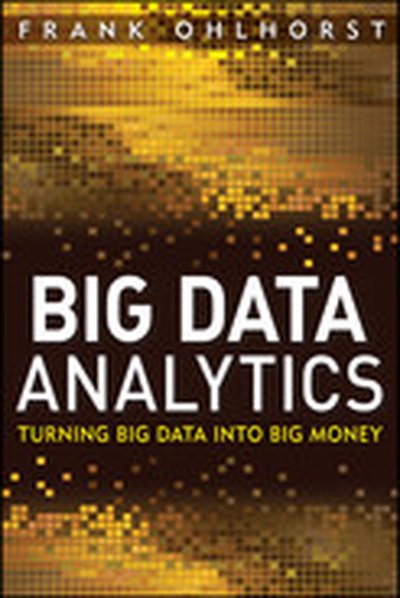
Big Data Analytics: Turning Big Data into Big Money

Unique insights to implement big data analytics and reap big returns to your bottom line Focusing on the business and financial value of big data analytics, respected technology journalist Frank J. Ohlhorst shares his insights on the newly emerging field of big data analytics in Big Data AnalyticsM. This breakthrough book demonstrates the importance of analytics, defines the processes, highlights the tangible and intangible values and discusses how you can turn a business liability into actionable material that can be used to redefine markets, improve profits and identify new business opportunities. Reveals big data analytics as the next wave for businesses looking for competitive advantage Takes an in-depth look at the financial value of big data analytics Offers tools and best practices for working with big data Once the domain of large on-line retailers such as eBay and Amazon, big data is now accessible by businesses of all sizes and across industries. From how to mine the data your company collects, to the data that is available on the outside, Big Data Analytics shows how you can leverage big data into a key component in your business's growth strategy.

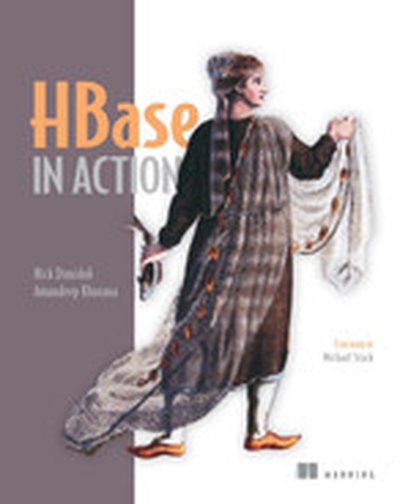
HBase in Action

HBase in Action has all the knowledge you need to design, build, and run applications using HBase. First, it introduces you to the fundamentals of distributed systems and large scale data handling. Then, you'll explore real-world applications and code samples with just enough theory to understand the practical techniques. You'll see how to build applications with HBase and take advantage of the MapReduce processing framework. And along the way you'll learn patterns and best practices. About the Technology HBase is a NoSQL storage system designed for fast, random access to large volumes of data. It runs on commodity hardware and scales smoothly from modest datasets to billions of rows and millions of columns. About the Book HBase in Action is an experience-driven guide that shows you how to design, build, and run applications using HBase. First, it introduces you to the fundamentals of handling big data. Then, you'll explore HBase with the help of real applications and code samples and with just enough theory to back up the practical techniques. You'll take advantage of the MapReduce processing framework and benefit from seeing HBase best practices in action. What's Inside When and how to use HBase Practical examples Design patterns for scalable data systems Deployment, integration, and design About the Reader Written for developers and architects familiar with data storage and processing. No prior knowledge of HBase, Hadoop, or MapReduce is required. About the Authors Nick Dimiduk is a Data Architect with experience in social media analytics, digital marketing, and GIS. Amandeep Khurana is a Solutions Architect focused on building HBase-driven solutions. Quotes Timely, practical ... explains in plain language how to use HBase. - From the Foreword by Michael Stack, Chair of the Apache HBase Project Management Committee A difficult topic lucidly explained. - John Griffin, coauthor of "Hibernate Search in Action" Amusing tongue-in-cheek style that doesn’t detract from the substance. - Charles Pyle, APS Healthcare Learn how to think the HBase way. - Gianluca Righetto, Menttis

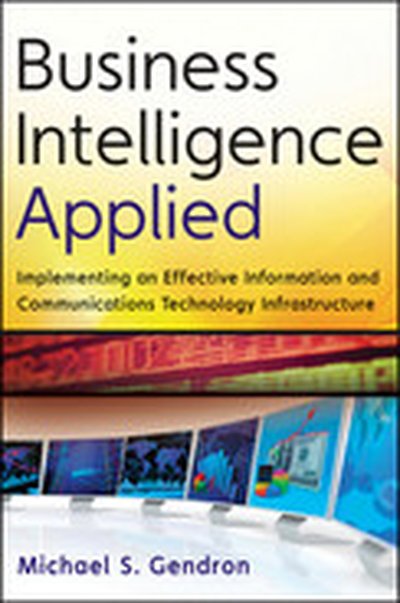
Business Intelligence Applied: Implementing an Effective Information and Communications Technology Infrastructure

Expert guidance for building an information communication and technology infrastructure that provides best in business intelligence Enterprise performance management (EPM) technology has been rapidly advancing, especially in the areas of predictive analysis and cloud-based solutions. Business intelligence caught on as a concept in the business world as the business strategy application of data warehousing in the early 2000s. With the recent surge in interest in data analytics and big data, it has seen a renewed level of interest as the ability of a business to find the valuable data in a timely—and competitive—fashion. Business Intelligence Applied reveals essential information for building an optimal and effective information and communication technology (ICT) infrastructure. Defines ICT infrastructure Examines best practices for documenting business change and for documenting technology recommendations Includes examples and cases from Europe and Asia Written for business intelligence staff, CIOs, CTOs, and technology managers With examples and cases from Europe and Asia, Business Intelligence Applied expertly covers business intelligence, a hot topic in business today as a key element to business and data analytics.

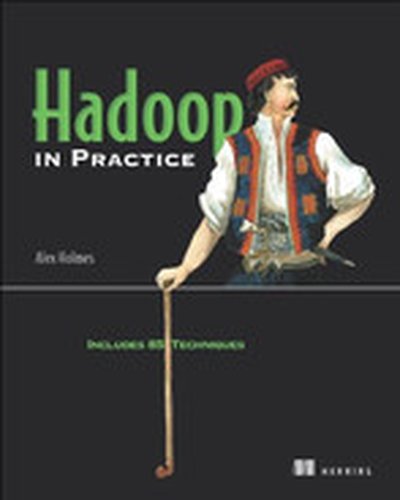
Hadoop in Practice

Hadoop in Practice collects 85 Hadoop examples and presents them in a problem/solution format. Each technique addresses a specific task you'll face, like querying big data using Pig or writing a log file loader. You'll explore each problem step by step, learning both how to build and deploy that specific solution along with the thinking that went into its design. As you work through the tasks, you'll find yourself growing more comfortable with Hadoop and at home in the world of big data. About the Technology Hadoop is an open source MapReduce platform designed to query and analyze data distributed across large clusters. Especially effective for big data systems, Hadoop powers mission-critical software at Apple, eBay, LinkedIn, Yahoo, and Facebook. It offers developers handy ways to store, manage, and analyze data. About the Book Hadoop in Practice collects 85 battle-tested examples and presents them in a problem/solution format. It balances conceptual foundations with practical recipes for key problem areas like data ingress and egress, serialization, and LZO compression. You'll explore each technique step by step, learning how to build a specific solution along with the thinking that went into it. As a bonus, the book's examples create a well-structured and understandable codebase you can tweak to meet your own needs. What's Inside Conceptual overview of Hadoop and MapReduce 85 practical, tested techniques Real problems, real solutions How to integrate MapReduce and R About the Reader This book assumes you've already started exploring Hadoop and want concrete advice on how to use it in production. About the Author Alex Holmes is a senior software engineer with extensive expertise in solving big data problems using Hadoop. He has presented at JavaOne and Jazoon and is a technical lead at VeriSign. Quotes Interesting topics that tickle the creative brain. - Mark Kemna, Brillig Ties together the Hadoop ecosystem technologies. - Ayon Sinha, Britely Comprehensive … high-quality code samples. - Chris Nauroth, The Walt Disney Company Covers all of the variants of Hadoop, not just the Apache distribution. - Ted Dunning, MapR Technologies Charts a path to the future. - Alexey Gayduk, Grid Dynamics