talk-data.com talk-data.com

Topic

Cloud Computing

infrastructure saas iaas

4055

tagged

Activity Trend

471 peak/qtr
2020-Q1 2026-Q1

Activities

4055 activities · Newest first

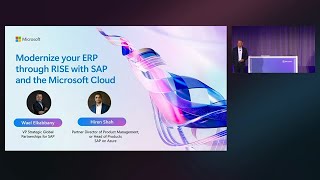
Modernize ERP through RISE with SAP and the Microsoft Cloud

Discover how Microsoft Cloud empowers SAP customers to modernize their business with SAP Business Suite through the RISE with SAP journey. Explore infrastructure innovations like High SLA for RISE, AI-driven monitoring, and performance optimization. See how organizations deploy RISE with SAP on Azure, integrate SAP BTP and BDC, secure workloads with Defender and Sentinel, while meeting sovereignty and compliance needs.

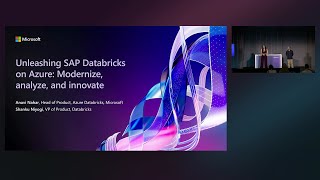
Unleashing SAP Databricks on Azure: Modernize, analyze, and innovate

SAP Databricks on Azure integrates Databricks Data Intelligence Platform with SAP Business Data Cloud, unifying SAP and external data for advanced analytics, AI, and ML. It enables building intelligent apps and actionable insights using trusted SAP and third-party business data. Available natively on Azure within SAP Business Data Cloud, it offers seamless access without data duplication via Delta Sharing. This session highlights automated forecasting, exploratory analysis, and BI use cases.

Unlock the full power of Windows 365
breakout
by Kenneth Pan (Microsoft) , Gaurav Kapoor (Johnson & Johnson) , Matt Harkness (One NZ) , Scott Manchester (Microsoft) , Fabrizio Salvatore (Allianz SE)

Join us to discover the power of the cloud with Windows 365 . Learn how the latest platform improvements and core features deliver strong resiliency and seamless integration with new AI capabilities, exciting feature updates, and the rest of Microsoft ecosystem. Experience user-friendly enhancements designed to boost your productivity and satisfaction. Get practical insights and actionable strategies to help you unlock the full potential of Windows 365.

In this hands-on lab, learn how to deploy secure, on-demand Cloud PCs using Windows 365 Reserve—ideal for travel, recovery, and temporary access. You'll create provisioning profiles, assign Cloud PCs, and configure Conditional Access, Entra ID, and networking. Experience the full user journey from sign-in to productivity. Leave equipped to streamline endpoint readiness with minimal overhead and respond to unexpected needs.

Please RSVP and arrive at least 5 minutes before the start time, at which point remaining spaces are open to standby attendees.

Powering Frontier Partnerships

Partners, be sure to join us for a dynamic keynote that explores the evolving role of partners in shaping the next generation of Frontier Firms. This session will spotlight success stories of partners leading customers through AI transformation, how we are delivering success together, and the latest investments and announcements from the Microsoft AI Cloud Partner Program (MAICPP).

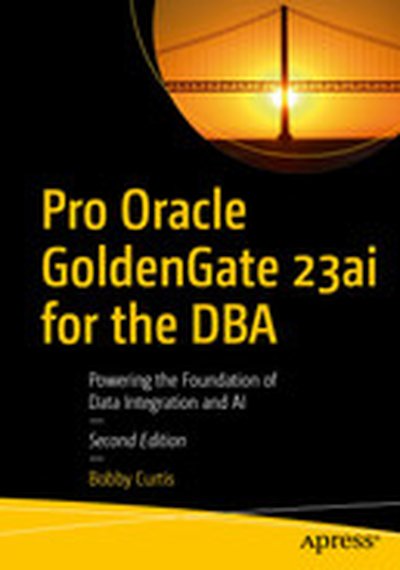
Pro Oracle GoldenGate 23ai for the DBA: Powering the Foundation of Data Integration and AI

Transform your data replication strategy into a competitive advantage with Oracle GoldenGate 23ai. This comprehensive guide delivers the practical knowledge DBAs and architects need to implement, optimize , and scale Oracle GoldenGate 23ai in production environments. Written by Oracle ACE Director Bobby Curtis, it blends deep technical expertise with real-world business insights from hundreds of implementations across manufacturing, financial services, and technology sectors. Beyond traditional replication, this book explores the groundbreaking capabilities that make GoldenGate 23ai essential for modern AI initiatives. Learn how to implement real-time vector replication for RAG systems, integrate with cloud platforms like GCP and Snowflake, and automate deployments using REST APIs and Python. Each chapter offers proven strategies to deliver measurable ROI while reducing operational risk. Whether you're upgrading from Classic GoldenGate , deploying your first cloud data pipeline, or building AI-ready data architectures, this book provides the strategic guidance and technical depth to succeed. With Bobby's signature direct approach, you'll avoid common pitfalls and implement best practices that scale with your business. What You Will Learn Master the microservices architecture and new capabilities of Oracle GoldenGate 23ai Implement secure, high-performance data replication across Oracle, PostgreSQL, and cloud databases Configure vector replication for AI and machine learning workloads, including RAG systems Design and build multi-master replication models with automatic conflict resolution Automate deployments and management using RESTful APIs and Python Optimize performance for sub-second replication lag in production environments Secure your replication environment with enterprise-grade features and compliance Upgrade from Classic to Microservices architecture with zero downtime Integrate with cloud platforms including OCI, GCP, AWS, and Azure Implement real-time data pipelines to BigQuery , Snowflake, and other cloud targets Navigate Oracle licensing models and optimize costs Who This Book Is For Database administrators, architects, and IT leaders working with Oracle GoldenGate —whether deploying for the first time, migrating from Classic architecture, or enabling AI-driven replication—will find actionable guidance on implementation, performance tuning, automation, and cloud integration. Covers unidirectional and multi-master replication and is packed with real-world use cases.

Summary  In this episode Preeti Somal, EVP of Engineering at Temporal, talks about the durable execution model and how it reshapes the way teams build reliable, stateful systems for data and AI. She explores Temporal’s code‑first programming model—workflows, activities, task queues, and replay—and how it eliminates hand‑rolled retry, checkpoint, and error‑handling scaffolding while letting data remain where it lives. Preeti shares real-world patterns for replacing DAG-first orchestration, integrating application and data teams through signals and Nexus for cross-boundary calls, and using Temporal to coordinate long-running, human-in-the-loop, and agentic AI workflows with full observability and auditability. Shee also discusses heuristics for choosing Temporal alongside (or instead of) traditional orchestrators, managing scale without moving large datasets, and lessons from running durable execution as a cloud service. 

Announcements  Hello and welcome to the Data Engineering Podcast, the show about modern data managementData teams everywhere face the same problem: they're forcing ML models, streaming data, and real-time processing through orchestration tools built for simple ETL. The result? Inflexible infrastructure that can't adapt to different workloads. That's why Cash App and Cisco rely on Prefect. Cash App's fraud detection team got what they needed - flexible compute options, isolated environments for custom packages, and seamless data exchange between workflows. Each model runs on the right infrastructure, whether that's high-memory machines or distributed compute. Orchestration is the foundation that determines whether your data team ships or struggles. ETL, ML model training, AI Engineering, Streaming - Prefect runs it all from ingestion to activation in one platform. Whoop and 1Password also trust Prefect for their data operations. If these industry leaders use Prefect for critical workflows, see what it can do for you at dataengineeringpodcast.com/prefect.Data migrations are brutal. They drag on for months—sometimes years—burning through resources and crushing team morale. Datafold's AI-powered Migration Agent changes all that. Their unique combination of AI code translation and automated data validation has helped companies complete migrations up to 10 times faster than manual approaches. And they're so confident in their solution, they'll actually guarantee your timeline in writing. Ready to turn your year-long migration into weeks? Visit dataengineeringpodcast.com/datafold today for the details. Composable data infrastructure is great, until you spend all of your time gluing it together. Bruin is an open source framework, driven from the command line, that makes integration a breeze. Write Python and SQL to handle the business logic, and let Bruin handle the heavy lifting of data movement, lineage tracking, data quality monitoring, and governance enforcement. Bruin allows you to build end-to-end data workflows using AI, has connectors for hundreds of platforms, and helps data teams deliver faster. Teams that use Bruin need less engineering effort to process data and benefit from a fully integrated data platform. Go to dataengineeringpodcast.com/bruin today to get started. And for dbt Cloud customers, they'll give you $1,000 credit to migrate to Bruin Cloud.Your host is Tobias Macey and today I'm interviewing Preeti Somal about how to incorporate durable execution and state management into AI application architectures Interview   IntroductionHow did you get involved in the area of data management?Can you describe what durable execution is and how it impacts system architecture?With the strong focus on state maintenance and high reliability, what are some of the most impactful ways that data teams are incorporating tools like Temporal into their work?One of the core primitives in Temporal is a "workflow". How does that compare to similar primitives in common data orchestration systems such as Airflow, Dagster, Prefect, etc.?  What are the heuristics that you recommend when deciding which tool to use for a given task, particularly in data/pipeline oriented projects? Even if a team is using a more data-focused orchestration engine, what are some of the ways that Temporal can be applied to handle the processing logic of the actual data?AI applications are also very dependent on reliable data to be effective in production contexts. What are some of the design patterns where durable execution can be integrated into RAG/agent applications?What are some of the conceptual hurdles that teams experience when they are starting to adopt Temporal or other durable execution frameworks?What are the most interesting, innovative, or unexpected ways that you have seen Temporal/durable execution used for data/AI services?What are the most interesting, unexpected, or challenging lessons that you have learned while working on Temporal?When is Temporal/durable execution the wrong choice?What do you have planned for the future of Temporal for data and AI systems? Contact Info   LinkedIn Parting Question   From your perspective, what is the biggest gap in the tooling or technology for data management today? Closing Announcements   Thank you for listening! Don't forget to check out our other shows. Podcast.init covers the Python language, its community, and the innovative ways it is being used. The AI Engineering Podcast is your guide to the fast-moving world of building AI systems.Visit the site to subscribe to the show, sign up for the mailing list, and read the show notes.If you've learned something or tried out a project from the show then tell us about it! Email [email protected] with your story. Links   TemporalDurable ExecutionFlinkMachine Learning EpochSpark StreamingAirflowDirected Acyclic Graph (DAG)Temporal NexusTensorZeroAI Engineering Podcast Episode The intro and outro music is from The Hug by The Freak Fandango Orchestra / CC BY-SA  

Keep Safe Using Mobile Tech, 2nd Edition

Leverage your smartphone and smartwatch for improved personal safety! Version 2.0, updated November 12, 2025 The digital and “real” worlds can both be scary places. The smartphone (and often smartwatch) you already carry with you can help reduce risks, deter theft, and mitigate violence. This book teaches you to secure your hardware, block abuse, automatically call emergency services, connect with others to ensure you arrive where and when you intended, detect stalking by compact trackers, and keep your ecosystem accounts from Apple, Google, and Microsoft secure. You don’t have to be reminded of the virtual and physical risks you face every day. Some of us are targeted more than others. Modern digital features built into mobile operating systems (and some computer operating systems) can help reduce our anxiety by putting more power in our hands to deter, deflect, block, and respond to abuse, threats, and emergencies. Keep Safe Using Mobile Tech looks at both digital threats, like online abuse and account hijacking, and ones in the physical world, like being stalked through Bluetooth trackers, facing domestic violence, or being in a car crash. The book principally covers the iPhone, Apple Watch, Android devices, and Wear OS watches. It also covers more limited but useful features available on the iPad and on computers running macOS or Windows. This second edition incorporates the massive number of new safety features Google added since October 2024 to the Android operating system, some particular to Google Pixel phones and smartwatches, and improved blocking, filtering, and screening added to Apple’s iOS 26 and related operating system updates in fall 2025. This book explores many techniques to help:

Learn how to harden your Apple Account, Google Account, and Microsoft Account beyond just a password or a text-message token. Discover filtering and blocking tools from Apple and Google that can prevent abusive, fraudulent, and phishing messages and calls from reaching you. Block seeing unwanted sensitive images on your iPhone, iPad, Mac, Apple Watch, or Android phone—and help your kids receive advice on how not to send them. Turn on tracking on your Apple, Google, and Microsoft devices, and use it to recover or erase stolen hardware. Keep your cloud-archived messages from leaking to attackers. Screen calls with an automated assistant so that you know who wants you before picking up and without sending to voicemail. Lock down your devices to keep thieves and other personal invaders from accessing them. Prepare for emergencies by setting up medical information on your mobile devices. Let a supported smartphone or smartwatch recognize when you’re in a car crash or have taken a hard fall and call emergency services for you (and text your emergency contacts) if you can’t respond. Keep track of heart anomalies through smartwatch alerts and tests on your Apple Watch and many Android Wear smartwatches. Tell others where or when you expect to check in with them again, and let your smartphone alert them if you don’t with your Apple iPhone or Android phone. Deter stalking from tiny Bluetooth trackers. Protect your devices and accounts against access from domestic assailants. Block thieves who steal your phone—potentially threatening you or attacking you in person—from gaining access to the rest of your digital life.

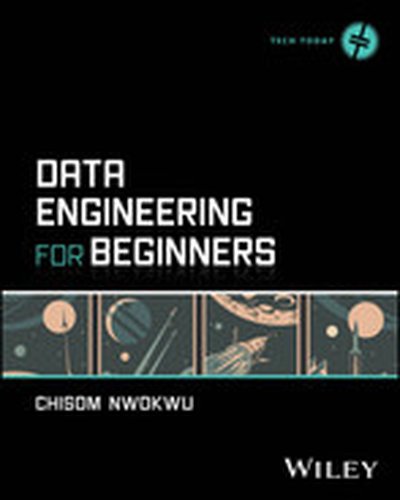
Data Engineering for Beginners

A hands-on technical and industry roadmap for aspiring data engineers In Data Engineering for Beginners, big data expert Chisom Nwokwu delivers a beginner-friendly handbook for everyone interested in the fundamentals of data engineering. Whether you're interested in starting a rewarding, new career as a data analyst, data engineer, or data scientist, or seeking to expand your skillset in an existing engineering role, Nwokwu offers the technical and industry knowledge you need to succeed. The book explains: Database fundamentals, including relational and noSQL databases Data warehouses and data lakes Data pipelines, including info about batch and stream processing Data quality dimensions Data security principles, including data encryption Data governance principles and data framework Big data and distributed systems concepts Data engineering on the cloud Essential skills and tools for data engineering interviews and jobs Data Engineering for Beginners offers an easy-to-read roadmap on a seemingly complicated and intimidating subject. It addresses the topics most likely to cause a beginning data engineer to stumble, clearly explaining key concepts in an accessible way. You'll also find: A comprehensive glossary of data engineering terms Common and practical career paths in the data engineering industry An introduction to key cloud technologies and services you may encounter early in your data engineering career Perfect for practicing and aspiring data analysts, data scientists, and data engineers, Data Engineering for Beginners is an effective and reliable starting point for learning an in-demand skill. It's a powerful resource for everyone hoping to expand their data engineering Skillset and upskill in the big data era.

Today, we’re joined by Chris McHenry, Chief Product Officer at Aviatrix, a cloud native network security company. We talk about:  Prerequisites to driving operational efficiency with agentic AIBridging the gap between security & engineering so organizations can go fast & be secure What’s required in order for agentic AI to create a magical momentWith cloud powering so much of our society, the need to get security right The security challenges introduced by agentic AI apps, including new attack vectors

Summary In this episode of the Data Engineering Podcast Ariel Pohoryles, head of product marketing for Boomi's data management offerings, talks about a recent survey of 300 data leaders on how organizations are investing in data to scale AI. He shares a paradox uncovered in the research: while 77% of leaders trust the data feeding their AI systems, only 50% trust their organization's data overall. Ariel explains why truly productionizing AI demands broader, continuously refreshed data with stronger automation and governance, and highlights the challenges posed by unstructured data and vector stores. The conversation covers the need to shift from manual reviews to automated pipelines, the resurgence of metadata and master data management, and the importance of guardrails, traceability, and agent governance. Ariel also predicts a growing convergence between data teams and application integration teams and advises leaders to focus on high-value use cases, aggressive pipeline automation, and cataloging and governing the coming sprawl of AI agents, all while using AI to accelerate data engineering itself.

Announcements Hello and welcome to the Data Engineering Podcast, the show about modern data managementData teams everywhere face the same problem: they're forcing ML models, streaming data, and real-time processing through orchestration tools built for simple ETL. The result? Inflexible infrastructure that can't adapt to different workloads. That's why Cash App and Cisco rely on Prefect. Cash App's fraud detection team got what they needed - flexible compute options, isolated environments for custom packages, and seamless data exchange between workflows. Each model runs on the right infrastructure, whether that's high-memory machines or distributed compute. Orchestration is the foundation that determines whether your data team ships or struggles. ETL, ML model training, AI Engineering, Streaming - Prefect runs it all from ingestion to activation in one platform. Whoop and 1Password also trust Prefect for their data operations. If these industry leaders use Prefect for critical workflows, see what it can do for you at dataengineeringpodcast.com/prefect.Data migrations are brutal. They drag on for months—sometimes years—burning through resources and crushing team morale. Datafold's AI-powered Migration Agent changes all that. Their unique combination of AI code translation and automated data validation has helped companies complete migrations up to 10 times faster than manual approaches. And they're so confident in their solution, they'll actually guarantee your timeline in writing. Ready to turn your year-long migration into weeks? Visit dataengineeringpodcast.com/datafold today for the details.Composable data infrastructure is great, until you spend all of your time gluing it together. Bruin is an open source framework, driven from the command line, that makes integration a breeze. Write Python and SQL to handle the business logic, and let Bruin handle the heavy lifting of data movement, lineage tracking, data quality monitoring, and governance enforcement. Bruin allows you to build end-to-end data workflows using AI, has connectors for hundreds of platforms, and helps data teams deliver faster. Teams that use Bruin need less engineering effort to process data and benefit from a fully integrated data platform. Go to dataengineeringpodcast.com/bruin today to get started. And for dbt Cloud customers, they'll give you $1,000 credit to migrate to Bruin Cloud.Your host is Tobias Macey and today I'm interviewing Ariel Pohoryles about data management investments that organizations are making to enable them to scale AI implementationsInterview IntroductionHow did you get involved in the area of data management?Can you start by describing the motivation and scope of your recent survey on data management investments for AI across your respondents?What are the key takeaways that were most significant to you?The survey reveals a fascinating paradox: 77% of leaders trust the data used by their AI systems, yet only half trust their organization's overall data quality. For our data engineering audience, what does this suggest about how companies are currently sourcing data for AI? Does it imply they are using narrow, manually-curated "golden datasets," and what are the technical challenges and risks of that approach as they try to scale?The report highlights a heavy reliance on manual data quality processes, with one expert noting companies feel it's "not reliable to fully automate validation" for external or customer data. At the same time, maturity in "Automated tools for data integration and cleansing" is low, at only 42%. What specific technical hurdles or organizational inertia are preventing teams from adopting more automation in their data quality and integration pipelines?There was a significant point made that with generative AI, "biases can scale much faster," making automated governance essential. From a data engineering perspective, how does the data management strategy need to evolve to support generative AI versus traditional ML models? What new types of data quality checks, lineage tracking, or monitoring for feedback loops are required when the model itself is generating new content based on its own outputs?The report champions a "centralized data management platform" as the "connective tissue" for reliable AI. How do you see the scale and data maturity impacting the realities of that effort?How do architectural patterns in the shape of cloud warehouses, lakehouses, data mesh, data products, etc. factor into that need for centralized/unified platforms?A surprising finding was that a third of respondents have not fully grasped the risk of significant inaccuracies in their AI models if they fail to prioritize data management. In your experience, what are the biggest blind spots for data and analytics leaders?Looking at the maturity charts, companies rate themselves highly on "Developing a data management strategy" (65%) but lag significantly in areas like "Automated tools for data integration and cleansing" (42%) and "Conducting bias-detection audits" (24%). If you were advising a data engineering team lead based on these findings, what would you tell them to prioritize in the next 6-12 months to bridge the gap between strategy and a truly scalable, trustworthy data foundation for AI?The report states that 83% of companies expect to integrate more data sources for their AI in the next year. For a data engineer on the ground, what is the most important capability they need to build into their platform to handle this influx?What are the most interesting, innovative, or unexpected ways that you have seen teams addressing the new and accelerated data needs for AI applications?What are some of the noteworthy trends or predictions that you have for the near-term future of the impact that AI is having or will have on data teams and systems?Contact Info LinkedInParting Question From your perspective, what is the biggest gap in the tooling or technology for data management today?Closing Announcements Thank you for listening! Don't forget to check out our other shows. Podcast.init covers the Python language, its community, and the innovative ways it is being used. The AI Engineering Podcast is your guide to the fast-moving world of building AI systems.Visit the site to subscribe to the show, sign up for the mailing list, and read the show notes.If you've learned something or tried out a project from the show then tell us about it! Email [email protected] with your story.Links BoomiData ManagementIntegration & Automation DemoAgentstudioData Connector Agent WebinarSurvey ResultsData GovernanceShadow ITPodcast EpisodeThe intro and outro music is from The Hug by The Freak Fandango Orchestra / CC BY-SA

PhD students, postdocs and independent researchers often struggle when trying to scale their code and data beyond their local machine, to a HPC cluster or the cloud. This is even more difficult if they don’t happen to have access to IT staff and resources to set up the necessary infrastructure, as is the case in many developing countries. We introduce a new open source, extensible remote development architecture, supported in version 6.1 of the Spyder scientific environment and IDE, that allows users to manage packages, browse files and run code remotely on a completely austere host from the comfort of their local machine.

The proliferation of AI/ML workloads across commercial enterprises, necessitates robust mechanisms to track, inspect and analyze their use of on-prem/cloud infrastructure. To that end, effective insights are crucial for optimizing cloud resource allocation with increasing workload demand, while mitigating cloud infrastructure costs and promoting operational stability.

This talk will outline an approach to systematically monitor, inspect and analyze AI/ML workloads’ properties like runtime, resource demand/utilization and cost attribution tags . By implementing granular inspection across multi-player teams and projects, organizations can gain actionable insights into resource bottlenecks, identify opportunities for cost savings, and enable AI/ML platform engineers to directly attribute infrastructure costs to specific workloads.

Cost attribution of infrastructure usage by AI/ML workloads focuses on key metrics such as compute node group information, cpu usage seconds, data transfer, gpu allocation , memory and ephemeral storage utilization. It enables platform administrators to identify competing workloads which lead to diminishing ROI. Answering questions from data scientists like "Why did my workload run for 6 hours today, when it took only 2 hours yesterday" or "Why did my workload start 3 hours behind schedule?" also becomes easier.

Through our work on Metaflow, we will showcase how we built a comprehensive framework for transparent usage reporting, cost attribution, performance optimization, and strategic planning for future AI/ML initiatives. Metaflow is a human centric python library that enables seamless scaling and management of AI/ML projects.

Ultimately, a well-defined usage tracking system empowers organizations to maximize the return on investment from their AI/ML endeavors while maintaining budgetary control and operational efficiency. Platform engineers and administrators will be able to gain insights into the following operational aspects of supporting a battle hardened ML Platform:

1.Optimize resource allocation: Understand consumption patterns to right-size clusters and allocate resources more efficiently, reducing idle time and preventing bottlenecks.

  1. Proactively manage capacity: Forecast future resource needs based on historical usage trends, ensuring the infrastructure can scale effectively with increasing workload demand.

  2. Facilitate strategic planning: Make informed decisions regarding future infrastructure investments and scaling strategies.

4.Diagnose workload execution delays: Identify resource contention, queuing issues, or insufficient capacity leading to delayed workload starts.

Data Scientists on the other hand will gain clarity on factors that influence workload performance. Tuning them can lead to efficiencies in runtime and associated cost profiles.