talk-data.com talk-data.com

Topic

Computer Science

programming algorithms data_structures

166

tagged

Activity Trend

9 peak/qtr
2020-Q1 2026-Q2

Activities

166 activities · Newest first

In this podcast, John T Langton, Director of Applied Data Science, sat with Vishal, President AnalyticsWeek, and discussed his data analytics journey. He shared his insights, from his startup days to running a data science group within a big enterprise.

Timeline: 0:28 John's journey. 13:28 John's current role. 17:06 Succeeding as a data scientist in different organizations. 26:47 Challenges in putting together a data science company. 38:36 Hacks to selling innovative ideas to clients and customers. 47:20 Defining a good data science hire. 51:50 Maturity level of enterprise AI. 1:00:00 Closing remarks.

John's Recommended Read: Designing Agentive Technology: AI That Works for People Paperback http://amzn.to/2ySDHGp

Podcast Link: https://futureofdata.org/johntlangton-wolters_kluwer-discussed-ai-lead-startup-journey/

John's BIO: John Langton is Director of Applied Data Science at Wolters Kluwer. He was previously worked as Director of Data Science at athenahealth, CEO of VisiTrend, a visual analytics company that was acquired by Carbon Black in 2015. He has a Ph.D. in computer science and an extensive background in AI, machine learning, big data analytics, and visualization. Prior to founding VisiTrend, John was Principal Investigator (PI) on several DoD projects at Charles River Analytics (CRA). He has taught classes at Brandeis University and has several peer-reviewed publications.

About #Podcast:

FutureOfData podcast is a conversation starter to bring leaders, influencers, and lead practitioners to discuss their journey to create the data-driven future.

Wanna Join? If you or any you know wants to join in, Register your interest @ http://play.analyticsweek.com/guest/

Want to sponsor? Email us @ [email protected]

Keywords: FutureOfData Data Analytics Leadership Podcast Big Data Strategy
Essentials of Cloud Application Development on IBM Bluemix

Abstract This IBM® Redbooks® publication is based on the Presentations Guide of the course Essentials of Cloud Application Development on IBM Bluemix that was developed by the IBM Redbooks team in partnership with IBM Skills Academy Program. This course is designed to teach university students the basic skills that are required to develop, deploy, and test cloud-based applications that use the IBM Bluemix® cloud services. The primary target audience for this course is university students in undergraduate computer science and computer engineer programs with no previous experience working in cloud environments. However, anyone new to cloud computing can also benefit from this course. After completing this course, you should be able to accomplish the following tasks: Define cloud computing Describe the factors that lead to the adoption of cloud computing Describe the choices that developers have when creating cloud applications Describe infrastructure as a service, platform as a service, and software as a service Describe IBM Bluemix and its architecture Identify the runtimes and services that IBM Bluemix offers Describe IBM Bluemix infrastructure types Create an application in IBM Bluemix Describe the IBM Bluemix dashboard, catalog, and documentation features Explain how the application route is used to test an application from the browser Create services in IBM Bluemix Describe how to bind services to an application in IBM Bluemix Describe the environment variables that are used with IBM Bluemix services Explain what are IBM Bluemix organizations, domains, spaces, and users Describe how to create an IBM SDK for Node.js application that runs on IBM Bluemix Explain how to manage your IBM Bluemix account with the Cloud Foundry CLI Describe how to set up and use the IBM Bluemix plug-in for Eclipse Describe the role of Node.js for server-side scripting Describe IBM Bluemix DevOps Services and the capabilities of IBM DevOps Services Identify the Web IDE features in IBM Bluemix DevOps Describe how to connect a Git repository client to Bluemix DevOps Services project Explain the pipeline build and deploy processes that IBM Bluemix DevOps Services use Describe how IBM Bluemix DevOps Services integrate with the IBM Bluemix cloud Describe the agile planning tools in IBM Bluemix Describe the characteristics of REST APIs Explain the advantages of the JSON data format Describe an example of REST APIs using Watson Describe the main types of data services in IBM Bluemix Describe the benefits of IBM Cloudant® Explain how Cloudant databases and documents are accessed from IBM Bluemix Describe how to use REST APIs to interact with Cloudant database Describe Bluemix mobile backend as a service (MBaaS) and the MBaaS architecture Describe the Push Notifications service Describe the App ID service Describe the Kinetise service Describe how to create Bluemix Mobile applications by using MobileFirst Services Starter Boilerplate The workshop materials were created in June 2017. Therefore, all IBM Bluemix features that are described in this Presentations Guide and IBM Bluemix user interfaces that are used in the examples are current as of June 2017.

Illuminating Statistical Analysis Using Scenarios and Simulations

Features an integrated approach of statistical scenarios and simulations to aid readers in developing key intuitions needed to understand the wide ranging concepts and methods of statistics and inference Illuminating Statistical Analysis Using Scenarios and Simulations presents the basic concepts of statistics and statistical inference using the dual mechanisms of scenarios and simulations. This approach helps readers develop key intuitions and deep understandings of statistical analysis. Scenario-specific sampling simulations depict the results that would be obtained by a very large number of individuals investigating the same scenario, each with their own evidence, while graphical depictions of the simulation results present clear and direct pathways to intuitive methods for statistical inference. These intuitive methods can then be easily linked to traditional formulaic methods, and the author does not simply explain the linkages, but rather provides demonstrations throughout for a broad range of statistical phenomena. In addition, induction and deduction are repeatedly interwoven, which fosters a natural "need to know basis" for ordering the topic coverage. Examining computer simulation results is central to the discussion and provides an illustrative way to (re)discover the properties of sample statistics, the role of chance, and to (re)invent corresponding principles of statistical inference. In addition, the simulation results foreshadow the various mathematical formulas that underlie statistical analysis. In addition, this book: • Features both an intuitive and analytical perspective and includes a broad introduction to the use of Monte Carlo simulation and formulaic methods for statistical analysis • Presents straight-forward coverage of the essentials of basic statistics and ensures proper understanding of key concepts such as sampling distributions, the effects of sample size and variance on uncertainty, analysis of proportion, mean and rank differences, covariance, correlation, and regression • Introduces advanced topics such as Bayesian statistics, data mining, model cross-validation, robust regression, and resampling • Contains numerous example problems in each chapter with detailed solutions as well as an appendix that serves as a manual for constructing simulations quickly and easily using Microsoft® Office Excel® Illuminating Statistical Analysis Using Scenarios and Simulations is an ideal textbook for courses, seminars, and workshops in statistics and statistical inference and is appropriate for self-study as well. The book also serves as a thought-provoking treatise for researchers, scientists, managers, technicians, and others with a keen interest in statistical analysis. Jeffrey E. Kottemann, Ph.D., is Professor in the Perdue School at Salisbury University. Dr. Kottemann has published articles in a wide variety of academic research journals in the fields of business administration, computer science, decision sciences, economics, engineering, information systems, psychology, and public administration. He received his Ph.D. in Systems and Quantitative Methods from the University of Arizona.

The Data Science Handbook

A comprehensive overview of data science covering the analytics, programming, and business skills necessary to master the discipline Finding a good data scientist has been likened to hunting for a unicorn: the required combination of technical skills is simply very hard to find in one person. In addition, good data science is not just rote application of trainable skill sets; it requires the ability to think flexibly about all these areas and understand the connections between them. This book provides a crash course in data science, combining all the necessary skills into a unified discipline. Unlike many analytics books, computer science and software engineering are given extensive coverage since they play such a central role in the daily work of a data scientist. The author also describes classic machine learning algorithms, from their mathematical foundations to real-world applications. Visualization tools are reviewed, and their central importance in data science is highlighted. Classical statistics is addressed to help readers think critically about the interpretation of data and its common pitfalls. The clear communication of technical results, which is perhaps the most undertrained of data science skills, is given its own chapter, and all topics are explained in the context of solving real-world data problems. The book also features: • Extensive sample code and tutorials using Python™ along with its technical libraries • Core technologies of “Big Data,” including their strengths and limitations and how they can be used to solve real-world problems • Coverage of the practical realities of the tools, keeping theory to a minimum; however, when theory is presented, it is done in an intuitive way to encourage critical thinking and creativity • A wide variety of case studies from industry • Practical advice on the realities of being a data scientist today, including the overall workflow, where time is spent, the types of datasets worked on, and the skill sets needed The Data Science Handbook is an ideal resource for data analysis methodology and big data software tools. The book is appropriate for people who want to practice data science, but lack the required skill sets. This includes software professionals who need to better understand analytics and statisticians who need to understand software. Modern data science is a unified discipline, and it is presented as such. This book is also an appropriate reference for researchers and entry-level graduate students who need to learn real-world analytics and expand their skill set. FIELD CADY is the data scientist at the Allen Institute for Artificial Intelligence, where he develops tools that use machine learning to mine scientific literature. He has also worked at Google and several Big Data startups. He has a BS in physics and math from Stanford University, and an MS in computer science from Carnegie Mellon.

R Data Structures and Algorithms

"R Data Structures and Algorithms" serves as a comprehensive guide to understanding data structures and algorithms for R developers. You will explore key data structures like stacks, queues, and trees, learn sorting and searching techniques, and apply these concepts to enhance the speed and efficiency of your R programs. What this Book will help me do Analyze algorithm efficiency using Big-O notation. Implement key data structures such as arrays, linked lists, and trees in R. Explore advanced techniques like dynamic programming and graph algorithms. Master sorting and searching algorithms for optimizing data processes. Utilize R-specific structures like vectors and data frames effectively. Author(s) The authors, PKS Prakash and Sri Krishna Rao, bring extensive experience in software development and data analysis, and a passion for making computer science concepts accessible. Their combined expertise ensures readers gain practical knowledge along with a deep theoretical understanding. Who is it for? This book is perfect for R developers aiming to deepen their understanding of data structures and algorithms. Whether you're a beginner with basic R proficiency or an advanced user seeking to boost application performance, this book provides the knowledge you need to succeed.

Essentials of Cloud Application Development on IBM Bluemix

Abstract This IBM® Redbooks® publication is based on the Presentations Guide of the course "Essentials of Cloud Application Development on IBM Bluemix" that was developed by the IBM Redbooks team in partnership with IBM Middle East and Africa (MEA) University Program. This course is designed to teach university students the basic skills that are required to develop, deploy, and test cloud-based applications that use the IBM Bluemix® cloud services. The primary target audience for this course is university students in undergraduate computer science and computer engineer programs with no previous experience working in cloud environments. However, anyone new to cloud computing can benefit from this course. After completing this course, you should be able to accomplish these tasks: Describe the factors that lead to the adoption of cloud computing. Describe infrastructure as a service, platform as a service, and software as a service. Define cloud computing. Describe IBM Bluemix. Describe the architecture of IBM Bluemix. Identify the runtimes and services that Bluemix offers. Explain how to get started with Bluemix. Describe Bluemix organizations, domains, spaces, and users. Create Bluemix applications. Use services in a Bluemix application. Set environmental variables that are used with Bluemix services. Deploy and run Bluemix applications. Describe how to create an IBM SDK for Node.js application that runs on Bluemix. Explain how to manage a Bluemix account with the Cloud Foundry CLI.[ ]Describe how to integrate workstation development platforms with Bluemix. Manage application code and assets with IBM Bluemix DevOps services. Work with the Git repository that is used by DevOps services. Describe the characteristics of REST APIs. Describe the use of JSON as the preferred data format for REST APIs. dentify the data services that are available on Bluemix. Describe the features in Bluemix for developing mobile applications. Create a MobileFirst Services Starter application on Bluemix. Send push notifications from Bluemix and receive them on the mobile device emulator. The workshop materials were created in August 2016. Thus, all IBM Bluemix features discussed in this Presentations Guide and Bluemix user interfaces used in the examples are current as of August 2016. Note: This IBM Redbooks publication references exercises that are NOT included with this book. The exercises are only available to students attending the course.

In this session, Beena Ammanath, Data Science Products at General Electric, sat with Vishal Kumar, CEO AnalyticsWeek and shared her journey as an analytics executive, life @ GE, future of analytics in the industrial sector, how Predix is helping other industrial companies cope up with growing data, and some challenges/Opportunities she's observing as an analytics executive.

Timeline: 0:29 Beena's journey. 5:19 Data science in the manufacturing sector. 7:03 Driving data science in the manufacturing sector. 9:39 Bringing in the data culture into the manufacturing sector. 11:35 Upskilling and being relevant as a data scientist. 13:27 Hacks to managing data teams well. 16:08 What's Predix? 19:06 Investment opportunities for data science in manufacturing. 21:07 Challenges manufacturing businesses in data. 24:46 IoT and manufacturing. 25:18 Dealing with IoT vendors at Predix. 26:24 Ontology of data at Predix. 29:43 Dealing with the new rules and laws in the IoT sector. 31:30 Interesting use cases in the manufacturing industry. 34:37 Open source vs. enterprise. 35:35 Getting recruited as a data scientist in manufacturing. 40:07 Pitching your product for a manufacturing company.

Podcast link: https://futureofdata.org/leadership-playbook-with-beena-ammanath-ge/

Here's Beena's Bio: Beena Ammanath is Board Director at ChickTech and Head of Data Science Products at General Electric. She is a seasoned technology leader with over 24 years of a proven track record of building, and leading high-performance teams from the ground-up focused on strategy and successful execution of industrial scale technology products and services. She has an impressive track record, having worked at recognized international organizations British Telecom, E*trade, Thomson Reuters, Bank of America, and Silicon Valley startups in engineering and management positions.

She is also helping build the next-gen of computer scientists through her role on the Industry Advisory Board for Cal Poly. She holds a Masters in Computer Science and an MBA in Finance. She has been a featured speaker on the topics of data science, big data, technology transformation, and women in leadership at numerous industry conferences.

Throughout her career in technology, Beena has been a strong advocate for women in positions of technology leadership and has established herself as a voice for resolving gender disparities.

Follow @beena_ammanath

The podcast is sponsored by: TAO.ai(https://tao.ai), Artificial Intelligence Driven Career Coach

About #Podcast:

FutureOfData podcast is a conversation starter to bring leaders, influencers, and lead practitioners to discuss their journey to create the data-driven future.

Want to Join? If you or any you know wants to join in, Register your interest @ http://play.analyticsweek.com/guest/

Want to sponsor? Email us @ [email protected]

Keywords:

FutureOfData #DataAnalytics #Leadership #Podcast #BigData #Strategy

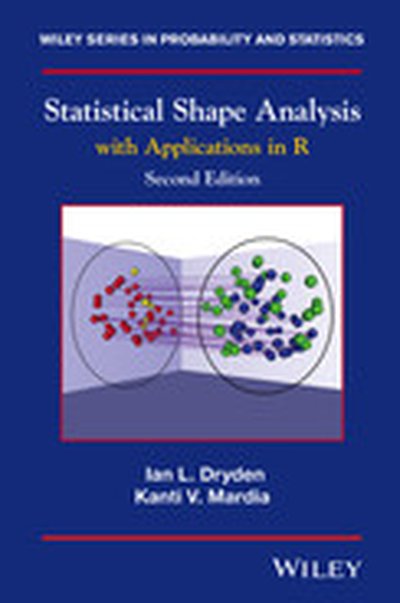
Statistical Shape Analysis, 2nd Edition

A thoroughly revised and updated edition of this introduction to modern statistical methods for shape analysis Shape analysis is an important tool in the many disciplines where objects are compared using geometrical features. Examples include comparing brain shape in schizophrenia; investigating protein molecules in bioinformatics; and describing growth of organisms in biology. This book is a significant update of the highly-regarded `Statistical Shape Analysis’ by the same authors. The new edition lays the foundations of landmark shape analysis, including geometrical concepts and statistical techniques, and extends to include analysis of curves, surfaces, images and other types of object data. Key definitions and concepts are discussed throughout, and the relative merits of different approaches are presented. The authors have included substantial new material on recent statistical developments and offer numerous examples throughout the text. Concepts are introduced in an accessible manner, while retaining sufficient detail for more specialist statisticians to appreciate the challenges and opportunities of this new field. Computer code has been included for instructional use, along with exercises to enable readers to implement the applications themselves in R and to follow the key ideas by hands-on analysis. Statistical Shape Analysis: with Applications in R will offer a valuable introduction to this fast-moving research area for statisticians and other applied scientists working in diverse areas, including archaeology, bioinformatics, biology, chemistry, computer science, medicine, morphometics and image analysis .

Probability and Statistics with Reliability, Queuing, and Computer Science Applications, 2nd Edition

An accessible introduction to probability, stochastic processes, and statistics for computer science and engineering applications This updated and revised edition of the popular classic relates fundamental concepts in probability and statistics to the computer sciences and engineering. The author uses Markov chains and other statistical tools to illustrate processes in reliability of computer systems and networks, fault tolerance, and performance. This edition features an entirely new section on stochastic Petri nets?as well as new sections on system availability modeling, wireless system modeling, numerical solution techniques for Markov chains, and software reliability modeling, among other subjects. Extensive revisions take new developments in solution techniques and applications into account and bring this work totally up to date. It includes more than 200 worked examples and self-study exercises for each section. Probability and Statistics with Reliability, Queuing and Computer Science Applications, Second Edition offers a comprehensive introduction to probability, stochastic processes, and statistics for students of computer science, electrical and computer engineering, and applied mathematics. Its wealth of practical examples and up-to-date information makes it an excellent resource for practitioners as well. An Instructor's Manual presenting detailed solutions to all the problems in the book is available from the Wiley editorial department.

podcast_episode
by Kyle Polich , Ji-Sung Kim (Princeton University)

Deepjazz is a project from Ji-Sung Kim, a computer science student at Princeton University. It is built using Theano, Keras, music21, and Evan Chow's project jazzml. Deepjazz is a computational music project that creates original jazz compositions using recurrent neural networks trained on Pat Metheny's "And Then I Knew". You can hear some of deepjazz's original compositions on soundcloud.

Data Structure and Software Engineering

This title includes a number of Open Access chapters. Data structure and software engineering is an integral part of computer science. This volume presents new approaches and methods to knowledge sharing, brain mapping, data integration, and data storage. The author describes how to manage an organization’s business process and domain data and presents new software and hardware testing methods. The book introduces a game development framework used as a learning aid in a software engineering at the university level. It also features a review of social software engineering metrics and methods for processing business information. It explains how to use Pegasys to create and manage sequence analysis workflows.

Mapping Workflows and Managing Knowledge

This book is Volume II of simple but powerful tools for performance improvement. It is written for managers, analysts, and consultants who realize the value that system dynamic modeling can bring to companies and organizations, and would like to have that capability without a degree in math or computer science. It features the iThink modeling program, which requires no extensive knowledge of math; instead, iThink uses a small set of symbols and rules to allow any keen observer of a system to create models graphically—the user literally draws a graphic of the system within the program and works from that. In Chapter 1, the author describes his own experiences with modeling, the growth and development of modeling software, and makes the case for its value. Chapter 2 is an overview of iThink symbols and rules, sufficient to enable the reader to interpret and understand iThink models; while the program has many advanced features, a great many models are based on the fundamentals in this chapter. Chapter 3 provides guidelines for converting workflow-mapping models into iThink dynamic models, and discusses approaches to building models from scratch. This approach to modeling is consistent with the author’s approach to workflow mapping and analysis, which uses a small symbol set and related discipline to map workflows in any company or organization, without the need for expensive software or extended training. That process is described in this volume of the series, and these maps are often the foundation for modeling the system as a dynamic entity.

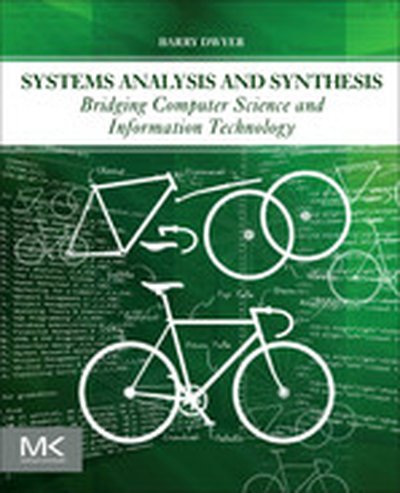
Systems Analysis and Synthesis

Systems Analysis and Synthesis: Bridging Computer Science and Information Technology presents several new graph-theoretical methods that relate system design to core computer science concepts, and enable correct systems to be synthesized from specifications. Based on material refined in the author’s university courses, the book has immediate applicability for working system engineers or recent graduates who understand computer technology, but have the unfamiliar task of applying their knowledge to a real business problem. Starting with a comparison of synthesis and analysis, the book explains the fundamental building blocks of systems-atoms and events-and takes a graph-theoretical approach to database design to encourage a well-designed schema. The author explains how database systems work-useful both when working with a commercial database management system and when hand-crafting data structures-and how events control the way data flows through a system. Later chapters deal with system dynamics and modelling, rule-based systems, user psychology, and project management, to round out readers’ ability to understand and solve business problems. Bridges computer science theory with practical business problems to lead readers from requirements to a working system without error or backtracking Explains use-definition analysis to derive process graphs and avoid large-scale designs that don’t quite work Demonstrates functional dependency graphs to allow databases to be designed without painful iteration Includes chapters on system dynamics and modeling, rule-based systems, user psychology, and project management

Handbook of Big Data

This handbook provides a state-of-the-art overview of the analysis of large-scale datasets. Featuring contributions from statistics and computer science experts in industry and academia, the text instills a working understanding of key statistical and computing ideas that can be readily applied in research and practice. Offering balanced coverage of methodology, theory, and applications, the text describes modern, scalable approaches for analyzing large datasets. It details advances in statistics and machine learning, as well as defines the underlying concepts of the available analytical tools and techniques.

Databases for Small Business: Essentials of Database Management, Data Analysis,and Staff Training for Entrepreneurs and Professionals

This book covers the practical aspects of database design, data cleansing, data analysis, and data protection , among others. The focus is on what you really need to know to create the right database for your small business and to leverage it most effectively to spur growth and revenue. Databases for Small Business is a practical handbook for entrepreneurs, managers, staff, and professionals in small organizations who are not IT specialists but who recognize the need to ramp up their small organizations’ use of data and to round out their own business expertise and office skills with basic database proficiency. Anna Manning—a data scientist who has worked on database design and data analysis in a computer science university research lab, her own small business, and a nonprofit—walks you through the progression of steps that will enable you to extract actionable intelligence and maximum value from your business data in terms of marketing, sales, customer relations, decision making, and business strategy. Dr. Manning illustrates the steps in the book with four running case studies of a small online business, an engineering startup, a small legal firm, and a nonprofit organization.

Advanced Data Management

Advanced data management has always been at the core of efficient database and information systems. Recent trends like big data and cloud computing have aggravated the need for sophisticated and flexible data storage and processing solutions. This book provides a comprehensive coverage of the principles of data management developed in the last decades with a focus on data structures and query languages. It treats a wealth of different data models and surveys the foundations of structuring, processing, storing and querying data according these models. Starting off with the topic of database design, it further discusses weaknesses of the relational data model, and then proceeds to convey the basics of graph data, tree-structured XML data, key-value pairs and nested, semi-structured JSON data, columnar and record-oriented data as well as object-oriented data. The final chapters round the book off with an analysis of fragmentation, replication and consistency strategies for data management in distributed databases as well as recommendations for handling polyglot persistence in multi-model databases and multi-database architectures. While primarily geared towards students of Master-level courses in Computer Science and related areas, this book may also be of benefit to practitioners looking for a reference book on data modeling and query processing. It provides both theoretical depth and a concise treatment of open source technologies currently on the market.

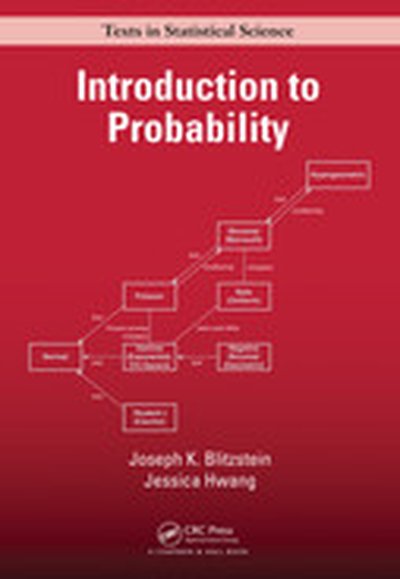
Introduction to Probability

Developed from celebrated Harvard statistics lectures, Introduction to Probability provides essential language and tools for understanding statistics, randomness, and uncertainty. The book explores a wide variety of applications and examples, ranging from coincidences and paradoxes to Google PageRank and Markov chain Monte Carlo (MCMC). Additional application areas explored include genetics, medicine, computer science, and information theory. The print book version includes a code that provides free access to an eBook version. The authors present the material in an accessible style and motivate concepts using real-world examples. Throughout, they use stories to uncover connections between the fundamental distributions in statistics and conditioning to reduce complicated problems to manageable pieces. The book includes many intuitive explanations, diagrams, and practice problems. Each chapter ends with a section showing how to perform relevant simulations and calculations in R, a free statistical software environment.

Numpy Beginner's Guide (Update)

Delve into the capabilities of NumPy, the cornerstone of mathematical computations in Python. In this guide, you will learn how to utilize NumPy to its fullest by exploring its powerful array and matrix operations, and also integrate it with other libraries like SciPy and matplotlib for advanced analysis and visualization. What this Book will help me do Master the installation and configuration of the NumPy library on different systems. Perform advanced array and matrix operations efficiently using NumPy. Understand and utilize commonly used NumPy modules for computational tasks. Design and generate complex plots using the matplotlib library. Learn best practices for testing and validating numerical computations with NumPy. Author(s) Ivan Idris is an experienced data analyst and Python enthusiast, proficient in utilizing numerical and scientific libraries to address complex problems. With a strong background in mathematics and computer science, Ivan brings a practical approach to his teachings. He emphasizes clarity and hands-on practice, making expert-level concepts accessible and engaging for learners. Who is it for? This book is perfect for scientists, engineers, and data professionals with a solid foundation in Python. It's meant for those seeking to deepen their understanding of numerical methods and scientific computing. If you want to harness the power of NumPy to streamline your computations and develop high-performance solutions, this guide is for you.

Machine Learning

This tutorial text gives a unifying perspective on machine learning by covering both probabilistic and deterministic approaches -which are based on optimization techniques – together with the Bayesian inference approach, whose essence lies in the use of a hierarchy of probabilistic models. The book presents the major machine learning methods as they have been developed in different disciplines, such as statistics, statistical and adaptive signal processing and computer science. Focusing on the physical reasoning behind the mathematics, all the various methods and techniques are explained in depth, supported by examples and problems, giving an invaluable resource to the student and researcher for understanding and applying machine learning concepts. The book builds carefully from the basic classical methods to the most recent trends, with chapters written to be as self-contained as possible, making the text suitable for different courses: pattern recognition, statistical/adaptive signal processing, statistical/Bayesian learning, as well as short courses on sparse modeling, deep learning, and probabilistic graphical models. All major classical techniques: Mean/Least-Squares regression and filtering, Kalman filtering, stochastic approximation and online learning, Bayesian classification, decision trees, logistic regression and boosting methods. The latest trends: Sparsity, convex analysis and optimization, online distributed algorithms, learning in RKH spaces, Bayesian inference, graphical and hidden Markov models, particle filtering, deep learning, dictionary learning and latent variables modeling. Case studies - protein folding prediction, optical character recognition, text authorship identification, fMRI data analysis, change point detection, hyperspectral image unmixing, target localization, channel equalization and echo cancellation, show how the theory can be applied. MATLAB code for all the main algorithms are available on an accompanying website, enabling the reader to experiment with the code.

Data Mining and Predictive Analytics, 2nd Edition

Learn methods of data analysis and their application to real-world data sets This updated second edition serves as an introduction to data mining methods and models, including association rules, clustering, neural networks, logistic regression, and multivariate analysis. The authors apply a unified "white box" approach to data mining methods and models. This approach is designed to walk readers through the operations and nuances of the various methods, using small data sets, so readers can gain an insight into the inner workings of the method under review. Chapters provide readers with hands-on analysis problems, representing an opportunity for readers to apply their newly-acquired data mining expertise to solving real problems using large, real-world data sets. Data Mining and Predictive Analytics, Second Edition: Offers comprehensive coverage of association rules, clustering, neural networks, logistic regression, multivariate analysis, and R statistical programming language Features over 750 chapter exercises, allowing readers to assess their understanding of the new material Provides a detailed case study that brings together the lessons learned in the book Includes access to the companion website, www.dataminingconsultant, with exclusive password-protected instructor content Data Mining and Predictive Analytics, Second Edition will appeal to computer science and statistic students, as well as students in MBA programs, and chief executives.