talk-data.com talk-data.com

Topic

Computer Science

programming algorithms data_structures

166

tagged

Activity Trend

9 peak/qtr
2020-Q1 2026-Q1

Activities

166 activities · Newest first

Dataflow Processing

Since its first volume in 1960, Advances in Computers has presented detailed coverage of innovations in computer hardware, software, theory, design, and applications. It has also provided contributors with a medium in which they can explore their subjects in greater depth and breadth than journal articles usually allow. As a result, many articles have become standard references that continue to be of significant, lasting value in this rapidly expanding field. In-depth surveys and tutorials on new computer technology Well-known authors and researchers in the field Extensive bibliographies with most chapters Many of the volumes are devoted to single themes or subfields of computer science

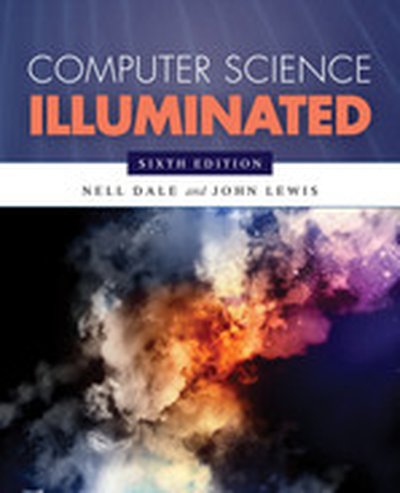
Computer Science Illuminated, 6th Edition

Each new print copy includes Navigate 2 Advantage Access that unlocks a comprehensive and interactive eBook, student practice activities and assessments, a full suite of instructor resources, and learning analytics reporting tools.

Fully revised and updated, the Sixth Edition of the best-selling text Computer Science Illuminated retains the accessibility and in-depth coverage of previous editions, while incorporating all-new material on cutting-edge issues in computer science. Authored by the award-winning Nell Dale and John Lewis, Computer Science Illuminated’s unique and innovative layered approach moves through the levels of computing from an organized, language-neutral perspective.

Designed for the introductory computing and computer science course, this student-friendly Sixth Edition provides students with a solid foundation for further study, and offers non-majors a complete introduction to computing.

Key Features of the Sixth Edition include:

Access to Navigate 2 online learning materials including a comprehensive and interactive eBook, student practice activities and assessments, learning analytics reporting tools, and more
Completely revised sections on HTML and CSS
Updates regarding Top Level Domains, Social Networks, and Google Analytics
All-new section on Internet management, including ICANN control and net neutrality 
New design, including fully revised figures and tables
New and updated Did You Know callouts are included in the chapter margins
New and revised Ethical Issues and Biographies throughout emphasize the history and breadth of computing
Available in our customizable PUBLISH platform

A collection of programming language chapters are available as low-cost bundling options. Available chapters include: Java, C++, Python, Alice, SQL, VB.NET, RUBY, Perl, Pascal, and JavaScript.

With Navigate 2, technology and content combine to expand the reach of your classroom. Whether you teach an online, hybrid, or traditional classroom-based course, Navigate 2 delivers unbeatable value. Experience Navigate 2 today at www.jblnavigate.com/2

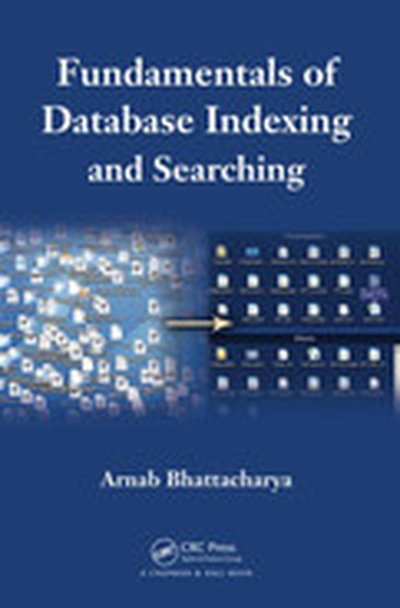
Fundamentals of Database Indexing and Searching

Fundamentals of Database Indexing and Searching presents well-known database searching and indexing techniques. It focuses on similarity search queries, showing how to use distance functions to measure the notion of dissimilarity. After defining database queries and similarity search queries, the book organizes the most common and representative index structures according to their characteristics. The author first describes low-dimensional index structures, memory-based index structures, and hierarchical disk-based index structures. He then outlines useful distance measures and index structures that use the distance information to efficiently solve similarity search queries. Focusing on the difficult dimensionality phenomenon, he also presents several indexing methods that specifically deal with high-dimensional spaces. In addition, the book covers data reduction techniques, including embedding, various data transforms, and histograms. Through numerous real-world examples, this book explores how to effectively index and search for information in large collections of data. Requiring only a basic computer science background, it is accessible to practitioners and advanced undergraduate students.

Making Sense of Data I: A Practical Guide to Exploratory Data Analysis and Data Mining, 2nd Edition

Praise for the First Edition "...a well-written book on data analysis and data mining that provides an excellent foundation..." —CHOICE "This is a must-read book for learning practical statistics and data analysis..." —Computing Reviews.com A proven go-to guide for data analysis, Making Sense of Data I: A Practical Guide to Exploratory Data Analysis and Data Mining, Second Edition focuses on basic data analysis approaches that are necessary to make timely and accurate decisions in a diverse range of projects. Based on the authors' practical experience in implementing data analysis and data mining, the new edition provides clear explanations that guide readers from almost every field of study. In order to facilitate the needed steps when handling a data analysis or data mining project, a step-by-step approach aids professionals in carefully analyzing data and implementing results, leading to the development of smarter business decisions. The tools to summarize and interpret data in order to master data analysis are integrated throughout, and the Second Edition also features: Updated exercises for both manual and computer-aided implementation with accompanying worked examples New appendices with coverage on the freely available Traceis" software, including tutorials using data from a variety of disciplines such as the social sciences, engineering, and finance New topical coverage on multiple linear regression and logistic regression to provide a range of widely used and transparent approaches Additional real-world examples of data preparation to establish a practical background for making decisions from data Making Sense of Data I: A Practical Guide to Exploratory Data Analysis and Data Mining, Second Edition is an excellent reference for researchers and professionals who need to achieve effective decision making from data. The Second Edition is also an ideal textbook for undergraduate and graduate-level courses in data analysis and data mining and is appropriate for cross-disciplinary courses found within computer science and engineering departments.

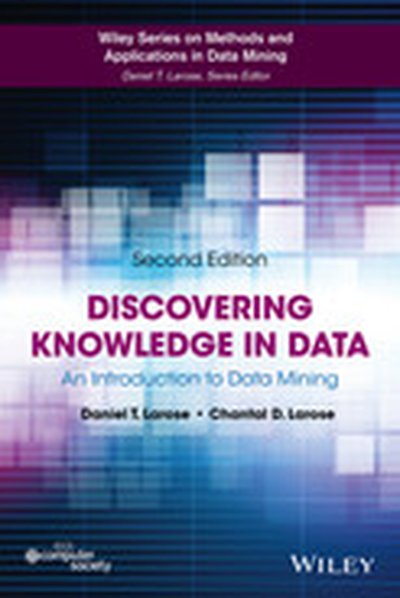
Discovering Knowledge in Data: An Introduction to Data Mining, 2nd Edition

The field of data mining lies at the confluence of predictive analytics, statistical analysis, and business intelligence. Due to the ever-increasing complexity and size of data sets and the wide range of applications in computer science, business, and health care, the process of discovering knowledge in data is more relevant than ever before. This book provides the tools needed to thrive in today's big data world. The author demonstrates how to leverage a company's existing databases to increase profits and market share, and carefully explains the most current data science methods and techniques. The reader will "learn data mining by doing data mining". By adding chapters on data modelling preparation, imputation of missing data, and multivariate statistical analysis, Discovering Knowledge in Data, Second Edition remains the eminent reference on data mining. The second edition of a highly praised, successful reference on data mining, with thorough coverage of big data applications, predictive analytics, and statistical analysis. Includes new chapters on Multivariate Statistics, Preparing to Model the Data, and Imputation of Missing Data, and an Appendix on Data Summarization and Visualization Offers extensive coverage of the R statistical programming language Contains 280 end-of-chapter exercises Includes a companion website with further resources for all readers, and Powerpoint slides, a solutions manual, and suggested projects for instructors who adopt the book

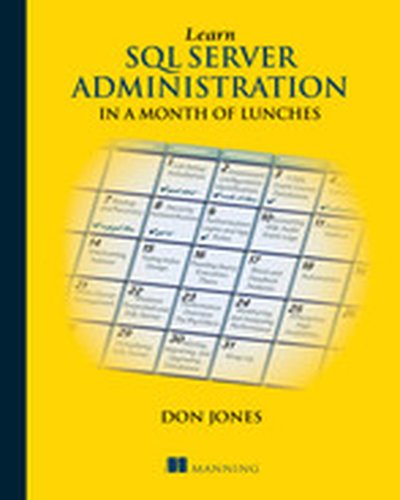
Learn SQL Server Administration in a Month of Lunches

Learn SQL Server Administration in a Month of Lunches is the perfect way to get started with SQL Server operations, including maintenance, backup and recovery, high availability, and performance monitoring. In about an hour a day over a month, you'll learn exactly what you can do, and what you shouldn't touch. Most importantly, you'll learn the day-to-day tasks and techniques you need to keep SQL Server humming along smoothly. About the Technology About the Book Microsoft SQL Server is used by millions of businesses, ranging in size from Fortune 500s to small shops worldwide. Whether you're just getting started as a DBA, supporting a SQL Server-driven application, or you've been drafted by your office as the SQL Server admin, you do not need a thousand-page book to get up and running. Learn SQL Server Administration in a Month of Lunches is the perfect way to get started with SQL Server. This concise, easy-to-read book skips academic introductions and teaches you day-to-day techniques for maintenance, backup and recovery, performance monitoring, and more. Each of the 21 short lessons gives you practical takeaways you'll use over and over. What's Inside Master the basics—ndexes, logins, backup, recovery... and more Learn what you can and cannot do when supporting a third-party application Monitor and improve performance Written by expert trainer and bestselling author Don Jones About the Reader About the Author Don Jones is a Microsoft MVP, speaker, and trainer. He is the creator of the Month of Lunches series and author of over 50 books on PowerShell, IIS, Active Directory, SCCM, SQL Server, and more. Quotes Concise and easy to understand, even on the most challenging topics. - Spike Xavier, Transmission IT, LLC Don has written another gem equal to his PowerShell titles. - Carm Vecchio, Computer Science Corporation (CSC) The essentials of SQL Server Administration, distilled into a friendly format. - Adam M Dutko, RunByMany, LLC Extremely useful for anyone managing or trying to manage SQL Server. - Maqbool Patel, PhD, MEDHOST Contains all the steps needed to become a professional DBA. - Ian Stirk, Stirk Consultancy, Ltd

Practical Data Science with R

NEWER EDITION AVAILABLE IN MEAP Practical Data Science with R, Second Edition is now available in the Manning Early Access Program. An eBook of this older edition is included at no additional cost when you buy the revised edition! You may still purchase Practical Data Science with R (First Edition) using the Buy options on this page. Practical Data Science with R lives up to its name. It explains basic principles without the theoretical mumbo-jumbo and jumps right to the real use cases you'll face as you collect, curate, and analyze the data crucial to the success of your business. You'll apply the R programming language and statistical analysis techniques to carefully explained examples based in marketing, business intelligence, and decision support. About the Technology Business analysts and developers are increasingly collecting, curating, analyzing, and reporting on crucial business data. The R language and its associated tools provide a straightforward way to tackle day-to-day data science tasks without a lot of academic theory or advanced mathematics. About the Book Practical Data Science with R shows you how to apply the R programming language and useful statistical techniques to everyday business situations. Using examples from marketing, business intelligence, and decision support, it shows you how to design experiments (such as A/B tests), build predictive models, and present results to audiences of all levels. What's Inside Data science for the business professional Statistical analysis using the R language Project lifecycle, from planning to delivery Numerous instantly familiar use cases Keys to effective data presentations About the Reader This book is accessible to readers without a background in data science. Some familiarity with basic statistics, R, or another scripting language is assumed. About the Authors Nina Zumel and John Mount are cofounders of a San Francisco-based data science consulting firm. Both hold PhDs from Carnegie Mellon and blog on statistics, probability, and computer science at win-vector.com. Quotes A unique and important addition to any data scientist’s library. - From the Foreword by Jim Porzak, Cofounder Bay Area R Users Group Covers the process end-to-end, from data exploration to modeling to delivering the results. - Nezih Yigitbasi, Intel Full of useful gems for both aspiring and experienced data scientists. - Fred Rahmanian, Siemens Healthcare Hands-on data analysis with real-world examples. Highly recommended. - Dr. Kostas Passadis, IPTO

Swarm Intelligence and Bio-Inspired Computation

Swarm Intelligence and bio-inspired computation have become increasing popular in the last two decades. Bio-inspired algorithms such as ant colony algorithms, bat algorithms, bee algorithms, firefly algorithms, cuckoo search and particle swarm optimization have been applied in almost every area of science and engineering with a dramatic increase of number of relevant publications. This book reviews the latest developments in swarm intelligence and bio-inspired computation from both the theory and application side, providing a complete resource that analyzes and discusses the latest and future trends in research directions. It can help new researchers to carry out timely research and inspire readers to develop new algorithms. With its impressive breadth and depth, this book will be useful for advanced undergraduate students, PhD students and lecturers in computer science, engineering and science as well as researchers and engineers. Focuses on the introduction and analysis of key algorithms Includes case studies for real-world applications Contains a balance of theory and applications, so readers who are interested in either algorithm or applications will all benefit from this timely book.

Data Points: Visualization That Means Something

A fresh look at visualization from the author of Visualize This Whether it's statistical charts, geographic maps, or the snappy graphical statistics you see on your favorite news sites, the art of data graphics or visualization is fast becoming a movement of its own. In Data Points: Visualization That Means Something, author Nathan Yau presents an intriguing complement to his bestseller Visualize This, this time focusing on the graphics side of data analysis. Using examples from art, design, business, statistics, cartography, and online media, he explores both standard-and not so standard-concepts and ideas about illustrating data. Shares intriguing ideas from Nathan Yau, author of Visualize This and creator of flowingdata.com, with over 66,000 subscribers Focuses on visualization, data graphics that help viewers see trends and patterns they might not otherwise see in a table Includes examples from the author's own illustrations, as well as from professionals in statistics, art, design, business, computer science, cartography, and more Examines standard rules across all visualization applications, then explores when and where you can break those rules Create visualizations that register at all levels, with Data Points: Visualization That Means Something.

Concepts of Database Management System

Concepts of Database Management System is designed to meet the syllabi requirements of undergraduate students of computer applications and computer science. It describes the concepts in an easy-to-understand language with sufficient number of examples. The overview of emerging trends in databases is thoroughly explained. A brief introduction to PL/SQL, MS-Access and Oracle is discussed to help students get a flavor of different types of database management systems.

Introduction to Probability and Stochastic Processes with Applications

An easily accessible, real-world approach to probability and stochastic processes Introduction to Probability and Stochastic Processes with Applications presents a clear, easy-to-understand treatment of probability and stochastic processes, providing readers with a solid foundation they can build upon throughout their careers. With an emphasis on applications in engineering, applied sciences, business and finance, statistics, mathematics, and operations research, the book features numerous real-world examples that illustrate how random phenomena occur in nature and how to use probabilistic techniques to accurately model these phenomena. The authors discuss a broad range of topics, from the basic concepts of probability to advanced topics for further study, including Itô integrals, martingales, and sigma algebras. Additional topical coverage includes: Distributions of discrete and continuous random variables frequently used in applications Random vectors, conditional probability, expectation, and multivariate normal distributions The laws of large numbers, limit theorems, and convergence of sequences of random variables Stochastic processes and related applications, particularly in queueing systems Financial mathematics, including pricing methods such as risk-neutral valuation and the Black-Scholes formula Extensive appendices containing a review of the requisite mathematics and tables of standard distributions for use in applications are provided, and plentiful exercises, problems, and solutions are found throughout. Also, a related website features additional exercises with solutions and supplementary material for classroom use. Introduction to Probability and Stochastic Processes with Applications is an ideal book for probability courses at the upper-undergraduate level. The book is also a valuable reference for researchers and practitioners in the fields of engineering, operations research, and computer science who conduct data analysis to make decisions in their everyday work.

Bayesian Analysis of Stochastic Process Models

Bayesian analysis of complex models based on stochastic processes has in recent years become a growing area. This book provides a unified treatment of Bayesian analysis of models based on stochastic processes, covering the main classes of stochastic processing including modeling, computational, inference, forecasting, decision making and important applied models. Key features: Explores Bayesian analysis of models based on stochastic processes, providing a unified treatment. Provides a thorough introduction for research students. Computational tools to deal with complex problems are illustrated along with real life case studies Looks at inference, prediction and decision making. Researchers, graduate and advanced undergraduate students interested in stochastic processes in fields such as statistics, operations research (OR), engineering, finance, economics, computer science and Bayesian analysis will benefit from reading this book. With numerous applications included, practitioners of OR, stochastic modelling and applied statistics will also find this book useful.

Handbook of Real-World Applications in Modeling and Simulation

Introduces various modeling and simulation methods and paradigms that are used to explain and solve the predominant challenges facing society Handbook of Real-World Applications in Modeling and Simulation provides a thorough explanation of modeling and simulation in the most useful, current, and predominant applied areas of transportation, homeland security, medicine, operational research, military science, and business modeling. Offering a cutting-edge and accessible presentation, this book discusses how and why the presented domains have become leading applications of modeling and simulation techniques. Contributions from leading academics and researchers integrate modeling and simulation theories, methods, and data to analyze challenges that involve technological and social issues. The book begins with an introduction that explains why modeling and simulation is a reliable analysis assessment tool for complex systems problems. Subsequent chapters provide an orientation to various modeling and simulation methods and paradigms that are used to explain and solve the predominant challenges across real-world applied domains. Additionally, the handbook: Provides a practical one-stop reference on modeling and simulation and contains an accessible introduction to key concepts and techniques Introduces, trains, and prepares readers from statistics, mathematics, engineering, computer science, economics, and business to use modeling and simulation in their studies and research Features case studies that are representative of fundamental areas of multidisciplinary studies and provides a concise look at the key concepts of modeling and simulation Contains a collection of original ideas on modeling and simulation to help academics and practitioners develop a multifunctional perspective Self-contained chapters offer a comprehensive approach to explaining each respective domain and include sections that explore the related history, theory, modeling paradigms, and case studies. Key terms and techniques are clearly outlined, and exercise sets allow readers to test their comprehension of the presented material. Handbook of Real-World Applications in Modeling and Simulation is an essential reference for academics and practitioners in the areas of operations research, business, management science, engineering, statistics, mathematics, and computer science. The handbook is also a suitable supplement for courses on modeling and simulation at the graduate level.

Data Mining: Concepts and Techniques, 3rd Edition

Data Mining: Concepts and Techniques provides the concepts and techniques in processing gathered data or information, which will be used in various applications. Specifically, it explains data mining and the tools used in discovering knowledge from the collected data. This book is referred as the knowledge discovery from data (KDD). It focuses on the feasibility, usefulness, effectiveness, and scalability of techniques of large data sets. After describing data mining, this edition explains the methods of knowing, preprocessing, processing, and warehousing data. It then presents information about data warehouses, online analytical processing (OLAP), and data cube technology. Then, the methods involved in mining frequent patterns, associations, and correlations for large data sets are described. The book details the methods for data classification and introduces the concepts and methods for data clustering. The remaining chapters discuss the outlier detection and the trends, applications, and research frontiers in data mining. This book is intended for Computer Science students, application developers, business professionals, and researchers who seek information on data mining. Presents dozens of algorithms and implementation examples, all in pseudo-code and suitable for use in real-world, large-scale data mining projects Addresses advanced topics such as mining object-relational databases, spatial databases, multimedia databases, time-series databases, text databases, the World Wide Web, and applications in several fields Provides a comprehensive, practical look at the concepts and techniques you need to get the most out of your data

Biological Computation

The area of biologically inspired computing, or biological computation, involves the development of new, biologically based techniques for solving difficult computational problems. A unified overview of computer science ideas inspired by biology, Biological Computation presents the most fundamental and significant concepts in this area. In the book, students discover that bacteria communicate, that DNA can be used for performing computations, how evolution solves optimization problems, that the way ants organize their nests can be applied to solve clustering problems, and what the human immune system can teach us about protecting computer networks. The authors discuss more biological examples such as these, along with the computational techniques developed from these scenarios. The text focuses on cellular automata, evolutionary computation, neural networks, and molecular computation. Each chapter explores the biological background, describes the computational techniques, gives examples of applications, discusses possible variants of the techniques, and includes exercises and solutions. The authors use the examples and exercises to illustrate key ideas and techniques. Clearly conveying the essence of the major computational approaches in the field, this book brings students to the point where they can either produce a working implementation of the techniques or effectively use one of the many available implementations. Moreover, the techniques discussed reflect fundamental principles that can be applied beyond bio-inspired computing. Supplementary material is available on Dr. Unger's website.

Mastering XPages: A Step-by-Step Guide to XPages Application Development and the XSP Language

The first complete, practical guide to XPages development - direct from members of the XPages development team at IBM Lotus Martin Donnelly, Mark Wallace, and Tony McGuckin have written the definitive programmer's guide to utilizing this breakthrough technology. Packed with tips, tricks, and best practices from IBM's own XPages developers, Mastering XPages brings together all the information developers need to become experts - whether you’re experienced with Notes/Domino development or not. The authors start from the very beginning, helping developers steadily build your expertise through practical code examples and clear, complete explanations. Readers will work through scores of real-world XPages examples, learning cutting-edge XPages and XSP language skills and gaining deep insight into the entire development process. Drawing on their own experience working directly with XPages users and customers, the authors illuminate both the technology and how it can be applied to solving real business problems. Martin Donnelly previously led a software startup that developed and distributed small business accounting software. Donnelly holds a Commerce degree from University College Cork and an M.S. in Computer Science from Boston University. Mark Wallace has worked at IBM for 15 years on many projects as a technical architect and application developer. Tony McGuckin participates in the Lotus OneUI Web Application and iWidget Adoption Workgroup. He holds a bachelor's degree in Software Engineering from the University of Ulster.

SAP® MM Questions and Answers

Designed for SAP users as a quick reference or for computer science and business students, SAP MM Questions and Answers includes all the major concepts related to SAP MM functionality, technical configuration, and implementation in an easy-to-understand question and answer format. It discusses the new aspects related to SAP ERP 6.0 and all the important MM codes and concepts for materials and vendors, including clients, company codes, plants, storage locations, purchase organizations, etc. The organized and accessible format allows the reader to quickly find the questions on specific subjects and provides all of the details to pass certification exams in a step-by-step, easy-to-read method of instruction.

SAP® SD Questions and Answers

Designed for SAP users as a quick reference or for computer science and business students, SAP SD Questions and Answers includes all the major concepts related to SAP SD functionality, technical configuration, and implementation in an easy-to-understand question and answer format. This organized and accessible format allows the reader to quickly find the questions on specific subjects and provides all of the details to pass certification exams in a step-by-step, easy-to-read method of instruction.

Topics Covered include Invoicing, Distribution Points, Backorder Processing, Account Determination, Material Master, Transaction Codes, Partner Procedures, Rebates and Refunds, Interfaces, Condition Types, Inventory issues, Administration Tables and more!

The SQL Programming Language

Ideal as a stand-alone primer or when used in conjunction with another introductory computer science text, SQL: The Programming Language will prepare students for core SQL programming courses offered in CS and CIS. With a clear, concise, and descriptive writing style, students will see real-world examples and cases of SQL functionality in database management. Screen shots and figures throughout the text allow readers to visualize important concepts discussed and student exercises urge them to explore problems on their own.

Googling Security: How Much Does Google Know About You?

What Does Google Know about You? And Who Are They Telling? When you use Google’s “free” services, you pay, big time–with personal information about yourself. Google is making a fortune on what it knows about you…and you may be shocked by just how much Google does know. Googling Security is the first book to reveal how Google’s vast information stockpiles could be used against you or your business–and what you can do to protect yourself. Unlike other books on Google hacking, this book covers information you disclose when using all of Google’s top applications, not just what savvy users can retrieve via Google’s search results. West Point computer science professor Greg Conti reveals the privacy implications of Gmail, Google Maps, Google Talk, Google Groups, Google Alerts, Google’s new mobile applications, and more. Drawing on his own advanced security research, Conti shows how Google’s databases can be used by others with bad intent, even if Google succeeds in its pledge of “don’t be evil.” Uncover the trail of informational “bread crumbs” you leave when you use Google search How Gmail could be used to track your personal network of friends, family, and acquaintances How Google’s map and location tools could disclose the locations of your home, employer, family and friends, travel plans, and intentions How the information stockpiles of Google and other online companies may be spilled, lost, taken, shared, or subpoenaed and later used for identity theft or even blackmail How the Google AdSense and DoubleClick advertising services could track you around the Web How to systematically reduce the personal information you expose or give away This book is a wake-up call and a “how-to” self-defense manual: an indispensable resource for everyone, from private citizens to security professionals, who relies on Google. Preface xiii Acknowledgments xix About the Author xxi Chapter 1: Googling 1 Chapter 2: Information Flows and Leakage 31 Chapter 3: Footprints, Fingerprints, and Connections 59 Chapter 4: Search 97 Chapter 5: Communications 139 Chapter 6: Mapping, Directions, and Imagery 177 Chapter 7: Advertising and Embedded Content 205 Chapter 8: Googlebot 239 Chapter 9: Countermeasures 259 Chapter 10: Conclusions and a Look to the Future 299 Index 317