talk-data.com talk-data.com

Topic

data-science

2252

tagged

Activity Trend

1 peak/qtr
2020-Q1 2026-Q1

Activities

2252 activities · Newest first

Workflow Automation with Microsoft Power Automate - Third Edition

This book serves as a comprehensive guide to mastering Microsoft Power Automate, offering step-by-step instructions for creating and managing low-code workflows. From beginner to advanced techniques, it covers cloud and RPA functionalities, enhanced by AI features like Co-pilot. You'll gain the skills to build, analyze, and optimize powerful automations tailored to your organization's needs. What this Book will help me do Understand and implement workflows using Power Automate's connectors and triggers for seamless integration. Utilize AI Builder and the Co-pilot feature to design intelligent workflows with generative AI capabilities. Master robotic process automation to bridge digital and legacy systems effectively. Learn to monitor and troubleshoot workflows while ensuring security and compliance in automation. Scale and govern enterprise-level workflows with best practices for maintainability. Author(s) Aaron Guilmette is a seasoned expert in the field of workflow automation with extensive experience in the Microsoft ecosystem. As the author of multiple books on Power Automate, Aaron combines technical depth with practical know-how. He brings a hands-on approach to guiding readers through advanced features, making automation accessible and effective. Who is it for? This book is ideal for power users, information workers, and citizen developers looking to integrate automation into their work. Whether you're new to automation or expanding your skills, this book provides actionable insights. Familiarity with the Microsoft 365 platform is recommended but not required, as the book covers foundational as well as advanced topics. It is perfect for anyone aiming to streamline workflows and drive efficiency in their projects or organization.
Applied Time Series Analysis for the Social Sciences

EXPLORE THIS INDISPENSABLE AND COMPREHENSIVE GUIDE TO TIME SERIES ANALYSIS FOR STUDENTS AND PRACTITIONERS IN A WIDE VARIETY OF DISCIPLINES Applied Time Series Analysis for the Social Sciences: Specification, Estimation, and Inference delivers an accessible guide to time series analysis that includes both theory and practice. The coverage spans developments from ARIMA intervention models and generalized least squares to the London School of Economics (LSE) approach and vector autoregression. Designed to break difficult concepts into manageable pieces while offering plenty of examples and exercises, the author demonstrates the use of lag operator algebra throughout to provide a better understanding of dynamic specification and the connections between model specifications that appear to be more different than they are. The book is ideal for those with minimal mathematical experience, intended to follow a course in multiple regression, and includes exercises designed to build general skills such as mathematical expectation calculations to derive means and variances. Readers will also benefit from the inclusion of: A focus on social science applications and a mix of theory and detailed examples provided throughout An accompanying website with data sets and examples in Stata, SAS and R A simplified unit root testing strategy based on recent developments An examination of various uses and interpretations of lagged dependent variables and the common pitfalls students and researchers face in this area An introduction to LSE methodology such as the COMFAC critique, general-to-specific modeling, and the use of forecasting to evaluate and test models Perfect for students and professional researchers in the political sciences, public policy, sociology, and economics, Applied Time Series Analysis for the Social Sciences: Specification, Estimation, and Inference will also earn a place in the libraries of post graduate students and researchers in public health, public administration and policy, and education.

Graph Theory for Computer Science

This book is a vital resource for anyone looking to understand the essential role of graph theory as the unifying thread that connects and provides innovative solutions across a wide spectrum of modern computer science disciplines. Graph theory is a traditional mathematical discipline that has evolved as a basic tool for modeling and analyzing the complex relationships between different technological landscapes. Graph theory helps explain the semantic and syntactic relationships in natural language processing, a technology behind many businesses. Disciplinary and industry developments are seeing a major transition towards more interconnected and data-driven decision-making, and the application of graph theory will facilitate this transition. Disciplines such as parallel and distributive computing will gain insights into how graph theory can help with resource optimization and job scheduling, creating considerable change in the design and development of scalable systems. This book provides comprehensive coverage of how graph theory acts as the thread that connects different areas of computer science to create innovative solutions to modern technological problems. Using a multi-faceted approach, the book explores the fundamentals and role of graph theory in molding complex computational processes across a wide spectrum of computer science.

Practical Signals Theory with MATLAB Applications, 2nd Edition

A hands-on resource designed to teach the mathematics of signals and systems with MATLAB™ In this newly revised second edition of Practical Signals Theory with MATLAB™ Applications, Richard Tervo delivers an articulate presentation of the mathematics underlying real world engineering applications and everyday electronic devices. The new edition provides extended coverage of communication systems—including digital and spread spectrum communications—as well as a new introductory chapter on using MATLAB™ as a tool to visualize the mathematics of signals and systems. The text contains numerous hands-on examples and expanded end-of-chapter exercises. It is a one-stop reference for signals and systems, explaining aspects of commonplace signal types, orthogonality and signal decomposition, transformations, and the graphical presentation of calculations and results. Readers will also find: A solid introduction to the mathematics of continuous and discrete signals represented in time and frequency domains Thorough coverage of the classic Fourier, Laplace and z-transforms, and their many applications New end-of-chapter worked exercises, a variety of in-line study questions with answers and easily reproducible MATLAB™ code demonstrations Bonus material on related applications in different fields of study and a companion website designed to support additional learning Perfect for undergraduate and graduate students of signals and systems, signals theory, and related areas of electrical engineering, Practical Signals Theory with MATLAB™ Applications will also benefit researchers and professors in the field of system design and signal processing.

Power BI for Finance

Build effective data models and reports in Power BI for financial planning, budgeting, and valuations with practical templates, logic, and step-by-step guidance. Free with your book: DRM-free PDF version + access to Packt's next-gen Reader Key Features Engineer optimal star schema data models for financial planning and analysis Implement common financial logic, calendars, and variance calculations Create dynamic, formatted reports for income statements, balance sheets, and cash flow Purchase of the print or Kindle book includes a free PDF eBook Book Description Martin Kratky brings his global experience of over 20 years as co-founder of Managility and creator of Acterys to empower CFOs and accountants with Power BI for Finance through this hands-on guide to streamlining and enhancing financial processes. Starting with the foundation of every effective BI solution, a well-designed data model, the book shows you how to structure star schemas and integrate common financial data sources like ERP and accounting systems. You’ll then learn to implement key financial logic using DAX and M, covering calendars, KPIs, and variance calculations. The book offers practical advice on creating clear and compliant financial reports, such as income statements, balance sheets, and cash flows with visual design and formatting best practices. With dedicated chapters on advanced workflows, you’ll learn how to handle multi-currency setups, perform group consolidations, and implement planning models like rolling forecasts, annual budgets, and sales and operations planning (S&OP). As you advance, you’ll gain insights from real-world case studies covering company valuations, Excel integration, and the use of write-back methods with Dynamics Business Performance Planning and Acterys. The concluding chapters highlight how AI and Copilot enhance financial analytics. Email sign-up and proof of purchase required What you will learn Apply multi-currency handling and group consolidation techniques in Power BI Model discounted cash flow and company valuation scenarios Design and manage write-back workflows with Dynamics BPP and Acterys Integrate Excel and Power BI using live connections and cube formulas Utilize AI, Copilot, and LLMs to enhance automation and insight generation Create complete finance-focused dashboards for sales and operations planning Who this book is for This book is for finance professionals including CFOs, FP&A managers, controllers, and certified accountants who want to enhance reporting, planning, and forecasting using Power BI. Basic familiarity with Power BI and financial concepts is recommended to get the most out of this hands-on guide.

The Book of R, 2nd Edition

The Book of R is a comprehensive, beginner-friendly guide to R, the world’s most popular programming language for statistical analysis. Even if you have no programming experience and little more than a grounding in the basics of mathematics, you’ll find everything you need to begin writing programs in R. You’ll start with the basics, like how to handle data and write simple programs, before moving on to more advanced topics, like producing statistical summaries of your data and performing tests and modeling. You’ll even learn how to create impressive data visualizations with R’s graphics tools and contributed packages, like ggplot2, ggvis, and rgl. Dozens of hands-on exercises take you from theory to practice as you learn: The fundamentals of programming in R, including how to write data frames, create functions, and use variables, statements, and loops Statistical concepts like exploratory data analysis, probabilities, hypothesis tests, and regression modeling and how to execute them in R How to access R’s thousands of functions, libraries, and datasets How to draw valid and useful conclusions from your data and create publication-quality graphics of your results The Book of R brings both statistics and R to life. With clear explanations, practical examples, and hands-on exercises, this book opens the door to the evolving world of data analysis. New to this edition: The entire book has been revised and expanded, with nearly 100 pages of new content and exercises. You’ll find greater coverage of data plots and R graphics, guidance on using pipes to string together commands, and new ways to read and write external files, among many other lessons.

The Definitive Guide to Microsoft Fabric

Master Microsoft Fabric from basics to advanced architectures with expert guidance to unify, secure, and scale analytics on real-world data platforms Key Features Build a complete data analytics platform with Microsoft Fabric Apply proven architectures, governance, and security strategies Gain real-world insights from five seasoned data experts Purchase of the print or Kindle book includes a free PDF eBook Book Description Microsoft Fabric is reshaping how organizations manage, analyze, and act on data by unifying ingestion, storage, transformation, analytics, AI, and visualization in a single platform. The Definitive Guide to Microsoft Fabric takes you from your very first workspace to building a secure, scalable, and future-proof analytics environment. You’ll learn how to unify data in OneLake, design data meshes, transform and model data, implement real-time analytics, and integrate AI capabilities. The book also covers advanced topics, such as governance, security, cost optimization, and team collaboration using DevOps and DataOps principles. Drawing on the real-world expertise of five seasoned professionals who have built and advised on platforms for startups, SMEs, and Europe’s largest enterprises, this book blends strategic insight with practical guidance. By the end of this book, you’ll have gained the knowledge and skills to design, deploy, and operate a Microsoft Fabric platform that delivers sustainable business value. What you will learn Understand Microsoft Fabric architecture and concepts Unify data storage and data governance with OneLake Ingest and transform data using multiple Fabric tools Implement real-time analytics and event processing Design effective semantic models and reports Integrate AI and machine learning into data workflows Apply governance, security, and compliance controls Optimize performance and costs at scale Who this book is for This book is for data engineers, analytics engineers, architects, and data analysts moving into platform design roles. It’s also valuable for technical leaders seeking to unify analytics in their organizations. You’ll need only a basic grasp of databases, SQL, and Python.

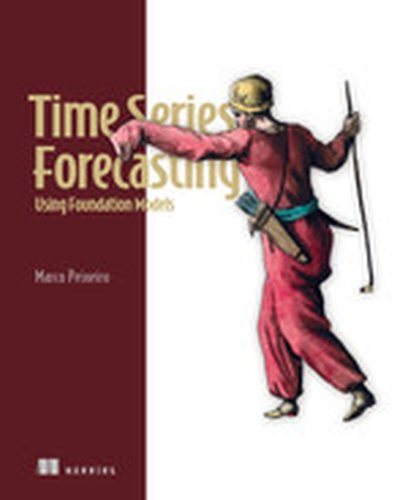
Time Series Forecasting Using Foundation Models

Make accurate time series predictions with powerful pretrained foundation models! You don’t need to spend weeks—or even months—coding and training your own models for time series forecasting. Time Series Forecasting Using Foundation Models shows you how to make accurate predictions using flexible pretrained models. In Time Series Forecasting Using Foundation Models you will discover: The inner workings of large time models Zero-shot forecasting on custom datasets Fine-tuning foundation forecasting models Evaluating large time models Time Series Forecasting Using Foundation Models teaches you how to do efficient forecasting using powerful time series models that have already been pretrained on billions of data points. You’ll appreciate the hands-on examples that show you what you can accomplish with these amazing models. Along the way, you’ll learn how time series foundation models work, how to fine-tune them, and how to use them with your own data. About the Technology Time-series forecasting is the art of analyzing historical, time-stamped data to predict future outcomes. Foundational time series models like TimeGPT and Chronos, pre-trained on billions of data points, can now effectively augment or replace painstakingly-built custom time-series models. About the Book Time Series Forecasting Using Foundation Models explores the architecture of large time models and shows you how to use them to generate fast, accurate predictions. You’ll learn to fine-tune time models on your own data, execute zero-shot probabilistic forecasting, point forecasting, and more. You’ll even find out how to reprogram an LLM into a time series forecaster—all following examples that will run on an ordinary laptop. What's Inside How large time models work Zero-shot forecasting on custom datasets Fine-tuning and evaluating foundation models About the Reader For data scientists and machine learning engineers familiar with the basics of time series forecasting theory. Examples in Python. About the Author Marco Peixeiro builds cutting-edge open-source forecasting Python libraries at Nixtla. He is the author of Time Series Forecasting in Python. Quotes Clear and hands-on, featuring both theory and easy-to-follow examples. - Eryk Lewinson, Author of Python for Finance Cookbook Bridges the gap between classical forecasting methods and the new developments in the foundational models. A fantastic resource. - Juan Orduz, PyMC Labs A foundational guide to forecasting’s next chapter. - Tyler Blume, daybreak An immensely practical introduction to forecasting using foundation models. - Stephan Kolassa, SAP Switzerland

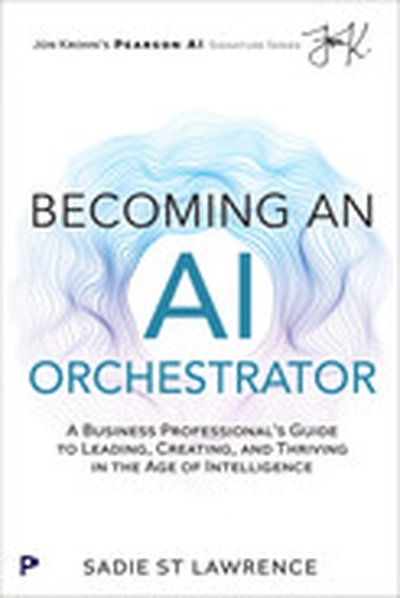
Becoming An AI Orchestrator: A Business Professional's Guide to Leading, Creating, and Thriving in the Age of Intelligence

Unlock your potential and lead the future with this essential guide to thriving, creating, and innovating with confidence in the age of intelligence. Embark on a transformative journey with Becoming An AI Orchestrator: A Business Professional's Guide to Leading, Creating, and Thriving in the Age of Intelligence. This book is your essential guide to navigating the age of intelligence, where technology and creativity converge. Whether you're a creator, knowledge worker, or leader, you'll find invaluable insights and practical advice to help you thrive in this new era. From understanding the forces that have shaped our technological landscape to embracing the opportunities and challenges of AI, this book empowers you to lead, create, and innovate with confidence. Discover the power of AI and unlock your potential. Through engaging stories and expert guidance, you'll learn how to harness AI to enhance your work and life. This book is not just about technology; it's about empowering you to bring your visions to life and make a meaningful impact. With a focus on creativity, adaptability, and collaboration, Becoming An AI Orchestrator is your roadmap to success in a rapidly evolving world. Join the ranks of those who are not just adapting to change but leading it.

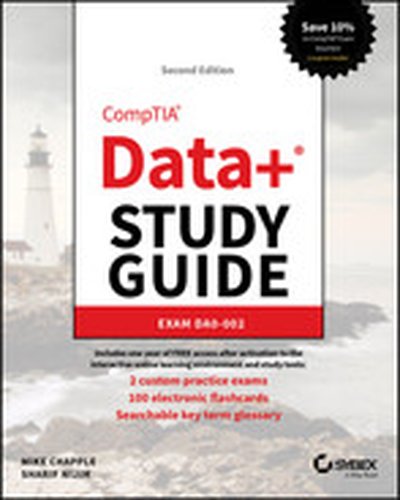
CompTIA Data+ Study Guide, 2nd Edition

Prepare for the CompTIA Data+ exam, as well as a new career in data science, with this effective study guide In the newly revised second edition of CompTIA Data+ Study Guide: Exam DA0-002, veteran IT professionals Mike Chapple and Sharif Nijim provide a powerful, one-stop resource for anyone planning to pursue the CompTIA Data+ certification and go on to an exciting new career in data science. The authors walk you through the info you need to succeed on the exam and in your first day at a data science-focused job. Complete with two online practice tests, this book comprehensively covers every objective tested by the updated DA0-002 exam, including databases and data acquisition, data quality, data analysis and statistics, data visualization, and data governance. You'll also find: Efficient and comprehensive content, helping you get up-to-speed as quickly as possible Bite-size chapters that break down essential topics into manageable and accessible lessons Complimentary access to Sybex' famous online learning environment, with practice questions, a complete glossary of common industry terminology, hundreds of flashcards, and more A practical and hands-on pathway to the CompTIA Data+ certification, as well as a new career in data science, the CompTIA Data+ Study Guide, Second Edition, offers the foundational knowledge, skills, and abilities you need to get started in an exciting and rewarding new career.

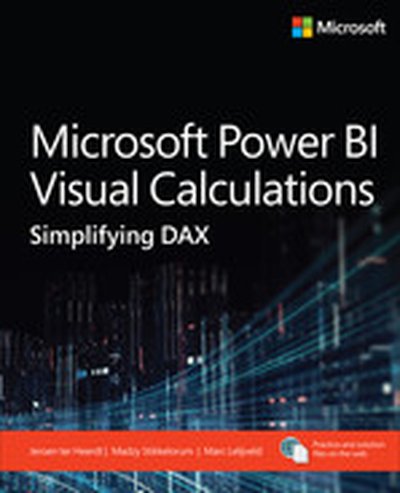
Microsoft Power BI Visual Calculations: Simplifying DAX

Seasoned experts Jeroen ter Heerdt, Madzy Stikkelorum, and Marc Lelijveld help you master visual calculations in Power BI for transformative data insights Microsoft Power BI Visual Calculations: Simplifying DAX is a comprehensive guide that demystifies the innovative feature of visual calculations in Power BI. Jeroen, a Principal Product Manager at Microsoft, Madzy, a Data Analytics Consultant, and Marc, a Microsoft Data Platform MVP, bring their extensive expertise to this book, offering you a practical approach to mastering visual calculations. The book is designed to simplify DAX, making it accessible to beginners and empowering you to transform raw data into actionable insights. You will learn to implement visual calculations, understand their benefits, and apply them effectively in real-world scenarios, ultimately enhancing your ability to make data-driven decisions. By reading this book, you will: Understand the fundamentals of visual calculations in Power BI Create your first visual calculation with step-by-step guidance Explore advanced concepts like resetting context in visual calculations Compare visual calculations with other Power BI calculation options Master the performance characteristics of visual calculations Utilize specific functions designed for visual calculations Implement practical use cases like running sums and moving averages Enhance visual calculations with regular DAX expressions Optimize operational processes using data-driven insights Unlock the full potential of Power BI for strategic decision-making About This Book For Power BI users who want to simplify DAX and unlock the full potential of visual calculations without the usual complexities For business executives, managers, and data enthusiasts looking to transform raw data into actionable insights for strategic decision-making

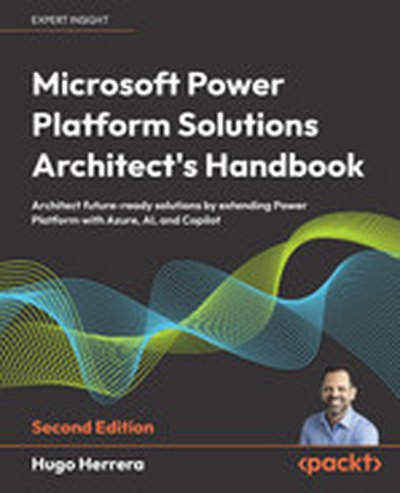
Microsoft Power Platform Solutions Architect's Handbook - Second Edition

Dive into 'Microsoft Power Platform Solution Architect's Handbook' to master the art of designing and delivering enterprise-grade solutions using Microsoft's cutting-edge Power Platform. Through a mix of practical examples and hands-on tutorials, this book equips you to harness tools like AI, Copilot, and DevOps for building innovative, scalable applications tailored to enterprise needs. What this Book will help me do Acquire the knowledge to effectively utilize AI tools such as Power Platform Copilot and ChatGPT to enhance application intelligence. Understand and apply enterprise-grade solution architecture principles for scalable and secure application development. Gain expertise in integrating heterogenous systems with Power Platform Pipes and third-party APIs. Develop proficiency in creating and maintaining reusable Dataverse data models. Learn to establish and manage a Center of Excellence to govern and scale Power Platform solutions. Author(s) Hugo Herrera is an experienced solution architect specializing in the Microsoft Power Platform with a deep focus on integrating AI and cloud-native strategies. With years of hands-on experience in enterprise software development and architectural design, Hugo brings real-world insights into his writing, emphasizing practical application of advanced concepts. His approach is clear, structured, and aimed at empowering readers to excel. Who is it for? This book is tailored for IT professionals like solution architects, enterprise architects, and technical consultants who are looking to elevate their capabilities in Power Platform development. It is also suitable for individuals with an intermediate understanding of Power Platform seeking to spearhead enterprise-level digital transformation projects. Ideal readers are those ready to deepen their integration, data modeling, and AI usage skills within the Microsoft ecosystem, particularly for enterprise applications.

Getting Started with Taipy

Share your machine learning models, create chatbots, as well as build and deploy insightful dashboards speedily using Taipy with this hands-on book featuring real-world application examples from multiple industries Free with your book: DRM-free PDF version + access to Packt's next-gen Reader Key Features Create visually compelling, interactive data applications with Taipy Bring predictive models to end users and create data pipelines to compare scenarios with what-if analyses Go beyond prototypes to build and deploy production-ready applications using the cloud provider of your choice Purchase of the print or Kindle book includes a free PDF eBook in full color Book Description While data analysts, data scientists, and BI experts have the tools to analyze data, build models, and create compelling visuals, they often struggle to translate these insights into practical, user-friendly applications that help end users answer real-world questions, such as identifying revenue trends, predicting inventory needs, or detecting fraud, without wading through complex code. This book is a comprehensive guide to overcoming this challenge. This book teaches you how to use Taipy, a powerful open-source Python library, to build intuitive, production-ready data apps quickly and efficiently. Instead of creating prototypes that nobody uses, you'll learn how to build faster applications that process large amounts of data for multiple users and deliver measurable business impact. Taipy does the heavy lifting to enable your users to visualize their KPIs, interact with charts and maps, and compare scenarios for better decision-making. You’ll learn to use Taipy to build apps that make your data accessible and actionable in production environments like the cloud or Docker. By the end of this book, you won’t just understand Taipy, you'll be able to transform your data skills into impactful solutions that address real-world needs and deliver valuable insights. Email sign-up and proof of purchase required What you will learn Explore Taipy, its use cases, and how it's different from other projects Discover how to create visually appealing interactive apps, display KPIs, charts, and maps Understand how to compare scenarios to make better decisions Connect Taipy applications to several data sources and services Develop apps for diverse use cases, including chatbots, dashboards, ML apps, and maps Deploy Taipy applications on different types of servers and services Master advanced concepts for simplifying and accelerating your development workflow Who this book is for If you’re a data analyst, data scientist, or BI analyst looking to build production-ready data apps entirely in Python, this book is for you. If your scripts and models sit idle because non-technical stakeholders can’t use them, this book shows you how to turn them into full applications fast with Taipy, so your work delivers real business value. It’s also valuable for developers and engineers who want to streamline their data workflows and build UIs in pure Python.

Path to Stellar Business Performance Analysis : A Design and Implementation Handbook

Business performance analysis is central to any business, as it helps to make or mend products, services, and processes. This book provides several blueprints for setting up business performance analytics (BPA) shops, from process layout for performance measures to tracking the underlying metrics of them using website tools such as Google Analytics and Looker Studio. Delivering satisfying user experiences in the context of overarching business objectives is key to delivering elevated business performance. This book transcends the topic of tracking user behaviors in websites from generic to specific KPI scenario-based tracking using Google Analytics/Google Tag Manager. Business Performance Analysis stands out by helping you create fit-for-purpose and coherent performance analysis blueprints by integrating performance measure creation and website analytics of BPA together. What You Will Learn Design a Business Performance Analysis function Analyze performance metrics with website analytics tools Identify business performance metrics for common product scenarios Who This Book is For Senior leaders, product managers, product owners, UX and web analytics professionals

Investing for Programmers

Maximize your portfolio, analyze markets, and make data-driven investment decisions using Python and generative AI. Investing for Programmers shows you how you can turn your existing skills as a programmer into a knack for making sharper investment choices. You’ll learn how to use the Python ecosystem, modern analytic methods, and cutting-edge AI tools to make better decisions and improve the odds of long-term financial success. In Investing for Programmers you’ll learn how to: Build stock analysis tools and predictive models Identify market-beating investment opportunities Design and evaluate algorithmic trading strategies Use AI to automate investment research Analyze market sentiments with media data mining In Investing for Programmers you'll learn the basics of financial investment as you conduct real market analysis, connect with trading APIs to automate buy-sell, and develop a systematic approach to risk management. Don’t worry—there’s no dodgy financial advice or flimsy get-rich-quick schemes. Real-life examples help you build your own intuition about financial markets, and make better decisions for retirement, financial independence, and getting more from your hard-earned money. About the Technology A programmer has a unique edge when it comes to investing. Using open-source Python libraries and AI tools, you can perform sophisticated analysis normally reserved for expensive financial professionals. This book guides you step-by-step through building your own stock analysis tools, forecasting models, and more so you can make smart, data-driven investment decisions. About the Book Investing for Programmers shows you how to analyze investment opportunities using Python and machine learning. In this easy-to-read handbook, experienced algorithmic investor Stefan Papp shows you how to use Pandas, NumPy, and Matplotlib to dissect stock market data, uncover patterns, and build your own trading models. You’ll also discover how to use AI agents and LLMs to enhance your financial research and decision-making process. What's Inside Build stock analysis tools and predictive models Design algorithmic trading strategies Use AI to automate investment research Analyze market sentiment with media data mining About the Reader For professional and hobbyist Python programmers with basic personal finance experience. About the Author Stefan Papp combines 20 years of investment experience in stocks, cryptocurrency, and bonds with decades of work as a data engineer, architect, and software consultant. Quotes Especially valuable for anyone looking to improve their investing. - Armen Kherlopian, Covenant Venture Capital A great breadth of topics—from basic finance concepts to cutting-edge technology. - Ilya Kipnis, Quantstrat Trader A top tip for people who want to leverage development skills to improve their investment possibilities. - Michael Zambiasi, Raiffeisen Digital Bank Brilliantly bridges the worlds of coding and finance. - Thomas Wiecki, PyMC Labs

Medical Analytics for Clinical and Healthcare Applications

The book is essential for anyone exploring the forefront of healthcare innovation, as it offers a thorough exploration of transformative data-driven methodologies that can significantly enhance patient outcomes and clinical efficiency in today’s evolving medical landscape. In today’s rapidly advancing healthcare landscape, the integration of medical analytics has become essential for improving patient outcomes, clinical efficiency, and decision-making. Medical Analytics for Clinical and Healthcare Applications provides a comprehensive examination of how data-driven methodologies are revolutionizing the medical field. This book offers a deep dive into innovative techniques, real-world applications, and emerging trends in medical analytics, showcasing how these advancements are transforming disease detection, diagnosis, treatment planning, and healthcare management. Spanning sixteen chapters across five subsections, this edited volume covers a wide array of topics—from foundational principles of medical data analysis to cutting-edge applications in predictive healthcare and medical data security. Readers will encounter state-of-the-art methodologies, including machine learning models, predictive analytics, and deep learning techniques applied to various healthcare challenges such as mental health disorders, cancer detection, and hospital mortality predictions. Medical Analytics for Clinical and Healthcare Applications equips readers with the knowledge to harness the power of medical analytics and its potential to shape the future of healthcare. Through its interdisciplinary approach and expert insights, this volume is poised to serve as a valuable resource for advancing healthcare technologies and improving the overall quality of care. Readers will find the volume: Explores the latest medical analytics techniques applied across clinical settings, from diagnosis to treatment optimization; Features real-world case studies and tools for implementing data-driven solutions in healthcare; Bridges the gap between healthcare professionals, data scientists, and engineers for collaborative innovation in medical technologies; Provides foresight into emerging trends and technologies shaping the future of healthcare analytics. Audience Healthcare professionals, clinical researchers, medical data scientists, biomedical engineers, IT professionals, academics, and policymakers focused on the intersection of medicine and data analytics.

DAX for Humans

Level up your Power BI skills by learning DAX in an easy, fun, and practical way using one core pattern that can be used to solve most problems Key Features Learn simple through advanced DAX in a clear, concise way using real-world examples Explore powerful techniques for debugging DAX and increasing efficiency Use artificial intelligence to write, refine, and troubleshoot your DAX formulas Purchase of the print or Kindle book includes a free PDF eBook Book Description Although DAX has been around for over a decade, many struggle to master the language primarily because DAX is often taught through the CALCULATE function, which is the most complex and unintuitive function in all of DAX. But what if DAX could be taught without CALCULATE? The result would be an incredibly intuitive and easy way to learn DAX. DAX for Humans stands the traditional approach to learning DAX on its head, foregoing the traditional, legacy methods of learning DAX for a more modern approach that focuses on core DAX concepts and not any specific function. Even if you know nothing about DAX, from the very first chapter you will learn the essentials of the DAX language, as well as a single pattern to solve the majority of DAX problems. From that point forward, you’ll explore how to work with the basic building blocks of the DAX language and apply what you learn to real-world business scenarios across customers, human resources, projects, finance, operations, and more. By the end of this book, you’ll be able to apply your DAX skills to simple, complex, and advanced scenarios; understand how to optimize and debug your DAX code; and even know how to efficiently apply artificial intelligence to help you write and debug your DAX code. What you will learn Master techniques to solve common DAX calculations Apply DAX to real-word, practical business scenarios Explore advanced techniques for tackling unusual DAX scenarios Discover new ideas, tricks, and time-saving techniques for better calculations Find out how to optimize and debug DAX effectively Leverage AI to assist in writing, troubleshooting, and improving DAX Who this book is for If you use Power BI but struggle with DAX or if you know DAX but want to improve and expand your skills, then this book is for you. Even if you have never used Power BI or DAX before, you will find this book helpful as you progress from the basics to mastery of the DAX language using real-world scenarios as your guide.

The Business Analyst's Career Master Plan

The Business Analyst's Career Master Plan empowers professionals to take charge of their livelihoods by mastering the key principles, techniques, and frameworks of business analysis. This guide combines strategic insights and actionable advice to help you flourish in your field, whether you're just starting out or striving toward a leadership role. What this Book will help me do Understand and apply foundational business analysis skills for professional scenarios. Develop advanced techniques such as effective requirements elicitation and stakeholder management. Design a personalized career roadmap tailored to your professional aspirations. Gain insights into certifications such as CBAP, ECBA, and PMI-PBA to leverage your credentials. Stay informed about emerging technologies and trends impacting the field. Author(s) Jamie Champagne, a renowned business analyst and career mentor, shares insights drawn from years of professional experience and thought leadership in this field. Jamie is recognized for her contributions to improving project outcomes and developing well-rounded analysts. Her passion for strategic thinking and practical career planning resonates throughout this book. Who is it for? This book is perfect for business professionals at all levels, from beginners setting their first steps in analysis to experienced analysts aiming for leadership. It is equally useful to other business roles, such as project managers and process advisors, seeking to deepen their understanding of business analysis. If advancing your career in business analysis is your goal, this book is tailored for you.

The Big Book of Data Science. Part I: Data Processing

There are already excellent books on software programming for data processing and data transformation for instance: Wes McKinney’s. This book, reflecting on my own industrial and teaching experience, tries to overcome the big learning curve newcomers to the field have to travel before they are ready to tackle real data science and AI challenges. In this regard this book is different to other books in that:

It assumes zero software programming knowledge. This instructional design is intentional given the book’s aim to open the practice of data science to anyone interested in data exploration and analysis irrespective of their previous background.

It follows an incremental approach to facilitate the assimilation of, sometimes, arcane software techniques to manipulate data.

It is practice oriented to ensure readers can apply what they learn in their daily practices.

Illustrates how to use generative AI to help you become a more productive data scientist and AI engineer.

By reading and working on the labs included in this book you will develop software programming skills required to successfully contribute to the data understanding and data preparation stages involved in any data related project. You will become proficient at manipulating and transforming datasets in industrial contexts and produce clean, reliable datasets that can drive accurate analysis and informed decision-making. Moreover you will be prepared to develop and deploy dashboards and visualizations supporting the insights and conclusions in the deployment stage.

Data modelling and evaluation are not covered in this book. We are working on a second installment of the book series illustrating the application of statistical and machine learning techniques to derive data insights.