talk-data.com talk-data.com

Topic

data

2093

tagged

Activity Trend

3 peak/qtr
2020-Q1 2026-Q1

Activities

Showing filtered results

Filtering by: O'Reilly Data Science Books ×
Competing on Analytics: Updated, with a New Introduction

The New Edition of a Business Classic This landmark work, the first to introduce business leaders to analytics, reveals how analytics are rewriting the rules of competition. Updated with fresh content, Competing on Analytics provides the road map for becoming an analytical competitor, showing readers how to create new strategies for their organizations based on sophisticated analytics. Introducing a five-stage model of analytical competition, Davenport and Harris describe the typical behaviors, capabilities, and challenges of each stage. They explain how to assess your company’s capabilities and guide it toward the highest level of competition. With equal emphasis on two key resources, human and technological, this book reveals how even the most highly analytical companies can up their game. With an emphasis on predictive, prescriptive, and autonomous analytics for marketing, supply chain, finance, M&A, operations, R&D, and HR, the book contains numerous new examples from different industries and business functions, such as Disney’s vacation experience, Google’s HR, UPS’s logistics, the Chicago Cubs’ training methods, and Firewire Surfboards’ customization. Additional new topics and research include: Data scientists and what they do Big data and the changes it has wrought Hadoop and other open-source software for managing and analyzing data Data products—new products and services based on data and analytics Machine learning and other AI technologies The Internet of Things and its implications New computing architectures, including cloud computing Embedding analytics within operational systems Visual analytics The business classic that turned a generation of leaders into analytical competitors, Competing on Analytics is the definitive guide for transforming your company’s fortunes in the age of analytics and big data.
MATLAB for Machine Learning

Learn the art of creating machine learning models and processing data efficiently with MATLAB. In this book, you will explore various techniques such as regression analysis, clustering, classification, and neural networks, all in the MATLAB environment. Each topic is detailed with practical examples for clear understanding and immediate application. What this Book will help me do Understand the key concepts of machine learning and how they integrate with MATLAB. Learn to preprocess and transform data for effective machine learning workflows. Explore regression methods and apply them to analyze and predict trends in your data. Master classification and clustering techniques for model creation and data categorization. Gain expertise in using MATLAB Neural Network Toolbox for building neural network-based solutions. Author(s) None Kolluru and Giuseppe Ciaburro are seasoned experts in using MATLAB for data analysis and machine learning. With years of experience in research and teaching, they have meticulously curated this book to bridge concepts of theory with real-world applications. Their writing approach is clear, instructional, and focused on equipping learners with practical skills. Who is it for? This book is ideal for data analysts, aspiring data scientists, and students eager to delve into machine learning using MATLAB. Even if you're new to the field, you'll find the instructions gentle yet comprehensive to help you follow along. However, having some background in math and statistics will definitely enhance your learning experience. If you're passionate about data and its insights, this is the guide for you.

Matplotlib 2.x By Example

"Matplotlib 2.x By Example" is your comprehensive guide to mastering data visualization in Python using the Matplotlib library. Through detailed explanations and hands-on examples, this book will teach you how to create stunning, insightful, and professional-looking visual representations of your data. You'll learn valuable skills tailored towards practical applications in science, marketing, and data analysis. What this Book will help me do Understand the core features of Matplotlib and how to use them effectively. Create professional 2D and 3D visualizations, such as scatter plots, line graphs, and more. Develop skills to transform raw data into meaningful insights through visualization. Enhance your data visualizations with interactive elements and animations. Leverage additional libraries such as Seaborn and Pandas to expand functionality. Author(s) Allen Yu, Claire Chung, and Aldrin Yim are seasoned data scientists and technical authors with extensive experience in Python and data visualization. Allen and his coauthors are dedicated to helping readers bridge the gap between their raw data and meaningful insights through visualization. With practical applications and real-world examples, their approachable writing makes complex libraries like Matplotlib accessible and production-ready. Who is it for? This book is perfect for data enthusiasts, analysts, and Python programmers looking to enhance their data visualization skills. Whether you're a professional aiming to create high-quality visual reports or a student eager to understand and present data effectively, this book provides practical and actionable insights. Basic Python knowledge is expected, while all Matplotlib-related aspects are thoroughly explained.

Advanced Analytics with R and Tableau

In "Advanced Analytics with R and Tableau," you will learn how to combine the statistical computing power of R with the excellent data visualization capabilities of Tableau to perform advanced analysis and present your findings effectively. This book guides you through practical examples to understand topics such as classification, clustering, and predictive analytics while creating compelling visual dashboards. What this Book will help me do Integrate advanced statistical computations in R with Tableau's visual analysis for comprehensive analytics. Master making R function calls from Tableau through practical applications such as RServe integration. Develop predictive and classification models in R, visualized wonderfully in Tableau dashboards. Understand clustering and unsupervised learning concepts, applied to real-world datasets for business insights. Leverage the combination of Tableau and R for making impactful, data-driven decisions in your organization. Author(s) Ruben Oliva Ramos, Jen Stirrup, and Roberto Rösler are accomplished professionals with extensive experience in data science and analytics. Their combined expertise brings practical insights into combining R and Tableau for advanced analytics. Advocates for hands-on learning, they emphasize clarity and actionable knowledge in their writing. Who is it for? "Advanced Analytics with R and Tableau" is ideal for business analysts, data scientists, and Tableau professionals eager to expand their capabilities into advanced analytics. Readers should be familiar with Tableau and have basic knowledge of R, though the book starts with accessible examples. If you're looking to enhance your analytics with R's statistical power seamlessly integrated into Tableau, this book is for you.

Mastering Predictive Analytics with R, Second Edition - Second Edition

This comprehensive guide dives into predictive analytics with R, exploring the powerful functionality and vast ecosystem of packages available in this programming language. By studying this book, you will gain mastery over predictive modeling techniques and learn how to apply machine learning to real-world problems efficiently and effectively. What this Book will help me do Develop proficiency in predictive modeling processes, from data preparation to model evaluation. Gain hands-on experience with R's diverse packages for machine learning. Understand the theoretical foundations and practical applications of various predictive models. Learn advanced techniques such as deep learning implementations of word embeddings and recurrent neural networks. Acquire the ability to handle large datasets using R for scalable predictive analytics workflows. Author(s) James D. Miller and Rui Miguel Forte are experts in data science and predictive analytics with decades of combined experience in the field. They bring practical insights from their work in both academia and industry. Their clear and engaging writing style aims at making complex concepts accessible to readers by integrating theoretical knowledge with real-world applications. Who is it for? This book is ideal for budding data scientists, predictive modelers, or quantitative analysts with some basic knowledge of R and statistics. Advanced learners aiming to refine their expertise in predictive analytics and those wishing to explore the functionality of R for applied machine learning will also greatly benefit from this resource. The book is suitable for professionals and enthusiasts keen to expand their understanding of predictive modeling and learn advanced techniques.

Elegant SciPy

Welcome to Scientific Python and its community. If you’re a scientist who programs with Python, this practical guide not only teaches you the fundamental parts of SciPy and libraries related to it, but also gives you a taste for beautiful, easy-to-read code that you can use in practice. You’ll learn how to write elegant code that’s clear, concise, and efficient at executing the task at hand. Throughout the book, you’ll work with examples from the wider scientific Python ecosystem, using code that illustrates principles outlined in the book. Using actual scientific data, you’ll work on real-world problems with SciPy, NumPy, Pandas, scikit-image, and other Python libraries. Explore the NumPy array, the data structure that underlies numerical scientific computation Use quantile normalization to ensure that measurements fit a specific distribution Represent separate regions in an image with a Region Adjacency Graph Convert temporal or spatial data into frequency domain data with the Fast Fourier Transform Solve sparse matrix problems, including image segmentations, with SciPy’s sparse module Perform linear algebra by using SciPy packages Explore image alignment (registration) with SciPy’s optimize module Process large datasets with Python data streaming primitives and the Toolz library

Learning Informatica PowerCenter 10.x - Second Edition

Dive into the world of Informatica PowerCenter 10.x, where enterprise data warehousing meets cutting-edge data management solutions. This comprehensive guide walks you through mastering ETL processes and optimizing performance, helping you become proficient in this powerful data integration tool. With step-by-step instructions, you'll build your knowledge from installation to advanced techniques. What this Book will help me do Understand how to install and configure Informatica PowerCenter 10.x for enterprise-level data integration projects, ensuring readiness to start transforming data effectively. Gain hands-on experience with PowerCenter's various developer tools, including Workflow Manager, Workflow Monitor, Designer, and Repository Manager, mastering their practical utilities. Learn and apply essential data warehousing concepts, such as Slowly Changing Dimensions (SCDs) and Incremental Aggregations, to create robust data-handling workflows. Leverage advanced PowerCenter features like pushdown optimization and partitioning to optimize performance for large-scale data processing jobs. Become proficient in migrating sources, targets, and workflows between environments, enabling seamless integration of data management solutions across enterprise systems. Author(s) Rahul Malewar, a seasoned expert in ETL and data integration, brings his extensive experience with Informatica PowerCenter to the table. With years spent working alongside global enterprises to streamline their data operations, Rahul's insights transfer into a hands-on teaching style that simplifies even the most advanced concepts. Apt at bridging technical depth with accessible explanations, he has dedicated his career to empowering learners to unlock the full potential of their data warehousing tools. Who is it for? Perfect for developers and data professionals aiming to elevate their enterprise data management skills, this book is ideally suited for those new to or experienced with Informatica. Whether you're striving to become proficient in PowerCenter or seeking to implement advanced ETL concepts in your projects, this guide will equip you with the expertise to succeed. A foundational understanding of programming and data warehousing concepts is recommended for best results.

Business Survival Analysis Using SAS

Solve business problems involving time-to-event and resulting probabilities by following the modeling tutorials in Business Survival Analysis Using SAS®: An Introduction to Lifetime Probabilities, the first book to be published in the field of business survival analysis! Survival analysis is a challenge. Books applying to health sciences exist, but nothing about survival applications for business has been available until now. Written for analysts, forecasters, econometricians, and modelers who work in marketing or credit risk and have little SAS modeling experience, Business Survival Analysis Using SAS® builds on a foundation of SAS code that works in any survival model and features numerous annotated graphs, coefficients, and statistics linked to real business situations and data sets. This guide also helps recent graduates who know the statistics but do not necessarily know how to apply them get up and running in their jobs. By example, it teaches the techniques while avoiding advanced theoretical underpinnings so that busy professionals can rapidly deliver a survival model to meet common business needs.

From first principles, this book teaches survival analysis by highlighting its relevance to business cases. A pragmatic introduction to survival analysis models, it leads you through business examples that contextualize and motivate the statistical methods and SAS coding. Specifically, it illustrates how to build a time-to-next-purchase survival model in SAS® Enterprise Miner, and it relates each step to the underlying statistics and to Base SAS® and SAS/STAT® software. Following the many examples—from data preparation to validation to scoring new customers—you will learn to develop and apply survival analysis techniques to scenarios faced by companies in the financial services, insurance, telecommunication, and marketing industries, including the following scenarios:

Time-to-next-purchase for marketing

Employer turnover for human resources

Small business portfolio macroeconometric stress tests for banks

International Financial Reporting Standard (IFRS 9) lifetime probability of default for banks and building societies

"Churn," or attrition, models for the telecommunications and insurance industries

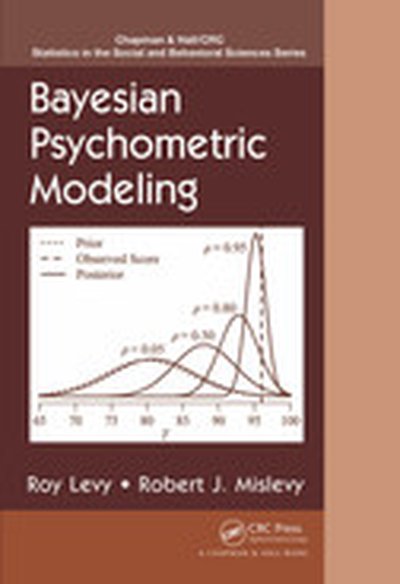
Bayesian Psychometric Modeling

This book presents a unified Bayesian approach across traditionally separate families of psychometric models. It shows that Bayesian techniques, as alternatives to conventional approaches, offer distinct and profound advantages in achieving many goals of psychometrics. The book covers foundational principles and statistical models as well as popular psychometric models. Throughout the text, procedures are illustrated using examples primarily from educational assessments. A supplementary website provides the datasets, WinBUGS code, R code, and Netica files used in the examples.

Predictive Modeling with SAS Enterprise Miner, 3rd Edition

A step-by-step guide to predictive modeling!

Kattamuri Sarma's Predictive Modeling with SAS Enterprise Miner: Practical Solutions for Business Applications, Third Edition, will show you how to develop and test predictive models quickly using SAS Enterprise Miner. Using realistic data, the book explains complex methods in a simple and practical way to readers from different backgrounds and industries. Incorporating the latest version of Enterprise Miner, this third edition also expands the section on time series.

Written for business analysts, data scientists, statisticians, students, predictive modelers, and data miners, this comprehensive text provides examples that will strengthen your understanding of the essential concepts and methods of predictive modeling. Topics covered include logistic regression, regression, decision trees, neural networks, variable clustering, observation clustering, data imputation, binning, data exploration, variable selection, variable transformation, and much more, including analysis of textual data.

Develop predictive models quickly, learn how to test numerous models and compare the results, gain an in-depth understanding of predictive models and multivariate methods, and discover how to do in-depth analysis. Do it all with Predictive Modeling with SAS Enterprise Miner!

Analysis of Clinical Trials Using SAS, 2nd Edition

Analysis of Clinical Trials Using SAS®: A Practical Guide, Second Edition bridges the gap between modern statistical methodology and real-world clinical trial applications. Tutorial material and step-by-step instructions illustrated with examples from actual trials serve to define relevant statistical approaches, describe their clinical trial applications, and implement the approaches rapidly and efficiently using the power of SAS. Topics reflect the International Conference on Harmonization (ICH) guidelines for the pharmaceutical industry and address important statistical problems encountered in clinical trials. Commonly used methods are covered, including dose-escalation and dose-finding methods that are applied in Phase I and Phase II clinical trials, as well as important trial designs and analysis strategies that are employed in Phase II and Phase III clinical trials, such as multiplicity adjustment, data monitoring, and methods for handling incomplete data. This book also features recommendations from clinical trial experts and a discussion of relevant regulatory guidelines.

This new edition includes more examples and case studies, new approaches for addressing statistical problems, and the following new technological updates:

SAS procedures used in group sequential trials (PROC SEQDESIGN and PROC SEQTEST)

SAS procedures used in repeated measures analysis (PROC GLIMMIX and PROC GEE)

macros for implementing a broad range of randomization-based methods in clinical trials, performing complex multiplicity adjustments, and investigating the design and analysis of early phase trials (Phase I dose-escalation trials and Phase II dose-finding trials)

Clinical statisticians, research scientists, and graduate students in biostatistics will greatly benefit from the decades of clinical research experience and the ready-to-use SAS macros compiled in this book.

Principles of Data Wrangling

A key task that any aspiring data-driven organization needs to learn is data wrangling, the process of converting raw data into something truly useful. This practical guide provides business analysts with an overview of various data wrangling techniques and tools, and puts the practice of data wrangling into context by asking, "What are you trying to do and why?" Wrangling data consumes roughly 50-80% of an analyst’s time before any kind of analysis is possible. Written by key executives at Trifacta, this book walks you through the wrangling process by exploring several factors—time, granularity, scope, and structure—that you need to consider as you begin to work with data. You’ll learn a shared language and a comprehensive understanding of data wrangling, with an emphasis on recent agile analytic processes used by many of today’s data-driven organizations. Appreciate the importance—and the satisfaction—of wrangling data the right way. Understand what kind of data is available Choose which data to use and at what level of detail Meaningfully combine multiple sources of data Decide how to distill the results to a size and shape that can drive downstream analysis

Dynamic Documents with R and knitr, 2nd Edition

Suitable for both beginners and advanced users, this popular book makes writing statistical reports easier by integrating computing directly with reporting. Reports range from homework, projects, exams, books, blogs, and web pages to virtually any documents related to statistical graphics, computing, and data analysis. This edition includes a new chapter on R Markdown v2, changes that reflect improvements in the knitr package, and several new sections. Demos and other information about the package are available on the author’s website.

Analytics

For years, organizations have struggled to make sense out of their data. IT projects designed to provide employees with dashboards, KPIs, and business-intelligence tools often take a year or more to reach the finish line...if they get there at all. This has always been a problem. Today, though, it's downright unacceptable. The world changes faster than ever. Speed has never been more important. By adhering to antiquated methods, firms lose the ability to see nascent trends—and act upon them until it's too late. But what if the process of turning raw data into meaningful insights didn't have to be so painful, time-consuming, and frustrating? What if there were a better way to do analytics? Fortunately, you're in luck... Analytics: The Agile Way is the eighth book from award-winning author and Arizona State University professor Phil Simon. Analytics: The Agile Way demonstrates how progressive organizations such as Google, Nextdoor, and others approach analytics in a fundamentally different way. They are applying the same Agile techniques that software developers have employed for years. They have replaced large batches in favor of smaller ones...and their results will astonish you. Through a series of case studies and examples, Analytics: The Agile Way demonstrates the benefits of this new analytics mind-set: superior access to information, quicker insights, and the ability to spot trends far ahead of your competitors.

Learning pandas - Second Edition

Take your Python skills to the next level with 'Learning pandas,' your go-to guide for mastering data manipulation and analysis. This book walks you through the powerful tools offered by the pandas library, helping you unlock key insights from data efficiently. Whether you're handling time-series data or visualizing patterns, you'll gain the proficiency needed to make sense of complex datasets. What this Book will help me do Understand and effectively use pandas Series and DataFrame objects for data representation and manipulation. Master indexing, slicing, and combining data to perform detailed exploration and analysis. Learn to access and work with external data sources, including APIs, databases, and files, using pandas. Develop the skills to handle and analyze time-series data, managing its unique challenges. Create informative and professional data visualizations directly using pandas capabilities. Author(s) Michael Heydt is a respected author and educator in the field of Python and data analysis. With years of experience utilizing pandas in practical and professional environments, Michael offers a unique perspective that combines deep technical insight with approachable examples. His teaching philosophy emphasizes clarity, applicability, and engaging instruction, ensuring learners easily acquire valuable skills. Who is it for? This book is ideal for Python programmers looking to enhance their data analysis capabilities, as well as data analysts and scientists wanting to leverage pandas to improve their workflows. Readers are recommended to have some familiarity with Python, though prior experience with pandas is not required. If you have a keen interest in data exploration and quantitative techniques, this book is for you.

Practical Predictive Analytics

Dive into the world of predictive analytics with 'Practical Predictive Analytics.' This comprehensive guide walks you through analyzing current and historical data to predict future outcomes. Using tools like R and Spark, you will master practical skills, solve real-world challenges, and apply predictive analytics across domains like marketing, healthcare, and retail. What this Book will help me do Learn the six steps for successfully implementing predictive analytics projects. Acquire practical skills in data cleaning, input, and model deployment using tools like R and Spark. Understand core predictive analytics algorithms and their applications in various industries. Apply data analytics techniques to solve problems in fields such as healthcare and marketing. Master methods for handling big data analytics using Databricks and Spark for effective prediction. Author(s) The author, None Winters, is an experienced data scientist and technical educator. With extensive background in predictive analytics, Winters specializes in applying statistical methods and techniques to real-world consultation scenarios. Winters brings a practical and accessible approach to this text, ensuring that learners can follow along and apply their newfound expertise effectively. Who is it for? This book is ideal for statisticians and analysts with some programming background in languages like R, who want to master predictive analytics skills. It caters to intermediate learners who aim to enhance their ability to solve complex analytical problems. Whether you're looking to advance your career or improve your proficiency in data science, this book will serve as a valuable resource for learning and growth.

QlikView for Developers

"QlikView for Developers" is a comprehensive guide to mastering QlikView, a powerful business intelligence tool. This book takes you on a journey from understanding the basics to building scalable and maintainable QlikView applications. Designed to provide practical methods, real-world scenarios, and valuable tips, it is ideal for anyone wanting to learn and effectively use QlikView for BI solutions. What this Book will help me do Understand the key features and architecture of QlikView and what has changed in QlikView 12. Learn to transform, model, and organize data in QlikView to effectively support business processes. Master best practices for creating interactive dashboards using charts, tables, and visualization objects. Discover techniques to optimize data architecture for scalable deployments and ensure data consistency. Implement advanced scripting and calculation methods, such as Set Analysis, to handle complex analytical requirements. Author(s) Miguel Angel Garcia and Barry Harmsen bring years of professional expertise in business intelligence and QlikView application development. Both authors have contributed significantly to the BI community and have extensive experience teaching and consulting on QlikView solutions. Their goal with this book is to provide a resource that is both informative and practical for QlikView developers. Who is it for? This book is intended for developers and analysts looking to harness the capabilities of QlikView for business intelligence purposes. It is suitable for beginners with minimal experience in QlikView, as well as for experienced practitioners wanting to deepen their knowledge and skills. The book provides a balanced approach that caters to various skill levels, ensuring accessible and actionable content for all readers.

Practical Data Science Cookbook, Second Edition - Second Edition

The Practical Data Science Cookbook, Second Edition provides hands-on, practical recipes that guide you through all aspects of the data science process using R and Python. Starting with setting up your programming environment, you'll work through a series of real-world projects to acquire, clean, analyze, and visualize data efficiently. What this Book will help me do Set up R and Python environments effectively for data science tasks. Acquire, clean, and preprocess data tailored to analysis with practical steps. Develop robust predictive and exploratory models for actionable insights. Generate analytic reports and share findings with impactful visualizations. Construct tree-based models and master random forests for advanced analytics. Author(s) Authored by a team of experienced professionals in the field of data science and analytics, this book reflects their collective expertise in tackling complex data challenges using programming. With backgrounds spanning industry and academia, the authors bring a practical, application-focused approach to teaching data science. Who is it for? This book is ideal for aspiring data scientists who want hands-on experience with real-world projects, regardless of prior experience. Beginners will gain step-by-step understanding of data science concepts, while seasoned professionals will appreciate the structured projects and use of R and Python for advanced analytics and modeling.