talk-data.com talk-data.com

Topic

data

5765

tagged

Activity Trend

3 peak/qtr
2020-Q1 2026-Q1

Activities

5765 activities · Newest first

MongoDB Administrator's Guide

The "MongoDB Administrator's Guide" is an indispensable resource for database administrators and developers looking to gain mastery over administrating MongoDB systems. This book offers over 100 practical recipes, designed to simplify the tasks of maintaining, optimizing, and securing MongoDB deployments. What this Book will help me do Deploy and configure production-grade MongoDB environments efficiently. Manage and optimize MongoDB indexing to improve query performance. Implement and maintain high availability through replication and sharding. Ensure database security with robust authentication and authorization. Perform efficient backups, recovery, and database performance monitoring. Author(s) None Dasadia is a seasoned MongoDB expert with extensive experience in database administration and optimization. Having worked extensively in developing and managing high-performance database systems, None ensures a hands-on and practical approach in their writing. Their aim is to guide readers to effectively solve real-world database challenges with MongoDB. Who is it for? This book is ideal for database administrators with a foundational understanding of MongoDB, as well as developers aiming to enhance their administration skills in this NoSQL ecosystem. Whether you're seeking best practices for routine tasks or scalable solutions for enterprise-level applications, this guide has comprehensive coverage tailored for you.

Research Methodology

This book offers a standardized approach for research aspirants working in the various areas. At the same time, all the major topics in social research have also been detailed thoroughly which makes this book a very good frame of study for students and researchers in diverse fields. This book charts new and evolving terrain of social research by covering qualitative, quantitative and mixed approach. The chapters has extensive number of case studies that help researchers to understand practical implications of the research and includes plenty of diagrammatic representations for easy understanding of various theories and procedures. Each phase of research is explained in detail so that even beginners can also effectively utilize this book. It is written in a highly interactive manner, which makes for an interesting read. Templates of technical report, business report and research reports are also included in the book. This provides the reader with a hands-on experience.

Adjustment Computations, 6th Edition

The definitive guide to bringing accuracy to measurement, updated and supplemented Adjustment Computations is the classic textbook for spatial information analysis and adjustment computations, providing clear, easy-to-understand instruction backed by real-world practicality. From the basic terms and fundamentals of errors to specific adjustment computations and spatial information analysis, this book covers the methodologies and tools that bring accuracy to surveying, GNSS, GIS, and other spatial technologies. Broad in scope yet rich in detail, the discussion avoids overly-complex theory in favor of practical techniques for students and professionals. This new sixth edition has been updated to align with the latest developments in this rapidly expanding field, and includes new video lessons and updated problems, including worked problems in STATS, MATRIX, ADJUST, and MathCAD. All measurement produces some amount of error; whether from human mistakes, instrumentation inaccuracy, or environmental features, these errors must be accounted and adjusted for when accuracy is critical. This book describes how errors are identified, analyzed, measured, and corrected, with a focus on least squares adjustment—the most rigorous methodology available. Apply industry-standard methodologies to error analysis and adjustment Translate your skills to the real-world with instruction focused on the practical Master the fundamentals as well as specific computations and analysis Strengthen your understanding of critical topics on the Fundamentals in Surveying Licensing Exam As spatial technologies expand in both use and capability, so does our need for professionals who understand how to check and adjust for errors in spatial data. Conceptual knowledge is one thing, but practical skills are what counts when accuracy is at stake; Adjustment Computations provides the real-world training you need to identify, analyze, and correct for potentially crucial errors.

JMP Connections

Achieve best-in-class metrics and get more from your data with JMP JMP Connections is the small- and medium-sized business owner's guide to exceeding customer expectations by getting more out of your data using JMP. Uniquely bifunctional, this book is divided into two parts: the first half of the book shows you what JMP can do for you. You'll discover how to wring every last drop of insight out of your data, and let JMP parse reams of raw numbers into actionable insight that leads to better strategic decisions. You'll also discover why it works so well; clear explanations break down the Connectivity platform and metrics in business terms to demystify data analysis and JMP while giving you a macro view of the benefits that come from optimal implementation. The second half of the book is for your technical team, demonstrating how to implement specific solutions relating to data set development and data virtualization. In the end, your organization reduces Full Time Equivalents while increasing productivity and competitiveness. JMP is a powerful tool for business, but many organizations aren't even scratching the surface of what their data can do for them. This book provides the information and technical guidance your business needs to achieve more. Learn what a JMP Connectivity Platform can do for your business Understand Metrics-on-Demand, Real-Time Metrics, and their implementation Delve into technical implementation with information on configuration and management, version control, data visualization, and more Make better business decisions by getting more and better information from your data Business leadership relies on good information to make good business decisions—but what if you could increase the quality of the information you receive, while getting more of what you want to know and less of what you don't need to know? How would that affect strategy, operations, customer experience, and other critical areas? JMP can help with that, and JMP Connections provides real, actionable guidance on getting more out of JMP.

Machine Learning with R Cookbook - Second Edition

Machine Learning with R Cookbook, Second Edition, is your hands-on guide to applying machine learning principles using R. Through simple, actionable examples and detailed step-by-step recipes, this book will help you build predictive models, analyze data, and derive actionable insights. Explore core topics in data science, including regression, classification, clustering, and more. What this Book will help me do Apply the Apriori algorithm for association analysis to uncover relationships in transaction datasets. Effectively visualize data patterns and associations using a variety of plots and graphing methods. Master the application of regression techniques to address predictive modeling challenges. Leverage the power of R and Hadoop for performing big data machine learning efficiently. Conduct advanced analyses such as survival analysis and improve machine learning model performance. Author(s) Yu-Wei, Chiu (David Chiu), the author, is an experienced data scientist and R programmer who specializes in applying data science and machine learning principles to solve real-world problems. David's pragmatic and comprehensive teaching style provides readers with deep insights and practical methodologies for using R effectively in their projects. His passion for data science and expertise in R and big data make this book a reliable resource for learners. Who is it for? This book is ideal for data scientists, analysts, and professionals working with machine learning and R. It caters to intermediate users who are versed in the basics of R and want to deepen their skills. If you aim to become the go-to expert for machine learning challenges and enhance your efficiency and capability in machine learning projects, this book is for you.

Pandas Cookbook

The Pandas Cookbook offers a collection of practical recipes for mastering data manipulation, analysis, and visualization tasks using pandas. Through a methodological and hands-on approach, you will learn to utilize pandas for handling real-world datasets efficiently. By the end of this book, you will be able to solve complex data science problems and create insightful visual representations in Python. What this Book will help me do Understand the core functionalities of pandas 0.20 for exploring datasets effectively. Master filtering, selecting, and transforming data for targeted analysis. Leverage pandas' features for aggregating and transforming grouped data. Restructure data for analysis and create professional visualizations using integration with Seaborn and Matplotlib. Gain expertise in handling time series data and SQL-like merging operations. Author(s) Theodore Petrou, the author of the Pandas Cookbook, is a data scientist and Python expert with extensive experience teaching and using pandas in professional settings. Known for his practical approach, he meticulously explains each recipe and includes comprehensive examples and datasets in Jupyter notebooks to enhance your learning experience. Who is it for? This book is aimed at data scientists, Python developers, and analysts seeking an in-depth, practical guide to mastering data analysis with pandas. Whether you're a beginner with some knowledge of Python or an experienced analyst looking to refine your skills, this cookbook provides valuable insights and techniques for your data-driven tasks.

Statistics for Process Control Engineers

The first statistics guide focussing on practical application to process control design and maintenance Statistics for Process Control Engineers is the only guide to statistics written by and for process control professionals. It takes a wholly practical approach to the subject. Statistics are applied throughout the life of a process control scheme – from assessing its economic benefit, designing inferential properties, identifying dynamic models, monitoring performance and diagnosing faults. This book addresses all of these areas and more. The book begins with an overview of various statistical applications in the field of process control, followed by discussions of data characteristics, probability functions, data presentation, sample size, significance testing and commonly used mathematical functions. It then shows how to select and fit a distribution to data, before moving on to the application of regression analysis and data reconciliation. The book is extensively illustrated throughout with line drawings, tables and equations, and features numerous worked examples. In addition, two appendices include the data used in the examples and an exhaustive catalogue of statistical distributions. The data and a simple-to-use software tool are available for download. The reader can thus reproduce all of the examples and then extend the same statistical techniques to real problems. Takes a back-to-basics approach with a focus on techniques that have immediate, practical, problem-solving applications for practicing engineers, as well as engineering students Shows how to avoid the many common errors made by the industry in applying statistics to process control Describes not only the well-known statistical distributions but also demonstrates the advantages of applying the large number that are less well-known Inspires engineers to identify new applications of statistical techniques to the design and support of control schemes Provides a deeper understanding of services and products which control engineers are often tasked with assessing This book is a valuable professional resource for engineers working in the global process industry and engineering companies, as well as students of engineering. It will be of great interest to those in the oil and gas, chemical, pulp and paper, water purification, pharmaceuticals and power generation industries, as well as for design engineers, instrument engineers and process technical support.

GeoServer Beginner's Guide - Second Edition

GeoServer Beginner's Guide is your starting point for mastering GeoServer, a powerful open-source tool for serving geospatial data online. This book makes it easy to create, manage, and share maps and geographic information systems (GIS) even if you don't have advanced technical experience. With step-by-step guidance, you'll leverage GeoServer's full capabilities. What this Book will help me do Configure and install GeoServer to publish your geospatial data quickly and efficiently, making it available online. Create interactive and visually appealing maps by styling points, lines, and polygons using GeoServer's tools. Learn how to connect GeoServer with back-end databases like PostGIS for advanced data management and functionalities. Optimize GeoServer for performance and prepare for production-ready deployments, ensuring a seamless user experience. Use GeoServer's REST API to automate tasks and integrate with other applications for enhanced workflows. Author(s) None Iacovella has extensive experience in GIS and web technologies, specializing in open-source solutions. With a passion for teaching, he has authored several books and tutorials that make technical topics accessible to developers and enthusiasts. His approachable writing style ensures that complex concepts are broken down into understandable steps. Who is it for? This book is designed for web developers and technical users who are new to GeoServer or open-source GIS tools. Ideal readers are those with basic server-side scripting knowledge and an interest in publishing dynamic, interactive maps. If you're looking to enhance your website with geospatial data, this guide will provide the step-by-step instructions you need.

Implementing Qlik Sense

"Implementing Qlik Sense" is your practical guide to becoming a proficient Qlik Sense consultant. By exploring detailed examples and real-world scenarios, you will learn how to effectively design and develop BI solutions tailored to meet and exceed client expectations. This book equips you with the skills and strategies needed to excel in the ever-evolving world of business intelligence. What this Book will help me do Understand the role and responsibilities of a Qlik Sense consultant and the value they provide. Engage effectively with clients to gather requirements and align BI solutions with their strategic goals. Design and implement architectural frameworks for robust and scalable Qlik Sense solutions. Adopt best practices for project management, from requirement gathering to post-deployment support. Gain practical insight into all stages of a Qlik project using realistic case studies and scenarios. Author(s) None Hegde and None Solanki are experienced professionals in Qlik Sense technologies, with a consultancy background in delivering impactful BI solutions. Known for their hands-on expertise, practical teaching, and collaborative approach to problem-solving, their insights make this book an indispensable resource. Who is it for? This book is tailored for BI developers and analysts who have basic knowledge of Qlik Sense and aspire to elevate their expertise into full-fledged consultancy roles. It's ideal for those seeking to provide value-driven insights through Qlik implementations, improving customer engagement and satisfaction.

Learning Neo4j 3.x - Second Edition

"Learning Neo4j 3.x" provides a comprehensive introduction to the world of graph databases, focusing on practical usage of Neo4j. This book guides you through the fundamentals, from installation and modeling to advanced features including security and optimization. You'll gain the skills to harness Neo4j for effective data management and visualization. What this Book will help me do Understand the basics of graph databases and how to use them effectively in real-world scenarios. Master the Cypher query language to query and manipulate graph data powerfully and intuitively. Learn to implement and optimize advanced graph techniques using the APOC library. Develop the ability to extend Neo4j's core functionality using available plugins and advanced extensions. Acquire skills to design and deploy scalable, secure enterprise-grade graph database solutions. Author(s) Jerome Baton and None Van Bruggen are experienced Neo4j specialists who share a passion for making complex technical concepts accessible. Jerome brings years of real-world experience in graph database applications, while None contributes expertise in data modeling and visualization. Together, they provide clear, focused insights with practical examples and hands-on guidance. Who is it for? This book is tailored for developers looking to extend their knowledge with graph databases to take on modern connected data challenges. It is suitable for those new to Neo4j, including beginners with databases, and will serve as a valuable guide for professionals aiming to deepen their expertise in data storage and query optimization using Neo4j.

Data Management and Analysis Using JMP

A holistic, step-by-step approach to analyzing health care data! Written for both beginner and intermediate JMP users working in or studying health care, Data Management and Analysis Using JMP: Health Care Case Studies bridges the gap between taking traditional statistics courses and successfully applying statistical analysis in the workplace. Authors Jane Oppenlander and Patricia Schaffer begin by illustrating techniques to prepare data for analysis, followed by presenting effective methods to summarize, visualize, and analyze data. The statistical analysis methods covered in the book are the foundational techniques commonly applied to meet regulatory, operational, budgeting, and research needs in the health care field. This example-driven book shows practitioners how to solve real-world problems by using an approach that includes problem definition, data management, selecting the appropriate analysis methods, step-by-step JMP instructions, and interpreting statistical results in context. Practical strategies for selecting appropriate statistical methods, remediating data anomalies, and interpreting statistical results in the domain context are emphasized. The cases presented in Data Management and Analysis Using JMP use multiple statistical methods. A progression of methods--from univariate to multivariate--is employed, illustrating a logical approach to problem-solving. Much of the data used in these cases is open source and drawn from a variety of health care settings. The book offers a welcome guide to working professionals as well as students studying statistics in health care-related fields.

The Sentient Enterprise

Mohan and Oliver have been very fortunate to have intimate views into the data challenges that face the largest organizations and institutions across every possible industry—and what they have been hearing about for some time is how the business needs to use data and analytics to their advantage. They continually hear the same issues, such as: We're spending valuable meeting time wondering why everyone's data doesn't match up. We can't leverage our economies of scale while remaining agile with data. We need self-serve apps that let the enterprise experiment with data and accelerate the development process. We need to get on a more predictive curve to ensure long-term success. To really address the data concerns of today's enterprise, they wanted to find a way to help enterprises achieve the success they seek. Not as a prescriptive process—but a methodology to become agile and leverage data and analytics to drive a competitive advantage. You know, it's amazing what can happen when two people with very different perspectives get together to solve a big problem. This evolutionary guide resulted from the a-ha moment between these two influencers at the top of their fields—one, an academic researcher and consultant, and the other, a longtime analytics practitioner and chief product officer at Teradata. Together, they created a powerful framework every type of business can use to connect analytic power, business practices, and human dynamics in ways that can transform what is currently possible.

Data Warehousing in the Age of Artificial Intelligence

Nearly 7,000 new mobile applications appear every day, and a constant stream of data gives them life. Many organizations rely on a predictive analytics model to turn data into useful business information and ensure the predictions remain accurate as data changes. It can be a complex, time-consuming process. This book shows how to automate and accelerate that process using machine learning (ML) on a modern data warehouse that runs on any cloud. Product specialists from MemSQL explain how today’s modern data warehouses provide the foundations to implement ML algorithms that run efficiently. Through several real-time use cases, you’ll learn how to quickly identify the right metrics to make actionable business decisions. This book explores foundational ML and artificial intelligence concepts to help you understand: How data warehouses accelerate deployment and simplify manageability How companies make a choice between cloud and on-premises deployments for building data processing applications Ways to build analytics and visualizations for business intelligence on historical data The technologies and architecture for building and deploying real-time data pipelines This book demonstrates specific models and examples for building supervised and unsupervised real-time ML applications, and gives practical advice on how to make the choice between building an ML pipeline or buying an existing solution. If you need to use data accurately and efficiently, a real-time data warehouse is a critical business tool.

Introduction to GPUs for Data Analytics

Moore’s law has finally run out of steam for CPUs. The number of x86 cores that can be placed cost-effectively on a single chip has reached a practical limit, making higher densities prohibitively expensive for most applications. Fortunately, for big data analytics, machine learning, and database applications, a more capable and cost-effective alternative for scaling compute performance is already available: the graphics processing unit, or GPU. In this report, executives at Kinetica and Sierra Communications explain how incorporating GPUs is ideal for keeping pace with the relentless growth in streaming, complex, and large data confronting organizations today. Technology professionals, business analysts, and data scientists will learn how their organizations can begin implementing GPU-accelerated solutions either on premise or in the cloud. This report explores: How GPUs supplement CPUs to enable continued price/performance gains The many database and data analytics applications that can benefit from GPU acceleration Why GPU databases with user-defined functions (UDFs) can simplify and unify the machine learning/deep learning pipeline How GPU-accelerated databases can process streaming data from the Internet of Things and other sources in real time The performance advantage of GPU databases in demanding geospatial analytics applications How cognitive computing—the most compute-intensive application currently imaginable—is now within reach, using GPUs

Transforming Industry Through Data Analytics

The information technology revolutions over the past six decades have been astonishing, from mainframes to personal computers to smart and connected economies. But those changes pale in comparison to what’s about to happen. By 2020, seven billion people and roughly 50 billion devices will be connected to the internet, leaving the world awash in data. How do we make sense of it all? In this insightful book, Raghunath Nambiar from Cisco examines the role of analytics in enabling digital transformation within the enterprise, including challenges associated with the explosion of data. It embraces the need for analytics at the edge of the network with a local context and analytics at the data center core with a global context. He also explores the differences between the four types of analytics—descriptive, diagnostic, predictive, and prescriptive—including the driving factors behind the need for each of them, as well as the analytical systems required to process them to produce actionable insight. Raghu then takes a deep dive into how the explosion in internet connections affects key industries, and how applied analytics will impact our future. Learn how analytics can make a difference in: Smart cities to manage energy, the environment, traffic, parking, structures, waste, safety, and crowds Smart energy to enable sustainable and efficient offerings that provide substantial benefits for both providers and customers Healthcare to address the aging population, growing shortage of physicians, and rising costs through connected health Manufacturing for producing higher quality products, creating new lines of business, reducing time-to-market, and increasing revenue growth Transportation to address the increasing demand through collaborative consumption, connected cars, and the potential for autonomous vehicles

Learning Ceph - Second Edition

Dive into 'Learning Ceph' to master Ceph, the powerful open-source storage solution known for its scalability and reliability. By following the book's clear instructions, you'll be equipped to deploy, configure, and integrate Ceph into your infrastructure for exabyte-scale data management. What this Book will help me do Understand the architectural principles of Ceph and its uses. Gain practical skills in deploying and managing a Ceph cluster. Learn to monitor and troubleshoot Ceph systems effectively. Explore integration possibilities with OpenStack and other platforms. Apply advanced techniques like erasure coding and CRUSH map optimization. Author(s) The authors are experienced software engineers and open-source contributors with deep expertise in storage systems and distributed computing. They bring practical, real-world examples and accessible explanations to complex topics like Ceph architecture and operation. Their passion for empowering professionals with robust technical skills shines through in this book. Who is it for? This book is ideal for system administrators, cloud engineers, or storage professionals looking to expand their knowledge of software-defined storage solutions. Whether you're new to Ceph or seeking advanced tips for optimization, this guide has something for every skill level. Prerequisite knowledge includes familiarity with Linux and server architecture concepts.

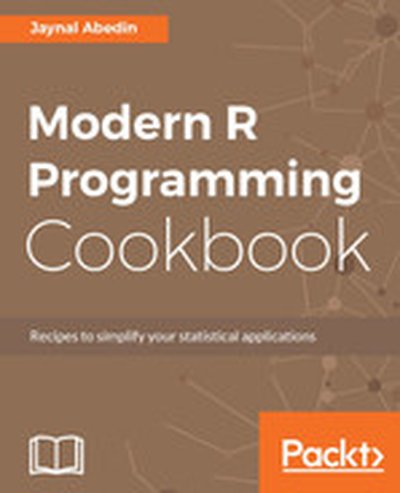
Modern R Programming Cookbook

'Modern R Programming Cookbook' provides an array of practical recipes designed to enhance your R programming skills for statistical, data science, and graphical applications. With this book, you will deepen your understanding of R's syntax and semantics and be able to solve real-world problems using R effectively. What this Book will help me do Understand and configure R's development environment, including IDE setup and library management. Master R's core data structures and best practices for efficient data manipulation. Design and implement custom R functions, handling errors and utilizing recursion effectively. Streamline data processing tasks using modern R packages like dplyr for structured workflows. Efficiently process text and interact with databases to tackle a variety of data science projects. Author(s) Jaynal Abedin is an experienced data scientist and R programmer with a strong background in statistical modeling and data analysis. Over his career, Jaynal has worked on numerous data-intensive projects, helping individuals and organizations transform data insights into actionable strategies. He brings a clear and hands-on approach to teaching and writes with the goal of empowering readers to tackle complex problems using R. Who is it for? This book is perfect for developers looking to enhance their R programming expertise, particularly if they already have a basic understanding of R's fundamentals. Whether you're working in data science, statistics, or software development, this book provides actionable strategies for leveraging R's capabilities. If you're exploring advanced R programming or aiming to upskill in data applications, this book is an excellent resource.

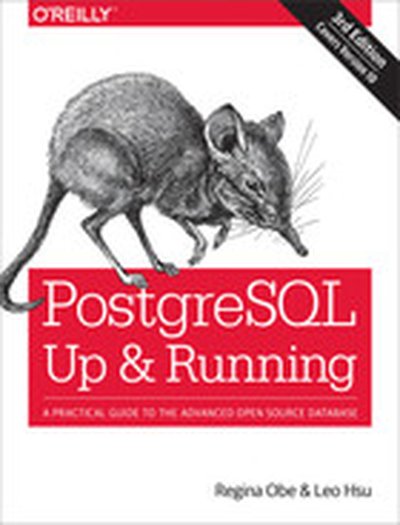
PostgreSQL: Up and Running, 3rd Edition

Thinking of migrating to PostgreSQL? This clear, fast-paced introduction helps you understand and use this open source database system. Not only will you learn about the enterprise class features in versions 9.5 to 10, you’ll also discover that PostgeSQL is more than a database system—it’s an impressive application platform as well. With examples throughout, this book shows you how to achieve tasks that are difficult or impossible in other databases. This third edition covers new features, such as ANSI-SQL constructs found only in proprietary databases until now: foreign data wrapper (FDW) enhancements; new full text functions and operator syntax introduced in version 9.6; XML constructs new in version 10; query parallelization features introduced in 9.6 and enhanced in 10; built-in logical replication introduced in Version 10.e. If you’re a current PostgreSQL user, you’ll pick up gems you may have missed before. Learn basic administration tasks such as role management, database creation, backup, and restore Apply the psql command-line utility and the pgAdmin graphical administration tool Explore PostgreSQL tables, constraints, and indexes Learn powerful SQL constructs not generally found in other databases Use several different languages to write database functions Tune your queries to run as fast as your hardware will allow Query external and variegated data sources with foreign data wrappers Learn how to use built-in replication to replicate data

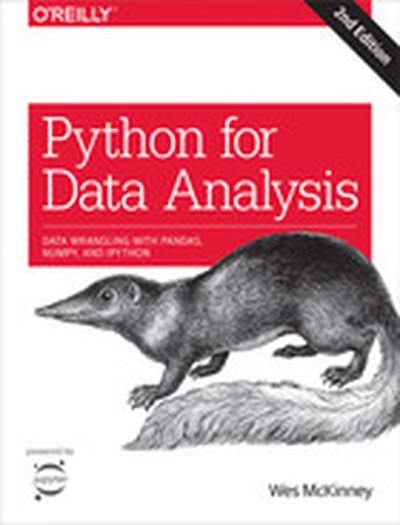
Python for Data Analysis, 2nd Edition

Get complete instructions for manipulating, processing, cleaning, and crunching datasets in Python. Updated for Python 3.6, the second edition of this hands-on guide is packed with practical case studies that show you how to solve a broad set of data analysis problems effectively. You’ll learn the latest versions of pandas, NumPy, IPython, and Jupyter in the process. Written by Wes McKinney, the creator of the Python pandas project, this book is a practical, modern introduction to data science tools in Python. It’s ideal for analysts new to Python and for Python programmers new to data science and scientific computing. Data files and related material are available on GitHub. Use the IPython shell and Jupyter notebook for exploratory computing Learn basic and advanced features in NumPy (Numerical Python) Get started with data analysis tools in the pandas library Use flexible tools to load, clean, transform, merge, and reshape data Create informative visualizations with matplotlib Apply the pandas groupby facility to slice, dice, and summarize datasets Analyze and manipulate regular and irregular time series data Learn how to solve real-world data analysis problems with thorough, detailed examples

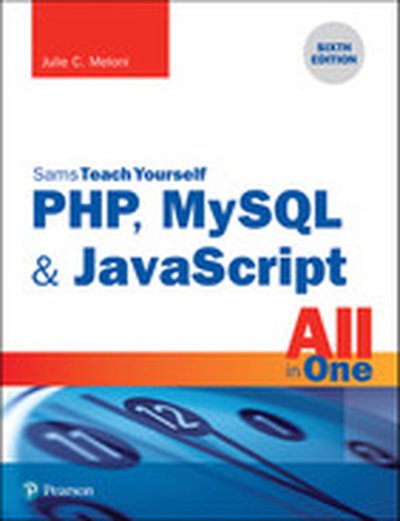
SamsTeachYourself PHP, MySQL & JavaScript: All in One, 6th Edition

In just a short time, you can learn how to use PHP, MySQL, and JavaScript together to create dynamic, interactive websites and applications using three leading web development technologies. No previous programming experience is required. Using a straightforward, step-by-step approach, each lesson in this book builds on the previous ones, enabling you to learn the essentials of full-stack web application development – from HTML, CSS, and JavaScript on the front end, to PHP scripting and MySQL databases on the server. Regardless of whether you run Linux, Windows, or MacOS, the book includes complete instructions to install all the software you need to set up a stable environment for learning, testing, and production. Step-by-step instructions carefully walk you through the most common web application development tasks. Practical, hands-on examples show you how to apply what you learn. Quizzes and exercises help you test your knowledge and stretch your skills. Learn how to: Build web pages with HTML5 and CSS Use JavaScript to build dynamic, interactive web pages Get PHP, MySQL, and JavaScript to work together to create modern, standards-compliant web applications Enhance interactivity with AJAX Leverage JavaScript libraries such as jQuery Work with cookies and user sessions Get user input with web-based forms Use basic SQL commands Interact with the MySQL database using PHP Write maintainable code and get started with version control Decide when frameworks such as Bootstrap, Foundation, React, Angular, and Laravel can be useful Create a web-based discussion forum or calendar Add a storefront and shopping cart to your site Contents at a Glance PART I Web Application Basics 1 Understanding How the Web Works 2 Structuring HTML and Using Cascading Style Sheets 3 Understanding the CSS Box Model and Positioning 4 Introducing JavaScript 5 Introducing PHP PART II Getting Started with Dynamic Web Sites 6 Understanding Dynamic Web Sites and HTML5 Applications 7 JavaScript Fundamentals: Variables, Strings, and Arrays 8 JavaScript Fundamentals: Functions, Objects, and Flow Control 9 Understanding JavaScript Event Handling 10 The Basics of Using jQuery PART III Taking Your Web Applications to the Next Level 11 AJAX: Getting Started with Remote Scripting 12 PHP Fundamentals: Variables, Strings, and Arrays 13 PHP Fundamentals: Functions, Objects, and Flow Control 14 Working with Cookies and User Sessions 15 Working with Web-Based Forms PART IV Integrating a Database into Your Applications 16 Understanding the Database Design Process 17 Learning Basic SQL Commands 18 Interacting with MySQL Using PHP PART V Getting Started with Application Development 19 Creating a Simple Discussion Forum 20 Creating an Online Storefront 21 Creating a Simple Calendar 22 Managing Web Applications PART VI Appendixes A Installation QuickStart with XAMPP B Installing and Configuring MySQL C Installing and Configuring Apache D Installing and Configuring PHP