talk-data.com talk-data.com

Topic

data

5765

tagged

Activity Trend

3 peak/qtr
2020-Q1 2026-Q1

Activities

5765 activities · Newest first

Exchanging Data From SAS to Excel

Microsoft Excel remains the leading spreadsheet application on the market; nearly every SAS user will need to move their data and reports into Excel workbooks at some point during their career. Exchanging Data From SAS(R) to Excel: The ODS Excel Destination shows SAS users how to create Excel workbooks that are presentation ready, eliminating manual changes to the workbooks after creation.

While the original book Exchanging Data between SAS and Microsoft Excel: Tips and Techniques to Transfer and Manage Data More Efficiently touched upon many topics involved in moving data between SAS and Excel, this companion book delves into the options that are available with the ODS Excel destination. This book also has numerous examples that include syntax and graphical output.

With this book, you can learn how to:

Create native Excel files

Insert graphs and images into Excel files

Place multiple tables on multiple tabs within the file

Customize spreadsheets with workbook-level options, print features, column features, row features, and cell-level features

Exchanging Data from SAS® to Excel: The ODS Excel Destination will make sending your output and graphics to Excel a breeze, enhancing any presentation!

High Availability for Oracle Database with IBM PowerHA SystemMirror and IBM Spectrum Virtualize HyperSwap

This IBM® Redpaper™ publication describes the use of the IBM Spectrum™ Virtualize HyperSwap® function to provide a high availability (HA) storage infrastructure for Oracle databases across metro distances, using the IBM SAN Volume Controller. The HyperSwap function is available on all IBM storage technologies that use IBM Spectrum Virtualize™ software, which include the IBM SAN Volume Controller, IBM Storwize® V5000, IBM Storwize V7000, IBM FlashSystem® V9000, and IBM Spectrum Virtualize as software. This paper focuses on the functional behavior of HyperSwap when subjected to various failure conditions and provides detailed timings and error recovery sequences that occur in response to these failure conditions. This paper does not provide the details necessary to implement the reference architectures (although some implementation detail is provided).

IBM TS4500 R4 Tape Library Guide

Abstract The IBM® TS4500 (TS4500) tape library is a next-generation tape solution that offers higher storage density and integrated management than previous solutions. This IBM Redbooks® publication gives you a close-up view of the new IBM TS4500 tape library. In the TS4500, IBM delivers the density that today's and tomorrow's data growth requires. It has the cost-effectiveness and the manageability to grow with business data needs, while you preserve existing investments in IBM tape library products. Now, you can achieve both a low cost per terabyte (TB) and a high TB density per square foot, because the TS4500 can store up to 8.25 petabytes (PB) of uncompressed data in a single frame library or scale up at 1.5 PB per square foot to over 263 PB, which is more than 4 times the capacity of the IBM TS3500 tape library. The TS4500 offers these benefits: High availability dual active accessors with integrated service bays to reduce inactive service space by 40%. The Elastic Capacity option can be used to completely eliminate inactive service space. Flexibility to grow: The TS4500 library can grow from both the right side and the left side of the first L frame because models can be placed in any active position. Increased capacity: The TS4500 can grow from a single L frame up to an additional 17 expansion frames with a capacity of over 23,000 cartridges. High-density (HD) generation 1 frames from the existing TS3500 library can be redeployed in a TS4500. Capacity on demand (CoD): CoD is supported through entry-level, intermediate, and base-capacity configurations. Advanced Library Management System (ALMS): ALMS supports dynamic storage management, which enables users to create and change logical libraries and configure any drive for any logical library. Support for the IBM TS1155 while also supporting TS1150 and TS1140 tape drive: The TS1155 gives organizations an easy way to deliver fast access to data, improve security, and provide long-term retention, all at a lower cost than disk solutions. The TS1155 offers high-performance, flexible data storage with support for data encryption. Also, this enhanced fifth-generation drive can help protect investments in tape automation by offering compatibility with existing automation. The new TS1155 Tape Drive Model 55E delivers a 10 Gb Ethernet host attachment interface optimized for cloud-based and hyperscale environments. The TS1155 Tape Drive Model 55F delivers a native data rate of 360 MBps, the same load/ready, locate speeds, and access times as the TS1150, and includes dual-port 8 Gb Fibre Channel support. Support of the IBM Linear Tape-Open (LTO) Ultrium 7 tape drive: The LTO Ultrium 7 offering represents significant improvements in capacity, performance, and reliability over the previous generation, LTO Ultrium 6, while they still protect your investment in the previous technology. Integrated TS7700 back-end Fibre Channel (FC) switches are available. Up to four library-managed encryption (LME) key paths per logical library are available. This book describes the TS4500 components, feature codes, specifications, supported tape drives, encryption, new integrated management console (IMC), and command-line interface (CLI). You learn how to accomplish several specific tasks: Improve storage density with increased expansion frame capacity up to 2.4 times and support 33% more tape drives per frame. Manage storage by using the ALMS feature. Improve business continuity and disaster recovery with dual active accessor, automatic control path failover, and data path failover. Help ensure security and regulatory compliance with tape-drive encryption and Write Once Read Many (WORM) media. Support IBM LTO Ultrium 7, 6, and 5, IBM TS1155, TS1150, and TS1140 tape drives. Provide a flexible upgrade path for users who want to expand their tape storage as their needs grow. Reduce the storage footprint and simplify cabling with 10 U of rack space on top of the library. This guide is for anyone who wants to understand more about the IBM TS4500 tape library. It is particularly suitable for IBM clients, IBM Business Partners, IBM specialist sales representatives, and technical specialists.

Learn FileMaker Pro 16: The Comprehensive Guide to Building Custom Databases

Extend FileMaker's built-in functionality and totally customize your data management environment with specialized functions and menus to super-charge the results and create a truly unique and focused experience. This book includes everything a beginner needs to get started building databases with FileMaker and contains advanced tips and techniques that the most seasoned professionals will appreciate. Written by a long time FileMaker developer, this book contains material for developers of every skill level. FileMaker Pro 16 is a powerful database development application used by millions of people in diverse industries to simplify data management tasks, leverage their business information in new ways and automate many mundane tasks. A custom solution built with FileMaker can quickly tap into a powerful set of capabilities and technologies to offer users an intuitive and pleasing environment in which to achieve new levels of efficiency and professionalism. What You’ll learn Create SQL queries to build fast and efficient formulas Discover new features of version 16 such as JSON functions, Cards, Layout Object window, SortValues, UniqueValues, using variables in Data Sources Write calculations using built-in and creating your own custom functions Discover the importance of a good approach to interface and technical design Apply best practices for naming conventions and usage standards Explore advanced topics about designing professional, open-ended solutions and using advanced techniques Who This Book Is For Casual programmers, full time consultants and IT professionals.

Infonomics

Infonomics is the theory, study, and discipline of asserting economic significance to information. It strives to apply economic and asset management principles to the valuation, handling, and deployment of information assets. This for the chief data officers and other leaders in their struggle to help their organizations become infosavvy. "Doug Laney masterfully weaves together a collection of great examples with a solid framework to guide readers on how to gain competitive advantage through what he labels "the unruly asset" – data. The framework is comprehensive, the advice practical and the success stories global and across industries and applications." Liz Rowe, Chief Data Officer, State of New Jersey "A must read for anybody who wants to survive in a data centric world." Shaun Adams, Head of Data Science, Betterbathrooms.com "Phenomenal! An absolute must read for data practitioners, business leaders and technology strategists. Doug's lucid style has a set a new standard in providing intelligible material in the field of information economics. His passion and knowledge on the subject exudes thru his literature and inspires individuals like me." Ruchi Rajasekhar, Principal Data Architect, MISO Energy "I highly recommend Infonomics to all aspiring analytics leaders. Doug Laney’s work gives readers a deeper understanding of how and why information should be monetized and managed as an enterprise asset. Laney’s assertion that accounting should recognize information as a capital asset is quite convincing and one I agree with. Infonomics enjoyably echoes that sentiment!" Matt Green, independent business analytics consultant, Atlanta area "If you care about the digital economy, and you should, read this book." Tanya Shuckhart, Analyst Relations Lead, IRI Worldwide

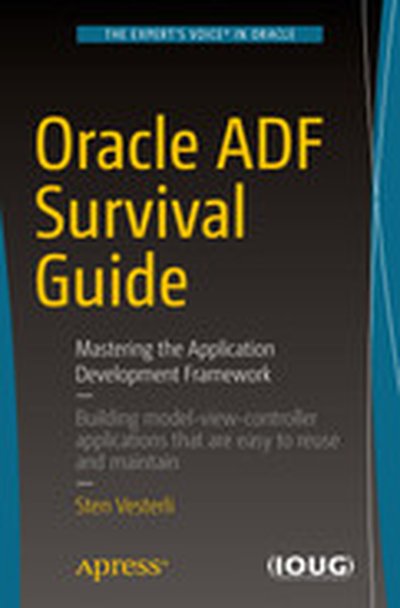
Oracle ADF Survival Guide: Mastering the Application Development Framework

Quickly get up to speed with Oracle's Application Development Framework (ADF). Rapidly build modern, user-friendly applications that will be easy to re-use, expand, and maintain. Oracle ADF Survival Guide covers the latest 12c version and explains all the important concepts and parts, including ADF Faces, ADF Task Flows, ADF Business Components, ADF Skins, the new Alta UI, and how to implement business logic in all layers of the application. Organizations with existing investments in Oracle database and Oracle Forms applications will be able to leverage Oracle's best practice for application development in moving those applications to the ADF framework. The book: Explains all parts of the ADF stack Shows how to integrate with databases and web services Demonstrates the best practice for ADF enterprise architecture What You Will Learn Rapidly build great-looking, user-friendly screens Build page flows visually for improved communication with business users Easily connect your user interface to databases and other back-end systems Leverage the best practice for productive team development Establish a solid enterprise architecture for maximum reuse and maintainability Automate your build and deployment process Who This Book Is For Experienced developers who want to rapidly become productive with Oracle's Application Development Framework (ADF) 12c. It is for Oracle Forms and database developers working for organizations who have followed Oracle’s strategic direction to ADF, as well as for experienced Java developers who want to learn Oracle’s highly-productive, JSF framework.

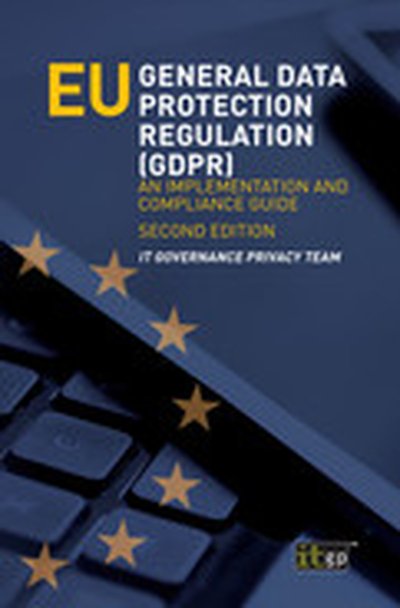
EU General Data Protection Regulation (GDPR): An Implementation and Compliance Guide - Second edition

The updated second edition of the bestselling guide to the changes your organisation needs to make to comply with the EU GDPR. “The clear language of the guide and the extensive explanations, help to explain the many doubts that arise reading the articles of the Regulation.” Giuseppe G. Zorzino The EU General Data Protection Regulation (GDPR) will supersede the 1995 EU Data Protection Directive (DPD) and all EU member states’ national laws based on it – including the UK Data Protection Act 1998 – in May 2018. All organisations – wherever they are in the world – that process the personal data of EU residents must comply with the Regulation. Failure to do so could result in fines of up to €20 million or 4% of annual global turnover. This book provides a detailed commentary on the GDPR, explains the changes you need to make to your data protection and information security regimes, and tells you exactly what you need to do to avoid severe financial penalties. Product overview Now in its second edition, EU GDPR – An Implementation and Compliance Guide is a clear and comprehensive guide to this new data protection law, explaining the Regulation, and setting out the obligations of data processors and controllers in terms you can understand. Topics covered include: The role of the data protection officer (DPO) – including whether you need one and what they should do. Risk management and data protection impact assessments (DPIAs), including how, when and why to conduct a DPIA. Data subjects’ rights, including consent and the withdrawal of consent; subject access requests and how to handle them; and data controllers’ and processors’ obligations. International data transfers to “third countries” – including guidance on adequacy decisions and appropriate safeguards; the EU-US Privacy Shield; international organisations; limited transfers; and Cloud providers. How to adjust your data protection processes to transition to GDPR compliance, and the best way of demonstrating that compliance. A full index of the Regulation to help you find the articles and stipulations relevant to your organisation. New for the second edition: Additional definitions. Further guidance on the role of the DPO. Greater clarification on data subjects’ rights. Extra guidance on data protection impact assessments. More detailed information on subject access requests (SARs). Clarification of consent and the alternative lawful bases for processing personal data. New appendix: implementation FAQ. The GDPR will have a significant impact on organisational data protection regimes around the world. EU GDPR – An Implementation and Compliance Guide shows you exactly what you need to do to comply with the new law.

IBM Tape Library Guide for Open Systems

Abstract This IBM® Redbooks® publication presents a general introduction to the latest IBM tape and tape library technologies. Featured tape technologies include the IBM LTO Ultrium and Enterprise 3592 tape drives, and their implementation in IBM tape libraries. This 14th edition includes information about the latest TS4300 Ultrium tape library and new TS1155 Enterprise tape drive, along with technical information about each IBM tape product for open systems, and includes generalized sections about Small Computer System Interface (SCSI) and Fibre Channel connections and multipath architecture configurations. This book also covers tools and techniques for library management. It is intended for anyone who wants to understand more about IBM tape products and their implementation. It is suitable for IBM clients, IBM Business Partners, IBM specialist sales representatives, and technical specialists. If you do not have a background in computer tape storage products, you might need to read other sources of information. In the interest of being concise, topics that are generally understood are not covered in detail.
Statistical Application Development with R and Python - Second Edition

This book, 'Statistical Application Development with R and Python', is your gateway to mastering statistical analysis and applying it effectively in real-world contexts. Through integrated R and Python code, you'll learn how to utilize data processing, explore advanced statistical models like regression and CART, and develop applications that solve complex analytical challenges. What this Book will help me do Fully understand data visualization and exploratory analysis methods to uncover insights from datasets. Master techniques such as regression models, clustering, and classification to enhance your analytical toolkit. Gain proficiency in R and Python for data processing and statistical modeling tasks. Apply CART and other machine learning tools to tackle nonlinear data challenges effectively. Equip yourself with a comprehensive approach to data exploration and decision-making for impactful results. Author(s) The author(s) of this book bring extensive experience in statistical analysis, computational modeling, and the use of R and Python for data science. They are professionals and educators passionate about making statistics accessible and practical. Their engaging writing style ensures readers not only understand but also enjoy the journey of learning statistics. Who is it for? This book is perfect for aspiring data scientists or professionals wanting to deepen their understanding of statistical analysis. Whether you're new to R or Python or looking to integrate both into your workflow, this guide provides comprehensive knowledge and practical techniques. It's suitable for beginners with no prior experience as well as seasoned users seeking to enhance their data processing and modeling skills.

Competing on Analytics: Updated, with a New Introduction

The New Edition of a Business Classic This landmark work, the first to introduce business leaders to analytics, reveals how analytics are rewriting the rules of competition. Updated with fresh content, Competing on Analytics provides the road map for becoming an analytical competitor, showing readers how to create new strategies for their organizations based on sophisticated analytics. Introducing a five-stage model of analytical competition, Davenport and Harris describe the typical behaviors, capabilities, and challenges of each stage. They explain how to assess your company’s capabilities and guide it toward the highest level of competition. With equal emphasis on two key resources, human and technological, this book reveals how even the most highly analytical companies can up their game. With an emphasis on predictive, prescriptive, and autonomous analytics for marketing, supply chain, finance, M&A, operations, R&D, and HR, the book contains numerous new examples from different industries and business functions, such as Disney’s vacation experience, Google’s HR, UPS’s logistics, the Chicago Cubs’ training methods, and Firewire Surfboards’ customization. Additional new topics and research include: Data scientists and what they do Big data and the changes it has wrought Hadoop and other open-source software for managing and analyzing data Data products—new products and services based on data and analytics Machine learning and other AI technologies The Internet of Things and its implications New computing architectures, including cloud computing Embedding analytics within operational systems Visual analytics The business classic that turned a generation of leaders into analytical competitors, Competing on Analytics is the definitive guide for transforming your company’s fortunes in the age of analytics and big data.

Using IBM Spectrum Copy Data Management with IBM FlashSystem A9000 or A9000R and SAP HANA

Data is the currency of the new economy, and organizations are increasingly tasked with finding better ways to protect, recover, access, share, and use it. IBM Spectrum™ Copy Data Management is aimed at using existing data in a manner that is efficient, automated, scalable. It helps you manage all of those snapshot and IBM FlashCopy® images made to support DevOps, data protection, disaster recovery, and Hybrid Cloud computing environments. This IBM® Redpaper™ publication specifically addresses IBM Spectrum Copy Data Management in combination with IBM FlashSystem® A9000 or A9000R when used for Automated Disaster Recovery of SAP HANA.

MATLAB for Machine Learning

Learn the art of creating machine learning models and processing data efficiently with MATLAB. In this book, you will explore various techniques such as regression analysis, clustering, classification, and neural networks, all in the MATLAB environment. Each topic is detailed with practical examples for clear understanding and immediate application. What this Book will help me do Understand the key concepts of machine learning and how they integrate with MATLAB. Learn to preprocess and transform data for effective machine learning workflows. Explore regression methods and apply them to analyze and predict trends in your data. Master classification and clustering techniques for model creation and data categorization. Gain expertise in using MATLAB Neural Network Toolbox for building neural network-based solutions. Author(s) None Kolluru and Giuseppe Ciaburro are seasoned experts in using MATLAB for data analysis and machine learning. With years of experience in research and teaching, they have meticulously curated this book to bridge concepts of theory with real-world applications. Their writing approach is clear, instructional, and focused on equipping learners with practical skills. Who is it for? This book is ideal for data analysts, aspiring data scientists, and students eager to delve into machine learning using MATLAB. Even if you're new to the field, you'll find the instructions gentle yet comprehensive to help you follow along. However, having some background in math and statistics will definitely enhance your learning experience. If you're passionate about data and its insights, this is the guide for you.

Matplotlib 2.x By Example

"Matplotlib 2.x By Example" is your comprehensive guide to mastering data visualization in Python using the Matplotlib library. Through detailed explanations and hands-on examples, this book will teach you how to create stunning, insightful, and professional-looking visual representations of your data. You'll learn valuable skills tailored towards practical applications in science, marketing, and data analysis. What this Book will help me do Understand the core features of Matplotlib and how to use them effectively. Create professional 2D and 3D visualizations, such as scatter plots, line graphs, and more. Develop skills to transform raw data into meaningful insights through visualization. Enhance your data visualizations with interactive elements and animations. Leverage additional libraries such as Seaborn and Pandas to expand functionality. Author(s) Allen Yu, Claire Chung, and Aldrin Yim are seasoned data scientists and technical authors with extensive experience in Python and data visualization. Allen and his coauthors are dedicated to helping readers bridge the gap between their raw data and meaningful insights through visualization. With practical applications and real-world examples, their approachable writing makes complex libraries like Matplotlib accessible and production-ready. Who is it for? This book is perfect for data enthusiasts, analysts, and Python programmers looking to enhance their data visualization skills. Whether you're a professional aiming to create high-quality visual reports or a student eager to understand and present data effectively, this book provides practical and actionable insights. Basic Python knowledge is expected, while all Matplotlib-related aspects are thoroughly explained.

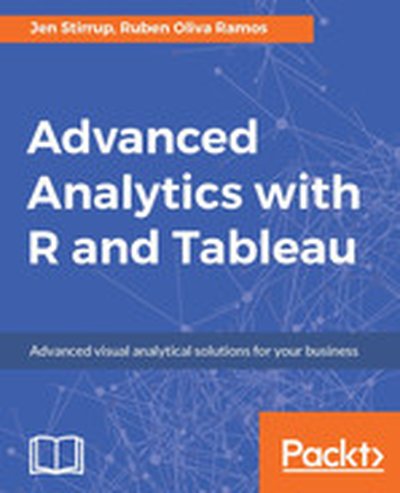
Advanced Analytics with R and Tableau

In "Advanced Analytics with R and Tableau," you will learn how to combine the statistical computing power of R with the excellent data visualization capabilities of Tableau to perform advanced analysis and present your findings effectively. This book guides you through practical examples to understand topics such as classification, clustering, and predictive analytics while creating compelling visual dashboards. What this Book will help me do Integrate advanced statistical computations in R with Tableau's visual analysis for comprehensive analytics. Master making R function calls from Tableau through practical applications such as RServe integration. Develop predictive and classification models in R, visualized wonderfully in Tableau dashboards. Understand clustering and unsupervised learning concepts, applied to real-world datasets for business insights. Leverage the combination of Tableau and R for making impactful, data-driven decisions in your organization. Author(s) Ruben Oliva Ramos, Jen Stirrup, and Roberto Rösler are accomplished professionals with extensive experience in data science and analytics. Their combined expertise brings practical insights into combining R and Tableau for advanced analytics. Advocates for hands-on learning, they emphasize clarity and actionable knowledge in their writing. Who is it for? "Advanced Analytics with R and Tableau" is ideal for business analysts, data scientists, and Tableau professionals eager to expand their capabilities into advanced analytics. Readers should be familiar with Tableau and have basic knowledge of R, though the book starts with accessible examples. If you're looking to enhance your analytics with R's statistical power seamlessly integrated into Tableau, this book is for you.

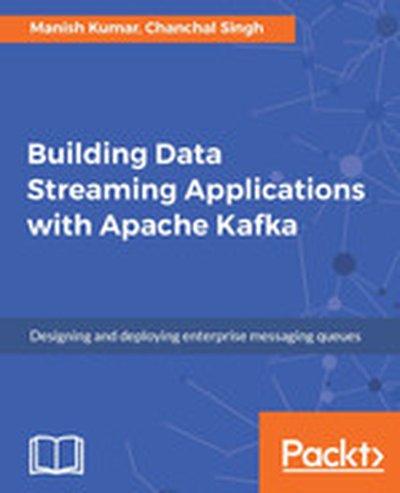
Building Data Streaming Applications with Apache Kafka

Learn how to design and build efficient real-time streaming applications using Apache Kafka, a leading distributed streaming platform. This book provides comprehensive guidance on setting up Kafka clusters, developing producers and consumers, and integrating with frameworks like Spark, Storm, and Heron. By the end, you'll master the skills needed to create enterprise-grade data streaming solutions. What this Book will help me do Grasp the core concepts and components of Apache Kafka and its ecosystem. Develop robust Kafka producers and consumers to process real-time data streams. Design and implement streaming applications using Spark, Storm, and Heron. Plan Kafka deployments with a focus on scalability, capacity, and fault tolerance. Ensure secure data streaming with best practices for securing Apache Kafka. Author(s) The authors, None Singh and None Kumar, bring years of expertise in data engineering and distributed systems. Having worked extensively with streaming technologies like Apache Kafka, they aim to share their in-depth knowledge through practical examples and real-world scenarios. Their approach to teaching focuses on making complex concepts easily understandable. Who is it for? This book is ideal for software developers and data engineers who are eager to learn Apache Kafka for building streaming applications. Some experience with programming, particularly Java, will help readers get the most out of the material. If you are working on data-processing systems or looking to enhance your skills in real-time data handling, this book caters to your needs.

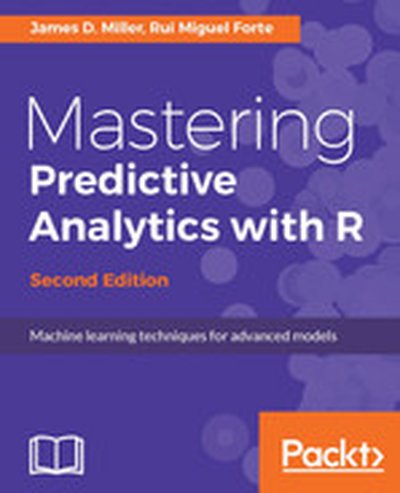
Mastering Predictive Analytics with R, Second Edition - Second Edition

This comprehensive guide dives into predictive analytics with R, exploring the powerful functionality and vast ecosystem of packages available in this programming language. By studying this book, you will gain mastery over predictive modeling techniques and learn how to apply machine learning to real-world problems efficiently and effectively. What this Book will help me do Develop proficiency in predictive modeling processes, from data preparation to model evaluation. Gain hands-on experience with R's diverse packages for machine learning. Understand the theoretical foundations and practical applications of various predictive models. Learn advanced techniques such as deep learning implementations of word embeddings and recurrent neural networks. Acquire the ability to handle large datasets using R for scalable predictive analytics workflows. Author(s) James D. Miller and Rui Miguel Forte are experts in data science and predictive analytics with decades of combined experience in the field. They bring practical insights from their work in both academia and industry. Their clear and engaging writing style aims at making complex concepts accessible to readers by integrating theoretical knowledge with real-world applications. Who is it for? This book is ideal for budding data scientists, predictive modelers, or quantitative analysts with some basic knowledge of R and statistics. Advanced learners aiming to refine their expertise in predictive analytics and those wishing to explore the functionality of R for applied machine learning will also greatly benefit from this resource. The book is suitable for professionals and enthusiasts keen to expand their understanding of predictive modeling and learn advanced techniques.

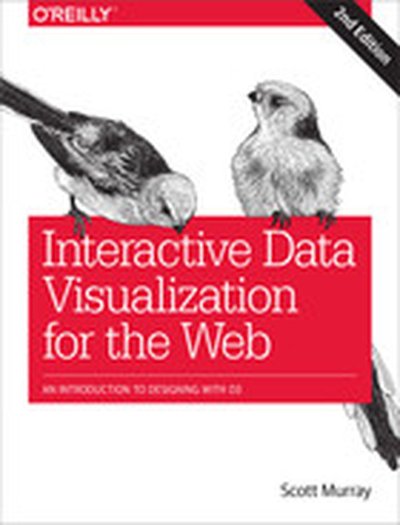
Interactive Data Visualization for the Web, 2nd Edition

Create and publish your own interactive data visualization projects on the webâ??even if you have little or no experience with data visualization or web development. Itâ??s inspiring and fun with this friendly, accessible, and practical hands-on introduction. This fully updated and expanded second edition takes you through the fundamental concepts and methods of D3, the most powerful JavaScript library for expressing data visually in a web browser. Ideal for designers with no coding experience, reporters exploring data journalism, and anyone who wants to visualize and share data, this step-by-step guide will also help you expand your web programming skills by teaching you the basics of HTML, CSS, JavaScript, and SVG. Learn D3 4.xâ??the latest D3 versionâ??with downloadable code and over 140 examples Create bar charts, scatter plots, pie charts, stacked bar charts, and force-directed graphs Use smooth, animated transitions to show changes in your data Introduce interactivity to help users explore your data Create custom geographic maps with panning, zooming, labels, and tooltips Walk through the creation of a complete visualization project, from start to finish Explore inspiring case studies with nine accomplished designers talking about their D3-based projects

Mastering Apache Storm

Mastering Apache Storm is your step-by-step guide to mastering real-time data streaming with this robust framework. You'll learn how to process big data efficiently and integrate Apache Storm with popular technologies like Kafka, HBase, and Redis to maximize its potential. This book walks you through from basic concepts to advanced implementations of Apache Storm in real-world scenarios. What this Book will help me do Understand the core features and operation of Apache Storm for real-time data streaming. Integrate Apache Storm with other Big Data frameworks like Kafka, HBase, Redis, and Hadoop. Effectively deploy and manage multi-node Apache Storm clusters in real-world environments. Monitor and analyze your data streams and system health effectively using built-in and external tools. Learn to implement fault-tolerant, scalable, and distributed stream processing applications in Apache Storm. Author(s) None Jain is an experienced software developer and technical instructor specializing in distributed systems and real-time data processing. With years of experience working with Apache Storm and related technologies, their teachings focus on practical, hands-on learning to equip readers with actionable skills. Who is it for? This book is ideal for Java developers aspiring to build expertise in real-time data streaming and distributed processing applications using Apache Storm. Beginners can start with the fundamentals provided, while those with prior knowledge can delve into intermediate and advanced implementations.

Artificial Intelligence for Marketing

A straightforward, non-technical guide to the next major marketing tool Artificial Intelligence for Marketing presents a tightly-focused introduction to machine learning, written specifically for marketing professionals. This book will not teach you to be a data scientist—but it does explain how Artificial Intelligence and Machine Learning will revolutionize your company's marketing strategy, and teach you how to use it most effectively. Data and analytics have become table stakes in modern marketing, but the field is ever-evolving with data scientists continually developing new algorithms—where does that leave you? How can marketers use the latest data science developments to their advantage? This book walks you through the "need-to-know" aspects of Artificial Intelligence, including natural language processing, speech recognition, and the power of Machine Learning to show you how to make the most of this technology in a practical, tactical way. Simple illustrations clarify complex concepts, and case studies show how real-world companies are taking the next leap forward. Straightforward, pragmatic, and with no math required, this book will help you: Speak intelligently about Artificial Intelligence and its advantages in marketing Understand how marketers without a Data Science degree can make use of machine learning technology Collaborate with data scientists as a subject matter expert to help develop focused-use applications Help your company gain a competitive advantage by leveraging leading-edge technology in marketing Marketing and data science are two fast-moving, turbulent spheres that often intersect; that intersection is where marketing professionals pick up the tools and methods to move their company forward. Artificial Intelligence and Machine Learning provide a data-driven basis for more robust and intensely-targeted marketing strategies—and companies that effectively utilize these latest tools will reap the benefit in the marketplace. Artificial Intelligence for Marketing provides a nontechnical crash course to help you stay ahead of the curve.