talk-data.com talk-data.com

Topic

data

5765

tagged

Activity Trend

3 peak/qtr
2020-Q1 2026-Q1

Activities

5765 activities · Newest first

FileMaker® 12 Developers Reference: Functions, Scripts, Commands, and Grammars

The new FileMaker 12 allows you to build unparalleled databases for a wide variety of devices, from Windows and Mac desktops to iPhones and iPad. With 10 million registered customers, FileMaker's users are "average Joes" who are knowledge workers, subject matter experts, and business users from all walks of life. The community extends well beyond the pool of professional software developers. FileMaker's legendary ease-of-use has led to its wide adoption and has allowed non-programmers an avenue into creating sophisticated software solutions. FileMaker 12 Developer’s Reference will serve to help bridge the gaps in these people's understanding of FileMaker's hundreds of calculation functions, script steps, and operations. They know FileMaker, they've used it for years, but they need a quick reference, immediately accessible while not interrupting their work on screen. There is no other book like this on the market. All FileMaker books include information on calculation formulas, scripting, etc., but none have expressly focused on giving readers one simple thing: a quick reference to be used in conjunction with their programming efforts. Some books teach, others explain, still others explore specific in-depth topics. This book will appeal to the entire FileMaker Pro community and be a great extension of their library. This edition is updated for the many new features coming with FileMaker 12, including the product's design functionality and the file format, and a new section dedicated to FileMaker Go, which is the iOS client.
Learning PHP, MySQL, JavaScript, and CSS, 2nd Edition

Learn how to build interactive, data-driven websites—even if you don’t have any previous programming experience. If you know how to build static sites with HTML, this popular guide will help you tackle dynamic web programming. You’ll get a thorough grounding in today’s core open source technologies: PHP, MySQL, JavaScript, and CSS. Explore each technology separately, learn how to combine them, and pick up valuable web programming concepts along the way, including objects, XHTML, cookies, and session management. This book provides review questions in each chapter to help you apply what you’ve learned. Learn PHP essentials and the basics of object-oriented programming Master MySQL, from database structure to complex queries Create web pages with PHP and MySQL by integrating forms and other HTML features Learn JavaScript fundamentals, from functions and event handling to accessing the Document Object Model Pick up CSS basics for formatting and styling your web pages Turn your website into a highly dynamic environment with Ajax calls Upload and manipulate files and images, validate user input, and secure your applications Explore a working example that brings all of the ingredients together

How Data Science Is Transforming Health Care

In the early days of the 20th century, department store magnate JohnWanamaker famously said, "I know that half of my advertising doesn'twork. The problem is that I don't know which half." That remainedbasically true until Google transformed advertising with AdSense basedon new uses of data and analysis. The same might be said about healthcare and it's poised to go through a similar transformation as newtools, techniques, and data sources come on line. Soon we'll makepolicy and resource decisions based on much better understanding ofwhat leads to the best outcomes, and we'll make medical decisionsbased on a patient's specific biology. The result will be betterhealth at less cost. This paper explores how data analysis will help us structure thebusiness of health care more effectively around outcomes, and how itwill transform the practice of medicine by personalizing for eachspecific patient.

Oracle SOA Suite 11g Administrator's Handbook

Dive into the world of Oracle SOA Suite 11g with this comprehensive administrator's guide. You will learn to effectively manage and secure your Oracle SOA Suite services and applications, from deployment to troubleshooting. This book provides clear, step-by-step instructions on key administrative tasks, ensuring you can confidently handle day-to-day challenges. What this Book will help me do Understand the core principles of managing composite applications and their lifecycle. Automate deployments through configuration plans and optimize performance within SOA environments. Develop skills in troubleshooting exceptions and identifying faults within Oracle SOA Suite. Gain practical knowledge in securing components, managing policies, and configuring MBeans. Master the essential backup and recovery procedures, patching, and scripting techniques for Oracle SOA Suite. Author(s) The authors bring extensive experience in Oracle technologies, particularly in administrative roles within service-oriented architecture environments. They focus on an approachable, clear teaching method, blending theory with practical, actionable insights to equip readers with real-world skills. Who is it for? Ideal for Oracle SOA Suite administrators looking to deepen their expertise, this book is also useful for WebLogic Server admins and developers eager to manage SOA Suite services. Whether you're seasoned in basic SOA administration or starting afresh, this book suits all levels seeking practical knowledge in this domain.

Endpoint Security and Compliance Management Design Guide Using IBM Tivoli Endpoint Manager

Organizations today are more widely distributed than ever before, which can make systems management tasks, such as distributing software, patches, and security policies, extremely challenging. The IBM® Tivoli® Endpoint Manager platform is architected for today's highly diverse, distributed, and complex IT environments. It provides real-time visibility and control through a single infrastructure, single agent, and single console for systems lifecycle management, endpoint protection, and security configuration and vulnerability management. This platform enables organizations to securely manage their global IT infrastructures faster and more accurately, resulting in improved governance, control, visibility, and business agility. Plus, it gives organizations the ability to handle tomorrow's unforeseen challenges. In this IBM Redbooks® publication, we provide IT security professionals with a better understanding around the challenging topic of endpoint management in the IT security domain. We focus on IBM Tivoli Endpoint Manager for Security and Compliance and describe the product architecture and provide a hands-on design guide for deploying the solution. This book is a valuable resource for security professionals and architects who want to understand and implement a centralized endpoint management infrastructure and endpoint protection to better handle security and compliance challenges.

SAP BusinessObjects BI 4.0 The Complete Reference 3/E

The definitive reference for building actionable business intelligence—completely revised for SAP BusinessObjects BI 4.0. Unleash the full potential of business intelligence with fact-based decisions, aligned to business goals, using reports and dashboards that lead from insight to action. SAP BusinessObjects BI 4.0: The Complete Reference offers completely updated coverage of the latest BI platform. Find out how to work with the new Information Design Tool to create universes that access multiple data sources and SAP BW. See how to translate complex business questions into highly efficient Web Intelligence queries and publish your results to the BI Launchpad. Learn how to create dashboards from data sourced through a universe or spreadsheet. The most important concepts for universe designers, report and dashboard authors, and business analysts are fully explained and illustrated by screenshots, diagrams, and step-by-step instructions. Establish and evolve BI goals Maximize your BI investments by offering the right module to the right user Create robust universes with the Information Design Tool, leveraging multiple data sources, derived tables, aggregate awareness, and parameters Develop a security plan that is scalable and flexible Design Web Intelligence reports from basic to advanced Create sophisticated calculations and advanced formatting to highlight critical business trends Build powerful dashboards to embed in PowerPoint or the BI Launchpad Use Explorer to visually navigate large data sets and uncover patterns

The Functional Art: An introduction to information graphics and visualization

Unlike any time before in our lives, we have access to vast amounts of free information. With the right tools, we can start to make sense of all this data to see patterns and trends that would otherwise be invisible to us. By transforming numbers into graphical shapes, we allow readers to understand the stories those numbers hide. In this practical introduction to understanding and using information graphics, you’ll learn how to use data visualizations as tools to see beyond lists of numbers and variables and achieve new insights into the complex world around us. Regardless of the kind of data you’re working with–business, science, politics, sports, or even your own personal finances–this book will show you how to use statistical charts, maps, and explanation diagrams to spot the stories in the data and learn new things from it. Condé Nast Traveler’s John Grimwade , National Geographic Magazine’s Fernando Baptista, The New York Times’ Steve Duenes, The Washington Post’s Hannah Fairfield, Hans Rosling of the Gapminder Foundation, Stanford’s Geoff McGhee, and European superstars Moritz Stefaner, Jan Willem Tulp, Stefanie Posavec, and Gregor Aisch. The Functional Art reveals: In this introductory course on information graphics, Alberto Cairo goes into greater detail with even more visual examples of how to create effective information graphics that function as practical tools for aiding perception. You’ll learn how to: incorporate basic design principles in your visualizations, create simple interfaces for interactive graphics, and choose the appropriate type of graphic forms for your data. Cairo also deconstructs successful information graphics from The New York Times and National Geographic magazine with sketches and images not shown in the book.

Complete Analytics with IBM DB2 Query Management Facility: Accelerating Well-Informed Decisions Across the Enterprise

There is enormous pressure today for businesses across all industries to cut costs, enhance business performance, and deliver greater value with fewer resources. To take business analytics to the next level and drive tangible improvements to the bottom line, it is important to manage not only the volume of data, but the speed with which actionable findings can be drawn from a wide variety of disparate sources. The findings must be easily communicated to those responsible for making both strategic and tactical decisions. At the same time, strained IT budgets require that the solution be self-service for everyone from DBAs to business users, and easily deployed to thin, browser-based clients. Business analytics hosted in the Query Management Facility™ (QMF™) on DB2® and System z® allow you to tackle these challenges in a practical way, using new features and functions that are easily deployed across the enterprise and easily consumed by business users who do not have prior IT experience. This IBM® Redbooks® publication provides step-by-step instructions on using these new features: Access to data that resides in any JDBC-compliant data source OLAP access through XMLA 150+ new analytical functions Graphical query interfaces and graphical reports Graphical, interactive dashboards Ability to integrate QMF functions with third-party applications Support for the IBM DB2 Analytics Accelerator A new QMF Classic perspective in QMF for Workstation Ability to start QMF for TSO as a DB2 for z/OS stored procedure New metadata capabilities, including ER diagrams and capability to federate data into a single virtual source

Experiment!: Website conversion rate optimization with A/B and multivariate testing

Testing is a surefire way to dramatically improve your website’s conversion rate and increase revenue. When you run experiments with changes to design or content, you’ll quickly discover which changes better motivate your users to take action. This book shows how to learn from your customers’ behavior and decisions, and how their responses reveal the strengths and weaknesses of your site. It will show you how to make websites that work harder and convert better. Learn how to approach experiments to improve conversion Understand the various methods of testing including A/B and multivariate Discover experiment ideas, and go beyond optimization to innovation Recognize the UX and design implications of experimenting Learn to analyze data and deliver results Experimenting changes the way you think about design and the way you work. It helps prevent the loudest voice from deciding direction; instead, through an experiment, you’ll ask the most important voices--your customers--“What do you think?”

HBase Administration Cookbook

The "HBase Administration Cookbook" is your hands-on guide to mastering HBase administration and configuration. Through practical recipes, this book covers the essential tasks like setting up clusters, optimizing performance, and integrating with the Hadoop ecosystem to manage vast amounts of data effectively. What this Book will help me do Set up and administer HBase clusters for scalability and high availability. Perform routine HBase management tasks confidently and efficiently. Optimize HBase and Hadoop ecosystem settings for maximum performance. Understand troubleshooting to address and resolve typical HBase issues. Leverage advanced configurations for specific read/write-heavy use cases. Author(s) Yifeng Jiang is a seasoned software engineer and database expert with deep experience in working with distributed databases like HBase. He is passionate about teaching and conveying complex concepts through approachable explanations and actionable steps. Yifeng's writing style reflects his hands-on expertise and focus on practical application. Who is it for? This book is designed for system administrators, database managers, and developers looking to master HBase administration and configuration. Whether you are relatively new to HBase with basic familiarity with Hadoop or are an experienced Hadoop administrator wanting to enhance your database management skills, this book provides valuable insights and thorough guidance.

Optimizing DB2 Queries with IBM DB2 Analytics Accelerator for z/OS

The IBM® DB2® Analytics Accelerator Version 2.1 for IBM z/OS® (also called DB2 Analytics Accelerator or Query Accelerator in this book and in DB2 for z/OS documentation) is a marriage of the IBM System z® Quality of Service and Netezza® technology to accelerate complex queries in a DB2 for z/OS highly secure and available environment. Superior performance and scalability with rapid appliance deployment provide an ideal solution for complex analysis. This IBM Redbooks® publication provides technical decision-makers with a broad understanding of the IBM DB2 Analytics Accelerator architecture and its exploitation by documenting the steps for the installation of this solution in an existing DB2 10 for z/OS environment. In this book we define a business analytics scenario, evaluate the potential benefits of the DB2 Analytics Accelerator appliance, describe the installation and integration steps with the DB2 environment, evaluate performance, and show the advantages to existing business intelligence processes. Please note that the additional material referenced in the text is not available from IBM.

IBM CSM to IBM Systems Director Transformation Guide

For many years, IBM® Cluster Systems Management (CSM) provided a single point of management for IBM Power Systems™ servers running the AIX® operating system. Now you can transform your environment to IBM Systems Director®, which provides CSM clients with the next generation of Cluster Systems Management for their Power Systems servers.

Computational Colour Science Using MATLAB, 2nd Edition

Computational Colour Science Using MATLAB 2nd Edition offers a practical, problem-based approach to colour physics. The book focuses on the key issues encountered in modern colour engineering, including efficient representation of colour information, Fourier analysis of reflectance spectra and advanced colorimetric computation. Emphasis is placed on the practical applications rather than the techniques themselves, with material structured around key topics. These topics include colour calibration of visual displays, computer recipe prediction and models for colour-appearance prediction. Each topic is carefully introduced at three levels to aid student understanding. First, theoretical ideas and background information are discussed, then explanations of mathematical solutions follow and finally practical solutions are presented using MATLAB. The content includes: A compendium of equations and numerical data required by the modern colour and imaging scientist. Numerous examples of solutions and algorithms for a wide-range of computational problems in colour science. Example scripts using the MATLAB programming language. This 2nd edition contains substantial new and revised material, including three innovative chapters on colour imaging, psychophysical methods, and physiological colour spaces; the MATLAB toolbox has been extended with a professional, optimized, toolbox to go alongside the current teaching toolbox; and a java toolbox has been added which will interest users who are writing web applications and/or applets or mobile phone applications. Computational Colour Science Using MATLAB 2nd Edition is an invaluable resource for students taking courses in colour science, colour chemistry and colour physics as well as technicians and researchers working in the area. In addition, it acts a useful reference for professionals and researchers working in colour dependent industries such as textiles, paints, print & electronic imaging. Review from First Edition: "...highly recommended as a concise introduction to the practicalities of colour science..." (Color Technology, 2004)

Experiment!: Planning, Implementing and Interpreting

Experiments are the most effective way to learn about the world. By cleverly interfering with something to see how it reacts we are able to find out how it works. In contrast to passive observation, experimenting provides us with data relevant to our research and thus less time and effort is spent separating relevant from irrelevant information. The art of experimentation is often learnt by doing, so an intuitive understanding of the experimental method usually evolves gradually through years of trial and error. This book speeds up the journey for the reader to becoming a proficient experimenter. Organized in two parts, this unique text begins by providing a general introduction to the scientific approach to experimentation. It then describes the processes and tools required, including the relevant statistical and experimental methods. Towards the end of the book a methodology is presented, which leads the reader through the three phases of an experiment: 'Planning', 'Data Collection', and 'Analysis and Synthesis'. Experiment! Provides an excellent introduction to the methodology and implementation of experimentation in the natural, engineering and medical sciences Puts practical tools into scientific context Features a number of selected actual experiments to explore what are the key characteristics of good experiments Includes examples and exercises in every chapter This book focuses on general research skills, such as adopting a scientific mindset, learning how to plan meaningful experiments and understanding the fundamentals of collecting and interpreting data. It is directed to anyone engaged in experiments, especially Ph.D. and masters students just starting to create and develop their own experiments.

IBM System Blue Gene Solution: Blue Gene/Q Hardware Overview and Installation Planning

This document is one of a series of IBM® Redbooks® written specifically for the IBM System Blue Gene® supercomputer, IBM Blue Gene/Q®. Blue Gene/Q is the third generation of massively parallel supercomputers from IBM in the Blue Gene series. This document provides an overview of components that comprise a Blue Gene/Q system. It helps System Planners and Customer Engineers plan for the installation of the Blue Gene/Q system. Information is provided about the physical requirements for the machine room where the Blue Gene/Q system is to be located. Examples of these requirements include floor (weight and cutouts), cooling, and electrical specifications.

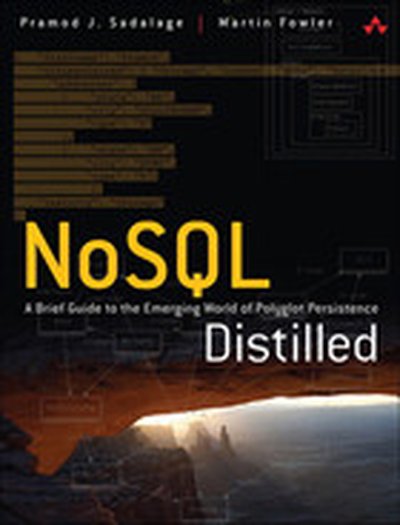
NoSQL Distilled: A Brief Guide to the Emerging World of Polyglot Persistence

The need to handle increasingly larger data volumes is one factor driving the adoption of a new class of nonrelational “NoSQL” databases. Advocates of NoSQL databases claim they can be used to build systems that are more performant, scale better, and are easier to program. NoSQL Distilled is a concise but thorough introduction to this rapidly emerging technology. Pramod J. Sadalage and Martin Fowler explain how NoSQL databases work and the ways that they may be a superior alternative to a traditional RDBMS. The authors provide a fast-paced guide to the concepts you need to know in order to evaluate whether NoSQL databases are right for your needs and, if so, which technologies you should explore further. The first part of the book concentrates on core concepts, including schemaless data models, aggregates, new distribution models, the CAP theorem, and map-reduce. In the second part, the authors explore architectural and design issues associated with implementing NoSQL. They also present realistic use cases that demonstrate NoSQL databases at work and feature representative examples using Riak, MongoDB, Cassandra, and Neo4j. In addition, by drawing on Pramod Sadalage’s pioneering work, NoSQL Distilled shows how to implement evolutionary design with schema migration: an essential technique for applying NoSQL databases. The book concludes by describing how NoSQL is ushering in a new age of Polyglot Persistence, where multiple data-storage worlds coexist, and architects can choose the technology best optimized for each type of data access.

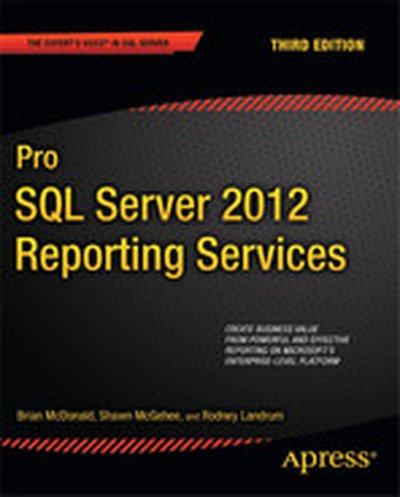
Pro SQL Server 2012 Reporting Services, Third Edition

Pro SQL Server 2012 Reporting Services opens the door to delivering customizable, web-enabled reports across your business at reasonable cost. Reporting Services is Microsoft's enterprise-level reporting platform. It is included with many editions of SQL Server, and is something you'll want to take advantage of if you're running SQL Server as your database engine. Reporting Services provides a full set of tools with which to create and deploy reports. Create interactive reports for business users. Define reporting models from which business users can generate their own ad hoc reports. Pull data from relational databases, from XML, and from other sources. Present that data to users in tabular and graphical forms, and more. Reporting Services experts Brian McDonald, Rodney Landrum, and Shawn McGehee show how to do all this and much more in this third edition of their longstanding book on the topic. Provides best practices for using Reporting Services Covers the very latest in new features for SQL Server 2012 Your key to delivering business intelligence across the enterprise

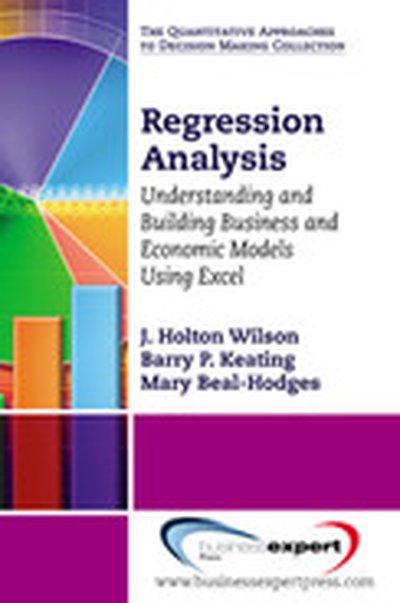
Regression Analysis

The technique of regression analysis is used so often in business and economics today that an understanding of its use is necessary for almost everyone engaged in the field. This book will teach you the essential elements of building and understanding regression models in a business/economic context in an intuitive manner. The authors take a non-theoretical treatment that is accessible even if you have a limited statistical background. It is specifically designed to teach the correct use of regression, while advising you of its limitations and teaching about common pitfalls. This book describes exactly how regression models are developed and evaluated —where real data is used, instead of contrived textbook-like problems. Completing this book will allow you to understand and build basic business/economic models using regression analysis. You will be able to interpret the output of those models and you will be able to evaluate the models for accuracy and shortcomings. Even if you never build a model yourself, at some point in your career it is likely that you will find it necessary to interpret one; this book will make that possible. Included are instructions for using Microsoft Excel to build business/economic models using regression analysis with an appendix using screen shots and step-by-step instructions.

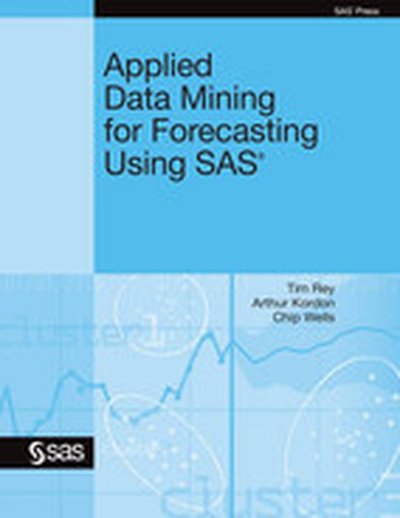
Applied Data Mining for Forecasting Using SAS

Applied Data Mining for Forecasting Using SAS, by Tim Rey, Arthur Kordon, and Chip Wells, introduces and describes approaches for mining large time series data sets. Written for forecasting practitioners, engineers, statisticians, and economists, the book details how to select useful candidate input variables for time series regression models in environments when the number of candidates is large, and identifies the correlation structure between selected candidate inputs and the forecast variable.

Categorical Data Analysis Using SAS, Third Edition, 3rd Edition

Statisticians and researchers will find Categorical Data Analysis Using SAS, Third Edition, by Maura Stokes, Charles Davis, and Gary Koch, to be a useful discussion of categorical data analysis techniques as well as an invaluable aid in applying these methods with SAS. Practical examples from a broad range of applications illustrate the use of the FREQ, LOGISTIC, GENMOD, NPAR1WAY, and CATMOD procedures in a variety of analyses. Topics discussed include assessing association in contingency tables and sets of tables, logistic regression and conditional logistic regression, weighted least squares modeling, repeated measurements analyses, loglinear models, generalized estimating equations, and bioassay analysis.

The third edition updates the use of SAS/STAT software to SAS/STAT 12.1 and incorporates ODS Graphics. Many additional SAS statements and options are employed, and graphs such as effect plots, odds ratio plots, regression diagnostic plots, and agreement plots are discussed. The material has also been revised and reorganized to reflect the evolution of categorical data analysis strategies. Additional techniques include such topics as exact Poisson regression, partial proportional odds models, Newcombe confidence intervals, incidence density ratios, and so on.

This book is part of the SAS Press program.