talk-data.com talk-data.com

Topic

data

5765

tagged

Activity Trend

3 peak/qtr
2020-Q1 2026-Q1

Activities

5765 activities · Newest first

IBM Business Process Manager Security: Concepts and Guidance

This IBM® Redbooks® publication provides information about security concerning an organization’s business process management (BPM) program, about common security holes that often occur in this field, and describes techniques for rectifying these holes. This book documents preferred practices and common security hardening exercises that you can use to achieve a reasonably well-secured BPM installation. Many of the practices described in this book apply equally to generic Java Platform and Enterprise Edition (J2EE) applications, as well as to BPM. However, it focuses on aspects that typically do not receive adequate consideration in actual practice. Also, it addresses equally the BPM Standard and BPM Advanced Editions, although there are topics inherent in BPM Advanced that we considered to be out of scope for this book. This book is not meant as a technical deep-dive into any one topic, technology, or philosophy. IBM offers a variety of training and consulting services that can help you to understand and evaluate the implications of this book’s topic in your own organization.
Microsoft® SQL Server 2012 Management and Administration, Second Edition

If you need to deploy, manage, or secure Microsoft SQL Server 2012, this is the complete, fast-paced, task-based reference you’ve been searching for. Authored by a worldclass expert on running SQL Server in the enterprise, this book goes far beyond the basics, taking on the complex tasks that DBAs need to make the most of Microsoft’s first cloud-enabled database platform. Designed for maximum practical usability, it’s packed with expert tips and up-to-date real-world configuration guidance you simply won’t find anywhere else. As someone who helped influence the design of SQL Server 2012 and drawing on many months of beta testing, Ross Mistry provides immediately usable solutions for installation and upgrades, management and monitoring, performance and availability, security, consolidation, virtualization, troubleshooting, and more. Mistry identifies new features and corresponding best practices in every chapter, helping you take full advantage of new SQL Server innovations ranging from private cloud support to AlwaysOn Availability Groups. Understand how to: Efficiently install or upgrade the SQL Server 2012 database engine Administer and configure database engine settings, storage, I/O, and partitioning Transfer data on-premise or to the cloud Manage and optimize indexes Learn how to consolidate, virtualize and optimize SQL Server for Private Clouds Harden and audit SQL Server 2012 environments Administer security and authorization, including new Contained Databases Encrypt data and communications Design and deploy new AlwaysOn high-availability and disaster recovery features Implement maintenance best practices, including Policy-Based Management

Regression for Economics

Regression analysis is the most commonly used statistical method in the world. Although few would characterize this technique as simple, regression is in fact both simple and elegant. The complexity that many attribute to regression analysis is often a reflection of their lack of familiarity with the language of mathematics. But regression analysis can be understood even without a mastery of sophisticated mathematical concepts. This book provides the foundation and will help demystify regression analysis using examples from economics and with real data to show the applications of the method. The concepts related to regression analysis are explained in a way that is comprehensible to those whose mathematical skills are not matching that of the expert level, and uses Microsoft Excel to obtain regression results. What hinders peoples’ comprehension of regression analysis is the difficulty many have in understanding mathematical symbols and derivations. By removing this obstacle, this book enables the logical reader to learn regression without possessing superior mathematical skills.

XML in Scientific Computing

This book introduces XML to scientists and engineers in a way that illustrates the similarities and differences with traditional programming languages and suggests new ways of saving and sharing the results of scientific calculations. The author discusses XML in the context of scientific computing, demonstrates how XSL can be used to perform various calculations, and explains how to create and navigate through XML documents using traditional languages such as Fortran, C++, and MATLAB. A suite of computer programs are available on the author's website.

Microsoft® SQL Server® 2012 Integration Services

Build and manage data integration solutions with expert guidance from the Microsoft SQL Server Integration Services (SSIS) team. See best practices in action and dive deep into the SSIS engine, SSISDB catalog, and security features. Using the developer enhancements in SQL Server 2012 and the flexible SSIS toolset, you’ll handle complex data integration scenarios more efficiently—and acquire the skills you need to build comprehensive solutions. Discover how to: Use SSIS to extract, transform, and load data from multiple data sources Apply best practices to optimize package and project configuration and deployment Manage security settings in the SSISDB catalog and control package access Work with SSIS data quality features to profile, cleanse, and increase reliability Monitor, troubleshoot, and tune SSIS solutions with advanced features such as detailed views and data taps Load data incrementally to capture an easily consumable stream of insert, update, and delete activity

SAS Hash Object Programming Made Easy

Hash objects, an efficient look-up tool in the SAS DATA step, are object-oriented programming structures that function differently from traditional SAS language statements. Michele Burlew's SAS Hash Object Programming Made Easy shows readers how to use these powerful features, which they can program to quickly look up and manage data and to conserve computing resources. SAS provides various look-up techniques, and hash objects are among the newest, so therefore many users may not have yet used them. Because the examples presented vary in complexity, SAS Hash Object Programming Made Easy is useful to SAS users of all experience levels, from novice programmer to advanced programmer. Novice programmers can adapt some of the simpler hash programming techniques as they develop their SAS programming skills. This book helps more experienced programmers learn how to take advantage of hash object programming by comparing traditional processing techniques to those that use hash objects. Additionally, users from diverse fields with different requirements can adapt the examples in SAS Hash Object Programming Made Easy to fit their unique situations.

This book is part of the SAS Press program.

Enterprise Analytics: Optimize Performance, Process, and Decisions Through Big Data

The Definitive Guide to Enterprise-Level Analytics Strategy, Technology, Implementation, and Management Organizations are capturing exponentially larger amounts of data than ever, and now they have to figure out what to do with it. Using analytics, you can harness this data, discover hidden patterns, and use this knowledge to act meaningfully for competitive advantage. Suddenly, you can go beyond understanding “how, when, and where” events have occurred, to understand why – and use this knowledge to reshape the future. Now, analytics pioneer Tom Davenport and the world-renowned experts at the International Institute for Analytics (IIA) have brought together the latest techniques, best practices, and research on analytics in a single primer for maximizing the value of enterprise data. Enterprise Analytics is today’s definitive guide to analytics strategy, planning, organization, implementation, and usage. It covers everything from building better analytics organizations to gathering data; implementing predictive analytics to linking analysis with organizational performance. The authors offer specific insights for optimizing supply chains, online services, marketing, fraud detection, and many other business functions. They support their powerful techniques with many real-world examples, including chapter-length case studies from healthcare, retail, and financial services. Enterprise Analytics will be an invaluable resource for every business and technical professional who wants to make better data-driven decisions: operations, supply chain, and product managers; product, financial, and marketing analysts; CIOs and other IT leaders; data, web, and data warehouse specialists, and many others.

Pro SQL Server 2012 BI Solutions

Business intelligence projects do not need to cost multi-millions of dollars or take months or even years to complete! Using rapid application development (RAD) techniques along with Microsoft SQL Server 2012, this book guides database administrators, SQL programmers, and report specialists in creating practical, cost-effective business intelligence solutions for their companies and departments. Pro SQL Server 2012 BI Solutions provides practical examples of cost-effective business intelligence projects. Readers will be guided through several complete projects that build a foundation for real-world solutions. Even with limited experience using Microsoft's SQL Server, Integration Server, Analysis Server, and Reporting Server, you can leverage your existing knowledge of SQL programming and database design to provide users with the business intelligence reports they need. Provides recipes for multiple business intelligence scenarios Progresses from simple to advanced projects using several examples Shows Microsoft SQL Server technology used to complete real-world business intelligence projects What you'll learn How to plan and implement cost-effective business intelligence projects How to create practical data warehouse databases How to extract, transform, and load data with Integration Services How to develop OLAP cubes and dimensions on Analysis Server How to create Reporting Server reports using both SQL and MDX How to apply performance-tuning techniques to get the most from your solutions Who this book is for Pro SQL Server 2012 BI Solutions is aimed at database administrators, SQL programmers, and report developers who create business intelligence solutions for midsized businesses and departments.

Loss Models: From Data to Decisions, 4th Edition

Praise for the Third Edition "This book provides in-depth coverage of modelling techniques used throughout many branches of actuarial science. . . . The exceptional high standard of this book has made it a pleasure to read." — Annals of Actuarial Science Newly organized to focus exclusively on material tested in the Society of Actuaries' Exam C and the Casualty Actuarial Society's Exam 4, Loss Models: From Data to Decisions, Fourth Edition continues to supply actuaries with a practical approach to the key concepts and techniques needed on the job. With updated material and extensive examples, the book successfully provides the essential methods for using available data to construct models for the frequency and severity of future adverse outcomes. The book continues to equip readers with the tools needed for the construction and analysis of mathematical models that describe the process by which funds flow into and out of an insurance system. Focusing on the loss process, the authors explore key quantitative techniques including random variables, basic distributional quantities, and the recursive method, and discuss techniques for classifying and creating distributions. Parametric, non-parametric, and Bayesian estimation methods are thoroughly covered along with advice for choosing an appropriate model. New features of this Fourth Edition include: Expanded discussion of working with large data sets, now including more practical elements of constructing decrement tables Added coverage of methods for simulating several special situations An updated presentation of Bayesian estimation, outlining conjugate prior distributions and the linear exponential family as well as related computational issues Throughout the book, numerous examples showcase the real-world applications of the presented concepts, with an emphasis on calculations and spreadsheet implementation. A wealth of new exercises taken from previous Exam C/4 exams allows readers to test their comprehension of the material, and a related FTP site features the book's data sets. Loss Models, Fourth Edition is an indispensable resource for students and aspiring actuaries who are preparing to take the SOA and CAS examinations. The book is also a valuable reference for professional actuaries, actuarial students, and anyone who works with loss and risk models. To explore our additional offerings in actuarial exam preparation visit www.wiley.com/go/c4actuarial.

Indexing

Indexing consists of both novel and more traditional techniques. Cutting-edge indexing techniques, such as automatic indexing, ontologies, and topic maps, were developed independently of older techniques such as thesauri, but it is now recognized that these older methods also hold expertise. Indexing describes various traditional and novel indexing techniques, giving information professionals and students of library and information sciences a broad and comprehensible introduction to indexing. This title consists of twelve chapters: an Introduction to subject readings and theasauri; Automatic indexing versus manual indexing; Techniques applied in automatic indexing of text material; Automatic indexing of images; The black art of indexing moving images; Automatic indexing of music; Taxonomies and ontologies; Metadata formats and indexing; Tagging; Topic maps; Indexing the web; and The Semantic Web. Makes difficult and complex techniques understandable Contains may links to and illustrations from websites where new indexing techniques can be experienced Provides references for further reading

Building Smarter Planet Solutions with MQTT and IBM WebSphere MQ Telemetry

MQ Telemetry Transport (MQTT) is a messaging protocol that is lightweight enough to be supported by the smallest devices, yet robust enough to ensure that important messages get to their destinations every time. With MQTT devices such as smart energy meters, cars, trains, satellite receivers, and personal health care devices can communicate with each other and with other systems or applications. This IBM® Redbooks® publication introduces MQTT and takes a scenario-based approach to demonstrate its capabilities. It provides a quick guide to getting started and then shows how to grow to an enterprise scale MQTT server using IBM WebSphere® MQ Telemetry. Scenarios demonstrate how to integrate MQTT with other IBM products, including WebSphere Message Broker. This book also provides typical usage patterns and guidance on scaling a solution. The intended audience for this book ranges from new users of MQTT and telemetry to those readers who are looking for in-depth knowledge and advanced topics. Please note that the additional material referenced in the text is not available from IBM.

Delivering Continuity and Extreme Capacity with the IBM DB2 pureScale Feature

The IBM® DB2® pureScale® feature offers clustering technology that helps deliver high availability and exceptional scalability transparent to applications. The DB2 pureScale feature helps you to meet your business needs around availability and scalability, and is also easy to configure and administer. This IBM Redbooks® publication addresses the DB2 pureScale feature that is available in IBM DB2 10.1 for Linux, UNIX, and Windows operating systems. It can help you build skills and deploy the DB2 pureScale feature. This book bundles all the information necessary for a in-depth analysis into the functions of the DB2 pureScale feature, including the actual hardware requirements. It includes validated step-by-step hardware and software installation instructions. In addition, this book provides detailed examples about how to work effectively with a DB2 pureScale cluster and how to plan and run an upgrade for all DB2 related components to DB2 10.1. This book is intended for database administrators (DBAs) who use IBM DB2 10.1 for Linux, UNIX, and Windows operating systems who want to explore and get started with the DB2 pureScale feature.

SQL Server 2012 Integration Services Design Patterns

SQL Server 2012 Integration Services Design Patterns is a book of recipes for SQL Server Integration Services (SSIS). Design patterns in the book show how to solve common problems encountered when developing data integration solutions. Because you do not have to build the code from scratch each time, using design patterns improves your efficiency as an SSIS developer. In SSIS Design Patterns, we take you through several of these snippets in detail, providing the technical details of the resolution. SQL Server 2012 Integration Services Design Patterns does not focus on the problems to be solved; instead, the book delves into why particular problems should be solved in certain ways. You'll learn more about SSIS as a result, and you'll learn by practical example. Where appropriate, SQL Server 2012 Integration Services Design Patterns provides examples of alternative patterns and discusses when and where they should be used. Highlights of the book include sections on ETL Instrumentation, SSIS Frameworks, and Dependency Services. Takes you through solutions to several common data integration challenges Demonstrates new features in SQL Server 2012 Integration Services Teaches SSIS using practical examples What you'll learn Load data from flat file formats Explore patterns for executing SSIS packages Discover a pattern for loading XML data Migrate SSIS packages through your application lifecycle without editing connections Take advantage of SSIS 2012 Dependency Services Build an SSIS Framework to support your application needs Who this book is for SQL Server 2012 Integration Services Design Patterns is for the data integration developer who is ready to take their SQL Server Integration Services (SSIS) skills to a more efficient level. It's for the developer interested in locating a previously-tested solution quickly. SQL Server 2012 Integration Services Design Patterns is a great book for ETL (extract, transform, and load) specialists and those seeking practical uses for new features in SQL Server 2012 Integration Services. It's an excellent choice for business intelligence and data warehouse developers.

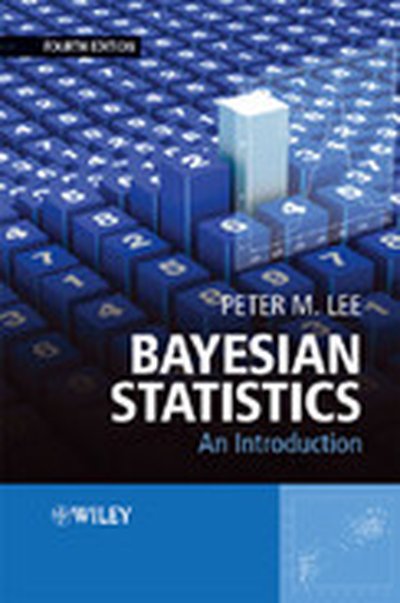
Bayesian Statistics: An Introduction, 4th Edition

Bayesian Statistics is the school of thought that combines prior beliefs with the likelihood of a hypothesis to arrive at posterior beliefs. The first edition of Peter Lee's book appeared in 1989, but the subject has moved ever onwards, with increasing emphasis on Monte Carlo based techniques. This new fourth edition looks at recent techniques such as variational methods, Bayesian importance sampling, approximate Bayesian computation and Reversible Jump Markov Chain Monte Carlo (RJMCMC), providing a concise account of the way in which the Bayesian approach to statistics develops as well as how it contrasts with the conventional approach. The theory is built up step by step, and important notions such as sufficiency are brought out of a discussion of the salient features of specific examples. This edition: Includes expanded coverage of Gibbs sampling, including more numerical examples and treatments of OpenBUGS, R2WinBUGS and R2OpenBUGS. Presents significant new material on recent techniques such as Bayesian importance sampling, variational Bayes, Approximate Bayesian Computation (ABC) and Reversible Jump Markov Chain Monte Carlo (RJMCMC). Provides extensive examples throughout the book to complement the theory presented. Accompanied by a supporting website featuring new material and solutions. More and more students are realizing that they need to learn Bayesian statistics to meet their academic and professional goals. This book is best suited for use as a main text in courses on Bayesian statistics for third and fourth year undergraduates and postgraduate students.

Infographics: The Power of Visual Storytelling

Transform your marketing efforts through the power of visual content In today's fast-paced environment, you must communicate your message in a concise and engaging way that sets it apart from the noise. Visual content—such as infographics and data visualization—can accomplish this. With DIY functionality, Infographics: The Power of Visual Storytelling will teach you how to find stories in your data, and how to visually communicate and share them with your audience for maximum impact. Infographics will show you the vast potential to using the communication medium as a marketing tool by creating informative and shareable infographic content. Learn how to explain an object, idea, or process using strong illustration that captures interest and provides instant clarity Discover how to unlock interesting stories (in previously buried or boring data) and turn them into visual communications that will help build brands and increase sales Use the power of visual content to communicate with and engage your audience, capture attention, and expand your market.

PeopleSoft PeopleTools Data Management and Upgrade Handbook

Master Oracle’s PeopleSoft PeopleTools Data Administration and Upgrade Toolset Maximize data integrity, maintain peak application performance, and keep your PeopleSoft environment up to date. PeopleSoft PeopleTools Data Management and Upgrade Handbook explains the latest techniques and provides best practices, case studies, and programming examples. Find out how to develop and deploy data mover scripts, audit database health, apply patches, and generate project comparison reports. This Oracle Press guide offers thorough coverage of Oracle’s PeopleSoft life cycle management tools. Understand PeopleSoft PeopleTools architecture Manage metadata using PeopleSoft Application Designer Create and execute PeopleSoft Data Mover scripts Learn how to use PeopleSoft Data Archive Manager Read best practices for applying updates, patches, and fixes Implement PeopleSoft change control features Build automated functional tests Plan and execute application and platform upgrades

Generalized Linear and Nonlinear Models for Correlated Data: Theory and Applications Using SAS

Edward F. Vonesh's Generalized Linear and Nonlinear Models for Correlated Data: Theory and Applications Using SAS is devoted to the analysis of correlated response data using SAS, with special emphasis on applications that require the use of generalized linear models or generalized nonlinear models. Written in a clear, easy-to-understand manner, it provides applied statisticians with the necessary theory, tools, and understanding to conduct complex analyses of continuous and/or discrete correlated data in a longitudinal or clustered data setting. Using numerous and complex examples, the book emphasizes real-world applications where the underlying model requires a nonlinear rather than linear formulation and compares and contrasts the various estimation techniques for both marginal and mixed-effects models. The SAS procedures MIXED, GENMOD, GLIMMIX, and NLMIXED as well as user-specified macros will be used extensively in these applications. In addition, the book provides detailed software code with most examples so that readers can begin applying the various techniques immediately.

Getting Started with Storm

Even as big data is turning the world upside down, the next phase of the revolution is already taking shape: real-time data analysis. This hands-on guide introduces you to Storm, a distributed, JVM-based system for processing streaming data. Through simple tutorials, sample Java code, and a complete real-world scenario, you’ll learn how to build fast, fault-tolerant solutions that process results as soon as the data arrives. Discover how easy it is to set up Storm clusters for solving various problems, including continuous data computation, distributed remote procedure calls, and data stream processing. Learn how to program Storm components: spouts for data input and bolts for data transformation Discover how data is exchanged between spouts and bolts in a Storm topology Make spouts fault-tolerant with several commonly used design strategies Explore bolts—their life cycle, strategies for design, and ways to implement them Scale your solution by defining each component’s level of parallelism Study a real-time web analytics system built with Node.js, a Redis server, and a Storm topology Write spouts and bolts with non-JVM languages such as Python, Ruby, and Javascript

IBM ProtecTier Implementation and Best Practices Guide

The IBM® System Storage® TS7650G ProtecTIER® Deduplication Gateway and the IBM System Storage TS7650 ProtecTIER Deduplication Appliance are disk-based data storage systems configured for three available interfaces: The Virtual Tape Library (VTL) interface is the foundation of ProtecTIER and emulates traditional automated tape libraries. The Symantec NetBackup OpenStorage (OST) API can be integrated with Symantec NetBackup to provide backup-to-disk without having to emulate traditional tape libraries. The newly available File System Interface (FSI) supports Common Internet File System (CIFS) as a backup target. For your existing ProtecTIER solution, we provide best practices and suggestions to boost the performance and the effectiveness of the data deduplication with regards to your application platforms for your VTL, OST, and FSI systems. When building a new ProtecTIER data deduplication environment, this publication helps IT architects and solution designers plan for the best option and scenario for data deduplication for their environments. This guide helps you optimize your deduplication ratio, while reducing the hardware, power and cooling, and management costs.

Unleashing DB2 10 for Linux, UNIX, and Windows

This IBM® Redbooks® publication provides a broad understanding of the key features in IBM DB2® 10 and how to use these features to get more value from business applications. It includes information about the following features: Time Travel Query, which you use to store and retrieve time-based data by using capability built into DB2 10, without needing to build your own solution Adaptive compression, an enhanced compression technology that adapts to changing data patterns, yielding extremely high compression ratios Multi-temperature storage, which you may use to optimize storage costs by identifying and managing data based on its “temperature” or access requirements Row and column access control, which offers security access enforcement on your data, at the row or column level, or both Availability enhancements, which provide different DB2 availability features for different enterprise needs; high availability disaster recovery (HADR) multiple-standby databases provide availability and data recovery in one technology, and the IBM DB2 pureScale® Feature provides continuous availability and scalability that is transparent to applications Oracle compatibility, which allows many applications written for Oracle to run on DB2, virtually unchanged Ingest utility, a feature-rich data movement utility that allows queries to run concurrently with minimal impact on data availability