talk-data.com talk-data.com

Topic

data

5765

tagged

Activity Trend

3 peak/qtr
2020-Q1 2026-Q1

Activities

5765 activities · Newest first

MongoDB Performance Tuning: Optimizing MongoDB Databases and their Applications

Use this fast and complete guide to optimize the performance of MongoDB databases and the applications that depend on them. You will be able to turbo-charge the performance of your MongoDB applications to provide a better experience for your users, reduce your running costs, and avoid application growing pains. MongoDB is the world’s most popular document database and the foundation for thousands of mission-critical applications. This book helps you get the best possible performance from MongoDB. MongoDB Performance Tuning takes a methodical and comprehensive approach to performance tuning that begins with application and schema design and goes on to cover optimization of code at all levels of an application. The book also explains how to configure MongoDB hardware and cluster configuration for optimal performance. The systematic approach in the book helps you treat the true causes of performance issues and get the best return on your tuninginvestment. Even when you’re under pressure and don’t know where to begin, simply follow the method in this book to set things right and get your MongoDB performance back on track. What You Will Learn Apply a methodical approach to MongoDB performance tuning Understand how to design an efficient MongoDB application Optimize MongoDB document design and indexing strategies Tune MongoDB queries, aggregation pipelines, and transactions Optimize MongoDB server resources: CPU, memory, disk Configure MongoDB Replica sets and Sharded clusters for optimal performance Who This Book Is For Developers and administrators of high-performance MongoDB applications who want to be sure they are getting the best possible performance from their MongoDB system. For developers who wish to create applications that are fast, scalable,and cost-effective. For administrators who want to optimize their MongoDB server and hardware configuration.
Cleaning Data for Effective Data Science

Dive into the intricacies of data cleaning, a crucial aspect of any data science and machine learning pipeline, with 'Cleaning Data for Effective Data Science.' This comprehensive guide walks you through tools and methodologies like Python, R, and command-line utilities to prepare raw data for analysis. Learn practical strategies to manage, clean, and refine data encountered in the real world. What this Book will help me do Understand and utilize various data formats such as JSON, SQL, and PDF for data ingestion and processing. Master key tools like pandas, SciPy, and Tidyverse to manipulate and analyze datasets efficiently. Develop heuristics and methodologies for assessing data quality, detecting bias, and identifying irregularities. Apply advanced techniques like feature engineering and statistical adjustments to enhance data usability. Gain confidence in handling time series data by employing methods for de-trending and interpolating missing values. Author(s) David Mertz has years of experience as a Python programmer and data scientist. Known for his engaging and accessible teaching style, David has authored numerous technical articles and books. He emphasizes not only the technicalities of data science tools but also the critical thinking that approaches solutions creatively and effectively. Who is it for? 'Cleaning Data for Effective Data Science' is designed for data scientists, software developers, and educators dealing with data preparation. Whether you're an aspiring data enthusiast or an experienced professional looking to refine your skills, this book provides essential tools and frameworks. Prior programming knowledge, particularly in Python or R, coupled with an understanding of statistical fundamentals, will help you make the most of this resource.

High Performant File System Workloads for AI and HPC on AWS using IBM Spectrum Scale

This IBM® Redpaper® publication is intended to facilitate the deployment and configuration of the IBM Spectrum® Scale based high-performance storage solutions for the scalable data and AI solutions on Amazon Web Services (AWS). Configuration, testing results, and tuning guidelines for running the IBM Spectrum Scale based high-performance storage solutions for the data and AI workloads on AWS are the focus areas of the paper. The LAB Validation was conducted with the Red Hat Linux nodes to IBM Spectrum Scale by using the various Amazon Elastic Compute Cloud (EC2) instances. Simultaneous workloads are simulated across multiple Amazon EC2 nodes running with Red Hat Linux to determine scalability against the IBM Spectrum Scale clustered file system. Solution architecture, configuration details, and performance tuning demonstrate how to maximize data and AI application performance with IBM Spectrum Scale on AWS.

IBM Spectrum Protect Plus Practical Guidance for Deployment, Configuration, and Usage

IBM® Spectrum Protect Plus is a data protection solution that provides near-instant recovery, replication, retention management, and reuse for virtual machines, databases, and applications backups in hybrid multicloud environments. IBM Knowledge Center for IBM Spectrum® Protect Plus provides extensive documentation for installation, deployment, and usage. In addition, build and size an IBM Spectrum Protect Plus solution. The goal of this IBM Redpaper® publication is to summarize and complement the available information by providing useful hints and tips that are based on the authors' practical experience in installing and supporting IBM Spectrum Protect Plus in customer environments. Over time, our aim is to compile a set of best practices that cover all aspects of the product, from planning and installation to tuning, maintenance, and troubleshooting.

Effortless App Development with Oracle Visual Builder

In "Effortless App Development with Oracle Visual Builder," you will explore how to quickly design, develop, and deploy robust web and mobile applications using Oracle Visual Builder's intuitive drag-and-drop features. This book equips you with the know-how to simplify application development tasks, making it perfect for professionals looking to boost productivity. What this Book will help me do Master the core architecture and features of Oracle Visual Builder to develop real-world applications effectively. Learn to create, manage, and leverage business objects and connect to various SaaS APIs within your applications. Build scalable and secure web and mobile applications using practical examples and clear implementation guidelines. Discover best practices for application lifecycle management, debugging, and troubleshooting VB applications. Extend Oracle and non-Oracle SaaS applications through hands-on knowledge tailored to real-world scenarios. Author(s) None Jain is an experienced developer and technical writer specializing in Oracle Visual Builder and cloud-based application development. With years of hands-on experience building and deploying cloud applications, they bring expertise and a practical approach to education. Their engaging writing style focuses on enabling readers to learn and apply new skills confidently. Who is it for? This book is perfectly suited for developers, UI designers, and IT professionals who want to master Oracle Visual Builder for developing web and mobile applications. If you already have experience with technologies like JavaScript, UI frameworks, and REST APIs, and seek to create intuitive applications using a simplified interface, this book is for you. Whether you're in the early stages of learning VB or looking to refine your skills, this book serves as a valuable guide.

Automating the Modern Data Warehouse

The opportunity to modernize and improve the enterprise data warehouse is one of the best reasons for moving your application to the cloud. A data warehouse can access a greater diversity of use cases and practices than is possible in an existing environment. In this report, researcher and analyst Stephen Swoyer offers a comprehensive overview of the benefits and challenges of implementing a cloud-based data warehouse. Senior IT decision makers, chief data officers, and data professionals will learn about the shifts and new trends in the data management landscape. Explore ways to improve data management, build a data warehouse strategy, and learn how to modernize a data warehouse effectively. Understand how AI, machine learning, self-service data integration, and built-in developer-oriented services have transformed the data warehouse role Use data warehouses to work with cloud-based data lakes for end-to-end data management and data governance Explore how data warehouse platforms as a service (PaaS) pave the way to automation Migrate, manage, and secure a data warehouse in a hybrid or multicloud environment

The Rise of the Knowledge Graph

Businesses manage data to understand the connections between their customers, products or services, features, markets, and anything else that affects the business. With a knowledge graph, you can represent these connections directly to analyze and understand the compound relationships that drive business innovation. This report introduces knowledge graphs and examines their ability to weave business data and business knowledge into an architecture known as a data fabric . Authors Sean Martin, Ben Szekely, and Dean Allemang explain graph data and knowledge representation and demonstrate the value of combining these two things in a knowledge graph. You'll learn how knowledge graphs enable an enterprise-scale data fabric and discover what to expect in the near future as this technology evolves. This report also examines the evolution of databases, data integration, and data analysis to help you understand how the industry reached this point. Learn how graph technology enables you to represent knowledge and link it to data Understand how graph technology emphasizes the connected nature of data Use a data fabric to support other data-intensive tasks, including machine learning and data analysis Examine how a data fabric supports intense data-driven business initiatives more robustly than a simple database or data architecture

IBM SPSS Essentials, 2nd Edition

Master the fundamentals of SPSS with this newly updated and instructive resource The newly and thoroughly revised Second Edition of SPSS Essentials delivers a comprehensive guide for students in the social sciences who wish to learn how to use the Statistical Package for the Social Sciences (SPSS) for the effective collection, management, and analysis of data. The accomplished researchers and authors provide readers with the practical nuts and bolts of SPSS usage and data entry, with a particular emphasis on managing and manipulating data. The book offers an introduction to SPSS, how to navigate it, and a discussion of how to understand the data the reader is working with. It also covers inferential statistics, including topics like hypothesis testing, one-sample Z-testing, T-testing, ANOVAs, correlations, and regression. Five unique appendices round out the text, providing readers with discussions of dealing with real-world data, troubleshooting, advanced data manipulations, and new workbook activities. SPSS Essentials offers a wide variety of features, including: A revised chapter order, designed to match the pacing and content of typical undergraduate statistics classes An explanation of when particular inferential statistics are appropriate for use, given the nature of the data being worked with Additional material on understanding your data sample, including discussions of SPSS output and how to find the most relevant information A companion website offering additional problem sets, complete with answers Perfect for undergraduate students of the social sciences who are just getting started with SPSS, SPSS Essentials also belongs on the bookshelves of advanced placement high school students and practitioners in social science who want to brush up on the fundamentals of this powerful and flexible software package.

Advances in Longitudinal Survey Methodology

Advances in Longitudinal Survey Methodology Explore an up-to-date overview of best practices in the implementation of longitudinal surveys from leading experts in the field of survey methodology Advances in Longitudinal Survey Methodology delivers a thorough review of the most current knowledge in the implementation of longitudinal surveys. The book provides a comprehensive overview of the many advances that have been made in the field of longitudinal survey methodology over the past fifteen years, as well as extending the topic coverage of the earlier volume, “Methodology of Longitudinal Surveys”, published in 2009. This new edited volume covers subjects like dependent interviewing, interviewer effects, panel conditioning, rotation group bias, measurement of cognition, and weighting. New chapters discussing the recent shift to mixed-mode data collection and obtaining respondents’ consent to data linkage add to the book’s relevance to students and social scientists seeking to understand modern challenges facing data collectors today. Readers will also benefit from the inclusion of: A thorough introduction to refreshment sampling for longitudinal surveys, including consideration of principles, sampling frame, sample design, questionnaire design, and frequency An exploration of the collection of biomarker data in longitudinal surveys, including detailed measurements of ill health, biological pathways, and genetics in longitudinal studies An examination of innovations in participant engagement and tracking in longitudinal surveys, including current practices and new evidence on internet and social media for participant engagement. An invaluable source for post-graduate students, professors, and researchers in the field of survey methodology, Advances in Longitudinal Survey Methodology will also earn a place in the libraries of anyone who regularly works with or conducts longitudinal surveys and requires a one-stop reference for the latest developments and findings in the field.

Data Science for Supply Chain Forecasting

Using data science in order to solve a problem requires a scientific mindset more than coding skills. Data Science for Supply Chain Forecasting, Second Edition contends that a true scientific method which includes experimentation, observation, and constant questioning must be applied to supply chains to achieve excellence in demand forecasting. This second edition adds more than 45 percent extra content with four new chapters including an introduction to neural networks and the forecast value added framework. Part I focuses on statistical "traditional" models, Part II, on machine learning, and the all-new Part III discusses demand forecasting process management. The various chapters focus on both forecast models and new concepts such as metrics, underfitting, overfitting, outliers, feature optimization, and external demand drivers. The book is replete with do-it-yourself sections with implementations provided in Python (and Excel for the statistical models) to show the readers how to apply these models themselves. This hands-on book, covering the entire range of forecasting—from the basics all the way to leading-edge models—will benefit supply chain practitioners, forecasters, and analysts looking to go the extra mile with demand forecasting. Events around the book Link to a De Gruyter Online Event in which the author Nicolas Vandeput together with Stefan de Kok, supply chain innovator and CEO of Wahupa; Spyros Makridakis, professor at the University of Nicosia and director of the Institute For the Future (IFF); and Edouard Thieuleux, founder of AbcSupplyChain, discuss the general issues and challenges of demand forecasting and provide insights into best practices (process, models) and discussing how data science and machine learning impact those forecasts. The event will be moderated by Michael Gilliland, marketing manager for SAS forecasting software: https://youtu.be/1rXjXcabW2s

IBM TS7700 Series DS8000 Object Store User's Guide Version 2.0

The IBM® TS7700 features a functional enhancement that allows for the TS7700 to act as an object store for transparent cloud tiering with IBM DS8000® (DS8K), DFSMShsm (HSM), and native DFSMSdss (DSS). This function can be used to move data sets directly from DS8000 to TS7700. This IBM Redpaper publication describes the client value, and how DFSMS, DS8000, and TS7700 are set up to enable and use the function.

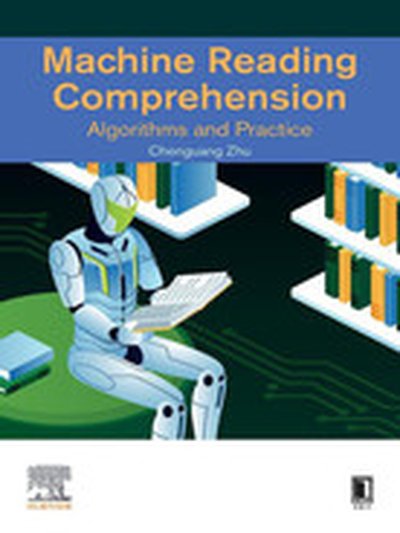
Machine Reading Comprehension

Machine reading comprehension (MRC) is a cutting-edge technology in natural language processing (NLP). MRC has recently advanced significantly, surpassing human parity in several public datasets. It has also been widely deployed by industry in search engine and quality assurance systems. Machine Reading Comprehension: Algorithms and Practice performs a deep-dive into MRC, offering a resource on the complex tasks this technology involves. The title presents the fundamentals of NLP and deep learning, before introducing the task, models, and applications of MRC. This volume gives theoretical treatment to solutions and gives detailed analysis of code, and considers applications in real-world industry. The book includes basic concepts, tasks, datasets, NLP tools, deep learning models and architecture, and insight from hands-on experience. In addition, the title presents the latest advances from the past two years of research. Structured into three sections and eight chapters, this book presents the basis of MRC; MRC models; and hands-on issues in application. This book offers a comprehensive solution for researchers in industry and academia who are looking to understand and deploy machine reading comprehension within natural language processing. Presents the first comprehensive resource on machine reading comprehension (MRC) Performs a deep-dive into MRC, from fundamentals to latest developments Offers the latest thinking and research in the field of MRC, including the BERT model Provides theoretical discussion, code analysis, and real-world applications of MRC Gives insight from research which has led to surpassing human parity in MRC

CDPSE Certified Data Privacy Solutions Engineer All-in-One Exam Guide

This study guide offers 100% coverage of every objective for the Certified Data Privacy Solutions Engineer Exam This resource offers complete, up-to-date coverage of all the material included on the current release of the Certified Data Privacy Solutions Engineer exam. Written by an IT security and privacy expert, CDPSE Certified Data Privacy Solutions Engineer All-in-One Exam Guide covers the exam domains and associated job practices developed by ISACA®. You’ll find learning objectives at the beginning of each chapter, exam tips, practice exam questions, and in-depth explanations. Designed to help you pass the CDPSE exam, this comprehensive guide also serves as an essential on-the-job reference for new and established privacy and security professionals. COVERS ALL EXAM TOPICS, INCLUDING: Online content includes: Privacy Governance Governance Management Risk Management Privacy Architecture Infrastructure Applications and Software Technical Privacy Controls Data Cycle Data Purpose Data Persistence 300 practice exam questions Test engine that provides full-length practice exams and customizable quizzes by exam topic

Tableau Prep Cookbook

Tableau Prep Cookbook is your practical guide to mastering Tableau Prep Builder for data preparation. Through real-world examples, you will learn techniques to clean, combine, and transform your data, enabling you to create robust pipelines for analytics and insights. Gain hands-on experience with concepts like data cleaning, advanced calculations, and preparing data for Business Intelligence tools. What this Book will help me do Master cleaning and combining data sources for analysis using Tableau Prep. Learn to create and deploy workflows for data preparation within your organization. Develop proficiency in building robust datasets for BI and analytics applications. Apply advanced techniques like scripting and custom calculations in Tableau Prep. Get hands-on experience by working through realistic, practical data scenarios. Author(s) None Kleine is an experienced data analytics professional with a passion for empowering organizations through robust data pipelines. Drawing from years of experience in BI tools and data preparation, None presents Tableau Prep Cookbook with a clear, actionable approach to learning. Their expertise ensures that readers gain practical skills to use Tableau Prep effectively. Who is it for? This book is perfect for data analysts, business intelligence professionals, and Tableau users looking to add Tableau Prep to their skills. If you're starting with beginner knowledge in data preparation or are looking to enhance your ability to manage data workflows, this book is designed for you. Gain the skills you need to prepare data effectively using Tableau Prep and elevate your analytics capabilities.

Getting Started: Journey to Modernization with IBM Z

Modernization of enterprise IT applications and infrastructure is key to the survival of organizations. It is no longer a matter of choice. The cost of missing out on business opportunities in an intensely competitive market can be enormous. To aid in their success, organizations are facing increased encouragement to embrace change. They are pushed to think of new and innovative ways to counter, or offer, a response to threats that are posed by competitors who are equally as aggressive in adopting newer methods and technologies. The term modernization often varies in meaning based on perspective. This IBM® Redbooks® publication focuses on the technological advancements that unlock computing environments that are hosted on IBM Z® to enable secure processing at the core of hybrid. This publication is intended for IT executives, IT managers, IT architects, System Programmers, and Application Developer professionals.

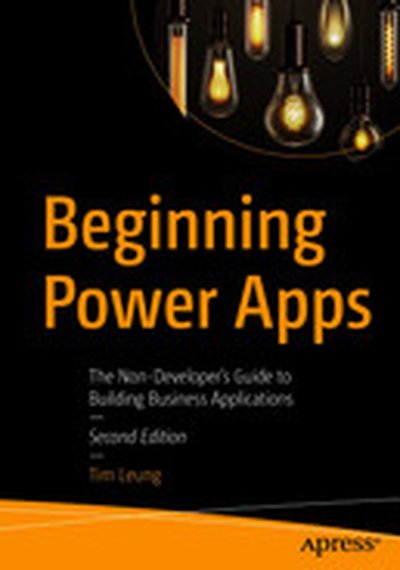
Beginning Power Apps: The Non-Developer's Guide to Building Business Applications

Transform the way your business works with easy-to-build apps. With this updated and expanded second edition, you can build business apps that work with your company's systems and databases, without having to enlist the expertise of costly, professionally trained software developers. In this new edition, business applications expert Tim Leung offers step-by-step guidance on how you can improve all areas of your business. He shows how you can replace manual or paper processes with modern apps that run on phone or tablet devices. For administrative and back-office operations, he covers how to build apps with workflow and dashboard capabilities. To facilitate collaboration with customers and clients, you’ll learn how to build secure web portals with data entry capabilities, including how to customize those portals with code. This hands-on new edition has 10 new chapters—including coverage on model-driven and portal apps, artificial intelligence, building components using the Power Apps Component Framework, using PowerShell for administration, and more—complete with context, explanatory screenshots, and non-technical terminology. What You Will Learn Create offline capable mobile apps and responsive web apps Carry out logic, data access, and data entry through formulas Embellish apps with charting, file handling, photo, barcode, and location features Set up Common Data Service, SharePoint, and SQL data sources Use AI to predict outcomes, recognize images, and analyze sentiment Integrate apps with external web services and automate tasks with Power Automate Build reusable code and canvas components, make customizations with JavaScript Transfer apps and data, and secure, administer, and monitor Power Apps environments Who This Book Is For Beginners and non-developers, and assumes no prior knowledge of Power Apps

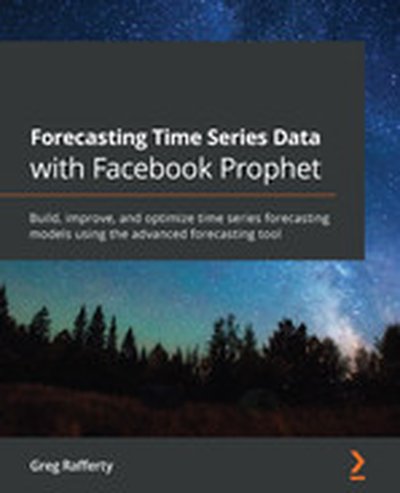
Forecasting Time Series Data with Facebook Prophet

Delve into the art of time series forecasting with the comprehensive power of Facebook Prophet. This tool enables users to develop precise forecasting models with simplicity and effectiveness. Through this book, you'll explore Prophet's core functionality and advanced configurations, equipping yourself with the knowledge to proficiently model and predict data trends. What this Book will help me do Build intuitive and effective forecasting models using Facebook Prophet. Understand the role and implementation of seasonality and holiday effects in time series data. Identify and address outliers and special data events effectively. Optimize forecasts using advanced techniques like hyperparameter tuning and additional regressors. Evaluate and deploy forecasting models in production settings for practical applications. Author(s) Greg Rafferty is a seasoned data science professional with extensive experience in time series forecasting. Having worked on diverse forecasting projects, Greg brings a unique perspective that integrates practicality and depth. His approachable writing style makes complex topics accessible and actionable. Who is it for? This book is tailored for data scientists, analysts, and developers seeking to enhance their forecasting capabilities using Python. If you have a grounding in Python and a basic understanding of forecasting principles, you will find this book a valuable resource to sharpen your expertise and achieve new forecasting precision.

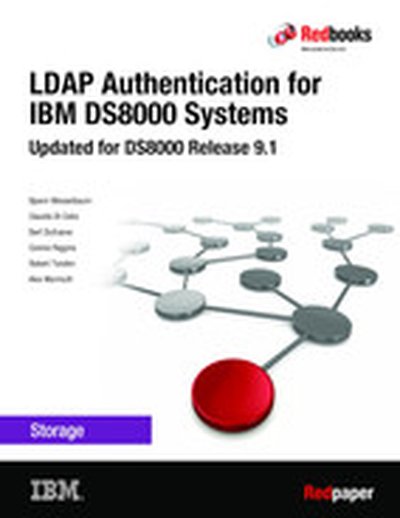
LDAP Authentication for IBM DS8000 Systems: Updated for DS8000 Release 9.1

The IBM® DS8000® series includes the option to replace the locally based user ID and password authentication with a centralized directory-based approach. This IBM Redpaper publication helps DS8000 storage administrators understand the concepts and benefits of a centralized directory. It provides the information that is required for implementing a DS8000 authentication mechanism that is based on the Lightweight Directory Access Protocol (LDAP). Starting with DS8000 Release 9.1 code, a simpler, native LDAP authentication method is supported along with the former implementation that relies on IBM Copy Services Manager (CSM) acting as a proxy between the DS8000 and external LDAP servers. Note that examples and operations shown in this Redpaper refer to the DS8000 R9.1 SP1, code release bundle 89.11.33.0.

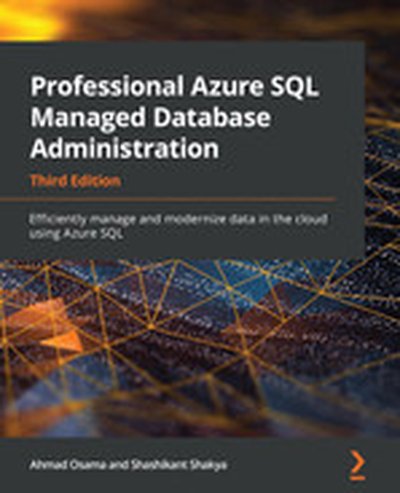
Professional Azure SQL Managed Database Administration - Third Edition

Professional Azure SQL Managed Database Administration is a comprehensive guide to mastering data management with Azure's managed database services. Packed with real-world exercises and updated to cover the latest Azure features, this book provides actionable insights into migration, performance tuning, scaling, and securing Azure SQL databases. What this Book will help me do Master the configuration and pricing options for Azure SQL databases to make cost-effective choices. Learn the processes to provision new SQL databases or migrate existing on-premises SQL databases to Azure. Acquire skills in implementing high availability and disaster recovery for ensuring data resilience. Understand the strategies for monitoring, tuning, and optimizing the performance of Azure SQL databases. Discover techniques for scaling uses through elastic pools and securing databases comprehensively. Author(s) Ahmad Osama and Shashikant Shakya are experienced professionals in SQL Server and Azure SQL technologies. With decades of combined experience in database administration and cloud computing, they bring a depth of understanding to the content of this book. Their hands-on teaching approach is evident in the practical exercises and real-world scenarios included. Who is it for? This book is specifically tailored for database administrators, developers, and application developers looking to leverage Azure SQL databases. If you are tasked with migrating applications to the cloud or ensuring top performance and resilience for cloud databases, you will find this book highly valuable. Prior experience with on-premises SQL services will help contextualize the content, making it suitable for professionals with intermediate SQL experience. Readers aiming to deepen their Azure SQL expertise will also greatly benefit.