talk-data.com talk-data.com

Topic

data

5765

tagged

Activity Trend

3 peak/qtr
2020-Q1 2026-Q1

Activities

5765 activities · Newest first

IBM Power Systems Bits: Understanding IBM Patterns for Cognitive Systems

This IBM® Redpaper™ publication addresses IBM Patterns for Cognitive Systems topics to anyone developing, implementing, and using Cognitive Solutions on IBM Power Systems™ servers. Moreover, this publication provides documentation to transfer the knowledge to the sales and technical teams. This publication describes IBM Patterns for Cognitive Systems. Think of a pattern as a use case for a specific scenario, such as event-based real-time marketing for real-time analytics, anti-money laundering, and addressing data oceans by reducing the cost of Hadoop. These examples are just a few of the cognitive patterns that are now available. Patterns identify and address challenges for cognitive infrastructures. These entry points then help you understand where you are on the cognitive journey and enables IBM to demonstrate the set of solutions capabilities for each lifecycle stage. This book targets technical readers, including IT specialist, systems architects, data scientists, developers, and anyone looking for a guide about how to unleash the cognitive capabilities of IBM Power Systems by using patterns.

R Projects For Dummies

Make the most of R’s extensive toolset R Projects For Dummies offers a unique learn-by-doing approach. You will increase the depth and breadth of your R skillset by completing a wide variety of projects. By using R’s graphics, interactive, and machine learning tools, you’ll learn to apply R’s extensive capabilities in an array of scenarios. The depth of the project experience is unmatched by any other content online or in print. And you just might increase your statistics knowledge along the way, too! R is a free tool, and it’s the basis of a huge amount of work in data science. It's taking the place of costly statistical software that sometimes takes a long time to learn. One reason is that you can use just a few R commands to create sophisticated analyses. Another is that easy-to-learn R graphics enable you make the results of those analyses available to a wide audience. This book will help you sharpen your skills by applying them in the context of projects with R, including dashboards, image processing, data reduction, mapping, and more. Appropriate for R users at all levels Helps R programmers plan and complete their own projects Focuses on R functions and packages Shows how to carry out complex analyses by just entering a few commands If you’re brand new to R or just want to brush up on your skills, R Projects For Dummies will help you complete your projects with ease.

IBM FlashSystem A9000 and IBM FlashSystem A9000R Architecture and Implementation

Abstract This IBM® Redbooks publication presents the architecture, design, concepts, and technology that are used in IBM FlashSystem® A9000 and IBM FlashSystem A9000R. FlashSystem A9000 and FlashSystem A9000R deliver the microsecond latency and high availability of IBM FlashCore® technology with grid architecture, simple scalability, and industry-leading IBM software that is designed to drive your business into the cognitive era. Comprehensive data reduction capabilities, including inline deduplication and a new compression engine, help lower total cost of ownership, and a highly intuitive user interface simplifies management. FlashSystem A9000 and FlashSystem A9000R transform technology infrastructure into business innovation. From a functional standpoint, FlashSystem A9000 and FlashSystem A9000R take advantage of most of the software-defined storage features that are offered by the IBM Spectrum Accelerate™ software, including multi-tenancy and business continuity functions. Starting with software version 12.1, the IBM HyperSwap® feature delivers always-on, high availability (HA) storage service for storage volumes in a production environment. Software version 12.2 introduces cross-generation asynchronous mirroring with IBM XIV® Gen3. This publication is intended for those individuals who need to plan, install, tailor, and configure FlashSystem A9000 and FlashSystem A9000R. For detailed information about configuration, management, and replication functions and their usage, see the following publications: , SG24-8376 IBM Spectrum Accelerate Family Storage Configuration and Usage for IBM FlashSystem A9000, IBM FlashSystem A9000R, and IBM XIV Gen3 , REDP-5401 IBM FlashSystem A9000 and A9000R Business Continuity Solutions , REDP-5434 IBM HyperSwap for IBM FlashSystem A9000 and A9000R , SG24-8368. IBM Spectrum Accelerate Family: Host Attachment and Interoperability

Python Web Scraping Cookbook

Python Web Scraping Cookbook is your comprehensive guide to building efficient and functional web scraping tools using Python. With practical recipes, you'll learn to overcome the challenges of dynamic content, captcha, and irregular web structures while deploying scalable solutions. What this Book will help me do Master the use of Python libraries like BeautifulSoup and Scrapy for scraping data. Perfect techniques for handling JavaScript-heavy sites using Selenium. Learn to overcome web scraping challenges, such as captchas and rate-limiting. Design scalable scraping pipelines with cloud deployment in AWS. Understand web data extraction techniques with XPath, CSS selectors, and more. Author(s) Michael Heydt is a seasoned software engineer and technical author with a focus on data engineering and cloud solutions. Having worked with Python extensively, he brings real-world insights into web scraping. His practical approach simplifies complex concepts. Who is it for? This book is perfect for Python developers and data enthusiasts keen to master web scraping techniques. If you're a programmer with insights into Python scripting and wish to scrape, analyze, and utilize web data efficiently, this book is for you.

IBM z14 Technical Guide

Abstract This IBM® Redbooks® publication describes the new member of the IBM Z family, IBM z14®. IBM z14 is the trusted enterprise platform for pervasive encryption, integrating data, transactions, and insights into the data. A data-centric infrastructure must always be available with a 99.999% or better availability, have flawless data integrity, and be secured from misuse. It also must be an integrated infrastructure that can support new applications. Finally, it must have integrated capabilities that can provide new mobile capabilities with real-time analytics that are delivered by a secure cloud infrastructure. IBM z14 servers are designed with improved scalability, performance, security, resiliency, availability, and virtualization. The superscalar design allows z14 servers to deliver a record level of capacity over the prior IBM Z platforms. In its maximum configuration, z14 is powered by up to 170 client characterizable microprocessors (cores) running at 5.2 GHz. This configuration can run more than 146,000 million instructions per second (MIPS) and up to 32 TB of client memory. The IBM z14 Model M05 is estimated to provide up to 35% more total system capacity than the IBM z13® Model NE1. This Redbooks publication provides information about IBM z14 and its functions, features, and associated software support. More information is offered in areas that are relevant to technical planning. It is intended for systems engineers, consultants, planners, and anyone who wants to understand the IBM Z servers functions and plan for their usage. It is intended as an introduction to mainframes. Readers are expected to be generally familiar with existing IBM Z technology and terminology.

SAS Viya

Learn how to access analytics from SAS Cloud Analytic Services (CAS) using Python and the SAS Viya platform. SAS Viya : The Python Perspective is an introduction to using the Python client on the SAS Viya platform. SAS Viya is a high-performance, fault-tolerant analytics architecture that can be deployed on both public and private cloud infrastructures. While SAS Viya can be used by various SAS applications, it also enables you to access analytic methods from SAS, Python, Lua, and Java, as well as through a REST interface using HTTP or HTTPS. This book focuses on the perspective of SAS Viya from Python. SAS Viya is made up of multiple components. The central piece of this ecosystem is SAS Cloud Analytic Services (CAS). CAS is the cloud-based server that all clients communicate with to run analytical methods. The Python client is used to drive the CAS component directly using objects and constructs that are familiar to Python programmers. Some knowledge of Python would be helpful before using this book; however, there is an appendix that covers the features of Python that are used in the CAS Python client. Knowledge of CAS is not required to use this book. However, you will need to have a CAS server set up and running to execute the examples in this book. With this book, you will learn how to: Install the required components for accessing CAS from Python Connect to CAS, load data, and run simple analyses Work with CAS using APIs familiar to Python users Grasp general CAS workflows and advanced features of the CAS Python client SAS Viya : The Python Perspective covers topics that will be useful to beginners as well as experienced CAS users. It includes examples from creating connections to CAS all the way to simple statistics and machine learning, but it is also useful as a desktop reference.

Machine Learning and Security

Can machine learning techniques solve our computer security problems and finally put an end to the cat-and-mouse game between attackers and defenders? Or is this hope merely hype? Now you can dive into the science and answer this question for yourself. With this practical guide, you’ll explore ways to apply machine learning to security issues such as intrusion detection, malware classification, and network analysis. Machine learning and security specialists Clarence Chio and David Freeman provide a framework for discussing the marriage of these two fields, as well as a toolkit of machine-learning algorithms that you can apply to an array of security problems. This book is ideal for security engineers and data scientists alike. Learn how machine learning has contributed to the success of modern spam filters Quickly detect anomalies, including breaches, fraud, and impending system failure Conduct malware analysis by extracting useful information from computer binaries Uncover attackers within the network by finding patterns inside datasets Examine how attackers exploit consumer-facing websites and app functionality Translate your machine learning algorithms from the lab to production Understand the threat attackers pose to machine learning solutions

An Introduction to Discrete-Valued Time Series

A much-needed introduction to the field of discrete-valued time series, with a focus on count-data time series Time series analysis is an essential tool in a wide array of fields, including business, economics, computer science, epidemiology, finance, manufacturing and meteorology, to name just a few. Despite growing interest in discrete-valued time series—especially those arising from counting specific objects or events at specified times—most books on time series give short shrift to that increasingly important subject area. This book seeks to rectify that state of affairs by providing a much needed introduction to discrete-valued time series, with particular focus on count-data time series. The main focus of this book is on modeling. Throughout numerous examples are provided illustrating models currently used in discrete-valued time series applications. Statistical process control, including various control charts (such as cumulative sum control charts), and performance evaluation are treated at length. Classic approaches like ARMA models and the Box-Jenkins program are also featured with the basics of these approaches summarized in an Appendix. In addition, data examples, with all relevant R code, are available on a companion website. Provides a balanced presentation of theory and practice, exploring both categorical and integer-valued series Covers common models for time series of counts as well as for categorical time series, and works out their most important stochastic properties Addresses statistical approaches for analyzing discrete-valued time series and illustrates their implementation with numerous data examples Covers classical approaches such as ARMA models, Box-Jenkins program and how to generate functions Includes dataset examples with all necessary R code provided on a companion website An Introduction to Discrete-Valued Time Series is a valuable working resource for researchers and practitioners in a broad range of fields, including statistics, data science, machine learning, and engineering. It will also be of interest to postgraduate students in statistics, mathematics and economics.

Loss Data Analysis

This volume deals with two complementary topics. On one hand the book deals with the problem of determining the the probability distribution of a positive compound random variable, a problem which appears in the banking and insurance industries, in many areas of operational research and in reliability problems in the engineering sciences. On the other hand, the methodology proposed to solve such problems, which is based on an application of the maximum entropy method to invert the Laplace transform of the distributions, can be applied to many other problems. The book contains applications to a large variety of problems, including the problem of dependence of the sample data used to estimate empirically the Laplace transform of the random variable. Contents Introduction Frequency models Individual severity models Some detailed examples Some traditional approaches to the aggregation problem Laplace transforms and fractional moment problems The standard maximum entropy method Extensions of the method of maximum entropy Superresolution in maxentropic Laplace transform inversion Sample data dependence Disentangling frequencies and decompounding losses Computations using the maxentropic density Review of statistical procedures

Market Data Analysis Using JMP

With the powerful interactive and visual functionality of JMP, you can dynamically analyze market data to transform it into actionable and useful information with clear, concise, and insightful reports and displays. Market Data Analysis Using JMP is a unique example-driven book because it has a specific application focus: market data analysis. A working knowledge of JMP will help you turn your market data into vital knowledge that will help you succeed in a highly competitive, fast-moving, and dynamic business world. This book can be used as a stand-alone resource for working professionals, or as a supplement to a business school course in market data research. Anyone who works with market data will benefit from reading and studying this book, then using JMP to apply the dynamic analytical concepts to their market data. After reading this book, you will be able to quickly and effortlessly use JMP to: prepare market data for analysis use and interpret sophisticated statistical methods build choice models estimate regression models to turn data into useful and actionable information Market Data Analysis Using JMP will teach you how to use dynamic graphics to illustrate your market data analysis and explore the vast possibilities that your data can offer!

An Introduction to SAS University Edition

SAS ® OnDemand for Academics is now the primary software choice for learners. SAS OnDemand for Academics is available for free access to SAS for individual learners as well as university educators and students. Access to SAS University Edition will end Aug. 2, 2021; users will no longer be able to download it after Apr. 30, 2021. Get up and running with the SAS University Edition using Ron Cody’s easy-to-follow, step-by-step guide. Aimed at beginners who have downloaded the free SAS University Edition and want to either use the point-and-click interactive environment of SAS Studio, or who want to write their own SAS programs, or both, An Introduction to SAS University Edition, begins by showing you how to obtain the SAS University Edition, and how you can run SAS on a PC or Macintosh computer. The first part of the book shows you how to perform basic tasks, such as producing a report, summarizing data, producing charts and graphs, and using the SAS Studio built-in tasks. The first part also describes how you can perform basic statistical tests using the interactive point-and-click environment. The second part of the book shows you how to write your own SAS programs, and how to use SAS procedures to perform a variety of tasks. This part of the book also explains how to read data from a variety of sources: text files, Excel workbooks, and CSV files. In order to get familiar with the SAS Studio environment, this book also shows you how to access dozens of interesting data sets that are included with the product.

Modernizing Your IT Infrastructure with IBM b-type Gen 6 Storage Networking and IBM Spectrum Storage Products

Abstract This IBM® Redbooks® publication describes the challenge that most data centers face when updating and modernizing their IT infrastructure. New business demands are driving new applications, joining, and creating in the digital world. A rich, meaningful digital experience is the key to effective engagement in today’s integrated digital world. Companies are able to customize digital experiences for their employees with personalized, targeted content for fully connecting with customers, co-workers, and business partners in the most powerful and productive ways. To achieve this, a robust infrastructure is required. Speed of access to data is one of the most important factors. The development of the flash storage devices helped with the insatiable desire for data access speed, but even that is not enough for the most demanding uses. The needs of SAN switches, servers, and software defined infrastructure (SDI) technologies are all requiring more; therefore, the bigger picture needs to be wholly analyzed to build a balanced ecosystem. This publication can help you with planning for growth in your IT infrastructure. This publication explores the concept of modernization and considers important aspects of IT, such as SAN switches, storage systems, and software defined storage.

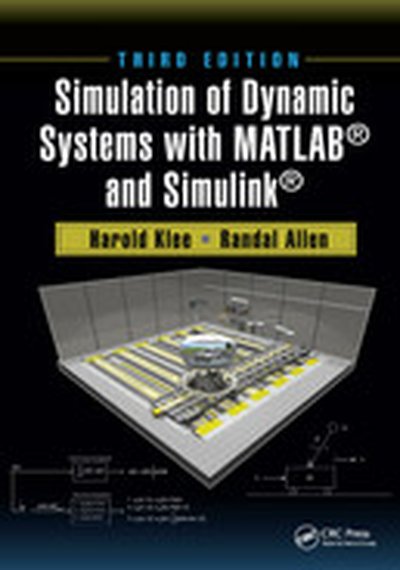
Simulation of Dynamic Systems with MATLAB® and Simulink®, 3rd Edition

The book presents an integrated treatment of continuous simulation with all the background and essential prerequisites in one setting. It features updated chapters and two new sections on Black Swan and the Stochastic Information Packet (SIP) and Stochastic Library Units with Relationships Preserved (SLURP) Standard.

Mastering PostgreSQL 10

Mastering PostgreSQL 10 delves into the depths of PostgreSQL development and administration, guiding readers through advanced functionalities of the database. Covering topics such as query optimization, replication, high availability, and migration, this book equips you with the skills needed to harness the full power of PostgreSQL 10. What this Book will help me do Learn to optimize database queries to enhance performance in PostgreSQL 10. Understand advanced replication techniques and how to implement high availability. Gain expertise in managing security, backups and performing data migrations effectively. Explore query tuning and indexing strategies to speed up your database applications. Handle troubleshooting challenges by understanding problems and their solutions. Author(s) The authors of Mastering PostgreSQL 10 are experts in the field of databases, with years of experience in designing, developing, and managing PostgreSQL systems. They are passionate educators dedicated to helping professionals maximize their potential with PostgreSQL. Their practical and approachable style ensures that even complex topics are clearly explained. Who is it for? This book is ideal for PostgreSQL data architects and administrators who want to master advanced features of PostgreSQL 10. It is best suited for individuals who have prior database administration experience and a working knowledge of SQL. Readers aiming to enhance performance and implement transformations in their PostgreSQL setups will benefit immensely. Those tasked with ensuring high availability, migration, and recovery of PostgreSQL will find this book invaluable.

Regression Analysis with R

Dive into the world of regression analysis with this hands-on guide that covers everything you need to know about building effective regression models in R. You'll learn both the theoretical foundations and how to apply them using practical examples and R code. By the end, you'll be equipped to interpret regression results and use them to make meaningful predictions. What this Book will help me do Master the fundamentals of regression analysis, from simple linear to logistic regression. Gain expertise in R programming for implementing regression models and analyzing results. Develop skills in handling missing data, feature engineering, and exploratory data analysis. Understand how to identify, prevent, and address overfitting and underfitting issues in modeling. Apply regression techniques in real-world applications, including classification problems and advanced methods like Bagging and Boosting. Author(s) Giuseppe Ciaburro is an experienced data scientist and author with a passion for making complex technical topics accessible. With expertise in R programming and regression analysis, he has worked extensively in statistical modeling and data exploration. Giuseppe's writing combines clear explanations of theory with hands-on examples, ideal for learners and practitioners alike. Who is it for? This book is perfect for aspiring data scientists and analysts eager to understand and apply regression analysis using R. It's suited for readers with a foundational knowledge of statistics and basic R programming experience. Whether you're delving into data science or aiming to strengthen existing skills, this book offers practical insights to reach your goals.

MySQL 8 Cookbook

With "MySQL 8 Cookbook," dive into over 150 practical recipes tailored for database professionals aiming to master MySQL 8. You will explore setup, querying, and advanced features like security and performance tuning. This book is your comprehensive guide to efficient database handling in MySQL 8. What this Book will help me do Efficiently set up and configure a MySQL 8 environment. Master advanced querying techniques using new MySQL features such as CTEs and window functions. Execute robust data backup and recovery strategies with MySQL 8. Implement performance improvements with tools and features like descending indexes and query optimizers. Secure, manage, and optimize databases to support scalable, high-performance applications. Author(s) Karthik Appigatla is a seasoned database administrator and developer with extensive expertise in MySQL and relational database systems. With years of industry experience, he brings a practical perspective to database solutions. His passion is to empower learners by simplifying complex database concepts with a hands-on approach. Who is it for? This book is tailored for MySQL developers or administrators who seek ready solutions for their MySQL challenges. Whether you're upgrading to MySQL 8 or want to leverage its latest features, this cookbook is for you. Ideal for those with basic Linux and SQL experience aiming to build advanced MySQL knowledge and skills.

Interval Finite Element Method with MATLAB

Interval Finite Element Method with MATLAB provides a thorough introduction to an effective way of investigating problems involving uncertainty using computational modeling. The well-known and versatile Finite Element Method (FEM) is combined with the concept of interval uncertainties to develop the Interval Finite Element Method (IFEM). An interval or stochastic environment in parameters and variables is used in place of crisp ones to make the governing equations interval, thereby allowing modeling of the problem. The concept of interval uncertainties is systematically explained. Several examples are explored with IFEM using MATLAB on topics like spring mass, bar, truss and frame. Provides a systematic approach to understanding the interval uncertainties caused by vague or imprecise data Describes the interval finite element method in detail Gives step-by-step instructions for how to use MATLAB code for IFEM Provides a range of examples of IFEM in use, with accompanying MATLAB codes

ABCs of IBM z/OS System Programming Volume 3

Abstract The ABCs of IBM z/OS® System Programming is a 13-volume collection that provides an introduction to the z/OS operating system and the hardware architecture. Whether you are a beginner or an experienced system programmer, the ABCs collection provides the information that you need to start your research into z/OS and related subjects. The ABCs collection serves as a powerful technical tool to help you become more familiar with z/OS in your current environment, or to help you evaluate platforms to consolidate your e-business applications. This edition is updated to z/OS Version 2 Release 3. The other volumes contain the following content: Volume 1: Introduction to z/OS and storage concepts, TSO/E, ISPF, JCL, SDSF, and z/OS delivery and installation Volume 2: z/OS implementation and daily maintenance, defining subsystems, IBM Job Entry Subsystem 2 (JES2) and JES3, link pack area (LPA), LNKLST, authorized libraries, System Modification Program Extended (SMP/E), IBM Language Environment Volume 4: Communication Server, TCP/IP, and IBM VTAM® Volume 5: Base and IBM Parallel Sysplex®, System Logger, Resource Recovery Services (RRS), global resource serialization (GRS), z/OS system operations, automatic restart manager (ARM), IBM Geographically Dispersed Parallel Sysplex™ (IBM GDPS) Volume 6: Introduction to security, IBM RACF®, Digital certificates and PKI, Kerberos, cryptography and z990 integrated cryptography, zSeries firewall technologies, LDAP, and Enterprise Identity Mapping (EIM) Volume 7: Printing in a z/OS environment, Infoprint Server, and Infoprint Central Volume 8: An introduction to z/OS problem diagnosis Volume 9: z/OS UNIX System Services Volume 10: Introduction to IBM z/Architecture®, the IBM Z platform, IBM Z connectivity, LPAR concepts, HCD, and DS Storage Solution. Volume 11: Capacity planning, performance management, WLM, IBM RMF™, and SMF Volume 12: WLM Volume 13: JES3, JES3 SDSF

Complex Network Analysis in Python

Construct, analyze, and visualize networks with networkx, a Python language module. Network analysis is a powerful tool you can apply to a multitude of datasets and situations. Discover how to work with all kinds of networks, including social, product, temporal, spatial, and semantic networks. Convert almost any real-world data into a complex network--such as recommendations on co-using cosmetic products, muddy hedge fund connections, and online friendships. Analyze and visualize the network, and make business decisions based on your analysis. If you're a curious Python programmer, a data scientist, or a CNA specialist interested in mechanizing mundane tasks, you'll increase your productivity exponentially. Complex network analysis used to be done by hand or with non-programmable network analysis tools, but not anymore! You can now automate and program these tasks in Python. Complex networks are collections of connected items, words, concepts, or people. By exploring their structure and individual elements, we can learn about their meaning, evolution, and resilience. Starting with simple networks, convert real-life and synthetic network graphs into networkx data structures. Look at more sophisticated networks and learn more powerful machinery to handle centrality calculation, blockmodeling, and clique and community detection. Get familiar with presentation-quality network visualization tools, both programmable and interactive--such as Gephi, a CNA explorer. Adapt the patterns from the case studies to your problems. Explore big networks with NetworKit, a high-performance networkx substitute. Each part in the book gives you an overview of a class of networks, includes a practical study of networkx functions and techniques, and concludes with case studies from various fields, including social networking, anthropology, marketing, and sports analytics. Combine your CNA and Python programming skills to become a better network analyst, a more accomplished data scientist, and a more versatile programmer. What You Need: You will need a Python 3.x installation with the following additional modules: Pandas (>=0.18), NumPy (>=1.10), matplotlib (>=1.5), networkx (>=1.11), python-louvain (>=0.5), NetworKit (>=3.6), and generalizesimilarity. We recommend using the Anaconda distribution that comes with all these modules, except for python-louvain, NetworKit, and generalizedsimilarity, and works on all major modern operating systems.