In response to the growing demand for integrating new data into our data platform, the Data Engineering Team at Okta has developed a solution utilizing Snowpark for Python to automate construction of data pipelines. Discover how Okta's Zero Touch Platform creates end-to-end pipelines that ingest events arriving on S3 and transforms data in Snowflake using Streams and Tasks. The platform features integrated capabilities to detect schema changes in data streams, facilitating automatic evolution of Snowflake table schemas. Crafted with privacy in mind, it also allows for data classification through tags and systemically masking data using tag-based masking policies.
 talk-data.com
Topic
Data Engineering
etl
data_pipelines
big_data
1127
tagged
Activity Trend
127
peak/qtr
2020-Q1
2026-Q2
Top Events
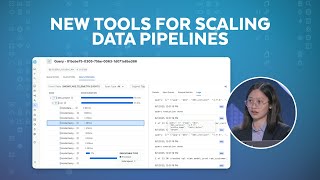
Learn how to efficiently scale and manage data engineering pipelines with Snowflake's latest capabilities for SQL- and Python-based transformations. Join us for new product and feature overviews, best practices and live demos.
In an era where cloud costs can spiral out of control, Sportsbet achieved a remarkable 49% reduction in Total Cost of Ownership (TCO) through an innovative AI-powered solution called 'Kill Bill.' This presentation reveals how we transformed Databricks' consumption-based pricing model from a challenge into a strategic advantage through an intelligent automation and optimization. Understand how to use GenAI to reduce Databricks TCO Leverage generative AI within Databricks solutions enables automated analysis of cluster logs, resource consumption, configurations, and codebases to provide Spark optimization suggestions Create AI agentic workflows by integrating Databricks' AI tools and Databricks Data Engineering tools Review a case study demonstrating how Total Cost of Ownership was reduced in practice. Attendees will leave with a clear understanding of how to implement AI within Databricks solutions to address similar cost challenges in their environments.
The last major shift in data engineering came during the rise of the cloud, transforming how we store, manage, and analyze data. Today, we stand at the cusp of the next revolution: AI-driven data engineering. This shift promises not just faster pipelines, but a fundamental change in the way data systems are designed and maintained. AI will redefine who builds data infrastructure, automating routine tasks, enabling more teams to contribute to data platforms, and (if done right) freeing up engineers to focus on higher-value work. However, this transformation also brings heightened pressure around governance, risk, and data security, requiring new approaches to control and oversight. For those prepared, this is a moment of immense opportunity – a chance to embrace a future of smarter, faster, and more responsive data systems.
Every analytics, BI and AI project relies on high-quality data. This is why data engineering, the practice of building reliable data pipelines that ingest and transform data, is consequential to the success of these projects. In this session, we'll show how you can use Lakeflow to accelerate innovation in multiple parts of the organization. We'll review real-world examples of Databricks customers using Lakeflow in different industries such as automotive, healthcare and retail. We'll touch on how the foundational data engineering capabilities Lakeflow provides help power initiatives that improve customer experiences, make real-time decisions and drive business results.
This deep dive covers advanced usage patterns, tips and best practices for maximizing the potential of Lakeflow Declarative Pipelines. Attendees will explore new features, enhanced workflows and cost-optimization strategies through a demo-heavy presentation. The session will also address complex use cases, showcasing how Lakeflow Declarative Pipelines simplifies the management of robust data pipelines while maintaining scalability and efficiency across diverse data engineering challenges.
This session is repeated. This introductory workshop caters to data engineers seeking hands-on experience and data architects looking to deepen their knowledge. The workshop is structured to provide a solid understanding of the following data engineering and streaming concepts: Introduction to Lakeflow and the Data Intelligence Platform Getting started with Lakeflow Declarative Pipelines for declarative data pipelines in SQL using Streaming Tables and Materialized Views Mastering Databricks Workflows with advanced control flow and triggers Understanding serverless compute Data governance and lineage with Unity Catalog Generative AI for Data Engineers: Genie and Databricks Assistant We believe you can only become an expert if you work on real problems and gain hands-on experience. Therefore, we will equip you with your own lab environment in this workshop and guide you through practical exercises like using GitHub, ingesting data from various sources, creating batch and streaming data pipelines, and more.

Your data and AI use-cases are multiplying. At the same time, there is increased focus and scrutiny to meet sophisticated security and regulatory requirements. IQVIA utilizes serverless use-cases across data engineering, data analytics, and ML and AI, to empower their customers to make informed decisions, support their R&D processes and improve patient outcomes. By leveraging native controls on the platform, serverless enables them to streamline their use cases while maintaining a strong security posture, top performance and optimized costs. This session will go over IQVIA’s journey to serverless, how they met their security and regulatory requirements, and the latest and upcoming enhancements to the Databricks Platform.
The demand for skilled Databricks data engineers continues to rise as enterprises accelerate their adoption of the Databricks platform. However, navigating the complex ecosystem of data engineering tools, frameworks and best practices can be overwhelming. This session provides a structured roadmap to becoming an expert Databricks data engineer, offering a clear progression from foundational skills to advanced capabilities. Acadford, a leading training provider, has successfully trained thousands of data engineers on Databricks, equipping them with the skills needed to excel in their careers and obtain professional certifications. Drawing on this experience, we will guide attendees through the most in-demand skills and knowledge areas through a combination of structured learning and practical insights. Key takeaways: Understand the core tech stack in Databricks Explore real-world code examples and live demonstrations Receive an actionable learning path with recommended resources
The demand for data engineering keeps growing, but data teams are bored by repetitive tasks, stumped by growing complexity and endlessly harassed by an unrelenting need for speed. What if AI could take the heavy lifting off your hands? What if we make the move away from code-generation and into config-generation — how much more could we achieve? In this session, we’ll explore how AI is revolutionizing data engineering, turning pain points into innovation. Whether you’re grappling with manual schema generation or struggling to ensure data quality, this session offers practical solutions to help you work smarter, not harder. You’ll walk away with a good idea of where AI is going to disrupt the data engineering workload, some good tips around how to accelerate your own workflows and an impending sense of doom around the future of the industry!
Try Keboola 👉 https://www.keboola.com/mcp?utm_campaign=FY25_Q2_RoW_Marketing_Events_Webinar_Keboola_MCP_Server_Launch_June&utm_source=Youtube&utm_medium=Avery Today, we'll create an entire data pipeline from scratch without writing a single line of code! Using Keboola MCP server and ClaudeAI, we’ll extract data from my FindADataJob.com RSS feed, transform it, load it into Google BigQuery, and visualize it with Streamlit. This is the future of data engineering! Keboola MCP Integration: https://mcp.connection.us-east4.gcp.keboola.com/sse I Analyzed Data Analyst Jobs to Find Out What Skills You ACTUALLY Need https://www.youtube.com/watch?v=lo3VU1srV1E&t=212s 💌 Join 10k+ aspiring data analysts & get my tips in your inbox weekly 👉 https://www.datacareerjumpstart.com/newsletter 🆘 Feeling stuck in your data journey? Come to my next free "How to Land Your First Data Job" training 👉 https://www.datacareerjumpstart.com/training 👩💻 Want to land a data job in less than 90 days? 👉 https://www.datacareerjumpstart.com/daa 👔 Ace The Interview with Confidence 👉 https://www.datacareerjumpstart.com/interviewsimulator ⌚ TIMESTAMPS 00:00 - Introduction 00:54 - Definition of Basic Data Engineering Terms 02:26 - Keboola MCP and Its Capabilities 07:48 - Extracting Data from RSS Feed 12:43 - Transforming and Cleaning the Data 19:19 - Aggregating and Analyzing Data 23:19 - Scheduling and Automating the Pipeline 25:04 - Visualizing Data with Streamlit
🔗 CONNECT WITH AVERY 🎥 YouTube Channel: https://www.youtube.com/@averysmith 🤝 LinkedIn: https://www.linkedin.com/in/averyjsmith/ 📸 Instagram: https://instagram.com/datacareerjumpstart 🎵 TikTok: https://www.tiktok.com/@verydata 💻 Website: https://www.datacareerjumpstart.com/ Mentioned in this episode: Join the last cohort of 2025! The LAST cohort of The Data Analytics Accelerator for 2025 kicks off on Monday, December 8th and enrollment is officially open!
To celebrate the end of the year, we’re running a special End-of-Year Sale, where you’ll get: ✅ A discount on your enrollment 🎁 6 bonus gifts, including job listings, interview prep, AI tools + more
If your goal is to land a data job in 2026, this is your chance to get ahead of the competition and start strong.
👉 Join the December Cohort & Claim Your Bonuses: https://DataCareerJumpstart.com/daa https://www.datacareerjumpstart.com/daa
Ludia, a leading mobile gaming company, is empowering its analysts and domain experts by democratizing data engineering with Databricks and dbt. This talk explores how Ludia enabled cross-functional teams to build and maintain production-grade data pipelines without relying solely on centralized data engineering resources—accelerating time to insight, improving data reliability, and fostering a culture of data ownership across the organization.
Navy Federal Credit Union has 200+ enterprise data sources in the enterprise data lake. These data assets are used for training 100+ machine learning models and hydrating a semantic layer for serving, at an average 4,000 business users daily across the credit union. The only option for extracting data from analytic semantic layer was to allow consuming application to access it via an already-overloaded cloud data warehouse. Visualizing data lineage for 1,000 + data pipelines and associated metadata is impossible and understanding the granular cost for running data pipelines is a challenge. Implementing Unity Catalog opened alternate path for accessing analytic semantic data from lake. It also opened the doors to remove duplicate data assets stored across multiple lakes which will save hundred thousands of dollars in data engineering efforts, compute and storage costs.
Building robust, production-grade data pipelines goes beyond writing transformation logic — it requires rigorous testing, version control, automated CI/CD workflows and a clear separation between development and production. In this talk, we’ll demonstrate how Lakeflow, paired with Databricks Asset Bundles (DABs), enables Git-based workflows, automated deployments and comprehensive testing for data engineering projects. We’ll share best practices for unit testing, CI/CD automation, data quality monitoring and environment-specific configurations. Additionally, we’ll explore observability techniques and performance tuning to ensure your pipelines are scalable, maintainable and production-ready.
An intelligent, action-driven approach to bridge Data Engineering and AI/ML workflows, delivering continuous data trust through comprehensive monitoring, validation, and remediation across the entire Databricks data lifecycle. Learn how Acceldata’s Agentic Data Management (ADM) platform: Ensures end-to-end data reliability across Databricks from ingestion, transformation, feature engineering, and model deployment. Bridges data engineering and AI teams by providing unified insights across Databricks jobs, notebooks and pipelines with proactive data insights and actions. Accelerates the delivery of trustworthy enterprise AI outcomes by detecting multi-variate anomalies, monitoring feature drift, and maintaining lineage within Databricks-native environments.
Riot Games reduced its Databricks compute spend and accelerated development cycles by transforming its data engineering workflows—migrating from bespoke Databricks notebooks and Spark pipelines to a scalable, testable, and developer-friendly dbt-based architecture. In this talk, members of the Developer Experience & Automation (DEA) team will walk through how they designed and operationalized dbt to support Riot’s evolving data needs.
Seismic shift Large Language Models are unleashing on data engineering, challenging traditional workflows. LLMs obliterate inefficiencies and redefine productivity. AI powerhouses automate complex tasks like documentation, code translation, and data model development with unprecedented speed and precision. Integrating LLMs into tools promises to reduce offshore dependency, fostering agile onshore innovation. Harnessing LLMs' full potential involves challenges, requiring deep dives into domain-specific data and strategic business alignment. Session will addresses deploying LLMs effectively, overcoming data management hurdles, and fostering collaboration between engineers and stakeholders. Join us to explore a future where LLMs redefine possibilities, inviting you to embrace AI-driven innovation and position your organization as a leader in data engineering.
Discover how Stack Overflow optimized its data engineering workflows using Databricks Asset Bundles (DABs) for scalable and efficient pipeline deployments. This session explores the structured pipeline architecture, emphasizing code reusability, modular design and bundle variables to ensure clarity and data isolation across projects. Learn how the data team leverages enterprise infrastructure to streamline deployment across multiple environments. Key topics include DRY-principled modular design, essential DAB features for automation and data security strategies using Unity Catalog. Designed for data engineers and teams managing multi-project workflows, this talk offers actionable insights on optimizing pipelines with Databricks evolving toolset.
We discuss two real-world use cases in big data engineering, focusing on constructing stable pipelines and managing storage at a petabyte scale. The first use case highlights the implementation of Delta Lake to optimize data pipelines, resulting in an 80% reduction in query time and a 70% reduction in storage space. The second use case demonstrates the effectiveness of the Workflows ‘ForEach’ operator in executing compute-intensive pipelines across multiple clusters, significantly reducing processing time from months to days. This approach involves a reusable design pattern that isolates notebooks into units of work, enabling data scientists to independently test and develop.

American Airlines, one of the largest airlines in the world, processes a tremendous amount of data every single minute. With a data estate of this scale, accountability for the data goes beyond the data team; the business organization has to be equally invested in championing the quality, reliability, and governance of data. In this session, Andrew Machen, Senior Manager, Data Engineering at American Airlines will share how his team maximizes resources to deliver reliable data at scale. He'll also outline his strategy for aligning business leadership with an investment in data reliability, and how leveraging Monte Carlo's data + AI observability platform enabled them to reduce time spent resolving data reliability issues from 10 weeks to 2 days, saving millions of dollars and driving valuable trust in the data.