talk-data.com talk-data.com

Topic

Data Governance

data_management compliance data_quality

417

tagged

Activity Trend

90 peak/qtr
2020-Q1 2026-Q1

Activities

417 activities · Newest first

Implementing Data Governance 3.0 for the Lakehouse Era: Community-Led and Bottom-Up

In this session, I cover our lessons in rethinking data governance by approaching data governance as an enablement function through implementing over 200+ data projects. I’ll go into the nuts and bolts of tooling and cultural practices governing our team and data helped our team accomplish projects twice as fast with teams that were one-third our normal size.

The session concludes with why organizations should start believing in and investing in true data governance and implementing governance tools and processes that are agile and collaborative, rather than top-down.

Connect with us: Website: https://databricks.com Facebook: https://www.facebook.com/databricksinc Twitter: https://twitter.com/databricks LinkedIn: https://www.linkedin.com/company/data... Instagram: https://www.instagram.com/databricksinc/

OvalEdge: End-To-End Data Governance

OvalEdge presents a progressive solution for Data Governance and is the only platform that provides an end-to-end data governance experience. Data Governance is all about access, data literacy, lineage, better business processes, data privacy and compliance controls, and data quality. What makes OvalEdge successful is having all of these features in a central platform that is accessible and beneficial for all data users.

Connect with us: Website: https://databricks.com Facebook: https://www.facebook.com/databricksinc Twitter: https://twitter.com/databricks LinkedIn: https://www.linkedin.com/company/data... Instagram: https://www.instagram.com/databricksinc/

Practical Data Governance in a Large Scale Databricks Environment

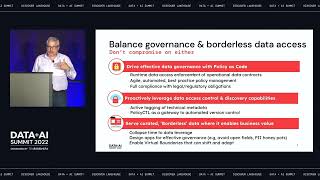
Learn from two governance and data practitioners what it takes to do data governance at enterprise scale. This is critical, since the power of Data Science is the ability to tap into any type of data source and turn it into pure value. It is at odds with its key enablers of Scale and Governance and we often must tackle new ways to bring our focus back to unlocking the insights inside the data. In this session, We will share new agile practices to roll out governance policies that balance Governance and Scale. We will untap how to deliver centralized fine-grained governance for ML and data transformation workloads that actually empowers data scientists in an enterprise Databricks environment that ensures privacy and compliance across hundreds of datasets. With automation being key to scale, we will also explore how we successfully automated security and governance

Connect with us: Website: https://databricks.com Facebook: https://www.facebook.com/databricksinc Twitter: https://twitter.com/databricks LinkedIn: https://www.linkedin.com/company/data... Instagram: https://www.instagram.com/databricksinc/

Competitive advantage hinges on predictive insights generated from AI! Build powerful data-driven

AI is central to unlocking competitive advantage. However data science teams don’t have access to a consistent level of high-quality data required to build AI & ML data applications.

Instead data scientists spend 80% of their time collecting, cleaning & preparing the data for analysis rather than building AI-data applications.

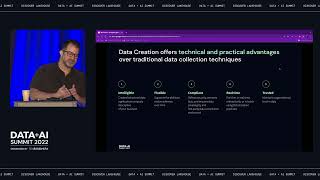
During this talk Snowplow introduces the concept of data creation. Create & deploy high-quality & predictive behavioral data in real-time to Databricks.

Learn how being equipped with AI-ready data in Databricks allows data science teams to focus on building AI data applications rather than data wrangling—dramatically accelerating the pace of data projects & improving model performance & managing data governance. - How to execute more AI & data intensive applications in production using Databricks & Snowplow - How to execute on each AI & data intensive application faster thanks to pre-validated & predictive data - How data creation can solve for data governance

Connect with us: Website: https://databricks.com Facebook: https://www.facebook.com/databricksinc Twitter: https://twitter.com/databricks LinkedIn: https://www.linkedin.com/company/data... Instagram: https://www.instagram.com/databricksinc/

Complete Data Security and Governance Powered by Unity Catalog and Immuta

Join Immuta and Databricks to learn how combining the Databricks Unity Catalog and Immuta’s industry-leading data access platform enables complete data governance with granular security. This new integration makes Immuta-orchestrated attribute-based access control (ABAC) policies even more powerful and non-invasive, taking the solution to new levels and empowering your data platform teams.

During this session, you’ll also learn: - Why ABAC is essential for modern data stacks - How customers use an ABAC model to orchestrate complex policies at scale - Details on the Unity primitives for row- and column-level security - How Immuta will scale Unity enforcement primitives through ABAC and abstractions

Connect with us: Website: https://databricks.com Facebook: https://www.facebook.com/databricksinc Twitter: https://twitter.com/databricks LinkedIn: https://www.linkedin.com/company/data... Instagram: https://www.instagram.com/databricksinc/

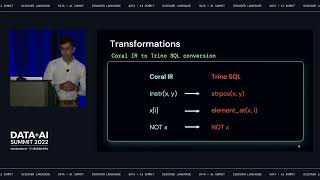
Coral and Transport Portable SQL and UDFs for the Interoperability of Spark and Other Engines

In this talk, we present two open source projects, Coral and Transport, that enable deep SQL and UDF interoperability between Spark and other engines, such as Trino and Hive. Coral is a SQL analysis, rewrite, and translation engine that enables compute engines to interoperate and analyze different SQL dialects and plans, through the conversion to a common relational algebraic intermediate representation. Transport is a UDF framework that enables users to write UDFs against a single API but execute them as native UDFs of multiple engines, such as Spark, Trino, and Hive. Further, we discuss how LinkedIn leverages Coral and Transport, and present a production use case for accessing views of other engines in Spark as well as enhancing Spark DataFrame and Dataset view schema. We discuss other potential applications such as automatic data governance and data obfuscation, query optimization, materialized view selection, incremental compute, and data source SQL and UDF communication.

Connect with us: Website: https://databricks.com Facebook: https://www.facebook.com/databricksinc Twitter: https://twitter.com/databricks LinkedIn: https://www.linkedin.com/company/data... Instagram: https://www.instagram.com/databricksinc/

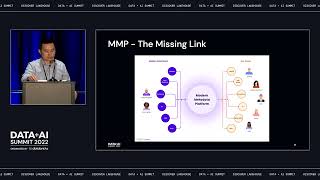
The Modern Metadata Platform: What, Why, and How?

Recently there has been a lot of buzz in the data community on the topic of metadata management. It’s often discussed in the context of data discovery, data provenance, data governance, and data privacy. Even Gartner and Forrester have created the new Active Metadata Management and Enterprise Data Fabric categories to highlight the development in this area.

However, metadata management isn’t actually a new problem. It has just taken on a whole new dimension with the widespread adoption of the Modern Data Stack. What used to be a small, esoteric issue that only concerned the core data team has exploded into complex, organizational challenges that plagued companies large and small.

In this talk, we’ll explain how a Modern Metadata Platform (MMP) can help solve these new challenges and the key ingredients to building a scalable and extensible MMP.

Connect with us: Website: https://databricks.com Facebook: https://www.facebook.com/databricksinc Twitter: https://twitter.com/databricks LinkedIn: https://www.linkedin.com/company/data... Instagram: https://www.instagram.com/databricksinc/

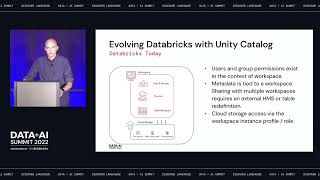
Unity Catalog: Journey to Unified Governance for Your Data and AI Assets on Lakehouse

Modern data assets take many forms: not just files or tables, but dashboards, ML models, and unstructured data like video and images, all of which cannot be governed and managed by legacy data governance solutions. Join this session to learn how data teams can use Unity Catalog to centrally manage all data and AI assets with a common governance model based on familiar ANSI SQL, ensuring much better native performance and security. Built-in automated data lineage provides end-to-end visibility into how data flows from source to consumption, so that organizations can identify and diagnose the impact of data changes. Unity Catalog delivers the flexibility to leverage existing data catalogs and solutions and establish a future-proof, centralized governance without expensive migration costs. It also creates detailed audit reports for data compliance and security, while ensuring data teams can quickly discover and reference data for BI, analytics, and ML workloads, accelerating time to value.

Connect with us: Website: https://databricks.com Facebook: https://www.facebook.com/databricksinc Twitter: https://twitter.com/databricks LinkedIn: https://www.linkedin.com/company/data... Instagram: https://www.instagram.com/databricksinc/

Discover Data Lakehouse With End-to-End Lineage

Data Lineage is key for managing change, ensuring data quality and implementing Data Governance in an organization. There are a few use cases for Data Lineage: Data Governance: For compliance and regulatory purposes our customers are required to prove the data/reports they are submitting came from a trusted and verified source.

This typically means identifying the tables and data sets used in a report or dashboard and tracing the source of these tables and fields. Another use case for the Governance scenario is to understand the spread of sensitive data within the lakehouse. Data Discovery: Data analysts looking to self-serve and build their own analytics and models typically spend time exploring and understanding the data in their lakehouse.

Lineage is a key piece of information which enhances the understanding and trustworthiness of the data the analyst plans to use. Problem Identification: Data teams are often called to solve errors in analysts dashboards and reports (“Why is the total number of widgets different in this report than the one I have built?”). This usually leads to an expensive forensic exercise by the DE team to understand the sources of data and the transformations applied to it before it hits the report. Change Management : It is not uncommon for data sources to change, a new source may stop delivering data or a field in the source system changes its semantics.

In this scenario the DE team would like to understand the downstream impact of this change - to get a sense of how many datasets and users will be affected by this change. This will help them determine the impact of the change, manage user expectations and address issues ahead of time In this talk, we will talk about how we capture table and column lineage for spark / delta and unity catalog for our customers in details and how users could leverage data lineage to serve various use cases mentioned above.

Connect with us: Website: https://databricks.com Facebook: https://www.facebook.com/databricksinc Twitter: https://twitter.com/databricks LinkedIn: https://www.linkedin.com/company/data... Instagram: https://www.instagram.com/databricksinc/

ÀLaSpark: Gousto's Recipe for Building Scalable PySpark Pipelines

Find out how Gousto is developing its data pipelines at scale in a repeatable manner. At Gousto, we’ve developed Goustospark - a wrapper around pyspark that allows us to quickly and easily build data pipelines that are deployed into our Databricks environment.

This wrapper abstracts repetitive components of all data pipelines such as spark configurations and metastore interactions. This allows a developer to simply specify the blueprints of the pipeline before turning their attention to more pressing issues, such as data quality and data governance, whilst enjoying a high level of performance and reliability.

In this session we will deep dive into the design patterns we followed, some unique approaches we’ve taken on how we structure pipelines and show a live demo of implementing a new spark streaming pipeline in Databricks from scratch. We will even share some example python code and snippets to help you build your own.

Connect with us: Website: https://databricks.com Facebook: https://www.facebook.com/databricksinc Twitter: https://twitter.com/databricks LinkedIn: https://www.linkedin.com/company/data... Instagram: https://www.instagram.com/databricksinc/

Best Practices of Maintaining High-Quality Data

Data sits at the heart of machine learning algorithms and makes your model only as good as the data governance policies at the organization. The talk will cover multiple data governance frameworks. Besides, we will talk in depth about one of the key areas of the data governance policy i.e. data quality. The session will cover the significance of the data quality, the definition of goodness, what are the key benefits and impact of maintaining high quality data and processes. Not merely a theoretical aspect, the talk focusses on the practical techniques and guidelines on maintaining the data quality.

Connect with us: Website: https://databricks.com Facebook: https://www.facebook.com/databricksinc Twitter: https://twitter.com/databricks LinkedIn: https://www.linkedin.com/company/data... Instagram: https://www.instagram.com/databricksinc/

Computational Data Governance at Scale

This talk is about the implementation of a Data Mesh in a Fozzy Group. In our experience, the biggest bottleneck in transition to Data Mesh is unclear data ownership. This and other issues can be solved with (federated) computational data governance. We will go through the process of building a global data lineage with 200k tables, 40k table replications, and 70k SQL stored procedures. Also, we will cover our lessons from building data product culture with explicit and automated tracking of ownership and data quality. Fozzy Group is a holding company that comprises about 40 different businesses with 60k employees in various domains: retail, banking, insurance, logistics, agriculture, HoReCa, E-Commerce, etc.

Connect with us: Website: https://databricks.com Facebook: https://www.facebook.com/databricksinc Twitter: https://twitter.com/databricks LinkedIn: https://www.linkedin.com/company/data... Instagram: https://www.instagram.com/databricksinc/

Day 1 Morning Keynote | Data + AI Summit 2022

Day 1 Morning Keynote | Data + AI Summit 2022 Welcome & "Destination Lakehouse" | Ali Ghodsi Apache Spark Community Update | Reynold Xin Streaming Lakehouse | Karthik Ramasamy Delta Lake | Michael Armbrust How Adobe migrated to a unified and open data Lakehouse to deliver personalization at unprecedented scale | Dave Weinstein Data Governance and Sharing on Lakehouse |Matei Zaharia Analytics Engineering and the Great Convergence | Tristan Handy Data Warehousing | Shant Hovespian Unlocking the power of data, AI & analytics: Amgen’s journey to the Lakehouse | Kerby Johnson

Get insights on how to launch a successful lakehouse architecture in Rise of the Data Lakehouse by Bill Inmon, the father of the data warehouse. Download the ebook: https://dbricks.co/3ER9Y0K

Connect with us: Website: https://databricks.com Facebook: https://www.facebook.com/databricksinc Twitter: https://twitter.com/databricks LinkedIn: https://www.linkedin.com/company/data... Instagram: https://www.instagram.com/databricksinc/

More Context, Less Chaos: How Atlan and Unity Catalog Power Column-Level Lineage and Active Metadata

“What does this mean? Who created it? How is it being used? Is it up to date?” Ever fielded these types of questions about your Databricks assets?

Today, context is a huge challenge for data teams. Everyone wants to use your company’s data, but often only a few experts know all of its tribal knowledge and context. The result — they get bombarded with endless questions and requests.

Atlan — the active metadata platform for modern data teams, recently named a Leader in The Forrester Wave: Enterprise Data Catalogs for DataOps — has launched an integration with Databricks Unity Catalog. By connecting to UC’s REST API, Atlan extracts metadata from Databricks clusters and workspaces, generates column-level lineage, and pairs it with metadata from the rest of your data assets to create true end-to-end lineage and visibility across your data stack.

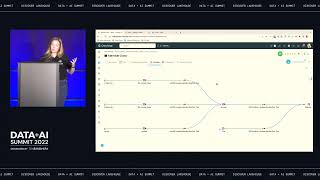
In this session, Prukalpa Sankar (Co-Founder at Atlan and a lifelong data practitioner) and Todd Greenstein (Product Manager with Databricks) will do a live product demo to show how Atlan and Databricks work together to power modern data governance, cataloging, and collaboration.

Connect with us: Website: https://databricks.com Facebook: https://www.facebook.com/databricksinc Twitter: https://twitter.com/databricks LinkedIn: https://www.linkedin.com/company/data... Instagram: https://www.instagram.com/databricksinc/

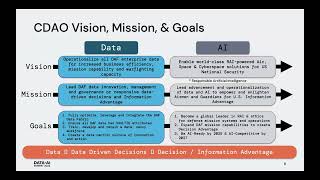
US Air Force: Safeguarding Personnel Data at Enterprise Scale

The US Air Force VAULT platform is a cloud-native enterprise data platform designed to provide the Department of the Air Force (DAF) with a robust, interoperable, and secure data environment. The strategic goals of VAULT include:

  • Leading Data Culture - Increase data use and literacy to improve efficiency and effectiveness of decisions, readiness, mission operations, and cybersecurity.
  • A Catalyst for Sharing Data - Make data Visible, Accessible, Understandable, Linked, and Trusted (VAULT).
  • Driving Data Capabilities - Increase access to the right combination of state-of-the-art technologies needed to best utilize data.

To achieve these goals, the VAULT team created a self-service platform to onboard and extract, transform and load data, perform data analytics, machine learning and visualization, and data governance. Supporting over 50 tenants across NIPR and SIPR, adds complexity to maintaining data security while ensuring data can be shared and utilized for analytics. To meet these goals VAULT requires dynamic and granular data access controls to both mitigate data exposure (due to compromised accounts, attackers monitoring a network, and other threats) while empowering users via self-service analytics. Protection of sensitive data is key to enable VAULT to support key use cases such as personal readiness to optimally place Airmen trainees to meet production goals, increase readiness, and match trainees to their preferences.

Connect with us: Website: https://databricks.com Facebook: https://www.facebook.com/databricksinc Twitter: https://twitter.com/databricks LinkedIn: https://www.linkedin.com/company/data... Instagram: https://www.instagram.com/databricksinc/

OpenLineage is an open standard for metadata and lineage collection designed to instrument jobs as they are running. The standard has become remarkably adept at understanding the lifecycle of data within an organization. Additionally, Airflow lets you make use of OpenLineage with a convenient integration. Gathering data lineage has never been easier. In this talk, we’ll provide an update-to-date report on OpenLineage features and the Airflow integration – essential information for data governance architects & engineers.

As we share data, we create data webs. If we allow copies of our data to proliferate throughout these webs, we reduce the value of the data and create data governance challenges. The solution is new, ownership-centric approaches to data sharing that don’t rely on traditional copy-based integration. Published at: https://www.eckerson.com/articles/zero-copy-approaches-to-data-sharing

Fundamentals of Data Engineering

Data engineering has grown rapidly in the past decade, leaving many software engineers, data scientists, and analysts looking for a comprehensive view of this practice. With this practical book, you'll learn how to plan and build systems to serve the needs of your organization and customers by evaluating the best technologies available through the framework of the data engineering lifecycle. Authors Joe Reis and Matt Housley walk you through the data engineering lifecycle and show you how to stitch together a variety of cloud technologies to serve the needs of downstream data consumers. You'll understand how to apply the concepts of data generation, ingestion, orchestration, transformation, storage, and governance that are critical in any data environment regardless of the underlying technology. This book will help you: Get a concise overview of the entire data engineering landscape Assess data engineering problems using an end-to-end framework of best practices Cut through marketing hype when choosing data technologies, architecture, and processes Use the data engineering lifecycle to design and build a robust architecture Incorporate data governance and security across the data engineering lifecycle

Democratizing data, and developing data culture in large enterprise organizations is an incredibly complex process that can seem overwhelming if you don’t know where to start. And today’s guest draws a clear path towards becoming data-driven.

Meenal Iyer, Sr. Director for Data Science and Experimentation at Tailored Brands, Inc., has over 20 years of experience as a Data and Analytics strategist. She has built several data and analytics platforms and drives the enterprises she works with to be insights-driven. Meenal has also led data teams at various retail organizations, and as a wide variety of specialties in Data Science, including data literacy programs, data monetization, machine learning, enterprise data governance, and more.

In this episode, Meenal shares her thorough, effective, and clear strategy for democratizing data successfully and how that helps create a successful data culture in large enterprises, and gives you the tools you need to do the same in your organization.

[Announcement] Join us for DataCamp Radar, our digital summit on June 23rd. During this summit, a variety of experts from different backgrounds will be discussing everything related to the future of careers in data. Whether you're recruiting for data roles or looking to build a career in data, there’s definitely something for you. Seats are limited, and registration is free, so secure your spot today on https://events.datacamp.com/radar/

Summary Metadata is the lifeblood of your data platform, providing information about what is happening in your systems. A variety of platforms have been developed to capture and analyze that information to great effect, but they are inherently limited in their utility due to their nature as storage systems. In order to level up their value a new trend of active metadata is being implemented, allowing use cases like keeping BI reports up to date, auto-scaling your warehouses, and automated data governance. In this episode Prukalpa Sankar joins the show to talk about the work she and her team at Atlan are doing to push this capability into the mainstream.

Announcements

Hello and welcome to the Data Engineering Podcast, the show about modern data management When you’re ready to build your next pipeline, or want to test out the projects you hear about on the show, you’ll need somewhere to deploy it, so check out our friends at Linode. With their new managed database service you can launch a production ready MySQL, Postgres, or MongoDB cluster in minutes, with automated backups, 40 Gbps connections from your application hosts, and high throughput SSDs. Go to dataengineeringpodcast.com/linode today and get a $100 credit to launch a database, create a Kubernetes cluster, or take advantage of all of their other services. And don’t forget to thank them for their continued support of this show! RudderStack helps you build a customer data platform on your warehouse or data lake. Instead of trapping data in a black box, they enable you to easily collect customer data from the entire stack and build an identity graph on your warehouse, giving you full visibility and control. Their SDKs make event streaming from any app or website easy, and their state-of-the-art reverse ETL pipelines enable you to send enriched data to any cloud tool. Sign up free… or just get the free t-shirt for being a listener of the Data Engineering Podcast at dataengineeringpodcast.com/rudder. Data teams are increasingly under pressure to deliver. According to a recent survey by Ascend.io, 95% in fact reported being at or over capacity. With 72% of data experts reporting demands on their team going up faster than they can hire, it’s no surprise they are increasingly turning to automation. In fact, while only 3.5% report having current investments in automation, 85% of data teams plan on investing in automation in the next 12 months. 85%!!! That’s where our friends at Ascend.io come in. The Ascend Data Automation Cloud provides a unified platform for data ingestion, transformation, orchestration, and observability. Ascend users love its declarative pipelines, powerful SDK, elegant UI, and extensible plug-in architecture, as well as its support for Python, SQL, Scala, and Java. Ascend automates workloads on Snowflake, Databricks, BigQuery, and open source Spark, and can be deployed in AWS, Azure, or GCP. Go to dataengineeringpodcast.com/ascend and sign up for a free trial. If you’re a data engineering podcast listener, you get credits worth $5,000 when you become a customer. Today’s episode is Sponsored by Prophecy.io – the low-code data engineering platform for the cloud. Prophecy provides an easy-to-use visual interface to design & deploy data pipelines on Apache Spark & Apache Airflow. Now all the data users can use software engineering best practices – git, tests and continuous deployment with a simple to use visual designer. How does it work? – You visually design the pipelines, and Prophecy generates clean Spark code with tests on git; then you visually schedule these pipelines on Airflow. You can observe your pipelines with built in metadata search and column level lineage. Finally, if you have existing workflows in AbInitio, Informatica or other ETL formats that you want to move to the cloud, you can import them automatically into Prophecy making them run productively on Spark. Create your free account today at dataengineeringpodcast.com/prophecy. Your host is Tobias Macey and today I’m interviewing Prukalpa Sankar about how data platforms can benefit from the idea of "active metadata" and the work that she and her team at Atlan are doing to make it a reality
Interview

Introduction How did you get involved in the area of data management? Can you describe what "active metadata" is and how it differs from the current approaches to metadata systems? What are some of the use cases that "active metadata" can enable for data producers and consumers?

What are the points of friction that those users encounter in the current formulation of metadata systems?

Central metadata systems/data catalogs came about as a solution to the challenge of integrating every data tool with every other data tool, giving a single place to integrate. What are the lessons that are being learned from the "modern data stack" that can be applied to centralized metadata? Can you describe the approach that you are taking at Atlan to enable the adoption of "active metadata"?

What are the architectural capabilities that you had to build to power the outbound traffic flows?

How are you addressing the N x M integration problem for pushing metadata into the necessary contexts at Atlan?

What are the interfaces that are necessary for receiving systems to be able to make use of the metadata that is being delivered? How does the type/category of metadata impact the type of integration that is necessary?

What are some of the automation possibilities that metadata activation offers for data teams?

What are the cases where you still need a human in the loop?

What are the most interesting, innovative, or unexpected ways that you have seen active metadata capabilities used? What are the most interesting, unexpected, or challenging lessons that you have learned while working on activating metadata for your users? When is an active approach to metadata the wrong choice? What do you have planned for the future of Atlan and active metadata?

Contact Info

LinkedIn @prukalpa on Twitter

Parting Question

From your perspective, what is the biggest gap in the tooling or technology for data management today?

Closing Announcements

Thank you for listening! Don’t forget to check out our other shows. Podcast.init covers the Python language, its community, and the innovative ways it is being used. The Machine Learning Podcast helps you go from idea to production with machine learning. Visit the site to subscribe to the show, sign up for the mailing list, and read the show notes. If you’ve learned something or tried out a project from the show then tell us about it! Email [email protected]) with your story. To help other people find the show please leave a review on Apple Podcasts and tell your friends and co-workers

Links

Atlan What is Active Metadata? Segment

Podcast Episode

Zapier ArgoCD Kubernetes Wix AWS Lambda Modern Data Culture Blog Post

The intro and outro music is from The Hug by The Freak Fandango Orchestra / CC BY-SA

Support Data Engineering Podcast