talk-data.com talk-data.com

Topic

Data Governance

data_management compliance data_quality

417

tagged

Activity Trend

90 peak/qtr
2020-Q1 2026-Q1

Activities

417 activities · Newest first

Summary The best way to make sure that you don’t leak sensitive data is to never have it in the first place. The team at Skyflow decided that the second best way is to build a storage system dedicated to securely managing your sensitive information and making it easy to integrate with your applications and data systems. In this episode Sean Falconer explains the idea of a data privacy vault and how this new architectural element can drastically reduce the potential for making a mistake with how you manage regulated or personally identifiable information.

Announcements

Hello and welcome to the Data Engineering Podcast, the show about modern data management When you’re ready to build your next pipeline, or want to test out the projects you hear about on the show, you’ll need somewhere to deploy it, so check out our friends at Linode. With their new managed database service you can launch a production ready MySQL, Postgres, or MongoDB cluster in minutes, with automated backups, 40 Gbps connections from your application hosts, and high throughput SSDs. Go to dataengineeringpodcast.com/linode today and get a $100 credit to launch a database, create a Kubernetes cluster, or take advantage of all of their other services. And don’t forget to thank them for their continued support of this show! Atlan is the metadata hub for your data ecosystem. Instead of locking all of that information into a new silo, unleash its transformative potential with Atlan’s active metadata capabilities. Push information about data freshness and quality to your business intelligence, automatically scale up and down your warehouse based on usage patterns, and let the bots answer those questions in Slack so that the humans can focus on delivering real value. Go to dataengineeringpodcast.com/atlan today to learn more about how you can take advantage of active metadata and escape the chaos. Modern data teams are dealing with a lot of complexity in their data pipelines and analytical code. Monitoring data quality, tracing incidents, and testing changes can be daunting and often takes hours to days or even weeks. By the time errors have made their way into production, it’s often too late and damage is done. Datafold built automated regression testing to help data and analytics engineers deal with data quality in their pull requests. Datafold shows how a change in SQL code affects your data, both on a statistical level and down to individual rows and values before it gets merged to production. No more shipping and praying, you can now know exactly what will change in your database! Datafold integrates with all major data warehouses as well as frameworks such as Airflow & dbt and seamlessly plugs into CI workflows. Visit dataengineeringpodcast.com/datafold today to book a demo with Datafold. Data teams are increasingly under pressure to deliver. According to a recent survey by Ascend.io, 95% in fact reported being at or over capacity. With 72% of data experts reporting demands on their team going up faster than they can hire, it’s no surprise they are increasingly turning to automation. In fact, while only 3.5% report having current investments in automation, 85% of data teams plan on investing in automation in the next 12 months. 85%!!! That’s where our friends at Ascend.io come in. The Ascend Data Automation Cloud provides a unified platform for data ingestion, transformation, orchestration, and observability. Ascend users love its declarative pipelines, powerful SDK, elegant UI, and extensible plug-in architecture, as well as its support for Python, SQL, Scala, and Java. Ascend automates workloads on Snowflake, Databricks, BigQuery, and open source Spark, and can be deployed in AWS, Azure, or GCP. Go to dataengineeringpodcast.com/ascend and sign up for a free trial. If you’re a data engineering podcast listener, you get credits worth $5,000 when you become a customer. Your host is Tobias Macey and today I’m interviewing Sean Falconer about the idea of a data privacy vault and how the Skyflow team are working to make it turn-key

Interview

Introduction How did you get involved in the area of data management? Can you describe what Skyflow is and the story behind it? What is a "data privacy vault" and how does it differ from strategies such as privacy engineering or existing data governance patterns? What are the primary use cases and capabilities that you are focused on solving for with Skyflow?

Who is the target customer for Skyflow (e.g. how does it enter an organization)?

How is the Skyflow platform architected?

How have the design and goals of the system changed or evolved over time?

Can you describe the process of integrating with Skyflow at the application level? For organizations that are building analytical capabilities on top of the data managed in their applications, what are the interactions with Skyflow at each of the stages in the data lifecycle? One of the perennial problems with distributed systems is the challenge of joining data across machine boundaries. How do you mitigate that problem? On your website there are different "vaults" advertised in the form of healthcare, fintech, and PII. What are the different requirements across each of those problem domains?

What are the commonalities?

As a relatively new company in an emerging product category, what are some of the customer education challenges that you are facing? What are the most interesting, innovative, or unexpected ways that you have seen Skyflow used? What are the most interesting, unexpected, or challenging lessons that you have learned while working on Skyflow? When is Skyflow the wrong choice? What do you have planned for the future of Skyflow?

Contact Info

LinkedIn @seanfalconer on Twitter Website

Parting Question

From your perspective, what is the biggest gap in the tooling or technology for data management today?

Closing Announcements

Thank you for listening! Don’t forget to check out our other show, Podcast.init to learn about the Python language, its community, and the innovative ways it is being used. Visit the site to subscribe to the show, sign up for the mailing list, and read the show notes. If you’ve learned something or tried out a project from the show then tell us about it! Email [email protected]) with your story. To help other people find the show please leave a review on iTunes and tell your friends and co-workers

Links

Skyflow Privacy Engineering Data Governance Homomorphic Encryption Polymorphic Encryption

The intro and outro music is from The Hug by The Freak Fandango Orchestra / CC BY-SA

Support Data Engineering Podcast

COVID, inflation, broken supply chains, and not-so-distant war make this a turbulent time for the modern consumer. During times like these, families tend to their nests, which leads to lots of home-improvement projects…which means lots of painting.

Today we explore the case study of a Fortune 500 producer of the paints and stains that coat many households, consumer products, and even mechanical vehicles. While business expands, this company needs to carefully align the records that track hundreds of suppliers, thousands of storefronts, and millions of customers.

Business expansion and complex supply chains make it particularly important—and challenging—for enterprises such as this paint producer, which we’ll call Bright Colors, to accurately describe the entities that make up their business. They need to be governed, validated data to describe entities such as their products, locations, and customers. Master data management, also known as MDM, streamlines operations and assists data governance by reconciling disparate data records into golden records and ideally a single source of truth.

We’re excited to share our conversation with an industry expert that helps Bright Colors and other Fortune 2000 enterprises navigate turbulent times with effective strategies for MDM and data governance.

Dave Wilkinson is chief technology officer with D3Clarity, a global strategy and implementation services firm that seeks to ensure digital certainty, security, and trust. D3Clarity is a partner of Semarchy, whose Intelligent Data Hub software helps enterprises govern and manage master data, reference data, data quality, enrichment, and workflows. Semarchy sponsored this podcast.

Summary Data governance is a practice that requires a high degree of flexibility and collaboration at the organizational and technical levels. The growing prominence of cloud and hybrid environments in data management adds additional stress to an already complex endeavor. Privacera is an enterprise grade solution for cloud and hybrid data governance built on top of the robust and battle tested Apache Ranger project. In this episode Balaji Ganesan shares how his experiences building and maintaining Ranger in previous roles helped him understand the needs of organizations and engineers as they define and evolve their data governance policies and practices.

Announcements

Hello and welcome to the Data Engineering Podcast, the show about modern data management When you’re ready to build your next pipeline, or want to test out the projects you hear about on the show, you’ll need somewhere to deploy it, so check out our friends at Linode. With their managed Kubernetes platform it’s now even easier to deploy and scale your workflows, or try out the latest Helm charts from tools like Pulsar and Pachyderm. With simple pricing, fast networking, object storage, and worldwide data centers, you’ve got everything you need to run a bulletproof data platform. Go to dataengineeringpodcast.com/linode today and get a $100 credit to try out a Kubernetes cluster of your own. And don’t forget to thank them for their continued support of this show! This episode is brought to you by Acryl Data, the company behind DataHub, the leading developer-friendly data catalog for the modern data stack. Open Source DataHub is running in production at several companies like Peloton, Optum, Udemy, Zynga and others. Acryl Data provides DataHub as an easy to consume SaaS product which has been adopted by several companies. Signup for the SaaS product at dataengineeringpodcast.com/acryl RudderStack helps you build a customer data platform on your warehouse or data lake. Instead of trapping data in a black box, they enable you to easily collect customer data from the entire stack and build an identity graph on your warehouse, giving you full visibility and control. Their SDKs make event streaming from any app or website easy, and their state-of-the-art reverse ETL pipelines enable you to send enriched data to any cloud tool. Sign up free… or just get the free t-shirt for being a listener of the Data Engineering Podcast at dataengineeringpodcast.com/rudder. The most important piece of any data project is the data itself, which is why it is critical that your data source is high quality. PostHog is your all-in-one product analytics suite including product analysis, user funnels, feature flags, experimentation, and it’s open source so you can host it yourself or let them do it for you! You have full control over your data and their plugin system lets you integrate with all of your other data tools, including data warehouses and SaaS platforms. Give it a try today with their generous free tier at dataengineeringpodcast.com/posthog Your host is Tobias Macey and today I’m interviewing Balaji Ganesan about his work at Privacera and his view on the state of data governance, access control, and security in the cloud

Interview

Introduction How did you get involved in the area of data management? Can you describe what Privacera is and the story behind it? What is your working definition of "data governance" and how does that influence your product focus and priorities? What are some of the lessons that you learned from your work on Apache Ranger that helped with your efforts at Privacera? How would you characterize your position in the market for data governance/data security tools? What are the unique constraints and challenges that come into play when managing data in cloud platforms? Can you explain how the Privacera platform is architected?

How have the design and goals of the system changed or evolved since you started working on it?

What is the workflow for an operator integrating Privacera into a data platform?

How do you provide feedback to users about the level of coverage for discovered data assets?

How does Privacera fit into the workflow of the different personas working with data?

What are some of the security and privacy controls that Privacera introduces?

How do you mitigate the potential for anyone to bypass Privacera’s controls by interacting directly with the underlying systems? What are the most interesting, innovative, or unexpected ways that you have seen Privacera used? What are the most interesting, unexpected, or challenging lessons that you have learned while working on Privacera? When is Privacera the wrong choice? What do you have planned for the future of Privacera?

Contact Info

LinkedIn @Balaji_Blog on Twitter

Parting Question

From your perspective, what is the biggest gap in the tooling or technology for data management today?

Closing Announcements

Thank you for listening! Don’t forget to check out our other show, Podcast.init to learn about the Python language, its community, and the innovative ways it is being used. Visit the site to subscribe to the show, sign up for the mailing list, and read the show notes. If you’ve learned something or tried out a project from the show then tell us about it! Email [email protected]) with your story. To help other people find the show please leave a review on iTunes and tell your friends and co-workers

Links

Privacera Hadoop Hortonworks Apache Ranger Oracle Teradata Presto/Trino Starburst

Podcast Episode

Ahana

Podcast Episode

The intro and outro music is from The Hug by The Freak Fandango Orchestra / CC BY-SA

Sponsored By: Acryl: Acryl

The modern data stack needs a reimagined metadata management platform. Acryl Data’s vision is to bring clarity to your data through its next generation multi-cloud metadata management platform. Founded by the leaders that created projects like LinkedIn DataHub and Airbnb Dataportal, Acryl Data enables delightful search and discovery, data observability, and federated governance across data ecosystems. Signup for the SaaS product today at dataengineeringpodcast.com/acrylSupport Data Engineering Podcast
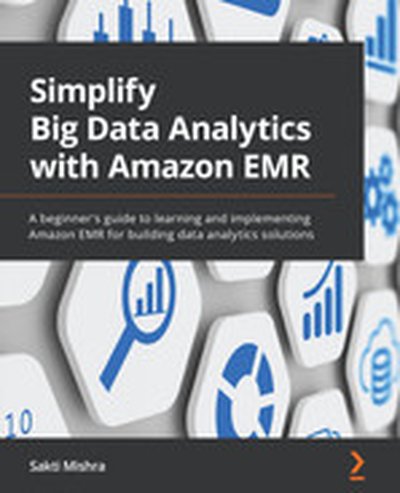
Simplify Big Data Analytics with Amazon EMR

Simplify Big Data Analytics with Amazon EMR is a thorough guide to harnessing Amazon's EMR service for big data processing and analytics. From distributed computation pipelines to real-time streaming analytics, this book provides hands-on knowledge and actionable steps for implementing data solutions efficiently. What this Book will help me do Understand the architecture and key components of Amazon EMR and how to deploy it effectively. Learn to configure and manage distributed data processing pipelines using Amazon EMR. Implement security and data governance best practices within the Amazon EMR ecosystem. Master batch ETL and real-time analytics techniques using technologies like Apache Spark. Apply optimization and cost-saving strategies to scalable data solutions. Author(s) Sakti Mishra is a seasoned data professional with extensive expertise in deploying scalable analytics solutions on cloud platforms like AWS. With a background in big data technologies and a passion for teaching, Sakti ensures practical insights accompany every concept. Readers will find his approach thorough, hands-on, and highly informative. Who is it for? This book is perfect for data engineers, data scientists, and other professionals looking to leverage Amazon EMR for scalable analytics. If you are familiar with Python, Scala, or Java and have some exposure to Hadoop or AWS ecosystems, this book will empower you to design and implement robust data pipelines efficiently.

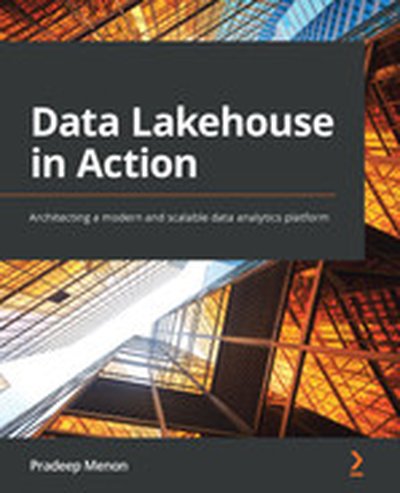
Data Lakehouse in Action

"Data Lakehouse in Action" provides a comprehensive exploration of the Data Lakehouse architecture, a modern solution for scalable and effective large-scale analytics. This book guides you through understanding the principles and components of the architecture, and its implementation using cloud platforms like Azure. Learn the practical techniques for designing robust systems tailored to organizational needs and maturity. What this Book will help me do Understand the evolution and need for modern data architecture patterns like Data Lakehouse. Learn how to design systems for data ingestion, storage, processing, and serving in a Data Lakehouse. Develop best practices for data governance and security in the Data Lakehouse architecture. Discover various analytics workflows enabled by the Data Lakehouse, including real-time and batch approaches. Implement practical Data Lakehouse patterns on a cloud platform, and integrate them with macro-patterns such as Data Mesh. Author(s) Pradeep Menon is a seasoned data architect and engineer with extensive experience implementing data analytics solutions for leading companies. With a penchant for simplifying complex architectures, Pradeep has authored several technical publications and frequently shares his expertise at industry conferences. His hands-on approach and passion for teaching shine through in his practical guides. Who is it for? This book is ideal for data professionals including architects, engineers, and data strategists eager to enhance their knowledge in modern analytics platforms. If you have a basic understanding of data architecture and are curious about implementing systems governed by the Data Lakehouse paradigm, this book is for you. It bridges foundational concepts with advanced practices, making it suitable for learners aiming to contribute effectively to their organization's analytics efforts.

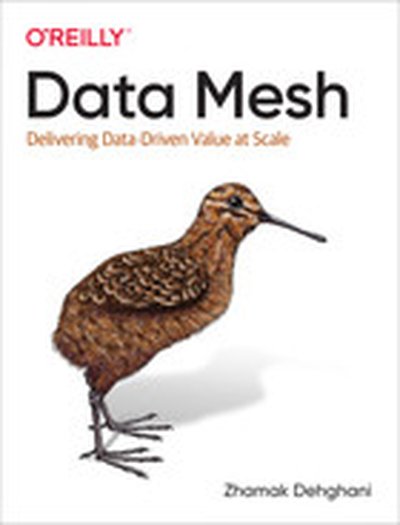
Data Mesh

We're at an inflection point in data, where our data management solutions no longer match the complexity of organizations, the proliferation of data sources, and the scope of our aspirations to get value from data with AI and analytics. In this practical book, author Zhamak Dehghani introduces data mesh, a decentralized sociotechnical paradigm drawn from modern distributed architecture that provides a new approach to sourcing, sharing, accessing, and managing analytical data at scale. Dehghani guides practitioners, architects, technical leaders, and decision makers on their journey from traditional big data architecture to a distributed and multidimensional approach to analytical data management. Data mesh treats data as a product, considers domains as a primary concern, applies platform thinking to create self-serve data infrastructure, and introduces a federated computational model of data governance. Get a complete introduction to data mesh principles and its constituents Design a data mesh architecture Guide a data mesh strategy and execution Navigate organizational design to a decentralized data ownership model Move beyond traditional data warehouses and lakes to a distributed data mesh

Fast-casual restaurants offer a fascinating microcosm of the turbulent forces confronting enterprises today—and the pivotal role that data plays in helping them maintain competitive advantage. COVID prompted customers to order their Chipotle burritos, Shake Shack milkshakes, and Bruegger’s Bagels for home delivery, and this trend continues in 2022. Supply-chain disruptions, meanwhile, force fast-casual restaurants to make some fast pivots between suppliers in order to keep their shelves stocked. And the market continues to grow as these companies win customers, add locations, and expand delivery partnerships.

These three industry trends—home delivery, supply-chain disruptions, and market expansion—all depend on governed, accurate data to describe entities such as orders, ingredients, and locations. Data quality and master data management therefore play a more pivotal role than ever in the success of fast-casual restaurants. Master data management, also known as MDM, streamlines operations and assists data governance by reconciling disparate data records into a golden record and source of truth. If you’re looking for an ideal case study for how MDM drives enterprise reinvention, agility, and growth, this is it.

We’re excited to talk with an industry expert that helps fast-casual restaurants handle these turbulent forces with effective strategies for managing data and especially master data. Matt Zingariello is Vice President of Data Strategy Services with Keyrus, a global consultancy that helps enterprises use data assets to optimize their digital strategies and customer experience. Matt leads a team that provides industry-specific advisory and implementation services to help enterprises address challenges such as data governance and MDM.

Keyrus is a partner of Semarchy, whose Intelligent Data Hub software helps enterprises govern and manage master data, reference data, data quality, enrichment, and workflows. Semarchy sponsored this podcast.

In our podcast, we'll define data quality and MDM as part of data governance. We’ll explore why enterprises need data quality and MDM, and how they can craft effective data quality and MDM strategies, with a focus on fast-casual restaurants as a case study.

It’s hard to find a data discipline today that is under more pressure than data governance. One on side, the supply of data is exploding. As enterprises transform their business to compete in the 2020s, they digitize myriad events and interactions, which creates mountains of data that they need to control. On the other side, demand for data is exploding. Business owners at all levels of the enterprise need to inform their decisions and drive their operations with data.

Under these pressures, data governance teams must ensure business owners access and consume the right, high-quality data. This requires master data management—the reconciliation of disparate data records into a golden record and source of truth—which assists data governance at many modern enterprises.

In this episode, our host Kevin Petrie, VP of Research at Eckerson Group talks with our guests Felicia Perez, Managing Director, Information as a Product Program at National Student Clearinghouse, and Patrick O'Halloran, enterprise data scientist as they define what data quality and MDM are, why you need them, and how best to achieve effective data quality and MDM.

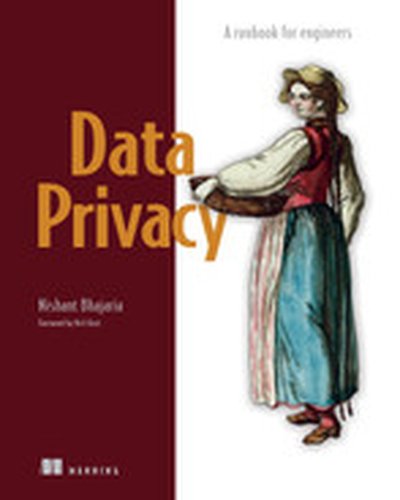
Data Privacy

Engineer privacy into your systems with these hands-on techniques for data governance, legal compliance, and surviving security audits. In Data Privacy you will learn how to: Classify data based on privacy risk Build technical tools to catalog and discover data in your systems Share data with technical privacy controls to measure reidentification risk Implement technical privacy architectures to delete data Set up technical capabilities for data export to meet legal requirements like Data Subject Asset Requests (DSAR) Establish a technical privacy review process to help accelerate the legal Privacy Impact Assessment (PIA) Design a Consent Management Platform (CMP) to capture user consent Implement security tooling to help optimize privacy Build a holistic program that will get support and funding from the C-Level and board Data Privacy teaches you to design, develop, and measure the effectiveness of privacy programs. You’ll learn from author Nishant Bhajaria, an industry-renowned expert who has overseen privacy at Google, Netflix, and Uber. The terminology and legal requirements of privacy are all explained in clear, jargon-free language. The book’s constant awareness of business requirements will help you balance trade-offs, and ensure your user’s privacy can be improved without spiraling time and resource costs. About the Technology Data privacy is essential for any business. Data breaches, vague policies, and poor communication all erode a user’s trust in your applications. You may also face substantial legal consequences for failing to protect user data. Fortunately, there are clear practices and guidelines to keep your data secure and your users happy. About the Book Data Privacy: A runbook for engineers teaches you how to navigate the trade-offs between strict data security and real world business needs. In this practical book, you’ll learn how to design and implement privacy programs that are easy to scale and automate. There’s no bureaucratic process—just workable solutions and smart repurposing of existing security tools to help set and achieve your privacy goals. What's Inside Classify data based on privacy risk Set up capabilities for data export that meet legal requirements Establish a review process to accelerate privacy impact assessment Design a consent management platform to capture user consent About the Reader For engineers and business leaders looking to deliver better privacy. About the Author Nishant Bhajaria leads the Technical Privacy and Strategy teams for Uber. His previous roles include head of privacy engineering at Netflix, and data security and privacy at Google. Quotes I wish I had had this text in 2015 or 2016 at Netflix, and it would have been very helpful in 2008–2012 in a time of significant architectural evolution of our technology. - From the Foreword by Neil Hunt, Former CPO, Netflix Your guide to building privacy into the fabric of your organization. - John Tyler, JPMorgan Chase The most comprehensive resource you can find about privacy. - Diego Casella, InvestSuite Offers some valuable insights and direction for enterprises looking to improve the privacy of their data. - Peter White, Charles Sturt University

SERVER-SIDE TAGGING: DATA QUALITY OR DATA QUANTITY?

Simo explores the latest and greatest paradigm in Google's marketing stack: server-side tagging in Google Tag Manager. The benefits of moving data collection server-side are obvious – or are they? The same tools and mechanisms that help with data governance and oversight can be abused due to the opaqueness associated with moving data collections server-side. In this talk, Simo takes a honest look at just what problems server-side tagging seeks to address, and whether it actually manages to do what it’s set out to do.

In my opinion, any organisation with respect for its data should have a Chief Data & Analytics Officer (CDAO) as part of their C-suite. Although the CDAO role is still nascent, business leaders across many industries are starting to appreciate the need for a data and analytics voice at board and executive level. So, what does a CDAO do? How should they spend their time to balance strategic influence with operational delivery of data products? To answer these questions and many more related to the principal analytics role, I recently spoke to Kshira Saagar, who is the Chief Data Officer at Latitude Financial. As the CDO at one of Australia’s largest consumer financial services firms, Kshira is responsible for the end-to-end journey of data through the organisation, from extraction to value creation through data products. He leads a large team of Data Scientists, Data analysts, Data Architects, Data Engineers, Machine Learning Engineers, Data Warehouse Developers, BI Developers and Data Governance experts, who are responsible for bringing the company’s data and analytics strategy to life. In this episode of Leaders of Analytics, we discuss: What a week in the role of a CDAO looks likeHow to secure strategic support and executive sponsorship for analytics projectsWhat’s required of CDAOs and their teams to foster a data literate organisationHow to structure data and analytics functions for successThe future of the CDAO role, and much more.Learn more about Kshira at https://www.kshirasaagar.com/

Summary The binding element of all data work is the metadata graph that is generated by all of the workflows that produce the assets used by teams across the organization. The DataHub project was created as a way to bring order to the scale of LinkedIn’s data needs. It was also designed to be able to work for small scale systems that are just starting to develop in complexity. In order to support the project and make it even easier to use for organizations of every size Shirshanka Das and Swaroop Jagadish founded Acryl Data. In this episode they discuss the recent work that has been done by the community, how their work is building on top of that foundation, and how you can get started with DataHub for your own work to manage data discovery today. They also share their ambitions for the near future of adding data observability and data quality management features.

Announcements

Hello and welcome to the Data Engineering Podcast, the show about modern data management When you’re ready to build your next pipeline, or want to test out the projects you hear about on the show, you’ll need somewhere to deploy it, so check out our friends at Linode. With their managed Kubernetes platform it’s now even easier to deploy and scale your workflows, or try out the latest Helm charts from tools like Pulsar and Pachyderm. With simple pricing, fast networking, object storage, and worldwide data centers, you’ve got everything you need to run a bulletproof data platform. Go to dataengineeringpodcast.com/linode today and get a $100 credit to try out a Kubernetes cluster of your own. And don’t forget to thank them for their continued support of this show! Are you bored with writing scripts to move data into SaaS tools like Salesforce, Marketo, or Facebook Ads? Hightouch is the easiest way to sync data into the platforms that your business teams rely on. The data you’re looking for is already in your data warehouse and BI tools. Connect your warehouse to Hightouch, paste a SQL query, and use their visual mapper to specify how data should appear in your SaaS systems. No more scripts, just SQL. Supercharge your business teams with customer data using Hightouch for Reverse ETL today. Get started for free at dataengineeringpodcast.com/hightouch. Modern Data teams are dealing with a lot of complexity in their data pipelines and analytical code. Monitoring data quality, tracing incidents, and testing changes can be daunting and often takes hours to days. Datafold helps Data teams gain visibility and confidence in the quality of their analytical data through data profiling, column-level lineage and intelligent anomaly detection. Datafold also helps automate regression testing of ETL code with its Data Diff feature that instantly shows how a change in ETL or BI code affects the produced data, both on a statistical level and down to individual rows and values. Datafold integrates with all major data warehouses as well as frameworks such as Airflow & dbt and seamlessly plugs into CI workflows. Go to dataengineeringpodcast.com/datafold today to start a 30-day trial of Datafold. Once you sign up and create an alert in Datafold for your company data, they will send you a cool water flask. Your host is Tobias Macey and today I’m interviewing Shirshanka Das and Swaroop Jagadish about Acryl Data, the company driving the open source metadata project DataHub for powering data discovery, data observability and federated data governance.

Interview

Introduction How did you get involved in the area of data management? Can you describe what Acryl Data is and the story behind it? How has your experience of building and running DataHub at LinkedIn informed your product direction for Acryl?

What are some lessons that your co-founder Swaroop has contributed from his experience at AirBnB?

The data catalog/discovery/quality market has become very active over the past year. What is your perspective on the market, and what are the gaps that are not yet bei

We talked to George Firican from Lights on Data about all things data governance and management. Check out their YouTube! 

As always, please leave a review and subscribe to the Data Career Podcast! 

Mentioned in this episode: Join the last cohort of 2025! The LAST cohort of The Data Analytics Accelerator for 2025 kicks off on Monday, December 8th and enrollment is officially open!

To celebrate the end of the year, we’re running a special End-of-Year Sale, where you’ll get: ✅ A discount on your enrollment 🎁 6 bonus gifts, including job listings, interview prep, AI tools + more

If your goal is to land a data job in 2026, this is your chance to get ahead of the competition and start strong.

👉 Join the December Cohort & Claim Your Bonuses: https://DataCareerJumpstart.com/daa https://www.datacareerjumpstart.com/daa

We talked about:

Natalie’s background Airbyte What is ETL? Why ELT instead of ETL? Transformations How does ELT help analysts be more independent? Data marts and Data warehouses Ingestion DB ETL vs ELT Data lakes Data swamps Data governance Ingestion layer vs Data lake Do you need both a Data warehouse and a Data lake? Airbyte and ELT Modern data stack Reverse ETL Is drag-and-drop killing data engineering jobs? Who is responsible for managing unused data? CDC – Change Data Capture Slowly changing dimension Are there cases where ETL is preferable over ELT? Why is Airbyte open source? The case of Elasticsearch and AWS

Links:

Natalie's LinkedIn: https://www.linkedin.com/in/nataliekwong/ https://airbyte.io/blog/why-the-future-of-etl-is-not-elt-but-el

Join DataTalks.Club: https://datatalks.club/slack.html

Our events: https://datatalks.club/events.html

Summary Gartner analysts are tasked with identifying promising companies each year that are making an impact in their respective categories. For businesses that are working in the data management and analytics space they recognized the efforts of Timbr.ai, Soda Data, Nexla, and Tada. In this episode the founders and leaders of each of these organizations share their perspective on the current state of the market, and the challenges facing businesses and data professionals today.

Announcements

Hello and welcome to the Data Engineering Podcast, the show about modern data management When you’re ready to build your next pipeline, or want to test out the projects you hear about on the show, you’ll need somewhere to deploy it, so check out our friends at Linode. With their managed Kubernetes platform it’s now even easier to deploy and scale your workflows, or try out the latest Helm charts from tools like Pulsar and Pachyderm. With simple pricing, fast networking, object storage, and worldwide data centers, you’ve got everything you need to run a bulletproof data platform. Go to dataengineeringpodcast.com/linode today and get a $100 credit to try out a Kubernetes cluster of your own. And don’t forget to thank them for their continued support of this show! Atlan is a collaborative workspace for data-driven teams, like Github for engineering or Figma for design teams. By acting as a virtual hub for data assets ranging from tables and dashboards to SQL snippets & code, Atlan enables teams to create a single source of truth for all their data assets, and collaborate across the modern data stack through deep integrations with tools like Snowflake, Slack, Looker and more. Go to dataengineeringpodcast.com/atlan today and sign up for a free trial. If you’re a data engineering podcast listener, you get credits worth $3000 on an annual subscription Have you ever had to develop ad-hoc solutions for security, privacy, and compliance requirements? Are you spending too much of your engineering resources on creating database views, configuring database permissions, and manually granting and revoking access to sensitive data? Satori has built the first DataSecOps Platform that streamlines data access and security. Satori’s DataSecOps automates data access controls, permissions, and masking for all major data platforms such as Snowflake, Redshift and SQL Server and even delegates data access management to business users, helping you move your organization from default data access to need-to-know access. Go to dataengineeringpodcast.com/satori today and get a $5K credit for your next Satori subscription. Your host is Tobias Macey and today I’m interviewing Saket Saurabh, Maarten Masschelein, Akshay Deshpande, and Dan Weitzner about the challenges facing data practitioners today and the solutions that are being brought to market for addressing them, as well as the work they are doing that got them recognized as "cool vendors" by Gartner.

Interview

Introduction How did you get involved in the area of data management? Can you each describe what you view as the biggest challenge facing data professionals? Who are you building your solutions for and what are the most common data management problems are you all solving? What are different components of Data Management and why is it so complex? What will simplify this process, if any? The report covers a lot of new data management terminology – data governance, data observability, data fabric, data mesh, DataOps, MLOps, AIOps – what does this all mean and why is it important for data engineers? How has the data management space changed in recent times? Describe the current data management landscape and any key developments. From your perspective, what are the biggest challenges in the data management space today? What modern data management features are lacking in existing databases? Gartner imagines a future where data and analytics leaders need to be prepared to rely on data manage

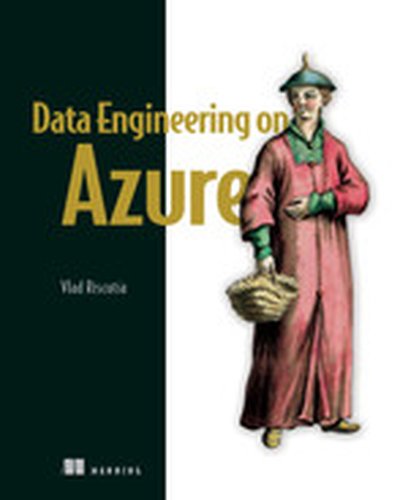
Data Engineering on Azure

Build a data platform to the industry-leading standards set by Microsoft’s own infrastructure. In Data Engineering on Azure you will learn how to: Pick the right Azure services for different data scenarios Manage data inventory Implement production quality data modeling, analytics, and machine learning workloads Handle data governance Using DevOps to increase reliability Ingesting, storing, and distributing data Apply best practices for compliance and access control Data Engineering on Azure reveals the data management patterns and techniques that support Microsoft’s own massive data infrastructure. Author Vlad Riscutia, a data engineer at Microsoft, teaches you to bring an engineering rigor to your data platform and ensure that your data prototypes function just as well under the pressures of production. You'll implement common data modeling patterns, stand up cloud-native data platforms on Azure, and get to grips with DevOps for both analytics and machine learning. About the Technology Build secure, stable data platforms that can scale to loads of any size. When a project moves from the lab into production, you need confidence that it can stand up to real-world challenges. This book teaches you to design and implement cloud-based data infrastructure that you can easily monitor, scale, and modify. About the Book In Data Engineering on Azure you’ll learn the skills you need to build and maintain big data platforms in massive enterprises. This invaluable guide includes clear, practical guidance for setting up infrastructure, orchestration, workloads, and governance. As you go, you’ll set up efficient machine learning pipelines, and then master time-saving automation and DevOps solutions. The Azure-based examples are easy to reproduce on other cloud platforms. What's Inside Data inventory and data governance Assure data quality, compliance, and distribution Build automated pipelines to increase reliability Ingest, store, and distribute data Production-quality data modeling, analytics, and machine learning About the Reader For data engineers familiar with cloud computing and DevOps. About the Author Vlad Riscutia is a software architect at Microsoft. Quotes A definitive and complete guide on data engineering, with clear and easy-to-reproduce examples. - Kelum Prabath Senanayake, Echoworx An all-in-one Azure book, covering all a solutions architect or engineer needs to think about. - Albert Nogués, Danone A meaningful journey through the Azure ecosystem. You’ll be building pipelines and joining components quickly! - Todd Cook, Appen A gateway into the world of Azure for machine learning and DevOps engineers. - Krzysztof Kamyczek, Luxoft

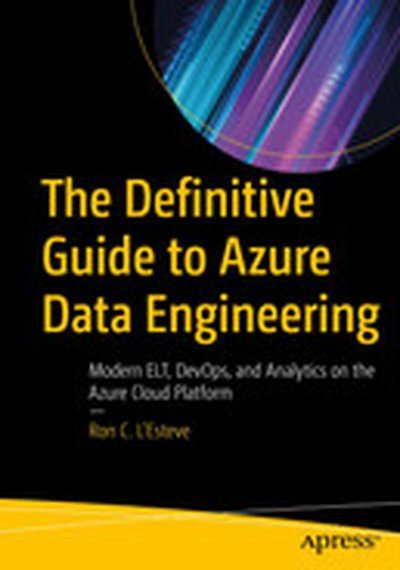
The Definitive Guide to Azure Data Engineering: Modern ELT, DevOps, and Analytics on the Azure Cloud Platform

Build efficient and scalable batch and real-time data ingestion pipelines, DevOps continuous integration and deployment pipelines, and advanced analytics solutions on the Azure Data Platform. This book teaches you to design and implement robust data engineering solutions using Data Factory, Databricks, Synapse Analytics, Snowflake, Azure SQL database, Stream Analytics, Cosmos database, and Data Lake Storage Gen2. You will learn how to engineer your use of these Azure Data Platform components for optimal performance and scalability. You will also learn to design self-service capabilities to maintain and drive the pipelines and your workloads. The approach in this book is to guide you through a hands-on, scenario-based learning process that will empower you to promote digital innovation best practices while you work through your organization’s projects, challenges, and needs. The clear examples enable you to use this book as a reference and guide for building data engineering solutions in Azure. After reading this book, you will have a far stronger skill set and confidence level in getting hands on with the Azure Data Platform. What You Will Learn Build dynamic, parameterized ELT data ingestion orchestration pipelines in Azure Data Factory Create data ingestion pipelines that integrate control tables for self-service ELT Implement a reusable logging framework that can be applied to multiple pipelines Integrate Azure Data Factory pipelines with a variety of Azure data sources and tools Transform data with Mapping Data Flows in Azure Data Factory Apply Azure DevOps continuous integration and deployment practices to your Azure Data Factory pipelines and development SQL databases Design and implement real-time streaming and advanced analytics solutions using Databricks, Stream Analytics, and Synapse Analytics Get started with a variety of Azure data services through hands-on examples Who This Book Is For Data engineers and data architects who are interested in learning architectural and engineering best practices around ELT and ETL on the Azure Data Platform, those who are creating complex Azure data engineering projects and are searching for patterns of success, and aspiring cloud and data professionals involved in data engineering, data governance, continuous integration and deployment of DevOps practices, and advanced analytics who want a full understanding of the many different tools and technologies that Azure Data Platform provides

In this episode, I talk to Matt Blasa (https://www.linkedin.com/in/mblasa/) about how he does data science freelancing. We also talk about online portfolios, data governance, and why he posts on LinkedIn. Enjoy!

🎙 PLEASE FOLLOW & SUBSCRIBE TO THE POD 

Want to break into data science? Check out my new course coming out later this summer: Data Career Jumpstart - https://www.datacareerjumpstart.com

Want to leave a question for the Ask Avery Show?

Written Mailbag: https://forms.gle/78zD544drpDAcTRV9

Audio Mailbag: https://anchor.fm/datacareerpodcast/message

Want to be on The Ask Avery Show? Sign up for a spot here:

https://calendly.com/datacareer/ask-avery?month=2021-05

Subscribe on YouTube: https://www.youtube.com/channel/UCuyfszBAd3gUt9vAbC1dfqA

Mentioned in this episode: Join the last cohort of 2025! The LAST cohort of The Data Analytics Accelerator for 2025 kicks off on Monday, December 8th and enrollment is officially open!

To celebrate the end of the year, we’re running a special End-of-Year Sale, where you’ll get: ✅ A discount on your enrollment 🎁 6 bonus gifts, including job listings, interview prep, AI tools + more

If your goal is to land a data job in 2026, this is your chance to get ahead of the competition and start strong.

👉 Join the December Cohort & Claim Your Bonuses: https://DataCareerJumpstart.com/daa https://www.datacareerjumpstart.com/daa

Check out "Telling Your Data Story" by Scott Taylor | https://amzn.to/3qaNakb

Want to attend the Master Data Marathon 3.0 hosted by Scott Taylor? Use code MDM50 for 50% off right now! https://thinklinkers.com/events/master_data_marathon_2021


Super exciting episode today. I got to interview Scott Taylor - The Data Whisperer. What a cool guy. We talked about data governance and data management. What are they? What does that even mean? We talked about Scott’s decades of experience in the data industry and how his use of branding has helped him build his career.

I’m always impressed with Scott’s branding. Let’s start with his name; the data whisperer. Great slogan, catchy, gives you an idea of what he’s about. Then there’s his truth hat, and we talk about that in the episode, and then he has puppets.


Want to break into data science? Check out my new course coming out later this summer: Data Career Jumpstart - https://www.datacareerjumpstart.com

Want to leave a question for the Ask Avery Show?

Written Mailbag: https://forms.gle/78zD544drpDAcTRV9

Audio Mailbag: https://anchor.fm/datacareerpodcast/message

Want to be on The Ask Avery Show? Sign up for a spot here:

https://calendly.com/datacareer/ask-avery?month=2021-05

Watch The Ask Avery Show Live Tuesday’s at 8PM: https://www.datacareerjumpstart.com/AskAvery

Add The Ask Avery Show to your calendar: https://calendar.google.com/calendar/ical/c_u2rk36mj5mgqg5g42glm9a741c%40group.calendar.google.com/public/basic.ics

Subscribe on YouTube: https://www.youtube.com/channel/UCuyfszBAd3gUt9vAbC1dfqA

Mentioned in this episode: Join the last cohort of 2025! The LAST cohort of The Data Analytics Accelerator for 2025 kicks off on Monday, December 8th and enrollment is officially open!

To celebrate the end of the year, we’re running a special End-of-Year Sale, where you’ll get: ✅ A discount on your enrollment 🎁 6 bonus gifts, including job listings, interview prep, AI tools + more

If your goal is to land a data job in 2026, this is your chance to get ahead of the competition and start strong.

👉 Join the December Cohort & Claim Your Bonuses: https://DataCareerJumpstart.com/daa https://www.datacareerjumpstart.com/daa

We talked about:

Jessi’s background Uri’s background Data governance Implementing data governance: policies and processes Reasons not to have data governance Start with “why” Cataloging and classifying our data Let data work for you The human component Data quality Defining policies Implementing policies Shopping-card experience for requesting data Proving the value of data catalog Using data catalog Data governance = data catalog?

Links:

Book: https://www.oreilly.com/library/view/data-governance-the/9781492063483/ Jessi’s LinkedIn: https://www.linkedin.com/in/jashdown/ Uri’s LinkedIn: https://linkedin.com/in/ugilad Uri’s Twitter: https://twitter.com/ugilad

Join DataTalks.Club: https://datatalks.club/slack.html

Our events: https://datatalks.club/events.html

Conference: https://datatalks.club/conferences/2021-summer-marathon.html