talk-data.com talk-data.com

Topic

Data Governance

data_management compliance data_quality

417

tagged

Activity Trend

90 peak/qtr
2020-Q1 2026-Q1

Activities

417 activities · Newest first

Summary Analytical workloads require a well engineered and well maintained data integration process to ensure that your information is reliable and up to date. Building a real-time pipeline for your data lakes and data warehouses is a non-trivial effort, requiring a substantial investment of time and energy. Meroxa is a new platform that aims to automate the heavy lifting of change data capture, monitoring, and data loading. In this episode founders DeVaris Brown and Ali Hamidi explain how their tenure at Heroku informed their approach to making data integration self service, how the platform is architected, and how they have designed their system to adapt to the continued evolution of the data ecosystem.

Announcements

Hello and welcome to the Data Engineering Podcast, the show about modern data management What are the pieces of advice that you wish you had received early in your career of data engineering? If you hand a book to a new data engineer, what wisdom would you add to it? I’m working with O’Reilly on a project to collect the 97 things that every data engineer should know, and I need your help. Go to dataengineeringpodcast.com/97things to add your voice and share your hard-earned expertise. When you’re ready to build your next pipeline, or want to test out the projects you hear about on the show, you’ll need somewhere to deploy it, so check out our friends at Linode. With their managed Kubernetes platform it’s now even easier to deploy and scale your workflows, or try out the latest Helm charts from tools like Pulsar and Pachyderm. With simple pricing, fast networking, object storage, and worldwide data centers, you’ve got everything you need to run a bulletproof data platform. Go to dataengineeringpodcast.com/linode today and get a $60 credit to try out a Kubernetes cluster of your own. And don’t forget to thank them for their continued support of this show! Are you bogged down by having to manually manage data access controls, repeatedly move and copy data, and create audit reports to prove compliance? How much time could you save if those tasks were automated across your cloud platforms? Immuta is an automated data governance solution that enables safe and easy data analytics in the cloud. Our comprehensive data-level security, auditing and de-identification features eliminate the need for time-consuming manual processes and our focus on data and compliance team collaboration empowers you to deliver quick and valuable data analytics on the most sensitive data to unlock the full potential of your cloud data platforms. Learn how we streamline and accelerate manual processes to help you derive real results from your data at dataengineeringpodcast.com/immuta. Today’s episode of the Data Engineering Podcast is sponsored by Datadog, a SaaS-based monitoring and analytics platform for cloud-scale infrastructure, applications, logs, and more. Datadog uses machine-learning based algorithms to detect errors and anomalies across your entire stack—which reduces the time it takes to detect and address outages and helps promote collaboration between Data Engineering, Operations, and the rest of the company. Go to dataengineeringpodcast.com/datadog today to start your free 14 day trial. If you start a trial and install Datadog’s agent, Datadog will send you a free T-shirt. You listen to this show to learn and stay up to date with what’s happening in databases, streaming platforms, big data, and everything else you need to know about modern data platforms. For more opportunities to stay up to date, gain new skills, and learn from your peers there are a growing number of virtual events that you can attend from the comfort and safety of your home. Go to dataengineeringpodcast.com/conferences to check out the upcoming events being offered by our partners and get registered today! Your host is Tobias Macey and today I’m interviewing DeVaris Brown and Ali Hamidi about Meroxa, a new platform as a service for dat
Summary Kafka has become a de facto standard interface for building decoupled systems and working with streaming data. Despite its widespread popularity, there are numerous accounts of the difficulty that operators face in keeping it reliable and performant, or trying to scale an installation. To make the benefits of the Kafka ecosystem more accessible and reduce the operational burden, Alexander Gallego and his team at Vectorized created the Red Panda engine. In this episode he explains how they engineered a drop-in replacement for Kafka, replicating the numerous APIs, that can scale more easily and deliver consistently low latencies with a much lower hardware footprint. He also shares some of the areas of innovation that they have found to help foster the next wave of streaming applications while working within the constraints of the existing Kafka interfaces. This was a fascinating conversation with an energetic and enthusiastic engineer and founder about the challenges and opportunities in the realm of streaming data.

Announcements

Hello and welcome to the Data Engineering Podcast, the show about modern data management What are the pieces of advice that you wish you had received early in your career of data engineering? If you hand a book to a new data engineer, what wisdom would you add to it? I’m working with O’Reilly on a project to collect the 97 things that every data engineer should know, and I need your help. Go to dataengineeringpodcast.com/97things to add your voice and share your hard-earned expertise. When you’re ready to build your next pipeline, or want to test out the projects you hear about on the show, you’ll need somewhere to deploy it, so check out our friends at Linode. With their managed Kubernetes platform it’s now even easier to deploy and scale your workflows, or try out the latest Helm charts from tools like Pulsar and Pachyderm. With simple pricing, fast networking, object storage, and worldwide data centers, you’ve got everything you need to run a bulletproof data platform. Go to dataengineeringpodcast.com/linode today and get a $60 credit to try out a Kubernetes cluster of your own. And don’t forget to thank them for their continued support of this show! Are you bogged down by having to manually manage data access controls, repeatedly move and copy data, and create audit reports to prove compliance? How much time could you save if those tasks were automated across your cloud platforms? Immuta is an automated data governance solution that enables safe and easy data analytics in the cloud. Our comprehensive data-level security, auditing and de-identification features eliminate the need for time-consuming manual processes and our focus on data and compliance team collaboration empowers you to deliver quick and valuable data analytics on the most sensitive data to unlock the full potential of your cloud data platforms. Learn how we streamline and accelerate manual processes to help you derive real results from your data at dataengineeringpodcast.com/immuta. If you’re looking for a way to optimize your data engineering pipeline – with instant query performance – look no further than Qubz. Qubz is next-generation OLAP technology built for the scale of Big Data from UST Global, a renowned digital services provider. Qubz lets users and enterprises analyze data on the cloud and on-premise, with blazing speed, while eliminating the complex engineering required to operationalize analytics at scale. With an emphasis on visual data engineering, connectors for all major BI tools and data sources, Qubz allow users to query OLAP cubes with sub-second response times on hundreds of billions of rows. To learn more, and sign up for a free demo, visit dataengineeringpodcast.com/qubz. You listen to this show to learn and stay up to date with what’s happening in databases, streaming platforms, big data, and everything else you need to know about modern data platforms. For more opportunities to s

Summary Data engineering is a constantly growing and evolving discipline. There are always new tools, systems, and design patterns to learn, which leads to a great deal of confusion for newcomers. Daniel Molnar has dedicated his time to helping data professionals get back to basics through presentations at conferences and meetups, and with his most recent endeavor of building the Pipeline Data Engineering Academy. In this episode he shares advice on how to cut through the noise, which principles are foundational to building a successful career as a data engineer, and his approach to educating the next generation of data practitioners. This was a useful conversation for anyone working with data who has found themselves spending too much time chasing the latest trends and wishes to develop a more focused approach to their work.

Announcements

Hello and welcome to the Data Engineering Podcast, the show about modern data management What are the pieces of advice that you wish you had received early in your career of data engineering? If you hand a book to a new data engineer, what wisdom would you add to it? I’m working with O’Reilly on a project to collect the 97 things that every data engineer should know, and I need your help. Go to dataengineeringpodcast.com/97things to add your voice and share your hard-earned expertise. When you’re ready to build your next pipeline, or want to test out the projects you hear about on the show, you’ll need somewhere to deploy it, so check out our friends at Linode. With their managed Kubernetes platform it’s now even easier to deploy and scale your workflows, or try out the latest Helm charts from tools like Pulsar and Pachyderm. With simple pricing, fast networking, object storage, and worldwide data centers, you’ve got everything you need to run a bulletproof data platform. Go to dataengineeringpodcast.com/linode today and get a $60 credit to try out a Kubernetes cluster of your own. And don’t forget to thank them for their continued support of this show! Are you bogged down by having to manually manage data access controls, repeatedly move and copy data, and create audit reports to prove compliance? How much time could you save if those tasks were automated across your cloud platforms? Immuta is an automated data governance solution that enables safe and easy data analytics in the cloud. Our comprehensive data-level security, auditing and de-identification features eliminate the need for time-consuming manual processes and our focus on data and compliance team collaboration empowers you to deliver quick and valuable data analytics on the most sensitive data to unlock the full potential of your cloud data platforms. Learn how we streamline and accelerate manual processes to help you derive real results from your data at dataengineeringpodcast.com/immuta. You listen to this show to learn and stay up to date with what’s happening in databases, streaming platforms, big data, and everything else you need to know about modern data platforms. For more opportunities to stay up to date, gain new skills, and learn from your peers there are a growing number of virtual events that you can attend from the comfort and safety of your home. Go to dataengineeringpodcast.com/conferences to check out the upcoming events being offered by our partners and get registered today! Your host is Tobias Macey and today I’m interviewing Daniel Molnar about being a data janitor and how to cut through the hype to understand what to learn for the long run

Interview

Introduction How did you get involved in the area of data management? Can you start by describing your thoughts on the current state of the data management industry? What is your strategy for being effective in the face of so much complexity and conflicting needs for data? What are some of the common difficulties that you see data engineers contend with, whether technical or social/organizational? What are the core fundamentals that you thin

Data Management at Scale

As data management and integration continue to evolve rapidly, storing all your data in one place, such as a data warehouse, is no longer scalable. In the very near future, data will need to be distributed and available for several technological solutions. With this practical book, you’ll learnhow to migrate your enterprise from a complex and tightly coupled data landscape to a more flexible architecture ready for the modern world of data consumption. Executives, data architects, analytics teams, and compliance and governance staff will learn how to build a modern scalable data landscape using the Scaled Architecture, which you can introduce incrementally without a large upfront investment. Author Piethein Strengholt provides blueprints, principles, observations, best practices, and patterns to get you up to speed. Examine data management trends, including technological developments, regulatory requirements, and privacy concerns Go deep into the Scaled Architecture and learn how the pieces fit together Explore data governance and data security, master data management, self-service data marketplaces, and the importance of metadata

Chief data officers (CDOs) first appeared in enterprise organizations after the Sarbanes Oxley Act became law in the United States in 2002 to improve corporate governance controls. CDOs started with a trickle, but have since become a flood, now populating more than two-thirds of large enterprises, according to a recent survey by NewVantage Partners.

To explore this dynamic role in detail, we invited Joe Dossantos, newly minted CDO for the data and analytics software vendor Qlik. Joe is responsible for data governance, internal data delivery, and self-service enablement. He also evangelizes data and analytics best practices to Qlik customers.

Prior to joining Qlik, Joe led TD Bank’s data strategy, and built and ran the Big Data Consulting Practice for EMC Corporation's Professional Services Organization.

Summary Data governance is a complex endeavor, but scaling it to meet the needs of a complex or globally distributed organization requires a well considered and coherent strategy. In this episode Tim Ward describes an architecture that he has used successfully with multiple organizations to scale compliance. By treating it as a graph problem, where each hub in the network has localized control with inheritance of higher level controls it reduces overhead and provides greater flexibility. Tim provides useful examples for understanding how to adopt this approach in your own organization, including some technology recommendations for making it maintainable and scalable. If you are struggling to scale data quality controls and governance requirements then this interview will provide some useful ideas to incorporate into your roadmap.

Announcements

Hello and welcome to the Data Engineering Podcast, the show about modern data management When you’re ready to build your next pipeline, or want to test out the projects you hear about on the show, you’ll need somewhere to deploy it, so check out our friends at Linode. With 200Gbit private networking, scalable shared block storage, a 40Gbit public network, fast object storage, and a brand new managed Kubernetes platform, you’ve got everything you need to run a fast, reliable, and bullet-proof data platform. And for your machine learning workloads, they’ve got dedicated CPU and GPU instances. Go to dataengineeringpodcast.com/linode today to get a $20 credit and launch a new server in under a minute. And don’t forget to thank them for their continued support of this show! You listen to this show to learn and stay up to date with what’s happening in databases, streaming platforms, big data, and everything else you need to know about modern data management. For even more opportunities to meet, listen, and learn from your peers you don’t want to miss out on this year’s conference season. We have partnered with organizations such as O’Reilly Media, Corinium Global Intelligence, ODSC, and Data Council. Upcoming events include the Software Architecture Conference in NYC, Strata Data in San Jose, and PyCon US in Pittsburgh. Go to dataengineeringpodcast.com/conferences to learn more about these and other events, and take advantage of our partner discounts to save money when you register today. Your host is Tobias Macey and today I’m interviewing Tim Ward about using an architectural pattern called data hub that allows for scaling data management across global businesses

Interview

Introduction How did you get involved in the area of data management? Can you start by giving an overview of the goals of a data hub architecture? What are the elements of a data hub architecture and how do they contribute to the overall goals?

What are some of the patterns or reference architectures that you drew on to develop this approach?

What are some signs that an organization should implement a data hub architecture? What is the migration path for an organization who has an existing data platform but needs to scale their governance and localize storage and access? What are the features or attributes of an individual hub that allow for them to be interconnected?

What is the interface presented between hubs to allow for accessing information across these localized repositories?

What is the process for adding a new hub and making it discoverable across the organization? How is discoverability of data managed within and between hubs? If someone wishes to access information between hubs or across several of them, how do you prevent data proliferation?

If data is copied between hubs, how are record updates accounted for to ensure that they are replicated to the hubs that hold a copy of that entity? How are access controls and data masking managed to ensure that various compliance regimes are honored? In addition to compliance issues, another challenge of distributed data repositories is the

Master Data Management is no shiny object. But like many traditional IT practices, MDM is being severely tested – and rendered all the more strategic – by digitalization and rising data volumes.

Originally published at https://www.eckerson.com/articles/five-master-data-management-best-practices-for-enterprises

One of the hardest parts of running a data analytics program inside a large organization is governing data and reports. It’s simply too easy for the definition of core data elements and metrics to get out of sync and reports to contain conflicting information.

Angie Davis has straddled both the business and IT worlds for more than 20 years. She served as a business analyst in several organizations before switching to the information technology side of the business where she ran analytics teams, first at JD Irving for six years and more recently at Brookfield Renewable where she is an IT director. Angie has a degree in mathematics and electrical engineering from Dalhousie University in Halifax, Nova Scotia.

Send us a text In this episode, host Al Martin continues with part two of his conversation with Janine Sneed about her two roles at IBM: Chief Digital Officer and VP of Customer Success for IBM Data and AI. Janine discusses her involvement with the GROW initiative and offers practical advice for career and life.


Show notes:

00:00 - Check us out on YouTube and SoundCloud. 00:10 - Connect with Producer Steve Moore on LinkedIn and Twitter. 00:15 - Connect with Producer Liam Seston on LinkedIn and Twitter. 00:20 - Connect with Producer Rachit Sharma on LinkedIn. 00:25 - Connect with Host Al Martin on LinkedIn and Twitter. 00:40 - Connect with Janine Sneed on LinkedIn and Twitter. 04:00 - Check out this great overview of AI. 04:30 - What is Data governance framework? 16:30 - Connect with Rob Thomas. Want to be featured as a guest on Making Data Simple? Reach out to us at [email protected] and tell us why you should be next. The Making Data Simple Podcast is hosted by Al Martin, WW VP Technical Sales, IBM, where we explore trending technologies, business innovation, and leadership ... while keeping it simple & fun.

Why is Data Quality still an issue after all these years? To get an answer to the prevalent question, Wayne Eckerson and Jason Beard engage in a dynamic exchange of questions which lead us to the root cause of data quality and data governance problems. Using examples from his past projects, Jason shows the value of business process mapping and how it exposes the hidden problems which go undetected under the standard IT lens.

In his most recent role as Vice President of Process & Data Management at Wiley, a book publisher, he was responsible for master data setup and governance, process optimization, business continuity planning, and change management for new and emerging business models. Jason has led business intelligence, data governance, master data management, Process Improvement, Business Transformation, and ERP projects in a variety of industries, including Scientific and Trade publishing, Educational Technology, Consumer Goods, Banking, Investments, and Insurance.

In this Episode, Wayne Eckerson asks Charles Reeves about his organization’s Internet of Things and Big Data strategy. Reeves is senior manager of BI and analytics at Graphics Packaging International, a leader in the packaging industry with hundreds of worldwide customers. He has 25 years of professional experience in IT management including nine years in reporting, analytics, and data governance.

Data Where You Want It

Many organizations have begun to rethink the strategy of allowing regional teams to maintain independent databases that are periodically consolidated with the head office. As businesses extend their reach globally, these hierarchical approaches no longer work. Instead, an enterprise’s entire data infrastructure—including multiple types of data persistence—needs to be shared and updated everywhere at the same time with fine-grained control over who has access. This practical report examines the requirements and challenges of constructing a geo-distributed data platform, including examples of specific technologies designed to meet them. Authors Ted Dunning and Ellen Friedman also provide real-world use cases that show how low-latency geo-distribution of very large-scale data and computation provide a competitive edge. With this report, you’ll explore: How replication and mirroring methods for data movement provide the large scale, low latency, and low cost that systems demand The importance of multimaster replication of data streams and databases Advantages (and disadvantages) of cloud neutrality, cloud bursting, and hybrid cloud architecture for transferring data Why effective data governance is a complex process that requires the right tools for controlling and monitoring geo-distributed data How to make containers work for geo-distributed data at scale, even where stateful applications are involved Use cases that demonstrate how telecoms and online advertisers distribute large quantities of data

In this podcast, @RobertoMaranca shared his thoughts on running a large data-driven organization. He shared his thoughts on the future of data organizations through compliance and privacy. He shared how businesses could survive policy like GDPR and prepare themselves for better data transparency and visibility. This podcast is great for leadership, leading a transnational corporation.

TIMELINE: 0:28 Roberto's journey. 8:18 Best practices as a data steward. 16:58 Data leadership and GDPR. 22:18 Impact of GDPR. 25:34 GDPR creating better knowledge archive. 29:27 GDPR and IOT infrastructure. 35:08 Shadow IT phenomenon and consumer privacy. 44:54 Suggestions for enterprises to deal with privacy disruption. 50:52 Data debt. 53:10 Opportunities in new privacy frameworks. 57:52 Roberto's success mantra. 1:02:38 Roberto's favorite reads.

Roberto's Recommended Read: Team of Teams: New Rules of Engagement for a Complex World by General Stanley McChrystal and Tantum Collins https://amzn.to/2kUxW1K Do Androids Dream of Electric Sheep?: The inspiration for the films Blade Runner and Blade Runner 2049 by Philip K. Dick https://amzn.to/2xOOpxZ A Scanner Darkly by Philip K. Dick https://amzn.to/2sAsUMs Other Philip K. Dick Books @ https://amzn.to/2JBwwY0

Podcast Link: https://futureofdata.org/data-leadership-through-privacy-gdpr-by-robertomaranca/

Roberto's BIO: With almost 25 years of experience in the world of IT and Data, Roberto has spent most its working life with General Electric in their Capital Division, where since 2014, as Chief Data Officer for their International Unit, he has been overlooking the implementation of the Data Governance and Quality frameworks, spanning from supporting risk model validation to enabling divestitures and leading their more recent Basel III data initiatives. For the last year, he has held the role of Chief Data Officer at Lloyds Banking Group, shaping and implementing a new Data Strategy and dividing his time between BCBS 239 and GDPR programs.

Roberto has got a Master’s Degree in Aeronautical Engineering from “Federico II” Naples University.

About #Podcast:

FutureOfData podcast is a conversation starter to bring leaders, influencers, and lead practitioners to discuss their journey to create the data-driven future.

Want to sponsor? Email us @ [email protected]

Keywords:

FutureOfData #DataAnalytics #Leadership #Podcast #BigData #Strategy

In this podcast @BesaBauta from MeryFirst talks about the compliance and privacy challenges faced in the hyper regulated industry. With her experience in health informatics, Besa shared some best practices and challenges faced by data science groups in health informatics and other similar groups in regulated space. This podcast is great for anyone looking to learn about data science compliance and privacy challenges.

TIMELINE: 0:28 Besa's journey. 6:05 Besa's current role. 9:30 Privacy and compliance in health informatics. 14:44 Are the current privacy regulations sufficient? 16:15 Data management in different organizations. 22:37 The negatives for compliance policies on data. 26:28 Hiring a good chief data officer. 30:20 Vetting a company as a CDO. 32:38 Challenges for a startup in the healthcare sector. 36:25 Common challenges for data officers in the healthcare sector. 38:29 Millenials and technology. 40:05 Leadership dealing with compliance policies. 46:26 Requirements for working in health informatics. 49:18 Ingredients of a perfect hire. 50:40 Besa's success mantra. 52:35 How does Besa stay updated? 54:37 Besa's favorite read. 57:04 Key takeaway. Besa's Recommended Read: The Art Of War by Sun Tzu and Lionel Giles https://amzn.to/2Jx2PYm

Podcast Link: https://futureofdata.org/compliance-and-privacy-in-health-informatics-by-besabauta/

Besa's BIO: Dr. Besa Bauta is the Chief Data Officer and Chief Compliance Officer for MercyFirst, a social service organization providing health and mental health services to children and adolescents in New York City. She oversees the Research, Evaluation, Analytics, and Compliance for Health (REACH) division, including data governance and security measures, analytics, risk mitigation, and policy initiatives. She is also an Adjunct Assistant Professor at NYU and previously worked as a Research Director for a USAID project in Afghanistan and as the Senior Director of Research and Evaluation at the Center for Evidence-Based Implementation and Research (CEBIR). She holds a Ph.D. in implementation science with a focus on health services, an MPH in Global Health, and an MSW. Her research has focused on health systems, mental health, and technology integration to improve population-level outcomes.

About #Podcast:

FutureOfData podcast is a conversation starter to bring leaders, influencers, and lead practitioners to discuss their journey to create the data-driven future.

Want to sponsor? Email us @ [email protected]

Keywords:

FutureOfData #DataAnalytics #Leadership #Podcast #BigData #Strategy

Summary

Data integration and routing is a constantly evolving problem and one that is fraught with edge cases and complicated requirements. The Apache NiFi project models this problem as a collection of data flows that are created through a self-service graphical interface. This framework provides a flexible platform for building a wide variety of integrations that can be managed and scaled easily to fit your particular needs. In this episode project members Kevin Doran and Andy LoPresto discuss the ways that NiFi can be used, how to start using it in your environment, and plans for future development. They also explained how it fits in the broad landscape of data tools, the interesting and challenging aspects of the project, and how to build new extensions.

Preamble

Hello and welcome to the Data Engineering Podcast, the show about modern data management When you’re ready to build your next pipeline you’ll need somewhere to deploy it, so check out Linode. With private networking, shared block storage, node balancers, and a 40Gbit network, all controlled by a brand new API you’ve got everything you need to run a bullet-proof data platform. Go to dataengineeringpodcast.com/linode to get a $20 credit and launch a new server in under a minute. Are you struggling to keep up with customer request and letting errors slip into production? Want to try some of the innovative ideas in this podcast but don’t have time? DataKitchen’s DataOps software allows your team to quickly iterate and deploy pipelines of code, models, and data sets while improving quality. Unlike a patchwork of manual operations, DataKitchen makes your team shine by providing an end to end DataOps solution with minimal programming that uses the tools you love. Join the DataOps movement and sign up for the newsletter at datakitchen.io/de today. After that learn more about why you should be doing DataOps by listening to the Head Chef in the Data Kitchen at dataengineeringpodcast.com/datakitchen Go to dataengineeringpodcast.com to subscribe to the show, sign up for the mailing list, read the show notes, and get in touch. Your host is Tobias Macey and today I’m interviewing Kevin Doran and Andy LoPresto about Apache NiFi

Interview

Introduction How did you get involved in the area of data management? Can you start by explaining what NiFi is? What is the motivation for building a GUI as the primary interface for the tool when the current trend is to represent everything as code? How did you get involved with the project?

Where does it sit in the broader landscape of data tools?

Does the data that is processed by NiFi flow through the servers that it is running on (á la Spark/Flink/Kafka), or does it orchestrate actions on other systems (á la Airflow/Oozie)?

How do you manage versioning and backup of data flows, as well as promoting them between environments?

One of the advertised features is tracking provenance for data flows that are managed by NiFi. How is that data collected and managed?

What types of reporting are available across this information?

What are some of the use cases or requirements that lend themselves well to being solved by NiFi?

When is NiFi the wrong choice?

What is involved in deploying and scaling a NiFi installation?

What are some of the system/network parameters that should be considered? What are the scaling limitations?

What have you found to be some of the most interesting, unexpected, and/or challenging aspects of building and maintaining the NiFi project and community? What do you have planned for the future of NiFi?

Contact Info

Kevin Doran

@kevdoran on Twitter Email

Andy LoPresto

@yolopey on Twitter Email

Parting Question

From your perspective, what is the biggest gap in the tooling or technology for data management today?

Links

NiFi HortonWorks DataFlow HortonWorks Apache Software Foundation Apple CSV XML JSON Perl Python Internet Scale Asset Management Documentum DataFlow NSA (National Security Agency) 24 (TV Show) Technology Transfer Program Agile Software Development Waterfall Spark Flink Kafka Oozie Luigi Airflow FluentD ETL (Extract, Transform, and Load) ESB (Enterprise Service Bus) MiNiFi Java C++ Provenance Kubernetes Apache Atlas Data Governance Kibana K-Nearest Neighbors DevOps DSL (Domain Specific Language) NiFi Registry Artifact Repository Nexus NiFi CLI Maven Archetype IoT Docker Backpressure NiFi Wiki TLS (Transport Layer Security) Mozilla TLS Observatory NiFi Flow Design System Data Lineage GDPR (General Data Protection Regulation)

The intro and outro music is from The Hug by The Freak Fandango Orchestra / CC BY-SA Support Data Engineering Podcast

podcast_episode
by Wayne Eckerson (Eckerson Group) , Carl Gerber (Various financial services and manufacturing firms (currently independent consultant and Eckerson Group partner))

In this podcast, Carl Gerber and Wayne Eckerson discuss Gerber’s top five data governance best practices: Motivation, Assessment, Data Assets Catalog, CxO Alliance, and Data Quality.

Gerber is a long-time chief data officer and data leader at several large, diverse financial services and manufacturing firms, who is now an independent consultant and an Eckerson Group partner.

He helps large organizations develop data strategies, modernize analytics, and establish enterprise data governance programs that ensure data quality, operational efficiency, regulatory compliance, and business outcomes. He also mentors and coaches Chief Data Officers and fills that role on an interim basis.

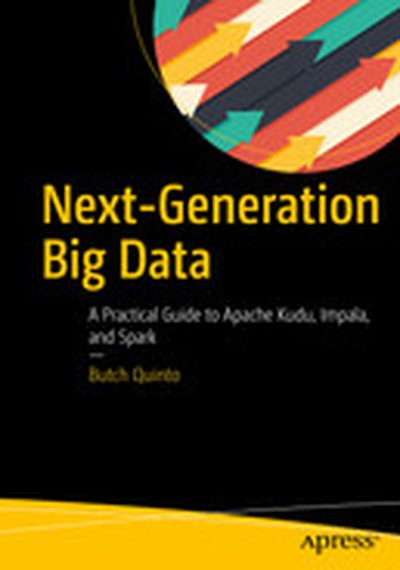
Next-Generation Big Data: A Practical Guide to Apache Kudu, Impala, and Spark

Utilize this practical and easy-to-follow guide to modernize traditional enterprise data warehouse and business intelligence environments with next-generation big data technologies. Next-Generation Big Data takes a holistic approach, covering the most important aspects of modern enterprise big data. The book covers not only the main technology stack but also the next-generation tools and applications used for big data warehousing, data warehouse optimization, real-time and batch data ingestion and processing, real-time data visualization, big data governance, data wrangling, big data cloud deployments, and distributed in-memory big data computing. Finally, the book has an extensive and detailed coverage of big data case studies from Navistar, Cerner, British Telecom, Shopzilla, Thomson Reuters, and Mastercard. What You’ll Learn Install Apache Kudu, Impala, and Spark to modernize enterprise data warehouse and business intelligence environments, complete with real-world, easy-to-follow examples, and practical advice Integrate HBase, Solr, Oracle, SQL Server, MySQL, Flume, Kafka, HDFS, and Amazon S3 with Apache Kudu, Impala, and Spark Use StreamSets, Talend, Pentaho, and CDAP for real-time and batch data ingestion and processing Utilize Trifacta, Alteryx, and Datameer for data wrangling and interactive data processing Turbocharge Spark with Alluxio, a distributed in-memory storage platform Deploy big data in the cloud using Cloudera Director Perform real-time data visualization and time series analysis using Zoomdata, Apache Kudu, Impala, and Spark Understand enterprise big data topics such as big data governance, metadata management, data lineage, impact analysis, and policy enforcement, and how to use Cloudera Navigator to perform common data governance tasks Implement big data use cases such as big data warehousing, data warehouse optimization, Internet of Things, real-time data ingestion and analytics, complex event processing, and scalable predictive modeling Study real-world big data case studies from innovative companies, including Navistar, Cerner, British Telecom, Shopzilla, Thomson Reuters, and Mastercard Who This Book Is For BI and big data warehouse professionals interested in gaining practical and real-world insight into next-generation big data processing and analytics using Apache Kudu, Impala, and Spark; and those who want to learn more about other advanced enterprise topics

Ethics is challenging because right and good are not always clear. More data, more kinds of data, and advanced analysis of data often conflict with concerns of data privacy, security, anonymity, and ownership. Resolving these conflicts requires acknowledgment, discussion, and the hard work of defining ethics-based policies and creating a culture of ethical conduct.

Originally published at https://www.eckerson.com/articles/data-ethics-the-new-data-governance-challenge

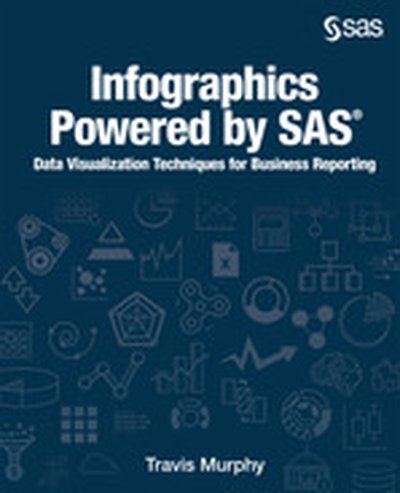
Infographics Powered by SAS

Create compelling business infographics with SAS and familiar office productivity tools. A picture is worth a thousand words, but what if there are a billion words? When analyzing big data, you need a picture that cuts through the noise. This is where infographics come in. Infographics are a representation of information in a graphic format designed to make the data easily understandable. With infographics, you don’t need deep knowledge of the data. The infographic combines story telling with data and provides the user with an approachable entry point into business data. Infographics Powered by SAS : Data Visualization Techniques for Business Reporting shows you how to create graphics to communicate information and insight from big data in the boardroom and on social media. Learn how to create business infographics for all occasions with SAS and learn how to build a workflow that lets you get the most from your SAS system without having to code anything, unless you want to! This book combines the perfect blend of creative freedom and data governance that comes from leveraging the power of SAS and the familiarity of Microsoft Office. Topics covered in this book include: SAS Visual Analytics SAS Office Analytics SAS/GRAPH software (SAS code examples) Data visualization with SAS Creating reports with SAS Using reports and graphs from SAS to create business presentations Using SAS within Microsoft Office

Summary

The information about how data is acquired and processed is often as important as the data itself. For this reason metadata management systems are built to track the journey of your business data to aid in analysis, presentation, and compliance. These systems are frequently cumbersome and difficult to maintain, so Octopai was founded to alleviate that burden. In this episode Amnon Drori, CEO and co-founder of Octopai, discusses the business problems he witnessed that led him to starting the company, how their systems are able to provide valuable tools and insights, and the direction that their product will be taking in the future.

Preamble

Hello and welcome to the Data Engineering Podcast, the show about modern data management When you’re ready to build your next pipeline you’ll need somewhere to deploy it, so check out Linode. With private networking, shared block storage, node balancers, and a 200Gbit network, all controlled by a brand new API you’ve got everything you need to run a bullet-proof data platform. Go to dataengineeringpodcast.com/linode to get a $20 credit and launch a new server in under a minute. For complete visibility into the health of your pipeline, including deployment tracking, and powerful alerting driven by machine-learning, DataDog has got you covered. With their monitoring, metrics, and log collection agent, including extensive integrations and distributed tracing, you’ll have everything you need to find and fix performance bottlenecks in no time. Go to dataengineeringpodcast.com/datadog today to start your free 14 day trial and get a sweet new T-Shirt. Go to dataengineeringpodcast.com to subscribe to the show, sign up for the newsletter, read the show notes, and get in touch. Your host is Tobias Macey and today I’m interviewing Amnon Drori about OctopAI and the benefits of metadata management

Interview

Introduction How did you get involved in the area of data management? What is OctopAI and what was your motivation for founding it? What are some of the types of information that you classify and collect as metadata? Can you talk through the architecture of your platform? What are some of the challenges that are typically faced by metadata management systems? What is involved in deploying your metadata collection agents? Once the metadata has been collected what are some of the ways in which it can be used? What mechanisms do you use to ensure that customer data is segregated?

How do you identify and handle sensitive information during the collection step?

What are some of the most challenging aspects of your technical and business platforms that you have faced? What are some of the plans that you have for OctopAI going forward?

Contact Info

Amnon

LinkedIn @octopai_amnon on Twitter

OctopAI

@OctopaiBI on Twitter Website

Parting Question

From your perspective, what is the biggest gap in the tooling or technology for data management today?

Links

OctopAI Metadata Metadata Management Data Integrity CRM (Customer Relationship Management) ERP (Enterprise Resource Planning) Business Intelligence ETL (Extract, Transform, Load) Informatica SAP Data Governance SSIS (SQL Server Integration Services) Vertica Airflow Luigi Oozie GDPR (General Data Privacy Regulation) Root Cause Analysis

The intro and outro music is from The Hug by The Freak Fandango Orchestra / CC BY-SA Support Data Engineering Podcast