talk-data.com talk-data.com

Topic

Data Lakehouse

data_architecture data_warehouse data_lake

489

tagged

Activity Trend

118 peak/qtr
2020-Q1 2026-Q1

Activities

489 activities · Newest first

Summary

If your business metrics looked weird tomorrow, would you know about it first? Anomaly detection is focused on identifying those outliers for you, so that you are the first to know when a business critical dashboard isn't right. Unfortunately, it can often be complex or expensive to incorporate anomaly detection into your data platform. Andrew Maguire got tired of solving that problem for each of the different roles he has ended up in, so he created the open source Anomstack project. In this episode he shares what it is, how it works, and how you can start using it today to get notified when the critical metrics in your business aren't quite right.

Announcements

Hello and welcome to the Data Engineering Podcast, the show about modern data management You shouldn't have to throw away the database to build with fast-changing data. You should be able to keep the familiarity of SQL and the proven architecture of cloud warehouses, but swap the decades-old batch computation model for an efficient incremental engine to get complex queries that are always up-to-date. With Materialize, you can! It’s the only true SQL streaming database built from the ground up to meet the needs of modern data products. Whether it’s real-time dashboarding and analytics, personalization and segmentation or automation and alerting, Materialize gives you the ability to work with fresh, correct, and scalable results — all in a familiar SQL interface. Go to dataengineeringpodcast.com/materialize today to get 2 weeks free! Introducing RudderStack Profiles. RudderStack Profiles takes the SaaS guesswork and SQL grunt work out of building complete customer profiles so you can quickly ship actionable, enriched data to every downstream team. You specify the customer traits, then Profiles runs the joins and computations for you to create complete customer profiles. Get all of the details and try the new product today at dataengineeringpodcast.com/rudderstack Data projects are notoriously complex. With multiple stakeholders to manage across varying backgrounds and toolchains even simple reports can become unwieldy to maintain. Miro is your single pane of glass where everyone can discover, track, and collaborate on your organization's data. I especially like the ability to combine your technical diagrams with data documentation and dependency mapping, allowing your data engineers and data consumers to communicate seamlessly about your projects. Find simplicity in your most complex projects with Miro. Your first three Miro boards are free when you sign up today at dataengineeringpodcast.com/miro. That’s three free boards at dataengineeringpodcast.com/miro. Data lakes are notoriously complex. For data engineers who battle to build and scale high quality data workflows on the data lake, Starburst powers petabyte-scale SQL analytics fast, at a fraction of the cost of traditional methods, so that you can meet all your data needs ranging from AI to data applications to complete analytics. Trusted by teams of all sizes, including Comcast and Doordash, Starburst is a data lake analytics platform that delivers the adaptability and flexibility a lakehouse ecosystem promises. And Starburst does all of this on an open architecture with first-class support for Apache Iceberg, Delta Lake and Hudi, so you always maintain ownership of your data. Want to see Starburst in action? Go to dataengineeringpodcast.com/starburst and get $500 in credits to try Starburst Galaxy today, the easiest and fastest way to get started using Trino. Your host is Tobias Macey and today I'm interviewing Andrew Maguire about his work on the Anomstack project and how you can use it to run your own anomaly detection for your metrics

Interview

Introduction How did you get involved in the area of data management? Can you describe what Anomstack is and the story behind it?

What are your goals for this project? What other tools/products might teams be evaluating while they consider Anom
Summary

The first step of data pipelines is to move the data to a place where you can process and prepare it for its eventual purpose. Data transfer systems are a critical component of data enablement, and building them to support large volumes of information is a complex endeavor. Andrei Tserakhau has dedicated his careeer to this problem, and in this episode he shares the lessons that he has learned and the work he is doing on his most recent data transfer system at DoubleCloud.

Announcements

Hello and welcome to the Data Engineering Podcast, the show about modern data management Introducing RudderStack Profiles. RudderStack Profiles takes the SaaS guesswork and SQL grunt work out of building complete customer profiles so you can quickly ship actionable, enriched data to every downstream team. You specify the customer traits, then Profiles runs the joins and computations for you to create complete customer profiles. Get all of the details and try the new product today at dataengineeringpodcast.com/rudderstack You shouldn't have to throw away the database to build with fast-changing data. You should be able to keep the familiarity of SQL and the proven architecture of cloud warehouses, but swap the decades-old batch computation model for an efficient incremental engine to get complex queries that are always up-to-date. With Materialize, you can! It’s the only true SQL streaming database built from the ground up to meet the needs of modern data products. Whether it’s real-time dashboarding and analytics, personalization and segmentation or automation and alerting, Materialize gives you the ability to work with fresh, correct, and scalable results — all in a familiar SQL interface. Go to dataengineeringpodcast.com/materialize today to get 2 weeks free! This episode is brought to you by Datafold – a testing automation platform for data engineers that finds data quality issues for every part of your data workflow, from migration to deployment. Datafold has recently launched a 3-in-1 product experience to support accelerated data migrations. With Datafold, you can seamlessly plan, translate, and validate data across systems, massively accelerating your migration project. Datafold leverages cross-database diffing to compare tables across environments in seconds, column-level lineage for smarter migration planning, and a SQL translator to make moving your SQL scripts easier. Learn more about Datafold by visiting dataengineeringpodcast.com/datafold today! Data lakes are notoriously complex. For data engineers who battle to build and scale high quality data workflows on the data lake, Starburst powers petabyte-scale SQL analytics fast, at a fraction of the cost of traditional methods, so that you can meet all your data needs ranging from AI to data applications to complete analytics. Trusted by teams of all sizes, including Comcast and Doordash, Starburst is a data lake analytics platform that delivers the adaptability and flexibility a lakehouse ecosystem promises. And Starburst does all of this on an open architecture with first-class support for Apache Iceberg, Delta Lake and Hudi, so you always maintain ownership of your data. Want to see Starburst in action? Go to dataengineeringpodcast.com/starburst and get $500 in credits to try Starburst Galaxy today, the easiest and fastest way to get started using Trino. Your host is Tobias Macey and today I'm interviewing Andrei Tserakhau about operationalizing high bandwidth and low-latency change-data capture

Interview

Introduction How did you get involved in the area of data management? Your most recent project involves operationalizing a generalized data transfer service. What was the original problem that you were trying to solve?

What were the shortcomings of other options in the ecosystem that led you to building a new system?

What was the design of your initial solution to the problem?

What are the sharp edges that you had to deal with to operate and use that i

Summary

Building a data platform that is enjoyable and accessible for all of its end users is a substantial challenge. One of the core complexities that needs to be addressed is the fractal set of integrations that need to be managed across the individual components. In this episode Tobias Macey shares his thoughts on the challenges that he is facing as he prepares to build the next set of architectural layers for his data platform to enable a larger audience to start accessing the data being managed by his team.

Announcements

Hello and welcome to the Data Engineering Podcast, the show about modern data management Introducing RudderStack Profiles. RudderStack Profiles takes the SaaS guesswork and SQL grunt work out of building complete customer profiles so you can quickly ship actionable, enriched data to every downstream team. You specify the customer traits, then Profiles runs the joins and computations for you to create complete customer profiles. Get all of the details and try the new product today at dataengineeringpodcast.com/rudderstack You shouldn't have to throw away the database to build with fast-changing data. You should be able to keep the familiarity of SQL and the proven architecture of cloud warehouses, but swap the decades-old batch computation model for an efficient incremental engine to get complex queries that are always up-to-date. With Materialize, you can! It’s the only true SQL streaming database built from the ground up to meet the needs of modern data products. Whether it’s real-time dashboarding and analytics, personalization and segmentation or automation and alerting, Materialize gives you the ability to work with fresh, correct, and scalable results — all in a familiar SQL interface. Go to dataengineeringpodcast.com/materialize today to get 2 weeks free! Developing event-driven pipelines is going to be a lot easier - Meet Functions! Memphis functions enable developers and data engineers to build an organizational toolbox of functions to process, transform, and enrich ingested events “on the fly” in a serverless manner using AWS Lambda syntax, without boilerplate, orchestration, error handling, and infrastructure in almost any language, including Go, Python, JS, .NET, Java, SQL, and more. Go to dataengineeringpodcast.com/memphis today to get started! Data lakes are notoriously complex. For data engineers who battle to build and scale high quality data workflows on the data lake, Starburst powers petabyte-scale SQL analytics fast, at a fraction of the cost of traditional methods, so that you can meet all your data needs ranging from AI to data applications to complete analytics. Trusted by teams of all sizes, including Comcast and Doordash, Starburst is a data lake analytics platform that delivers the adaptability and flexibility a lakehouse ecosystem promises. And Starburst does all of this on an open architecture with first-class support for Apache Iceberg, Delta Lake and Hudi, so you always maintain ownership of your data. Want to see Starburst in action? Go to dataengineeringpodcast.com/starburst and get $500 in credits to try Starburst Galaxy today, the easiest and fastest way to get started using Trino. Your host is Tobias Macey and today I'll be sharing an update on my own journey of building a data platform, with a particular focus on the challenges of tool integration and maintaining a single source of truth

Interview

Introduction How did you get involved in the area of data management? data sharing weight of history

existing integrations with dbt switching cost for e.g. SQLMesh de facto standard of Airflow

Single source of truth

permissions management across application layers Database engine Storage layer in a lakehouse Presentation/access layer (BI) Data flows dbt -> table level lineage orchestration engine -> pipeline flows

task based vs. asset based

Metadata platform as the logical place for horizontal view

Contact Info

LinkedIn Website

Parting Questio

Summary

The dbt project has become overwhelmingly popular across analytics and data engineering teams. While it is easy to adopt, there are many potential pitfalls. Dustin Dorsey and Cameron Cyr co-authored a practical guide to building your dbt project. In this episode they share their hard-won wisdom about how to build and scale your dbt projects.

Announcements

Hello and welcome to the Data Engineering Podcast, the show about modern data management Data projects are notoriously complex. With multiple stakeholders to manage across varying backgrounds and toolchains even simple reports can become unwieldy to maintain. Miro is your single pane of glass where everyone can discover, track, and collaborate on your organization's data. I especially like the ability to combine your technical diagrams with data documentation and dependency mapping, allowing your data engineers and data consumers to communicate seamlessly about your projects. Find simplicity in your most complex projects with Miro. Your first three Miro boards are free when you sign up today at dataengineeringpodcast.com/miro. That’s three free boards at dataengineeringpodcast.com/miro. Introducing RudderStack Profiles. RudderStack Profiles takes the SaaS guesswork and SQL grunt work out of building complete customer profiles so you can quickly ship actionable, enriched data to every downstream team. You specify the customer traits, then Profiles runs the joins and computations for you to create complete customer profiles. Get all of the details and try the new product today at dataengineeringpodcast.com/rudderstack You shouldn't have to throw away the database to build with fast-changing data. You should be able to keep the familiarity of SQL and the proven architecture of cloud warehouses, but swap the decades-old batch computation model for an efficient incremental engine to get complex queries that are always up-to-date. With Materialize, you can! It’s the only true SQL streaming database built from the ground up to meet the needs of modern data products. Whether it’s real-time dashboarding and analytics, personalization and segmentation or automation and alerting, Materialize gives you the ability to work with fresh, correct, and scalable results — all in a familiar SQL interface. Go to dataengineeringpodcast.com/materialize today to get 2 weeks free! Data lakes are notoriously complex. For data engineers who battle to build and scale high quality data workflows on the data lake, Starburst powers petabyte-scale SQL analytics fast, at a fraction of the cost of traditional methods, so that you can meet all your data needs ranging from AI to data applications to complete analytics. Trusted by teams of all sizes, including Comcast and Doordash, Starburst is a data lake analytics platform that delivers the adaptability and flexibility a lakehouse ecosystem promises. And Starburst does all of this on an open architecture with first-class support for Apache Iceberg, Delta Lake and Hudi, so you always maintain ownership of your data. Want to see Starburst in action? Go to dataengineeringpodcast.com/starburst and get $500 in credits to try Starburst Galaxy today, the easiest and fastest way to get started using Trino. Your host is Tobias Macey and today I'm interviewing Dustin Dorsey and Cameron Cyr about how to design your dbt projects

Interview

Introduction How did you get involved in the area of data management? What was your path to adoption of dbt?

What did you use prior to its existence? When/why/how did you start using it?

What are some of the common challenges that teams experience when getting started with dbt?

How does prior experience in analytics and/or software engineering impact those outcomes?

You recently wrote a book to give a crash course in best practices for dbt. What motivated you to invest that time and effort?

What new lessons did you learn about dbt in the process of writing the book?

The introduction of dbt is largely res

Summary

Software development involves an interesting balance of creativity and repetition of patterns. Generative AI has accelerated the ability of developer tools to provide useful suggestions that speed up the work of engineers. Tabnine is one of the main platforms offering an AI powered assistant for software engineers. In this episode Eran Yahav shares the journey that he has taken in building this product and the ways that it enhances the ability of humans to get their work done, and when the humans have to adapt to the tool.

Announcements

Hello and welcome to the Data Engineering Podcast, the show about modern data management Introducing RudderStack Profiles. RudderStack Profiles takes the SaaS guesswork and SQL grunt work out of building complete customer profiles so you can quickly ship actionable, enriched data to every downstream team. You specify the customer traits, then Profiles runs the joins and computations for you to create complete customer profiles. Get all of the details and try the new product today at dataengineeringpodcast.com/rudderstack This episode is brought to you by Datafold – a testing automation platform for data engineers that finds data quality issues before the code and data are deployed to production. Datafold leverages data-diffing to compare production and development environments and column-level lineage to show you the exact impact of every code change on data, metrics, and BI tools, keeping your team productive and stakeholders happy. Datafold integrates with dbt, the modern data stack, and seamlessly plugs in your data CI for team-wide and automated testing. If you are migrating to a modern data stack, Datafold can also help you automate data and code validation to speed up the migration. Learn more about Datafold by visiting dataengineeringpodcast.com/datafold Data lakes are notoriously complex. For data engineers who battle to build and scale high quality data workflows on the data lake, Starburst powers petabyte-scale SQL analytics fast, at a fraction of the cost of traditional methods, so that you can meet all your data needs ranging from AI to data applications to complete analytics. Trusted by teams of all sizes, including Comcast and Doordash, Starburst is a data lake analytics platform that delivers the adaptability and flexibility a lakehouse ecosystem promises. And Starburst does all of this on an open architecture with first-class support for Apache Iceberg, Delta Lake and Hudi, so you always maintain ownership of your data. Want to see Starburst in action? Go to dataengineeringpodcast.com/starburst and get $500 in credits to try Starburst Galaxy today, the easiest and fastest way to get started using Trino. You shouldn't have to throw away the database to build with fast-changing data. You should be able to keep the familiarity of SQL and the proven architecture of cloud warehouses, but swap the decades-old batch computation model for an efficient incremental engine to get complex queries that are always up-to-date. With Materialize, you can! It’s the only true SQL streaming database built from the ground up to meet the needs of modern data products. Whether it’s real-time dashboarding and analytics, personalization and segmentation or automation and alerting, Materialize gives you the ability to work with fresh, correct, and scalable results — all in a familiar SQL interface. Go to dataengineeringpodcast.com/materialize today to get 2 weeks free! Your host is Tobias Macey and today I'm interviewing Eran Yahav about building an AI powered developer assistant at Tabnine

Interview

Introduction How did you get involved in machine learning? Can you describe what Tabnine is and the story behind it? What are the individual and organizational motivations for using AI to generate code?

What are the real-world limitations of generative AI for creating software? (e.g. size/complexity of the outputs, naming conventions, etc.) What are the elements of skepticism/overs

Summary

Databases are the core of most applications, but they are often treated as inscrutable black boxes. When an application is slow, there is a good probability that the database needs some attention. In this episode Lukas Fittl shares some hard-won wisdom about the causes and solution of many performance bottlenecks and the work that he is doing to shine some light on PostgreSQL to make it easier to understand how to keep it running smoothly.

Announcements

Hello and welcome to the Data Engineering Podcast, the show about modern data management Introducing RudderStack Profiles. RudderStack Profiles takes the SaaS guesswork and SQL grunt work out of building complete customer profiles so you can quickly ship actionable, enriched data to every downstream team. You specify the customer traits, then Profiles runs the joins and computations for you to create complete customer profiles. Get all of the details and try the new product today at dataengineeringpodcast.com/rudderstack You shouldn't have to throw away the database to build with fast-changing data. You should be able to keep the familiarity of SQL and the proven architecture of cloud warehouses, but swap the decades-old batch computation model for an efficient incremental engine to get complex queries that are always up-to-date. With Materialize, you can! It’s the only true SQL streaming database built from the ground up to meet the needs of modern data products. Whether it’s real-time dashboarding and analytics, personalization and segmentation or automation and alerting, Materialize gives you the ability to work with fresh, correct, and scalable results — all in a familiar SQL interface. Go to dataengineeringpodcast.com/materialize today to get 2 weeks free! Data lakes are notoriously complex. For data engineers who battle to build and scale high quality data workflows on the data lake, Starburst powers petabyte-scale SQL analytics fast, at a fraction of the cost of traditional methods, so that you can meet all your data needs ranging from AI to data applications to complete analytics. Trusted by teams of all sizes, including Comcast and Doordash, Starburst is a data lake analytics platform that delivers the adaptability and flexibility a lakehouse ecosystem promises. And Starburst does all of this on an open architecture with first-class support for Apache Iceberg, Delta Lake and Hudi, so you always maintain ownership of your data. Want to see Starburst in action? Go to dataengineeringpodcast.com/starburst and get $500 in credits to try Starburst Galaxy today, the easiest and fastest way to get started using Trino. This episode is brought to you by Datafold – a testing automation platform for data engineers that finds data quality issues before the code and data are deployed to production. Datafold leverages data-diffing to compare production and development environments and column-level lineage to show you the exact impact of every code change on data, metrics, and BI tools, keeping your team productive and stakeholders happy. Datafold integrates with dbt, the modern data stack, and seamlessly plugs in your data CI for team-wide and automated testing. If you are migrating to a modern data stack, Datafold can also help you automate data and code validation to speed up the migration. Learn more about Datafold by visiting dataengineeringpodcast.com/datafold Your host is Tobias Macey and today I'm interviewing Lukas Fittl about optimizing your database performance and tips for tuning Postgres

Interview

Introduction How did you get involved in the area of data management? What are the different ways that database performance problems impact the business? What are the most common contributors to performance issues? What are the useful signals that indicate performance challenges in the database?

For a given symptom, what are the steps that you recommend for determining the proximate cause?

What are the potential negative impacts to be aware of when tu

No Compromises: Analytics Engineering on the Lakehouse (London) - Coalesce 2023

The Lakehouse architecture has emerged as the ideal data architecture for the AI age. It unites the structured world of analytics with the rapidly evolving world of AI.But what really makes something a “Lakehouse” and why should you care? In this session, Databricks discusses the key components of a lakehouse, what you should look for when adapting this paradigm and how Databricks and dbt are together enabling analytics engineers, analysts and data scientists to collaborate together on a single unified platform.

Speaker: Thor List, Senior Field Engineering Manager, Databricks

Register for Coalesce at https://coalesce.getdbt.com

No compromises: Analytics engineering on the Lakehouse - Coalesce 2023

The Lakehouse architecture unites the structured world of analytics with the rapidly evolving world of AI.

But what really makes something a “Lakehouse” and why should you care? In this session, Databricks discusses the key components of a lakehouse, what you should look for when adapting this paradigm and how Databricks and dbt are together enabling analytics engineers, analysts and data scientists to collaborate together on a single unified platform. You’ll hear from a customer about how they leveraged dbt Cloud on Databricks to deliver powerful customer experiences quickly and efficiently. Ken Wong shares the latest capabilities of Databricks platform and provides a sneak peek of upcoming features.

Speakers: Ken Wong, Senior Director of Product Management, Databricks; Samuel Garfield, Analytics Engineer, Retool

Register for Coalesce at https://coalesce.getdbt.com

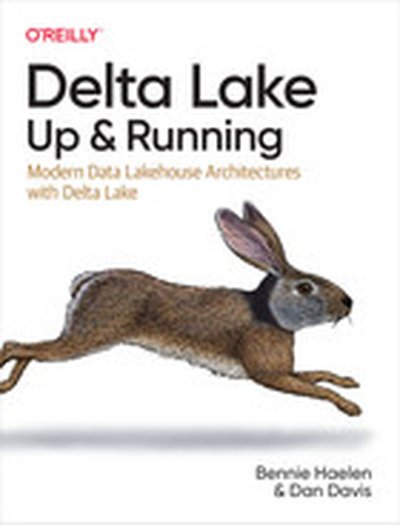
Delta Lake: Up and Running

With the surge in big data and AI, organizations can rapidly create data products. However, the effectiveness of their analytics and machine learning models depends on the data's quality. Delta Lake's open source format offers a robust lakehouse framework over platforms like Amazon S3, ADLS, and GCS. This practical book shows data engineers, data scientists, and data analysts how to get Delta Lake and its features up and running. The ultimate goal of building data pipelines and applications is to gain insights from data. You'll understand how your storage solution choice determines the robustness and performance of the data pipeline, from raw data to insights. You'll learn how to: Use modern data management and data engineering techniques Understand how ACID transactions bring reliability to data lakes at scale Run streaming and batch jobs against your data lake concurrently Execute update, delete, and merge commands against your data lake Use time travel to roll back and examine previous data versions Build a streaming data quality pipeline following the medallion architecture

Many organizations with data warehouses or data lakes are discovering that they are not prepared to scale AI workloads. A lack of processes and standards has led to a growing quagmire of unstructured, ungoverned data, best described as a data swamp. In this session, Paul Zikopoulos, Vice President of IBM Skills Vitality and Enablement, IBM, will introduce you to a new approach using an open source, data lakehouse strategy, which can help resolve the problems hindering your ability to put analytics and AI to work at scale. Then, Tarun Chopra, Vice President of Product Management for Data and AI, IBM, will dive into IBM watsonx.data, a fit-for-purpose data store to scale AI workloads, and how leading companies are deploying it within their data strategy.

Data Warehousing using Fivetran, dbt and DBSQL

In this video you will learn how to use Fivetran to ingest data from Salesforce into your Lakehouse. After the data has been ingested, you will then learn how you can transform your data using dbt. Then we will use Databricks SQL to query, visualize and govern your data. Lastly, we will show you how you can use AI functions in Databricks SQL to call language learning models.

Read more about Databricks SQL https://docs.databricks.com/en/sql/index.html#what-is-databricks-sql

Internet-Scale Analytics: Migrating a Mission Critical Product to the Cloud

While we may not all agree on a “If it ain’t broke, don’t fix it” approach, we can all agree that “If it shows any crack, migrate it to the cloud and completely re-architect it.” Akamai’s CSI (Cloud Security Intelligence) group is responsible for processing massive amounts of security events arriving from our edge network, which is estimated to process 30% of internet traffic, making it accessible by various internal consumers powering customer-facing products.

In this session, we will visit the reasons for migrating one of our mission critical security products and its 10GB ingest pipeline to the cloud, examine our new architecture and its benefits and touch on the challenges we faced during the process (and still do). While our requirements are unique and our solution contains a few proprietary components, this session will provide you with several concepts involving popular off-the-shelf products you can easily use in your own cloud environment.

Talk by: Yaniv Kunda

Here’s more to explore: Why the Data Lakehouse Is Your next Data Warehouse: https://dbricks.co/3Pt5unq Lakehouse Fundamentals Training: https://dbricks.co/44ancQs

Connect with us: Website: https://databricks.com Twitter: https://twitter.com/databricks LinkedIn: https://www.linkedin.com/company/databricks Instagram: https://www.instagram.com/databricksinc Facebook: https://www.facebook.com/databricksinc

Sponsored: EY | Business Value Unleashed: Real-World Accelerating AI & Data-Centric Transformation

Data and AI are revolutionizing industries and transforming businesses at an unprecedented pace. These advancements pave the way for groundbreaking outcomes such as fresh revenue streams, optimized working capital, and captivating, personalized customer experiences.

Join Hugh Burgin, Luke Pritchard and Dan Diasio as we explore a range of real-world examples of AI and data-driven transformation opportunities being powered by Databricks, including business value realized and technical solutions implemented. We will focus on how to integrate and leverage business insights, a diverse network of cloud-based solutions and Databricks to unleash new business value opportunities. By highlighting real-world use cases we will discuss:

  • Examples of how Manufacturing, Retail, Financial Services and other sectors are using Databricks services to scale AI, gain insights that matter and secure their data
  • The ways data monetization are changing how companies view data and incentivizing better data management
  • Examples of Generative AI and LLMs changing how businesses operate, how their customers engage, and what you can do about it

Talk by: Hugh Burgin and Luke Pritchard

Here’s more to explore: State of Data + AI Report: https://dbricks.co/44i2HBp The Data Team's Guide to the Databricks Lakehouse Platform: https://dbricks.co/46nuDpI

Connect with us: Website: https://databricks.com Twitter: https://twitter.com/databricks LinkedIn: https://www.linkedin.com/company/databricks Instagram: https://www.instagram.com/databricksinc Facebook: https://www.facebook.com/databricksin

If a Duck Quacks in the Forest and Everyone Hears, Should You Care?

YES! "Duck posting" has become an internet meme for praising DuckDB on Twitter. Nearly every quack using DuckDB has done it once or twice. But, why all the fuss? With advances in CPUs, memory, SSDs, and the software that enables it all, our personal machines are powerful beasts relegated to handling a few Chrome tabs and sitting 90% idle. As data engineers and data analysts, this seems like a waste that's not only expensive, but also impacting the environment.

In this session, you will see how DuckDB brings SQL analytics capabilities to a 2MB standalone executable on your laptop that only recently required a large cluster. This session will explain the architecture of DuckDB that enables high performance analytics on a laptop: great query optimization, vectorized execution, continuous improvements in compression and more. We will show its capabilities using live demos, from the pandas library to WASM, to the command-line. We'll demonstrate performance on large datasets, and talk about how we're exploring using the laptop to augment cloud analytics workloads.

Talk by: Ryan Boyd

Here’s more to explore: Why the Data Lakehouse Is Your next Data Warehouse: https://dbricks.co/3Pt5unq Lakehouse Fundamentals Training: https://dbricks.co/44ancQs

Connect with us: Website: https://databricks.com Twitter: https://twitter.com/databricks LinkedIn: https://www.linkedin.com/company/databricks Instagram: https://www.instagram.com/databricksinc Facebook: https://www.facebook.com/databricksinc

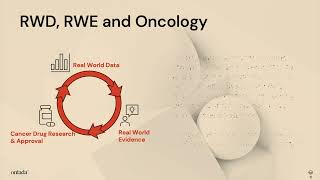
Using Lakehouse to Fight Cancer:Ontada’s Journey to Establish a RWD Platform on Databricks Lakehouse

Ontada, a McKesson business, is an oncology real-world data and evidence, clinical education and provider of technology business dedicated to transforming the fight against cancer. Core to Ontada’s mission is using real-world data (RWD) and evidence generation to improve patient health outcomes and to accelerate life science research.

To support its mission, Ontada embarked on a journey to migrate its enterprise data warehouse (EDW) from an on-premise Oracle database to Databricks Lakehouse. This move allows Ontada to now consume data from any source, including structured and unstructured data from its own EHR and genomics lab results, and realize faster time to insight. In addition, using the Lakehouse has helped Ontada eliminate data silos, enabling the organization to realize the full potential of RWD – from running traditional descriptive analytics to extracting biomarkers from unstructured data. The session will cover the following topics:

  • Oracle to Databricks: migration best practices and lessons learned
  • People, process, and tools: expediting innovation while protecting patient information using Unity Catalog
  • Getting the most out of the Databricks Lakehouse: from BI to genomics, running all analytics under one platform
  • Hyperscale biomarker abstraction: reducing the manual effort needed to extract biomarkers from large unstructured data (medical notes, scanned/faxed documents) using spaCY and John Snow Lab NLP libraries

Join this session to hear how Ontada is transforming RWD to deliver safe and effective cancer treatment.

Talk by: Donghwa Kim

Connect with us: Website: https://databricks.com Twitter: https://twitter.com/databricks LinkedIn: https://www.linkedin.com/company/databricks Instagram: https://www.instagram.com/databricksinc Facebook: https://www.facebook.com/databricksinc

AI Regulation is Coming: The EU AI Act and How Databricks Can Help with Compliance

With the heightened attention on LLMs and what they can do, and the widening impact of AI on day-to-day life, the push by regulators across the globe to regulate AI is intensifying. As with GDPR in the privacy realm, the EU is leading the way with the EU Artificial Intelligence Act (AIA). Regulators everywhere will be looking to the AIA as precedent, and understanding the requirements imposed by the AIA is important for all players in the AI channel. Although not finalized, the basic framework regarding how the AIA will work is becoming clearer. The impact on developers and deployers of AI (‘providers’ and ‘users’ under the AIA) will be substantial. Although the AIA will probably not go into effect until early 2025, AI applications developed today will likely be affected, and design and development decisions made now should take the future regulations into account. In this session, we Matteo Quattrocchi, Brussels-based Director, Policy – EMEA, for BSA (the Software Alliance – the leading advocacy organization representing the enterprise software sector), will present an overview of the current proposed requirements under the AIA and give an update on the ongoing deliberations and likely timing for enactment. We will also highlight some of the ways the Lakehouse platform, including Managed MLflow, can help providers and users of ML-based applications meet the requirements of the AIA and other upcoming AI regulations.

Talk by: Matteo Quattrocchi and Scott Starbird

Connect with us: Website: https://databricks.com Twitter: https://twitter.com/databricks LinkedIn: https://www.linkedin.com/company/databricks Instagram: https://www.instagram.com/databricksinc Facebook: https://www.facebook.com/databricksinc

Data Architecture: IQVIA's Migration to Databricks Lakehouse for High-Performance Analytics

As the healthcare and life science (HLS) industry has grown and evolved, a need has emerged for scalable and cost-effective ETL solutions capable of processing billions of records at terabyte scale. IQVIA has the largest global healthcare data networks in the world, with over one million data sources providing access to 1.2B non-identified patient records and 100 billion healthcare records processed annually in over 100 countries. IQVIA’s ability to combine, centralize, and integrate various sources of HLS data enables clinical-to-commercial operational intelligence and omnichannel analytics for its clients. Databricks Lakehouse allows IQVIA to onboard the rapidly growing number of clients while delivering strong business value to customers, cost-efficiently and at scale. 

During this session, you will learn more about how IQVIA is leveraging Databricks Lakehouse as well as how HLS organizations can soon access IQVIA data assets though the Databricks Marketplace for quick and secure data sharing.

Talk by: Venkat Dasari and William Zanine

Here’s more to explore: State of Data + AI Report: https://dbricks.co/44i2HBp The Data Team's Guide to the Databricks Lakehouse Platform: https://dbricks.co/46nuDpI

Connect with us: Website: https://databricks.com Twitter: https://twitter.com/databricks LinkedIn: https://www.linkedin.com/company/databricks Instagram: https://www.instagram.com/databricksinc Facebook: https://www.facebook.com/databricksinc

Data Democratization at Michelin

Too often business decisions in large organizations are based on time consuming and labor-intensive data extracts, fragile Excel or access sheets that require significant manual intervention. The teams that prepare these manual reports have invaluable heuristic knowledge that, when combined with meaningful data and tools, can make smart business decisions. Imagine a world where these business teams are empowered with tools that help them build meaningful reports despite their limited technical expertise.

In this session, we will discuss: - The value derived from investing in developing citizen data personas within a business organization - How we successfully built a citizen data analytics culture within Michelin - Real examples of the impact of this initiative on the business and on the people themselves

The audience will walk away with some convincing arguments for building a citizen data culture in their organization and a how-to cookbook that they can use to cultivate citizen data personas. Finally, they can interactively uncover key success factors in the case of Michelin that can help drive a similar initiative in their respective companies.

Talk by: Philippe Leonhart and Fabien Cochet

Here’s more to explore: Why the Data Lakehouse Is Your next Data Warehouse: https://dbricks.co/3Pt5unq Lakehouse Fundamentals Training: https://dbricks.co/44ancQs

Connect with us: Website: https://databricks.com Twitter: https://twitter.com/databricks LinkedIn: https://www.linkedin.com/company/databricks Instagram: https://www.instagram.com/databricksinc Facebook: https://www.facebook.com/databricksinc

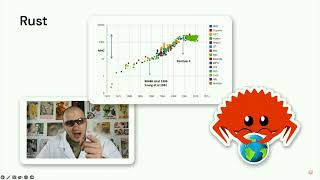
Delta-rs, Apache Arrow, Polars, WASM: Is Rust the Future of Analytics?

Rust is a unique language whose traits make it very appealing for data engineering. In this session, we'll walk through the different aspects of the language that make it such a good fit for big data processing including: how it improves performance and how it provides greater safety guarantees and compatibility with a wide range of existing tools that make it well positioned to become a major building block for the future of analytics.

We will also take a hands-on look through real code examples at a few emerging technologies built on top of Rust that utilize these capabilities, and learn how to apply them to our modern lakehouse architecture.

Talk by: Oz Katz

Here’s more to explore: Why the Data Lakehouse Is Your next Data Warehouse: https://dbricks.co/3Pt5unq Lakehouse Fundamentals Training: https://dbricks.co/44ancQs

Connect with us: Website: https://databricks.com Twitter: https://twitter.com/databricks LinkedIn: https://www.linkedin.com/company/databricks Instagram: https://www.instagram.com/databricksinc Facebook: https://www.facebook.com/databricksinc