talk-data.com talk-data.com

Topic

Data Science

machine_learning statistics analytics

1516

tagged

Activity Trend

68 peak/qtr
2020-Q1 2026-Q1

Activities

1516 activities · Newest first

MATLAB for Machine Learning - Second Edition

"MATLAB for Machine Learning" is your comprehensive guide to leveraging MATLAB's powerful tools and toolbox for machine learning and deep learning tasks. Through this book, you will explore practical applications and processes that streamline the development of machine learning models while tackling real-world problems effectively. What this Book will help me do Gain proficiency in utilizing MATLAB's Machine Learning Toolbox for developing machine learning algorithms. Learn how to handle data preprocessing, from data cleansing to visualization, within MATLAB. Explore and implement foundational to advanced machine learning techniques, such as classification and regression models. Comprehend and apply the principles of neural networks for pattern recognition and cluster analysis. Dive into advanced concepts of deep learning, including convolutional networks, natural language processing, and time series analysis, using MATLAB's inbuilt functionality. Author(s) Giuseppe Ciaburro is an expert in the field of machine learning and MATLAB programming. With a robust academic background in data science and years of experience in applying these principles across domains, Giuseppe provides a clear and approachable pathway for learners in his writing. Who is it for? This book is ideal for machine learning professionals, data scientists, and engineers specializing in fields such as deep learning, computer vision, and natural language processing. It is suitable for those with a fundamental understanding of programming concepts who seek to apply MATLAB in solving complex learning problems. A prior familiarity with MATLAB basics will be advantageous.
Statistics Slam Dunk

Learn statistics by analyzing professional basketball data! In this action-packed book, you’ll build your skills in exploratory data analysis by digging into the fascinating world of NBA games and player stats using the R language. Statistics Slam Dunk is an engaging how-to guide for statistical analysis with R. Each chapter contains an end-to-end data science or statistics project delving into NBA data and revealing real-world sporting insights. Written by a former basketball player turned business intelligence and analytics leader, you’ll get practical experience tidying, wrangling, exploring, testing, modeling, and otherwise analyzing data with the best and latest R packages and functions. In Statistics Slam Dunk you’ll develop a toolbox of R programming skills including: Reading and writing data Installing and loading packages Transforming, tidying, and wrangling data Applying best-in-class exploratory data analysis techniques Creating compelling visualizations Developing supervised and unsupervised machine learning algorithms Executing hypothesis tests, including t-tests and chi-square tests for independence Computing expected values, Gini coefficients, z-scores, and other measures If you’re looking to switch to R from another language, or trade base R for tidyverse functions, this book is the perfect training coach. Much more than a beginner’s guide, it teaches statistics and data science methods that have tons of use cases. And just like in the real world, you’ll get no clean pre-packaged data sets in Statistics Slam Dunk. You’ll take on the challenge of wrangling messy data to drill on the skills that will make you the star player on any data team. About the Technology Statistics Slam Dunk is a data science manual with a difference. Each chapter is a complete, self-contained statistics or data science project for you to work through—from importing data, to wrangling it, testing it, visualizing it, and modeling it. Throughout the book, you’ll work exclusively with NBA data sets and the R language, applying best-in-class statistics techniques to reveal fun and fascinating truths about the NBA. About the Book Is losing basketball games on purpose a rational strategy? Which hustle statistics have an impact on wins and losses? Does spending more on player salaries translate into a winning record? You’ll answer all these questions and more. Plus, R’s visualization capabilities shine through in the book’s 300 plots and charts, including Pareto charts, Sankey diagrams, Cleveland dot plots, and dendrograms. What's Inside Transforming, tidying, and wrangling data Applying best-in-class exploratory data analysis techniques Developing supervised and unsupervised machine learning algorithms Executing hypothesis tests and effect size tests About the Reader For readers who know basic statistics. No advanced knowledge of R—or basketball—required. About the Author Gary Sutton is a former basketball player who has built and led high-performing business intelligence and analytics organizations across multiple verticals. Quotes In this journey of exploration, every computer scientist will find a valuable ally in understanding the language of data. - Kim Lokøy, areo Transcends other R titles by revealing the hidden narratives that lie within the numbers. - Christian Sutton, Shell International Exploration and Production Seamlessly blending theory and practical insights, this book serves as an indispensable guide for those venturing into the field of data analytics. - Juan Delgado, Sodexo BRS

2023 was a huge year for data and AI. Everyone who didn't live under a rock started using generative AI, and much was teased by companies like OpenAI, Microsoft, Google and Meta. We saw the millions of different use cases generative AI could be applied to, as well as the iterations we could expect from the AI space, such as connected multi-modal models, LLMs in mobile devices and formal legislation. But what has this meant for DataCamp? What will we do to facilitate learners and organizations around the world in staying ahead of the curve? In this special episode of DataFramed, we sit down with DataCamp Co-Founders Jo Cornelissen, Chief Executive Officer, and Martijn Theuwissen, Chief Operating Officer, to discuss their expectations for data & AI in 2024. In the episode, Richie, Jo and Martijn discuss generative AI's mainstream impact in 2023, the broad use cases of generative AI and skills required to utilize it effectively, trends in AI and software development, how the programming languages for data are evolving, new roles in data & AI, the job market and skill development in data science and their predictions for 2024. Links Mentioned in the Show: Free course - Become an AI DeveloperWebinar - Data & AI Trends & Predictions 2024 Courses: Artificial Intelligence (AI) StrategyGenerative AI for BusinessImplementing AI Solutions in BusinessAI Ethics

In January 2024, six activists were identified by British Police in London, suspected of planning to disrupt the London Stock Exchange through a lock-in. In an attempt to prevent the building from opening for trading. Despite the foiled attempt, the strategy for this protest was inherently flawed. Trading no longer requires a busy exchange with raucous shouting and phone calls to facilitate the flow of investment around the world. Nowadays, machines can trade at a fraction of a second, ingesting huge amounts of real-time data to execute finely tuned-trading strategies. But who programs these trading machines, how do we assess risk when trading at such a high volume and in such short periods of time? Anthony Markham is Vice President, Quantitative Developer at Deutsche Bank. With a background in Aerospace and Software Engineering, Anthony has experience in Data Science, facial recognition research, tertiary education, and Quantitative Finance, developing mostly in Python, Julia, and C++. When not working, Anthony enjoys working on personal projects, flying aircraft, and playing sports. In the episode, Richie and Anthony cover what algorithmic trading is, the use of machine learning techniques in trading strategies, the challenges of handling large datasets with low latency, risk management in algorithmic trading, data analysis techniques for handling time series data, the challenges of deep neural networks in trading, the diverse roles and skills of those who work in algorithmic trading and much more.  Links Mentioned in the Show: Flash crash of 2010KDB+Q Query Language[Course] Quantitative Risk Management in PythonUnderstanding Value at Risk (VaR)

Você já deve ter ouvido, sobre o lançamento da nova Cloud Publica e Brasileira, que movimentou muitos rumores no mercado de tecnologia. E atendo a pedidos da comunidade, agora você tem a chance de conhecer as estratégias, e um pouco mais, sobre a Magalu Cloud.

Neste episódio do Data Hackers — a maior comunidade de AI e Data Science do Brasil-, chamamos o Vaner Vendramini — Field CTO na Magalu Cloud, para desmitificar tudo que está por de trás deste lançamento da primeira Cloud Brasileira em Hiperscala, da Magalu. 

Lembrando que você pode encontrar todos os podcasts da comunidade Data Hackers no Spotify, iTunes, Google Podcast, Castbox e muitas outras plataformas. Caso queira, você também pode ouvir o episódio aqui no post mesmo!

Conheça nosso convidado:

Vaner Vendramini — Field CTO na Magalu Cloud

Nossa Bancada Data Hackers:

Monique Femme — Head of Community Management na Data Hackers Allan Senne — Co-founder da Data Hackers e Co-Founder & CTO at Dadosfera.

Paulo Vasconcellos — Co-founder da Data Hackers e Principal Data Scientist na Hotmart. Gabriel Lages — Co-founder da Data Hackers e Data & Analytics Sr. Director na Hotmart.

Falamos no episódioLinks de referências:

Sobre o evento de lançamento da Magalu Cloud: https://www.magazineluiza.com.br/blog-da-lu/c/dl/dldc/magalu-cloud-a-nuvem-do-magazine-luiza/12434/ Cloud Alema citada pelo Vaner: https://www.stackit.de/en/ Estudo da McKinsey sobre o mercado de cloud Computing em 2030: https://www.mckinsey.com/br/our-insights/all-insights/computacao-em-nuvem-2030 Progressão do market sharing de Cloud, de 2018 até 2021, da digital cloud training: https://digitalcloud.training/comparison-of-aws-vs-azure-vs-google/ Página de parceiros da Magalu Cloud: https://magalu.cloud/solucoes/

Sandy Iyer has been General Manager of Data Science at Sportsbet since the beginning of 2023, leading a dynamic team that leverages data in innovative ways. But what does it take to lead in such a data-driven environment? How does one balance the promotion of betting products with social responsibility? And how does data shape the strategy of a betting giant like Sportsbet? These are just a few of the questions we'll explore today. I’ve watched Sandy's career trajectory skyrocket in the last few years, and It's been nothing short of inspiring. In this conversation we explore the key elements behind her impressive progression, including the leadership lessons has she gleaned from her time in the trenches of data science. And more importantly, Sandy explains how can you apply these insights to your own career. From discussing unique data science use cases that have propelled Sportsbet's success, to exploring emerging trends that will shape the future of the betting industry, Sandy offers a wealth of insights. She also shares personal stories of challenges faced and overcome, revealing the qualities essential for any budding data scientist aspiring to become a senior analytics leader.

A percepção de empresas brasileiras que fazem uso de Inteligência Artificial, vem aumentando. Mas poucas são as empresas, que vivenciam esses pequenos momentos de evolução tanto de uma nova tecnologia, ou até mesmo, com o uso eficiente dela.

Pensando nisso, neste episódio do Podcast do Data Hackers — a maior comunidade de AI e Data Science do Brasil-, conversamos com dois nomes de peso da área de tecnologia e que são autores Best Sellers: Sandor Caetano — CDO no Picpay; co-autor do livro “O Cientista e o Executivo”, ex-Nubank and iFood; e o Diego Barreto — VP de Finanças e Estratégia do iFood | Autor do best sellers “Nova Economia” e “O Cientista e o Executivo” | Mentor da Endeavor | Colunista no MIT Tech Review.

Agora aqui deixa o seu comentário sobre este episódio, porque que sortearemos dois comentários (de pessoas diferentes), pra ganhar o livro do Sandor e do Diego, "O Cientista e o Executivo". 

Lembrando que você pode encontrar todos os podcasts da comunidade Data Hackers no Spotify, iTunes, Google Podcast, Castbox e muitas outras plataformas. Caso queira, você também pode ouvir o episódio aqui no post mesmo!

This panel delves into how the faculty at UVA's School of Data Science are actively working to craft a liberal arts curriculum suitable for the digital age, one that not only adapts to but embraces changes in technology and practice. The panel discusses the future of data science education, including in K-12, the school’s guiding philosophy for its undergraduate and graduate programs (minor, B.S., online and residential M.S., Ph.D.), and the merits as well as challenges that arise when constructing a new educational curriculum for a new discipline.

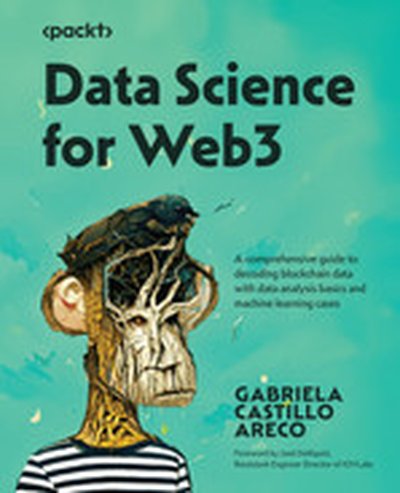
Data Science for Web3

Discover how to navigate the world of Web3 data with 'Data Science for Web3,' an expertly crafted guide by Gabriela Castillo Areco. Through practical examples, industry insights, and real-world use cases, you will learn the skills needed to analyze blockchain data and extract actionable business insights. What this Book will help me do Understand blockchain transactions and data structures to build robust datasets. Leverage on-chain and off-chain data for valuable Web3 business insights. Create DeFi- and NFT-specific datasets for targeted analysis. Develop machine learning models tailored for blockchain use cases. Apply data science techniques to innovate in the Web3 ecosystem. Author(s) Gabriela Castillo Areco is a seasoned data scientist and an expert in blockchain analytics. With years of experience in the technology and finance sectors, Gabriela brings a practical perspective to understanding intricate data within the emerging Web3 paradigm. Her engaging approach makes technical concepts accessible and actionable. Who is it for? This book is ideal for data professionals such as analysts, scientists, or engineers, aiming to harness the potential of blockchain analytics. It's also suitable for business professionals exploring data-driven opportunities within Web3. Whether you're a beginner or an experienced learner with some Python background, this book will meet you at your level.

Regardless of profession, the work we do leaves behind a trace of actions that help us achieve our goals. This is especially true for those that work with data. For large enterprises where there are seemingly countless processes happening at any one time, keeping track of these processes is crucial. Given the scale of these processes, one small efficiency gain can leads to a staggering amount of time and money saved. Process mining is a data-driven approach to process analysis that uses event logs to extract process-related information. It can separate inferred facts, from exact truths, and uncover what really happens in a variety of operations.  Wil van der Aalst is a full professor at RWTH Aachen University, leading the Process and Data Science (PADS) group. He is also the Chief Scientist at Celonis, part-time affiliated with the Fraunhofer FIT, and a member of the Board of Governors of Tilburg University.  His research interests include process mining, Petri nets, business process management, workflow management, process modeling, and process analysis. Wil van der Aalst has published over 275 journal papers, 35 books (as author or editor), 630 refereed conference/workshop publications, and 85 book chapters. Cong Yu leads the CeloAI group at Celonis focusing on bringing advanced AI technologies to EMS products, building up capabilities for their knowledge platform, and ultimately helping enterprises in reducing process inefficiencies and achieving operational excellence. Previously, Cong was Principal (Research) Scientist / Research Director at Google Research NYC from September 2010 to July 2022, leading the NYSD/Beacon Research Group, and also taught at NYU Courant Institute of Mathematical Sciences.  In the episode, Wil, Cong, and Richie explore process mining and its development over the past 25 years, the differences between process mining and ML, AI, and data mining, popular use cases of process mining, adoption from large enterprises like BMW, HP, and Dell, the requirements for an effective process mining system, the role of predictive analytics and data engineering in process mining, how to scale process mining systems, prospects within the field and much more. Links Mentioned in the Show: CelonisGartner’s Magic Quadrant for Process MiningPM4PyProcess Query Language (PQL)[Couse] Business Process Analytics in R

For those who celebrate or acknowledge it, Christmas is now in the rearview mirror. Father Time has a beard that reaches down to his toes, and he's ready to hand over the clock to an absolutely adorable little Baby Time when 2024 rolls in. That means it's time for our annual set of reflections on the analytics and data science industry. Somehow, the authoring of this description of the show was completely unaided by an LLM, although the show did include quite a bit of discussion around generative AI. It also included the announcement of a local LLM based on all of our podcast episodes to date (updated with each new episode going forward!), which you can try out here! The discussion was wide-ranging beyond AI: Google Analytics 4, Marketing Mix Modelling (MMM), the technical/engineering side of analytics versus the softer skills of creative analytical thought and engaging with stakeholders, and more, as well as a look ahead to 2024! For complete show notes, including links to items mentioned in this episode and a transcript of the show, visit the show page.

Because of advances in machine learning, wearable technology, and computer vision, the field of sport analytics is a whole new game. This episode gets into the details on what is new, the impact of analytics and technology on athletes and sports, as well as the ethics surrounding its implementation. Three experts from the University of Virginia School of Data Science met to discuss this exciting topic: Natalie Kupperman, Stephen Baek, and Don Brown.  

On behalf of everyone here at the School of Data Science, thank you and we’ll see you next year

There are a few caveats to using generative AI tools, those caveats have led to a few tips that have quickly become second nature to those that use LLMs like ChatGPT. The main one being: have the domain knowledge to validate the output in order to avoid hallucinations. Hallucinations are one of the weak spots for LLMs due to the nature of the way they are built, as they are trained to correlate data in order to predict what might come next in an incomplete sequence. Does this mean that we’ll always have to be wary of the output of AI products, with the expectation that there is no intelligent decision-making going on under the hood? Far from it. Causal AI is bound by reason—rather than looking at correlation, these exciting systems are able to focus on the underlying causal mechanisms and relationships. As the AI field rapidly evolves, Causal AI is an area of research that is likely to have a huge impact on a huge number of industries and problems.  Paul Hünermund is an Assistant Professor of Strategy and Innovation at Copenhagen Business School. In his research, Dr. Hünermund studies how firms can leverage new technologies in the space of machine learning and artificial intelligence such as Causal AI for value creation and competitive advantage. His work explores the potential for biases in organizational decision-making and ways for managers to counter them. It thereby sheds light on the origins of effective business strategies in markets characterized by a high degree of technological competition and the resulting implications for economic growth and environmental sustainability.  His work has been published in The Journal of Management Studies, the Econometrics Journal, Research Policy, Journal of Product Innovation Management, International Journal of Industrial Organization, MIT Sloan Management Review, and Harvard Business Review, among others.  In the full episode, Richie and Paul explore Causal AI, its differences when compared to other forms of AI, use cases of Causal AI in fields like drug development, marketing, manufacturing, and defense. They also discuss how Causal AI contributes to better decision-making, the role of domain experts in getting accurate results, what happens in the early stages of Causal AI adoption, exciting new developments within the Causal AI space and much more.  Links Mentioned in the Show: Causal Data Science in BusinessCausal AI by causaLensIntro to Causal AI Using the DoWhy Library in PythonLesson: Inference (causal) models

How are video games collecting data from players? What kind of information is useful to the #videogame #company? How is the video game #data #governed? Find out the answer to all these questions and more as Marie Leseleuc, Analytics and Data Science Director at Eidos-Montreal, joins us to talk about moving data in the video game industry on this latest #podcast #episode of Data Unchained!

datagovernance #datascience #dataanalytics #dataengineers #international #remotework

Cyberpunk by jiglr | https://soundcloud.com/jiglrmusic Music promoted by https://www.free-stock-music.com Creative Commons Attribution 3.0 Unported License https://creativecommons.org/licenses/by/3.0/deed.en_US Hosted on Acast. See acast.com/privacy for more information.

Data leaders must prepare their teams to deliver the timely, accurate, and trustworthy data that GenAI initiatives need to ensure they deliver results. They can do so by modernizing their environments, extending data governance programs, and fostering collaboration with data science teams. Published at: https://www.eckerson.com/articles/the-data-leader-s-guide-to-generative-ai-part-i-models-applications-and-pipelines

Exploramos as lives do State do Data’23 e mergulhamos de cabeça no universo da engenharia de dados! Neste bate-papo abordarmos os elementos fundamentais para se tornar um engenheiro de dados de sucesso, habilidades essenciais, tecnologias indispensáveis e os insights valiosos compartilhados pelo nosso convidado, o Sionek.

Neste episódio do ⁠Data Hackers — a maior comunidade de AI e Data Science do Brasil⁠-, conheçam o André Sionek — Engenheiro de Software Líder na empresa Util e que hoje mora em Londres, mas fez sua carreira através da Engenharia de Dados.

Lembrando que você pode encontrar todos os podcasts da comunidade Data Hackers no ⁠Spotify⁠, ⁠iTunes⁠, ⁠Google Podcast⁠, ⁠Castbox⁠ e muitas outras plataformas. Caso queira, você também pode ouvir o episódio aqui no post mesmo!

Conheça nosso convidado:

André Sionek — Engenheiro de Software Líder na empresa Util.

Nossa Bancada Data Hackers:

Paulo Vasconcellos — Co-founder Monique Femme — Head of Community Management

Falamos no episódioLinks de referências:

Participe e responda a pesquisa State of Data: http://www.stateofdata.com.br/podcast Assista a Live no Youtube: https://www.youtube.com/watch?v=_O6nopgr7T8

Artificial intelligence has the potential to change our societies, economies, and political systems in both intentional and unintended ways. While it is difficult to understand the full extent of what the long-term impacts may be, we have enough shared knowledge and expertise to predict the likely shapes that these changes may take—both for better and for worse. More importantly, we should ask ourselves what kind of future we want AI to help us create: what we want from the future of AI should ultimately determine the future of AI. This panel will bring together experts to discuss the intersection of AI and society and offer suggestions for how AI might work within a just, inclusive, sustainable, and fair digital future. 

Panelist

Farhana Faruqe, Assistant Professor of Data Science Sarah Lebovitz, Assistant Professor of Commerce Larry Medsker, Research Professor, George Washington University  Mar Hicks, Associate Professor of Data Science (moderator)

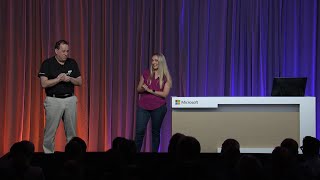
Make your data AI ready with Microsoft Fabric and Azure Databricks | BRK221H

Bring your data into the era of AI with Microsoft Fabric, a powerful all in one AI powered analytics solution for enterprises that covers everything from data movement to data science, real time analytics and business intelligence. Learn how Azure Databricks and Microsoft Fabric seamlessly work together to offer customers a modern, price performant analytics solution that helps teams turn data into a competitive advantage.

To learn more, please check out these resources: * https://aka.ms/Ignite23CollectionsBRK221H * https://info.microsoft.com/ww-landing-contact-me-for-events-m365-in-person-events.html?LCID=en-us&ls=407628-contactme-formfill * https://aka.ms/azure-ignite2023-dataaiblog

𝗦𝗽𝗲𝗮𝗸𝗲𝗿𝘀: * Justyna Lucznik * Kristen Christensen * Patrick Baumgartner * Eric McChesney * Hannah Chen * Wangui wmckelvey * Arthi Ramasubramanian Iyer * Chris Finlan * Christian Wade * Ed Donahue * Kasper de Jonge * Mohammad Ali * Ravs Kaur * Steve Howard * Jessica Hawk * Amir Netz * Arun Ulagaratchagan

𝗦𝗲𝘀𝘀𝗶𝗼𝗻 𝗜𝗻𝗳𝗼𝗿𝗺𝗮𝘁𝗶𝗼𝗻: This video is one of many sessions delivered for the Microsoft Ignite 2023 event. View sessions on-demand and learn more about Microsoft Ignite at https://ignite.microsoft.com

BRK221H | English (US) | Data

MSIgnite

Machine Learning Interviews

As tech products become more prevalent today, the demand for machine learning professionals continues to grow. But the responsibilities and skill sets required of ML professionals still vary drastically from company to company, making the interview process difficult to predict. In this guide, data science leader Susan Shu Chang shows you how to tackle the ML hiring process. Having served as principal data scientist in several companies, Chang has considerable experience as both ML interviewer and interviewee. She'll take you through the highly selective recruitment process by sharing hard-won lessons she learned along the way. You'll quickly understand how to successfully navigate your way through typical ML interviews. This guide shows you how to: Explore various machine learning roles, including ML engineer, applied scientist, data scientist, and other positions Assess your interests and skills before deciding which ML role(s) to pursue Evaluate your current skills and close any gaps that may prevent you from succeeding in the interview process Acquire the skill set necessary for each machine learning role Ace ML interview topics, including coding assessments, statistics and machine learning theory, and behavioral questions Prepare for interviews in statistics and machine learning theory by studying common interview questions