
talk-data.com talk-data.com

Topic

ETL/ELT

ETL/ELT

data_integration data_transformation data_loading

480

tagged

Activity Trend

40 peak/qtr
2020-Q1 2026-Q1

Activities

480 activities · Newest first

Summary Data Engineering is still a relatively new field that is going through a continued evolution as new technologies are introduced and new requirements are understood. In this episode Maxime Beauchemin returns to revisit what it means to be a data engineer and how the role has changed over the past 5 years.

Announcements

Hello and welcome to the Data Engineering Podcast, the show about modern data management When you’re ready to build your next pipeline, or want to test out the projects you hear about on the show, you’ll need somewhere to deploy it, so check out our friends at Linode. With their managed Kubernetes platform it’s now even easier to deploy and scale your workflows, or try out the latest Helm charts from tools like Pulsar and Pachyderm. With simple pricing, fast networking, object storage, and worldwide data centers, you’ve got everything you need to run a bulletproof data platform. Go to dataengineeringpodcast.com/linode today and get a $100 credit to try out a Kubernetes cluster of your own. And don’t forget to thank them for their continued support of this show! Struggling with broken pipelines? Stale dashboards? Missing data? If this resonates with you, you’re not alone. Data engineers struggling with unreliable data need look no further than Monte Carlo, the world’s first end-to-end, fully automated Data Observability Platform! In the same way that application performance monitoring ensures reliable software and keeps application downtime at bay, Monte Carlo solves the costly problem of broken data pipelines. Monte Carlo monitors and alerts for data issues across your data warehouses, data lakes, ETL, and business intelligence, reducing time to detection and resolution from weeks or days to just minutes. Start trusting your data with Monte Carlo today! Visit dataengineeringpodcast.com/montecarlo to learn more. The first 10 people to request a personalized product tour will receive an exclusive Monte Carlo Swag box. Are you bored with writing scripts to move data into SaaS tools like Salesforce, Marketo, or Facebook Ads? Hightouch is the easiest way to sync data into the platforms that your business teams rely on. The data you’re looking for is already in your data warehouse and BI tools. Connect your warehouse to Hightouch, paste a SQL query, and use their visual mapper to specify how data should appear in your SaaS systems. No more scripts, just SQL. Supercharge your business teams with customer data using Hightouch for Reverse ETL today. Get started for free at dataengineeringpodcast.com/hightouch. Your host is Tobias Macey and today I’m interviewing Maxime Beauchemin about the impacts that the evolution of the modern data stack has had on the role and responsibilities of data engineers

Interview

Introduction How did you get involved in the area of data management? What is your current working definition of a data engineer?

How has that definition changed since your article on the "rise of the data engineer" and episode 3 of this show about "defining data engineering"?

How has the growing availability of data infrastructure services shifted foundational skills and knowledge that are necessary to be effective?

How should a new/aspiring data engineer focus their time and energy to become effective?

One of the core themes in this current spate of technologies is "democratization of data". In your post on the downfall of the data engineer you called out the pressure on data engineers to maintain control with so many contributors with varying levels of skill and understanding. How well is the "modern data stack" balancing these concerns? An interesting impact of the growing usage of data is the constrained availability of data engineers. How do you see the effects of the job market on driving evolution of tooling and services? With the explosion of tools and services for working with data, a new problem has evolved of which ones to use for a given organization. What do you see as
Summary The data mesh is a thesis that was presented to address the technical and organizational challenges that businesses face in managing their analytical workflows at scale. Zhamak Dehghani introduced the concepts behind this architectural patterns in 2019, and since then it has been gaining popularity with many companies adopting some version of it in their systems. In this episode Zhamak re-joins the show to discuss the real world benefits that have been seen, the lessons that she has learned while working with her clients and the community, and her vision for the future of the data mesh.

Announcements

Hello and welcome to the Data Engineering Podcast, the show about modern data management When you’re ready to build your next pipeline, or want to test out the projects you hear about on the show, you’ll need somewhere to deploy it, so check out our friends at Linode. With their managed Kubernetes platform it’s now even easier to deploy and scale your workflows, or try out the latest Helm charts from tools like Pulsar and Pachyderm. With simple pricing, fast networking, object storage, and worldwide data centers, you’ve got everything you need to run a bulletproof data platform. Go to dataengineeringpodcast.com/linode today and get a $100 credit to try out a Kubernetes cluster of your own. And don’t forget to thank them for their continued support of this show! Atlan is a collaborative workspace for data-driven teams, like Github for engineering or Figma for design teams. By acting as a virtual hub for data assets ranging from tables and dashboards to SQL snippets & code, Atlan enables teams to create a single source of truth for all their data assets, and collaborate across the modern data stack through deep integrations with tools like Snowflake, Slack, Looker and more. Go to dataengineeringpodcast.com/atlan today and sign up for a free trial. If you’re a data engineering podcast listener, you get credits worth $3000 on an annual subscription Modern Data teams are dealing with a lot of complexity in their data pipelines and analytical code. Monitoring data quality, tracing incidents, and testing changes can be daunting and often takes hours to days. Datafold helps Data teams gain visibility and confidence in the quality of their analytical data through data profiling, column-level lineage and intelligent anomaly detection. Datafold also helps automate regression testing of ETL code with its Data Diff feature that instantly shows how a change in ETL or BI code affects the produced data, both on a statistical level and down to individual rows and values. Datafold integrates with all major data warehouses as well as frameworks such as Airflow & dbt and seamlessly plugs into CI workflows. Go to dataengineeringpodcast.com/datafold today to start a 30-day trial of Datafold. Your host is Tobias Macey and today I’m welcoming back Zhamak Dehghani to talk about her work on the data mesh book and the lessons learned over the past 2 years

Interview

Introduction How did you get involved in the area of data management? Can you start by giving a brief recap of the principles of the data mesh and the story behind it? How has your view of the principles of the data mesh changed since our conversation in July of 2019? What are some of the ways that your work on the data mesh book influenced your thinking on the practical elements of implementing a data mesh? What do you view as the as-yet-unknown elements of the technical and social design constructs that are needed for a sustainable data mesh implementation? In the opening of your book you state that "Data Mesh is a new approach in sourcing, managing, and accessing data for analytical use cases at scale". As with everything, scale is subjective, but what are some of the heuristics that you rely on for determining when a data mesh is an appropriate solution? What are some of the ways that data mesh concepts manifest at the boundaries of organizations? While the idea of federated access to data product quanta reduces the amount of coordination necessary at the organizational level, it raises the spectre of more complex logic required for consumers of multiple quanta. How can data mesh implementations mitigate the impact of this problem? What are some of the technical components that you have found to be best suited to the implementation of data elements within a mesh? What are the technological components that are still missing for a mesh-native data platform? How should an organization that wishes to implement a mesh style architecture think about the roles and skills that they will need on staff?

How can vendors factor into the solution?

What is the role of application developers in a data mesh ecosystem and how do they need to change their thinking around the interfaces that they provide in their products? What are the most interesting, innovative, or unexpected ways that you have seen data mesh principles used? What are the most interesting, unexpected, or challenging lessons that you have learned while working on data mesh implementations? When is a data mesh the wrong approach? What do you think the future of the data mesh will look like?

Contact Info

LinkedIn @zhamakd on Twitter

Parting Question

From your perspective, what is the biggest gap in the tooling or technology for data management today?

Links

Data Engineering Podcast Data Mesh Interview Data Mesh Book Thoughtworks Expert Systems OpenLineage

Podcast Episode

Data Mesh Learning

The intro and outro music is from The Hug by The Freak Fandango Orchestra / CC BY-SA

Support Data Engineering Podcast

Summary One of the perennial challenges of data analytics is having a consistent set of definitions, along with a flexible and performant API endpoint for querying them. In this episode Artom Keydunov and Pavel Tiunov share their work on Cube.js and the various ways that it is being used in the open source community.

Announcements

Hello and welcome to the Data Engineering Podcast, the show about modern data management When you’re ready to build your next pipeline, or want to test out the projects you hear about on the show, you’ll need somewhere to deploy it, so check out our friends at Linode. With their managed Kubernetes platform it’s now even easier to deploy and scale your workflows, or try out the latest Helm charts from tools like Pulsar and Pachyderm. With simple pricing, fast networking, object storage, and worldwide data centers, you’ve got everything you need to run a bulletproof data platform. Go to dataengineeringpodcast.com/linode today and get a $100 credit to try out a Kubernetes cluster of your own. And don’t forget to thank them for their continued support of this show! Atlan is a collaborative workspace for data-driven teams, like Github for engineering or Figma for design teams. By acting as a virtual hub for data assets ranging from tables and dashboards to SQL snippets & code, Atlan enables teams to create a single source of truth for all their data assets, and collaborate across the modern data stack through deep integrations with tools like Snowflake, Slack, Looker and more. Go to dataengineeringpodcast.com/atlan today and sign up for a free trial. If you’re a data engineering podcast listener, you get credits worth $3000 on an annual subscription Modern Data teams are dealing with a lot of complexity in their data pipelines and analytical code. Monitoring data quality, tracing incidents, and testing changes can be daunting and often takes hours to days. Datafold helps Data teams gain visibility and confidence in the quality of their analytical data through data profiling, column-level lineage and intelligent anomaly detection. Datafold also helps automate regression testing of ETL code with its Data Diff feature that instantly shows how a change in ETL or BI code affects the produced data, both on a statistical level and down to individual rows and values. Datafold integrates with all major data warehouses as well as frameworks such as Airflow & dbt and seamlessly plugs into CI workflows. Go to dataengineeringpodcast.com/datafold today to start a 30-day trial of Datafold. Your host is Tobias Macey and today I’m interviewing Artyom Keydunov and Pavel Tiunov about Cube.js a framework for building analytics APIs to power your applications and BI dashboards

Interview

Introduction How did you get involved in the area of data management? Can you describe what Cube is and the story behind it? What are the main use cases and platform architectures that you are focused on?

Who are the target personas that will be using and managing Cube.js?

The name comes from the concept of an OLAP cube. Can you discuss the applications of OLAP cubes and their role in the current state of the data ecosystem?

How does the idea of an OLAP cube compare to the recent focus on a dedicated metrics layer?

What are the pieces of a data platform that might be replaced by Cube.js? Can you describe the design and architecture of the Cube platform?

How has the focus and target use case for the Cube platform evolved since you first started working on it?

One of the perpetually hard problems in computer science is cache management. How have you approached that challenge in the pre-aggregation layer of the Cube framework? What is your overarching design philosophy for the API of the Cube system? Can you talk through the workflow of someone building a cube and querying it from a downstream system?

What do the iteration cycles look like as you go from initial proof of concept to a more sophisticated usage of Cube.js

Summary Building a well managed data ecosystem for your organization requires a holistic view of all of the producers, consumers, and processors of information. The team at Metaphor are building a fully connected metadata layer to provide both technical and social intelligence about your data. In this episode Pardhu Gunnam and Mars Lan explain how they have designed the architecture and user experience to allow everyone to collaborate on the data lifecycle and provide opportunities for automation and extensible workflows.

Announcements

Hello and welcome to the Data Engineering Podcast, the show about modern data management When you’re ready to build your next pipeline, or want to test out the projects you hear about on the show, you’ll need somewhere to deploy it, so check out our friends at Linode. With their managed Kubernetes platform it’s now even easier to deploy and scale your workflows, or try out the latest Helm charts from tools like Pulsar and Pachyderm. With simple pricing, fast networking, object storage, and worldwide data centers, you’ve got everything you need to run a bulletproof data platform. Go to dataengineeringpodcast.com/linode today and get a $100 credit to try out a Kubernetes cluster of your own. And don’t forget to thank them for their continued support of this show! Struggling with broken pipelines? Stale dashboards? Missing data? If this resonates with you, you’re not alone. Data engineers struggling with unreliable data need look no further than Monte Carlo, the world’s first end-to-end, fully automated Data Observability Platform! In the same way that application performance monitoring ensures reliable software and keeps application downtime at bay, Monte Carlo solves the costly problem of broken data pipelines. Monte Carlo monitors and alerts for data issues across your data warehouses, data lakes, ETL, and business intelligence, reducing time to detection and resolution from weeks or days to just minutes. Start trusting your data with Monte Carlo today! Visit dataengineeringpodcast.com/montecarlo to learn more. The first 10 people to request a personalized product tour will receive an exclusive Monte Carlo Swag box. Are you bored with writing scripts to move data into SaaS tools like Salesforce, Marketo, or Facebook Ads? Hightouch is the easiest way to sync data into the platforms that your business teams rely on. The data you’re looking for is already in your data warehouse and BI tools. Connect your warehouse to Hightouch, paste a SQL query, and use their visual mapper to specify how data should appear in your SaaS systems. No more scripts, just SQL. Supercharge your business teams with customer data using Hightouch for Reverse ETL today. Get started for free at dataengineeringpodcast.com/hightouch. Your host is Tobias Macey and today I’m interviewing Pardhu Gunnam and Mars Lan about Metaphor Data, a platform aiming to be the system of record for your data ecosystem

Interview

Introduction How did you get involved in the area of data management? Can you describe what Metaphor is and the story behind it? On your site it states that you are aiming to be the "system of record" for your data platform. Can you unpack that statement and its implications?

What are the shortcomings in the "data catalog" approach to metadata collection and presentation?

Who are the target end users of Metaphor and what are the pain points for each persona that you are prioritizing?

How has that focus informed your priorities for user experience design and feature development?

Can you describe how the Metaphor platform is architected?

What are the lessons that you learned from your work at DataHub that have informed your work on Metaphor?

There has been a huge amount of focus on the "modern data stack" with an assumption that there is a cloud data warehouse as the central component that all data flows through. How does Metaphor’s design allow for usage in platforms that aren’t dominated

Send us a text Want to be featured as a guest on Making Data Simple? Reach out to us at [[email protected]] and tell us why you should be next.

Abstract Making Data Simple Podcast is hosted by Al Martin, VP, IBM Expert Services Delivery, where we explore trending technologies, business innovation, and leadership ... while keeping it simple & fun. This week on Making Data Simple, we have Douwe Maan. Douwe is the Founder and CEO of Meltano, an open source data integration and transformation platform. He joined GitLab as employee number 10 while still in college and later became its Engineering Manager. Meltano originally began as an internal project within GitLab, but spun out as an independent startup in early 2021 while raising $4.2 million in seed funding led by GV. Today, Meltano has over 5,000 active projects every month and supports data integration connectors for almost 300 sources and destinations. Show Notes 1:30 – Douwe’s history 4:00 – What is an iPhone jail break? 8:04 – How would you describe Meltano? 10:38 – What kind of tools do you use? 12:12 – Did you start with ELT? 16:08 – Is this dev ops or data ops and what is the difference? 18:38 – What platform does Meltano use? 29:52 – What can you do that no one else can do? 32:10 – Do you have point and click analytics? 36:23 – How do you measure success? Meltano  Connect with the Team Producer Kate Brown - LinkedIn. Producer Steve Templeton - LinkedIn. Host Al Martin - LinkedIn and Twitter.  Want to be featured as a guest on Making Data Simple? Reach out to us at [email protected] and tell us why you should be next. The Making Data Simple Podcast is hosted by Al Martin, WW VP Technical Sales, IBM, where we explore trending technologies, business innovation, and leadership ... while keeping it simple & fun.

Summary Spark is a powerful and battle tested framework for building highly scalable data pipelines. Because of its proven ability to handle large volumes of data Capital One has invested in it for their business needs. In this episode Gokul Prabagaren shares his use for it in calculating your rewards points, including the auditing requirements and how he designed his pipeline to maintain all of the necessary information through a pattern of data enrichment.

Announcements

Hello and welcome to the Data Engineering Podcast, the show about modern data management When you’re ready to build your next pipeline, or want to test out the projects you hear about on the show, you’ll need somewhere to deploy it, so check out our friends at Linode. With their managed Kubernetes platform it’s now even easier to deploy and scale your workflows, or try out the latest Helm charts from tools like Pulsar and Pachyderm. With simple pricing, fast networking, object storage, and worldwide data centers, you’ve got everything you need to run a bulletproof data platform. Go to dataengineeringpodcast.com/linode today and get a $100 credit to try out a Kubernetes cluster of your own. And don’t forget to thank them for their continued support of this show! Atlan is a collaborative workspace for data-driven teams, like Github for engineering or Figma for design teams. By acting as a virtual hub for data assets ranging from tables and dashboards to SQL snippets & code, Atlan enables teams to create a single source of truth for all their data assets, and collaborate across the modern data stack through deep integrations with tools like Snowflake, Slack, Looker and more. Go to dataengineeringpodcast.com/atlan today and sign up for a free trial. If you’re a data engineering podcast listener, you get credits worth $3000 on an annual subscription Modern Data teams are dealing with a lot of complexity in their data pipelines and analytical code. Monitoring data quality, tracing incidents, and testing changes can be daunting and often takes hours to days. Datafold helps Data teams gain visibility and confidence in the quality of their analytical data through data profiling, column-level lineage and intelligent anomaly detection. Datafold also helps automate regression testing of ETL code with its Data Diff feature that instantly shows how a change in ETL or BI code affects the produced data, both on a statistical level and down to individual rows and values. Datafold integrates with all major data warehouses as well as frameworks such as Airflow & dbt and seamlessly plugs into CI workflows. Go to dataengineeringpodcast.com/datafold today to start a 30-day trial of Datafold. Your host is Tobias Macey and today I’m interviewing Gokul Prabagaren about how he is using Spark for real-world workflows at Capital One

Interview

Introduction How did you get involved in the area of data management? Can you start by giving an overview of the types of data and workflows that you are responsible for at Capital one?

In terms of the three "V"s (Volume, Variety, Velocity), what is the magnitude of the data that you are working with?

What are some of the business and regulatory requirements that have to be factored into the solutions that you design? Who are the consumers of the data assets that you are producing? Can you describe the technical elements of the platform that you use for managing your data pipelines? What are the various ways that you are using Spark at Capital One? You wrote a post and presented at the Databricks conference about your experience moving from a data filtering to a data enrichment pattern for segmenting transactions. Can you give some context as to the use case and what your design process was for the initial implementation?

What were the shortcomings to that approach/business requirements which led you to refactoring the approach to one that maintained all of the data through the different processing stages?

What are some of t

Summary The core to providing your users with excellent service is to understand them and provide a personalized experience. Unfortunately many sites and applications take that to the extreme and collect too much information. In order to make it easier for developers to build customer profiles in a way that respects their privacy Serge Huber helped to create the Apache Unomi framework as an open source customer data platform. In this episode he explains how it can be used to build rich and useful profiles of your users, the system architecture that powers it, and some of the ways that it is being integrated into an organization’s broader data ecosystem.

Announcements

Hello and welcome to the Data Engineering Podcast, the show about modern data management When you’re ready to build your next pipeline, or want to test out the projects you hear about on the show, you’ll need somewhere to deploy it, so check out our friends at Linode. With their managed Kubernetes platform it’s now even easier to deploy and scale your workflows, or try out the latest Helm charts from tools like Pulsar and Pachyderm. With simple pricing, fast networking, object storage, and worldwide data centers, you’ve got everything you need to run a bulletproof data platform. Go to dataengineeringpodcast.com/linode today and get a $100 credit to try out a Kubernetes cluster of your own. And don’t forget to thank them for their continued support of this show! Struggling with broken pipelines? Stale dashboards? Missing data? If this resonates with you, you’re not alone. Data engineers struggling with unreliable data need look no further than Monte Carlo, the world’s first end-to-end, fully automated Data Observability Platform! In the same way that application performance monitoring ensures reliable software and keeps application downtime at bay, Monte Carlo solves the costly problem of broken data pipelines. Monte Carlo monitors and alerts for data issues across your data warehouses, data lakes, ETL, and business intelligence, reducing time to detection and resolution from weeks or days to just minutes. Start trusting your data with Monte Carlo today! Visit dataengineeringpodcast.com/montecarlo to learn more. The first 10 people to request a personalized product tour will receive an exclusive Monte Carlo Swag box. Are you bored with writing scripts to move data into SaaS tools like Salesforce, Marketo, or Facebook Ads? Hightouch is the easiest way to sync data into the platforms that your business teams rely on. The data you’re looking for is already in your data warehouse and BI tools. Connect your warehouse to Hightouch, paste a SQL query, and use their visual mapper to specify how data should appear in your SaaS systems. No more scripts, just SQL. Supercharge your business teams with customer data using Hightouch for Reverse ETL today. Get started for free at dataengineeringpodcast.com/hightouch. Your host is Tobias Macey and today I’m interviewing Serge Huber about Apache Unomi, an open source customer data platform designed to manage customers, leads and visitors data and help personalize customers experiences

Interview

Introduction How did you get involved in the area of data management? Can you describe what Unomi is and the story behind it? What are the goals and target use cases of Unomi? What are the aspects of collecting and aggregating profile information that present challenges to developers?

How does the design of Unomi reduce that burden?

How does the focus of Unomi compare to systems such as Segment/Rudderstack or Optimizely for collecting user interactions and applying personalization? How does Unomi fit in the architecture of an application or data infrastructure? Can you describe how Unomi itself is architected?

How have the goals and design of the project changed or evolved since it started? What are some of the most complex or challenging engineering projects that you have worked through?

Can you describe the wo

Summary Hiring data professionals is challenging for a multitude of reasons, and as with every interview process there is a potential for bias to creep in. Tim Freestone founded Alooba to provide a more stable reference point for evaluating candidates to ensure that you can make more informed comparisons based on their actual knowledge. In this episode he explains how Alooba got started, how it is being used in the interview process for data oriented roles, and how it can also provide visibility into your organizations overall data literacy. The whole process of hiring is an important organizational skill to cultivate and this is an interesting exploration of the specific challenges involved in finding data professionals.

Announcements

Hello and welcome to the Data Engineering Podcast, the show about modern data management When you’re ready to build your next pipeline, or want to test out the projects you hear about on the show, you’ll need somewhere to deploy it, so check out our friends at Linode. With their managed Kubernetes platform it’s now even easier to deploy and scale your workflows, or try out the latest Helm charts from tools like Pulsar and Pachyderm. With simple pricing, fast networking, object storage, and worldwide data centers, you’ve got everything you need to run a bulletproof data platform. Go to dataengineeringpodcast.com/linode today and get a $100 credit to try out a Kubernetes cluster of your own. And don’t forget to thank them for their continued support of this show! Struggling with broken pipelines? Stale dashboards? Missing data? If this resonates with you, you’re not alone. Data engineers struggling with unreliable data need look no further than Monte Carlo, the world’s first end-to-end, fully automated Data Observability Platform! In the same way that application performance monitoring ensures reliable software and keeps application downtime at bay, Monte Carlo solves the costly problem of broken data pipelines. Monte Carlo monitors and alerts for data issues across your data warehouses, data lakes, ETL, and business intelligence, reducing time to detection and resolution from weeks or days to just minutes. Start trusting your data with Monte Carlo today! Visit dataengineeringpodcast.com/montecarlo to learn more. The first 10 people to request a personalized product tour will receive an exclusive Monte Carlo Swag box. Are you bored with writing scripts to move data into SaaS tools like Salesforce, Marketo, or Facebook Ads? Hightouch is the easiest way to sync data into the platforms that your business teams rely on. The data you’re looking for is already in your data warehouse and BI tools. Connect your warehouse to Hightouch, paste a SQL query, and use their visual mapper to specify how data should appear in your SaaS systems. No more scripts, just SQL. Supercharge your business teams with customer data using Hightouch for Reverse ETL today. Get started for free at dataengineeringpodcast.com/hightouch. Your host is Tobias Macey and today I’m interviewing Tim Freestone about Alooba, an assessment platform for evaluating data and analytics candidates to improve hiring outcomes for data roles.

Interview

Introduction How did you get involved in the area of data management? Can you describe what Alooba is and the story behind it? What are the main goals that you are trying to achieve with Alooba? What are the main challenges that employers and candidates face when navigating their respective roles in the hiring process?

What are some of the difficulties that are specific to data oriented roles?

What are some of the complexities involved in designing a user experience that is positive and productive for both candidates and companies? What are some strategies that you have developed for establishing a fair and consistent baseline of skills to ensure consistent comparison across candidates? One of the problems that comes from test-based skills assessment is the implicit bias towa

Summary A/B testing and experimentation are the most reliable way to determine whether a change to your product will have the desired effect on your business. Unfortunately, being able to design, deploy, and validate experiments is a complex process that requires a mix of technical capacity and organizational involvement which is hard to come by. Chetan Sharma founded Eppo to provide a system that organizations of every scale can use to reduce the burden of managing experiments so that you can focus on improving your business. In this episode he digs into the technical, statistical, and design requirements for running effective experiments and how he has architected the Eppo platform to make the process more accessible to business and data professionals.

Announcements

Hello and welcome to the Data Engineering Podcast, the show about modern data management When you’re ready to build your next pipeline, or want to test out the projects you hear about on the show, you’ll need somewhere to deploy it, so check out our friends at Linode. With their managed Kubernetes platform it’s now even easier to deploy and scale your workflows, or try out the latest Helm charts from tools like Pulsar and Pachyderm. With simple pricing, fast networking, object storage, and worldwide data centers, you’ve got everything you need to run a bulletproof data platform. Go to dataengineeringpodcast.com/linode today and get a $100 credit to try out a Kubernetes cluster of your own. And don’t forget to thank them for their continued support of this show! Atlan is a collaborative workspace for data-driven teams, like Github for engineering or Figma for design teams. By acting as a virtual hub for data assets ranging from tables and dashboards to SQL snippets & code, Atlan enables teams to create a single source of truth for all their data assets, and collaborate across the modern data stack through deep integrations with tools like Snowflake, Slack, Looker and more. Go to dataengineeringpodcast.com/atlan today and sign up for a free trial. If you’re a data engineering podcast listener, you get credits worth $3000 on an annual subscription Modern Data teams are dealing with a lot of complexity in their data pipelines and analytical code. Monitoring data quality, tracing incidents, and testing changes can be daunting and often takes hours to days. Datafold helps Data teams gain visibility and confidence in the quality of their analytical data through data profiling, column-level lineage and intelligent anomaly detection. Datafold also helps automate regression testing of ETL code with its Data Diff feature that instantly shows how a change in ETL or BI code affects the produced data, both on a statistical level and down to individual rows and values. Datafold integrates with all major data warehouses as well as frameworks such as Airflow & dbt and seamlessly plugs into CI workflows. Go to dataengineeringpodcast.com/datafold today to start a 30-day trial of Datafold. Your host is Tobias Macey and today I’m interviewing Chetan Sharma about Eppo, a platform for building A/B experiments that are easier to manage

Interview

Introduction How did you get involved in the area of data management? Can you describe what Eppo is and the story behind it? What are some examples of the kinds of experiments that teams and organizations might want to conduct? What are the points of friction that What are the steps involved in designing, deploying, and analyzing the outcomes of an A/B experiment?

What are some of the statistical errors that are common when conducting an experiment?

What are the design and UX principles that you have focused on in Eppo to improve the workflow of building and analyzing experiments? Can you describe the system design of the Eppo platform?

What are the services or capabilities external to Eppo that are required for it to be effective? What are the integration points for adding Eppo to an organization’s existing platform?

B

Summary The modern data stack has been gaining a lot of attention recently with a rapidly growing set of managed services for different stages of the data lifecycle. With all of the available options it is possible to run a scalable, production grade data platform with a small team, but there are still sharp edges and integration challenges to work through. Peter Fishman and Dan Silberman experienced these difficulties firsthand and created Mozart Data to provide a single, easy to use option for getting started with the modern data stack. In this episode they explain how they designed a user experience to make working with data more accessibly by organizations without a data team, while allowing for more advanced users to build out more complex workflows. They also share their thoughts on the modern data ecosystem and how it improves the availability of analytics for companies of all sizes.

Announcements

Hello and welcome to the Data Engineering Podcast, the show about modern data management When you’re ready to build your next pipeline, or want to test out the projects you hear about on the show, you’ll need somewhere to deploy it, so check out our friends at Linode. With their managed Kubernetes platform it’s now even easier to deploy and scale your workflows, or try out the latest Helm charts from tools like Pulsar and Pachyderm. With simple pricing, fast networking, object storage, and worldwide data centers, you’ve got everything you need to run a bulletproof data platform. Go to dataengineeringpodcast.com/linode today and get a $100 credit to try out a Kubernetes cluster of your own. And don’t forget to thank them for their continued support of this show! Atlan is a collaborative workspace for data-driven teams, like Github for engineering or Figma for design teams. By acting as a virtual hub for data assets ranging from tables and dashboards to SQL snippets & code, Atlan enables teams to create a single source of truth for all their data assets, and collaborate across the modern data stack through deep integrations with tools like Snowflake, Slack, Looker and more. Go to dataengineeringpodcast.com/atlan today and sign up for a free trial. If you’re a data engineering podcast listener, you get credits worth $3000 on an annual subscription Modern Data teams are dealing with a lot of complexity in their data pipelines and analytical code. Monitoring data quality, tracing incidents, and testing changes can be daunting and often takes hours to days. Datafold helps Data teams gain visibility and confidence in the quality of their analytical data through data profiling, column-level lineage and intelligent anomaly detection. Datafold also helps automate regression testing of ETL code with its Data Diff feature that instantly shows how a change in ETL or BI code affects the produced data, both on a statistical level and down to individual rows and values. Datafold integrates with all major data warehouses as well as frameworks such as Airflow & dbt and seamlessly plugs into CI workflows. Go to dataengineeringpodcast.com/datafold today to start a 30-day trial of Datafold. Your host is Tobias Macey and today I’m interviewing Peter Fishman and Dan Silberman about Mozart Data and how they are building a unified experience for the modern data stack

Interview

Introduction How did you get involved in the area of data management? Can you describe what Mozart Data is and the story behind it? The promise of the "modern data stack" is that it’s all delivered as a service to make it easier to set up. What are the missing pieces that make something like Mozart necessary? What are the main workflows or industries that you are focusing on? Who are the main personas that you are building Mozart for?

How has that combination of user persona and industry focus informed your decisions around feature priorities and user experience?

Can you describe how you have architected the Mozart platform?

How have you approached the bu

Summary The data that you have access to affects the questions that you can answer. By using external data sources you can drastically increase the range of analysis that is available to your organization. The challenge comes in all of the operational aspects of finding, accessing, organizing, and serving that data. In this episode Mark Hookey discusses how he and his team at Demyst do all of the DataOps for external data sources so that you don’t have to, including the systems necessary to organize and catalog the various collections that they host, the various serving layers to provide query interfaces that match your platform, and the utility of having a single place to access a multitude of information. If you are having trouble answering questions for your business with the data that you generate and collect internally, then it is definitely worthwhile to explore the information available from external sources.

Announcements

Hello and welcome to the Data Engineering Podcast, the show about modern data management When you’re ready to build your next pipeline, or want to test out the projects you hear about on the show, you’ll need somewhere to deploy it, so check out our friends at Linode. With their managed Kubernetes platform it’s now even easier to deploy and scale your workflows, or try out the latest Helm charts from tools like Pulsar and Pachyderm. With simple pricing, fast networking, object storage, and worldwide data centers, you’ve got everything you need to run a bulletproof data platform. Go to dataengineeringpodcast.com/linode today and get a $100 credit to try out a Kubernetes cluster of your own. And don’t forget to thank them for their continued support of this show! Struggling with broken pipelines? Stale dashboards? Missing data? If this resonates with you, you’re not alone. Data engineers struggling with unreliable data need look no further than Monte Carlo, the world’s first end-to-end, fully automated Data Observability Platform! In the same way that application performance monitoring ensures reliable software and keeps application downtime at bay, Monte Carlo solves the costly problem of broken data pipelines. Monte Carlo monitors and alerts for data issues across your data warehouses, data lakes, ETL, and business intelligence, reducing time to detection and resolution from weeks or days to just minutes. Start trusting your data with Monte Carlo today! Visit dataengineeringpodcast.com/montecarlo to learn more. The first 10 people to request a personalized product tour will receive an exclusive Monte Carlo Swag box. Are you bored with writing scripts to move data into SaaS tools like Salesforce, Marketo, or Facebook Ads? Hightouch is the easiest way to sync data into the platforms that your business teams rely on. The data you’re looking for is already in your data warehouse and BI tools. Connect your warehouse to Hightouch, paste a SQL query, and use their visual mapper to specify how data should appear in your SaaS systems. No more scripts, just SQL. Supercharge your business teams with customer data using Hightouch for Reverse ETL today. Get started for free at dataengineeringpodcast.com/hightouch. Your host is Tobias Macey and today I’m interviewing Mark Hookey about Demyst Data, a platform for operationalizing external data

Interview

Introduction How did you get involved in the area of data management? Can you describe what Demyst is and the story behind it?

What are the services and systems that you provide for organizations to incorporate external sources in their data workflows? Who are your target customers?

What are some examples of data sets that an organization might want to use in their analytics?

How are these different from SaaS data that an organization might integrate with tools such as Stitcher and Fivetran?

What are some of the challenges that are introduced by working with these external data sets?

If an organization isn’t using Demyst what are some

Summary One of the perennial challenges posed by data lakes is how to keep them up to date as new data is collected. With the improvements in streaming engines it is now possible to perform all of your data integration in near real time, but it can be challenging to understand the proper processing patterns to make that performant. In this episode Ori Rafael shares his experiences from Upsolver and building scalable stream processing for integrating and analyzing data, and what the tradeoffs are when coming from a batch oriented mindset.

Announcements

Hello and welcome to the Data Engineering Podcast, the show about modern data management When you’re ready to build your next pipeline, or want to test out the projects you hear about on the show, you’ll need somewhere to deploy it, so check out our friends at Linode. With their managed Kubernetes platform it’s now even easier to deploy and scale your workflows, or try out the latest Helm charts from tools like Pulsar and Pachyderm. With simple pricing, fast networking, object storage, and worldwide data centers, you’ve got everything you need to run a bulletproof data platform. Go to dataengineeringpodcast.com/linode today and get a $100 credit to try out a Kubernetes cluster of your own. And don’t forget to thank them for their continued support of this show! Atlan is a collaborative workspace for data-driven teams, like Github for engineering or Figma for design teams. By acting as a virtual hub for data assets ranging from tables and dashboards to SQL snippets & code, Atlan enables teams to create a single source of truth for all their data assets, and collaborate across the modern data stack through deep integrations with tools like Snowflake, Slack, Looker and more. Go to dataengineeringpodcast.com/atlan today and sign up for a free trial. If you’re a data engineering podcast listener, you get credits worth $3000 on an annual subscription Modern Data teams are dealing with a lot of complexity in their data pipelines and analytical code. Monitoring data quality, tracing incidents, and testing changes can be daunting and often takes hours to days. Datafold helps Data teams gain visibility and confidence in the quality of their analytical data through data profiling, column-level lineage and intelligent anomaly detection. Datafold also helps automate regression testing of ETL code with its Data Diff feature that instantly shows how a change in ETL or BI code affects the produced data, both on a statistical level and down to individual rows and values. Datafold integrates with all major data warehouses as well as frameworks such as Airflow & dbt and seamlessly plugs into CI workflows. Go to dataengineeringpodcast.com/datafold today to start a 30-day trial of Datafold. Your host is Tobias Macey and today I’m interviewing Ori Rafael about strategies for building stream and batch processing patterns for data lake analytics

Interview

Introduction How did you get involved in the area of data management? Can you start by giving an overview of the state of the market for data lakes today?

What are the prevailing architectural and technological patterns that are being used to manage these systems?

Batch and streaming systems have been used in various combinations since the early days of Hadoop. The Lambda architecture has largely been abandoned, so what is the answer for today’s data lakes? What are the challenges presented by streaming approaches to data transformations?

The batch model for processing is intuitive despite its latency problems. What are the benefits that it provides?

The core concept for data orchestration is the DAG. How does that manifest in a streaming context? In batch processing idempotent/immutable datasets are created by re-running the entire pipeline when logic changes need to be made. Given that there is no definitive start or end of a stream, what are the options for amending logical errors in transformations? What are some of the da

Summary The technology for scaling storage and processing of data has gone through massive evolution over the past decade, leaving us with the ability to work with massive datasets at the cost of massive complexity. Nick Schrock created the Dagster framework to help tame that complexity and scale the organizational capacity for working with data. In this episode he shares the journey that he and his team at Elementl have taken to understand the state of the ecosystem and how they can provide a foundational layer for a holistic data platform.

Announcements

Hello and welcome to the Data Engineering Podcast, the show about modern data management When you’re ready to build your next pipeline, or want to test out the projects you hear about on the show, you’ll need somewhere to deploy it, so check out our friends at Linode. With their managed Kubernetes platform and blazing fast NVMe storage there’s nothing slowing you down. With simple pricing, fast networking, object storage, and worldwide data centers, you’ve got everything you need to run a bulletproof data platform. Go to dataengineeringpodcast.com/linode today and get a $100 credit to try out a Kubernetes cluster of your own. And don’t forget to thank them for their continued support of this show! Struggling with broken pipelines? Stale dashboards? Missing data? If this resonates with you, you’re not alone. Data engineers struggling with unreliable data need look no further than Monte Carlo, the world’s first end-to-end, fully automated Data Observability Platform! In the same way that application performance monitoring ensures reliable software and keeps application downtime at bay, Monte Carlo solves the costly problem of broken data pipelines. Monte Carlo monitors and alerts for data issues across your data warehouses, data lakes, ETL, and business intelligence, reducing time to detection and resolution from weeks or days to just minutes. Start trusting your data with Monte Carlo today! Visit dataengineeringpodcast.com/montecarlo to learn more. The first 10 people to request a personalized product tour will receive an exclusive Monte Carlo Swag box. Are you bored with writing scripts to move data into SaaS tools like Salesforce, Marketo, or Facebook Ads? Hightouch is the easiest way to sync data into the platforms that your business teams rely on. The data you’re looking for is already in your data warehouse and BI tools. Connect your warehouse to Hightouch, paste a SQL query, and use their visual mapper to specify how data should appear in your SaaS systems. No more scripts, just SQL. Supercharge your business teams with customer data using Hightouch for Reverse ETL today. Get started for free at dataengineeringpodcast.com/hightouch. Your host is Tobias Macey and today I’m interviewing Nick Schrock about the evolution of Dagster and its path forward

Interview

Introduction How did you get involved in the area of data management? Can you describe what Dagster is and the story behind it? How has the project and community changed/evolved since we last spoke 2 years ago?

How has the experience of the past 2 years clarified the challenges and opportunities that exist in the data ecosystem?

What do you see as the foundational vs transient complexities that are germane to the industry?

One of the emerging ideas in Dagster is the "software defined data asset" as the central entity in the framework. How has that shifted the way that engineers approach pipeline design and composition?

How did that conceptual shift inform the accompanying refactor of the core principles in the framework? (jobs, ops, graphs)

One of the powerful elements of the Dagster framework is the investment in rich metadata as a foundational principle. What are the opportunities for integrating and extending that context throughout the rest of an organizations data platform?

What do you see as the potential for efforts such as OpenLineage and OpenMetadata to allow for other compone

Serverless Analytics with Amazon Athena

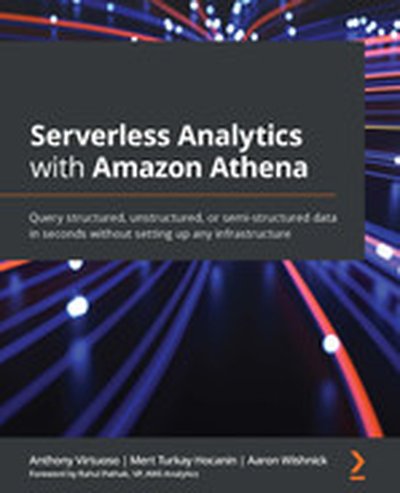
Delve into the serverless world of Amazon Athena with the comprehensive book 'Serverless Analytics with Amazon Athena'. This guide introduces you to the power of Athena, showing you how to efficiently query data in Amazon S3 using SQL without the hassle of managing infrastructure. With clear instructions and practical examples, you'll master querying structured, unstructured, and semi-structured data seamlessly. What this Book will help me do Effectively query and analyze both structured and unstructured data stored in S3 using Amazon Athena. Integrate Athena with other AWS services to create powerful, secure, and cost-efficient data workflows. Develop ETL pipelines and machine learning workflows leveraging Athena's compatibility with AWS Glue. Monitor and troubleshoot Athena queries for consistent performance and build scalable serverless data solutions. Implement security best practices and optimize costs when managing your Athena-driven data solutions. Author(s) None Virtuoso, along with co-authors Mert Turkay Hocanin None and None Wishnick, brings a wealth of experience in cloud solutions, serverless technologies, and data engineering. They excel in demystifying complex technical topics and have a passion for empowering readers with practical skills and knowledge. Who is it for? This book is tailored for business intelligence analysts, application developers, and system administrators who want to harness Amazon Athena for seamless, cost-efficient data analytics. It suits individuals with basic SQL knowledge looking to expand their capabilities in querying and processing data. Whether you're managing growing datasets or building data-driven applications, this book provides the know-how to get it right.

Summary The most important gauge of success for a data platform is the level of trust in the accuracy of the information that it provides. In order to build and maintain that trust it is necessary to invest in defining, monitoring, and enforcing data quality metrics. In this episode Michael Harper advocates for proactive data quality and starting with the source, rather than being reactive and having to work backwards from when a problem is found.

Announcements

Hello and welcome to the Data Engineering Podcast, the show about modern data management When you’re ready to build your next pipeline, or want to test out the projects you hear about on the show, you’ll need somewhere to deploy it, so check out our friends at Linode. With their managed Kubernetes platform it’s now even easier to deploy and scale your workflows, or try out the latest Helm charts from tools like Pulsar and Pachyderm. With simple pricing, fast networking, object storage, and worldwide data centers, you’ve got everything you need to run a bulletproof data platform. Go to dataengineeringpodcast.com/linode today and get a $100 credit to try out a Kubernetes cluster of your own. And don’t forget to thank them for their continued support of this show! Atlan is a collaborative workspace for data-driven teams, like Github for engineering or Figma for design teams. By acting as a virtual hub for data assets ranging from tables and dashboards to SQL snippets & code, Atlan enables teams to create a single source of truth for all their data assets, and collaborate across the modern data stack through deep integrations with tools like Snowflake, Slack, Looker and more. Go to dataengineeringpodcast.com/atlan today and sign up for a free trial. If you’re a data engineering podcast listener, you get credits worth $3000 on an annual subscription Modern Data teams are dealing with a lot of complexity in their data pipelines and analytical code. Monitoring data quality, tracing incidents, and testing changes can be daunting and often takes hours to days. Datafold helps Data teams gain visibility and confidence in the quality of their analytical data through data profiling, column-level lineage and intelligent anomaly detection. Datafold also helps automate regression testing of ETL code with its Data Diff feature that instantly shows how a change in ETL or BI code affects the produced data, both on a statistical level and down to individual rows and values. Datafold integrates with all major data warehouses as well as frameworks such as Airflow & dbt and seamlessly plugs into CI workflows. Go to dataengineeringpodcast.com/datafold today to start a 30-day trial of Datafold. Your host is Tobias Macey and today I’m interviewing Michael Harper about definitions of data quality and where to define and enforce it in the data platform

Interview

Introduction How did you get involved in the area of data management? What is your definition for the term "data quality" and what are the implied goals that it embodies?

What are some ways that different stakeholders and participants in the data lifecycle might disagree about the definitions and manifestations of data quality?

The market for "data quality tools" has been growing and gaining attention recently. How would you categorize the different approaches taken by open source and commercial options in the ecosystem?

What are the tradeoffs that you see in each approach? (e.g. data warehouse as a chokepoint vs quality checks on extract)

What are the difficulties that engineers and stakeholders encounter when identifying and defining information that is necessary to identify issues in their workflows? Can you describe some examples of adding data quality checks to the beginning stages of a data workflow and the kinds of issues that can be identified?

What are some ways that quality and observability metrics can be aggregated across multiple pipeline stages to identify more complex issues?

In application observa

Summary A significant source of friction and wasted effort in building and integrating data management systems is the fragmentation of metadata across various tools. After experiencing the impacts of fragmented metadata and previous attempts at building a solution Suresh Srinivas and Sriharsha Chintalapani created the OpenMetadata project. In this episode they share the lessons that they have learned through their previous attempts and the positive impact that a unified metadata layer had during their time at Uber. They also explain how the OpenMetadat project is aiming to be a common standard for defining and storing metadata for every use case in data platforms and the ways that they are architecting the reference implementation to simplify its adoption. This is an ambitious and exciting project, so listen and try it out today.

Announcements

Hello and welcome to the Data Engineering Podcast, the show about modern data management When you’re ready to build your next pipeline, or want to test out the projects you hear about on the show, you’ll need somewhere to deploy it, so check out our friends at Linode. With their managed Kubernetes platform it’s now even easier to deploy and scale your workflows, or try out the latest Helm charts from tools like Pulsar and Pachyderm. With simple pricing, fast networking, object storage, and worldwide data centers, you’ve got everything you need to run a bulletproof data platform. Go to dataengineeringpodcast.com/linode today and get a $100 credit to try out a Kubernetes cluster of your own. And don’t forget to thank them for their continued support of this show! Struggling with broken pipelines? Stale dashboards? Missing data? If this resonates with you, you’re not alone. Data engineers struggling with unreliable data need look no further than Monte Carlo, the world’s first end-to-end, fully automated Data Observability Platform! In the same way that application performance monitoring ensures reliable software and keeps application downtime at bay, Monte Carlo solves the costly problem of broken data pipelines. Monte Carlo monitors and alerts for data issues across your data warehouses, data lakes, ETL, and business intelligence, reducing time to detection and resolution from weeks or days to just minutes. Start trusting your data with Monte Carlo today! Visit dataengineeringpodcast.com/impact today to save your spot at IMPACT: The Data Observability Summit a half-day virtual event featuring the first U.S. Chief Data Scientist, founder of the Data Mesh, Creator of Apache Airflow, and more data pioneers spearheading some of the biggest movements in data. The first 50 to RSVP with this link will be entered to win an Oculus Quest 2 — Advanced All-In-One Virtual Reality Headset. RSVP today – you don’t want to miss it! Are you bored with writing scripts to move data into SaaS tools like Salesforce, Marketo, or Facebook Ads? Hightouch is the easiest way to sync data into the platforms that your business teams rely on. The data you’re looking for is already in your data warehouse and BI tools. Connect your warehouse to Hightouch, paste a SQL query, and use their visual mapper to specify how data should appear in your SaaS systems. No more scripts, just SQL. Supercharge your business teams with customer data using Hightouch for Reverse ETL today. Get started for free at dataengineeringpodcast.com/hightouch. Your host is Tobias Macey and today I’m interviewing Sriharsha Chintalapani and Suresh Srinivas about OpenMetadata, an open standard for metadata and a reference implementation for a central metadata store

Interview

Introduction How did you get involved in the area of data management? Can you describe what the OpenMetadata project is and the story behind it?

What are the goals of the project?

What are the common challenges faced by engineers and data practitioners in organizing the metadata for their systems? What are the capabilities that a centralized and holis

Summary Business intelligence is often equated with a collection of dashboards that show various charts and graphs representing data for an organization. What is overlooked in that characterization is the level of complexity and effort that are required to collect and present that information, and the opportunities for providing those insights in other contexts. In this episode Telmo Silva explains how he co-founded ClicData to bring full featured business intelligence and reporting to every organization without having to build and maintain that capability on their own. This is a great conversation about the technical and organizational operations involved in building a comprehensive business intelligence system and the current state of the market.

Announcements

Hello and welcome to the Data Engineering Podcast, the show about modern data management When you’re ready to build your next pipeline, or want to test out the projects you hear about on the show, you’ll need somewhere to deploy it, so check out our friends at Linode. With their managed Kubernetes platform it’s now even easier to deploy and scale your workflows, or try out the latest Helm charts from tools like Pulsar and Pachyderm. With simple pricing, fast networking, object storage, and worldwide data centers, you’ve got everything you need to run a bulletproof data platform. Go to dataengineeringpodcast.com/linode today and get a $100 credit to try out a Kubernetes cluster of your own. And don’t forget to thank them for their continued support of this show! Modern Data teams are dealing with a lot of complexity in their data pipelines and analytical code. Monitoring data quality, tracing incidents, and testing changes can be daunting and often takes hours to days. Datafold helps Data teams gain visibility and confidence in the quality of their analytical data through data profiling, column-level lineage and intelligent anomaly detection. Datafold also helps automate regression testing of ETL code with its Data Diff feature that instantly shows how a change in ETL or BI code affects the produced data, both on a statistical level and down to individual rows and values. Datafold integrates with all major data warehouses as well as frameworks such as Airflow & dbt and seamlessly plugs into CI workflows. Go to dataengineeringpodcast.com/datafold today to start a 30-day trial of Datafold. Atlan is a collaborative workspace for data-driven teams, like Github for engineering or Figma for design teams. By acting as a virtual hub for data assets ranging from tables and dashboards to SQL snippets & code, Atlan enables teams to create a single source of truth for all their data assets, and collaborate across the modern data stack through deep integrations with tools like Snowflake, Slack, Looker and more. Go to dataengineeringpodcast.com/atlan today and sign up for a free trial. If you’re a data engineering podcast listener, you get credits worth $3000 on an annual subscription Your host is Tobias Macey and today I’m interviewing Telmo Silva about ClicData,

Interview

Introduction How did you get involved in the area of data management? Can you describe what ClicData is and the story behind it? How would you characterize the current state of the market for business intelligence?

What are the systems/capabilities that are required to run a full-featured BI system?

What are the challenges that businesses face in developing in-house capacity for business intelligence? Can you describe how the ClicData platform is architected?

How has it changed or evolved since you first began working on it?

How are you approaching schema design and evolution in the storage layer? How do you handle questions of data security/privacy/regulations given that you are storing the information on behalf of the business? In your work with clients what are some of the challenges that businesses are facing when attempting to answer questions and gain insights from their data in a rep

Summary The precursor to widespread adoption of cloud data warehouses was the creation of customer data platforms. Acting as a centralized repository of information about how your customers interact with your organization they drove a wave of analytics about how to improve products based on actual usage data. A natural outgrowth of that capability is the more recent growth of reverse ETL systems that use those analytics to feed back into the operational systems used to engage with the customer. In this episode Tejas Manohar and Rachel Bradley-Haas share the story of their own careers and experiences coinciding with these trends. They also discuss the current state of the market for these technological patterns and how to take advantage of them in your own work.

Announcements

Hello and welcome to the Data Engineering Podcast, the show about modern data management When you’re ready to build your next pipeline, or want to test out the projects you hear about on the show, you’ll need somewhere to deploy it, so check out our friends at Linode. With their managed Kubernetes platform it’s now even easier to deploy and scale your workflows, or try out the latest Helm charts from tools like Pulsar and Pachyderm. With simple pricing, fast networking, object storage, and worldwide data centers, you’ve got everything you need to run a bulletproof data platform. Go to dataengineeringpodcast.com/linode today and get a $100 credit to try out a Kubernetes cluster of your own. And don’t forget to thank them for their continued support of this show! Struggling with broken pipelines? Stale dashboards? Missing data? If this resonates with you, you’re not alone. Data engineers struggling with unreliable data need look no further than Monte Carlo, the world’s first end-to-end, fully automated Data Observability Platform! In the same way that application performance monitoring ensures reliable software and keeps application downtime at bay, Monte Carlo solves the costly problem of broken data pipelines. Monte Carlo monitors and alerts for data issues across your data warehouses, data lakes, ETL, and business intelligence, reducing time to detection and resolution from weeks or days to just minutes. Go to dataengineeringpodcast.com/montecarlo and start trusting your data with Monte Carlo today! Are you bored with writing scripts to move data into SaaS tools like Salesforce, Marketo, or Facebook Ads? Hightouch is the easiest way to sync data into the platforms that your business teams rely on. The data you’re looking for is already in your data warehouse and BI tools. Connect your warehouse to Hightouch, paste a SQL query, and use their visual mapper to specify how data should appear in your SaaS systems. No more scripts, just SQL. Supercharge your business teams with customer data using Hightouch for Reverse ETL today. Get started for free at dataengineeringpodcast.com/hightouch. Your host is Tobias Macey and today I’m interviewing Rachel Bradley-Haas and Tejas Manohar about the combination of operational analytics and the customer data platform

Interview

Introduction How did you get involved in the area of data management? Can we start by discussing what it means to have a "customer data platform"? What are the challenges that organizations face in establishing a unified view of their customer interactions?

How do the presence of multiple product lines impact the ability to understand the relationship with the customer?

We have been building data warehouses and business intelligence systems for decades. How does the idea of a CDP differ from the approaches of those previous generations? A recent outgrowth of the focus on creating a CDP is the introduction of "operational analytics", which was initially termed "reverse ETL". What are your opinions on the semantics and importance of these names?

What is the relationship between a CDP and operational analytics? (can you have one without the other?)

How have the capabilities

Summary The perennial question of data warehousing is how to model the information that you are storing. This has given rise to methods as varied as star and snowflake schemas, data vault modeling, and wide tables. The challenge with many of those approaches is that they are optimized for answering known questions but brittle and cumbersome when exploring unknowns. In this episode Ahmed Elsamadisi shares his journey to find a more flexible and universal data model in the form of the "activity schema" that is powering the Narrator platform, and how it has allowed his customers to perform self-service exploration of their business domains without being blocked by schema evolution in the data warehouse. This is a fascinating exploration of what can be done when you challenge your assumptions about what is possible.

Announcements

Hello and welcome to the Data Engineering Podcast, the show about modern data management When you’re ready to build your next pipeline, or want to test out the projects you hear about on the show, you’ll need somewhere to deploy it, so check out our friends at Linode. With their managed Kubernetes platform it’s now even easier to deploy and scale your workflows, or try out the latest Helm charts from tools like Pulsar and Pachyderm. With simple pricing, fast networking, object storage, and worldwide data centers, you’ve got everything you need to run a bulletproof data platform. Go to dataengineeringpodcast.com/linode today and get a $100 credit to try out a Kubernetes cluster of your own. And don’t forget to thank them for their continued support of this show! Atlan is a collaborative workspace for data-driven teams, like Github for engineering or Figma for design teams. By acting as a virtual hub for data assets ranging from tables and dashboards to SQL snippets & code, Atlan enables teams to create a single source of truth for all their data assets, and collaborate across the modern data stack through deep integrations with tools like Snowflake, Slack, Looker and more. Go to dataengineeringpodcast.com/atlan today and sign up for a free trial. If you’re a data engineering podcast listener, you get credits worth $3000 on an annual subscription Modern Data teams are dealing with a lot of complexity in their data pipelines and analytical code. Monitoring data quality, tracing incidents, and testing changes can be daunting and often takes hours to days. Datafold helps Data teams gain visibility and confidence in the quality of their analytical data through data profiling, column-level lineage and intelligent anomaly detection. Datafold also helps automate regression testing of ETL code with its Data Diff feature that instantly shows how a change in ETL or BI code affects the produced data, both on a statistical level and down to individual rows and values. Datafold integrates with all major data warehouses as well as frameworks such as Airflow & dbt and seamlessly plugs into CI workflows. Go to dataengineeringpodcast.com/datafold today to start a 30-day trial of Datafold. Your host is Tobias Macey and today I’m interviewing Ahmed Elsamadisi about Narrator, a platform to enable anyone to go from question to data-driven decision in minutes

Interview

Introduction How did you get involved in the area of data management? Can you describe what Narrator is and the story behind it? What are the challenges that you have seen organizations encounter when attempting to make analytics a self-serve capability? What are the use cases that you are focused on? How does Narrator fit within the data workflows of an organization? How is the Narrator platform implemented?

How has the design and focus of the technology evolved since you first started working on Narrator?

The core element of the analyses that you are building is the "activity schema". Can you describe the design process that led you to that format?

What are the challenges that are posed by more widely used modeling techniques such as star/s

Summary Streaming data systems have been growing more capable and flexible over the past few years. Despite this, it is still challenging to build reliable pipelines for stream processing. In this episode Eric Sammer discusses the shortcomings of the current set of streaming engines and how they force engineers to work at an extremely low level of abstraction. He also explains why he started Decodable to address that limitation and the work that he and his team have done to let data engineers build streaming pipelines entirely in SQL.

Announcements

Hello and welcome to the Data Engineering Podcast, the show about modern data management When you’re ready to build your next pipeline, or want to test out the projects you hear about on the show, you’ll need somewhere to deploy it, so check out our friends at Linode. With their managed Kubernetes platform it’s now even easier to deploy and scale your workflows, or try out the latest Helm charts from tools like Pulsar and Pachyderm. With simple pricing, fast networking, object storage, and worldwide data centers, you’ve got everything you need to run a bulletproof data platform. Go to dataengineeringpodcast.com/linode today and get a $100 credit to try out a Kubernetes cluster of your own. And don’t forget to thank them for their continued support of this show! Struggling with broken pipelines? Stale dashboards? Missing data? If this resonates with you, you’re not alone. Data engineers struggling with unreliable data need look no further than Monte Carlo, the world’s first end-to-end, fully automated Data Observability Platform! In the same way that application performance monitoring ensures reliable software and keeps application downtime at bay, Monte Carlo solves the costly problem of broken data pipelines. Monte Carlo monitors and alerts for data issues across your data warehouses, data lakes, ETL, and business intelligence, reducing time to detection and resolution from weeks or days to just minutes. Start trusting your data with Monte Carlo today! Visit dataengineeringpodcast.com/impact today to save your spot at IMPACT: The Data Observability Summit a half-day virtual event featuring the first U.S. Chief Data Scientist, founder of the Data Mesh, Creator of Apache Airflow, and more data pioneers spearheading some of the biggest movements in data. The first 50 to RSVP with this link will be entered to win an Oculus Quest 2 — Advanced All-In-One Virtual Reality Headset. RSVP today – you don’t want to miss it! Are you bored with writing scripts to move data into SaaS tools like Salesforce, Marketo, or Facebook Ads? Hightouch is the easiest way to sync data into the platforms that your business teams rely on. The data you’re looking for is already in your data warehouse and BI tools. Connect your warehouse to Hightouch, paste a SQL query, and use their visual mapper to specify how data should appear in your SaaS systems. No more scripts, just SQL. Supercharge your business teams with customer data using Hightouch for Reverse ETL today. Get started for free at dataengineeringpodcast.com/hightouch. Your host is Tobias Macey and today I’m interviewing Eric Sammer about Decodable, a platform for simplifying the work of building real-time data pipelines

Interview

Introduction How did you get involved in the area of data management? Can you describe what Decodable is and the story behind it? Who are the target users, and how has that focus informed your prioritization of features at launch? What are the complexities that data engineers encounter when building pipelines on streaming systems? What are the distributed systems concepts and design optimizations that are often skipped over or misunderstood by engineers who are using them? (e.g. backpressure, exactly once semantics, isolation levels, etc.)

How do those mismatches in understanding and expectation impact the correctness and reliability of the workflows that they are building?

Can you describe how y