Ever feel like you're clicking "agree" online without really understanding what you're signing up for? The EU feels the same way. In this episode, we explore how the EU is tackling data protection in the digital age. From those pesky cookie banners to the stealthy world of device fingerprinting, we break down what's at stake and how the EU is fighting to give you back control of your data. Join us as we unpack the EU's e-Privacy Directive, its upcoming revamp, and what it all means for you. Get ready to become a more informed and empowered digital citizen.
 talk-data.com
Topic
GDPR/CCPA
data_privacy
compliance
regulations
95
tagged
Activity Trend
9
peak/qtr
2020-Q1
2026-Q2
Top Events
O'Reilly Data Engineering Books
25
Data Engineering Podcast
10
Deep Dive into Data Privacy
7
The Analytics Power Hour
6
Data + AI Summit 2025
4
Databricks DATA + AI Summit 2023
3
Superweek 2018
3
DATA MINER Big Data Europe Conference 2020
3
DataFramed
3
DataTalks.Club
3
Superweek 2023
2
Superweek 2019
2
Episode Summary: In this episode, we dive into the exciting world of AI and Large Language Models (LLMs) and how they're revolutionizing marketing. Gone are the days of generic campaigns and guesswork. With AI, marketing is becoming highly personalized, insight-driven, and responsive to individual customer needs—all in real-time. Key Points Covered: * The Shift from Data-Driven to Insight-Driven MarketingDiscover how marketing is evolving from simply collecting data to understanding the "why" behind customer behavior. AI allows marketers to predict customer preferences, making campaigns more targeted and effective. * AI-Powered Personalization at ScaleLearn how AI can dig into customer data to deliver hyper-personalized experiences, like suggesting a product based on your previous purchases, time of day, or even the weather in your location. * Customer Journey Mapping with AIAI is now capable of mapping every step of a customer’s interaction with a brand, from the first website visit to the final purchase, helping marketers identify friction points and optimize the entire journey. * The Power of Real-Time AI DashboardsForget the overwhelming spreadsheets! AI-powered dashboards are the new standard, delivering clear, actionable insights in real-time across all marketing channels. * Ethical Considerations in AI-Driven MarketingWith great power comes great responsibility. We explore how marketers can walk the fine line between personalization and privacy, and why transparency and trust are critical in this AI-powered era. * The Future of AI in Customer ExperienceFrom chatbots that truly understand your needs to online shopping experiences that adapt to you, AI is poised to make our everyday interactions with brands smoother and more enjoyable. Memorable Quote:"It’s like having a dedicated marketing team for every single customer." Ethical Discussion:We discuss the responsibility marketers have in ensuring AI respects data privacy and builds trust with consumers. Regulations like GDPR are setting important standards, but it’s up to each brand to find the balance between personalization and privacy. Final Thought:As AI continues to reshape the marketing landscape, it's crucial for brands and customers alike to stay informed, ask questions, and participate in the conversation about how these technologies are used. Have thoughts on how AI is transforming marketing? Share your insights with us, and stay curious for the next episode as we dive deeper into the world of AI, marketing, and beyond. Send me an email at [email protected] This is a public episode. If you would like to discuss this with other subscribers or get access to bonus episodes, visit mukundansankar.substack.com
This talk will explore a platform strategy that emphasizes the decentralization of data and analytics, aiming to achieve an optimal balance between autonomy and governance, thereby increasing iteration and innovation speed while ensuring compliance with regulations. Attendees will learn how to support the entire data product lifecycle, enabling teams to operate independently while adhering to governance and architectural standards.
The discussion will highlight the following key areas:
1. Autonomy and Innovation: How decentralized data platforms empower teams to innovate faster by reducing dependencies and bottlenecks. Examples of successful implementations will be provided, illustrating how autonomy can lead to increased iteration and innovation speed.
2. Governance and Compliance: Strategies for maintaining robust governance frameworks that ensure data quality, security, and compliance with regulations such as GDPR and HIPAA. The talk will cover tools and best practices for monitoring and enforcing compliance in a decentralized environment.
3. Data Product lifecycle: A comprehensive approach to supporting the data product lifecycle, from data product prototyping to the data product operations, monitoring and change management.
4. Adoption: Real-world scenarios where organizations have navigated the trade-offs between autonomy and governance, creating the right condition for platform adoption.
GDPR and EU AI Act impact on creative data use. Learn best practices in data governance + AI for customer relationship success with a CDP.
How do GDPR and the EU AI Act impact creative data use? The author of 'How to Use Customer Data' and Acxiom’s European Privacy Officer shares her insight into best data governance practices for building great customer relationships using a CDP to create an effective data-driven business.
The topics will include:
Embracing the 'personalization paradox' and its benefits for marketing data scientists.
Devising GDPR-powered data use strategies to empower both customers and brands along the way.
Tips for data scientists to kick start with AI governance
The Data Product Management In Action podcast, brought to you by Soda and executive producer Scott Hirleman, is a platform for data product management practitioners to share insights and experiences. In Season 01, Episode 002, host Frannie Helforoush (Senior Digital Product Manager at RBC Global Asset Management) chats with Deepti Surabattula (Principal Data Product Manager and AI Delivery & Support Workstream Lead at Pfizer). They discuss the importance of user and stakeholder involvement in data product management and effective relationship management. Deepti shares experiences and challenges with different implementation processes and how to enjoy and find reward in creating valuable data products. About our host Frannie Helforoush: Frannie's journey began as a software engineer and evolved into a strategic product manager. Now, as a data product manager, she leverages her expertise in both fields to create impactful solutions. Frannie thrives on making data accessible and actionable, driving product innovation, and ensuring product thinking is integral to data management. Connect with Frannie on LinkedIn.
About our guest Deepti Surabattula: Deepti is a product leader with a strong engineering background. She has proven success across Life Sciences, Aerospace, and Medical Devices, leading AI, data, and regulatory-compliant products from inception to delivery. Deepti is an expert in regulatory guidelines for data integrity and product compliance (21 CFR part 11, GDPR, MHRA, ICH, EMA) and is passionate about strategy, technology innovation, and quality solutions to improve human lives. Connect with Deepti on LinkedIn. All views and opinions expressed are those of the individuals and do not necessarily reflect their employers or anyone else. Join the conversation on LinkedIn.
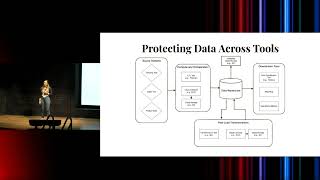
Speaker: Jessica Larson (Data Engineer & Author of “Snowflake Access Control”)
This tech talk is a part of the Data Engineering Open Forum at Netflix 2024. The requirements for creating a new data warehouse in the post-GDPR world are significantly different from those of the pre-GDPR world, such as the need to prioritize sensitive data protection and regulatory compliance over performance and cost. In this talk, Jessica Larson shares her takeaways from building a new data platform post-GDPR.
If you are interested in attending a future Data Engineering Open Forum, we highly recommend you join our Google Group (https://groups.google.com/g/data-engineering-open-forum) to stay tuned to event announcements.
Are you navigating the complexities of responsible AI and data protection? Recent studies show that 80% of enterprises struggle with GDPR and other privacy regulations. AWS AI/ML services prioritize privacy and ethical standards, offering data anonymization, secure environments, and compliance controls. In this lightning talk, learn how AWS services facilitate responsible cloud security practices, alignment with regulatory requirements, and maintaining ethical standards. Enhance your AI capabilities with AWS, where innovation aligns with integrity. Explore responsible AI in cloud security and experience a Privacy Nexus demo in PartyRock, an Amazon Bedrock Playground, to enhance safety and trust with AWS.
Learn more about AWS re:Inforce at https://go.aws/reinforce.
Subscribe: More AWS videos: http://bit.ly/2O3zS75 More AWS events videos: http://bit.ly/316g9t4
ABOUT AWS Amazon Web Services (AWS) hosts events, both online and in-person, bringing the cloud computing community together to connect, collaborate, and learn from AWS experts.
AWS is the world's most comprehensive and broadly adopted cloud platform, offering over 200 fully featured services from data centers globally. Millions of customers—including the fastest-growing startups, largest enterprises, and leading government agencies—are using AWS to lower costs, become more agile, and innovate faster.
reInforce2024 #CloudSecurity #AWS #AmazonWebServices #CloudComputing
Send us a text Welcome to the cozy corner of the tech world where ones and zeros mingle with casual chit-chat. Datatopics Unplugged is your go-to spot for relaxed discussions around tech, news, data, and society.
Dive into conversations that should flow as smoothly as your morning coffee (but don't), where industry insights meet laid-back banter. Whether you're a data aficionado or just someone curious about the digital age, pull up a chair, relax, and let's get into the heart of data, unplugged style!
In this episode: Slack's Data Practices: Discussing Slack's use of customer data to build models, the risks of global data leakage, and the impact of GDPR and AI regulations.ChatGPT's Data Analysis Improvements: Discussing new features in ChatGPT that let you interrogate your data like a pro. The Loneliness of Data Scientists: Why being a lone data wolf is tough, and how collaboration is the key to success. Rustworkx for Graph Computation: Evaluating Rustworkx as a robust tool for graphs compared to Networkx.Dolt - Git for Data: Comparing Dolt and DVC as tools for data version control. Check it out.Veo by Google DeepMind: An overview of Google's Veo technology and its potential applications.Ilya Sutskever’s Departure from OpenAI: What does Ilya Sutskever’s exit mean for OpenAI with Jakub Pachocki stepping in?Hot Takes - No Data Engineering Roadmap? Debating the necessity of a data engineering roadmap and the prominence of SQL skills.
How do you craft a robust AI-focused data governance strategy that addresses not just technical issues, but also legal, ethical, and organizational angles? Any workable strategy must be able to adapt to an AI landscape that's changing almost any day, and will enforce responsible use of data.
In this session, Kristy Wedel will discuss the unique governance needs of AI, the critical importance of high-quality data, and policies that can evolve alongside learning algorithms through continuous assessment approaches. She will inclde data privacy and compliance—with a focus on GDPR and HIPAA—as well as ethical considerations, anonymization, and privacy. Attendees will leave with a practical understanding of documentation and how to equip stakeholders for success. Kristy will also offer practical guidelines for bias mitigation, fairness, and transparency in AI solutions.
Cookies were invented to help online shoppers, simply as an identifier so that online carts weren’t lost to the ether. Marketers quickly saw the power of using cookies for more than just maintaining session states, and moved to use them as part of their targeted advertising. Before we knew it, our online habits were being tracked, without our clear consent. The unregulated cookie-boom lasted until 2018 with the advent of GDPR and the CCPA. Since then marketers have been evolving their practices, looking for alternatives to cookie-tracking that will perform comparatively, and with the cookie being phased out in 2024, technologies like fingerprinting and new privacy-centric marketing strategies will play a huge role in how products meet users in the future. Cory Munchbach has spent her career on the cutting edge of marketing technology and brings years working with Fortune 500 clients from various industries to BlueConic. Prior to BluConic, she was an analyst at Forrester Research where she covered business and consumer technology trends and the fast-moving marketing tech landscape. A sought-after speaker and industry voice, Cory’s work has been featured in Financial Times, Forbes, Raconteur, AdExchanger, The Drum, Venture Beat, Wired, AdAge, and Adweek. A life-long Bostonian, Cory has a bachelor’s degree in political science from Boston College and spends a considerable amount of her non-work hours on various volunteer and philanthropic initiatives in the greater Boston community. In the episode, Richie and Cory cover successful marketing strategies and their use of data, the types of data used in marketing, how data is leveraged during different stages of the customer life cycle, the impact of privacy laws on data collection and marketing strategies, tips on how to use customer data while protecting privacy and adhering to regulations, the importance of data skills in marketing, the future of marketing analytics and much more. Links Mentioned in the Show: BlueConicMattel CreationsGoogle: Prepare for third-party cookie restrictionsData Clean Rooms[Course] Marketing Analytics for Business

This talk was recorded at Crunch Conference 2022. Julia from Pitch spoke about understanding the GDPR and applying privacy principles in your designs.
"Understanding these underlying concepts can help you make better, more balanced, and more privacy-conscious decisions."
The event was organized by Crafthub.
You can watch the rest of the conference talks on our channel.
If you are interested in more speakers, tickets and details of the conference, check out our website: https://crunchconf.com/ If you are interested in more events from our company: https://crafthub.events/

With the heightened attention on LLMs and what they can do, and the widening impact of AI on day-to-day life, the push by regulators across the globe to regulate AI is intensifying. As with GDPR in the privacy realm, the EU is leading the way with the EU Artificial Intelligence Act (AIA). Regulators everywhere will be looking to the AIA as precedent, and understanding the requirements imposed by the AIA is important for all players in the AI channel. Although not finalized, the basic framework regarding how the AIA will work is becoming clearer. The impact on developers and deployers of AI (‘providers’ and ‘users’ under the AIA) will be substantial. Although the AIA will probably not go into effect until early 2025, AI applications developed today will likely be affected, and design and development decisions made now should take the future regulations into account. In this session, we Matteo Quattrocchi, Brussels-based Director, Policy – EMEA, for BSA (the Software Alliance – the leading advocacy organization representing the enterprise software sector), will present an overview of the current proposed requirements under the AIA and give an update on the ongoing deliberations and likely timing for enactment. We will also highlight some of the ways the Lakehouse platform, including Managed MLflow, can help providers and users of ML-based applications meet the requirements of the AIA and other upcoming AI regulations.
Talk by: Matteo Quattrocchi and Scott Starbird
Connect with us: Website: https://databricks.com Twitter: https://twitter.com/databricks LinkedIn: https://www.linkedin.com/company/databricks Instagram: https://www.instagram.com/databricksinc Facebook: https://www.facebook.com/databricksinc
Kai Zenner has been working on the EI AI Act for a while, and we chat about his perspective on its evolution, challenges, and potential. Along the way, we discuss why the EU AI Act differs from GDPR, why regulating a quasi-global piece of legislation is very difficult, and much more.
I admit, politics and regulation are way outside my wheelhouse, and I learned a ton in this discussion. Given the impact the EU AI Act will affect the work of everyone involved with data, I think you'll learn a thing or two about not just the act itself, but also how the "sausage is made", so to speak. Enjoy!
LinkedIn: https://www.linkedin.com/in/kzenner/
Twitter: https://twitter.com/ZennerBXL
Site: https://www.kaizenner.eu
If you like this show, give it a 5-star rating on your favorite podcast platform.
Purchase Fundamentals of Data Engineering at your favorite bookseller.
Subscribe to my Substack: https://joereis.substack.com/
Databricks has been an essential part of the Conde Nast architecture for the last few years. Prior to building our centralized data platform, “evergreen,” we had similar challenges as many other organizations; siloed data, duplicated efforts for engineers, and a lack of collaboration between data teams. These problems led to mistrust in data sets and made it difficult to scale to meet the strategic globalization plan we had for Conde Nast.
Over the last few years we have been extremely successful in building a centralized data platform on Databricks in AWS, fully embracing the lakehouse vision from end-to-end. Now, our analysts and marketers can derive the same insights from one dataset and data scientists can use the same datasets for use cases such as personalization, subscriber propensity models, churn models and on-site recommendations for our iconic brands.
In this session, we’ll discuss how we plan to incorporate Unity Catalog and Delta Sharing as the next phase of our globalization mission. The evergreen platform has become the global standard for data processing and analytics at Conde. In order to manage the worldwide data and comply with GDPR requirements, we need to make sure data is processed in the appropriate region and PII data is handled appropriately. At the same time, we need to have a global view of the data to allow us to make business decisions at the global level. We’ll talk about how delta sharing allows us a simple, secure way to share de-identified datasets across regions in order to make these strategic business decisions, while complying with security requirements. Additionally, we’ll discuss how Unity Catalog allows us to secure, govern and audit these datasets in an easy and scalable manner.
Talk by: Zachary Bannor
Connect with us: Website: https://databricks.com Twitter: https://twitter.com/databricks LinkedIn: https://www.linkedin.com/company/databricks Instagram: https://www.instagram.com/databricksinc Facebook: https://www.facebook.com/databricksinc

Incredibly useful, knowledge graphs help organizations keep track of medical research, cybersecurity threat intelligence, GDPR compliance, web user engagement, and much more. They do so by storing interlinked descriptions of entities—objects, events, situations, or abstract concepts—and encoding the underlying information. How do you create a knowledge graph? And how do you move it from theory into production? Using hands-on examples, this practical book shows data scientists and data engineers how to build their own knowledge graphs. Authors Jesús Barrasa and Jim Webber from Neo4j illustrate common patterns for building knowledge graphs that solve many of today's pressing knowledge management problems. You'll quickly discover how these graphs become increasingly useful as you add data and augment them with algorithms and machine learning. Learn the organizing principles necessary to build a knowledge graph Explore how graph databases serve as a foundation for knowledge graphs Understand how to import structured and unstructured data into your graph Follow examples to build integration-and-search knowledge graphs Learn what pattern detection knowledge graphs help you accomplish Explore dependency knowledge graphs through examples Use examples of natural language knowledge graphs and chatbots Use graph algorithms and ML to gain insight into connected data
We talked about:
Katharine's background Katharine's ML privacy startup GDPR, CCPA, and the “opt-in as the default” approach What is data privacy? Finding Katharine's book – Practical Data Privacy The various definitions of data privacy and “user profiles” Privacy engineering and privacy-enhancing technologies Why data privacy is important What is differential privacy? The importance of keeping privacy in mind when designing systems Data privacy on the example of ChatGPT Katharine's resource suggestions for learning about data privacy
Links:
LinkedIn: https://www.linkedin.com/in/katharinejarmul/
Twitter: https://twitter.com/kjam
Free data engineering course: https://github.com/DataTalksClub/data-engineering-zoomcamp Join DataTalks.Club: https://datatalks.club/slack.html Our events: https://datatalks.club/events.html
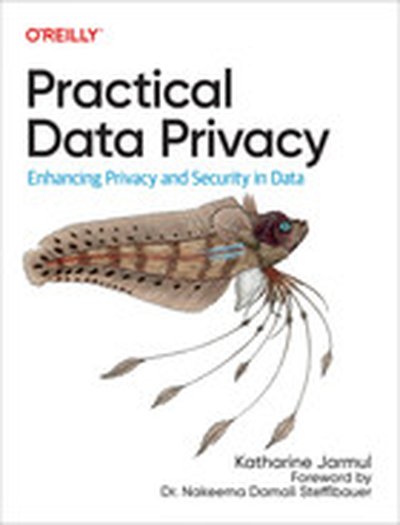
Between major privacy regulations like the GDPR and CCPA and expensive and notorious data breaches, there has never been so much pressure to ensure data privacy. Unfortunately, integrating privacy into data systems is still complicated. This essential guide will give you a fundamental understanding of modern privacy building blocks, like differential privacy, federated learning, and encrypted computation. Based on hard-won lessons, this book provides solid advice and best practices for integrating breakthrough privacy-enhancing technologies into production systems. Practical Data Privacy answers important questions such as: What do privacy regulations like GDPR and CCPA mean for my data workflows and data science use cases? What does "anonymized data" really mean? How do I actually anonymize data? How does federated learning and analysis work? Homomorphic encryption sounds great, but is it ready for use? How do I compare and choose the best privacy-preserving technologies and methods? Are there open-source libraries that can help? How do I ensure that my data science projects are secure by default and private by design? How do I work with governance and infosec teams to implement internal policies appropriately?
Summary
With the rise of the web and digital business came the need to understand how customers are interacting with the products and services that are being sold. Product analytics has grown into its own category and brought with it several services with generational differences in how they approach the problem. NetSpring is a warehouse-native product analytics service that allows you to gain powerful insights into your customers and their needs by combining your event streams with the rest of your business data. In this episode Priyendra Deshwal explains how NetSpring is designed to empower your product and data teams to build and explore insights around your products in a streamlined and maintainable workflow.
Announcements
Hello and welcome to the Data Engineering Podcast, the show about modern data management Join in with the event for the global data community, Data Council Austin. From March 28-30th 2023, they'll play host to hundreds of attendees, 100 top speakers, and dozens of startups that are advancing data science, engineering and AI. Data Council attendees are amazing founders, data scientists, lead engineers, CTOs, heads of data, investors and community organizers who are all working together to build the future of data. As a listener to the Data Engineering Podcast you can get a special discount of 20% off your ticket by using the promo code dataengpod20. Don't miss out on their only event this year! Visit: dataengineeringpodcast.com/data-council today! RudderStack helps you build a customer data platform on your warehouse or data lake. Instead of trapping data in a black box, they enable you to easily collect customer data from the entire stack and build an identity graph on your warehouse, giving you full visibility and control. Their SDKs make event streaming from any app or website easy, and their extensive library of integrations enable you to automatically send data to hundreds of downstream tools. Sign up free at dataengineeringpodcast.com/rudder Your host is Tobias Macey and today I'm interviewing Priyendra Deshwal about how NetSpring is using the data warehouse to deliver a more flexible and detailed view of your product analytics
Interview
Introduction How did you get involved in the area of data management? Can you describe what NetSpring is and the story behind it?
What are the activities that constitute "product analytics" and what are the roles/teams involved in those activities?
When teams first come to you, what are the common challenges that they are facing and what are the solutions that they have attempted to employ? Can you describe some of the challenges involved in bringing product analytics into enterprise or highly regulated environments/industries?
How does a warehouse-native approach simplify that effort?
There are many different players (both commercial and open source) in the product analytics space. Can you share your view on the role that NetSpring plays in that ecosystem? How is the NetSpring platform implemented to be able to best take advantage of modern warehouse technologies and the associated data stacks?
What are the pre-requisites for an organization's infrastructure/data maturity for being able to benefit from NetSpring? How have the goals and implementation of the NetSpring platform evolved from when you first started working on it?
Can you describe the steps involved in integrating NetSpring with an organization's existing warehouse?
What are the signals that NetSpring uses to understand the customer journeys of different organizations? How do you manage the variance of the data models in the warehouse while providing a consistent experience for your users?
Given that you are a product organization, how are you using NetSpring to power NetSpring? What are the most interesting, innovative, or unexpected ways that you have seen NetSpring used? What are the most interesting, unexpected, or challenging lessons that you have learned while working on NetSpring? When is NetSpring the wrong choice? What do you have planned for the future of NetSpring?
Contact Info
Parting Question
From your perspective, what is the biggest gap in the tooling or technology for data management today?
Closing Announcements
Thank you for listening! Don't forget to check out our other shows. Podcast.init covers the Python language, its community, and the innovative ways it is being used. The Machine Learning Podcast helps you go from idea to production with machine learning. Visit the site to subscribe to the show, sign up for the mailing list, and read the show notes. If you've learned something or tried out a project from the show then tell us about it! Email [email protected]) with your story. To help other people find the show please leave a review on Apple Podcasts and tell your friends and co-workers
Links
NetSpring ThoughtSpot Product Analytics Amplitude Mixpanel Customer Data Platform GDPR CCPA Segment
Podcast Episode
Rudderstack
Podcast Episode
The intro and outro music is from The Hug by The Freak Fandango Orchestra / CC BY-SA
Sponsored By:
TimeXtender:  TimeXtender is a holistic, metadata-driven solution for data integration, optimized for agility. TimeXtender provides all the features you need to build a future-proof infrastructure for ingesting, transforming, modelling, and delivering clean, reliable data in the fastest, most efficient way possible.
You can't optimize for everything all at once. That's why we take a holistic approach to data integration that optimises for agility instead of fragmentation. By unifying each layer of the data stack, TimeXtender empowers you to build data solutions 10x faster while reducing costs by 70%-80%. We do this for one simple reason: because time matters.
Go to dataengineeringpodcast.com/timextender today to get started for free!Rudderstack: 
RudderStack provides all your customer data pipelines in one platform. You can collect, transform, and route data across your entire stack with its event streaming, ETL, and reverse ETL pipelines.
RudderStack’s warehouse-first approach means it does not store sensitive information, and it allows you to leverage your existing data warehouse/data lake infrastructure to build a single source of truth for every team.
RudderStack also supports real-time use cases. You can Implement RudderStack SDKs once, then automatically send events to your warehouse and 150+ business tools, and you’ll never have to worry about API changes again.
Visit dataengineeringpodcast.com/rudderstack to sign up for free today, and snag a free T-Shirt just for being a Data Engineering Podcast listener.Data Council:  Join us at the event for the global data community, Data Council Austin. From March 28-30th 2023, we'll play host to hundreds of attendees, 100 top speakers, and dozens of startups that are advancing data science, engineering and AI. Data Council attendees are amazing founders, data scientists, lead engineers, CTOs, heads of data, investors and community organizers who are all working together to build the future of data. As a listener to the Data Engineering Podcast you can get a special discount off tickets by using the promo code dataengpod20. Don't miss out on our only event this year! Visit: dataengineeringpodcast.com/data-council Promo Code: dataengpod20Support Data Engineering Podcast
Send us a text Datatopics is a podcast presented by Kevin Missoorten to talk about the fuzzy and misunderstood concepts in the world of data, analytics, and AI and get to the bottom of things.
In this episode Kevin is joined by Ruben Lasuy - a fellow consultant in the space of GDPR, data governance and data strategy - to explore the so called "Collaborative Data Ecosystems", a datatopic surfing the Solid-protocol wave. But are Solid and its Solid Pods really the trigger for this new concept or is there more at play?
Datatopics is brought to you by Dataroots Music: The Gentlemen - DivKidThe thumbnail is generated by Midjourney