CDAOs are making investments daily. Perhaps you're looking to grow your team, or maybe making a technology investment to support GenAI, or another investment where you need to build buy-in and gain funding. This workshop will help you develop personal influence skills while also building a strong story for investment.
 talk-data.com
Topic
GenAI
Generative AI
ai
machine_learning
llm
1517
tagged
Activity Trend
192
peak/qtr
2020-Q1
2026-Q1
Top Events
Google Cloud Next '24
294
Google Cloud Next '25
165
AWS re:Invent 2024
124
Data + AI Summit 2025
98
DataFramed
94
Big Data LDN 2024
61
Big Data LDN 2025
31
Microsoft Ignite 2025
27
Secrets of Data Analytics Leaders
26
Exhibitors' Events - Auto created
23
O'Reilly AI & ML Books
23
gartner-data-analytics-india-2025
23
Philips, with its legacy of innovation and diverse AI portfolio, recognized the potential of Large Language Models. To enable scalable and responsible Generative AI adoption, Philips established the "AI Foundation." This multi-disciplinary team provides Generative AI as a service, addressing, awareness and education, rapid iteration, enterprise data integration, platform experiences, and robust compliance. Learn how The AI Foundation empowers Philips teams to build innovative, Generative AI-powered solutions at scale through foundational services and a governed platform.
Generative AI costs can rapidly escalate due to poor architectural decisions, lack of operational know-how and inadequate governance. In this session, we outline the top ten best practices that D&A leaders can adopt to optimize costs, enabling them to achieve quicker business value and operational efficiency.
The rapid advances in generative AI are fueling great excitement. Within just a few years, one-third of generative AI interactions are expected to utilize autonomous agents, propelling a new wave of productivity for enterprises. However, this potential can only be realized if the challenges surrounding AI trustworthiness, inferencing costs, domain-specificity, and effective and secure leveraging of quality enterprise data can be overcome. Data and AI leaders require a practical approach to accelerate AI adoption. Discover actionable techniques to maximize the value of your data for AI, learn from real-world examples of data and AI driven innovation in defence and aerospace, and gain insights into fostering greater AI productivity across your teams with IBM watsonx.
The Bank of India is redefining trust through the power of data. Join its Analytics Head as they share how AI, real-time analytics, and predictive insights are transforming security, transparency, and customer experience. Discover how a legacy institution is embracing agility to lead the future of banking.
In addition - see how organizations unlock value with SAS Viya — achieving over 100x performance gains and half the cost in compute and storage costs when modernizing SAS 9 environments. It will explore how Intelligent Decisioning and Generative AI are integrated with data and models to automate decisions and drive stronger business outcomes.
Rapid changes demand innovative decision-making tools beyond traditional methods. Businesses are turning to AI, BI, and data science to gain a competitive edge. The perfect blend of these technologies can be a true differentiator.
Take a quick look at what to expect from this session:
-Challenges in data and analytics today
-Unlocking the power of AI, BI, and data science
-The transformative role of AI-powered self-service BI platforms
-Live demos of next-generation analytics in action
Learn how these innovations can drive better decisions to deliver transformative business outcomes.
Moving AI projects from pilot to production requires substantial effort for most enterprises. AI Engineering provides the foundation for enterprise delivery of AI and generative AI solutions at scale unifying DataOps, MLOps and DevOps practices. This session will highlight AI engineering best practices across these dimensions covering people, processes and technology.
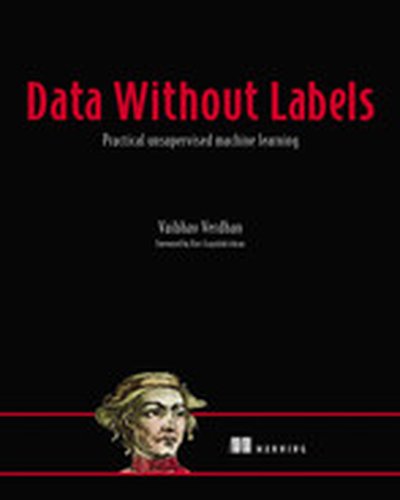
Discover all-practical implementations of the key algorithms and models for handling unlabeled data. Full of case studies demonstrating how to apply each technique to real-world problems. In Data Without Labels you’ll learn: Fundamental building blocks and concepts of machine learning and unsupervised learning Data cleaning for structured and unstructured data like text and images Clustering algorithms like K-means, hierarchical clustering, DBSCAN, Gaussian Mixture Models, and Spectral clustering Dimensionality reduction methods like Principal Component Analysis (PCA), SVD, Multidimensional scaling, and t-SNE Association rule algorithms like aPriori, ECLAT, SPADE Unsupervised time series clustering, Gaussian Mixture models, and statistical methods Building neural networks such as GANs and autoencoders Dimensionality reduction methods like Principal Component Analysis and multidimensional scaling Association rule algorithms like aPriori, ECLAT, and SPADE Working with Python tools and libraries like sci-kit learn, numpy, Pandas, matplotlib, Seaborn, Keras, TensorFlow, and Flask How to interpret the results of unsupervised learning Choosing the right algorithm for your problem Deploying unsupervised learning to production Maintenance and refresh of an ML solution Data Without Labels introduces mathematical techniques, key algorithms, and Python implementations that will help you build machine learning models for unannotated data. You’ll discover hands-off and unsupervised machine learning approaches that can still untangle raw, real-world datasets and support sound strategic decisions for your business. Don’t get bogged down in theory—the book bridges the gap between complex math and practical Python implementations, covering end-to-end model development all the way through to production deployment. You’ll discover the business use cases for machine learning and unsupervised learning, and access insightful research papers to complete your knowledge. About the Technology Generative AI, predictive algorithms, fraud detection, and many other analysis tasks rely on cheap and plentiful unlabeled data. Machine learning on data without labels—or unsupervised learning—turns raw text, images, and numbers into insights about your customers, accurate computer vision, and high-quality datasets for training AI models. This book will show you how. About the Book Data Without Labels is a comprehensive guide to unsupervised learning, offering a deep dive into its mathematical foundations, algorithms, and practical applications. It presents practical examples from retail, aviation, and banking using fully annotated Python code. You’ll explore core techniques like clustering and dimensionality reduction along with advanced topics like autoencoders and GANs. As you go, you’ll learn where to apply unsupervised learning in business applications and discover how to develop your own machine learning models end-to-end. What's Inside Master unsupervised learning algorithms Real-world business applications Curate AI training datasets Explore autoencoders and GANs applications About the Reader Intended for data science professionals. Assumes knowledge of Python and basic machine learning. About the Author Vaibhav Verdhan is a seasoned data science professional with extensive experience working on data science projects in a large pharmaceutical company. Quotes An invaluable resource for anyone navigating the complexities of unsupervised learning. A must-have. - Ganna Pogrebna, The Alan Turing Institute Empowers the reader to unlock the hidden potential within their data. - Sonny Shergill, Astra Zeneca A must-have for teams working with unstructured data. Cuts through the fog of theory ili Explains the theory and delivers practical solutions. - Leonardo Gomes da Silva, onGRID Sports Technology The Bible for unsupervised learning! Full of real-world applications, clear explanations, and excellent Python implementations. - Gary Bake, Falconhurst Technologies
In this episode, Tristan talks to Zach Lloyd, founder of Warp—a terminal built for the modern era, including for AI agents. They explore the history of terminals, differences between terminals and shells, and what the future might look like. In a world driven by generative AI, the terminal could once again be the control center of computer usage. For full show notes and to read 6+ years of back issues of the podcast's companion newsletter, head to https://roundup.getdbt.com. The Analytics Engineering Podcast is sponsored by dbt Labs.
AI agents have enterprises in a chock-hold. From drafting your emails and scheduling your calendar to chatbots and omni-channel contact centre solutions with API integrations a lot is changing in white collar jobs. But, alongside the rise of trad wives we have the Stepford Wives, so I am 3D printing a robot to make my bed, iron and empty the dishwasher. How will embodied AI reshape what it means to be human, and how do we stay ahead of the curve.
Supported by Our Partners • WorkOS — The modern identity platform for B2B SaaS. • Modal — The cloud platform for building AI applications. • Cortex — Your Portal to Engineering Excellence. — Kubernetes is the second-largest open-source project in the world. What does it actually do—and why is it so widely adopted? In this episode of The Pragmatic Engineer, I’m joined by Kat Cosgrove, who has led several Kubernetes releases. Kat has been contributing to Kubernetes for several years, and originally got involved with the project through K3s (the lightweight Kubernetes distribution). In our conversation, we discuss how Kubernetes is structured, how it scales, and how the project is managed to avoid contributor burnout. We also go deep into: • An overview of what Kubernetes is used for • A breakdown of Kubernetes architecture: components, pods, and kubelets • Why Google built Borg, and how it evolved into Kubernetes • The benefits of large-scale open source projects—for companies, contributors, and the broader ecosystem • The size and complexity of Kubernetes—and how it’s managed • How the project protects contributors with anti-burnout policies • The size and structure of the release team • What KEPs are and how they shape Kubernetes features • Kat’s views on GenAI, and why Kubernetes blocks using AI, at least for documentation • Where Kat would like to see AI tools improve developer workflows • Getting started as a contributor to Kubernetes—and the career and networking benefits that come with it • And much more! — Timestamps (00:00) Intro (02:02) An overview of Kubernetes and who it’s for (04:27) A quick glimpse at the architecture: Kubernetes components, pods, and cubelets (07:00) Containers vs. virtual machines (10:02) The origins of Kubernetes (12:30) Why Google built Borg, and why they made it an open source project (15:51) The benefits of open source projects (17:25) The size of Kubernetes (20:55) Cluster management solutions, including different Kubernetes services (21:48) Why people contribute to Kubernetes (25:47) The anti-burnout policies Kubernetes has in place (29:07) Why Kubernetes is so popular (33:34) Why documentation is a good place to get started contributing to an open-source project (35:15) The structure of the Kubernetes release team (40:55) How responsibilities shift as engineers grow into senior positions (44:37) Using a KEP to propose a new feature—and what’s next (48:20) Feature flags in Kubernetes (52:04) Why Kat thinks most GenAI tools are scams—and why Kubernetes blocks their use (55:04) The use cases Kat would like to have AI tools for (58:20) When to use Kubernetes (1:01:25) Getting started with Kubernetes (1:04:24) How contributing to an open source project is a good way to build your network (1:05:51) Rapid fire round — The Pragmatic Engineer deepdives relevant for this episode: • Backstage: an open source developer portal • How Linux is built with Greg Kroah-Hartman • Software engineers leading projects • What TPMs do and what software engineers can learn from them • Engineering career paths at Big Tech and scaleups — See the transcript and other references from the episode at https://newsletter.pragmaticengineer.com/podcast — Production and marketing by https://penname.co/. For inquiries about sponsoring the podcast, email [email protected].
Get full access to The Pragmatic Engineer at newsletter.pragmaticengineer.com/subscribe
GenAI systems are evolving beyond basic information retrieval and question answering, becoming sophisticated agents capable of managing multi-turn dialogues and executing complex, multi-step tasks autonomously. However, reliably evaluating and systematically improving their performance remains challenging. In this session, we'll explore methods for assessing the behavior of LLM-driven agentic systems, highlighting techniques and showcasing actionable insights to identify performance bottlenecks and to creating better-aligned, more reliable agentic AI systems.
As we enter a new era of productivity, automation isn’t about armies of robots—it’s about enabling better decisions through algorithms. For knowledge workers, the true transformation is human-centric.
While generative AI and robotics capture headlines, the real foundation of successful automation is high-quality, well-governed data. Without it, your AI initiatives will stall, and your brand could suffer.
Join Soda and LexisNexis Risk Solutions to explore how empowering your people with data governance, observability, and literacy is the key to unlocking the full potential of agents and GenAI.
Summary In this episode of the Data Engineering Podcast Tulika Bhatt, a senior software engineer at Netflix, talks about her experiences with large-scale data processing and the future of data engineering technologies. Tulika shares her journey into the data engineering field, discussing her work at BlackRock and Verizon before joining Netflix, and explains the challenges and innovations involved in managing Netflix's impression data for personalization and user experience. She highlights the importance of balancing off-the-shelf solutions with custom-built systems using technologies like Spark, Flink, and Iceberg, and delves into the complexities of ensuring data quality and observability in high-speed environments, including robust alerting strategies and semantic data auditing.
Announcements Hello and welcome to the Data Engineering Podcast, the show about modern data managementData migrations are brutal. They drag on for months—sometimes years—burning through resources and crushing team morale. Datafold's AI-powered Migration Agent changes all that. Their unique combination of AI code translation and automated data validation has helped companies complete migrations up to 10 times faster than manual approaches. And they're so confident in their solution, they'll actually guarantee your timeline in writing. Ready to turn your year-long migration into weeks? Visit dataengineeringpodcast.com/datafold today for the details.Your host is Tobias Macey and today I'm interviewing Tulika Bhatt about her experiences working on large scale data processing and her insights on the future trajectory of the supporting technologiesInterview IntroductionHow did you get involved in the area of data management?Can you start by outlining the ways that operating at large scale change the ways that you need to think about the design of data systems?When dealing with small-scale data systems it can be feasible to have manual processes. What are the elements of large scal data systems that demand autopmation?How can those large-scale automation principles be down-scaled to the systems that the rest of the world are operating?A perennial problem in data engineering is that of data quality. The past 4 years has seen a significant growth in the number of tools and practices available for automating the validation and verification of data. In your experience working with high volume data flows, what are the elements of data validation that are still unsolved?Generative AI has taken the world by storm over the past couple years. How has that changed the ways that you approach your daily work?What do you see as the future realities of working with data across various axes of large scale, real-time, etc.?What are the most interesting, innovative, or unexpected ways that you have seen solutions to large-scale data management designed?What are the most interesting, unexpected, or challenging lessons that you have learned while working on data management across axes of scale?What are the ways that you are thinking about the future trajectory of your work??Contact Info LinkedInParting Question From your perspective, what is the biggest gap in the tooling or technology for data management today?Closing Announcements Thank you for listening! Don't forget to check out our other shows. Podcast.init covers the Python language, its community, and the innovative ways it is being used. The AI Engineering Podcast is your guide to the fast-moving world of building AI systems.Visit the site to subscribe to the show, sign up for the mailing list, and read the show notes.If you've learned something or tried out a project from the show then tell us about it! Email [email protected] with your story.Links BlackRockSparkFlinkKafkaCassandraRocksDBNetflix Maestro workflow orchestratorPagerdutyIcebergThe intro and outro music is from The Hug by The Freak Fandango Orchestra / CC BY-SA
Join us for a session focused on unlocking the real potential of AI through product thinking. Dive into why AI projects aren’t taking off. Discover the most important metric for GenAI applications. We'll walk through Shape, Nail, Scale, Run – a practical framework for turning AI ideas into successful, scalable solutions. Be inspired by a real-world case study of what we did for the UK’s oldest private bank with product-led thinking. This session is perfect for product leaders, designers, and anyone looking to bring AI to life in meaningful ways.
Among organizations that have adopted generative AI, only 33% report implementing it into functional processes. To seize productivity gains from AI, enterprises need to get the most from their data, ensure governance, and make it easier to use. For many, that means better integration with the workforce tools already in use. Learn how companies are developing AI agents that act with greater autonomy and how they are scaling them across diverse environments to deliver impact. Discover how to manage your AI assistants and agents in a unified, adaptable experience that safeguards investments.
Analytics is experiencing another monumental change. Just as visual drag and drop BI tools and augmented insights led to changes in analytics delivery, we now experience conversational interfaces, automated workflows and AI agents that cause us to rethink how analytics will be done. Join this session to learn the new technologies that are making an impact and how this will affect plans for future investment in analytics tools, platforms and solutions.
Engineering knowledge is often trapped in silos, limiting innovation. Fast adoption of GenAI with an integrated approach unlocks and scales knowledge, creating a competitive edge.
This session explores how AI accelerates decision-making, streamlines knowledge management, and drives business impact.
Discover real-world use cases and strategies to stay ahead with scalable, AI-driven solutions that seamlessly integrate into enterprise workflows, ensuring faster adoption and maximum value.
Come together for a discussion with peers to discuss your GenAI early wins and challenges. Peer Meetups are networking sessions that allow you to connect and share with a small group of your peers, without Gartner facilitation. Please make every effort to attend your Peer Meetup as other attendees will be looking forward to meeting with you.
Join us for this roundtable, tailored for Black and Brown technology leaders and open to all attendees, to explore the impact of GenAI on the workforce and underrepresented talent. As AI continues to shape the future of work, the high quality of diverse thought and talent holds both the promise of inclusivity and the hope of overcoming perpetuating biases. Together we’ll discuss how AI can be a double-edged sword — potentially amplifying existing inequalities and amplifying how diverse talent is highly qualified talent overall