talk-data.com talk-data.com

Topic

Git

version_control source_code_management collaboration

14

tagged

Activity Trend

16 peak/qtr
2020-Q1 2026-Q1

Activities

Showing filtered results

Filtering by: O'Reilly Data Science Books ×
Data Insight Foundations: Step-by-Step Data Analysis with R

This book is an essential guide designed to equip you with the vital tools and knowledge needed to excel in data science. Master the end-to-end process of data collection, processing, validation, and imputation using R, and understand fundamental theories to achieve transparency with literate programming, renv, and Git--and much more. Each chapter is concise and focused, rendering complex topics accessible and easy to understand. Data Insight Foundations caters to a diverse audience, including web developers, mathematicians, data analysts, and economists, and its flexible structure allows enables you to explore chapters in sequence or navigate directly to the topics most relevant to you. While examples are primarily in R, a basic understanding of the language is advantageous but not essential. Many chapters, especially those focusing on theory, require no programming knowledge at all. Dive in and discover how to manipulate data, ensure reproducibility, conduct thorough literature reviews, collect data effectively, and present your findings with clarity. What You Will Learn Data Management: Master the end-to-end process of data collection, processing, validation, and imputation using R. Reproducible Research: Understand fundamental theories and achieve transparency with literate programming, renv, and Git. Academic Writing: Conduct scientific literature reviews and write structured papers and reports with Quarto. Survey Design: Design well-structured surveys and manage data collection effectively. Data Visualization: Understand data visualization theory and create well-designed and captivating graphics using ggplot2. Who this Book is For Career professionals such as research and data analysts transitioning from academia to a professional setting where production quality significantly impacts career progression. Some familiarity with data analytics processes and an interest in learning R or Python are ideal.
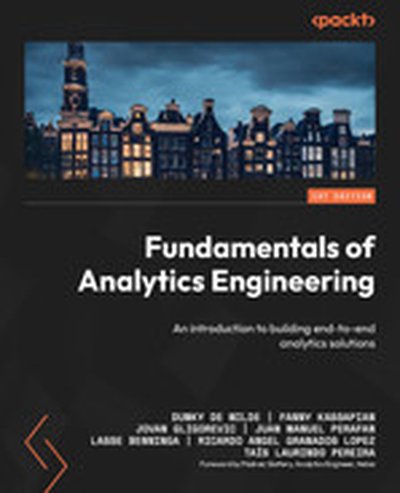
Fundamentals of Analytics Engineering

Master the art and science of analytics engineering with 'Fundamentals of Analytics Engineering.' This book takes you on a comprehensive journey from understanding foundational concepts to implementing end-to-end analytics solutions. You'll gain not just theoretical knowledge but practical expertise in building scalable, robust data platforms to meet organizational needs. What this Book will help me do Design and implement effective data pipelines leveraging modern tools like Airbyte, BigQuery, and dbt. Adopt best practices for data modeling and schema design to enhance system performance and develop clearer data structures. Learn advanced techniques for ensuring data quality, governance, and observability in your data solutions. Master collaborative coding practices, including version control with Git and strategies for maintaining well-documented codebases. Automate and manage data workflows efficiently using CI/CD pipelines and workflow orchestrators. Author(s) Dumky De Wilde, alongside six co-authors-experienced professionals from various facets of the analytics field-delivers a cohesive exploration of analytics engineering. The authors blend their expertise in software development, data analysis, and engineering to offer actionable advice and insights. Their approachable ethos makes complex concepts understandable, promoting educational learning. Who is it for? This book is a perfect fit for data analysts and engineers curious about transitioning into analytics engineering. Aspiring professionals as well as seasoned analytics engineers looking to deepen their understanding of modern practices will find guidance. It's tailored for individuals aiming to boost their career trajectory in data engineering roles, addressing fundamental to advanced topics.

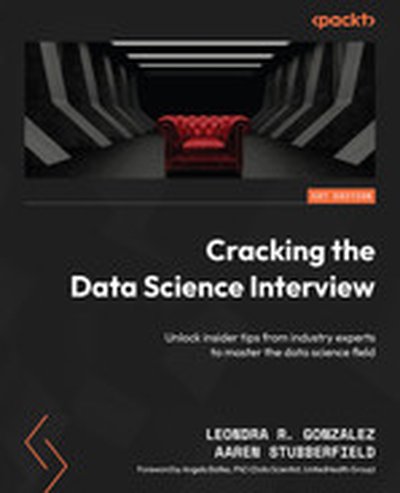
Cracking the Data Science Interview

"Cracking the Data Science Interview" is your ultimate resource for preparing for roles in the competitive field of data science. With this book, you'll explore essential topics such as Python, SQL, statistics, and machine learning, as well as learn practical skills for building portfolios and acing interviews. Follow its guidance and you'll be equipped to stand out in any data science interview. What this Book will help me do Confidently explain complex statistical and machine learning concepts. Develop models and deploy them while ensuring version control and efficiency. Learn and apply scripting skills in shell and Bash for productivity. Master Git workflows to handle collaborative coding in projects. Perfectly tailor portfolios and resumes to land data science opportunities. Author(s) Leondra R. Gonzalez, with years of data science and mentorship experience, co-authors this book with None Stubberfield, a seasoned expert in technology and machine learning. Together, they integrate their expertise to provide practical advice for navigating the data science job market. Who is it for? If you're preparing for data science interviews, this book is for you. It's ideal for candidates with a foundational knowledge of Python, SQL, and statistics looking to refine and expand their technical and professional skills. Professionals transitioning into data science will also find it invaluable for building confidence and succeeding in this rewarding field.

The Book of Dash

A swift and practical introduction to building interactive data visualization apps in Python, known as dashboards. Youâ??ve seen dashboards before; think election result visualizations you can update in real time, or population maps you can filter by demographic. With the Python Dash library youâ??ll create analytic dashboards that present data in effective, usable, elegant ways in just a few lines of code. The book is fast-paced and caters to those entirely new to dashboards. It will talk you through the necessary software, then get straight into building the dashboards themselves. Youâ??ll learn the basic format of a Dash app by building a twitter analysis dashboard that maps the number of likes certain accounts gained over time. Youâ??ll build up skills through three more sophisticated projects. The first is a global analysis app that compares country data in three areas: the percentage of a population using the internet, percentage of parliament seats held by women, and CO2 emissions. Youâ??ll then build an investment portfolio dashboard, and an app that allows you to visualize and explore machine learning algorithms. In this book you will: â?¢Create and run your first Dash apps â?¢Use the pandas library to manipulate and analyze social media data â?¢Use Git to download and build on existing apps written by the pros â?¢Visualize machine learning models in your apps â?¢Create and manipulate statistical and scientific charts and maps using Plotly Dash combines several technologies to get you building dashboards quickly and efficiently. This book will do the same.

Learn RStudio IDE: Quick, Effective, and Productive Data Science

Discover how to use the popular RStudio IDE as a professional tool that includes code refactoring support, debugging, and Git version control integration. This book gives you a tour of RStudio and shows you how it helps you do exploratory data analysis; build data visualizations with ggplot; and create custom R packages and web-based interactive visualizations with Shiny. In addition, you will cover common data analysis tasks including importing data from diverse sources such as SAS files, CSV files, and JSON. You will map out the features in RStudio so that you will be able to customize RStudio to fit your own style of coding. Finally, you will see how to save a ton of time by adopting best practices and using packages to extend RStudio. Learn RStudio IDE is a quick, no-nonsense tutorial of RStudio that will give you a head start to develop the insights you need in your data science projects. What YouWill Learn Quickly, effectively, and productively use RStudio IDE for building data science applications Install RStudio and program your first Hello World application Adopt the RStudio workflow Make your code reusable using RStudio Use RStudio and Shiny for data visualization projects Debug your code with RStudio Import CSV, SPSS, SAS, JSON, and other data Who This Book Is For Programmers who want to start doing data science, but don’t know what tools to focus on to get up to speed quickly.

Programming Skills for Data Science: Start Writing Code to Wrangle, Analyze, and Visualize Data with R, First Edition

The Foundational Hands-On Skills You Need to Dive into Data Science “Freeman and Ross have created the definitive resource for new and aspiring data scientists to learn foundational programming skills.” –From the foreword by Jared Lander, series editor Using data science techniques, you can transform raw data into actionable insights for domains ranging from urban planning to precision medicine. brings together all the foundational skills you need to get started, even if you have no programming or data science experience. Programming Skills for Data Science Leading instructors Michael Freeman and Joel Ross guide you through installing and configuring the tools you need to solve professional-level data science problems, including the widely used R language and Git version-control system. They explain how to wrangle your data into a form where it can be easily used, analyzed, and visualized so others can see the patterns you've uncovered. Step by step, you'll master powerful R programming techniques and troubleshooting skills for probing data in new ways, and at larger scales. Freeman and Ross teach through practical examples and exercises that can be combined into complete data science projects. Everything's focused on real-world application, so you can quickly start analyzing your own data and getting answers you can act upon. Learn to Install your complete data science environment, including R and RStudio Manage projects efficiently, from version tracking to documentation Host, manage, and collaborate on data science projects with GitHub Master R language fundamentals: syntax, programming concepts, and data structures Load, format, explore, and restructure data for successful analysis Interact with databases and web APIs Master key principles for visualizing data accurately and intuitively Produce engaging, interactive visualizations with ggplot and other R packages Transform analyses into sharable documents and sites with R Markdown Create interactive web data science applications with Shiny Collaborate smoothly as part of a data science team Register your book for convenient access to downloads, updates, and/or corrections as they become available. See inside book for details.

Mastering Microsoft Power BI

Dive right into the powerful world of Microsoft Power BI with this comprehensive guide. This book takes you through every step of mastering Power BI, from data modeling to creating actionable visualizations. You'll find clear explanations and practical steps to improve your data analytics and enhance business decision-making. What this Book will help me do Learn to connect and transform data using Power Query M Language to create clean, structured datasets. Understand how to design scalable and performance-optimized Power BI Data Models for effective analytics. Develop professional, visually appealing and interactive reports and dashboards to convey insights confidently. Implement best practices for managing Power BI solutions, including deployment, version control, and monitoring. Gain practical knowledge to administer Power BI across organizational structures, ensuring security and efficiency. Author(s) None Powell is a seasoned expert in business intelligence and a passionate educator in the field of data analytics. With extensive hands-on experience in Microsoft Power BI, None has supported many organizations in unlocking the potential of their data. The approachable writing style reflects a real-world yet proficient understanding of Power BI's capabilities. Who is it for? This book is ideal for business intelligence professionals looking to deepen their expertise in Microsoft Power BI. Readers already familiar with basic BI concepts and Power BI will gain significant technical depth. It suits professionals keen to enhance their data modeling, visualization, and analytics skills. If you're aiming to create impactful dashboards and benefit from advanced insights, this book is for you.

JMP Connections

Achieve best-in-class metrics and get more from your data with JMP JMP Connections is the small- and medium-sized business owner's guide to exceeding customer expectations by getting more out of your data using JMP. Uniquely bifunctional, this book is divided into two parts: the first half of the book shows you what JMP can do for you. You'll discover how to wring every last drop of insight out of your data, and let JMP parse reams of raw numbers into actionable insight that leads to better strategic decisions. You'll also discover why it works so well; clear explanations break down the Connectivity platform and metrics in business terms to demystify data analysis and JMP while giving you a macro view of the benefits that come from optimal implementation. The second half of the book is for your technical team, demonstrating how to implement specific solutions relating to data set development and data virtualization. In the end, your organization reduces Full Time Equivalents while increasing productivity and competitiveness. JMP is a powerful tool for business, but many organizations aren't even scratching the surface of what their data can do for them. This book provides the information and technical guidance your business needs to achieve more. Learn what a JMP Connectivity Platform can do for your business Understand Metrics-on-Demand, Real-Time Metrics, and their implementation Delve into technical implementation with information on configuration and management, version control, data visualization, and more Make better business decisions by getting more and better information from your data Business leadership relies on good information to make good business decisions—but what if you could increase the quality of the information you receive, while getting more of what you want to know and less of what you don't need to know? How would that affect strategy, operations, customer experience, and other critical areas? JMP can help with that, and JMP Connections provides real, actionable guidance on getting more out of JMP.

Beginning Data Science in R: Data Analysis, Visualization, and Modelling for the Data Scientist

Discover best practices for data analysis and software development in R and start on the path to becoming a fully-fledged data scientist. This book teaches you techniques for both data manipulation and visualization and shows you the best way for developing new software packages for R. Beginning Data Science in R details how data science is a combination of statistics, computational science, and machine learning. You'll see how to efficiently structure and mine data to extract useful patterns and build mathematical models. This requires computational methods and programming, and R is an ideal programming language for this. This book is based on a number of lecture notes for classes the author has taught on data science and statistical programming using the R programming language. Modern data analysis requires computational skills and usually a minimum of programming. What You Will Learn Perform data science and analytics using statistics and the R programming language Visualize and explore data, including working with large data sets found in big data Build an R package Test and check your code Practice version control Profile and optimize your code Who This Book Is For Those with some data science or analytics background, but not necessarily experience with the R programming language.

Learning Pentaho CTools

Learning Pentaho CTools is a comprehensive guide to building sophisticated and custom analytics dashboards using the powerful capabilities of Pentaho CTools. This book walks you through the process of creating interactive dashboards, integrating data sources, and applying data visualization best practices. You'll quickly gain the expertise needed to create impactful dashboards with ease. What this Book will help me do Master installing and configuring CTools for Pentaho to jumpstart dashboard development. Harness diverse data sources and deliver data in formats like CSV, JSON, and XML for customized analytics. Design and implement dynamic, visually stunning dashboards using Community Dashboard Framework (CDF). Deploy and integrate plugins, leverage widgets, and manage dashboards effectively with version control. Enhance interactivity by customizing dashboard components, charts, and filters to suit unique requirements. Author(s) None Gaspar, an expert in Pentaho and its tools, has been a Senior Consultant at Pentaho, where he gained in-depth experience crafting analytics solutions. He brings to this book his teaching passion and field expertise, combining theoretical insights with practical applications. His approachable style ensures readers can follow technical concepts effectively. Who is it for? This book is ideal for developers who are looking to enhance their understanding of Pentaho's CTools portfolio to build advanced dashboards. A working knowledge of JavaScript and CSS will enable readers to get the most out of this guide. Whether you aim to extend your analytics capabilities or learn the tools from scratch, this book bridges the gap between learning and application.

Mastering RStudio: Develop, Communicate, and Collaborate with R

"Mastering RStudio: Develop, Communicate, and Collaborate with R" is your guide to unlocking the potential of RStudio. You'll learn to use RStudio effectively in your data science projects, covering everything from creating R packages to interactive web apps with Shiny. By the end, you'll fully understand how to use RStudio tools to manage projects and share results effectively. What this Book will help me do Gain a comprehensive understanding of the RStudio interface and workflow optimizations. Effectively communicate data insights with R Markdown, including static and interactive documents. Create impactful data visualizations using R's diverse graphical systems and tools. Develop Shiny web applications to showcase and share analytical results. Learn to collaborate on projects using Git and GitHub, and understand R package development workflows. Author(s) Julian Hillebrand and None Nierhoff are experienced R developers with years of practical expertise in data science and software development. They have a passion for teaching how to utilize RStudio effectively. Their approach to writing combines practical examples with thorough explanations, ensuring readers can readily apply concepts to real-world scenarios. Who is it for? This book is ideal for R programmers and analysts seeking to enhance their workflows using RStudio. Whether you're looking to create professional data visualizations, develop R packages, or implement Shiny web applications, this book provides the tools you need. Suitable for those already familiar with basic R programming and fundamental concepts.

Bioinformatics Data Skills

Learn the data skills necessary for turning large sequencing datasets into reproducible and robust biological findings. With this practical guide, you’ll learn how to use freely available open source tools to extract meaning from large complex biological data sets. At no other point in human history has our ability to understand life’s complexities been so dependent on our skills to work with and analyze data. This intermediate-level book teaches the general computational and data skills you need to analyze biological data. If you have experience with a scripting language like Python, you’re ready to get started. Go from handling small problems with messy scripts to tackling large problems with clever methods and tools Process bioinformatics data with powerful Unix pipelines and data tools Learn how to use exploratory data analysis techniques in the R language Use efficient methods to work with genomic range data and range operations Work with common genomics data file formats like FASTA, FASTQ, SAM, and BAM Manage your bioinformatics project with the Git version control system Tackle tedious data processing tasks with with Bash scripts and Makefiles

IBM Cognos 10 Report Studio Cookbook - Second Edition

This cookbook is a comprehensive guide to mastering IBM Cognos 10 Report Studio, enabling users to become proficient in developing professional-grade reports. Through practical recipes, you will learn how to harness the full potential of Report Studio, mastering both fundamental and advanced features for real-world application. What this Book will help me do Efficiently organize and process data using advanced sorting and filtering techniques. Create visually engaging and functional reports, including dynamic drill-through links and enhanced formatting options. Master the use of conditional formatting, cascaded prompts, and master-detailed queries in your reports. Enhance reports with Active Reports, direct XML editing, and by integrating JavaScript and HTML elements. Adopt industry best practices for report development, including version control and regression testing. Author(s) The author of this cookbook is an experienced IBM Cognos consultant with years of experience in developing business intelligence solutions and creating comprehensive reports. They focus on combining technical expertise with practical examples, presenting information in an approachable and user-friendly manner. Who is it for? This book is ideal for Business Intelligence Developers with a working knowledge of IBM Cognos 10 who seek to enhance their report-building skills. It also serves Business Analysts or Power Users familiar with basic report authoring who aim to explore advanced features. Prior knowledge of IBM Cognos 10 architecture and basic Report Studio functionalities is assumed.

IBM Cognos 8 Report Studio Cookbook

The "IBM Cognos 8 Report Studio Cookbook" by Abhishek Sanghani provides over 80 hands-on recipes to enhance your proficiency in creating business reports using Cognos 8 Report Studio. From mastering basic techniques to leveraging advanced features, this book is your guide to developing reports that meet real-world business demands. What this Book will help me do Understand and utilize advanced techniques for sorting, filtering, and aggregating data in reports. Implement features like conditional formatting, cascaded prompts, and master-detail queries to enhance report functionality. Create dynamic, user-friendly business reports tailored to specific requirements. Make use of XML specifications to customize reports beyond the capabilities of the default tools. Adopt best practices in report development such as version control and regression testing. Author(s) Abhishek Sanghani is an experienced Business Intelligence professional specializing in IBM Cognos and data analytics. With practical knowledge from implementing solutions for various industries, he brings a wealth of insight into creating powerful business reports. Abhishek's approachable writing makes advanced Report Studio concepts accessible to readers. Who is it for? This book is ideally suited for Business Intelligence or MIS developers working with Cognos Report Studio, seeking advanced guidance for creating reports. Business analysts and power users wanting to extend beyond basic report authoring will also benefit greatly. The book assumes a functional understanding of Cognos Studio and familiarity with its ecosystem.