talk-data.com talk-data.com

Topic

JavaScript

programming_language web_development front_end

231

tagged

Activity Trend

12 peak/qtr
2020-Q1 2026-Q1

Activities

231 activities · Newest first

Create Web Charts with D3

Create Web Charts with D3 shows how to convert your data into eye-catching, innovative, animated, and highly interactive browser-based charts. This book is suitable for developers of all experience levels and needs: if you want power and control and need to create data visualization beyond traditional charts, then D3 is the JavaScript library for you. By the end of the book, you will have a good knowledge of all the elements needed to manage data from every possible source, from high-end scientific instruments to Arduino boards, from PHP SQL databases queries to simple HTML tables, and from Matlab calculations to reports in Excel. This book contains content previously published in Beginning JavaScript Charts. Create all kinds of charts using the latest technologies available on browsers Full of step-by-step examples, Create Web Charts with D3 introduces you gradually to all aspects of chart development, from the data source to the choice of which solution to apply. This book provides a number of tools that can be the starting point for any project requiring graphical representations of data, whether using commercial libraries or your own
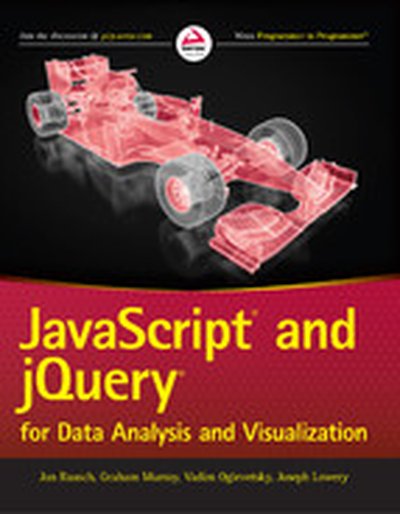
JavaScript and jQuery for Data Analysis and Visualization

Go beyond design concepts—build dynamic data visualizations using JavaScript JavaScript and jQuery for Data Analysis and Visualization goes beyond design concepts to show readers how to build dynamic, best-of-breed visualizations using JavaScript—the most popular language for web programming. The authors show data analysts, developers, and web designers how they can put the power and flexibility of modern JavaScript libraries to work to analyze data and then present it using best-of-breed visualizations. They also demonstrate the use of each technique with real-world use cases, showing how to apply the appropriate JavaScript and jQuery libraries to achieve the desired visualization. All of the key techniques and tools are explained in this full-color, step-by-step guide. The companion website includes all sample codes used to generate the visualizations in the book, data sets, and links to the libraries and other resources covered. Go beyond basic design concepts and get a firm grasp of visualization approaches and techniques using JavaScript and jQuery Discover detailed, step-by-step directions for building specific types of data visualizations in this full-color guide Learn more about the core JavaScript and jQuery libraries that enable analysis and visualization Find compelling stories in complex data, and create amazing visualizations cost-effectively Let JavaScript and jQuery for Data Analysis and Visualization be the resource that guides you through the myriad strategies and solutions for combining analysis and visualization with stunning results.

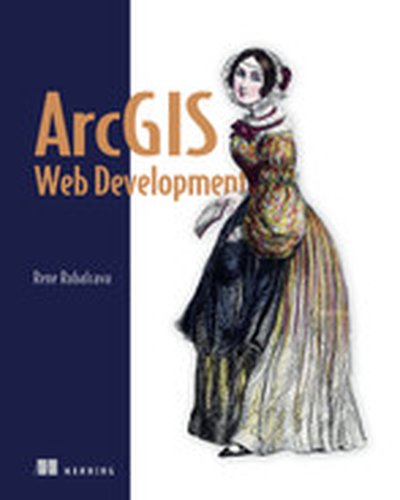
ArcGIS Web Development

ArcGIS Web Development is an example-rich tutorial designed to teach developers to use the ArcGIS JavaScript API to build custom GIS web applications. About the Technology Now you can unshackle your GIS application from a workstation! Using the ArcGIS JavaScript API, developers can build mobile and web-based maps and applications driven by ArcGIS data and functionality. Experienced ArcGIS developers will find that the familiar development environment provides a smooth transition to the web. Web developers new to GIS will be pleased by how easily they can apply their existing skills to GIS applications. About the Book ArcGIS Web Development is an example-rich guide that teaches you to use the ArcGIS JavaScript API to build custom GIS web applications. The book begins with easy-to-follow examples that introduce readers to the ArcGIS JavaScript API and show how you can apply simple customizations. As the book progresses, you'll explore a full-scale, web-mapping application. By the end you will be able to build web apps that have features you'd ordinarily expect to find only in dedicated GIS applications. What's Inside Build web-based GIS applications Customize the ArcGIS Javascript API tools Bring ArcGIS data to the web Create secure logins for mobile app users About the Reader Written for web developers familiar with JavaScript and basic GIS concepts. Experience with ArcGIS is helpful, but not necessary. About the Author Rene Rubalcava is the cofounder of SmartGeoTech, Inc., a GIS development company specializing in Esri technologies. Quotes The most succinct tutorial for using the ArcGIS JavaScript API. - Shaun Langley, Urban GIS Everything you need to build location and mapping web applications with ArcGIS. - Dennis Sellinger, Géotech, France Anyone getting started with the ArcGIS API for JavaScript should pick up this book. - Brian Arnold, Bazaarvoice, Inc. The author is thorough, and the pace is just right. - Jacqueline Wilson, Avon Grove Charter School

Sams Teach Yourself NoSQL with MongoDB in 24 Hours

NoSQL database usage is growing at a stunning 50% per year, as organizations discover NoSQL's potential to address even the most challenging Big Data and real-time database problems. Every NoSQL database is different, but one is the most popular by far: MongoDB. Now, in just 24 lessons of one hour or less, you can learn how to leverage MongoDB's immense power. Each short, easy lesson builds on all that's come before, teaching NoSQL concepts and MongoDB techniques from the ground up. Sams Teach Yourself NoSQL with MongoDB in 24 Hours covers all this, and much more: Learning how NoSQL is different, when to use it, and when to use traditional RDBMSes instead Designing and implementing MongoDB databases of diverse types and sizes Storing and interacting with data via Java, PHP, Python, and Node.js/Mongoose Choosing the right NoSQL distribution model for your application Installing and configuring MongoDB Designing MongoDB data models, including collections, indexes, and GridFS Balancing consistency, performance, and durability Leveraging the immense power of Map-Reduce Administering, monitoring, securing, backing up, and repairing MongoDB databases Mastering advanced techniques such as sharding and replication Optimizing performance

Visual Storytelling with D3: An Introduction to Data Visualization in JavaScript™

Master D3, Today’s Most Powerful Tool for Visualizing Data on the Web Data-driven graphics are everywhere these days, from websites and mobile apps to interactive journalism and high-end presentations. Using D3, you can create graphics that are visually stunning and powerfully effective. is a hands-on, full-color tutorial that teaches you to design charts and data visualizations to tell your story quickly and intuitively, and that shows you how to wield the powerful D3 JavaScript library. Visual Storytelling with D3 Drawing on his extensive experience as a professional graphic artist, writer, and programmer, Ritchie S. King walks you through a complete sample project—from conception through data selection and design. Step by step, you’ll build your skills, mastering increasingly sophisticated graphical forms and techniques. If you know a little HTML and CSS, you have all the technical background you’ll need to master D3. This tutorial is for web designers creating graphics-driven sites, services, tools, or dashboards; online journalists who want to visualize their content; researchers seeking to communicate their results more intuitively; marketers aiming to deepen their connections with customers; and for any data visualization enthusiast. Coverage includes Identifying a data-driven story and telling it visually Creating and manipulating beautiful graphical elements with SVG Shaping web pages with D3 Structuring data so D3 can easily visualize it Using D3’s data joins to connect your data to the graphical elements on a web page Sizing and scaling charts, and adding axes to them Loading and filtering data from external standalone datasets Animating your charts with D3’s transitions Adding interactivity to visualizations, including a play button that cycles through different views of your data Finding D3 resources and getting involved in the thriving online D3 community About the Website All of this book’s examples are available at ritchiesking.com/book, along with video tutorials, updates, supporting material, and even more examples, as they become available.

Leaflet.js Essentials

Leaflet.js Essentials is a practical guide designed to help web developers create engaging, mobile-friendly map applications using the Leaflet.js library. Through clear step-by-step tutorials, you will gain the skills to integrate interactive mapping features into your web projects. What this Book will help me do Build web maps integrating Tile Layers and Web Mapping Services. Develop interactive maps using Leaflet.js and JavaScript. Add GeoJSON data and create custom map markers. Create advanced visualizations such as heatmaps and choropleth maps. Enhance maps using third-party plugins and additional tools. Author(s) Paul Crickard III is an experienced software developer and an expert in geospatial technologies. With a passion for teaching complex topics in an accessible way, Paul has helped many developers integrate geospatial functionalities into their projects. His practical approach to Leaflet in this book equips developers with actionable knowledge. Who is it for? This book is ideal for web developers with a basic knowledge of JavaScript looking to enhance their projects with interactive maps. It suits both beginners to geospatial technologies and those familiar with mapping concepts. If you're aiming to create engaging maps or want to leverage Leaflet for app development, this is the right book for you.

Learning PHP, MySQL, JavaScript, CSS & HTML5, 3rd Edition

Build interactive, data-driven websites with the potent combination of open-source technologies and web standards, even if you only have basic HTML knowledge. With this popular hands-on guide, you’ll tackle dynamic web programming with the help of today’s core technologies: PHP, MySQL, JavaScript, CSS, and HTML5. Explore each technology separately, learn how to use them together, and pick up valuable web programming practices along the way. At the end of the book, you’ll put everything together to build a fully functional social networking site. Learn PHP in-depth, along with the basics of object-oriented programming Explore MySQL, from database structure to complex queries Create dynamic PHP web pages that tailor themselves to the user Manage cookies and sessions, and maintain a high level of security Master the JavaScript language and use it to create interactive web pages Use Ajax calls for background browser/server communication Acquire CSS2 & CSS3 skills for professionally styling your web pages Implement all the new HTML5 features, including geolocation, audio, video, and the canvas

Google Maps

Create custom applications with the Google Maps API Featuring step-by-step examples, this practical resource gets you started programming the Google Maps API with JavaScript in no time. Learn how to embed maps on web pages, annotate the embedded maps with your data, generate KML files to store and reuse your map data, and enable client applications to request spatial data through web services. Google Maps: Power Tools for Maximizing the API explains techniques for visualizing masses of data and animating multiple items on the map. You’ll also find out how to embed Google maps in desktop applications to combine the richness of the Windows interface with the unique features of the API. You can use the numerous samples included throughout this hands-on guide as your starting point for building customized applications. Create map-enabled web pages with a custom look Learn the JavaScript skills required to exploit the Google Maps API Create highly interactive interfaces for mapping applications Embed maps in desktop applications written in .NET Annotate maps with labels, markers, and shapes Understand geodesic paths and shapes and perform geodesic calculations Store geographical data in KML format Add GIS features to mapping applications Store large sets of geography data in databases and perform advanced spatial queries Use web services to request spatial data from within your script on demand Automate the generation of standalone web pages with annotated maps Use the Geocoding and Directions APIs Visualize large data sets using symbols and heatmaps Animate items on a map Bonus online content includes: A tutorial on The SQL Spatial application A bonus chapter on animating multiple airplanes Three appendices: debugging scripts in the browser; scalable vector graphics; and applying custom styles

Google Maps JavaScript API Cookbook

The Google Maps JavaScript API Cookbook is your go-to guide for mastering Google's powerful Maps JavaScript API. With its recipe-based approach, it helps you quickly learn how to include maps on websites and mobile devices, customize functionality, integrate advanced GIS tools, and make the most of Google's mapping power. What this Book will help me do Create customized maps with JavaScript for mobile and web applications. Integrate GIS services like GeoServer and ArcGIS with Google APIs. Add and manage vector and raster layers to enrich visual data. Work with geocoding and direction services for added intelligence. Extend API functionalities using external libraries and datasets. Author(s) None Dincer and None Uraz are experienced GIS developers with a strong background in mapping technologies. They have utilized the Google Maps JavaScript API in numerous real-world projects over years of professional experience. Their approachable writing style ensures that you can learn complex topics with ease. Who is it for? This book is designed for JavaScript developers who aim to enhance their skills by integrating mapping functionalities into their applications. It is suitable for those at an intermediate programming level, looking to include maps in web and mobile platforms. If you're interested in GIS and leveraging Google APIs for robust mapping solutions, this is for you.

Implementing IBM CICS JSON Web Services for Mobile Applications

This IBM® Redbooks® publication provides information about how you can connect mobile devices to IBM Customer Information Control System (CICS®) Transaction Server (CICS TS), using existing enterprise services already hosted on CICS, or to develop new services supporting new lines of business. This book describes the steps to develop, configure, and deploy a mobile application that connects either directly to CICS TS, or to CICS via IBM Worklight® Server. It also describes the advantages that your organization can realize by using Worklight Server with CICS. In addition, this Redbooks publication provides a broad understanding of the new CICS architecture that enables you to make new and existing mainframe applications available as web services using JavaScript Object Notation (JSON), and provides support for the transformation between JSON and application data. While doing so, we provide information about each resource definition, and its role when CICS handles or makes a request. We also describe how to move your CICS applications, and business, into the mobile space, and how to prepare your CICS environment for the following scenarios: Taking an existing CICS application and exposing it as a JSON web service Creating a new CICS application, based on a JSON schema Using CICS as a JSON client This Redbooks publication provides information about the installation and configuration steps for both Worklight Studio and Worklight Server. Worklight Studio is the Eclipse interface that a developer uses to implement a Worklight native or hybrid mobile application, and can be installed into an Eclipse instance. Worklight Server is where components developed for the server side (written in Worklight Studio), such as adapters and custom server-side authentication logic, run. CICS applications and their associated data constitute some of the most valuable assets owned by an enterprise. Therefore, the protection of these assets is an essential part of any CICS mobile project. This Redbooks publication, after a review of the main mobile security challenges, outlines the options for securing CICS JSON web services, and reviews how products, such as Worklight and IBM DataPower®, can help. It then shows examples of security configurations in CICS and Worklight.

Data Visualization with D3.js Cookbook

Dive into the world of data visualization with 'Data Visualization with D3.js Cookbook'. This book provides a hands-on approach to mastering data visualization using D3.js, a powerful JavaScript library that brings data to life using HTML, SVG, and CSS. Through step-by-step recipes, you'll learn everything you need to create stunning, interactive, and effective visualizations. What this Book will help me do Develop expertise in functional JavaScript to create elegant D3 visualizations. Learn to work with HTML and SVG elements efficiently to design effective visuals. Master the use of D3 scales and interpolators to represent data accurately. Enhance your understanding of D3 layouts and force-directed visuals for complex data. Create interactive and responsive visualizations for web applications. Author(s) Nick Zhu is an experienced software engineer and data visualization enthusiast with extensive expertise in JavaScript and web development. Authoring 'Data Visualization with D3.js Cookbook', Nick adeptly shares his knowledge, making complex topics approachable. His passion for clear communication shines in his instructive writing style. Who is it for? This book is designed for developers who have some knowledge of HTML, CSS, and JavaScript and aim to excel in data visualization using D3.js. If you strive for deeper mastery of D3 and wish to enhance your ability to create compelling graphics, this book is ideal for you. It serves both as a learning resource for newcomers and a quick reference for experienced practitioners. Your goal to transform data into impactful visuals aligns perfectly with the insights offered.

JavaScript and JSON Essentials

"JavaScript and JSON Essentials" is a focused tutorial that introduces you to the lightweight JSON data format, essential for effective data storage and transfer with JavaScript. By following this book, you'll gain the expertise to work with JSON in web applications, including tasks such as serialization, asynchronous calls, and debugging. What this Book will help me do Fully understand the structure and use of JSON and how it integrates with JavaScript. Learn to implement synchronous and asynchronous data transfers using JSON. Develop skills in creating, updating, and manipulating JSON objects effectively. Master the design of web functionalities like the Carousel application using JSON. Gain knowledge about best practices in debugging and optimizing JSON for web applications. Author(s) Sai S. Sriparasa is a seasoned developer and educator with extensive experience in JavaScript and related technologies. Having worked on numerous data-driven projects, Sai integrates real-world scenarios into his writing. His tutorials are crafted to be approachable and practical, aimed at demystifying complex concepts for a diverse audience. Who is it for? This book is ideal for web developers who are familiar with JavaScript and seek to expand their understanding of JSON. Suitable for programmers who have a basic knowledge of HTML and some exposure to server-side languages like PHP or Python. Those aiming to integrate efficient data exchange formats into their web applications will find it highly beneficial. It's also a good resource for JavaScript developers wanting to delve deeper into the synchronous and asynchronous handling of data.

Agile Data Science

Mining big data requires a deep investment in people and time. How can you be sure you’re building the right models? With this hands-on book, you’ll learn a flexible toolset and methodology for building effective analytics applications with Hadoop. Using lightweight tools such as Python, Apache Pig, and the D3.js library, your team will create an agile environment for exploring data, starting with an example application to mine your own email inboxes. You’ll learn an iterative approach that enables you to quickly change the kind of analysis you’re doing, depending on what the data is telling you. All example code in this book is available as working Heroku apps. Create analytics applications by using the agile big data development methodology Build value from your data in a series of agile sprints, using the data-value stack Gain insight by using several data structures to extract multiple features from a single dataset Visualize data with charts, and expose different aspects through interactive reports Use historical data to predict the future, and translate predictions into action Get feedback from users after each sprint to keep your project on track

IBM Cognos 10 Report Studio Cookbook - Second Edition

This cookbook is a comprehensive guide to mastering IBM Cognos 10 Report Studio, enabling users to become proficient in developing professional-grade reports. Through practical recipes, you will learn how to harness the full potential of Report Studio, mastering both fundamental and advanced features for real-world application. What this Book will help me do Efficiently organize and process data using advanced sorting and filtering techniques. Create visually engaging and functional reports, including dynamic drill-through links and enhanced formatting options. Master the use of conditional formatting, cascaded prompts, and master-detailed queries in your reports. Enhance reports with Active Reports, direct XML editing, and by integrating JavaScript and HTML elements. Adopt industry best practices for report development, including version control and regression testing. Author(s) The author of this cookbook is an experienced IBM Cognos consultant with years of experience in developing business intelligence solutions and creating comprehensive reports. They focus on combining technical expertise with practical examples, presenting information in an approachable and user-friendly manner. Who is it for? This book is ideal for Business Intelligence Developers with a working knowledge of IBM Cognos 10 who seek to enhance their report-building skills. It also serves Business Analysts or Power Users familiar with basic report authoring who aim to explore advanced features. Prior knowledge of IBM Cognos 10 architecture and basic Report Studio functionalities is assumed.

Mongoose for Application Development

This book is your hands-on guide to mastering Mongoose for application development on the Node.js stack. By working through practical examples, you'll learn how to define data schemas, efficiently interact with your database, and build a real-life project management application using this powerful tool. What this Book will help me do Master connecting Node.js applications to MongoDB using Mongoose. Define and leverage data schemas and models for robust data management. Perform CRUD operations seamlessly using Mongoose's accessible APIs. Integrate advanced concepts like schema validators, population, and sub-documents. Learn to enhance productivity by developing and utilizing reusable plugins. Author(s) Simon Holmes, an experienced web developer, specializes in JavaScript, Node.js, and database technologies. Known for his clear and effective teaching style, Simon has authored several books and tutorials to help developers be more proficient and productive. His insights on Mongoose bridge the gap between practical application and theoretical knowledge. Who is it for? This book is perfect for developers interested in Node.js who want to incorporate MongoDB into their applications and need a structured yet hands-on approach. It's suitable for learners new to Mongoose as well as experienced developers seeking to optimize their database interactions. Key audiences include backend developers, full-stack developers, and software engineers aiming to enhance their database schemas and queries.

Pro Data Visualization using R and JavaScript

Pro Data Visualization using R and JavaScript makes the R language approachable, and promotes the idea of data gathering and analysis. You'll see how to use R to interrogate and analyze your data, and then use the D3 JavaScript library to format and display that data in an elegant, informative, and interactive way. You will learn how to gather data effectively, and also how to understand the philosophy and implementation of each type of chart, so as to be able to represent the results visually. With the popularity of the R language, the art and practice of creating data visualizations is no longer the preserve of mathematicians, statisticians, or cartographers. As technology leaders, we can gather metrics around what we do and use data visualizations to communicate that information. Pro Data Visualization using R and JavaScript combines the power of the R language with the simplicity and familiarity of JavaScript to display clear and informative data visualizations. Gathering and analyzing empirical data is the key to truly understanding anything. We can track operational metrics to quantify the health of our products in production. We can track quality metrics of our projects, and even use our data to identify bad code. Visualizing this data allows anyone to read our analysis and easily get a deep understanding of the story the data tells. What you'll learn A rich understanding of how to gather, and analyze empirical data How to tell a story with data using data visualizations What types of data visualizations are best to use for the story that you want to tell with your data A comprehensive introduction to the R language, covering all the essentials Exploration of how to construct interactive data visualizations using JavaScript and JavaScript libraries Who this book is for Developers at all levels interested in data visualization, beginning to intermediate engineering managers, statisticians, mathematicians, economists and any others interested in data visualization.

PHP, MySQL, JavaScript & HTML5 All-in-One For Dummies

Get the basics on four key web programming tools in one great book! PHP, JavaScript, and HTML5 are essential programming languages for creating dynamic websites that work with the MySQL database. PHP and MySQL provide a robust, easy-to-learn, open-source solution for creating superb e-commerce sites and content management. JavaScript and HTML5 add support for the most current multimedia effects. This one-stop guide gives you what you need to know about all four! Seven self-contained minibooks cover web technologies, HTML5 and CSS3, PHP programming, MySQL databases, JavaScript, PHP with templates, and web applications. Addresses how PHP, MySQL, JavaScript, and HTML5 are vital tools for creating dynamic, database-driven websites and are especially important for e-commerce sites Serves as essential reading for web designers who are new to these technologies, offering a crash course covering all of these powerful technologies in this handy volume of seven self-contained minibooks Covers how to program in PHP and how to create and administer a MySQL database as well as how to manipulate MySQL data via a web interface Shows how to create a secure website and how to code popular e-business applications such as login programs and shopping carts With seven books in one, PHP, MySQL, JavaScript & HTML5 All-in-One For Dummies will turn your website into the center of attention in no time at all.

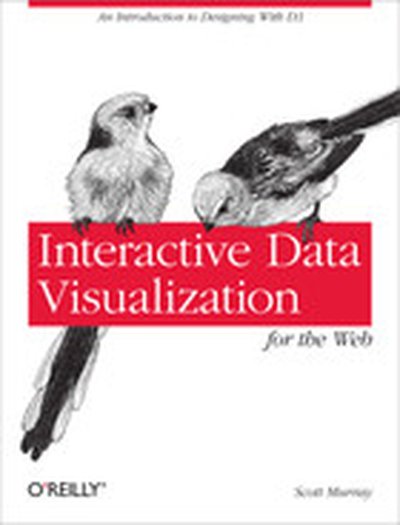
Interactive Data Visualization for the Web

Create and publish your own interactive data visualization projects on the Web—even if you have little or no experience with data visualization or web development. It’s easy and fun with this practical, hands-on introduction. Author Scott Murray teaches you the fundamental concepts and methods of D3, a JavaScript library that lets you express data visually in a web browser. Along the way, you’ll expand your web programming skills, using tools such as HTML and JavaScript. This step-by-step guide is ideal whether you’re a designer or visual artist with no programming experience, a reporter exploring the new frontier of data journalism, or anyone who wants to visualize and share data. Learn HTML, CSS, JavaScript, and SVG basics Dynamically generate web page elements from your data—and choose visual encoding rules to style them Create bar charts, scatter plots, pie charts, stacked bar charts, and force-directed layouts Use smooth, animated transitions to show changes in your data Introduce interactivity to help users explore data through different views Create customized geographic maps with data Explore hands-on with downloadable code and over 100 examples

MongoDB Applied Design Patterns

Whether you’re building a social media site or an internal-use enterprise application, this hands-on guide shows you the connection between MongoDB and the business problems it’s designed to solve. You’ll learn how to apply MongoDB design patterns to several challenging domains, such as ecommerce, content management, and online gaming. Using Python and JavaScript code examples, you’ll discover how MongoDB lets you scale your data model while simplifying the development process. Many businesses launch NoSQL databases without understanding the techniques for using their features most effectively. This book demonstrates the benefits of document embedding, polymorphic schemas, and other MongoDB patterns for tackling specific big data use cases, including: Operational intelligence: Perform real-time analytics of business data Ecommerce: Use MongoDB as a product catalog master or inventory management system Content management: Learn methods for storing content nodes, binary assets, and discussions Online advertising networks: Apply techniques for frequency capping ad impressions, and keyword targeting and bidding Social networking: Learn how to store a complex social graph, modeled after Google+ Online gaming: Provide concurrent access to character and world data for a multiplayer role-playing game