talk-data.com talk-data.com

Topic

JavaScript

programming_language web_development front_end

231

tagged

Activity Trend

12 peak/qtr
2020-Q1 2026-Q1

Activities

231 activities · Newest first

Source Code Analytics With Roslyn and JavaScript Data Visualization

Learn how to build an interactive source code analytics system using Roslyn and JavaScript. This concise 150 page book will help you create and use practical code analysis tools utilizing the new features of Microsoft's Roslyn compiler to understand the health of your code and identify parts of the code for refactoring. Source code is one of the biggest assets of a software company. However if not maintained well, it can become a big liability. As source code becomes larger. more complex and accessed via the cloud, maintaining code quality becomes even more challenging. The author provides straightforward tools and advice on how to manage code quality in this new environment. Roslyn exposes a set of APIs which allow developers to parse their C# and VB.NET code and drastically lower the barrier to entry for Meta programming in .NET. Roslyn has a dedicated set of APIs for creating custom refactoring for integrating with Visual Studio. This title will show readers how to use Roslyn along with industry standard JavaScript visualization APIs like HighCharts, D3.js etc to create a scalable and highly responsive source code analytics system. What You Will Learn Understand the Roslyn Syntax API Use Data Visualization techniques to assist code analysis process visually Code health monitoring matrices (from the standard of Code Query Language) Code mining techniques to identify design patterns used in source code Code forensics techniques to identify probable author of a given source code Techniques to identify duplicate/near duplicate code Who This Book is For .NET Software Developers and Architects
Mastering RethinkDB

Mastering RethinkDB offers a comprehensive guide to using the open-source, scalable database RethinkDB for real-time application development. Throughout this book, you'll gain practical knowledge on query management with ReQL, build dynamic web apps, and perform advanced database administration tasks. What this Book will help me do Gain expertise in managing and configuring RethinkDB clusters for optimal performance in real-time applications. Develop robust web applications using RethinkDB and integrate them seamlessly with Node.js. Leverage advanced querying features of ReQL, including geospatial and time-series queries. Enhance RethinkDB's capabilities with integration techniques for third-party libraries like ElasticSearch. Master deployment practices using platforms such as Docker and PaaS for production-grade applications. Author(s) None Shaikh, an expert in database technologies and real-time system design, brings years of hands-on experience working with open-source databases like RethinkDB. Known for writing practical technical books, None emphasizes real-world applications and clarity to help both novice and seasoned developers excel. Who is it for? This book is ideal for developers who are building real-time applications and want to adopt RethinkDB for their solutions. Readers should have a basic understanding of RethinkDB and Node.js to get the most benefit. It's particularly suited for programmers looking to deepen their database administration skills and enhance their real-time data handling expertise.

podcast_episode
by Tim Wilson (Analytics Power Hour - Columbus (OH) , Michael Helbling (Search Discovery)

Step right up! Step right up! We've got your org charts here! If an analyst falls in the woods, and she reports into a hub-and-spoke model, is the result best illustrated with a 3D pie chart? Join Michael and Tim as they conclude that, at the end of the day, effective communication is imperative regardless of where the analysts sit organizationally. And, because, "Why not?" ride along on a digression about the product management of analytics platforms within the organization! Miscellany referenced in this episode include: 10 Tips to Maximize Your JavaScript Debugging Experience, The Comedians of Comedy, and Extras.

Learning IBM Bluemix

Learning IBM Bluemix provides a comprehensive introduction to developing and deploying applications with the IBM Bluemix cloud platform. By following detailed examples and guided exercises, you'll understand the full life cycle of cloud-based application development, from initial setup to scaling and security. What this Book will help me do Understand the capabilities of IBM Bluemix as a Platform as a Service to build applications efficiently. Learn to develop and deploy applications using Cloud Foundry command line and Bluemix console. Explore microservices architecture and build scalable applications using Bluemix tools. Integrate on-premises systems with cloud-hosted applications on Bluemix. Develop mobile client applications with the support of Bluemix's Mobile services. Author(s) Sreelatha Sankaranarayanan is an experienced developer and cloud technology author, with extensive expertise in IBM Bluemix. Her passion for simplifying complex concepts is reflected in her engaging writing style, ensuring learners can master new skills effectively. She brings years of real-world experience in cloud computing and software development to her instructional materials. Who is it for? This book is tailored for developers aiming to transition to cloud-based application development using IBM Bluemix, with a focus on practical application. Readers should have foundational skills in Java and Node.js to fully benefit. Ideal for professionals looking to expand their capabilities with cloud infrastructure, or for those wanting to leverage microservices and cloud solutions in their applications.

In-Place Analytics with Live Enterprise Data with IBM DB2 Query Management Facility

IBM® DB2® Query Management Facility™ for z/OS® provides a zero-footprint, mobile-enabled, highly secure business analytics solution. IBM QMF™ V11.2.1 offers many significant new features and functions in keeping with the ongoing effort to broaden its usage and value to a wider set of users and business areas. In this IBM Redbooks® publication, we explore several of the new features and options that are available within this new release. This publication introduces TSO enhancements for QMF Analytics for TSO and QMF Enhanced Editor. A chapter describes how the QMF Data Service component connects to multiple mainframe data sources to accomplish the consolidation and delivery of data. This publication describes how self-service business intelligence can be achieved by using QMF Vision to enable self-service dashboards and data exploration. A chapter is dedicated to JavaScript support, demonstrating how application developers can use JavaScript to extend the capabilities of QMF. Additionally, this book describes methods to take advantage of caching for reduced CPU consumption, wider access to information, and faster performance. This publication is of interest to anyone who wants to better understand how QMF can enable in-place analytics with live enterprise data.

Essentials of Cloud Application Development on IBM Bluemix

Abstract This IBM® Redbooks® publication is based on the Presentations Guide of the course "Essentials of Cloud Application Development on IBM Bluemix" that was developed by the IBM Redbooks team in partnership with IBM Middle East and Africa (MEA) University Program. This course is designed to teach university students the basic skills that are required to develop, deploy, and test cloud-based applications that use the IBM Bluemix® cloud services. The primary target audience for this course is university students in undergraduate computer science and computer engineer programs with no previous experience working in cloud environments. However, anyone new to cloud computing can benefit from this course. After completing this course, you should be able to accomplish these tasks: Describe the factors that lead to the adoption of cloud computing. Describe infrastructure as a service, platform as a service, and software as a service. Define cloud computing. Describe IBM Bluemix. Describe the architecture of IBM Bluemix. Identify the runtimes and services that Bluemix offers. Explain how to get started with Bluemix. Describe Bluemix organizations, domains, spaces, and users. Create Bluemix applications. Use services in a Bluemix application. Set environmental variables that are used with Bluemix services. Deploy and run Bluemix applications. Describe how to create an IBM SDK for Node.js application that runs on Bluemix. Explain how to manage a Bluemix account with the Cloud Foundry CLI.[ ]Describe how to integrate workstation development platforms with Bluemix. Manage application code and assets with IBM Bluemix DevOps services. Work with the Git repository that is used by DevOps services. Describe the characteristics of REST APIs. Describe the use of JSON as the preferred data format for REST APIs. dentify the data services that are available on Bluemix. Describe the features in Bluemix for developing mobile applications. Create a MobileFirst Services Starter application on Bluemix. Send push notifications from Bluemix and receive them on the mobile device emulator. The workshop materials were created in August 2016. Thus, all IBM Bluemix features discussed in this Presentations Guide and Bluemix user interfaces used in the examples are current as of August 2016. Note: This IBM Redbooks publication references exercises that are NOT included with this book. The exercises are only available to students attending the course.

Data Visualization: Representing Information on Modern Web

Unleash the power of data by creating interactive, engaging, and compelling visualizations for the web About This Book Get a portable, versatile, and flexible data visualization design approach that will help you navigate the complex path towards success Get thorough explanation of the many visual variables and visualization taxonomy to provide you with a menu of creative options A comprehensive and contemporary introduction to data-driven visualization design and the most effective approaches to designing impact-maximizing and cognition-amplifying visualizations Who This Book Is For This course is for developers who are excited about data and who want to share that excitement with others and it will be handy for the web developers or data scientists who want to create interactive visualizations for the web. Prior knowledge of developing web applications is required. You should have a working knowledge of both JavaScript and HTML. What You Will Learn Harness the power of D3 by building interactive and real-time data-driven web visualizations Find out how to use JavaScript to create compelling visualizations of social data Identify the purpose of your visualization and your project's parameters to determine overriding design considerations across your project's execution Apply critical thinking to visualization design and get intimate with your dataset to identify its potential visual characteristics Explore the various features of HTML5 to design creative visualizations Discover what data is available on Stack Overflow, Facebook, Twitter, and Google+ Gain a solid understanding of the common D3 development idioms Find out how to write basic D3 code for server using Node.js In Detail Do you want to create more attractive charts? Or do you have huge data sets and need to unearth the key insights in a visual manner? Data visualization is the representation and presentation of data, using proven design techniques to bring alive the patterns, stories, and key insights that are locked away. This learning path is divided into three modules. The first module will equip you with the key techniques required to overcome contemporary data visualization challenges. After getting familiar with key concepts of data visualization, it's time to incorporate it with various technologies. In the second module, Social Data Visualization with HTML5 and JavaScript, it teaches you how to leverage HTML5 techniques through JavaScript to build visualizations. It also clears up how the often complicated OAuth protocol works to help you unlock a universe of social media data from sites such as Twitter, Facebook, and Google+. Once you are familiar with the concepts of incorporating data visualization with HTML5 and JavaScript, third module, Learning d3.js Data Visualization, will lead you to D3, which has emerged as one of the leading platforms to develop beautiful, interactive visualizations over the web. This module provides a strong foundation in designing compelling web visualizations with D3.js. By the end of this course, you will have unlocked the mystery behind successful data visualizations. This Learning Path combines some of the best that Packt has to offer in one complete, curated package. It includes content from the following Packt products: Data Visualization: a successful design process by Andy Kirk Social Data Visualization with HTML5 and JavaScript by Simon Timms Learning d3.js Data Visualization, Second Edition by Ændrew Rininsland and Swizec Teller Style and approach This course includes all the resources that will help you jump into creating interactive and engaging visualizations for the web. Through this comprehensive course, you’ll learn how to create engaging visualizations for the web to represent your data from start to finish! Downloading the example code for this book. You can download the example code files for all Packt books you have purchased from your account at http://www.PacktPub.com. If you purchased this book elsewhere, you can visit http://www.PacktPub.com/support and register to have the code file.

Data Visualization Toolkit: Using JavaScript, Rails™, and Postgres to Present Data and Geospatial Information

Create Beautiful Visualizations that Free Your Data to Tell Powerful Truths “The depth of Barrett Clark’s knowledge shines through in his writing: clear, concise, and confident. Barrett has been practicing all of this stuff in his day job for many years–Postgres, D3, GIS, all of it. The knowledge in this book is real-world and hard-earned!” –From the Foreword by Obie Fernandez is your hands-on, practical, and holistic guide to the art of visualizing data. You’ll learn how to use Rails, jQuery, D3, Leaflet, PostgreSQL, and PostGIS together, creating beautiful visualizations and maps that give your data a voice and to make it “dance.” Data Visualization Toolkit Barrett Clark teaches through real-world problems and examples developed specifically to illuminate every technique you need to generate stunningly effective visualizations. You’ll move from the absolute basics toward deep dives, mastering diverse visualizations and discovering when to use each. Along the way, you’ll build three start-to-finish visualization applications, using actual real estate, weather, and travel datasets. Clark addresses every component of data visualization: your data, database, application server, visualization libraries, and more. He explains data transformations; presents expert techniques in JavaScript, Ruby, and SQL; and illuminates key concepts associated with both descriptive statistics and geospatial data. Throughout, everything is aimed at one goal: to help you cut through the clutter and let your data tell all it can. This guide will help you Explore and understand the data visualization technology stack Master the thought process and steps involved in importing data Extract, transform, and load data in usable, reliable form Handle spotty data, or data that doesn’t line up with what your chart expects Use D3 to build pie and bar charts, scatter and box plots, and more Work effectively with time-series data Tweak Ruby and SQL to optimize performance with large datasets Use raw SQL in Rails: window functions, subqueries, and common table expressions Build chord diagrams and time-series aggregates Use separate databases or schema for reporting databases Integrate geographical data via geospatial SQL queries Construct maps with Leaflet and Rails Query geospatial data the “Rails way” and the “raw SQL way”

Cassandra: The Definitive Guide, 2nd Edition

Imagine what you could do if scalability wasn't a problem. With this hands-on guide, you’ll learn how the Cassandra database management system handles hundreds of terabytes of data while remaining highly available across multiple data centers. This expanded second edition—updated for Cassandra 3.0—provides the technical details and practical examples you need to put this database to work in a production environment. Authors Jeff Carpenter and Eben Hewitt demonstrate the advantages of Cassandra’s non-relational design, with special attention to data modeling. If you’re a developer, DBA, or application architect looking to solve a database scaling issue or future-proof your application, this guide helps you harness Cassandra’s speed and flexibility. Understand Cassandra’s distributed and decentralized structure Use the Cassandra Query Language (CQL) and cqlsh—the CQL shell Create a working data model and compare it with an equivalent relational model Develop sample applications using client drivers for languages including Java, Python, and Node.js Explore cluster topology and learn how nodes exchange data Maintain a high level of performance in your cluster Deploy Cassandra on site, in the Cloud, or with Docker Integrate Cassandra with Spark, Hadoop, Elasticsearch, Solr, and Lucene

Data Visualization with Python and JavaScript

Learn how to turn raw data into rich, interactive web visualizations with the powerful combination of Python and JavaScript. With this hands-on guide, author Kyran Dale teaches you how build a basic dataviz toolchain with best-of-breed Python and JavaScript libraries—including Scrapy, Matplotlib, Pandas, Flask, and D3—for crafting engaging, browser-based visualizations. As a working example, throughout the book Dale walks you through transforming Wikipedia’s table-based list of Nobel Prize winners into an interactive visualization. You’ll examine steps along the entire toolchain, from scraping, cleaning, exploring, and delivering data to building the visualization with JavaScript’s D3 library. If you’re ready to create your own web-based data visualizations—and know either Python or JavaScript— this is the book for you. Learn how to manipulate data with Python Understand the commonalities between Python and JavaScript Extract information from websites by using Python’s web-scraping tools, BeautifulSoup and Scrapy Clean and explore data with Python’s Pandas, Matplotlib, and Numpy libraries Serve data and create RESTful web APIs with Python’s Flask framework Create engaging, interactive web visualizations with JavaScript’s D3 library

Practical D3.js

Your indispensable guide to mastering the efficient use of D3.js in professional-standard data visualization projects. You will learn what data visualization is, how to work with it, and how to think like a D3.js expert, both practically and theoretically. Practical D3.js does not just show you how to use D3.js, it teaches you how to think like a data scientist and work with the data in the real world. In Part One, you will learn about theories behind data visualization. In Part Two, you will learn how to use D3.js to create the best charts and layouts. Uniquely, this book intertwines the technical details of D3.js with practical topics such as data journalism and the use of open government data. Written by leading data scientists Tarek Amr and Rayna Stamboliyska, this book is your guide to using D3.js in the real world -- add it to your library today. You Will Learn: How to think like a data scientist and present data in the best way What structure and design strategies you can use for compelling data visualization How to use data binding, animations and events, scales, and color pickers How to use shapes, path generators, arcs and polygons Who This Book is For: This book is for anyone who wants to learn to master the use of D3.js in a practical manner, while still learning the important theoretical aspects needed to enable them to work with their data in the best possible way.

Learning Pentaho CTools

Learning Pentaho CTools is a comprehensive guide to building sophisticated and custom analytics dashboards using the powerful capabilities of Pentaho CTools. This book walks you through the process of creating interactive dashboards, integrating data sources, and applying data visualization best practices. You'll quickly gain the expertise needed to create impactful dashboards with ease. What this Book will help me do Master installing and configuring CTools for Pentaho to jumpstart dashboard development. Harness diverse data sources and deliver data in formats like CSV, JSON, and XML for customized analytics. Design and implement dynamic, visually stunning dashboards using Community Dashboard Framework (CDF). Deploy and integrate plugins, leverage widgets, and manage dashboards effectively with version control. Enhance interactivity by customizing dashboard components, charts, and filters to suit unique requirements. Author(s) None Gaspar, an expert in Pentaho and its tools, has been a Senior Consultant at Pentaho, where he gained in-depth experience crafting analytics solutions. He brings to this book his teaching passion and field expertise, combining theoretical insights with practical applications. His approachable style ensures readers can follow technical concepts effectively. Who is it for? This book is ideal for developers who are looking to enhance their understanding of Pentaho's CTools portfolio to build advanced dashboards. A working knowledge of JavaScript and CSS will enable readers to get the most out of this guide. Whether you aim to extend your analytics capabilities or learn the tools from scratch, this book bridges the gap between learning and application.

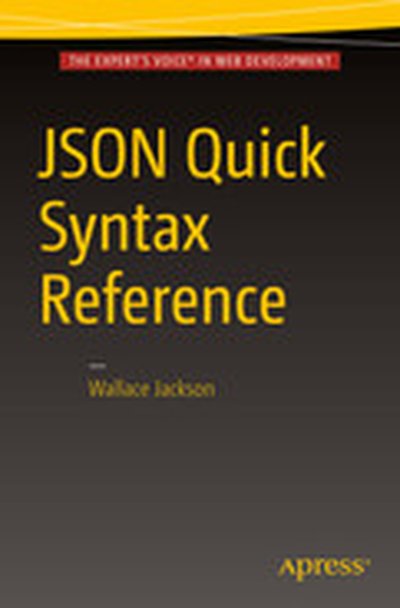
JSON Quick Syntax Reference

This compact quick scripting syntax reference on JSON covers syntax and parameters central to JSON object definitions, using the NetBeans 8.1 open source and Eclipse IDE software tool packages. JSON Quick Syntax Reference covers the syntax used in the JSON object definition language, logically organized by topical chapters, and getting more advanced as chapters progress, covering structures and file formats which are best for use with HTML5. Furthermore, this book includes the key factors regarding the data footprint optimization work process, the in-lining of .CSS and .JS files, and why a data footprint optimization work process is important.

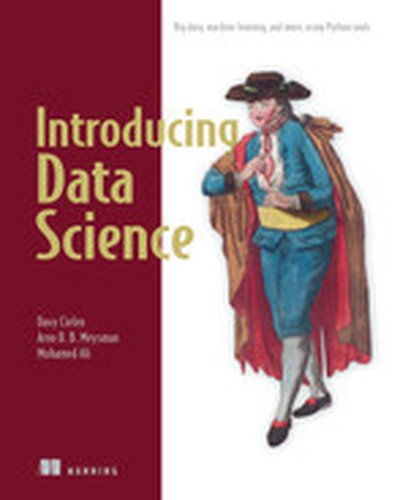
Introducing Data Science

Introducing Data Science teaches you how to accomplish the fundamental tasks that occupy data scientists. Using the Python language and common Python libraries, you'll experience firsthand the challenges of dealing with data at scale and gain a solid foundation in data science. About the Technology Many companies need developers with data science skills to work on projects ranging from social media marketing to machine learning. Discovering what you need to learn to begin a career as a data scientist can seem bewildering. This book is designed to help you get started. About the Book Introducing Data Science explains vital data science concepts and teaches you how to accomplish the fundamental tasks that occupy data scientists. You'll explore data visualization, graph databases, the use of NoSQL, and the data science process. You'll use the Python language and common Python libraries as you experience firsthand the challenges of dealing with data at scale. Discover how Python allows you to gain insights from data sets so big that they need to be stored on multiple machines, or from data moving so quickly that no single machine can handle it. This book gives you hands-on experience with the most popular Python data science libraries, Scikit-learn and StatsModels. After reading this book, you'll have the solid foundation you need to start a career in data science. What's Inside Handling large data Introduction to machine learning Using Python to work with data Writing data science algorithms About the Reader This book assumes you're comfortable reading code in Python or a similar language, such as C, Ruby, or JavaScript. No prior experience with data science is required. About the Authors Davy Cielen, Arno D. B. Meysman, and Mohamed Ali are the founders and managing partners of Optimately and Maiton, where they focus on developing data science projects and solutions in various sectors. Quotes Read this book if you want to get a quick overview of data science, with lots of examples to get you started! - Alvin Raj, Oracle The map that will help you navigate the data science oceans. - Marius Butuc, Shopify Covers the processes involved in data science from end to end… A complete overview. - Heather Campbell, Kainos A must-read for anyone who wants to get into the data science world. - Hector Cuesta, Big Data Bootcamp

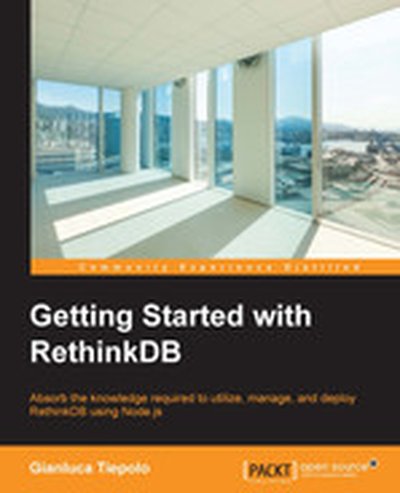
Getting Started with RethinkDB

Dive into the world of NoSQL databases with RethinkDB, a modern and powerful document-oriented database designed for developing real-time applications. Through this book, you'll explore essential RethinkDB features and learn how to integrate it seamlessly with Node.js, enabling you to build and deploy responsive web apps. What this Book will help me do Master the basics of installing and configuring RethinkDB on your system. Learn how to use the intuitive ReQL language to perform complex queries. Set up and manage RethinkDB clusters by mastering sharding and replication. Optimize database performance using indexing and advanced query techniques. Develop interactive real-time applications by integrating RethinkDB with Node.js. Author(s) None Tiepolo is an experienced developer and educator specializing in real-time database technologies. With extensive expertise in NoSQL solutions and hands-on experience in software engineering, Tiepolo combines a teacher's clarity with a programmer's practicality to make complex topics accessible. Who is it for? This book is tailored for developers eager to grasp RethinkDB, particularly those with an interest in building real-time applications. If you are new to database programming, you'll find accessible guidance here. Developers with basic experience in JavaScript or Node.js will gain further insights into real-world applications of these skills.

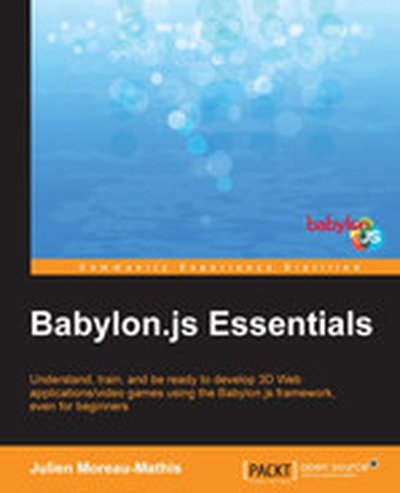
Babylon.js Essentials

Embark on a journey to create stunning web-based 3D applications and games using Babylon.js, a powerful JavaScript framework. This essentials book takes you from the ground up, teaching the theory and practical applications of 3D development, with a particular focus on ease and accessibility. By the end of this guide, you'll possess the skills to design and implement dynamic 3D experiences. What this Book will help me do Gain a fundamental understanding of TypeScript and its advantages in large-scale projects like 3D engines. Master the foundational principles of 3D development with Babylon.js, emphasized through hands-on practice and clear theory. Learn to apply materials in Babylon.js, enabling you to alter and enrich the visual appeal of 3D objects. Incorporate collision physics and gameplay dynamics by understanding essential concepts like impostors in 3D simulations. Utilize advanced Babylon.js features, such as 3D audio spatialization and rendering post-process effects, to create immersive experiences. Author(s) None Moreau-Mathis, a software developer with significant experience, has worked on developing cutting-edge applications at companies like Microsoft. Their expertise in 3D development frameworks, particularly Babylon.js, has enabled them to break down complex technical concepts into approachable lessons. Moreau-Mathis combines a passion for sharing knowledge with years of hands-on experience to provide readers with practical and inspirational advice. Who is it for? This book is perfect for developers familiar with HTML5 and seeking to begin 3D Web application and game development using Babylon.js. Readers should have basic programming knowledge, such as in Object-Oriented Programming, and familiarity with web development concepts to grasp framework architecture effectively. Whether you are enhancing your web development toolkit or starting out with 3D, this book will help you achieve your aims.

Mastering OpenLayers 3

Delve into the world of advanced web mapping with 'Mastering OpenLayers 3.' This comprehensive guide equips you with the knowledge to create responsive, robust web mapping applications using the OpenLayers 3 library, showcasing step-by-step examples and practical insights. What this Book will help me do Learn to effectively utilize OpenLayers 3's advanced features for web mapping. Integrate and customize the library in your own mapping applications proficiently. Develop thematic maps and apply stunning visual effects using advanced techniques. Create mobile-friendly, interactive web mapping solutions. Extend the capabilities of OpenLayers 3 with your own custom classes and scripts. Author(s) None Farkas is a skilled technical author with expertise in web mapping technologies and libraries like OpenLayers. Known for his hands-on approach, None brings clarity to complex topics, making them accessible to developers of various skill levels. Who is it for? This book is perfect for developers with basic to intermediate knowledge of JavaScript and GIS. If you are a front-end developer looking to build dynamic mapping applications or someone aiming to deepen your understanding of OpenLayers 3, this book is for you.

Web Application Development with R Using Shiny Second Edition - Second Edition

This book dives into the practical application of R's power combined with Shiny's simplicity to build web-based analytics and interactive data summary tools. By following this step-by-step guide, you'll go from the basics of building with R and Shiny to creating sophisticated custom dashboards and interactive web apps. What this Book will help me do Create interactive web apps and dashboards using Shiny with impressive user interfaces. Integrate Shiny applications into custom HTML and CSS-based web pages for enhanced flexibility. Produce user-friendly Shiny applications extended with JavaScript and jQuery for added functionality. Develop web solutions that include interactive graphics, maps, and data analysis summaries. Deliver and deploy web apps securely using cloud solutions or self-hosted servers. Author(s) Chris Beeley, an experienced R developer and teacher, has a robust background in statistical programming and data analysis. Chris is passionate about sharing knowledge through practical examples and hands-on exercises. As the author of this book, Chris ensures that readers receive a clear and approachable entry into web application development using Shiny. Who is it for? This book is ideal for data enthusiasts, analysts, and developers looking to transition their analytic skills to the web. It caters to readers with basic programming knowledge but does not require prior experience with R or Shiny. It is perfect for professionals and learners wanting to create interactive analytics tools, dashboards, or data-driven web applications.

The Definitive Guide to MongoDB: A complete guide to dealing with Big Data using MongoDB, Third Edition

The Definitive Guide to MongoDB, Third Edition, is updated for MongoDB 3 and includes all of the latest MongoDB features, including the aggregation framework introduced in version 2.2 and hashed indexes in version 2.4. The Third Edition also now includes Node.js along with Python. MongoDB is the most popular of the "Big Data" NoSQL database technologies, and it's still growing. David Hows from 10gen, along with experienced MongoDB authors Peter Membrey and Eelco Plugge, provide their expertise and experience in teaching you everything you need to know to become a MongoDB pro.

Building Responsive Data Visualization for the Web

Unchain your data from the desktop with responsive visualizations Building Responsive Data Visualization for the Web is a handbook for any front-end development team needing a framework for integrating responsive web design into the current workflow. Written by a leading industry expert and design lead at Starbase Go, this book provides a wealth of information and practical guidance from the perspective of a real-world designer. You'll walk through the process of building data visualizations responsively as you learn best practices that build upon responsive web design principles, and get the hands-on practice you need with exercises, examples, and source code provided in every chapter. These strategies are designed to be implemented by teams large and small, with varying skill sets, so you can apply these concepts and skills to your project right away. Responsive web design is the practice of building a website to suit base browser capability, then adding features that enhance the experience based on the user's device's capabilities. Applying these ideas to data produces visualizations that always look as if they were designed specifically for the device through which they are viewed. This book shows you how to incorporate these principles into your current practices, with highly practical hands-on training. Examine the hard data surrounding responsive design Master best practices with hands-on exercises Learn data-based document manipulation using D3.js Adapt your current strategies to responsive workflows Data is growing exponentially, and the need to visualize it in any context has become crucial. Traditional visualizations allow important data to become lost when viewed on a small screen, and the web traffic speaks for itself – viewers repeatedly demonstrate their preference for responsive design. If you're ready to create more accessible, take-anywhere visualizations, Building Responsive Data Visualization for the Web is your tailor-made solution.