talk-data.com talk-data.com

Topic

JavaScript

programming_language web_development front_end

231

tagged

Activity Trend

12 peak/qtr
2020-Q1 2026-Q1

Activities

231 activities · Newest first

Pro D3.js: Use D3.js to Create Maintainable, Modular, and Testable Charts

Go beyond the basics of D3.js to create maintainable, modular, and testable charts and to package them into a library that can be distributed as open source software or kept for private use. This book will show you how to transform regular D3.js chart code into reusable and extendable modules.You know the basics of working with D3.js, but it's time to become a professional D3.js practitioner. This book is your launching pad to refactoring code, composing complex visualizations from small components, working as a team with other developers, and integrating charts with a Continuous Integration system. You'll begin by creating a production-ready chart using D3.js v5, ES2015, and a test-driven approach and then move on to using and extending Britecharts, the reusable charting library based on Reusable API patterns. Finally, you'll see how to use D3.js along with React to document and build your charts to compose a charting library you can release into the NPM repository. With Pro D3.js, you'll become an accomplished D3.js developer in no time. What You Will Learn Create v5 D3.js charts with ES2016 and unit tests Develop modular, testable and extensible code with the Reusable API pattern Work with and extend Britecharts, a reusable charting library created at Eventbrite Use Webpack and npm to create and publish a charting library from your own chart collections Write reference documentation and build a documentation homepage for your library. Who This Book Is For Data scientists, data visualization engineers, and frontend developers with a fundamental knowledge of D3.js and some experience with JavaScript, as well as data journalists and consultants.

Are you down with ITP? What about ETP? Are you pretty sure that the decline in returning visitors to your site that has everyone in a tizzy is largely due to increasingly restrictive cookie handling by browsers? Do you really, really, REALLY want Google, Apple, Mozilla, and even Microsoft to get on the same page when it comes to cookie handling and JavaScript subtleties? So many questions! Lucky for us (and you!), Measure Slack legend (and L.L. Bean Senior Programmer/Analyst) Cory Underwood has some answers. Or, at least, he will depress you in delightful ways. For complete show notes, including links to items mentioned in this episode, a transcript of the show, and an update on ITP 2.3 from Cory, visit the show page.

Introducing MySQL Shell: Administration Made Easy with Python

Use MySQL Shell, the first modern and advanced client for connecting to and interacting with MySQL. It supports SQL, Python, and JavaScript. That’s right! You can write Python scripts and execute them within the shell interactively, or in batch mode. The level of automation available from Python combined with batch mode is especially helpful to those practicing DevOps methods in their database environments. Introducing MySQL Shell covers everything you need to know about MySQL Shell. You will learn how to use the shell for SQL, as well as the new application programming interfaces for working with a document store and even automating your management of MySQL servers using Python. The book includes a look at the supporting technologies and concepts such as JSON, schema-less documents, NoSQL, MySQL Replication, Group Replication, InnoDB Cluster, and more. MySQL Shell is the client that developers and databaseadministrators have been waiting for. Far more powerful than the legacy client, MySQL Shell enables levels of automation that are useful not only for MySQL, but in the broader context of your career as well. Automate your work and build skills in one of the most in-demand languages. With MySQL Shell, you can do both! What You'll Learn Use MySQL Shell with the newest features in MySQL 8 Discover what a Document Store is and how to manage it with MySQL Shell Configure Group Replication and InnoDB Cluster from MySQL Shell Understand the new MySQL Python application programming interfaces Write Python scripts for managing your data and the MySQL high availability features Who This Book Is For Developers and database professionals who want to automate their work and remain on the cutting edge of what MySQLhas to offer. Anyone not happy with the limited automation capabilities of the legacy command-line client will find much to like in this book on the MySQL Shell that supports powerful automation through the Python scripting language.

A simple recipe for a delicious analytics platform: combine 3 cups of data schema with a pinch of JavaScript in a large pot of cloud storage. Bake in the deployment oven for a couple of months, and savory insights will emerge. Right? Why does this recipe have both 5-star and 1-star ratings?! On this episode, long-standing digital analytics maven June Dershewitz, Director of Analytics at Twitch, drops by the podcast's analytics kitchen to discuss the relative merits of building versus buying an analytics platform. Or, of course, doing something in between!

The episode was originally 3.5 hours long, but we edited out most of Michael's tangents into gaming geekdown, which brought the run-time down to a more normal length.

For complete show notes, including links to items mentioned in this episode and a transcript of the show, visit the show page.

Learn D3.js

Dive into the world of data visualization with 'Learn D3.js'. This comprehensive guide introduces D3.js-the leading JavaScript library for creating interactive, data-driven visualizations on the web. By following practical examples, you'll understand core concepts of D3.js, learn to implement various types of visualizations, and develop skills to bring dynamic, responsive graphics to your projects. What this Book will help me do Master the fundamentals of D3.js and use it to produce stunning web-based data visualizations. Bind data to the DOM using D3.js and configure interactive transitions and animations. Gain experience generating a multitude of chart types such as bar, pie, scatter charts, and more. Incorporate user interactivity into your visualizations using D3.js effectively. Work with map-based data visualizations using GIS data and various geographical projections. Author(s) Helder da Rocha is an experienced developer and educator with a passion for data visualization. With a solid background in JavaScript and web technologies, he has crafted this book to make the complexities of D3.js accessible and engaging. His approach emphasizes practical, hands-on learning, nurturing both new and seasoned developers alike. Who is it for? Are you a web developer, designer, or data scientist aiming to create interactive data visualizations for the web? If you have foundational knowledge of HTML, CSS, and JavaScript, this book is your perfect guide. Whether you're dipping your toes into web-based charts or seeking to craft advanced interactive graphics, 'Learn D3.js' is tailored to empower your journey.

D3 for the Impatient

If you’re in a hurry to learn D3.js, the leading JavaScript library for web-based graphics and visualization, this book is for you. Written for technically savvy readers with a background in programming or data science, the book moves quickly, emphasizing unifying concepts and patterns. Anticipating common difficulties, author Philipp K. Janert teaches you how to apply D3 to your own problems. Assuming only a general programming background, but no previous experience with contemporary web development, this book explains supporting technologies such as SVG, HTML5, CSS, and the DOM as needed, making it a convenient one-stop resource for a technical audience. Understand D3 selections, the library’s fundamental organizing principle Learn how to create data-driven documents with data binding Create animated graphs and interactive user interfaces Draw figures with curves, shapes, and colors Use the built-in facilities for heatmaps, tree graphs, and networks Simplify your work by writing your own reusable components

Learn Chart.js

This book, 'Learn Chart.js', serves as a comprehensive guide to mastering Chart.js for creating stunning web-based data visualizations. By combining JavaScript, HTML5 Canvas, and Chart.js, you will understand how to turn raw data into interactive visual stories. What this Book will help me do Develop skills to create interactive and engaging data visualizations using the Chart.js library. Learn to efficiently load, parse, and handle data from external formats like CSV and JSON. Understand different chart types offered by Chart.js and learn when to best use each one. Gain the ability to customize Chart.js charts, such as adjusting properties for styling or animations. Acquire hands-on experience with practical examples, equipping you to apply what you learn in real-world scenarios. Author(s) Helder da Rocha brings his extensive experience in programming and software development to this book, offering readers a clear and practical approach to mastering Chart.js. With a deep understanding of data visualization and web technologies, he conveys complex concepts in a straightforward way. Who is it for? This book is ideal for web developers, data analysts, and designers who have basic proficiency in HTML, CSS, and JavaScript. It is particularly suited for professionals looking to create impactful web-based data visualizations using open-source tools. Additionally, the book assumes no prior knowledge of the Canvas element, making it accessible for Chart.js beginners.

podcast_episode
by Val Kroll , Julie Hoyer , Simo Ahava (NetBooster, Helsinki - Finland) , Tim Wilson (Analytics Power Hour - Columbus (OH) , Moe Kiss (Canva) , Michael Helbling (Search Discovery)

Are you deeply knowledgable in JavaScript, R, the DOM, Python, AWS, jQuery, Google Cloud Platform, and SQL? Good for you! If you're not, should you be? What does "technical" mean, anyway? And, is it even possible for an analyst to dive into all of these different areas? English philosophy expert The Notorious C.M.O. (aka, Simo Ahava) returns to the show to share his thoughts on the subject in this episode. For complete show notes, including links to items mentioned in this episode and a transcript of the show, visit the show page.

D3.js Quick Start Guide

D3.js Quick Start Guide is your go-to resource for mastering D3.js, a powerful JavaScript library for creating interactive visualizations in the browser. This book walks you through core concepts, from building scatter plots to creating force-directed graphs, helping you go from beginner to creating stunning visual data representations. What this Book will help me do Create interactive scatter plots showcasing data relationships. Implement bar graphs that dynamically update from API data. Design animated pie charts for visually appealing representations. Develop force-directed graphs to represent networked data. Leverage GeoJSON data for building informative interactive maps. Author(s) None Huntington is an experienced web developer with a clear knack for turning complex topics into understandable concepts. With expertise in data visualization and web technologies, Huntington explains technical subject matter in a friendly and approachable manner, ensuring learners grasp both theoretical and practical aspects effectively. Who is it for? This book is ideal for web developers and data enthusiasts eager to learn how to represent data via interactive visualizations using D3.js. If you have a basic understanding of JavaScript and are looking to enhance your web development skillset with dynamic visualization techniques, this guide is perfect for you. Through easy-to-follow examples, you'll get up to speed quickly and start building professional-looking visualizations right away. Whether you're a data scientist, interactive news developer, or just interested in bringing data to life, this book is your key to mastering D3.js.

Python Data Analytics: With Pandas, NumPy, and Matplotlib

Explore the latest Python tools and techniques to help you tackle the world of data acquisition and analysis. You'll review scientific computing with NumPy, visualization with matplotlib, and machine learning with scikit-learn. This revision is fully updated with new content on social media data analysis, image analysis with OpenCV, and deep learning libraries. Each chapter includes multiple examples demonstrating how to work with each library. At its heart lies the coverage of pandas, for high-performance, easy-to-use data structures and tools for data manipulation Author Fabio Nelli expertly demonstrates using Python for data processing, management, and information retrieval. Later chapters apply what you've learned to handwriting recognition and extending graphical capabilities with the JavaScript D3 library. Whether you are dealing with sales data, investment data, medical data, web page usage, or other data sets, Python Data Analytics, Second Edition is an invaluable reference with its examples of storing, accessing, and analyzing data. What You'll Learn Understand the core concepts of data analysis and the Python ecosystem Go in depth with pandas for reading, writing, and processing data Use tools and techniques for data visualization and image analysis Examine popular deep learning libraries Keras, Theano,TensorFlow, and PyTorch Who This Book Is For Experienced Python developers who need to learn about Pythonic tools for data analysis

Web Application Development with R Using Shiny - Third Edition

Transform your R programming into interactive web applications with "Web Application Development with R Using Shiny." This book takes you step-by-step through creating dynamic user interfaces and web solutions with the R Shiny package, empowering you to build impactful tools that showcase your data. What this Book will help me do Create interactive web applications using R Shiny. Apply JavaScript for added functionality and customization in Shiny apps. Effortlessly deploy Shiny apps online for accessibility. Understand Shiny UI functions to design effective user interfaces. Leverage data visualization techniques for insightful analytics in apps. Author(s) Chris Beeley and Shitalkumar R. Sukhdeve bring their profound expertise in R programming and Shiny development to this book. Chris is an experienced data scientist passionate about interactive data solutions, while Shitalkumar, with a strong computing background, shares his hands-on insights. Their collaborative and tutorial approach ensures learners grasp each concept smoothly. Who is it for? This book is ideal for R programmers eager to transition from static data evaluation to engaging, interactive web applications. It caters to professionals and enthusiasts seeking practical, hands-on coding guidance. Readers should have foundational R programming knowledge, ensuring a smooth transition into Shiny concepts.

Mastering The Faster Web with PHP, MySQL, and JavaScript

Explore cutting-edge web optimization techniques in 'Mastering The Faster Web with PHP, MySQL, and JavaScript'. This comprehensive guide equips developers with the tools and knowledge to create lightning-fast web applications using modern technologies, including PHP 7, asynchronous programming, advanced SQL, and efficient JavaScript. What this Book will help me do Efficiently use profiling and benchmarking tools to identify performance bottlenecks. Optimize PHP 7 applications through efficient data structures and logical improvements. Enhance database performance by identifying and solving inefficient SQL queries. Incorporate modern asynchronous programming and functional programming techniques into your workflow. Integrate seamless UI designs that prioritize application responsiveness and user experience. Author(s) None Caya is a seasoned web developer with extensive experience in PHP, MySQL, and JavaScript. Through their career, they have delved deep into profiling, optimization techniques, and modern web technologies to deliver high-performance web solutions. This book reflects their commitment to providing actionable insights and practical advice to fellow developers. Who is it for? Ideal readers of this book are PHP developers with foundational knowledge in programming and web technologies who aspire to build and optimize modern web applications. Experience in JavaScript is not required, as the book covers essential aspects needed for performance enhancements. If you're aiming to hone your skills in creating faster web solutions, this book suits your goals perfectly.

MySQL and JSON: A Practical Programming Guide

Practical instruction on using JavaScript Object Notation (JSON) with MySQL This hands-on guide teaches, step by step, how to use JavaScript Object Notation (JSON) with MySQL. Written by a MySQL Community Manager for Oracle , MySQL and JSON: A Practical Programming Guide shows how to quickly get started using JSON with MySQL and clearly explains the latest tools and functions. All content is based on the author’s years of interaction with MySQL professionals. Throughout, real-world examples and sample code guide you through the syntax and application of each method. You will get in-depth coverage of programming with the MySQL Document Store. •See how JavaScript Object Notation (JSON) works with MySQL •Use JSON as string data and JSON as a data type •Find the path, load data, and handle searches with REGEX •Work with JSON and non-JSON output •Build virtual generated columns and stored generated columns •Generate complex geometries using GeoJSON •Convert and manage data with JSON functions •Access JSON data, collections, and tables through MySQL Document Store

Learning PHP, MySQL & JavaScript, 5th Edition

Build interactive, data-driven websites with the potent combination of open source technologies and web standards, even if you have only basic HTML knowledge. In this update to this popular hands-on guide, you’ll tackle dynamic web programming with the latest versions of today’s core technologies: PHP, MySQL, JavaScript, CSS, HTML5, and key jQuery libraries. Web designers will learn how to use these technologies together and pick up valuable web programming practices along the way—including how to optimize websites for mobile devices. At the end of the book, you’ll put everything together to build a fully functional social networking site suitable for both desktop and mobile browsers. Explore MySQL, from database structure to complex queries Use the MySQLi extension, PHP’s improved MySQL interface Create dynamic PHP web pages that tailor themselves to the user Manage cookies and sessions and maintain a high level of security Enhance the JavaScript language with jQuery and jQuery mobile libraries Use Ajax calls for background browser-server communication Style your web pages by acquiring CSS2 and CSS3 skills Implement HTML5 features, including geolocation, audio, video, and the canvas element Reformat your websites into mobile web apps

Summary

Building an ETL pipeline is a common need across businesses and industries. It’s easy to get one started but difficult to manage as new requirements are added and greater scalability becomes necessary. Rather than duplicating the efforts of other engineers it might be best to use a hosted service to handle the plumbing so that you can focus on the parts that actually matter for your business. In this episode CTO and co-founder of Alooma, Yair Weinberger, explains how the platform addresses the common needs of data collection, manipulation, and storage while allowing for flexible processing. He describes the motivation for starting the company, how their infrastructure is architected, and the challenges of supporting multi-tenancy and a wide variety of integrations.

Preamble

Hello and welcome to the Data Engineering Podcast, the show about modern data management When you’re ready to build your next pipeline you’ll need somewhere to deploy it, so check out Linode. With private networking, shared block storage, node balancers, and a 40Gbit network, all controlled by a brand new API you’ve got everything you need to run a bullet-proof data platform. Go to dataengineeringpodcast.com/linode to get a $20 credit and launch a new server in under a minute. For complete visibility into the health of your pipeline, including deployment tracking, and powerful alerting driven by machine-learning, DataDog has got you covered. With their monitoring, metrics, and log collection agent, including extensive integrations and distributed tracing, you’ll have everything you need to find and fix performance bottlenecks in no time. Go to dataengineeringpodcast.com/datadog today to start your free 14 day trial and get a sweet new T-Shirt. Go to dataengineeringpodcast.com to subscribe to the show, sign up for the newsletter, read the show notes, and get in touch. Your host is Tobias Macey and today I’m interviewing Yair Weinberger about Alooma, a company providing data pipelines as a service

Interview

Introduction How did you get involved in the area of data management? What is Alooma and what is the origin story? How is the Alooma platform architected?

I want to go into stream VS batch here What are the most challenging components to scale?

How do you manage the underlying infrastructure to support your SLA of 5 nines? What are some of the complexities introduced by processing data from multiple customers with various compliance requirements?

How do you sandbox user’s processing code to avoid security exploits?

What are some of the potential pitfalls for automatic schema management in the target database? Given the large number of integrations, how do you maintain the

What are some challenges when creating integrations, isn’t it simply conforming with an external API?

For someone getting started with Alooma what does the workflow look like? What are some of the most challenging aspects of building and maintaining Alooma? What are your plans for the future of Alooma?

Contact Info

LinkedIn @yairwein on Twitter

Parting Question

From your perspective, what is the biggest gap in the tooling or technology for data management today?

Links

Alooma Convert Media Data Integration ESB (Enterprise Service Bus) Tibco Mulesoft ETL (Extract, Transform, Load) Informatica Microsoft SSIS OLAP Cube S3 Azure Cloud Storage Snowflake DB Redshift BigQuery Salesforce Hubspot Zendesk Spark The Log: What every software engineer should know about real-time data’s unifying abstraction by Jay Kreps RDBMS (Relational Database Management System) SaaS (Software as a Service) Change Data Capture Kafka Storm Google Cloud PubSub Amazon Kinesis Alooma Code Engine Zookeeper Idempotence Kafka Streams Kubernetes SOC2 Jython Docker Python Javascript Ruby Scala PII (Personally Identifiable Information) GDPR (General Data Protection Regulation) Amazon EMR (Elastic Map Reduce) Sequoia Capital Lightspeed Investors Redis Aerospike Cassandra MongoDB

The intro and outro music is from The Hug by The Freak Fandango Orchestra / CC BY-SA Support Data Engineering Podcast

JavaScript and JSON Essentials - Second Edition

Dive into "JavaScript and JSON Essentials" to discover how JSON works as a cornerstone in modern web development. Through hands-on examples and practical guidance, this book equips you with the knowledge to effectively use JSON with JavaScript for creating responsive, scalable, and capable web applications. What this Book will help me do Master JSON structures and utilize them in web development workflows. Integrate JSON data within Angular, Node.js, and other popular frameworks. Implement real-time JSON features using tools like Kafka and Socket.io. Understand BSON, GeoJSON, and JSON-LD formats for specialized applications. Develop efficient JSON handling for distributed and scalable systems. Author(s) None Joseph D'mello and Sai S Sriparasa are seasoned software developers and educators with extensive experience in JavaScript. Their expertise in web application development and JSON usage shines through in this book. They take a clear and engaging approach, ensuring that complex concepts are demystified and actionable. Who is it for? This book is best suited for web developers familiar with JavaScript who want to enhance their abilities to use JSON for building fast, data-driven web applications. Whether you're looking to strengthen your backend skills or learn tools like Angular and Kafka in conjunction with JSON, this book is made for you.

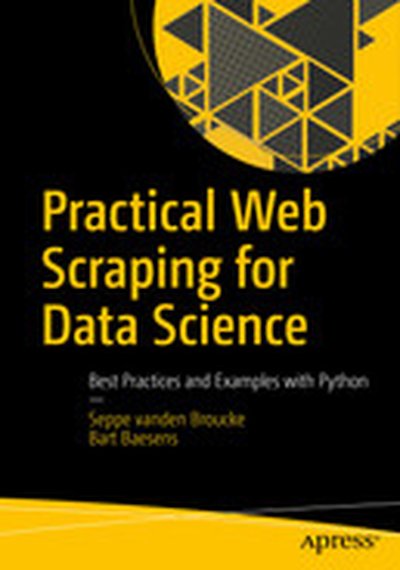
Practical Web Scraping for Data Science: Best Practices and Examples with Python

This book provides a complete and modern guide to web scraping, using Python as the programming language, without glossing over important details or best practices. Written with a data science audience in mind, the book explores both scraping and the larger context of web technologies in which it operates, to ensure full understanding. The authors recommend web scraping as a powerful tool for any data scientist’s arsenal, as many data science projects start by obtaining an appropriate data set. Starting with a brief overview on scraping and real-life use cases, the authors explore the core concepts of HTTP, HTML, and CSS to provide a solid foundation. Along with a quick Python primer, they cover Selenium for JavaScript-heavy sites, and web crawling in detail. The book finishes with a recap of best practices and a collection of examples that bring together everything you've learned and illustrate various data science use cases. What You'll Learn Leverage well-established best practices and commonly-used Python packages Handle today's web, including JavaScript, cookies, and common web scraping mitigation techniques Understand the managerial and legal concerns regarding web scraping Who This Book is For A data science oriented audience that is probably already familiar with Python or another programming language or analytical toolkit (R, SAS, SPSS, etc). Students or instructors in university courses may also benefit. Readers unfamiliar with Python will appreciate a quick Python primer in chapter 1 to catch up with the basics and provide pointers to other guides as well.

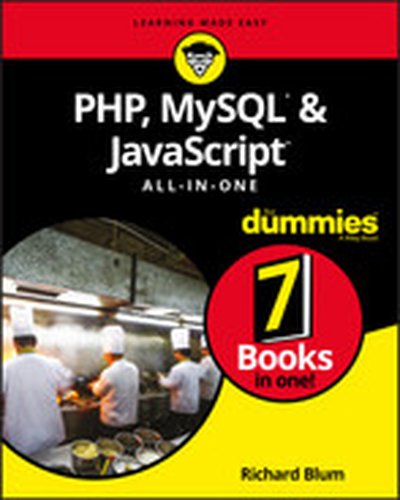
PHP, MySQL, & JavaScript All-in-One For Dummies

Explore the engine that drives the internet It takes a powerful suite of technologies to drive the most-visited websites in the world. PHP, mySQL, JavaScript, and other web-building languages serve as the foundation for application development and programming projects at all levels of the web. Dig into this all-in-one book to get a grasp on these in-demand skills, and figure out how to apply them to become a professional web builder. You’ll get valuable information from seven handy books covering the pieces of web programming, HTML5 & CSS3, JavaScript, PHP, MySQL, creating object-oriented programs, and using PHP frameworks. This book is ideal for the inexperienced programmer interested in adding these skills to their toolbox. New coders who've made it through an online course or boot camp will also find great value in how this book builds on what you already know. Helps you grasp the technologies that power web applications Covers PHP version 7.2 Includes coverage of the latest updates in web development Perfect for developers to use to solve problems

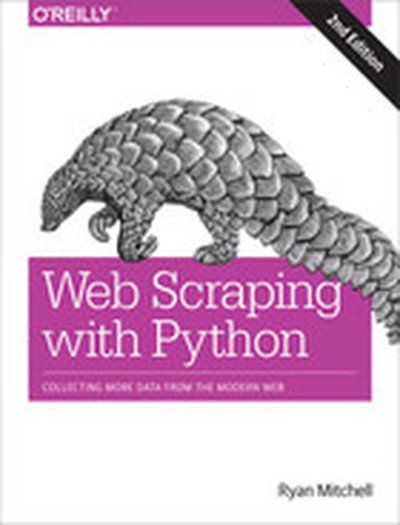
Web Scraping with Python, 2nd Edition

If programming is magic then web scraping is surely a form of wizardry. By writing a simple automated program, you can query web servers, request data, and parse it to extract the information you need. The expanded edition of this practical book not only introduces you web scraping, but also serves as a comprehensive guide to scraping almost every type of data from the modern web. Part I focuses on web scraping mechanics: using Python to request information from a web server, performing basic handling of the server's response, and interacting with sites in an automated fashion. Part II explores a variety of more specific tools and applications to fit any web scraping scenario you're likely to encounter. Parse complicated HTML pages Develop crawlers with the Scrapy framework Learn methods to store data you scrape Read and extract data from documents Clean and normalize badly formatted data Read and write natural languages Crawl through forms and logins Scrape JavaScript and crawl through APIs Use and write image-to-text software Avoid scraping traps and bot blockers Use scrapers to test your website

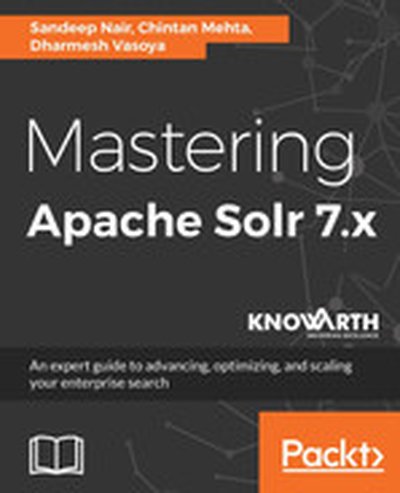
Mastering Apache Solr 7.x

"Mastering Apache Solr 7.x" is your practical guide to building, advancing, and optimizing enterprise search solutions using Solr 7. With this book, you will harness the robust features of Solr, implement efficient search capabilities, and tackle complex business intelligence problems to achieve unparalleled search performance. What this Book will help me do Develop and implement efficient schemas using the Solr Schema API. Optimize enterprise search performance with advanced querying and scoring techniques. Implement fault-tolerant and distributed search systems using SolrCloud. Leverage Apache Tika for seamless data indexing and content extraction. Utilize programming languages like JavaScript, Python, and Ruby to integrate with Solr. Author(s) With years of experience in search technologies and deep expertise in Apache Solr, authors None Nair, None Mehta, and Dharmesh Vasoya bring together a wealth of knowledge in this book. Their collaborative insights equip readers to master advanced Solr features, sharing practical examples and real-world applications with a passion for clarity and efficiency. Who is it for? This book is ideal for software developers, data engineers, and database architects who aim to design and implement effective enterprise search systems. It is tailored for readers with prior experience in Apache Solr or Java programming, focusing on those eager to enhance their search solution expertise. Achieve your advanced search system goals here.