talk-data.com talk-data.com

Topic

Power BI

Microsoft Power BI

bi data_visualization microsoft

31

tagged

Activity Trend

16 peak/qtr
2020-Q1 2026-Q1

Activities

31 activities · Newest first

Accelerate Data and AI transformation with Azure Databricks

As organizations aim to be more data-driven, integrated, scalable, and collaborative platforms are vital. Azure Databricks delivers unified data analytics for processing, AI, and real-time insights. Its full potential emerges within the integration with the Microsoft ecosystem. This session shows how Azure Databricks serves as the data and AI backbone while empowering users to leverage Microsoft solutions like Power BI, Power Apps and Microsoft Foundry for advanced, real-time decision-making.

Empower Business Users with AI driven insights in Microsoft Fabric

Discover how Microsoft Fabric empowers business teams by seamlessly connecting data across your organization to drive smarter decisions. In this session, we will cover how Power BI and data agents in Fabric can empower you to be an AI-first organization. Learn how Fabric helps you deliver trusted, AI-powered analytics at scale across the Microsoft ecosystem.

Innovation Session: Microsoft Fabric and Azure Databases - the data estate for AI

In today’s AI-driven economy, data isn’t just an asset, it’s your differentiator. Join us for major announcements across Microsoft Fabric, Power BI, Azure SQL, and Azure PostgreSQL, and see how these innovations come together to deliver a unified, intelligent data foundation for AI. Experience customer success stories, live demos, and an inside look at the roadmap shaping the future of analytics, transactional workloads, and real-time insights all in one integrated experience.

Bridging BI Tools: Deep Dive Into AI/BI Dashboards for Power BI Practitioners

In the rapidly-evolving field of data analytics, (AI/BI) dashboards and Power BI stand out as two formidable approaches, each offering unique strengths and catering to specific use cases. Power BI has earned its reputation for delivering user-friendly, highly customisable visualisations and reports for data analysis. On the other hand, AI/BI dashboards have gained good traction due to their seamless integration with the Databricks platform, making them an attractive option for data practitioners. This session will provide a comparison of these two tools, highlighting their respective features, strengths and potential limitations. Understanding the nuances between these tools is crucial for organizations aiming to make informed decisions about their data analytics strategy. This session will equip participants with the knowledge needed to select the most appropriate tool or combination of tools to meet their data analysis requirements and drive data-informed decision-making processes.

Data Triggers and Advanced Control Flow With Lakeflow Jobs

Lakeflow Jobs is the production-ready fully managed orchestrator for the entire Lakehouse with 99.95% uptime. Join us for a dive into how you can orchestrate your enterprise data operations, from triggering your jobs only when your data is ready to advanced control flow with conditionals, looping and job modularity — with demos! Attendees will gain practical insights into optimizing their data operations by orchestrating with Lakeflow Jobs: New task types: Publish AI/BI Dashboards, push to Power BI or ingest with Lakeflow Connect Advanced execution control: Reference SQL Task outputs, run partial DAGs and perform targeted backfills Repair runs: Re-run failed pipelines with surgical precision using task-level repair Control flow upgrades: Native for-each loops and conditional logic make DAGs more dynamic + expressive Smarter triggers: Kick off jobs based on file arrival or Delta table changes, enabling responsive workflows Code-first approach to pipeline orchestration

Unified Advanced Analytics: Integrating Power BI and Databricks Genie for Real-time Insights

In today’s data-driven landscape, business users expect seamless, interactive analytics without having to switch between different environments. This presentation explores our web application that unifies a Power BI dashboard with Databricks Genie, allowing users to query and visualize insights from the same dataset within a single, cohesive interface. We will compare two integration strategies: one that leverages a traditional webpage enhanced by an Azure bot to incorporate Genie’s capabilities, and another that utilizes Databricks Apps to deliver a smoother, native experience. We use the Genie API to build this solution. Attendees will learn the architecture behind these solutions, key design considerations and challenges encountered during implementation. Join us to see live demos of both approaches, and discover best practices for delivering an all-in-one, interactive analytics experience.

Geo-Powering Insights: The Art of Spatial Data Integration and Visualization

In this presentation, we will explore how to leverage Databricks' SQL engine to efficiently ingest and transform geospatial data. We'll demonstrate the seamless process of connecting to external systems such as ArcGIS to retrieve datasets, showcasing the platform's versatility in handling diverse data sources. We'll then delve into the power of Databricks Apps, illustrating how you can create custom geospatial dashboards using various frameworks like Streamlit and Flask, or any framework of your choice. This flexibility allows you to tailor your visualizations to your specific needs and preferences. Furthermore, we'll highlight the Databricks Lakehouse's integration capabilities with popular dashboarding tools such as Tableau and Power BI. This integration enables you to combine the robust data processing power of Databricks with the advanced visualization features of these specialized tools.

Power BI and Databricks: Practical Best Practices

This session is repeated. Power BI has long been the dominant BI tool in the market. In this session, we'll discuss how to get the most out of PowerBI and Databricks, beginning with high-level architecture and moving down into detailed how-to guides for troubleshooting common failure points. At the end, you'll receive a cheat-sheet which summarizes those best practices into an easy-to-reference format.

Sponsored by: Microsoft | Leverage the power of the Microsoft Ecosystem with Azure Databricks

Join us for this insightful session to learn how you can leverage the power of the Microsoft ecosystem along with Azure Databricks to take your business to the next level. Azure Databricks is a fully integrated, native, first-party solution on Microsoft Azure. Databricks and Microsoft continue to actively collaborate on product development, ensuring tight integration, optimized performance, and a streamlined support experience. Azure Databricks offers seamless integrations with Power BI, Azure Open AI, Microsoft Purview, Azure Data Lake Storage (ADLS) and Foundry. In this session, you’ll learn how you can leverage deep integration between Azure Databricks and the Microsoft solutions to empower your organization to do more with your data estate. You’ll also get an exclusive sneak peek into the product roadmap.

How to Get the Most Out of Your BI Tools on Databricks

Unlock the full potential of your BI tools with Databricks. This session explores how features like Photon, Databricks SQL, Liquid Clustering, AI/BI Genie and Publish to Power BI enhance performance, scalability and user experience. Learn how Databricks accelerates query performance, optimizes data layouts and integrates seamlessly with BI tools. Gain actionable insights and best practices to improve analytics efficiency, reduce latency and drive better decision-making. Whether migrating from a data warehouse or optimizing an existing setup, this talk provides the strategies to elevate your BI capabilities.

Accelerating Analytics: Integrating BI and Partner Tools to Databricks SQL

This session is repeated. Did you know that you can integrate with your favorite BI tools directly from Databricks SQL? You don’t even need to stand up an additional warehouse. This session shows the integrations with Microsoft Power Platform, Power BI, Tableau and dbt so you can have a seamless integration experience. Directly connect your Databricks workspace with Fabric and Power BI workspaces or Tableau to publish and sync data models, with defined primary and foreign keys, between the two platforms.

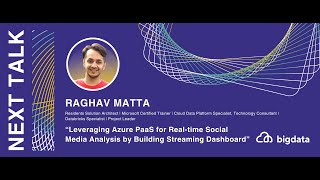
Raghav Matta: Leveraging Azure PaaS for Real-time Social Media Analysis

🌟 Session Overview 🌟

Session Name: Leveraging Azure PaaS for Real-time Social Media Analysis by Building Streaming Dashboard Speaker: Raghav Matta Session Description: In this session, Raghav and Sundar will delve into a practical business scenario focusing on real-time social media analysis using Azure PaaS offerings.

  1. They will begin by addressing a prevalent business challenge concerning social media sentiment analysis.

  2. Next, speakers explore a range of Azure services including Azure Functions, Logic Apps, Cognitive Services, Stream Analytics, PowerBI, and Azure Databricks.

  3. Moving forward, they will demonstrate how to gather live data in real-time utilizing Azure Cognitive Services Bing Web Search API. Subsequently, they will analyze the data using Azure Stream Analytics and visualize insights using PowerBI.

This course combines hands-on labs with theoretical curriculum aligned with the 'Exam AI-102: Designing and Implementing a Microsoft Azure AI Solution'.

For further information and resources, please refer to: https://docs.microsoft.com/en-us/azure/stream-analytics/stream-analytics-twitter-sentiment-analysis-trends https://microsoftlearning.github.io/AI-102-AIEngineer/Instructions/05-analyze-text.html 🚀 About Big Data and RPA 2024 🚀

Unlock the future of innovation and automation at Big Data & RPA Conference Europe 2024! 🌟 This unique event brings together the brightest minds in big data, machine learning, AI, and robotic process automation to explore cutting-edge solutions and trends shaping the tech landscape. Perfect for data engineers, analysts, RPA developers, and business leaders, the conference offers dual insights into the power of data-driven strategies and intelligent automation. 🚀 Gain practical knowledge on topics like hyperautomation, AI integration, advanced analytics, and workflow optimization while networking with global experts. Don’t miss this exclusive opportunity to expand your expertise and revolutionize your processes—all from the comfort of your home! 📊🤖✨

📅 Yearly Conferences: Curious about the evolution of QA? Check out our archive of past Big Data & RPA sessions. Watch the strategies and technologies evolve in our videos! 🚀 🔗 Find Other Years' Videos: 2023 Big Data Conference Europe https://www.youtube.com/playlist?list=PLqYhGsQ9iSEpb_oyAsg67PhpbrkCC59_g 2022 Big Data Conference Europe Online https://www.youtube.com/playlist?list=PLqYhGsQ9iSEryAOjmvdiaXTfjCg5j3HhT 2021 Big Data Conference Europe Online https://www.youtube.com/playlist?list=PLqYhGsQ9iSEqHwbQoWEXEJALFLKVDRXiP

💡 Stay Connected & Updated 💡

Don’t miss out on any updates or upcoming event information from Big Data & RPA Conference Europe. Follow us on our social media channels and visit our website to stay in the loop!

🌐 Website: https://bigdataconference.eu/, https://rpaconference.eu/ 👤 Facebook: https://www.facebook.com/bigdataconf, https://www.facebook.com/rpaeurope/ 🐦 Twitter: @BigDataConfEU, @europe_rpa 🔗 LinkedIn: https://www.linkedin.com/company/73234449/admin/dashboard/, https://www.linkedin.com/company/75464753/admin/dashboard/ 🎥 YouTube: http://www.youtube.com/@DATAMINERLT

Supercharge your lakehouse with Azure Databricks and Microsoft Fabric | BRK203

Azure Databricks enhances the lakehouse experience in Azure by seamlessly integrating data and AI solutions for faster value. Catalog data, schema, and tables in Unity Catalog are readily available, supporting data engineering, data science, real-time intelligence, and optimized performance, delivering blazing fast insights with Power BI.

𝗦𝗽𝗲𝗮𝗸𝗲𝗿𝘀: * Lindsey Allen * Robert Saxby

𝗦𝗲𝘀𝘀𝗶𝗼𝗻 𝗜𝗻𝗳𝗼𝗿𝗺𝗮𝘁𝗶𝗼𝗻: This is one of many sessions from the Microsoft Ignite 2024 event. View even more sessions on-demand and learn about Microsoft Ignite at https://ignite.microsoft.com

BRK203 | English (US) | Data

MSIgnite

Power BI in Microsoft Fabric: unveiling the latest innovations | BRK202

Join us as we unveil the latest announcements for Power BI in Microsoft Fabric. Explore how Copilot's advanced AI capabilities are transforming data analytics by automating report creation, generating intelligent insights, and enhancing data visualization. Discover how Power BI seamlessly integrates to enable smooth data flow and enhance collaboration. We'll also share real-world success stories, demonstrating the profound impact of this innovation on data analytics.

𝗦𝗽𝗲𝗮𝗸𝗲𝗿𝘀: * Mohammad Ali * Kimberly Manis

𝗦𝗲𝘀𝘀𝗶𝗼𝗻 𝗜𝗻𝗳𝗼𝗿𝗺𝗮𝘁𝗶𝗼𝗻: This is one of many sessions from the Microsoft Ignite 2024 event. View even more sessions on-demand and learn about Microsoft Ignite at https://ignite.microsoft.com

BRK202 | English (US) | Data

MSIgnite

Is BI Too Big for Small Data?

This is a talk about how we thought we had Big Data, and we built everything planning for Big Data, but then it turns out we didn't have Big Data, and while that's nice and fun and seems more chill, it's actually ruining everything, and I am here asking you to please help us figure out what we are supposed to do now.

📓 Resources Big Data is Dead: https://motherduck.com/blog/big-data-... Small Data Manifesto: https://motherduck.com/blog/small-dat... Is Excel Immortal?: https://benn.substack.com/p/is-excel-immortal Small Data SF: https://www.smalldatasf.com/

➡️ Follow Us LinkedIn: / motherduck
X/Twitter : / motherduck
Blog: https://motherduck.com/blog/


Mode founder David Wheeler challenges the data industry's obsession with "big data," arguing that most companies are actually working with "small data," and our tools are failing us. This talk deconstructs the common sales narrative for BI tools, exposing why the promise of finding game-changing insights through data exploration often falls flat. If you've ever built dashboards nobody uses or wondered why your analytics platform doesn't deliver on its promises, this is a must-watch reality check on the modern data stack.

We explore the standard BI demo, where an analyst uncovers a critical insight by drilling into event data. This story sells tools like Tableau and Power BI, but it rarely reflects reality, leading to a "revolving door of BI" as companies swap tools every few years. Discover why the narrative of the intrepid analyst finding a needle in the haystack only works in movies and how this disconnect creates a cycle of failed data initiatives and unused "trashboards."

The presentation traces our belief that "data is the new oil" back to the early 2010s, with examples from Target's predictive analytics and Facebook's growth hacking. However, these successes were built on truly massive datasets. For most businesses, analyzing small data results in noisy charts that offer vague "directional vibes" rather than clear, actionable insights. We contrast the promise of big data analytics with the practical challenges of small data interpretation.

Finally, learn actionable strategies for extracting real value from the data you actually have. We argue that BI tools should shift focus from data exploration to data interpretation, helping users understand what their charts actually mean. Learn why "doing things that don't scale," like manually analyzing individual customer journeys, can be more effective than complex models for small datasets. This talk offers a new perspective for data scientists, analysts, and developers looking for better data analysis techniques beyond the big data hype.

The Best Data Warehouse is a Lakehouse

Reynold Xin, Co-founder and Chief Architect at Databricks, presented during Data + AI Summit 2024 on Databricks SQL and its advancements and how to drive performance improvements with the Databricks Data Intelligence Platform.

Speakers: Reynold Xin, Co-founder and Chief Architect, Databricks Pearl Ubaru, Technical Product Engineer, Databricks

Main Points and Key Takeaways (AI-generated summary)

Introduction of Databricks SQL: - Databricks SQL was announced four years ago and has become the fastest-growing product in Databricks history. - Over 7,000 customers, including Shell, AT&T, and Adobe, use Databricks SQL for data warehousing.

Evolution from Data Warehouses to Lakehouses: - Traditional data architectures involved separate data warehouses (for business intelligence) and data lakes (for machine learning and AI). - The lakehouse concept combines the best aspects of data warehouses and data lakes into a single package, addressing issues of governance, storage formats, and data silos.

Technological Foundations: - To support the lakehouse, Databricks developed Delta Lake (storage layer) and Unity Catalog (governance layer). - Over time, lakehouses have been recognized as the future of data architecture.

Core Data Warehousing Capabilities: - Databricks SQL has evolved to support essential data warehousing functionalities like full SQL support, materialized views, and role-based access control. - Integration with major BI tools like Tableau, Power BI, and Looker is available out-of-the-box, reducing migration costs.

Price Performance: - Databricks SQL offers significant improvements in price performance, which is crucial given the high costs associated with data warehouses. - Databricks SQL scales more efficiently compared to traditional data warehouses, which struggle with larger data sets.

Incorporation of AI Systems: - Databricks has integrated AI systems at every layer of their engine, improving performance significantly. - AI systems automate data clustering, query optimization, and predictive indexing, enhancing efficiency and speed.

Benchmarks and Performance Improvements: - Databricks SQL has seen dramatic improvements, with some benchmarks showing a 60% increase in speed compared to 2022. - Real-world benchmarks indicate that Databricks SQL can handle high concurrency loads with consistent low latency.

User Experience Enhancements: - Significant efforts have been made to improve the user experience, making Databricks SQL more accessible to analysts and business users, not just data scientists and engineers. - New features include visual data lineage, simplified error messages, and AI-driven recommendations for error fixes.

AI and SQL Integration: - Databricks SQL now supports AI functions and vector searches, allowing users to perform advanced analysis and query optimizations with ease. - The platform enables seamless integration with AI models, which can be published and accessed through the Unity Catalog.

Conclusion: - Databricks SQL has transformed into a comprehensive data warehousing solution that is powerful, cost-effective, and user-friendly. - The lakehouse approach is presented as a superior alternative to traditional data warehouses, offering better performance and lower costs.

Databricks SQL: Why the Best Serverless Data Warehouse is a Lakehouse

Many organizations rely on complex cloud data architectures that create silos between applications, users and data. This fragmentation makes it difficult to access accurate, up-to-date information for analytics, often resulting in the use of outdated data. Enter the lakehouse, a modern data architecture that unifies data, AI, and analytics in a single location.

This session explores why the lakehouse is the best data warehouse, featuring success stories, use cases and best practices from industry experts. You'll discover how to unify and govern business-critical data at scale to build a curated data lake for data warehousing, SQL and BI. Additionally, you'll learn how Databricks SQL can help lower costs and get started in seconds with on-demand, elastic SQL serverless warehouses, and how to empower analytics engineers and analysts to quickly find and share new insights using their preferred BI and SQL tools such as Fivetran, dbt, Tableau, or Power BI.

Talk by: Miranda Luna and Cyrielle Simeone

Connect with us: Website: https://databricks.com Twitter: https://twitter.com/databricks LinkedIn: https://www.linkedin.com/company/databricks Instagram: https://www.instagram.com/databricksinc Facebook: https://www.facebook.com/databricksinc

Real-Time Streaming Solution for Call Center Analytics: Business Challenges and Technical Enablement

A large international client with a business footprint in North America, Europe and Africa reached out to us with an interest in having a real-time streaming solution designed and implemented for its call center handling incoming and outgoing client calls. The client had a previous bad experience with another vendor, who overpromised and underdelivered on the latency of the streaming solution. The previous vendor delivered an over-complex streaming data pipeline resulting in the data taking over five minutes to reach a visualization layer. The client felt that architecture was too complex and involved many services integrated together.

Our immediate challenges involved gaining the client's trust and proving that our design and implementation quality would supersede a previous experience. To resolve an immediate challenge of the overly complicated pipeline design, we deployed a Databricks Lakehouse architecture with Azure Databricks at the center of the solution. Our reference architecture integrated Genesys Cloud : App Services : Event Hub : Databricks : : Data Lake : Power BI.

The streaming solution proved to be low latency (seconds) during the POV stage, which led to subsequent productionalization of the pipeline with deployment of jobs, DLTs pipeline, including multi-notebook workflow and business and performance metrics dashboarding relied on by the call center staff for a day-to-day performance monitoring and improvements.

Talk by: Natalia Demidova

Connect with us: Website: https://databricks.com Twitter: https://twitter.com/databricks LinkedIn: https://www.linkedin.com/company/databricks Instagram: https://www.instagram.com/databricksinc Facebook: https://www.facebook.com/databricksinc

Streaming Data Analytics with Power BI and Databricks

This session is comprised of a series of end-to-end technical demos illustrating the synergy between Databricks and Power BI for streaming use cases, and considerations around when to choose which scenario:

Scenario 1: DLT + Power BI Direct Query and Auto Refresh

Scenario 2: Structured Streaming + Power BI streaming datasets

Scenario 3: DLT + Power BI composite datasets

Talk by: Liping Huang and Marius Panga

Connect with us: Website: https://databricks.com Twitter: https://twitter.com/databricks LinkedIn: https://www.linkedin.com/company/databricks Instagram: https://www.instagram.com/databricksinc Facebook: https://www.facebook.com/databricksinc

Sponsored: Matillion | Using Matillion to Boost Productivity w/ Lakehouse and your Full Data Stack

In this presentation, Matillion’s Sarah Pollitt, Group Product Manager for ETL, will discuss how you can use Matillion to load data from popular data sources such as Salesforce, SAP, and over a hundred out-of-the-box connectors into your data lakehouse. You can quickly transform this data using powerful tools like Matillion or dbt, or your own custom notebooks, to derive valuable insights. She will also explore how you can run streaming pipelines to ensure real-time data processing, and how you can extract and manage this data using popular governance tools such as Alation or Collibra, ensuring compliance and data quality. Finally, Sarah will showcase how you can seamlessly integrate this data into your analytics tools of choice, such as Thoughtspot, PowerBI, or any other analytics tool that fits your organization's needs.

Talk by: Rick Wear

Connect with us: Website: https://databricks.com Twitter: https://twitter.com/databricks LinkedIn: https://www.linkedin.com/company/databricks Instagram: https://www.instagram.com/databricksinc Facebook: https://www.facebook.com/databricksinc