talk-data.com talk-data.com

Topic

Python

programming_language data_science web_development

1446

tagged

Activity Trend

185 peak/qtr
2020-Q1 2026-Q1

Activities

1446 activities · Newest first

podcast_episode
by Alice Zhao (Best Fit Analytics) , Chris Bruehl (Institute for Advanced Analytics (IAA) at NC State)

For years, Data Analysts and Data Scientists have been two of the most in-demand roles. In this show, Chris Bruehl and Alice Zhao will talk about the similarities and differences between the two roles, potential career paths, and their thoughts on how you can decide which flavor of data role is a better fit for you. You'll leave the show with a deeper understanding of these two roles, the types of work they do, the skills required, and some actionable advice for landing the role of your choosing. What You'll Learn: Why Chris started Maven Analytics, and what the early days were like How the company has evolved over time What's coming up next for the company and for our learners   Register for free to be part of the next live session: https://bit.ly/3XB3A8b   About our guests: Chris Bruehl is a Python expert, certified Statistical Business Analyst, and seasoned Data Scientist, having held senior-level roles at large insurance firms and financial service companies. He earned a Masters in Analytics at NC State's Institute for Advanced Analytics, where he founded the IAA Follow Chris on LinkedIn   Alice Zhao is a seasoned data scientist and author of the book, SQL Pocket Guide, 4th Edition (O'Reilly). She has taught numerous courses in Python, SQL, and R as a data science instructor at Maven Analytics and Metis, and as a co-founder of Best Fit Analytics. Follow Alice on LinkedIn

Follow us on Socials: LinkedIn YouTube Instagram (Mavens of Data) Instagram (Maven Analytics) TikTok Facebook Medium X/Twitter
Send us a text Welcome to the cozy corner of the tech world where ones and zeros mingle with casual chit-chat. Datatopics Unplugged  is your go-to spot for relaxed discussions around tech, news, data, and society. Dive into conversations that should flow as smoothly as your morning coffee (but don't), where industry insights meet laid-back banter. Whether you're a data aficionado or just someone curious about the digital age, pull up a chair, relax, and let's get into the heart of data, unplugged style! In this episode, we cover: ChatGPT Search: Exploring OpenAI's new web-browsing capability, and how it transforms everything from everyday searches to complex problem-solving.ChatGPT is a Good Rubber Duck: Discover how ChatGPT makes for an excellent companion for debugging and brainstorming, offering more than a few laughs along the way.What’s New in Python 3.13: From the new free-threaded mode to the just-in-time (JIT) compiler, we break down the major (and some lesser-known) changes, with additional context from this breakdown and Reddit insights.UV is Fast on its Feet: How the development of new tools impacts the Python packaging ecosystem, with a side discussion on Poetry and the complexities of Python lockfiles.Meta’s Llama Training Takes Center Stage: Meta ramps up its AI game, pouring vast resources into training the Llama model. We ponder the long-term impact and their ambitions in the AI space.OpenAI’s Swarm: A new experimental framework for multi-agent orchestration, enabling AI agents to collaborate and complete tasks—what it means for the future of AI interactions.PGrag for Retrieval-Augmented Generation (RAG): We explore Neon's integration for building end-to-end RAG pipelines directly in Postgres, bridging vector databases, text embedding, and more.OSI’s Open Source AI License: The Open Source Initiative releases an AI-specific license to bring much-needed clarity and standards to open-source models.We also venture into generative AI, the future of AR (including Apple Vision and potential contact lenses), and a brief look at V0 by Vercel, a tool that auto-generates web components with AI prompts.

Está no ar, o Data Hackers News !! Os assuntos mais quentes da semana, com as principais notícias da área de Dados, IA e Tecnologia, que você também encontra na nossa Newsletter semanal, agora no Podcast do Data Hackers !!

Aperte o play e ouça agora, o Data Hackers News dessa semana !

Para saber tudo sobre o que está acontecendo na área de dados, se inscreva na Newsletter semanal:

⁠⁠⁠⁠⁠⁠⁠⁠⁠⁠⁠⁠⁠⁠⁠⁠⁠⁠⁠⁠⁠⁠⁠⁠⁠⁠⁠⁠⁠⁠⁠⁠https://www.datahackers.news/⁠⁠⁠⁠⁠⁠⁠⁠⁠⁠⁠⁠⁠⁠⁠⁠⁠⁠⁠⁠⁠⁠⁠⁠⁠⁠⁠⁠⁠⁠⁠⁠

Conheça nossos comentaristas do Data Hackers News:

⁠⁠⁠⁠⁠⁠⁠⁠⁠⁠⁠⁠⁠⁠⁠⁠⁠⁠⁠⁠⁠⁠⁠⁠⁠⁠⁠⁠Monique Femme⁠⁠⁠⁠⁠⁠⁠⁠⁠⁠⁠⁠⁠⁠⁠⁠⁠⁠⁠⁠⁠⁠⁠⁠⁠⁠⁠⁠⁠

Paulo Vasconcellos

⁠Matérias/assuntos comentados:

Python é a linguagem com mais desenvolvedores no mundo;

Github lança IA capaz de criar aplicativos a partir de texto;

OpenAI lança motor de busca pra competir com Google.

Demais canais do Data Hackers:

⁠⁠⁠⁠⁠⁠⁠⁠⁠⁠⁠⁠⁠⁠⁠⁠⁠⁠⁠⁠⁠⁠⁠⁠⁠⁠⁠⁠⁠⁠⁠⁠Site⁠⁠⁠⁠⁠⁠⁠⁠⁠⁠⁠⁠⁠⁠⁠⁠⁠⁠⁠⁠⁠⁠⁠⁠⁠⁠⁠⁠⁠⁠⁠⁠

⁠⁠⁠⁠⁠⁠⁠⁠⁠⁠⁠⁠⁠⁠⁠⁠⁠⁠⁠⁠⁠⁠⁠⁠⁠⁠⁠⁠⁠⁠⁠⁠Linkedin⁠⁠⁠⁠⁠⁠⁠⁠⁠⁠⁠⁠⁠⁠⁠⁠⁠⁠⁠⁠⁠⁠⁠⁠⁠⁠⁠⁠⁠⁠⁠⁠

⁠⁠⁠⁠⁠⁠⁠⁠⁠⁠⁠⁠⁠⁠⁠⁠⁠⁠⁠⁠⁠⁠⁠⁠⁠⁠⁠⁠⁠⁠⁠⁠Instagram⁠⁠⁠⁠⁠⁠⁠⁠⁠⁠⁠⁠⁠⁠⁠⁠⁠⁠⁠⁠⁠⁠⁠⁠⁠⁠⁠⁠⁠⁠⁠⁠

⁠⁠⁠⁠⁠⁠⁠⁠⁠⁠⁠⁠⁠⁠⁠⁠⁠⁠⁠⁠⁠⁠⁠⁠⁠⁠⁠⁠⁠⁠⁠⁠Tik Tok⁠⁠⁠⁠⁠⁠⁠⁠⁠⁠⁠⁠⁠⁠⁠⁠⁠⁠⁠⁠⁠⁠⁠⁠⁠⁠⁠⁠⁠⁠⁠⁠

⁠⁠⁠⁠⁠⁠⁠⁠⁠⁠⁠⁠⁠⁠⁠⁠⁠⁠⁠⁠⁠⁠⁠⁠⁠⁠⁠⁠⁠⁠⁠⁠You Tube⁠⁠⁠⁠⁠⁠⁠⁠⁠⁠⁠⁠⁠⁠⁠⁠⁠⁠⁠⁠⁠⁠⁠⁠⁠⁠⁠⁠⁠⁠⁠⁠

Apache Airflow Best Practices

"Apache Airflow Best Practices" is your go-to guide for mastering data workflow orchestration using Apache Airflow. This book introduces you to core concepts and features of Airflow and helps you efficiently design, deploy, and manage workflows. With detailed examples and hands-on tutorials, you'll learn how to tackle real-world challenges in data engineering. What this Book will help me do Understand and utilize the features and updates introduced in Apache Airflow 2.x. Design and implement robust, scalable, and efficient data pipelines and workflows. Learn best practices for deploying Apache Airflow in cloud environments such as AWS and GCP. Extend Airflow's functionality with custom plugins and advanced configuration. Monitor, maintain, and scale your Airflow deployment effectively for high availability. Author(s) Dylan Intorf, Dylan Storey, and Kendrick van Doorn are seasoned professionals in data engineering, data strategy, and software development. Between them, they bring decades of experience working in diverse industries like finance, tech, and life sciences. They bring their expertise into this practical guide to help practitioners understand and master Apache Airflow. Who is it for? This book is tailored for data professionals such as data engineers, scientists, and system administrators, offering valuable insights for new learners and experienced users. If you're starting with workflow orchestration, seeking to optimize your current Airflow implementation, or scaling efforts, this book aligns with your goals. Readers should have a basic knowledge of Python programming and data engineering principles.

Artificial Intelligence for Cybersecurity

Explore how artificial intelligence can transform your cybersecurity strategies with "Artificial Intelligence for Cybersecurity". This book provides practical insights into applying AI methods to a variety of cybersecurity problems, from malware analysis to threat detection. By understanding these concepts, you'll gain the knowledge needed to protect your organization's data and networks effectively. What this Book will help me do Understand how AI methods can address cybersecurity concerns effectively. Develop practical skills using AI tools to combat cyber threats. Design AI-powered solutions for malware identification and anomaly detection. Navigate real-world applications of AI in cybersecurity scenarios. Recognize and mitigate common pitfalls while implementing AI methods in cybersecurity. Author(s) The authors, Bojan Kolosnjaji, Huang Xiao, Peng Xu, and Apostolis Zarras, are experts in machine learning and cybersecurity. With extensive backgrounds in both academia and industry, they bring a wealth of knowledge to the book. Their practical and educational approach makes complex AI and cybersecurity concepts accessible, empowering readers to apply these methods to real-world problems. Who is it for? This book is ideal for professionals in cybersecurity who are keen to integrate AI techniques into their frameworks and workflows. It's also suitable for machine learning enthusiasts who want to delve into the realm of cybersecurity. If you possess a basic understanding of Python programming and machine learning fundamentals, this book will guide you through to advanced concepts. Whether you are a student or an industry veteran, this book offers valuable insights for enhancing your cybersecurity strategies with AI.

Building Modern Data Applications Using Databricks Lakehouse

This book, "Building Modern Data Applications Using Databricks Lakehouse," provides a comprehensive guide for data professionals to master the Databricks platform. You'll learn to effectively build, deploy, and monitor robust data pipelines with Databricks' Delta Live Tables, empowering you to manage and optimize cloud-based data operations effortlessly. What this Book will help me do Understand the foundations and concepts of Delta Live Tables and its role in data pipeline development. Learn workflows to process and transform real-time and batch data efficiently using the Databricks lakehouse architecture. Master the implementation of Unity Catalog for governance and secure data access in modern data applications. Deploy and automate data pipeline changes using CI/CD, leveraging tools like Terraform and Databricks Asset Bundles. Gain advanced insights in monitoring data quality and performance, optimizing cloud costs, and managing DataOps tasks effectively. Author(s) Will Girten, the author, is a seasoned Solutions Architect at Databricks with over a decade of experience in data and AI systems. With a deep expertise in modern data architectures, Will is adept at simplifying complex topics and translating them into actionable knowledge. His books emphasize real-time application and offer clear, hands-on examples, making learning engaging and impactful. Who is it for? This book is geared towards data engineers, analysts, and DataOps professionals seeking efficient strategies to implement and maintain robust data pipelines. If you have a basic understanding of Python and Apache Spark and wish to delve deeper into the Databricks platform for streamlining workflows, this book is tailored for you.

Pandas Cookbook - Third Edition

Discover the power of pandas for your data analysis tasks. Pandas Cookbook provides practical, hands-on recipes for mastering pandas 2.x, guiding you through real-world scenarios quickly and effectively. What this Book will help me do Efficiently manipulate and clean data using pandas. Perform advanced grouping and aggregation operations. Handle time series data with pandas robust functions. Optimize pandas code for better performance. Integrate pandas with tools like NumPy and databases. Author(s) William Ayd and Matthew Harrison co-authored this insightful cookbook. With years of practical experience in data science and Python development, both authors aim to make data analysis accessible and efficient using pandas. Who is it for? This book is perfect for Python developers and data analysts looking to enhance their data manipulation skills. Whether you're a beginner aiming to understand pandas or a professional seeking advanced insights, this book is tailored for anyone handling structured data.

A 90-minute hands-on workshop introducing the FiftyOne computer vision toolset. Part 1 covers FiftyOne basics (terms, architecture, installation, and general usage), an overview of useful workflows to explore, understand, and curate data, and how FiftyOne represents and semantically slices unstructured computer vision data. Part 2 is a hands-on session on loading datasets from the FiftyOne Dataset Zoo, navigating the FiftyOne App, programmatically inspecting attributes of a dataset, adding new samples and custom attributes, generating and evaluating model predictions, and saving insightful views into the data.

90-minute hands-on workshop on the FiftyOne computer vision toolset. Part 1 covers FiftyOne Basics (terms, architecture, installation, and general usage); an overview of useful workflows to explore, understand, and curate data; and how FiftyOne represents and semantically slices unstructured computer vision data. Part 2 provides a hands-on introduction to FiftyOne: loading datasets from the FiftyOne Dataset Zoo, navigating the FiftyOne App, programmatically inspecting dataset attributes, adding new samples and custom attributes, generating and evaluating model predictions, and saving insightful views into the data. Prerequisites: working knowledge of Python. All attendees get access to tutorials, videos, and code examples used in the workshop.

Send us a text Peter Wang, Chief AI and Innovation Officer and Co-founder of Anaconda, is back. Peter discusses Anaconda’s AI incubator. "It turns out Python is still a thing". Python and much, much more. 01:27 Meet Peter Wang05:10 Python or R05:51 Anaconda's Differentiation07:08 Why the Name Anaconda08:24 The AI Incubator11:40 GenAI14:39 Enter Python16:08 Anaconda Commercial Services18:40 Security20:57 Common Points of Failure22:53 Branding24:50 watsonx Partnership28:40 AI Risks34:13 Getting Philosophical36:13 China44:52 Leadership StyleLinkedin: linkedin.com/in/pzwang Website: https://www.linkedin.com/company/anacondainc/, https://www.anaconda.com/ Want to be featured as a guest on Making Data Simple? Reach out to us at [email protected] and tell us why you should be next. The Making Data Simple Podcast is hosted by Al Martin, WW VP Technical Sales, IBM, where we explore trending technologies, business innovation, and leadership ... while keeping it simple & fun. Want to be featured as a guest on Making Data Simple? Reach out to us at [email protected] and tell us why you should be next. The Making Data Simple Podcast is hosted by Al Martin, WW VP Technical Sales, IBM, where we explore trending technologies, business innovation, and leadership ... while keeping it simple & fun.

Summary Gleb Mezhanskiy, CEO and co-founder of DataFold, joins Tobias Macey to discuss the challenges and innovations in data migrations. Gleb shares his experiences building and scaling data platforms at companies like Autodesk and Lyft, and how these experiences inspired the creation of DataFold to address data quality issues across teams. He outlines the complexities of data migrations, including common pitfalls such as technical debt and the importance of achieving parity between old and new systems. Gleb also discusses DataFold's innovative use of AI and large language models (LLMs) to automate translation and reconciliation processes in data migrations, reducing time and effort required for migrations. Announcements Hello and welcome to the Data Engineering Podcast, the show about modern data managementImagine catching data issues before they snowball into bigger problems. That’s what Datafold’s new Monitors do. With automatic monitoring for cross-database data diffs, schema changes, key metrics, and custom data tests, you can catch discrepancies and anomalies in real time, right at the source. Whether it’s maintaining data integrity or preventing costly mistakes, Datafold Monitors give you the visibility and control you need to keep your entire data stack running smoothly. Want to stop issues before they hit production? Learn more at dataengineeringpodcast.com/datafold today!Your host is Tobias Macey and today I'm welcoming back Gleb Mezhanskiy to talk about Datafold's experience bringing AI to bear on the problem of migrating your data stackInterview IntroductionHow did you get involved in the area of data management?Can you describe what the Data Migration Agent is and the story behind it?What is the core problem that you are targeting with the agent?What are the biggest time sinks in the process of database and tooling migration that teams run into?Can you describe the architecture of your agent?What was your selection and evaluation process for the LLM that you are using?What were some of the main unknowns that you had to discover going into the project?What are some of the evolutions in the ecosystem that occurred either during the development process or since your initial launch that have caused you to second-guess elements of the design?In terms of SQL translation there are libraries such as SQLGlot and the work being done with SDF that aim to address that through AST parsing and subsequent dialect generation. What are the ways that approach is insufficient in the context of a platform migration?How does the approach you are taking with the combination of data-diffing and automated translation help build confidence in the migration target?What are the most interesting, innovative, or unexpected ways that you have seen the Data Migration Agent used?What are the most interesting, unexpected, or challenging lessons that you have learned while working on building an AI powered migration assistant?When is the data migration agent the wrong choice?What do you have planned for the future of applications of AI at Datafold?Contact Info LinkedInParting Question From your perspective, what is the biggest gap in the tooling or technology for data management today?Closing Announcements Thank you for listening! Don't forget to check out our other shows. Podcast.init covers the Python language, its community, and the innovative ways it is being used. The AI Engineering Podcast is your guide to the fast-moving world of building AI systems.Visit the site to subscribe to the show, sign up for the mailing list, and read the show notes.If you've learned something or tried out a project from the show then tell us about it! Email [email protected] with your story.Links DatafoldDatafold Migration AgentDatafold data-diffDatafold Reconciliation Podcast EpisodeSQLGlotLark parserClaude 3.5 SonnetLookerPodcast EpisodeThe intro and outro music is from The Hug by The Freak Fandango Orchestra / CC BY-SA

Today's analytics and data science job market seems to be as competitive as it's ever been. So it's more important than ever to know what employers are looking for and have a solid plan of attack in your job search. In this episode, Luke Barousse and Kelly Adams will walk us through their insights from the job market, talk about exactly what employers are looking for, and lay out an actionable plan for you to start building skills that will help you in your career. You'll leave this show with a deeper understanding of the job market, and a concrete roadmap you can use to take your data skills and career to the next level.   What You'll Learn: Insights from a deep analysis of the data science and analytics job market The skills employers are looking for, and why they matter A roadmap for building key data science and data analytics skills   Register for free to be part of the next live session: https://bit.ly/3XB3A8b   About our guests: Luke Barousse is a data analyst, YouTuber, and engineer who helps data nerds be more productive. Follow Luke on LinkedIn Subscribe to Luke's YouTube Channel Luke's Python, SQL, and ChatGPT Courses

Kelly Adams is a data analyst, course creator, and writer. Kelly's Website Follow Kelly on LinkedIn Datanerd.Tech   Follow us on Socials: LinkedIn YouTube Instagram (Mavens of Data) Instagram (Maven Analytics) TikTok Facebook Medium X/Twitter
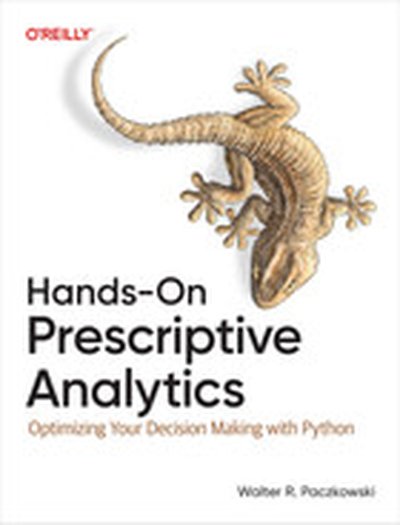
Hands-On Prescriptive Analytics

Business decisions in any context—operational, tactical, or strategic—can have considerable consequences. Whether the outcome is positive and rewarding or negative and damaging to the business, its employees, and stakeholders is unknown when action is approved. These decisions are usually made under the proverbial cloud of uncertainty. With this practical guide, data analysts, data scientists, and business analysts will learn why and how maximizing positive consequences and minimizing negative ones requires three forms of rich information: Descriptive analytics explores the results from an action—what has already happened. Predictive analytics focuses on what could happen. The third, prescriptive analytics, informs us what should happen in the future. While all three are important for decision-makers, the primary focus of this book is on the third: prescriptive analytics. Author Walter R. Paczkowski, Ph.D. shows you: The distinction among descriptive, predictive, and prescriptive analytics How predictive analytics produces a menu of action options How prescriptive analytics narrows the menu of action options The forms of prescriptive analytics: eight prescriptive methods Two broad classes of these methods: non-stochastic and stochastic How to develop prescriptive analyses for action recommendations Ways to use an appropriate tool-set in Python

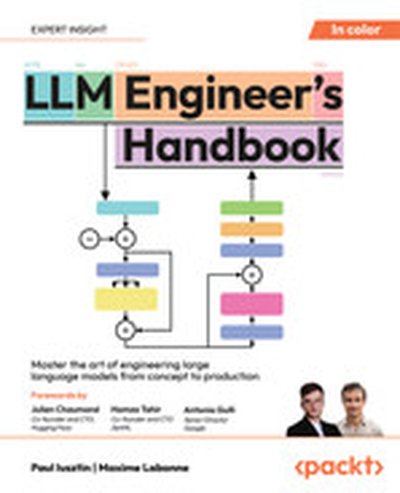
LLM Engineer's Handbook

The "LLM Engineer's Handbook" is your comprehensive guide to mastering Large Language Models from concept to deployment. Written by leading experts, it combines theoretical foundations with practical examples to help you build, refine, and deploy LLM-powered solutions that solve real-world problems effectively and efficiently. What this Book will help me do Understand the principles and approaches for training and fine-tuning Large Language Models (LLMs). Apply MLOps practices to design, deploy, and monitor your LLM applications effectively. Implement advanced techniques such as retrieval-augmented generation (RAG) and preference alignment. Optimize inference for high performance, addressing low-latency and high availability for production systems. Develop robust data pipelines and scalable architectures for building modular LLM systems. Author(s) Paul Iusztin and Maxime Labonne are experienced AI professionals specializing in natural language processing and machine learning. With years of industry and academic experience, they are dedicated to making complex AI concepts accessible and actionable. Their collaborative authorship ensures a blend of theoretical rigor and practical insights tailored for modern AI practitioners. Who is it for? This book is tailored for AI engineers, NLP professionals, and LLM practitioners who wish to deepen their understanding of Large Language Models. Ideal readers possess some familiarity with Python, AWS, and general AI concepts. If you aim to apply LLMs to real-world scenarios or enhance your expertise in AI-driven systems, this handbook is designed for you.

In this episode, Conor interviews Andor, Stephen and an attendee from Lambda World 2024. Link to Episode 204 on WebsiteDiscuss this episode, leave a comment, or ask a question (on GitHub)Twitter ADSP: The PodcastConor HoekstraGuests Interviewed Andor PénzesStephen TaylorShow Notes Date Recorded: 2024-10-04 Date Released: 2024-10-18 Lambda WorldADSP Episode 133: 🇵🇱 Lambda Days Live 🇵🇱 José Valim, Alexis King & More!Lambda World 2024 - The Butcherbird Combinator - Chris FordLambda World 2024 - Scala Sampler for Functional Soundscapes - Johanna OderskyUnite 2024 Barcelone (Unity Conference)Examples of easy dependently typed programming (in Idris) by Andor Penzes | Lambda Days 2023Dependently-Typed Python by Andor Penzes | Lambda Days 2024DepPy (Dependently Typed Python)CORECURSIVE #065 From Competitive Programming to APL With Conor HoekstraY CombinatorCategory Theory for Programmers - Bartosz MilewskiDevWorld ConferenceQCon ConferenceScala Days ConferenceLambda World 2024 - Stephen Taylor TalkAbove Average in APLDon't Be Mean in APLAPL Wiki MerchCan Programming Be Liberated from the von Neumann Style? John Backus Turing Award PaperLambda World 2024 - The Power of Function Composition - Conor HoekstraLambda World 2024 - Kamila Szewczyk TalkIntro Song Info Miss You by Sarah Jansen https://soundcloud.com/sarahjansenmusic Creative Commons — Attribution 3.0 Unported — CC BY 3.0 Free Download / Stream: http://bit.ly/l-miss-you Music promoted by Audio Library https://youtu.be/iYYxnasvfx8

SQL is one of the most widely used data analysis tools around, often discussed as a cornerstone for Data Analysis, Data Science, and Data Engineering careers. In this episode, Thais Cooke talks about how she leverages SQL in her role as a Data Analyst and shares practical tips you can use to take your SQL game to the next level. You'll leave the show with an insider's perspective on where SQL adds the most value, and where you should focus if you want to build SQL skills that will advance your career. What You'll Learn: What makes SQL such a valuable skill set for so many roles Some of the most valuable ways you can use SQL on the job Where you can focus if you want to build job-ready SQL skills   Register for free to be part of the next live session: https://bit.ly/3XB3A8b   About our guest: Thais Cooke is a Data Analyst proficient in Excel, SQL, and Python with a background in Clinical Healthcare. SQL for Healthcare Professionals Course Follow Thais on LinkedIn  

Follow us on Socials: LinkedIn YouTube Instagram (Mavens of Data) Instagram (Maven Analytics) TikTok Facebook Medium X/Twitter
Coalesce 2024: Building DEFCON 1 data pipelines (aka payments pipelines)

SpotOn works with FIS (formerly WorldPay) to handle payment processing, allowing for more detailed transaction management than other processors. Our data team took on the challenge of transitioning to FIS to gain better control over transaction details.

The legacy data pipelines we inherited were problematic and unreliable. They consisted of an SFTP file server, cron jobs, and Python/Shell scripts that moved data from SFTP to S3 and then processed it into Postgres. These systems were fragile, often breaking when new or different data arrived, requiring manual intervention and frequent restarts.

We recognized the need for a better solution. Our team decided to use Snowpipe and dbt to streamline our data processing. This approach allowed us to manage and parse complex data formats efficiently. We used dbt to create models that could handle the varied and detailed specifications provided by FIS, ensuring that as updates came in, they could be easily integrated.

With this new setup, we have significantly reduced the fragility of our pipelines. Using dbt Cloud, we've improved collaboration and error detection, ensuring data integrity and better insights into usage patterns. This new system supports not only payment processing but also other critical functions like customer loyalty and marketing, aggregating and cleaning data from various sources.

As we continue migrating from older systems like TSYS, we see the clear benefits of this modernization. Our experience with dbt has proven invaluable in supporting our business-critical data operations and ensuring smooth transitions and reliable data handling.

Speakers: Kevin Hu CEO Metaplane

Daniel Corley Senior Analytics Engineer SpotOn

Read the blog to learn about the latest dbt Cloud features announced at Coalesce, designed to help organizations embrace analytics best practices at scale https://www.getdbt.com/blog/coalesce-2024-product-announcements

Send us a text Welcome to the cozy corner of the tech world where ones and zeros mingle with casual chit-chat. Datatopics Unplugged is your go-to spot for relaxed discussions around tech, news, data, and society. Dive into conversations that flow as smoothly as your morning coffee, where industry insights meet laid-back banter. Whether you're a data aficionado or just someone curious about the digital age, pull up a chair, relax, and let's get into the heart of data, unplugged style! In today's episode: Remote work and hybrid challenges: Insights from the IMF on remote productivity, plus the challenges of work-life balance and Amazon’s office return with other companies' strategies for bringing employees back to the office.The fall of Zapata AI: A look at the shutdown of Zapata AI and the struggles in building successful quantum computing ventures.WTF Python: Exploring Python’s type hints, overloads, and those confusing "WTF" moments. Check out WTFPython.Data profiling tools: A dive into YData Profiling and Sweetviz for detailed data analysis.GifCities and personal websites: Reflecting on the fall of GifCities, the retro GIF hub, and discussing Murilo’s blog journey.Rust’s complexity debate: Discussing the blog post My Negative Views on Rust and whether Rust is too complex or simply misunderstood..io domain controversy: Examining the future of the .io domain as the British Indian Ocean Territory transfers sovereignty. Read more on Every.to and MIT Technology Review.Ducks or AI? A fun challenge to distinguish real ducks from AI-generated ones in the Duck Imposter Game.Adobe's AI video generator: A discussion on Adobe Firefly’s AI-powered video generator and its potential impact on content creation.