talk-data.com talk-data.com

Topic

Python

programming_language data_science web_development

1446

tagged

Activity Trend

185 peak/qtr
2020-Q1 2026-Q1

Activities

1446 activities · Newest first

Summary In this episode of the Data Engineering Podcast the inimitable Max Beauchemin talks about reusability in data pipelines. The conversation explores the "write everything twice" problem, where similar pipelines are built without code reuse, and discusses the challenges of managing different SQL dialects and relational databases. Max also touches on the evolving role of data engineers, drawing parallels with front-end engineering, and suggests that generative AI could facilitate knowledge capture and distribution in data engineering. He encourages the community to share reference implementations and templates to foster collaboration and innovation, and expresses hopes for a future where code reuse becomes more prevalent.

Announcements Hello and welcome to the Data Engineering Podcast, the show about modern data managementData migrations are brutal. They drag on for months—sometimes years—burning through resources and crushing team morale. Datafold's AI-powered Migration Agent changes all that. Their unique combination of AI code translation and automated data validation has helped companies complete migrations up to 10 times faster than manual approaches. And they're so confident in their solution, they'll actually guarantee your timeline in writing. Ready to turn your year-long migration into weeks? Visit dataengineeringpodcast.com/datafold today for the details.Your host is Tobias Macey and today I'm joined again by Max Beauchemin to talk about the challenges of reusability in data pipelinesInterview IntroductionHow did you get involved in the area of data management?Can you start by sharing your current thesis on the opportunities and shortcomings of code and component reusability in the data context?What are some ways that you think about what constitutes a "component" in this context?The data ecosystem has arguably grown more varied and nuanced in recent years. At the same time, the number and maturity of tools has grown. What is your view on the current trend in productivity for data teams and practitioners?What do you see as the core impediments to building more reusable and general-purpose solutions in data engineering?How can we balance the actual needs of data consumers against their requests (whether well- or un-informed) to help increase our ability to better design our workflows for reuse?In data engineering there are two broad approaches; code-focused or SQL-focused pipelines. In principle one would think that code-focused environments would have better composability. What are you seeing as the realities in your personal experience and what you hear from other teams?When it comes to SQL dialects, dbt offers the option of Jinja macros, whereas SDF and SQLMesh offer automatic translation. There are also tools like PRQL and Malloy that aim to abstract away the underlying SQL. What are the tradeoffs across those options that help or hinder the portability of transformation logic?Which layers of the data stack/steps in the data journey do you see the greatest opportunity for improving the creation of more broadly usable abstractions/reusable elements?low/no code systems for code reuseimpact of LLMs on reusability/compositionimpact of background on industry practices (e.g. DBAs, sysadmins, analysts vs. SWE, etc.)polymorphic data models (e.g. activity schema)What are the most interesting, innovative, or unexpected ways that you have seen teams address composability and reusability of data components?What are the most interesting, unexpected, or challenging lessons that you have learned while working on data-oriented tools and utilities?What are your hopes and predictions for sharing of code and logic in the future of data engineering?Contact Info LinkedInParting Question From your perspective, what is the biggest gap in the tooling or technology for data management today?Closing Announcements Thank you for listening! Don't forget to check out our other shows. Podcast.init covers the Python language, its community, and the innovative ways it is being used. The AI Engineering Podcast is your guide to the fast-moving world of building AI systems.Visit the site to subscribe to the show, sign up for the mailing list, and read the show notes.If you've learned something or tried out a project from the show then tell us about it! Email [email protected] with your story.Links Max's Blog PostAirflowSupersetTableauLookerPowerBICohort AnalysisNextJSAirbytePodcast EpisodeFivetranPodcast EpisodeSegmentdbtSQLMeshPodcast EpisodeSparkLAMP StackPHPRelational AlgebraKnowledge GraphPython MarshmallowData Warehouse Lifecycle Toolkit (affiliate link)Entity Centric Data Modeling Blog PostAmplitudeOSACon presentationol-data-platform Tobias' team's data platform codeThe intro and outro music is from The Hug by The Freak Fandango Orchestra / CC BY-SA
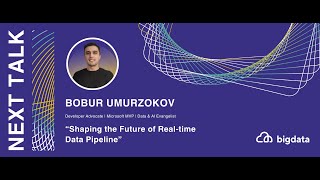
Bobur Umurzokov: Shaping the Future of Real-time Data Pipeline

🌟 Session Overview 🌟

Session Name: Shaping the Future of Real-time Data Pipeline Speaker: Bobur Umurzokov Session Description: The rise of real-time data processing has transformed business operations, yet navigating its technical challenges remains complex. Organizations often wrestle with managing distinct batch and streaming data workflows, each presenting unique difficulties. Batch processing, while effective for large datasets, can be costly, slow, and not well-suited for streaming API integration. On the other hand, streaming, despite its speed and low latency, often has restricted functionality.

This talk is prepared for developers, data engineers, and tech visionaries eager to explore how to build an efficient, dynamic, and unified data pipeline for both scenarios using streaming platforms in Python. You will see, with examples, how simple it is to make your batch code run in streaming with serverless infrastructure from day one.

🚀 About Big Data and RPA 2024 🚀

Unlock the future of innovation and automation at Big Data & RPA Conference Europe 2024! 🌟 This unique event brings together the brightest minds in big data, machine learning, AI, and robotic process automation to explore cutting-edge solutions and trends shaping the tech landscape. Perfect for data engineers, analysts, RPA developers, and business leaders, the conference offers dual insights into the power of data-driven strategies and intelligent automation. 🚀 Gain practical knowledge on topics like hyperautomation, AI integration, advanced analytics, and workflow optimization while networking with global experts. Don’t miss this exclusive opportunity to expand your expertise and revolutionize your processes—all from the comfort of your home! 📊🤖✨

📅 Yearly Conferences: Curious about the evolution of QA? Check out our archive of past Big Data & RPA sessions. Watch the strategies and technologies evolve in our videos! 🚀 🔗 Find Other Years' Videos: 2023 Big Data Conference Europe https://www.youtube.com/playlist?list=PLqYhGsQ9iSEpb_oyAsg67PhpbrkCC59_g 2022 Big Data Conference Europe Online https://www.youtube.com/playlist?list=PLqYhGsQ9iSEryAOjmvdiaXTfjCg5j3HhT 2021 Big Data Conference Europe Online https://www.youtube.com/playlist?list=PLqYhGsQ9iSEqHwbQoWEXEJALFLKVDRXiP

💡 Stay Connected & Updated 💡

Don’t miss out on any updates or upcoming event information from Big Data & RPA Conference Europe. Follow us on our social media channels and visit our website to stay in the loop!

🌐 Website: https://bigdataconference.eu/, https://rpaconference.eu/ 👤 Facebook: https://www.facebook.com/bigdataconf, https://www.facebook.com/rpaeurope/ 🐦 Twitter: @BigDataConfEU, @europe_rpa 🔗 LinkedIn: https://www.linkedin.com/company/73234449/admin/dashboard/, https://www.linkedin.com/company/75464753/admin/dashboard/ 🎥 YouTube: http://www.youtube.com/@DATAMINERLT

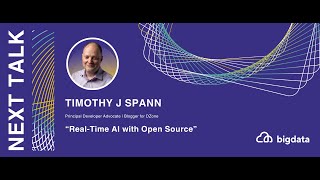
Timothy J Spann: Real-Time AI with Open Source

🌟 Session Overview 🌟

Session Name: Real-Time AI with Open Source Speaker: Timothy J Spann Session Description: While building it, we will explore the practical reasons for choosing specific indexes, determining what to vectorize, and querying multiple vectors—even when one is an image and the other is text. We will discuss the importance of filtering and how it is applied. Next, we will use our vector database of Air Quality readings to feed an LLM and generate accurate answers to Air Quality questions. I will demonstrate all the steps to build a RAG application using Milvus, LangChain, Ollama, Python, and Air Quality Reports. Finally, after the demos, I will answer questions, share the source code, and provide additional resources, including articles.

🚀 About Big Data and RPA 2024 🚀

Unlock the future of innovation and automation at Big Data & RPA Conference Europe 2024! 🌟 This unique event brings together the brightest minds in big data, machine learning, AI, and robotic process automation to explore cutting-edge solutions and trends shaping the tech landscape. Perfect for data engineers, analysts, RPA developers, and business leaders, the conference offers dual insights into the power of data-driven strategies and intelligent automation. 🚀 Gain practical knowledge on topics like hyperautomation, AI integration, advanced analytics, and workflow optimization while networking with global experts. Don’t miss this exclusive opportunity to expand your expertise and revolutionize your processes—all from the comfort of your home! 📊🤖✨

📅 Yearly Conferences: Curious about the evolution of QA? Check out our archive of past Big Data & RPA sessions. Watch the strategies and technologies evolve in our videos! 🚀 🔗 Find Other Years' Videos: 2023 Big Data Conference Europe https://www.youtube.com/playlist?list=PLqYhGsQ9iSEpb_oyAsg67PhpbrkCC59_g 2022 Big Data Conference Europe Online https://www.youtube.com/playlist?list=PLqYhGsQ9iSEryAOjmvdiaXTfjCg5j3HhT 2021 Big Data Conference Europe Online https://www.youtube.com/playlist?list=PLqYhGsQ9iSEqHwbQoWEXEJALFLKVDRXiP

💡 Stay Connected & Updated 💡

Don’t miss out on any updates or upcoming event information from Big Data & RPA Conference Europe. Follow us on our social media channels and visit our website to stay in the loop!

🌐 Website: https://bigdataconference.eu/, https://rpaconference.eu/ 👤 Facebook: https://www.facebook.com/bigdataconf, https://www.facebook.com/rpaeurope/ 🐦 Twitter: @BigDataConfEU, @europe_rpa 🔗 LinkedIn: https://www.linkedin.com/company/73234449/admin/dashboard/, https://www.linkedin.com/company/75464753/admin/dashboard/ 🎥 YouTube: http://www.youtube.com/@DATAMINERLT

Welcome to DataFramed Industry Roundups! In this series of episodes, Adel & Richie sit down to discuss the latest and greatest in data & AI. In this episode, we touch upon AI agents for data work, will the full-stack data scientist make a return, old languages making a comeback, Python's increase in performance, what they're both thankful for, and much more. Links Mentioned in the Show Fractal’s Data Science Agent: AryaArticle: What Makes a True AI Agent? Rethinking the Pursuit of AutonomyCassie Kozyrkov on DataFramedTIOBE Index for November 2024Community discussion on FortranTutorial: High Performance Data Manipulation in Python: pandas 2.0 vs. polars New to DataCamp? Learn on the go using the DataCamp mobile appEmpower your business with world-class data and AI skills with DataCamp for business

Exam Ref DP-100 Designing and Implementing a Data Science Solution on Azure

Prepare for Microsoft Exam DP-100 and demonstrate your real-world knowledge of managing data ingestion and preparation, model training and deployment, and machine learning solution monitoring with Python, Azure Machine Learning, and MLflow. Designed for professionals with data science experience, this Exam Ref focuses on the critical thinking and decision-making acumen needed for success at the Microsoft Certified: Azure Data Scientist Associate level. Focus on the expertise measured by these objectives: Design and prepare a machine learning solution Explore data and train models Prepare a model for deployment Deploy and retrain a model This Microsoft Exam Ref: Organizes its coverage by exam objectives Features strategic, what-if scenarios to challenge you Assumes you have experience in designing and creating a suitable working environment for data science workloads, training machine learning models, and managing, deploying, and monitoring scalable machine learning solutions About the Exam Exam DP-100 focuses on knowledge needed to design and prepare a machine learning solution, manage an Azure Machine Learning workspace, explore data and train models, create models by using the Azure Machine Learning designer, prepare a model for deployment, manage models in Azure Machine Learning, deploy and retrain a model, and apply machine learning operations (MLOps) practices. About Microsoft Certification Passing this exam fulfills your requirements for the Microsoft Certified: Azure Data Scientist Associate credential, demonstrating your expertise in applying data science and machine learning to implement and run machine learning workloads on Azure, including knowledge and experience using Azure Machine Learning and MLflow.

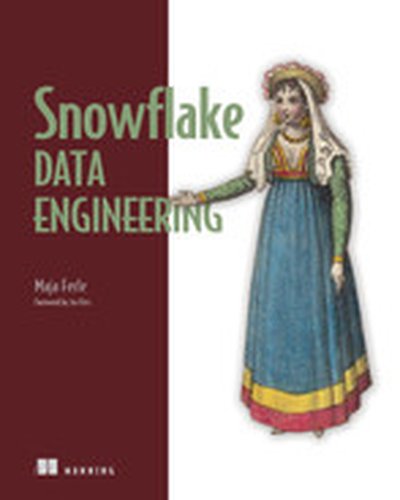
Snowflake Data Engineering

A practical introduction to data engineering on the powerful Snowflake cloud data platform. Data engineers create the pipelines that ingest raw data, transform it, and funnel it to the analysts and professionals who need it. The Snowflake cloud data platform provides a suite of productivity-focused tools and features that simplify building and maintaining data pipelines. In Snowflake Data Engineering, Snowflake Data Superhero Maja Ferle shows you how to get started. In Snowflake Data Engineering you will learn how to: Ingest data into Snowflake from both cloud and local file systems Transform data using functions, stored procedures, and SQL Orchestrate data pipelines with streams and tasks, and monitor their execution Use Snowpark to run Python code in your pipelines Deploy Snowflake objects and code using continuous integration principles Optimize performance and costs when ingesting data into Snowflake Snowflake Data Engineering reveals how Snowflake makes it easy to work with unstructured data, set up continuous ingestion with Snowpipe, and keep your data safe and secure with best-in-class data governance features. Along the way, you’ll practice the most important data engineering tasks as you work through relevant hands-on examples. Throughout, author Maja Ferle shares design tips drawn from her years of experience to ensure your pipeline follows the best practices of software engineering, security, and data governance. About the Technology Pipelines that ingest and transform raw data are the lifeblood of business analytics, and data engineers rely on Snowflake to help them deliver those pipelines efficiently. Snowflake is a full-service cloud-based platform that handles everything from near-infinite storage, fast elastic compute services, inbuilt AI/ML capabilities like vector search, text-to-SQL, code generation, and more. This book gives you what you need to create effective data pipelines on the Snowflake platform. About the Book Snowflake Data Engineering guides you skill-by-skill through accomplishing on-the-job data engineering tasks using Snowflake. You’ll start by building your first simple pipeline and then expand it by adding increasingly powerful features, including data governance and security, adding CI/CD into your pipelines, and even augmenting data with generative AI. You’ll be amazed how far you can go in just a few short chapters! What's Inside Ingest data from the cloud, APIs, or Snowflake Marketplace Orchestrate data pipelines with streams and tasks Optimize performance and cost About the Reader For software developers and data analysts. Readers should know the basics of SQL and the Cloud. About the Author Maja Ferle is a Snowflake Subject Matter Expert and a Snowflake Data Superhero who holds the SnowPro Advanced Data Engineer and the SnowPro Advanced Data Analyst certifications. Quotes An incredible guide for going from zero to production with Snowflake. - Doyle Turner, Microsoft A must-have if you’re looking to excel in the field of data engineering. - Isabella Renzetti, Data Analytics Consultant & Trainer Masterful! Unlocks the true potential of Snowflake for modern data engineers. - Shankar Narayanan, Microsoft Valuable insights will enhance your data engineering skills and lead to cost-effective solutions. A must read! - Frédéric L’Anglais, Maxa Comprehensive, up-to-date and packed with real-life code examples. - Albert Nogués, Danone

Send us a text Welcome to the cozy corner of the tech world where ones and zeros mingle with casual chit-chat. Datatopics Unplugged is your go-to spot for relaxed discussions around tech, news, data, and society. This week, Yannick joins the conversation for a lively year-end retrospective on the state of AI, data, and technology in 2024. Whether you're knee-deep in neural networks or just data-curious, this episode offers plenty to ponder. Grab your coffee, sit back, and explore: AI’s meteoric rise in 2024: How GenAI went from hype to tangible business tools and what’s ahead for 2025.Strategic AI adoption: Challenges and best practices for embedding AI into workflows and decision-making processes.Real-time data: From dynamic pricing to e-commerce triggers, we explore gaps and future trends in event-driven infrastructure.The ethics and compliance puzzle: A dive into the EU AI Act, data privacy, and the evolving landscape of ethical AI usage.Developer tools and trends: Productivity boosters like Copilot and the rise of tools like PDM and Ubi in the Python ecosystem.With reflections on everything from Lakehouse data platforms to open-source debates, this episode is the perfect blend of geeky insights and forward-looking predictions. Pull up a chair, relax, and let’s dive into the world of data, unplugged style!

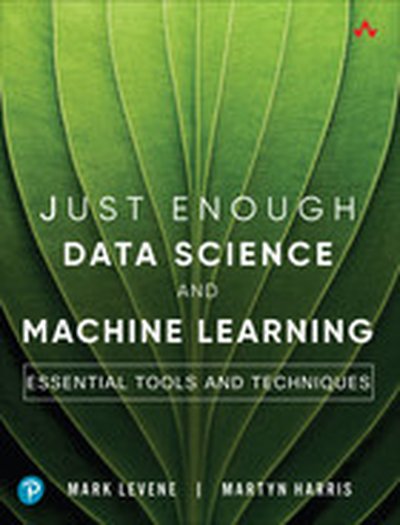
Just Enough Data Science and Machine Learning: Essential Tools and Techniques

An accessible introduction to applied data science and machine learning, with minimal math and code required to master the foundational and technical aspects of data science. In Just Enough Data Science and Machine Learning, authors Mark Levene and Martyn Harris present a comprehensive and accessible introduction to data science. It allows the readers to develop an intuition behind the methods adopted in both data science and machine learning, which is the algorithmic component of data science involving the discovery of patterns from input data. This book looks at data science from an applied perspective, where emphasis is placed on the algorithmic aspects of data science and on the fundamental statistical concepts necessary to understand the subject. The book begins by exploring the nature of data science and its origins in basic statistics. The authors then guide readers through the essential steps of data science, starting with exploratory data analysis using visualisation tools. They explain the process of forming hypotheses, building statistical models, and utilising algorithmic methods to discover patterns in the data. Finally, the authors discuss general issues and preliminary concepts that are needed to understand machine learning, which is central to the discipline of data science. The book is packed with practical examples and real-world data sets throughout to reinforce the concepts. All examples are supported by Python code external to the reading material to keep the book timeless. Notable features of this book: Clear explanations of fundamental statistical notions and concepts Coverage of various types of data and techniques for analysis In-depth exploration of popular machine learning tools and methods Insight into specific data science topics, such as social networks and sentiment analysis Practical examples and case studies for real-world application Recommended further reading for deeper exploration of specific topics. ....

Hands-on 90-minute workshop to learn how to leverage the FiftyOne computer vision toolset. Part 1 covers FiftyOne basics (terms, architecture, installation, and general usage), an overview of useful workflows to explore, understand, and curate data, and how FiftyOne represents and semantically slices unstructured computer vision data. Part 2 is a hands-on introduction to FiftyOne, where you will learn how to load datasets from the FiftyOne Dataset Zoo, navigate the FiftyOne App, programmatically inspect attributes of a dataset, add new sample and custom attributes to a dataset, generate and evaluate model predictions, and save insightful views into the data. Prerequisites: working knowledge of Python and basic computer vision. Attendees will get access to tutorials, videos, and code examples used in the workshop.

90-minute hands-on workshop led by Harpreet Sahota, Hacker-in-Residence and Machine Learning Engineer at Voxel51. Part 1 covers FiftyOne basics (terms, architecture, installation, general usage), an overview of useful workflows to explore, understand, and curate data, and how FiftyOne represents and semantically slices unstructured computer vision data. Part 2 provides a hands-on introduction to FiftyOne: loading datasets from the FiftyOne Dataset Zoo, navigating the FiftyOne App, programmatically inspecting attributes, adding new samples and custom attributes, generating and evaluating model predictions, and saving insightful views into the data. Prerequisites: working knowledge of Python.

Hands-on introduction to FiftyOne: load datasets from the FiftyOne Dataset Zoo, navigate the FiftyOne App, programmatically inspect attributes of a dataset, add new samples and custom attributes, generate and evaluate model predictions, and save insightful views into the data.

Summary In this episode of the Data Engineering Podcast Sam Kleinman talks about the pivotal role of databases in software engineering. Sam shares his journey into the world of data and discusses the complexities of database selection, highlighting the trade-offs between different database architectures and how these choices affect system design, query performance, and the need for ETL processes. He emphasizes the importance of understanding specific requirements to choose the right database engine and warns against over-engineering solutions that can lead to increased complexity. Sam also touches on the tendency of engineers to move logic to the application layer due to skepticism about database longevity and advises teams to leverage database capabilities instead. Finally, he identifies a significant gap in data management tooling: the lack of easy-to-use testing tools for database interactions, highlighting the need for better testing paradigms to ensure reliability and reduce bugs in data-driven applications.

Announcements Hello and welcome to the Data Engineering Podcast, the show about modern data managementIt’s 2024, why are we still doing data migrations by hand? Teams spend months—sometimes years—manually converting queries and validating data, burning resources and crushing morale. Datafold's AI-powered Migration Agent brings migrations into the modern era. Their unique combination of AI code translation and automated data validation has helped companies complete migrations up to 10 times faster than manual approaches. And they're so confident in their solution, they'll actually guarantee your timeline in writing. Ready to turn your year-long migration into weeks? Visit dataengineeringpodcast.com/datafold today to learn how Datafold can automate your migration and ensure source to target parity. Your host is Tobias Macey and today I'm interviewing Sam Kleinman about database tradeoffs across operating environments and axes of scaleInterview IntroductionHow did you get involved in the area of data management?The database engine you use has a substantial impact on how you architect your overall system. When starting a greenfield project, what do you see as the most important factor to consider when selecting a database?points of friction introduced by database capabilitiesembedded databases (e.g. SQLite, DuckDB, LanceDB), when to use and when do they become a bottlenecksingle-node database engines (e.g. Postgres, MySQL), when are they legitimately a problemdistributed databases (e.g. CockroachDB, PlanetScale, MongoDB)polyglot storage vs. general-purpose/multimodal databasesfederated queries, benefits and limitations ease of integration vs. variability of performance and access control Contact Info LinkedInGitHubParting Question From your perspective, what is the biggest gap in the tooling or technology for data management today?Closing Announcements Thank you for listening! Don't forget to check out our other shows. Podcast.init covers the Python language, its community, and the innovative ways it is being used. The AI Engineering Podcast is your guide to the fast-moving world of building AI systems.Visit the site to subscribe to the show, sign up for the mailing list, and read the show notes.If you've learned something or tried out a project from the show then tell us about it! Email [email protected] with your story.Links MongoDBNeonPodcast EpisodeGlareDBNoSQLS3 Conditional WriteEvent driven architectureCockroachDBCouchbaseCassandraThe intro and outro music is from The Hug by The Freak Fandango Orchestra / CC BY-SA
Send us a text

Welcome to the cozy corner of the tech world where ones and zeros mingle with casual chit-chat. Datatopics Unplugged is your go-to spot for relaxed discussions around tech, news, data, and society. Dive into conversations that should flow as smoothly as your morning coffee (but don’t), where industry insights meet laid-back banter. Whether you’re a data aficionado or just someone curious about the digital age, pull up a chair, relax, and let’s get into the heart of data, unplugged style! In this episode, we are joined by special guest Nico for a lively and wide-ranging tech chat. Grab your headphones and prepare for: Strava’s ‘Athlete Intelligence’ feature: A humorous dive into how workout apps are getting smarter—and a little sassier.Frontend frameworks: HTMX is a tough choice: A candid discussion on using React versus emerging alternatives like HTMX and when to keep things lightweight.Octoverse 2024 trends and language wars: Python takes the lead over JavaScript as the top GitHub language, and we dissect why Go, TypeScript, and Rust are getting love too.GenAI meets Minecraft: Imagine procedurally generated worlds and dreamlike coherence breaks—Minecraft-style. How GenAI could redefine gameplay narratives and NPC behavior.OpenAI’s O1 model leak: Insights on the recent leak, what’s new, and its implications for the future of AI.Tiger Beetle’s transactional databases and testing tales: Nico walks us through Tiger Style, deterministic simulation testing, and why it’s a game changer for distributed databases.Automated testing for LLMOps: A quick overview of automated testing for large language models and its role in modern AI workflows.DeepLearning.ai’s short courses: Quick, impactful learning to level up your AI skills.

Summary The challenges of integrating all of the tools in the modern data stack has led to a new generation of tools that focus on a fully integrated workflow. At the same time, there have been many approaches to how much of the workflow is driven by code vs. not. Burak Karakan is of the opinion that a fully integrated workflow that is driven entirely by code offers a beneficial and productive means of generating useful analytical outcomes. In this episode he shares how Bruin builds on those opinions and how you can use it to build your own analytics without having to cobble together a suite of tools with conflicting abstractions.

Announcements Hello and welcome to the Data Engineering Podcast, the show about modern data managementImagine catching data issues before they snowball into bigger problems. That’s what Datafold’s new Monitors do. With automatic monitoring for cross-database data diffs, schema changes, key metrics, and custom data tests, you can catch discrepancies and anomalies in real time, right at the source. Whether it’s maintaining data integrity or preventing costly mistakes, Datafold Monitors give you the visibility and control you need to keep your entire data stack running smoothly. Want to stop issues before they hit production? Learn more at dataengineeringpodcast.com/datafold today!Your host is Tobias Macey and today I'm interviewing Burak Karakan about the benefits of building code-only data systemsInterview IntroductionHow did you get involved in the area of data management?Can you describe what Bruin is and the story behind it?Who is your target audience?There are numerous tools that address the ETL workflow for analytical data. What are the pain points that you are focused on for your target users?How does a code-only approach to data pipelines help in addressing the pain points of analytical workflows?How might it act as a limiting factor for organizational involvement?Can you describe how Bruin is designed?How have the design and scope of Bruin evolved since you first started working on it?You call out the ability to mix SQL and Python for transformation pipelines. What are the components that allow for that functionality?What are some of the ways that the combination of Python and SQL improves ergonomics of transformation workflows?What are the key features of Bruin that help to streamline the efforts of organizations building analytical systems?Can you describe the workflow of someone going from source data to warehouse and dashboard using Bruin and Ingestr?What are the opportunities for contributions to Bruin and Ingestr to expand their capabilities?What are the most interesting, innovative, or unexpected ways that you have seen Bruin and Ingestr used?What are the most interesting, unexpected, or challenging lessons that you have learned while working on Bruin?When is Bruin the wrong choice?What do you have planned for the future of Bruin?Contact Info LinkedInParting Question From your perspective, what is the biggest gap in the tooling or technology for data management today?Closing Announcements Thank you for listening! Don't forget to check out our other shows. Podcast.init covers the Python language, its community, and the innovative ways it is being used. The AI Engineering Podcast is your guide to the fast-moving world of building AI systems.Visit the site to subscribe to the show, sign up for the mailing list, and read the show notes.If you've learned something or tried out a project from the show then tell us about it! Email [email protected] with your story.Links BruinFivetranStitchIngestrBruin CLIMeltanoSQLGlotdbtSQLMeshPodcast EpisodeSDFPodcast EpisodeAirflowDagsterSnowparkAtlanEvidenceThe intro and outro music is from The Hug by The Freak Fandango Orchestra / CC BY-SA