This session shows how someone can take a simple notebook they've created on Colab, and create an executable Python wheel that can be checked in for source control and to Artifact Registry for production use.
Click the blue “Learn more” button above to tap into special offers designed to help you implement what you are learning at Google Cloud Next 25.
 talk-data.com
Topic
Python
programming_language
data_science
web_development
1446
tagged
Activity Trend
185
peak/qtr
2020-Q1
2026-Q2
Top Events
O'Reilly Data Science Books
220
Data Engineering Podcast
183
O'Reilly Data Engineering Books
151
SciPy 2025
67
PyConDE & PyData Berlin 2023
49
Data + AI Summit 2025
30
Databricks DATA + AI Summit 2023
29
O'Reilly AI & ML Books
27
PyData Seattle 2025
23
PyData Paris 2025
20
O'Reilly Data Visualization Books
20
PyData London 2025
20
by
Guillaume Blaquiere
(Carrefour)
,
Sonakshi Pandey
(Google Cloud)
,
Sandeep Karmarkar
(Google Cloud)
Python's dominance in data science streamlines workflows, but large-scale data processing challenges persist. Discover how BigQuery DataFrames, a Pandas and scikit-learn-like abstraction over the BigQuery engine, revolutionizes this process.
Join this session to learn about BigQuery DataFrames and witness how you can:
- Effortlessly transform terabytes of data
- Build efficient ML applications on massive datasets by leveraging large language models
- Use your familiar Python environment
Click the blue “Learn more” button above to tap into special offers designed to help you implement what you are learning at Google Cloud Next 25.
In this mini course, you will explore automatic side-by-side evaluation on Vertex AI using AutoSxS, a tool for evaluating models relative to each other. You will understand the application of side-by-side evaluation how you can use AutoSxS through the Vertex AI API or Vertex AI SDK for Python.
Click the blue “Learn more” button above to tap into special offers designed to help you implement what you are learning at Google Cloud Next 25.
A good BI tool should integrate with a larger ecosystem, not be a monolith. At Hashboard we’ve built Hashquery, a new Python SDK which we believe connects the dots. Import models from your semantic layer of choice, express complex queries with ease, and push the result wherever you need it. In this talk we’ll explore how.
by
Steffen Grimmel
(Deutsche Telekom)
,
Oliver Ratzesberger
(Google Cloud)
,
Irina Farooq
(Google Cloud)
,
Brian Welcker
(Google Cloud)
Join this session to learn the latest innovations for BigQuery to support all data, be it structured or unstructured, across multiple and open data formats, and cross-clouds; all workloads, be they Cloud SQL, Spark, or Python; and built-in AI, to supercharge the work of data teams and unlock generative AI across new use cases. Learn how you can take advantage of BigQuery, a single, unified data platform that combines capabilities including data processing, streaming, and governance.
Click the blue “Learn more” button above to tap into special offers designed to help you implement what you are learning at Google Cloud Next 25.
Join us as we go from zero to insights in 15 minutes. Alex will build an entire analytical report, from SQL query to python to data visualization. We’ll cover the basics of a modern data notebook, some of the technical AI Magic behind the scenes, and show how hundreds of customers accelerate time to insight with Hex.
Large Language Models like the GPT, Gemini, Gemma and Llama series are rapidly transforming the world in general and the field of data science in particular. This talk introduces deep-learning transformer architectures including LLMs. Critically, it also demonstrates the breadth of capabilities state-of-the-art LLMs can deliver, including for dramatically revolutionizing the development of machine learning models and commercially successful AI products. This talk provides an overview of the full lifecycle of LLM development, from training to production deployment, with an emphasis on leveraging the open-source Python libraries like Hugging Face Transformers and PyTorch Lightning.
This session explores the integration of Rust and Python within Google Apps Script by leveraging WebAssembly. Developers can enhance the robustness and capabilities of their applications by combining the strengths of Rust's performance and Python's versatility. The presentation will delve into the integration process, showcasing practical examples of how this approach can be employed to create powerful solutions within the Apps Script environment.
Click the blue “Learn more” button above to tap into special offers designed to help you implement what you are learning at Google Cloud Next 25.
Gemini is a family of generative AI models developed by Google DeepMind that is designed for multimodal use cases. The Gemini API gives you access to the Gemini Pro Vision and Gemini Pro models. In this spotlight lab, you will learn how to use the Vertex AI Gemini API with the Vertex AI SDK for Python to interact with the Gemini Pro (gemini-pro) model and the Gemini Pro Vision (gemini-pro-vision) model.
Click the blue “Learn more” button above to tap into special offers designed to help you implement what you are learning at Google Cloud Next 25.
Harrison Chase is the CEO and Co-founder of LangChain, a company formed around the popular open-source Python/Typescript packages. After studying stats and computer science at Harvard, Harrison also went on to lead the machine learning team at Robust Intelligence (an MLOps company) and the entity linking team at Kensho (a fintech startup).
In this fireside chat, he will discuss how LangChain is making it easier to use large language models (LLMs) to develop context-aware reasoning applications. Leveraging the Google ecosystem, they are testing, evaluating, and observing common patterns for building more complex state machines and agents.
Click the blue “Learn more” button above to tap into special offers designed to help you implement what you are learning at Google Cloud Next 25.
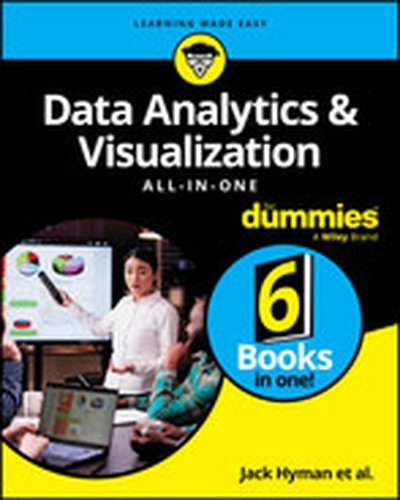
Install data analytics into your brain with this comprehensive introduction Data Analytics & Visualization All-in-One For Dummies collects the essential information on mining, organizing, and communicating data, all in one place. Clocking in at around 850 pages, this tome of a reference delivers eight books in one, so you can build a solid foundation of knowledge in data wrangling. Data analytics professionals are highly sought after these days, and this book will put you on the path to becoming one. You’ll learn all about sources of data like data lakes, and you’ll discover how to extract data using tools like Microsoft Power BI, organize the data in Microsoft Excel, and visually present the data in a way that makes sense using a Tableau. You’ll even get an intro to the Python, R, and SQL coding needed to take your data skills to a new level. With this Dummies guide, you’ll be well on your way to becoming a priceless data jockey. Mine data from data sources Organize and analyze data Use data to tell a story with Tableau Expand your know-how with Python and R New and novice data analysts will love this All-in-One reference on how to make sense of data. Get ready to watch as your career in data takes off.
We talked about:
Tereza’s background Switching from an Individual Contributor to Lead Python Pizza and the pizza management metaphor Learning to figure things out on your own and how to receive feedback Tereza as a leadership coach Podcasts Tereza’s coaching framework (selling yourself vs bragging) The importance of retrospectives The importance of communication and active listening Convincing people you don’t have power over Building relationships and empathy Inclusive leadership
Links:
LinkedIn: https://www.linkedin.com/in/tereza-iofciu/ Twitter: https://twitter.com/terezaif Github: https://github.com/terezaif Website: https:// terezaiofciu.com
Free Data Engineering course: https://github.com/DataTalksClub/data-engineering-zoomcamp
Join DataTalks.Club: https://datatalks.club/slack.html Our events: https://datatalks.club/events.html
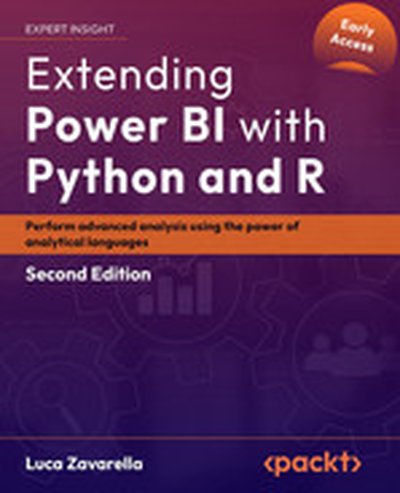
In "Extending Power BI with Python and R," you'll learn how to enhance your Power BI reports and analyses by leveraging the advanced analytical capabilities of Python and R. From working with large datasets to creating sophisticated visuals, this book provides practical instructions on powerful techniques that unlock new possibilities in Power BI. What this Book will help me do Configure and optimize Python and R integration in Power BI for enhanced performance. Implement advanced data transformation techniques to overcome Power BI limitations. Develop advanced visualizations using the Grammar of Graphics in Python and R. Analyze data leveraging powerful Python and R algorithms, including machine learning models. Secure your Power BI data with anonymization and pseudonymization techniques. Author(s) None Zavarella is a data analytics expert with years of practical experience in business intelligence and data analytics. With a passion for enhancing data tools with programming languages like Python and R, they bring practical knowledge and technical acumen to this comprehensive resource. They aim to make complex concepts approachable to their readers. Who is it for? This book is aimed at professionals such as business analysts, business intelligence specialists, and data scientists who leverage Power BI for their data solutions. Readers should have a working knowledge of Power BI basics and a desire to extend its capabilities. A familiarity with Python and R programming basics is also beneficial for following the advanced techniques presented.
Hands-on 90-minute workshop led by Dan Gural, Machine Learning Engineer at Voxel51, to learn how to use the FiftyOne computer vision toolset. Part 1 covers FiftyOne basics (terms, architecture, installation, and general usage), an overview of useful workflows to explore, understand, and curate data, and how FiftyOne represents and semantically slices unstructured computer vision data. Part 2 is a hands-on introduction to FiftyOne, including loading datasets from the FiftyOne Dataset Zoo, navigating the FiftyOne App, programmatically inspecting attributes of a dataset, adding new samples and custom attributes, generating and evaluating model predictions, and saving insightful views into the data.
Hands-on workshop led by Dan Gural, Machine Learning Engineer at Voxel51. The session covers FiftyOne Basics (terms, architecture, installation, and usage), workflows to explore and curate data, and how FiftyOne represents and slices unstructured computer vision data. The second half is a hands-on introduction: loading datasets from the FiftyOne Dataset Zoo, navigating the FiftyOne App, programmatically inspecting attributes, adding samples and custom attributes, generating and evaluating model predictions, and saving insightful views. Prerequisites: working knowledge of Python and basic computer vision. Attendees will gain access to tutorials, videos, and code examples used in the workshop.
Summary
A core differentiator of Dagster in the ecosystem of data orchestration is their focus on software defined assets as a means of building declarative workflows. With their launch of Dagster+ as the redesigned commercial companion to the open source project they are investing in that capability with a suite of new features. In this episode Pete Hunt, CEO of Dagster labs, outlines these new capabilities, how they reduce the burden on data teams, and the increased collaboration that they enable across teams and business units.
Announcements
Hello and welcome to the Data Engineering Podcast, the show about modern data management Dagster offers a new approach to building and running data platforms and data pipelines. It is an open-source, cloud-native orchestrator for the whole development lifecycle, with integrated lineage and observability, a declarative programming model, and best-in-class testability. Your team can get up and running in minutes thanks to Dagster Cloud, an enterprise-class hosted solution that offers serverless and hybrid deployments, enhanced security, and on-demand ephemeral test deployments. Go to dataengineeringpodcast.com/dagster today to get started. Your first 30 days are free! Data lakes are notoriously complex. For data engineers who battle to build and scale high quality data workflows on the data lake, Starburst powers petabyte-scale SQL analytics fast, at a fraction of the cost of traditional methods, so that you can meet all your data needs ranging from AI to data applications to complete analytics. Trusted by teams of all sizes, including Comcast and Doordash, Starburst is a data lake analytics platform that delivers the adaptability and flexibility a lakehouse ecosystem promises. And Starburst does all of this on an open architecture with first-class support for Apache Iceberg, Delta Lake and Hudi, so you always maintain ownership of your data. Want to see Starburst in action? Go to dataengineeringpodcast.com/starburst and get $500 in credits to try Starburst Galaxy today, the easiest and fastest way to get started using Trino. Your host is Tobias Macey and today I'm interviewing Pete Hunt about how the launch of Dagster+ will level up your data platform and orchestrate across language platforms
Interview
Introduction How did you get involved in the area of data management? Can you describe what the focus of Dagster+ is and the story behind it?
What problems are you trying to solve with Dagster+? What are the notable enhancements beyond the Dagster Core project that this updated platform provides? How is it different from the current Dagster Cloud product?
In the launch announcement you tease new capabilities that would be great to explore in turns:
Make data a team sport, enabling data teams across the organization Deliver reliable, high quality data the organization can trust Observe and manage data platform costs Master the heterogeneous collection of technologies—both traditional and Modern Data Stack
What are the business/product goals that you are focused on improving with the launch of Dagster+ What are the most interesting, innovative, or unexpected ways that you have seen Dagster used? What are the most interesting, unexpected, or challenging lessons that you have learned while working on the design and launch of Dagster+? When is Dagster+ the wrong choice? What do you have planned for the future of Dagster/Dagster Cloud/Dagster+?
Contact Info
Twitter LinkedIn
Parting Question
From your perspective, what is the biggest gap in the tooling or technology for data management today?
Closing Announcements
Thank you for listening! Don't forget to check out our other shows. Podcast.init covers the Python language, its community, and the innovative ways it is being used. The Machine Learning Podcast helps you go from idea to production with machine learning. Visit the site to subscribe to the show, sign up for the mailing list, and read the show notes. If y
Hear the story of Alex The Analyst like you've never heard it before. In this episode, Avery Smith sits down with Alex Freberg, more commonly known as Alex the Analyst to discuss his journey from no technical background to data analyst superstar.
They talk about Alex's journey from a recreational therapy degree to learning what data analytics is. They also cover what matters most when getting hired as a data analyst. Is it technical skills like SQL and Python? Or is it something much simpler?
Connect with Alex the Analyst :
🤝 Follow on Linkedin
▶️ Subscribe on Youtube
🎒 Learn About Analyst Builder
✉️ Discover what we wish we knew about landing the dream job
🤖 Data Analytics Answers At Your Finger Tips
🤝 Ace your data analyst interview with the interview simulator
📩 Get my weekly email with helpful data career tips
📊 Come to my next free “How to Land Your First Data Job” training
🏫 Check out my 10-week data analytics bootcamp
Timestamps:
(6:01) Alex's Data Career Journey (11:50) Alex's First Portfolio (17:53) Alex's Advice on Getting Hired & Interviews (27:10) How to Become an Analyst in 7 Days
Connect with Avery:
📺 Subscribe on YouTube
🎙Listen to My Podcast
👔 Connect with me on LinkedIn
🎵 TikTok Mentioned in this episode: Join the last cohort of 2025! The LAST cohort of The Data Analytics Accelerator for 2025 kicks off on Monday, December 8th and enrollment is officially open!
To celebrate the end of the year, we’re running a special End-of-Year Sale, where you’ll get: ✅ A discount on your enrollment 🎁 6 bonus gifts, including job listings, interview prep, AI tools + more
If your goal is to land a data job in 2026, this is your chance to get ahead of the competition and start strong.
👉 Join the December Cohort & Claim Your Bonuses: https://DataCareerJumpstart.com/daa a...
Send us a text Welcome to the cozy corner of the tech world where ones and zeros mingle with casual chit-chat. Datatopics Unplugged is your go-to spot for relaxed discussions around tech, news, data, and society. Dive into conversations that should flow as smoothly as your morning coffee (but don't), where industry insights meet laid-back banter. Whether you're a data aficionado or just someone curious about the digital age, pull up a chair, relax, and let's get into the heart of data, unplugged style! In episode #41, titled “Regulations and Revelations: Rust Safety, ChatGPT Secrets, and Data Contracts” we're thrilled to have Paolo Léonard joining us as we unpack a host of intriguing developments across the tech landscape: In Rust We Trust? White House Office urges memory safety: A dive into the push for memory safety and what it means for programming languages like Python.ChatGPT's Accidental Leak? Did OpenAI just accidentally leak the next big ChatGPT upgrade?: Speculations on the upcoming enhancements and their impact on knowledge accessibility.EU AI Act Adoption: EU Parliament officially adopts AI Act: Exploring the landmark AI legislation and its broad effects, with a critical look at potential human rights concerns.Meet Devin, the AI Engineer: Exploring the capabilities and potential of the first AI software engineer.Rye's New Stewardship: Astral takes stewardship of Rye: The next big thing in Python packaging and the role of community in driving innovation, with discussions unfolding on GitHub.Data Contract CLI: A look at data contracts and their importance in managing and understanding data across platforms.AI and Academic Papers: The influence of AI on academic research, highlighted by this paper and this paper, and how it's reshaping the landscape of knowledge sharing.