Discover how deferred generators let you control async data flow in React. We’ll look at a simple pattern to manage streaming and user-driven data updates, great for live UIs and smoother async logic.
 talk-data.com
Topic
React
javascript_library
front_end
web_development
99
tagged
Activity Trend
9
peak/qtr
2020-Q1
2026-Q2
Top Events
O'Reilly Data Engineering Books
12
O'Reilly Data Science Books
6
Data Engineering Podcast
5
Making Data Simple
4
Experiencing Data w/ Brian T. O’Neill (AI & data product management leadership—powered by UX design)
4
Data + AI Summit 2025
4
Databricks DATA + AI Summit 2023
4
React Paris Meetup #007
3
React Paris Meetup #5
3
Airflow Summit 2025
2
React Paris Meetup #1
2
React.NYC Meetup - React Threads, Type Safety, Isograph & more
2
Sync Engines allow you to add a database caching layer to your web app that enables near zero latencies, real-time collaboration, and local-first development. In this talk, I will explore ZeroSync, one of the sync engines by Rocicorp, and present a demo app to illustrate how it works, pros and cons.
Bradesco Bank is one of the largest private banks in Latin America, with over 75 million customers and over 80 years of presence in FSI. In the digital business, velocity to react to customer interactions is crucial to succeed. In the legacy landscape, acquiring data points on interactions over digital and marketing channels was complex, costly and lacking integrity due to typical fragmentation of tools. With the new in-house Customer Data Platform powered by Databricks Intelligent Platform, it was possible to completely transform the data strategy around customer data. Using some key components such Uniform and Lakeflow Declarative Pipelines, it was possible to increase data integrity, reduce latency and processing time and, most importantly, boost personal productivity and business agility. Months of reprocessing, weeks of human labor and cumbersome and complex data integrations were dramatically simplified achieving significant operational efficiency.
At Plexure, we ingest hundreds of millions of customer activities and transactions into our data platform every day, fuelling our personalisation engine and providing insights into the effectiveness of marketing campaigns.We're on a journey to transition from infrequent batch ingestion to near real-time streaming using Azure Event Hubs and Lakeflow Declarative Pipelines. This transformation will allow us to react to customer behaviour as it happens, rather than hours or even days later.It also enables us to move faster in other ways. By leveraging a Schema Registry, we've created a metadata-driven framework that allows data producers to: Evolve schemas with confidence, ensuring downstream processes continue running smoothly. Seamlessly publish new datasets into the data platform without requiring Data Engineering assistance. Join us to learn more about our journey and see how we're implementing this with Lakeflow Declarative Pipelines meta-programming - including a live demo of the end-to-end process!
The AI Screening Agent automates Level 1 (L1) screening process, essential for Know Your Customer (KYC) and compliance due diligence during customer onboarding. This system aims to minimize false positives, significantly reducing human review time and costs. Beyond typical Retrieval-Augmented Generation (RAG) applications like summarization and chat-with-your-data (CWYD), the AI Screening Agent employs a ReAct architecture with intelligent tools, enabling it to perform complex compliance decision-making with human-like accuracy and greater consistency. In this talk, I will explore the screening agent architecture, demonstrating its ability to meet evolving client policies. I will discuss evaluation and configuration management using MLflow LLM-as-judge and Unity Catalog, and discuss challenges, such as, data fidelity and customization. This session underscores the transformative potential of AI agents in compliance workflows, emphasizing their adaptability, accuracy, and consistency.

by
Giancarlo Costa
(European Food Safety Authority)
,
Jeroen De Clercq
(delaware)
,
Tim Bal
(delaware)
In 2020, Delaware implemented a state-of-the-art, event-driven architecture for EFSA, enabling a highly decoupled system landscape, presented at the Data&AI Summit 2021. By centrally brokering events in near real-time, consumer applications react instantly to events from producer applications as they occur. Event producers are decoupled from consumers via a publisher/subscriber mechanism. Over the past years, we noticed some drawbacks. The processing of these custom events, primarily aimed for process integration weren’t covering all edge cases, the data quality was not always optimal due to missing events and we needed to create a complex logic for SCD2 tables. Lakeflow Connect allows us to extract the data directly from the source without the complex architecture in between, avoiding data loss and thus, data quality issues, and with some simple adjustments, an SCD2 table is created automatically. Lakeflow Connect allows us to create more efficient and intelligent data provisioning.
Whilst GenAI has brought conversational experiences to the forefront, the next generation of web interfaces will demand more than just chat interactions. Instead, delivering highly personalized experiences requires a powerful blend of search, dynamic multimodal visual elements, and conversational interactions. In this session, discover how Valtech, the experience innovation company, is leveraging Vertex AI Agent Builder and Gemini with React to redefine experiences on the web.
This Session is hosted by a Google Cloud Next Sponsor.
Visit your registration profile at g.co/cloudnext to opt out of sharing your contact information with the sponsor hosting this session.
Synthetic monitoring uses global testing infrastructure to track user pathways and gauge the influence of web and front-end performance on user experience. It provides comprehensive insight into your website's performance, functionality, and availability from development to production, allowing you to identify and resolve issues before they affect your customers. This talk will show how to monitor a React application
Building a server driven UI with React is perfect as Reacts dynamic nature makes it easy to render and update UIs based on API responses but it still requires many round trips over the network. React 19 and RSCs are a perfect solution to this problem! By leveraging the new features in React 19 we can now build an even more performant server driven UI. In this talk I'll demo how I've been able to leverage React 19 and RSCs in an enterprise application to build server driven UIs.
Send us a text
Welcome to the cozy corner of the tech world where ones and zeros mingle with casual chit-chat. Datatopics Unplugged is your go-to spot for relaxed discussions around tech, news, data, and society. Dive into conversations that should flow as smoothly as your morning coffee (but don’t), where industry insights meet laid-back banter. Whether you’re a data aficionado or just someone curious about the digital age, pull up a chair, relax, and let’s get into the heart of data, unplugged style! In this episode, we are joined by special guest Nico for a lively and wide-ranging tech chat. Grab your headphones and prepare for: Strava’s ‘Athlete Intelligence’ feature: A humorous dive into how workout apps are getting smarter—and a little sassier.Frontend frameworks: HTMX is a tough choice: A candid discussion on using React versus emerging alternatives like HTMX and when to keep things lightweight.Octoverse 2024 trends and language wars: Python takes the lead over JavaScript as the top GitHub language, and we dissect why Go, TypeScript, and Rust are getting love too.GenAI meets Minecraft: Imagine procedurally generated worlds and dreamlike coherence breaks—Minecraft-style. How GenAI could redefine gameplay narratives and NPC behavior.OpenAI’s O1 model leak: Insights on the recent leak, what’s new, and its implications for the future of AI.Tiger Beetle’s transactional databases and testing tales: Nico walks us through Tiger Style, deterministic simulation testing, and why it’s a game changer for distributed databases.Automated testing for LLMOps: A quick overview of automated testing for large language models and its role in modern AI workflows.DeepLearning.ai’s short courses: Quick, impactful learning to level up your AI skills.
We’re improving DataFramed, and we need your help! We want to hear what you have to say about the show, and how we can make it more enjoyable for you—find out more here. Staying ahead means knowing what’s happening right now—not minutes or hours later. Real-time analytics promises to help teams react faster, make informed choices, and even predict issues before they arise. But implementing these systems is no small feat, and it requires careful alignment between technical capabilities and business needs. How do you ensure that real-time data actually drives impact? And what should organizations consider to make sure their real-time analytics investments lead to tangible benefits? Zuzanna Stamirowska is the CEO of Pathway.com - the fastest data processing engine on the market which makes real-time intelligence possible. Zuzanna is also the author of the state-of-the-art forecasting model for maritime trade published by the National Academy of Sciences of the USA. While working on this project she saw that the digitization of traditional industries was slowed down by the lack of a software infrastructure capable of doing automated reasoning on top of data streams, in real time. This was the spark to launch Pathway. She holds a Master’s degree in Economics and Public Policy from Sciences Po, Ecole Polytechnique, and ENSAE, as well as a PhD in Complexity Science.. Hélène Stanway is Independent Advisor & Consultant at HMLS Consulting Ltd. Hélène is an award-winning and highly effective insurance leader with a proven track record in emerging technologies, innovation, operations, data, change, and digital transformation. Her passion for actively combining the human element, design, and innovation alongside technology has enabled companies in the global insurance market to embrace change by achieving their desired strategic goals, improving processes, increasing efficiency, and deploying relevant tools. With a special passion for IoT and Sensor Technology, Hélène is a perpetual learner, driven to help delegates succeed. In the episode, Richie, Zuzanna and Hélène explore real-time analytics, their operational impact, use-cases of real-time analytics across industries, the benefits of adopting real-time analytics, the key roles and stakeholders you need to make that happen, operational challenges, strategies for effective adoption, the real-time of the future, common pitfalls, and much more. Links Mentioned in the Show:
Pathway
Connect with Zuzanna and HélèneLiArticle: What are digital twins and why do we need them?Course: Time Series Analysis in Power BIRelated Episode: How Real Time Data Accelerates Business Outcomes with George TrujilloSign up to RADAR: Forward Edition New to DataCamp? Learn on the go using the DataCamp mobile appEmpower your business with world-class data
Artificial Intelligence (AI) has well and truly landed in the boardroom, driven by the hype and clear potential that AI promises. For a select group, this has been an accelerator to performance, delivering operational and strategic improvements. For many, however, confusion and lack of certainty has crept in, creating overwhelm and indecision. In this session, Jason will talk about what’s been happening in the Boardroom and how you, as data leaders and professionals, can react and use this time as an opportunity.
When writing a fullstack application a common problem facing developers today is keeping data consistency between the frontend and backend. What the backend expects and what the frontend sends is not always the same. In this talk we’ll look at this problem and different approaches to solve it. We’ll take a look at how AWS Amplify approaches this problem and show a demo. We’ll also compare and contrast other TypeScript approaches with React and Next.
In a web app, the enemy of performance isn't bad algorithms — it's bloat. Enter Isograph, the framework for building data-driven React apps. It leverages a compiler to provide great DevEx and performance, right out of the box. In this talk, find out how Isograph lets you: load component JavaScript and data only when needed, for example when the user is about to scroll to them; load components (such as a VideoViewer) only if an item of that type (a Video) is returned from the server, and defer loading parts of your component tree, without server support. And the cherry on top? We're doing it all in userland. 😎
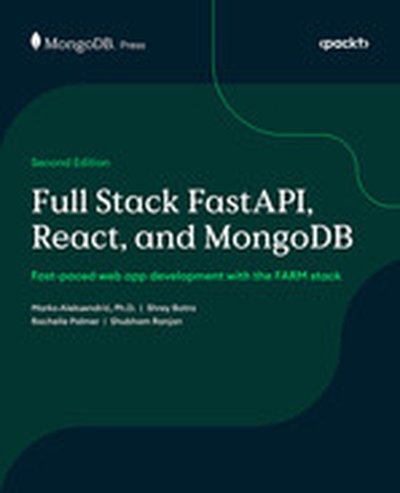
Full Stack FastAPI, React, and MongoDB guides you step-by-step through creating web applications using the FARM stack. This hands-on resource teaches you how to integrate FastAPI, a modern Python framework, React for front-end development, and MongoDB for data storage to build and deploy powerful, scalable web applications. What this Book will help me do Master the essentials of MongoDB, including creating and managing document-based databases. Gain proficiency in building APIs using FastAPI and Python for robust backend systems. Develop dynamic frontends using React, integrating seamlessly with a FastAPI backend. Securely authenticate and authorize users using JSON Web Tokens in your applications. Explore advanced features like integrating AI models and building with Next.js for production-ready development. Author(s) Marko Aleksendrić, Shrey Batra, Rachelle Palmer, and Shubham Ranjan combine their expertise in web development and software engineering in this book. Together, they bring years of professional experience and a passion for teaching developers to create modern web applications effectively using cutting-edge tools. Who is it for? Intermediate web developers who possess foundational JavaScript and Python skills are the ideal audience for this book. If you want to advance your skills by mastering modern web application development with the FARM stack, this book will guide you comprehensively. With practical, real-world examples, it is designed for developers aiming to build production-grade applications.
This session will be an introduction to using React as your frontend library. Basic knowledge of HTML, CSS, and JavaScript is required. We will discuss the React way, component-based approach, and building dynamic user interfaces. We'll use CodeSandbox at https://codesandbox.io/s/react-new to practice, and join the session via Zoom.
Soon we will finally switch to a 100% React UI with a full separation between the API and UI as well. While we are doing such a big change, let’s also take the opportunity to imagine whole new interfaces vs just simply modernizing the existing views. How can we use design to help you better understand what is going on with your DAG? Come listen to some of our proposed ideas and bring your own big ideas as the second half will be an open discussion.
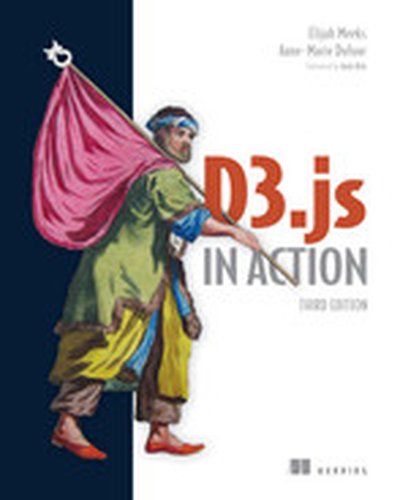
Create stunning web-based data visualizations with D3.js. This totally-revised new edition of D3.js in Action guides you from simple charts to powerful interactive graphics. Chapter-by-chapter you’ll assemble an impressive portfolio of visualizations—including intricate networks, maps, and even a complete customized visualization layout. Plus, you'll learn best practices for building interactive graphics, animations, and integrating your work into frontend development frameworks like React and Svelte. In D3.js in Action, Third Edition you will learn how to: Set up a local development environment for D3 Include D3 in web development projects, including Node-based web apps Select and append DOM elements Size and position elements on screen Assemble components and layouts into creative data visualizations D3.js in Action, Third Edition has been extensively revised for D3.js version 7, and modern best practices for web visualizations. Its brand new chapters dive into interactive visualizations, cover responsiveness for dataviz, and show you how you can improve accessibility. About the Technology With D3.js, you can create sophisticated infographics, charts, and interactive data visualizations using standard frontend tools like JavaScript, HTML, and CSS. Granting D3 its VIS Test of Time award, the IEEE credited this powerful library for bringing data visualization to the mainstream. You’ll be blown away by how beautiful your results can be! About the Book D3.js in Action, Third Edition is a roadmap for creating brilliant and beautiful visualizations with D3.js. Like a gentle mentor, it guides you from basic charts all the way to advanced interactive visualizations like networks and maps. You’ll learn to build graphics, create animations, and set up mobile-friendly responsiveness. Each chapter contains a complete data visualization project to put your new skills into action. What's Inside Fully revised for D3.js v7 Includes 12 complete projects Create data visualizations with SVG and canvas Combine D3 with React, Svelte, and Angular About the Reader For web developers with HTML, CSS, and JavaScript skills. About the Authors Elijah Meeks was a data visualization pioneer at Stanford and the first Senior Data Visualization Engineer at Netflix. Anne-Marie Dufour is a Data Visualization Engineer. The technical editor on this book was Jon Borgman. Quotes Guides readers through the intricate world of D3 with clarity and practical insight. Whether you’re a seasoned expert or just starting, this book will be invaluable. - Connor Rothschild, Data Visualization Engineer, Moksha Data Studio Amazing job of explaining the core concepts of D3 while providing all you need to learn other fundamental concepts. - Lindsey Poulter, Visualization Engineer, New York Mets A navigation tool to explore all possible paths in the world of D3. Clear schematics and nicely selected examples guide the readers through D3’s possibilities. - Matthias Stahl, Head Data & Visualizations, Der SPIEGEL
Overview of the new features in React 19 and how to use them.