talk-data.com talk-data.com

Topic

Redshift

Amazon Redshift

data_warehouse cloud aws olap

119

tagged

Activity Trend

17 peak/qtr
2020-Q1 2026-Q1

Activities

119 activities · Newest first

Data Engineering with AWS - Second Edition

Learn data engineering and modern data pipeline design with AWS in this comprehensive guide! You will explore key AWS services like S3, Glue, Redshift, and QuickSight to ingest, transform, and analyze data, and you'll gain hands-on experience creating robust, scalable solutions. What this Book will help me do Understand and implement data ingestion and transformation processes using AWS tools. Optimize data for analytics with advanced AWS-powered workflows. Build end-to-end modern data pipelines leveraging cutting-edge AWS technologies. Design data governance strategies using AWS services for security and compliance. Visualize data and extract insights using Amazon QuickSight and other tools. Author(s) Gareth Eagar is a Senior Data Architect with over 25 years of experience in designing and implementing data solutions across various industries. He combines his deep technical expertise with a passion for teaching, aiming to make complex concepts approachable for learners at all levels. Who is it for? This book is intended for current or aspiring data engineers, data architects, and analysts seeking to leverage AWS for data engineering. It suits beginners with a basic understanding of data concepts who want to gain practical experience as well as intermediate professionals aiming to expand into AWS-based systems.

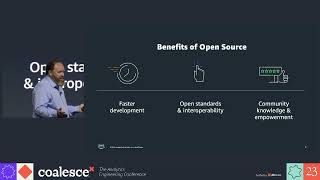
Community driven: The dbt Labs and AWS partnership - Coalesce 2023

When companies work together through open source development, good things happen. Open source contributions lead to strong relationships between engineers across company lines, and positive outcomes for customers whether through improved functionality, performance, or supply chain security. In this keynote, learn about the power of open source in driving innovation, how AWS approaches open source collaboration, and some of the key improvements for Amazon Redshift, AWS Glue, and Amazon Athena customers and dbt users resulting from our partnership.

Speaker: David Nalley, Director, Open Source Strategy and Marketing, Amazon Web Services

Register for Coalesce at https://coalesce.getdbt.com/

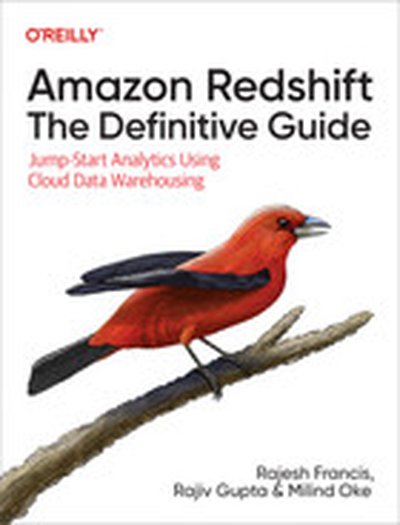
Amazon Redshift: The Definitive Guide

Amazon Redshift powers analytic cloud data warehouses worldwide, from startups to some of the largest enterprise data warehouses available today. This practical guide thoroughly examines this managed service and demonstrates how you can use it to extract value from your data immediately, rather than go through the heavy lifting required to run a typical data warehouse. Analytic specialists Rajesh Francis, Rajiv Gupta, and Milind Oke detail Amazon Redshift's underlying mechanisms and options to help you explore out-of-the box automation. Whether you're a data engineer who wants to learn the art of the possible or a DBA looking to take advantage of machine learning-based auto-tuning, this book helps you get the most value from Amazon Redshift. By understanding Amazon Redshift features, you'll achieve excellent analytic performance at the best price, with the least effort. This book helps you: Build a cloud data strategy around Amazon Redshift as foundational data warehouse Get started with Amazon Redshift with simple-to-use data models and design best practices Understand how and when to use Redshift Serverless and Redshift provisioned clusters Take advantage of auto-tuning options inherent in Amazon Redshift and understand manual tuning options Transform your data platform for predictive analytics using Redshift ML and break silos using data sharing Learn best practices for security, monitoring, resilience, and disaster recovery Leverage Amazon Redshift integration with other AWS services to unlock additional value

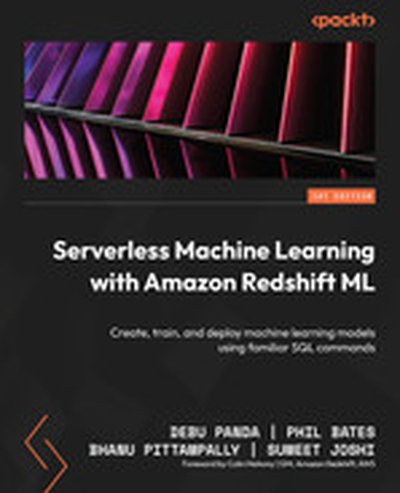
Serverless Machine Learning with Amazon Redshift ML

Serverless Machine Learning with Amazon Redshift ML provides a hands-on guide to using Amazon Redshift Serverless and Redshift ML for building and deploying machine learning models. Through SQL-focused examples and practical walkthroughs, you will learn efficient techniques for cloud data analytics and serverless machine learning. What this Book will help me do Grasp the workflow of building machine learning models with Redshift ML using SQL. Learn to handle supervised learning tasks like classification and regression. Apply unsupervised learning techniques, such as K-means clustering, in Redshift ML. Develop time-series forecasting models within Amazon Redshift. Understand how to operationalize machine learning in serverless cloud architecture. Author(s) Debu Panda, Phil Bates, Bhanu Pittampally, and Sumeet Joshi are seasoned professionals in cloud computing and machine learning technologies. They combine deep technical knowledge with teaching expertise to guide learners through mastering Amazon Redshift ML. Their collaborative approach ensures that the content is accessible, engaging, and practically applicable. Who is it for? This book is perfect for data scientists, machine learning engineers, and database administrators using or intending to use Amazon Redshift. It's tailored for professionals with basic knowledge of machine learning and SQL who aim to enhance their efficiency and specialize in serverless machine learning within cloud architectures.

Summary

All software systems are in a constant state of evolution. This makes it impossible to select a truly future-proof technology stack for your data platform, making an eventual migration inevitable. In this episode Gleb Mezhanskiy and Rob Goretsky share their experiences leading various data platform migrations, and the hard-won lessons that they learned so that you don't have to.

Announcements

Hello and welcome to the Data Engineering Podcast, the show about modern data management Introducing RudderStack Profiles. RudderStack Profiles takes the SaaS guesswork and SQL grunt work out of building complete customer profiles so you can quickly ship actionable, enriched data to every downstream team. You specify the customer traits, then Profiles runs the joins and computations for you to create complete customer profiles. Get all of the details and try the new product today at dataengineeringpodcast.com/rudderstack Modern data teams are using Hex to 10x their data impact. Hex combines a notebook style UI with an interactive report builder. This allows data teams to both dive deep to find insights and then share their work in an easy-to-read format to the whole org. In Hex you can use SQL, Python, R, and no-code visualization together to explore, transform, and model data. Hex also has AI built directly into the workflow to help you generate, edit, explain and document your code. The best data teams in the world such as the ones at Notion, AngelList, and Anthropic use Hex for ad hoc investigations, creating machine learning models, and building operational dashboards for the rest of their company. Hex makes it easy for data analysts and data scientists to collaborate together and produce work that has an impact. Make your data team unstoppable with Hex. Sign up today at dataengineeringpodcast.com/hex to get a 30-day free trial for your team! Your host is Tobias Macey and today I'm interviewing Gleb Mezhanskiy and Rob Goretsky about when and how to think about migrating your data stack

Interview

Introduction How did you get involved in the area of data management? A migration can be anything from a minor task to a major undertaking. Can you start by describing what constitutes a migration for the purposes of this conversation? Is it possible to completely avoid having to invest in a migration? What are the signals that point to the need for a migration?

What are some of the sources of cost that need to be accounted for when considering a migration? (both in terms of doing one, and the costs of not doing one) What are some signals that a migration is not the right solution for a perceived problem?

Once the decision has been made that a migration is necessary, what are the questions that the team should be asking to determine the technologies to move to and the sequencing of execution? What are the preceding tasks that should be completed before starting the migration to ensure there is no breakage downstream of the changing component(s)? What are some of the ways that a migration effort might fail? What are the major pitfalls that teams need to be aware of as they work through a data platform migration? What are the opportunities for automation during the migration process? What are the most interesting, innovative, or unexpected ways that you have seen teams approach a platform migration? What are the most interesting, unexpected, or challenging lessons that you have learned while working on data platform migrations? What are some ways that the technologies and patterns that we use can be evolved to reduce the cost/impact/need for migraitons?

Contact Info

Gleb

LinkedIn @glebmm on Twitter

Rob

LinkedIn RobGoretsky on GitHub

Parting Question

From your perspective, what is the biggest gap in the tooling or technology for data management today?

Closing Announcements

Thank you for listening! Don't forget to check out our other shows. Podcast.init covers the Python language, its community, and the innovative ways it is being used. The Machine Learning Podcast helps you go from idea to production with machine learning. Visit the site to subscribe to the show, sign up for the mailing list, and read the show notes. If you've learned something or tried out a project from the show then tell us about it! Email [email protected]) with your story. To help other people find the show please leave a review on Apple Podcasts and tell your friends and co-workers

Links

Datafold

Podcast Episode

Informatica Airflow Snowflake

Podcast Episode

Redshift Eventbrite Teradata BigQuery Trino EMR == Elastic Map-Reduce Shadow IT

Podcast Episode

Mode Analytics Looker Sunk Cost Fallacy data-diff

Podcast Episode

SQLGlot Dagster dbt

The intro and outro music is from The Hug by The Freak Fandango Orchestra / CC BY-SA Sponsored By: Hex: Hex Tech Logo

Hex is a collaborative workspace for data science and analytics. A single place for teams to explore, transform, and visualize data into beautiful interactive reports. Use SQL, Python, R, no-code and AI to find and share insights across your organization. Empower everyone in an organization to make an impact with data. Sign up today at [dataengineeringpodcast.com/hex](https://www.dataengineeringpodcast.com/hex} and get 30 days free!Rudderstack: Rudderstack

Introducing RudderStack Profiles. RudderStack Profiles takes the SaaS guesswork and SQL grunt work out of building complete customer profiles so you can quickly ship actionable, enriched data to every downstream team. You specify the customer traits, then Profiles runs the joins and computations for you to create complete customer profiles. Get all of the details and try the new product today at dataengineeringpodcast.com/rudderstackSupport Data Engineering Podcast

Processing Delta Lake Tables on AWS Using AWS Glue, Amazon Athena, and Amazon Redshift

Delta Lake is an open source project that helps implement modern data lake architectures commonly built on cloud storages. With Delta Lake, you can achieve ACID transactions, time travel queries, CDC, and other common use cases on the cloud.

There are a lot of use cases of Delta tables on AWS. AWS has invested a lot in this technology, and now Delta Lake is available with multiple AWS services, such as AWS Glue Spark jobs, Amazon EMR, Amazon Athena, and Amazon Redshift Spectrum. AWS Glue is a serverless, scalable data integration service that makes it easier to discover, prepare, move, and integrate data from multiple sources. With AWS Glue, you can easily ingest data from multiple data sources such as on-prem databases, Amazon RDS, DynamoDB, MongoDB into Delta Lake on Amazon S3 even without expertise in coding.

This session will demonstrate how to get started with processing Delta Lake tables on Amazon S3 using AWS Glue, and querying from Amazon Athena, and Amazon Redshift. The session also covers recent AWS service updates related to Delta Lake.

Talk by: Noritaka Sekiyama and Akira Ajisaka

Here’s more to explore: Why the Data Lakehouse Is Your next Data Warehouse: https://dbricks.co/3Pt5unq Lakehouse Fundamentals Training: https://dbricks.co/44ancQs

Connect with us: Website: https://databricks.com Twitter: https://twitter.com/databricks LinkedIn: https://www.linkedin.com/company/databricks Instagram: https://www.instagram.com/databricksinc Facebook: https://www.facebook.com/databricksinc

Summary

Data has been one of the most substantial drivers of business and economic value for the past few decades. Bob Muglia has had a front-row seat to many of the major shifts driven by technology over his career. In his recent book "Datapreneurs" he reflects on the people and businesses that he has known and worked with and how they relied on data to deliver valuable services and drive meaningful change.

Announcements

Hello and welcome to the Data Engineering Podcast, the show about modern data management Introducing RudderStack Profiles. RudderStack Profiles takes the SaaS guesswork and SQL grunt work out of building complete customer profiles so you can quickly ship actionable, enriched data to every downstream team. You specify the customer traits, then Profiles runs the joins and computations for you to create complete customer profiles. Get all of the details and try the new product today at dataengineeringpodcast.com/rudderstack Your host is Tobias Macey and today I'm interviewing Bob Muglia about his recent book about the idea of "Datapreneurs" and the role of data in the modern economy

Interview

Introduction How did you get involved in the area of data management? Can you describe what your concept of a "Datapreneur" is?

How is this distinct from the common idea of an entreprenur?

What do you see as the key inflection points in data technologies and their impacts on business capabilities over the past ~30 years? In your role as the CEO of Snowflake you had a first-row seat for the rise of the "modern data stack". What do you see as the main positive and negative impacts of that paradigm?

What are the key issues that are yet to be solved in that ecosmnjjystem?

For technologists who are thinking about launching new ventures, what are the key pieces of advice that you would like to share? What do you see as the short/medium/long-term impact of AI on the technical, business, and societal arenas? What are the most interesting, innovative, or unexpected ways that you have seen business leaders use data to drive their vision? What are the most interesting, unexpected, or challenging lessons that you have learned while working on the Datapreneurs book? What are your key predictions for the future impact of data on the technical/economic/business landscapes?

Contact Info

LinkedIn

Parting Question

From your perspective, what is the biggest gap in the tooling or technology for data management today?

Closing Announcements

Thank you for listening! Don't forget to check out our other shows. Podcast.init covers the Python language, its community, and the innovative ways it is being used. The Machine Learning Podcast helps you go from idea to production with machine learning. Visit the site to subscribe to the show, sign up for the mailing list, and read the show notes. If you've learned something or tried out a project from the show then tell us about it! Email [email protected]) with your story. To help other people find the show please leave a review on Apple Podcasts and tell your friends and co-workers

Links

Datapreneurs Book SQL Server Snowflake Z80 Processor Navigational Database System R Redshift Microsoft Fabric Databricks Looker Fivetran

Podcast Episode

Databricks Unity Catalog RelationalAI 6th Normal Form Pinecone Vector DB

Podcast Episode

Perplexity AI

The intro and outro music is from The Hug by The Freak Fandango Orchestra / CC BY-SA Sponsored By: Rudderstack: Rudderstack

Introducing RudderStack Profiles. RudderStack Profiles takes the SaaS guesswork and SQL grunt work out of building complete customer profiles so you can quickly ship actionable, enriched data to every downstream team. You specify the customer traits, then Profiles runs the joins and computations for you to create complete customer profiles. Get all of the details and try the new product today at dataengineeringpodcast.com/rudderstackSupport Data Engineering Podcast

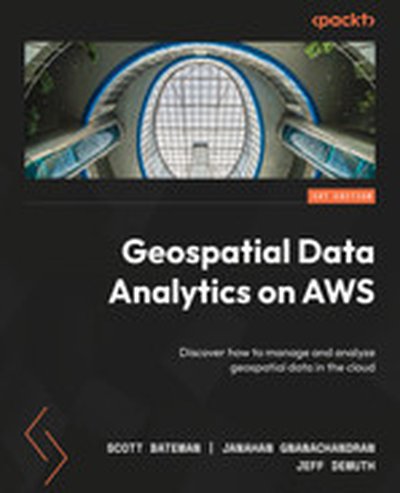
Geospatial Data Analytics on AWS

In "Geospatial Data Analytics on AWS," you will learn how to store, manage, and analyze geospatial data effectively using various AWS services. This book provides insight into building geospatial data lakes, leveraging AWS databases, and applying best practices to derive insights from spatial data in the cloud. What this Book will help me do Design and manage geospatial data lakes on AWS leveraging S3 and other storage solutions. Analyze geospatial data using AWS services such as Athena and Redshift. Utilize machine learning models for geospatial data processing and analytics using SageMaker. Visualize geospatial data through services like Amazon QuickSight and OpenStreetMap integration. Avoid common pitfalls when managing geospatial data in the cloud. Author(s) Scott Bateman, Janahan Gnanachandran, and Jeff DeMuth bring their extensive experience in cloud computing and geospatial analytics to this book. With backgrounds in cloud architecture, data science, and geospatial applications, they aim to make complex topics accessible. Their collaborative approach ensures readers can practically apply concepts to real-world challenges. Who is it for? This book is ideal for GIS and data professionals, including developers, analysts, and scientists. It suits readers with a basic understanding of geographical concepts but no prior AWS experience. If you're aiming to enhance your cloud-based geospatial data management and analytics skills, this is the guide for you.

Summary

A significant portion of the time spent by data engineering teams is on managing the workflows and operations of their pipelines. DataOps has arisen as a parallel set of practices to that of DevOps teams as a means of reducing wasted effort. Agile Data Engine is a platform designed to handle the infrastructure side of the DataOps equation, as well as providing the insights that you need to manage the human side of the workflow. In this episode Tevje Olin explains how the platform is implemented, the features that it provides to reduce the amount of effort required to keep your pipelines running, and how you can start using it in your own team.

Announcements

Hello and welcome to the Data Engineering Podcast, the show about modern data management RudderStack helps you build a customer data platform on your warehouse or data lake. Instead of trapping data in a black box, they enable you to easily collect customer data from the entire stack and build an identity graph on your warehouse, giving you full visibility and control. Their SDKs make event streaming from any app or website easy, and their extensive library of integrations enable you to automatically send data to hundreds of downstream tools. Sign up free at dataengineeringpodcast.com/rudderstack Your host is Tobias Macey and today I'm interviewing Tevje Olin about Agile Data Engine, a platform that combines data modeling, transformations, continuous delivery and workload orchestration to help you manage your data products and the whole lifecycle of your warehouse

Interview

Introduction How did you get involved in the area of data management? Can you describe what Agile Data Engine is and the story behind it? What are some of the tools and architectures that an organization might be able to replace with Agile Data Engine?

How does the unified experience of Agile Data Engine change the way that teams think about the lifecycle of their data? What are some of the types of experiments that are enabled by reduced operational overhead?

What does CI/CD look like for a data warehouse?

How is it different from CI/CD for software applications?

Can you describe how Agile Data Engine is architected?

How have the design and goals of the system changed since you first started working on it? What are the components that you needed to develop in-house to enable your platform goals?

What are the changes in the broader data ecosystem that have had the most influence on your product goals and customer adoption? Can you describe the workflow for a team that is using Agile Data Engine to power their business analytics?

What are some of the insights that you generate to help your customers understand how to improve their processes or identify new opportunities?

In your "about" page it mentions the unique approaches that you take for warehouse automation. How do your practices differ from the rest of the industry? How have changes in the adoption/implementation of ML and AI impacted the ways that your customers exercise your platform? What are the most interesting, innovative, or unexpected ways that you have seen the Agile Data Engine platform used? What are the most interesting, unexpected, or challenging lessons that you have learned while working on Agile Data Engine? When is Agile Data Engine the wrong choice? What do you have planned for the future of Agile Data Engine?

Guest Contact Info

LinkedIn

Parting Question

From your perspective, what is the biggest gap in the tooling or technology for data management today?

About Agile Data Engine

Agile Data Engine unlocks the potential of your data to drive business value - in a rapidly changing world. Agile Data Engine is a DataOps Management platform for designing, deploying, operating and managing data products, and managing the whole lifecycle of a data warehouse. It combines data modeling, transformations, continuous delivery and workload orchestration into the same platform.

Links

Agile Data Engine Bill Inmon Ralph Kimball Snowflake Redshift BigQuery Azure Synapse Airflow

The intro and outro music is from The Hug by The Freak Fandango Orchestra / CC BY-SA Sponsored By: Rudderstack: Rudderstack

RudderStack provides all your customer data pipelines in one platform. You can collect, transform, and route data across your entire stack with its event streaming, ETL, and reverse ETL pipelines.

RudderStack’s warehouse-first approach means it does not store sensitive information, and it allows you to leverage your existing data warehouse/data lake infrastructure to build a single source of truth for every team.

RudderStack also supports real-time use cases. You can Implement RudderStack SDKs once, then automatically send events to your warehouse and 150+ business tools, and you’ll never have to worry about API changes again.

Visit dataengineeringpodcast.com/rudderstack to sign up for free today, and snag a free T-Shirt just for being a Data Engineering Podcast listener.Support Data Engineering Podcast

Summary

All of the advancements in our technology is based around the principles of abstraction. These are valuable until they break down, which is an inevitable occurrence. In this episode the host Tobias Macey shares his reflections on recent experiences where the abstractions leaked and some observances on how to deal with that situation in a data platform architecture.

Announcements

Hello and welcome to the Data Engineering Podcast, the show about modern data management RudderStack helps you build a customer data platform on your warehouse or data lake. Instead of trapping data in a black box, they enable you to easily collect customer data from the entire stack and build an identity graph on your warehouse, giving you full visibility and control. Their SDKs make event streaming from any app or website easy, and their extensive library of integrations enable you to automatically send data to hundreds of downstream tools. Sign up free at dataengineeringpodcast.com/rudderstack Your host is Tobias Macey and today I'm sharing some thoughts and observances about abstractions and impedance mismatches from my experience building a data lakehouse with an ELT workflow

Interview

Introduction impact of community tech debt

hive metastore new work being done but not widely adopted

tensions between automation and correctness data type mapping

integer types complex types naming things (keys/column names from APIs to databases)

disaggregated databases - pros and cons

flexibility and cost control not as much tooling invested vs. Snowflake/BigQuery/Redshift

data modeling

dimensional modeling vs. answering today's questions

What are the most interesting, unexpected, or challenging lessons that you have learned while working on your data platform? When is ELT the wrong choice? What do you have planned for the future of your data platform?

Contact Info

LinkedIn

Parting Question

From your perspective, what is the biggest gap in the tooling or technology for data management today?

Closing Announcements

Thank you for listening! Don't forget to check out our other shows. Podcast.init covers the Python language, its community, and the innovative ways it is being used. The Machine Learning Podcast helps you go from idea to production with machine learning. Visit the site to subscribe to the show, sign up for the mailing list, and read the show notes. If you've learned something or tried out a project from the show then tell us about it! Email [email protected]) with your story. To help other people find the show please leave a review on Apple Podcasts and tell your friends and co-workers

Links

dbt Airbyte

Podcast Episode

Dagster

Podcast Episode

Trino

Podcast Episode

ELT Data Lakehouse Snowflake BigQuery Redshift Technical Debt Hive Metastore AWS Glue

The intro and outro music is from The Hug by The Freak Fandango Orchestra / CC BY-SA Sponsored By: Rudderstack: Rudderstack

RudderStack provides all your customer data pipelines in one platform. You can collect, transform, and route data across your entire stack with its event streaming, ETL, and reverse ETL pipelines.

RudderStack’s warehouse-first approach means it does not store sensitive information, and it allows you to leverage your existing data warehouse/data lake infrastructure to build a single source of truth for every team.

RudderStack also supports real-time use cases. You can Implement RudderStack SDKs once, then automatically send events to your warehouse and 150+ business tools, and you’ll never have to worry about API changes again.

Visit dataengineeringpodcast.com/rudderstack to sign up for free today, and snag a free T-Shirt just for being a Data Engineering Podcast listener.Support Data Engineering Podcast
Summary

With all of the messaging about treating data as a product it is becoming difficult to know what that even means. Vishal Singh is the head of products at Starburst which means that he has to spend all of his time thinking and talking about the details of product thinking and its application to data. In this episode he shares his thoughts on the strategic and tactical elements of moving your work as a data professional from being task-oriented to being product-oriented and the long term improvements in your productivity that it provides.

Announcements

Hello and welcome to the Data Engineering Podcast, the show about modern data management When you're ready to build your next pipeline, or want to test out the projects you hear about on the show, you'll need somewhere to deploy it, so check out our friends at Linode. With their new managed database service you can launch a production ready MySQL, Postgres, or MongoDB cluster in minutes, with automated backups, 40 Gbps connections from your application hosts, and high throughput SSDs. Go to dataengineeringpodcast.com/linode today and get a $100 credit to launch a database, create a Kubernetes cluster, or take advantage of all of their other services. And don't forget to thank them for their continued support of this show! Modern data teams are dealing with a lot of complexity in their data pipelines and analytical code. Monitoring data quality, tracing incidents, and testing changes can be daunting and often takes hours to days or even weeks. By the time errors have made their way into production, it’s often too late and damage is done. Datafold built automated regression testing to help data and analytics engineers deal with data quality in their pull requests. Datafold shows how a change in SQL code affects your data, both on a statistical level and down to individual rows and values before it gets merged to production. No more shipping and praying, you can now know exactly what will change in your database! Datafold integrates with all major data warehouses as well as frameworks such as Airflow & dbt and seamlessly plugs into CI workflows. Visit dataengineeringpodcast.com/datafold today to book a demo with Datafold. RudderStack helps you build a customer data platform on your warehouse or data lake. Instead of trapping data in a black box, they enable you to easily collect customer data from the entire stack and build an identity graph on your warehouse, giving you full visibility and control. Their SDKs make event streaming from any app or website easy, and their extensive library of integrations enable you to automatically send data to hundreds of downstream tools. Sign up free at dataengineeringpodcast.com/rudder Build Data Pipelines. Not DAGs. That’s the spirit behind Upsolver SQLake, a new self-service data pipeline platform that lets you build batch and streaming pipelines without falling into the black hole of DAG-based orchestration. All you do is write a query in SQL to declare your transformation, and SQLake will turn it into a continuous pipeline that scales to petabytes and delivers up to the minute fresh data. SQLake supports a broad set of transformations, including high-cardinality joins, aggregations, upserts and window operations. Output data can be streamed into a data lake for query engines like Presto, Trino or Spark SQL, a data warehouse like Snowflake or Redshift., or any other destination you choose. Pricing for SQLake is simple. You pay $99 per terabyte ingested into your data lake using SQLake, and run unlimited transformation pipelines for free. That way data engineers and data users can process to their heart’s content without worrying about their cloud bill. For data engineering podcast listeners, we’re offering a 30 day trial with unlimited data, so go to dataengineeringpodcast.com/upsolver today and see for yourself how to avoid DAG hell. Your host is Tobias Macey and today I'm interviewing Vishal Singh about his experience

Summary

Encryption and security are critical elements in data analytics and machine learning applications. We have well developed protocols and practices around data that is at rest and in motion, but security around data in use is still severely lacking. Recognizing this shortcoming and the capabilities that could be unlocked by a robust solution Rishabh Poddar helped to create Opaque Systems as an outgrowth of his PhD studies. In this episode he shares the work that he and his team have done to simplify integration of secure enclaves and trusted computing environments into analytical workflows and how you can start using it without re-engineering your existing systems.

Announcements

Hello and welcome to the Data Engineering Podcast, the show about modern data management When you're ready to build your next pipeline, or want to test out the projects you hear about on the show, you'll need somewhere to deploy it, so check out our friends at Linode. With their new managed database service you can launch a production ready MySQL, Postgres, or MongoDB cluster in minutes, with automated backups, 40 Gbps connections from your application hosts, and high throughput SSDs. Go to dataengineeringpodcast.com/linode today and get a $100 credit to launch a database, create a Kubernetes cluster, or take advantage of all of their other services. And don't forget to thank them for their continued support of this show! Modern data teams are dealing with a lot of complexity in their data pipelines and analytical code. Monitoring data quality, tracing incidents, and testing changes can be daunting and often takes hours to days or even weeks. By the time errors have made their way into production, it’s often too late and damage is done. Datafold built automated regression testing to help data and analytics engineers deal with data quality in their pull requests. Datafold shows how a change in SQL code affects your data, both on a statistical level and down to individual rows and values before it gets merged to production. No more shipping and praying, you can now know exactly what will change in your database! Datafold integrates with all major data warehouses as well as frameworks such as Airflow & dbt and seamlessly plugs into CI workflows. Visit dataengineeringpodcast.com/datafold today to book a demo with Datafold. RudderStack helps you build a customer data platform on your warehouse or data lake. Instead of trapping data in a black box, they enable you to easily collect customer data from the entire stack and build an identity graph on your warehouse, giving you full visibility and control. Their SDKs make event streaming from any app or website easy, and their extensive library of integrations enable you to automatically send data to hundreds of downstream tools. Sign up free at dataengineeringpodcast.com/rudder Build Data Pipelines. Not DAGs. That’s the spirit behind Upsolver SQLake, a new self-service data pipeline platform that lets you build batch and streaming pipelines without falling into the black hole of DAG-based orchestration. All you do is write a query in SQL to declare your transformation, and SQLake will turn it into a continuous pipeline that scales to petabytes and delivers up to the minute fresh data. SQLake supports a broad set of transformations, including high-cardinality joins, aggregations, upserts and window operations. Output data can be streamed into a data lake for query engines like Presto, Trino or Spark SQL, a data warehouse like Snowflake or Redshift., or any other destination you choose. Pricing for SQLake is simple. You pay $99 per terabyte ingested into your data lake using SQLake, and run unlimited transformation pipelines for free. That way data engineers and data users can process to their heart’s content without worrying about their cloud bill. For data engineering podcast listeners, we’re offering a 30 day trial with unlimited data, so go to dataengineeringpodcast.com/upsolver today an

Summary

The data ecosystem has seen a constant flurry of activity for the past several years, and it shows no signs of slowing down. With all of the products, techniques, and buzzwords being discussed it can be easy to be overcome by the hype. In this episode Juan Sequeda and Tim Gasper from data.world share their views on the core principles that you can use to ground your work and avoid getting caught in the hype cycles.

Announcements

Hello and welcome to the Data Engineering Podcast, the show about modern data management When you're ready to build your next pipeline, or want to test out the projects you hear about on the show, you'll need somewhere to deploy it, so check out our friends at Linode. With their new managed database service you can launch a production ready MySQL, Postgres, or MongoDB cluster in minutes, with automated backups, 40 Gbps connections from your application hosts, and high throughput SSDs. Go to dataengineeringpodcast.com/linode today and get a $100 credit to launch a database, create a Kubernetes cluster, or take advantage of all of their other services. And don't forget to thank them for their continued support of this show! Modern data teams are dealing with a lot of complexity in their data pipelines and analytical code. Monitoring data quality, tracing incidents, and testing changes can be daunting and often takes hours to days or even weeks. By the time errors have made their way into production, it’s often too late and damage is done. Datafold built automated regression testing to help data and analytics engineers deal with data quality in their pull requests. Datafold shows how a change in SQL code affects your data, both on a statistical level and down to individual rows and values before it gets merged to production. No more shipping and praying, you can now know exactly what will change in your database! Datafold integrates with all major data warehouses as well as frameworks such as Airflow & dbt and seamlessly plugs into CI workflows. Visit dataengineeringpodcast.com/datafold today to book a demo with Datafold. RudderStack helps you build a customer data platform on your warehouse or data lake. Instead of trapping data in a black box, they enable you to easily collect customer data from the entire stack and build an identity graph on your warehouse, giving you full visibility and control. Their SDKs make event streaming from any app or website easy, and their extensive library of integrations enable you to automatically send data to hundreds of downstream tools. Sign up free at dataengineeringpodcast.com/rudder Build Data Pipelines. Not DAGs. That’s the spirit behind Upsolver SQLake, a new self-service data pipeline platform that lets you build batch and streaming pipelines without falling into the black hole of DAG-based orchestration. All you do is write a query in SQL to declare your transformation, and SQLake will turn it into a continuous pipeline that scales to petabytes and delivers up to the minute fresh data. SQLake supports a broad set of transformations, including high-cardinality joins, aggregations, upserts and window operations. Output data can be streamed into a data lake for query engines like Presto, Trino or Spark SQL, a data warehouse like Snowflake or Redshift., or any other destination you choose. Pricing for SQLake is simple. You pay $99 per terabyte ingested into your data lake using SQLake, and run unlimited transformation pipelines for free. That way data engineers and data users can process to their heart’s content without worrying about their cloud bill. For data engineering podcast listeners, we’re offering a 30 day trial with unlimited data, so go to dataengineeringpodcast.com/upsolver today and see for yourself how to avoid DAG hell. Your host is Tobias Macey and today I'm interviewing Juan Sequeda and Tim Gasper about their views on the role of the data mesh paradigm for driving re-assessment of the foundational principles of data systems

Summary One of the most critical aspects of software projects is managing its data. Managing the operational concerns for your database can be complex and expensive, especially if you need to scale to large volumes of data, high traffic, or geographically distributed usage. Planetscale is a serverless option for your MySQL workloads that lets you focus on your applications without having to worry about managing the database or fight with differences between development and production. In this episode Nick van Wiggeren explains how the Planetscale platform is implemented, their strategies for balancing maintenance and improvements of the underlying Vitess project with their business goals, and how you can start using it today to free up the time you spend on database administration.

Announcements

Hello and welcome to the Data Engineering Podcast, the show about modern data management When you’re ready to build your next pipeline, or want to test out the projects you hear about on the show, you’ll need somewhere to deploy it, so check out our friends at Linode. With their new managed database service you can launch a production ready MySQL, Postgres, or MongoDB cluster in minutes, with automated backups, 40 Gbps connections from your application hosts, and high throughput SSDs. Go to dataengineeringpodcast.com/linode today and get a $100 credit to launch a database, create a Kubernetes cluster, or take advantage of all of their other services. And don’t forget to thank them for their continued support of this show! Modern data teams are dealing with a lot of complexity in their data pipelines and analytical code. Monitoring data quality, tracing incidents, and testing changes can be daunting and often takes hours to days or even weeks. By the time errors have made their way into production, it’s often too late and damage is done. Datafold built automated regression testing to help data and analytics engineers deal with data quality in their pull requests. Datafold shows how a change in SQL code affects your data, both on a statistical level and down to individual rows and values before it gets merged to production. No more shipping and praying, you can now know exactly what will change in your database! Datafold integrates with all major data warehouses as well as frameworks such as Airflow & dbt and seamlessly plugs into CI workflows. Visit dataengineeringpodcast.com/datafold today to book a demo with Datafold. RudderStack helps you build a customer data platform on your warehouse or data lake. Instead of trapping data in a black box, they enable you to easily collect customer data from the entire stack and build an identity graph on your warehouse, giving you full visibility and control. Their SDKs make event streaming from any app or website easy, and their extensive library of integrations enable you to automatically send data to hundreds of downstream tools. Sign up free at dataengineeringpodcast.com/rudder Build Data Pipelines. Not DAGs. That’s the spirit behind Upsolver SQLake, a new self-service data pipeline platform that lets you build batch and streaming pipelines without falling into the black hole of DAG-based orchestration. All you do is write a query in SQL to declare your transformation, and SQLake will turn it into a continuous pipeline that scales to petabytes and delivers up to the minute fresh data. SQLake supports a broad set of transformations, including high-cardinality joins, aggregations, upserts and window operations. Output data can be streamed into a data lake for query engines like Presto, Trino or Spark SQL, a data warehouse like Snowflake or Redshift., or any other destination you choose. Pricing for SQLake is simple. You pay $99 per terabyte ingested into your data lake using SQLake, and run unlimited transformation pipelines for free. That way data engineers and data users can process to their heart’s content without worrying about their cloud bill. For data engineering podcast l

Summary The term "real-time data" brings with it a combination of excitement, uncertainty, and skepticism. The promise of insights that are always accurate and up to date is appealing to organizations, but the technical realities to make it possible have been complex and expensive. In this episode Arjun Narayan explains how the technical barriers to adopting real-time data in your analytics and applications have become surmountable by organizations of all sizes.

Announcements

Hello and welcome to the Data Engineering Podcast, the show about modern data management When you’re ready to build your next pipeline, or want to test out the projects you hear about on the show, you’ll need somewhere to deploy it, so check out our friends at Linode. With their new managed database service you can launch a production ready MySQL, Postgres, or MongoDB cluster in minutes, with automated backups, 40 Gbps connections from your application hosts, and high throughput SSDs. Go to dataengineeringpodcast.com/linode today and get a $100 credit to launch a database, create a Kubernetes cluster, or take advantage of all of their other services. And don’t forget to thank them for their continued support of this show! Modern data teams are dealing with a lot of complexity in their data pipelines and analytical code. Monitoring data quality, tracing incidents, and testing changes can be daunting and often takes hours to days or even weeks. By the time errors have made their way into production, it’s often too late and damage is done. Datafold built automated regression testing to help data and analytics engineers deal with data quality in their pull requests. Datafold shows how a change in SQL code affects your data, both on a statistical level and down to individual rows and values before it gets merged to production. No more shipping and praying, you can now know exactly what will change in your database! Datafold integrates with all major data warehouses as well as frameworks such as Airflow & dbt and seamlessly plugs into CI workflows. Visit dataengineeringpodcast.com/datafold today to book a demo with Datafold. RudderStack helps you build a customer data platform on your warehouse or data lake. Instead of trapping data in a black box, they enable you to easily collect customer data from the entire stack and build an identity graph on your warehouse, giving you full visibility and control. Their SDKs make event streaming from any app or website easy, and their extensive library of integrations enable you to automatically send data to hundreds of downstream tools. Sign up free at dataengineeringpodcast.com/rudder Build Data Pipelines. Not DAGs. That’s the spirit behind Upsolver SQLake, a new self-service data pipeline platform that lets you build batch and streaming pipelines without falling into the black hole of DAG-based orchestration. All you do is write a query in SQL to declare your transformation, and SQLake will turn it into a continuous pipeline that scales to petabytes and delivers up to the minute fresh data. SQLake supports a broad set of transformations, including high-cardinality joins, aggregations, upserts and window operations. Output data can be streamed into a data lake for query engines like Presto, Trino or Spark SQL, a data warehouse like Snowflake or Redshift., or any other destination you choose. Pricing for SQLake is simple. You pay $99 per terabyte ingested into your data lake using SQLake, and run unlimited transformation pipelines for free. That way data engineers and data users can process to their heart’s content without worrying about their cloud bill. For data engineering podcast listeners, we’re offering a 30 day trial with unlimited data, so go to dataengineeringpodcast.com/upsolver today and see for yourself how to avoid DAG hell. Your host is Tobias Macey and today I’m interviewing Arjun Narayan about the benefits of real-time data for teams of all sizes

Interview

Introduction How did you ge

Summary The most expensive part of working with massive data sets is the work of retrieving and processing the files that contain the raw information. FeatureBase (formerly Pilosa) avoids that overhead by converting the data into bitmaps. In this episode Matt Jaffee explains how to model your data as bitmaps and the benefits that this representation provides for fast aggregate computation. He also discusses the improvements that have been incorporated into FeatureBase to simplify integration with the rest of your data stack, and the SQL interface that was added to make working with the product easier.

Announcements

Hello and welcome to the Data Engineering Podcast, the show about modern data management When you’re ready to build your next pipeline, or want to test out the projects you hear about on the show, you’ll need somewhere to deploy it, so check out our friends at Linode. With their new managed database service you can launch a production ready MySQL, Postgres, or MongoDB cluster in minutes, with automated backups, 40 Gbps connections from your application hosts, and high throughput SSDs. Go to dataengineeringpodcast.com/linode today and get a $100 credit to launch a database, create a Kubernetes cluster, or take advantage of all of their other services. And don’t forget to thank them for their continued support of this show! Modern data teams are dealing with a lot of complexity in their data pipelines and analytical code. Monitoring data quality, tracing incidents, and testing changes can be daunting and often takes hours to days or even weeks. By the time errors have made their way into production, it’s often too late and damage is done. Datafold built automated regression testing to help data and analytics engineers deal with data quality in their pull requests. Datafold shows how a change in SQL code affects your data, both on a statistical level and down to individual rows and values before it gets merged to production. No more shipping and praying, you can now know exactly what will change in your database! Datafold integrates with all major data warehouses as well as frameworks such as Airflow & dbt and seamlessly plugs into CI workflows. Visit dataengineeringpodcast.com/datafold today to book a demo with Datafold. RudderStack helps you build a customer data platform on your warehouse or data lake. Instead of trapping data in a black box, they enable you to easily collect customer data from the entire stack and build an identity graph on your warehouse, giving you full visibility and control. Their SDKs make event streaming from any app or website easy, and their extensive library of integrations enable you to automatically send data to hundreds of downstream tools. Sign up free at dataengineeringpodcast.com/rudder Build Data Pipelines. Not DAGs. That’s the spirit behind Upsolver SQLake, a new self-service data pipeline platform that lets you build batch and streaming pipelines without falling into the black hole of DAG-based orchestration. All you do is write a query in SQL to declare your transformation, and SQLake will turn it into a continuous pipeline that scales to petabytes and delivers up to the minute fresh data. SQLake supports a broad set of transformations, including high-cardinality joins, aggregations, upserts and window operations. Output data can be streamed into a data lake for query engines like Presto, Trino or Spark SQL, a data warehouse like Snowflake or Redshift., or any other destination you choose. Pricing for SQLake is simple. You pay $99 per terabyte ingested into your data lake using SQLake, and run unlimited transformation pipelines for free. That way data engineers and data users can process to their heart’s content without worrying about their cloud bill. For data engineering podcast listeners, we’re offering a 30 day trial with unlimited data, so go to dataengineeringpodcast.com/upsolver today and see for yourself how to avoid DAG hell. Your host is Tobias Macey

Make Analysts Love You: How Acorns simplifies their data pipelines with Rudderstack and dbt Labs

Understanding the user funnel and measuring conversion is critical to Acorns as a subscription business. The engineering team turned to Rudderstack to track customer interaction in near real-time across web, ios, and android. However, transforming that into actionable insights required carefully curated SQL spanning two datastores. Come learn how the data engineering team used dbt to build a centralized metrics interface and dynamic funnels in a data landscape spanning Rudderstack, Redshift, Databricks, and dbt with Tableau as our visualization tool.

Check the slides here: https://docs.google.com/presentation/d/1MTbqysGH_9oxUPKgQQO2MYM1f1XUhSVw_ERDvaZ8Qsg/edit?usp=sharing

Coalesce 2023 is coming! Register for free at https://coalesce.getdbt.com/.

Beyond pretty graphs: How end-to-end lineage drives better actions

Everyone is talking about data lineage these days, and for a good reason. Data lineage helps ensure better data quality across your modern data stack. But not everyone speaks the same lineage language. Data engineers use lineage for impact and root cause analysis. Analysts and Analytics engineers use lineage to trace jobs and transformations in their warehouses. And consumers use lineage to understand why data never reached their expected destination. This results in a narrow, siloed view lineage in which only one group benefits. It’s time to stop using siloed lineage views for pretty graphs and start using end-to-end lineage to drive focused actions. In the talk, you will learn:

• How data quality tailors to specific needs of data engineers, analysts, & consumers

• How data lineage should drive actions

• A real-world example of end-to-end data lineage with Airflow, dbt, Spark, and Redshift

Coalesce 2023 is coming! Register for free at https://coalesce.getdbt.com/.

Running a Low Cost, Versatile Data Management Ecosystem with Apache Spark at Core

Data is the key component of Analytics, AI or ML platform. Organizations may not be successful without having a Platform that can Source, Transform, Quality check and present data in a reportable format that can drive actionable insights.

This session will focus on how Capital One HR Team built a Low Cost Data movement Ecosystem that can source data, transform at scale and build the data storage (Redshift) at a level that can be easily consumed by AI/ML programs - by using AWS Services with combination of Open source software(Spark) and Enterprise Edition Hydrograph (UI Based ETL tool with Spark as backend) This presentation is mainly to demonstrate the flexibility that Apache Spark provides for various types ETL Data Pipelines when we code in Spark.

We have been running 3 types of pipelines over 6+ years , over 400+ nightly batch jobs for $1000/mo. (1) Spark on EC2 (2) UI Based ETL tool with Spark backend (on the same EC2) (3) Spark on EMR. We have a CI/CD pipeline that supports easy integration and code deployment in all non-prod and prod regions ( even supports automated unit testing). We will also demonstrate how this ecosystem can failover to a different region in less than 15 minutes , making our application highly resilient.

Connect with us: Website: https://databricks.com Facebook: https://www.facebook.com/databricksinc Twitter: https://twitter.com/databricks LinkedIn: https://www.linkedin.com/company/data... Instagram: https://www.instagram.com/databricksinc/

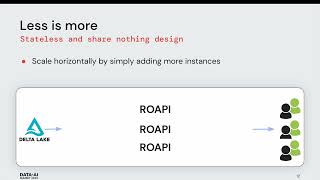
ROAPI: Serve Not So Big Data Pipeline Outputs Online with Modern APIs

Data is the key component of Analytics, AI or ML platform. Organizations may not be successful without having a Platform that can Source, Transform, Quality check and present data in a reportable format that can drive actionable insights.

This session will focus on how Capital One HR Team built a Low Cost Data movement Ecosystem that can source data, transform at scale and build the data storage (Redshift) at a level that can be easily consumed by AI/ML programs - by using AWS Services with combination of Open source software(Spark) and Enterprise Edition Hydrograph (UI Based ETL tool with Spark as backend) This presentation is mainly to demonstrate the flexibility that Apache Spark provides for various types ETL Data Pipelines when we code in Spark.

We have been running 3 types of pipelines over 6+ years , over 400+ nightly batch jobs for $1000/mo. (1) Spark on EC2 (2) UI Based ETL tool with Spark backend (on the same EC2) (3) Spark on EMR. We have a CI/CD pipeline that supports easy integration and code deployment in all non-prod and prod regions ( even supports automated unit testing). We will also demonstrate how this ecosystem can failover to a different region in less than 15 minutes , making our application highly resilient.

Connect with us: Website: https://databricks.com Facebook: https://www.facebook.com/databricksinc Twitter: https://twitter.com/databricks LinkedIn: https://www.linkedin.com/company/data... Instagram: https://www.instagram.com/databricksinc/