talk-data.com talk-data.com

Topic

Redshift

Amazon Redshift

data_warehouse cloud aws olap

119

tagged

Activity Trend

17 peak/qtr
2020-Q1 2026-Q1

Activities

119 activities · Newest first

AWS re:Invent 2024 - Analyze Amazon Aurora & RDS data in Amazon Redshift with zero-ETL (DAT331)

Discover the power of Amazon Aurora and Amazon RDS zero-ETL integrations with Amazon Redshift. Zero-ETL integrations help unify your data across applications and data sources for holistic insights. This session explores how Amazon Aurora and Amazon RDS zero-ETL integrations with Amazon Redshift remove the need to build and manage complex data pipelines, enabling analytics and machine learning using Amazon Redshift on petabytes of transactional data from your relational databases. In this session, learn about key zero-ETL integration functionalities like data filtering, AWS CloudFormation support, and more.

Learn more: AWS re:Invent: https://go.aws/reinvent. More AWS events: https://go.aws/3kss9CP

Subscribe: More AWS videos: http://bit.ly/2O3zS75 More AWS events videos: http://bit.ly/316g9t4

About AWS: Amazon Web Services (AWS) hosts events, both online and in-person, bringing the cloud computing community together to connect, collaborate, and learn from AWS experts. AWS is the world's most comprehensive and broadly adopted cloud platform, offering over 200 fully featured services from data centers globally. Millions of customers—including the fastest-growing startups, largest enterprises, and leading government agencies—are using AWS to lower costs, become more agile, and innovate faster.

AWSreInvent #AWSreInvent2024

AWS re:Invent 2024 - Solving different data ingestion use cases with AWS (ANT330)

Ingesting data is typically the first step in building your data pipelines. The growing landscape of data types like unstructured data, incremental data, and open table formats such as Apache Iceberg makes it all the more critical to build durable data pipelines, land the data immediately, apply the desired schema structure, and provide quality outputs for different types of use cases. Join this session to explore specific solutions that can help solve for different data ingestion challenges. Learn about the robust architectures and key strategies for efficiently ingesting and processing data with services like AWS Glue, Amazon Kinesis, Amazon Redshift, and Amazon OpenSearch Service.

Learn more: AWS re:Invent: https://go.aws/reinvent. More AWS events: https://go.aws/3kss9CP

Subscribe: More AWS videos: http://bit.ly/2O3zS75 More AWS events videos: http://bit.ly/316g9t4

About AWS: Amazon Web Services (AWS) hosts events, both online and in-person, bringing the cloud computing community together to connect, collaborate, and learn from AWS experts. AWS is the world's most comprehensive and broadly adopted cloud platform, offering over 200 fully featured services from data centers globally. Millions of customers—including the fastest-growing startups, largest enterprises, and leading government agencies—are using AWS to lower costs, become more agile, and innovate faster.

AWSreInvent #AWSreInvent2024

AWS re:Invent 2024 - Innovations in AWS analytics: Data warehousing and SQL analytics (ANT349)

Join this session to learn about the newest innovations in data warehousing and SQL analytics with AWS analytics services. Amazon Redshift is the AI-powered, cloud-based data warehousing solution used by tens of thousands of AWS customers to modernize data analytics workloads and generate business insights with the best price performance. Learn more about the latest capabilities launched for Amazon Redshift to further drive quick decision-making with lower costs for your organization.

Learn more: AWS re:Invent: https://go.aws/reinvent. More AWS events: https://go.aws/3kss9CP

Subscribe: More AWS videos: http://bit.ly/2O3zS75 More AWS events videos: http://bit.ly/316g9t4

About AWS: Amazon Web Services (AWS) hosts events, both online and in-person, bringing the cloud computing community together to connect, collaborate, and learn from AWS experts. AWS is the world's most comprehensive and broadly adopted cloud platform, offering over 200 fully featured services from data centers globally. Millions of customers—including the fastest-growing startups, largest enterprises, and leading government agencies—are using AWS to lower costs, become more agile, and innovate faster.

AWSreInvent #AWSreInvent2024

AWS re:Invent 2024 - AI-powered analytics with Amazon Redshift Serverless & data sharing (ANT328)

Amazon Redshift Serverless uses AI and ML to automatically provision and scale data warehouse capacity and deliver fast performance for demanding and unpredictable workloads. It delivers a first-class data sharing experience where you can isolate workloads and read from and write to the same Redshift databases to build multi-warehouse, data mesh architectures and simplify SQL analytics. Join this session to learn best practices and key considerations for data sharing and SQL analytics with Redshift Serverless to optimize price-performance for your most demanding analytics workloads.

Learn more: AWS re:Invent: https://go.aws/reinvent. More AWS events: https://go.aws/3kss9CP

Subscribe: More AWS videos: http://bit.ly/2O3zS75 More AWS events videos: http://bit.ly/316g9t4

About AWS: Amazon Web Services (AWS) hosts events, both online and in-person, bringing the cloud computing community together to connect, collaborate, and learn from AWS experts. AWS is the world's most comprehensive and broadly adopted cloud platform, offering over 200 fully featured services from data centers globally. Millions of customers—including the fastest-growing startups, largest enterprises, and leading government agencies—are using AWS to lower costs, become more agile, and innovate faster.

AWSreInvent #AWSreInvent2024

AWS re:Invent 2024 - Scaling to new heights with Amazon Redshift multi-cluster architecture (ANT339)

AWS customers use Amazon Redshift to modernize their data analytics workloads and deliver insights for their businesses. Learn how to design your analytics system to scale with your business needs. Explore the different patterns of multi-cluster architectures and best practices to deploy them cost-effectively. Explore how GE Aerospace overcame challenges with its on-premises system by using a combination of architectural patterns to create an extensible design that met strict compliance and security requirements, achieved performance targets, and shared data across its enterprise.

Learn more: AWS re:Invent: https://go.aws/reinvent. More AWS events: https://go.aws/3kss9CP

Subscribe: More AWS videos: http://bit.ly/2O3zS75 More AWS events videos: http://bit.ly/316g9t4

About AWS: Amazon Web Services (AWS) hosts events, both online and in-person, bringing the cloud computing community together to connect, collaborate, and learn from AWS experts. AWS is the world's most comprehensive and broadly adopted cloud platform, offering over 200 fully featured services from data centers globally. Millions of customers—including the fastest-growing startups, largest enterprises, and leading government agencies—are using AWS to lower costs, become more agile, and innovate faster.

AWSreInvent #AWSreInvent2024

AWS re:Invent 2024 - Scale with self-service analytics on AWS (ANT334)

Self-service analytics empowers users to independently access, explore, and analyze data to accelerate decision-making. It’s a foundational step for organizations to democratize the use of data for business growth with easy-to-use, simple-to-understand, and quick-to-deliver tools. Interactive querying, SQL analytics, data preparation, data transformation, data workflow orchestration and search analytics are some of the key day-to-day functions that data users need from self-service solutions. Learn how AWS analytics services like Amazon Athena, AWS Glue, Amazon Redshift, Amazon Managed Workflows for Apache Airflow, and Amazon OpenSearch Service enable data-driven decision-making through self-serve analytics.

Learn more: AWS re:Invent: https://go.aws/reinvent. More AWS events: https://go.aws/3kss9CP

Subscribe: More AWS videos: http://bit.ly/2O3zS75 More AWS events videos: http://bit.ly/316g9t4

About AWS: Amazon Web Services (AWS) hosts events, both online and in-person, bringing the cloud computing community together to connect, collaborate, and learn from AWS experts. AWS is the world's most comprehensive and broadly adopted cloud platform, offering over 200 fully featured services from data centers globally. Millions of customers—including the fastest-growing startups, largest enterprises, and leading government agencies—are using AWS to lower costs, become more agile, and innovate faster.

AWSreInvent #AWSreInvent2024

AWS re:Invent 2024 - [NEW LAUNCH] Amazon SageMaker Lakehouse: Accelerate analytics & AI (ANT354-NEW)

Data warehouses, data lakes, or both? Explore how Amazon SageMaker Lakehouse, a unified, open, and secure data lake house simplifies analytics and AI. This session unveils how SageMaker Lakehouse provides unified access to data across Amazon S3 data lakes, Amazon Redshift data warehouses, and third-party sources without altering your existing architecture. Learn how it breaks down data silos and opens your data estate with Apache Iceberg compatibility, offering flexibility to use preferred query engines and tools that accelerate your time to insights. Discover robust security features, including consistent fine-grained access controls, that help democratize data without compromises.

Learn more: AWS re:Invent: https://go.aws/reinvent. More AWS events: https://go.aws/3kss9CP

Subscribe: More AWS videos: http://bit.ly/2O3zS75 More AWS events videos: http://bit.ly/316g9t4

About AWS: Amazon Web Services (AWS) hosts events, both online and in-person, bringing the cloud computing community together to connect, collaborate, and learn from AWS experts. AWS is the world's most comprehensive and broadly adopted cloud platform, offering over 200 fully featured services from data centers globally. Millions of customers—including the fastest-growing startups, largest enterprises, and leading government agencies—are using AWS to lower costs, become more agile, and innovate faster.

AWSreInvent #AWSreInvent2024

AWS re:Invent 2024 - Deep dive into Amazon Aurora and its innovations (DAT405)

With an innovative architecture that decouples compute from storage and advanced features like Global Database and low-latency read replicas, Amazon Aurora reimagines what it means to be a relational database. Aurora is a modern database service offering unparalleled performance and high availability at scale with full open source MySQL and PostgreSQL compatibility. In this session, dive deep into the most exciting new features that Aurora offers, including Aurora Limitless Database, Aurora I/O-Optimized, Aurora zero-ETL integration with Amazon Redshift, and Aurora Serverless v2. Additionally, learn how the addition of the pgvector extension allows for the storage of vector embeddings and support of vector similarity searches for generative AI.

Learn more: AWS re:Invent: https://go.aws/reinvent. More AWS events: https://go.aws/3kss9CP

Subscribe: More AWS videos: http://bit.ly/2O3zS75 More AWS events videos: http://bit.ly/316g9t4

About AWS: Amazon Web Services (AWS) hosts events, both online and in-person, bringing the cloud computing community together to connect, collaborate, and learn from AWS experts. AWS is the world's most comprehensive and broadly adopted cloud platform, offering over 200 fully featured services from data centers globally. Millions of customers—including the fastest-growing startups, largest enterprises, and leading government agencies—are using AWS to lower costs, become more agile, and innovate faster.

AWSreInvent #AWSreInvent2024

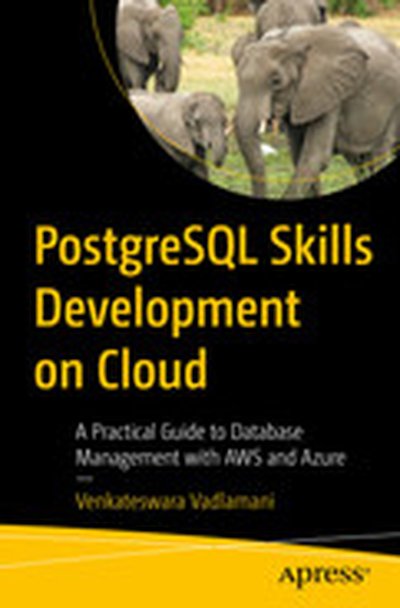
PostgreSQL Skills Development on Cloud: A Practical Guide to Database Management with AWS and Azure

This book provides a comprehensive approach to manage PostgreSQL cluster databases on Amazon Web Services and Azure Web Services on the cloud, as well as in Docker and container environments on a Red Hat operating system. Furthermore, detailed references for managing PostgreSQL on both Windows and Mac are provided. This book condenses all the fundamental and essential concepts you need to manage a PostgreSQL cluster into a one-stop guide that is perfect for newcomers to Postgres database administration. Each chapter of the book provides historical context and documents version changes of the PostgreSQL cluster, elucidates practical "how-to" methods, and includes illustrations and key word definitions, practices for application, a summary of key learnings, and questions to reinforce understanding. The book also outlines a clear study objective with a weekly learning schedule and hundreds of practice exercises, along with questions and answers. With its comprehensive and practical approach, this book will help you gain the confidence to manage all aspects of a PostgreSQL cluster in critical production environments so you can better support your organization's database infrastructure on the cloud and in containers. What You Will Learn Install and configure Postgres clusters on the cloud and in containers, monitor database logs, start and stop databases, troubleshoot, tune performance, backup and recover, and integrate with Amazon S3 and Azure Data Blob Manage Postgres databases on Amazon Web Services and Azure Web Services on the cloud, as well as in Docker and container environments on a Red Hat operating system Access sample references to scripting solutions and database management tools for working with Postgres, Redshift (based on Postgres 8.2), and Docker Create Amazon Machine Images (AMI) and Azure Images for managing a fleet of Postgres clusters on the cloud Reinforce knowledge with a weekly learning schedule and hundreds of practice exercises, along with questions and answers Progress from simple concepts, such as how to choose the correct instance type, to creating complex machine images Gain access to an Amazon AMI with a DBA admin tool, allowing you to learn Postgres, Redshift, and Docker in a cloud environment Refer to a comprehensive summary of documentations of Postgres, Amazon Web services, Azure Web services, and Red Hat Linux for managing all aspects of Postgres cluster management on the cloud Who This Book Is For Newcomers to PostgreSQL database administration and cross-platform support DBAs looking to master PostgreSQL on the cloud.

AWS re:Invent 2024 - Modernize your data warehouse by moving to Amazon Redshift (ANT345)

Are you spending too much time on data warehouse management tasks like hardware provisioning, software patching, and performance tuning and not enough time building your applications and innovating with data? Tens of thousands of AWS customers rely on Amazon Redshift every day to run and scale analytics in seconds on all their data without managing data warehouse infrastructure. In this session, hear from AWS customers who share their journeys moving to a modern cloud data warehouse and analytics with Amazon Redshift. Learn best practices for building powerful analytics and machine learning applications and operating at scale while keeping costs low.

Learn more: AWS re:Invent: https://go.aws/reinvent. More AWS events: https://go.aws/3kss9CP

Subscribe: More AWS videos: http://bit.ly/2O3zS75 More AWS events videos: http://bit.ly/316g9t4

About AWS: Amazon Web Services (AWS) hosts events, both online and in-person, bringing the cloud computing community together to connect, collaborate, and learn from AWS experts. AWS is the world's most comprehensive and broadly adopted cloud platform, offering over 200 fully featured services from data centers globally. Millions of customers—including the fastest-growing startups, largest enterprises, and leading government agencies—are using AWS to lower costs, become more agile, and innovate faster.

AWSreInvent #AWSreInvent2024

AWS re:Invent 2024 - Accelerate value from data: Migrating from batch to stream processing (ANT324)

Growing business needs for incorporating real-time insights into conventional use cases is pushing the data transformation envelope from batch processing to streaming. From gaming to clickstream to generative AI use cases, batch analytical workloads today want high throughput, low latency, and simplified ingestion mechanisms for real-time insights and visualizations. Join this session to hear from experts on how to successfully migrate from batch to stream processing using AWS streaming services that provide scalable integrations and real-time capabilities across services such as Amazon Redshift for real-time data warehousing analytics and ELT pipelines.

Learn more: AWS re:Invent: https://go.aws/reinvent. More AWS events: https://go.aws/3kss9CP

Subscribe: More AWS videos: http://bit.ly/2O3zS75 More AWS events videos: http://bit.ly/316g9t4

About AWS: Amazon Web Services (AWS) hosts events, both online and in-person, bringing the cloud computing community together to connect, collaborate, and learn from AWS experts. AWS is the world's most comprehensive and broadly adopted cloud platform, offering over 200 fully featured services from data centers globally. Millions of customers—including the fastest-growing startups, largest enterprises, and leading government agencies—are using AWS to lower costs, become more agile, and innovate faster.

AWSreInvent #AWSreInvent2024

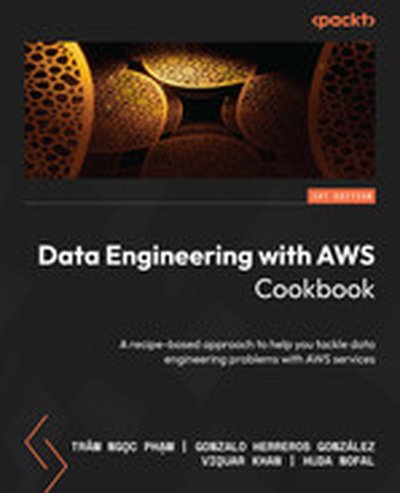
Data Engineering with AWS Cookbook

Data Engineering with AWS Cookbook serves as a comprehensive practical guide for building scalable and efficient data engineering solutions using AWS. With this book, you will master implementing data lakes, orchestrating data pipelines, and creating serving layers using AWS's robust services, such as Glue, EMR, Redshift, and Athena. With hands-on exercises and practical recipes, you will enhance your AWS-based data engineering projects. What this Book will help me do Gain the skills to design centralized data lake solutions and manage them securely at scale. Develop expertise in crafting data pipelines with AWS's ETL technologies like Glue and EMR. Learn to implement and automate governance, orchestration, and monitoring for data platforms. Build high-performance data serving layers using AWS analytics tools like Redshift and QuickSight. Effectively plan and execute data migrations to AWS from on-premises infrastructure. Author(s) Trâm Ngọc Phạm, Gonzalo Herreros González, Viquar Khan, and Huda Nofal bring together years of collective experience in data engineering and AWS cloud solutions. Each author's deep knowledge and passion for cloud technology have shaped this book into a valuable resource, geared towards practical learning and real-world application. Their approach ensures readers are not just learning but building tangible, impactful solutions. Who is it for? This book is geared towards data engineers and big data professionals engaged in or transitioning to cloud-based environments, specifically on AWS. Ideal readers are those looking to optimize workflows and master AWS tools to create scalable, efficient solutions. The content assumes a basic familiarity with AWS concepts like IAM roles and a command-line interface, ensuring all examples are accessible yet meaningful for those seeking advancement in AWS data engineering.

Generative AI and data are more interconnected than ever. If you want quality in your AI product, you need to be connected to a database with high quality data. But with so many database options and new AI tools emerging, how do you ensure you’re making the right choices for your organization? Whether it’s enhancing customer experiences or improving operational efficiency, understanding the role of your databases in powering AI is crucial.  Andi Gutmans is the General Manager and Vice President for Databases at Google. Andi’s focus is on building, managing, and scaling the most innovative database services to deliver the industry’s leading data platform for businesses. Prior to joining Google, Andi was VP Analytics at AWS running services such as Amazon Redshift. Prior to his tenure at AWS, Andi served as CEO and co-founder of Zend Technologies, the commercial backer of open-source PHP. Andi has over 20 years of experience as an open source contributor and leader. He co-authored open source PHP. He is an emeritus member of the Apache Software Foundation and served on the Eclipse Foundation’s board of directors. He holds a bachelor’s degree in computer science from the Technion, Israel Institute of Technology. In the episode, Richie and Andi explore databases and their relationship with AI and GenAI, key features needed in databases for AI, GCP database services, AlloyDB, federated queries in Google Cloud, vector databases, graph databases, practical use cases of AI in databases and much more.  Links Mentioned in the Show: GCPConnect with AndiAlloyDB for PostgreSQLCourse: Responsible AI Data ManagementRelated Episode: The Power of Vector Databases and Semantic Search with Elan Dekel, VP of Product at PineconeSign up to RADAR: Forward Edition New to DataCamp? Learn on the go using the DataCamp mobile appEmpower your business with world-class data and AI skills with DataCamp for business

Coalesce 2024: Generative AI driven near-real-time operational analytics with zero-ETL and dbt Cloud

AWS offers the most scalable, highest performing data services to keep up with the growing volume and velocity of data to help organizations to be data-driven in real-time. AWS helps customers unify diverse data sources by investing in a zero ETL future and enable end-to-end data governance so your teams are free to move faster with data. Data teams running dbt Cloud are able to deploy analytics code, following software engineering best practices such as modularity, continuous integration and continuous deployment (CI/CD), and embedded documentation. In this session, we will dive deeper into how to get near real-time insight on petabytes of transaction data using Amazon Aurora zero-ETL integration with Amazon Redshift and dbt Cloud for your Generative AI workloads.

Speakers: Neela Kulkarni Solutions Architect AWS

Neeraja Rentachintala Director, Product Management Amazon

Read the blog to learn about the latest dbt Cloud features announced at Coalesce, designed to help organizations embrace analytics best practices at scale https://www.getdbt.com/blog/coalesce-2024-product-announcements

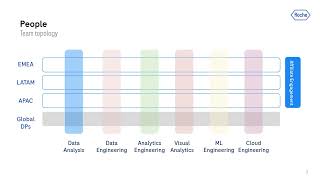
Coalesce 2024: How Roche is redefining data, analytics & genAI at scale with dbt

Centralize, harmonize, and streamline. That’s how Roche delivers self-service analytics to the thousands of people in its pharma commercial sector. Dbt is powering the backend solution that combines over 60 transactional systems into a harmonized simplified data model. By adopting a version-controlled approach and enabling end-to-end lineage tracking, we achieved significant reduction in duplication and accelerated time-to-insight for data-driven decision-making. The transition from a heterogeneous technology stack to standardized ways of working has fostered greater flexibility in allocating resources across the organization to address diverse use cases. Additionally, the scalable nature of this platform allows us to easily replicate successful data solutions globally. We further augmented our capabilities by integrating generative AI into our Redshift data warehouse, empowering the creation of innovative data products using dbt. This presentation will share practical lessons learned, architectural insights, and the tangible business impact realized from this data platform modernization.

Speaker: João Antunes Lead Engineer Hoffmann-La Roche

Read the blog to learn about the latest dbt Cloud features announced at Coalesce, designed to help organizations embrace analytics best practices at scale https://www.getdbt.com/blog/coalesce-2024-product-announcements

Join us as we dive deep into the world of spatial analytics and discover how to leverage location data to its fullest potential. Whether you're working with massive datasets in a Spark environment, harnessing the power of cloud data warehouses like Snowflake, Redshift, or BigQuery, or analysing live data feeds in real time, this session will equip you with the tools and knowledge to:

• Uncover hidden patterns and trends in your data that traditional analytics might miss.

• Gain a deeper understanding of your customers and their behaviours.

• Optimise operations and improve efficiency.

• Make data-driven decisions with confidence.

Don't miss this opportunity to learn how spatial analytics can revolutionise your data platform and drive your business forward.

Balyasny Asset Management (BAM) is a diversified global investment firm founded in 2001 with over $20 billion in assets under management. As dbt took hold at BAM, we had multiple teams building dbt projects against Snowflake, Redshift, and SQL Server. The common question was: How can we quickly and easily productionise our projects? Airflow is the orchestrator of choice at BAM, but our dbt users ranged from Airflow power users to people who’d never heard of Airflow before. We built a single solution on top of Cosmos that allowed us to: Decouple the dbt project from the Airflow repository Have each dbt node run as a separate Airflow task Allow users to run dbt with little to no Airflow knowledge Enable users to have fine-grained control over how dbt is run and to combine it with other Airflow tasks Provide observability, monitoring, and alerting.

Using various operators to perform daily routines. Integration with Technologies: Redis: Acts as a caching mechanism to optimize data retrieval and processing speed, enhancing overall pipeline performance. MySQL: Utilized for storing metadata and managing task state information within Airflow’s backend database. Tableau: Integrates with Airflow to generate interactive visualizations and dashboards, providing valuable insights into the processed data. Amazon Redshift: Panasonic leverages Redshift for scalable data warehousing, seamlessly integrating it with Airflow for data loading and analytics. Foundry: Integrated with Airflow to access and process data stored within Foundry’s data platform, ensuring data consistency and reliability. Plotly Dashboards: Employed for creating custom, interactive web-based dashboards to visualize and analyze data processed through Airflow pipelines. GitLab CI/CD Pipelines: Utilized for version control and continuous integration/continuous deployment (CI/CD) of Airflow DAGs (Directed Acyclic Graphs), ensuring efficient development and deployment of workflows.

Summary

Stripe is a company that relies on data to power their products and business. To support that functionality they have invested in Trino and Iceberg for their analytical workloads. In this episode Kevin Liu shares some of the interesting features that they have built by combining those technologies, as well as the challenges that they face in supporting the myriad workloads that are thrown at this layer of their data platform.

Announcements

Hello and welcome to the Data Engineering Podcast, the show about modern data management Data lakes are notoriously complex. For data engineers who battle to build and scale high quality data workflows on the data lake, Starburst is an end-to-end data lakehouse platform built on Trino, the query engine Apache Iceberg was designed for, with complete support for all table formats including Apache Iceberg, Hive, and Delta Lake. Trusted by teams of all sizes, including Comcast and Doordash. Want to see Starburst in action? Go to dataengineeringpodcast.com/starburst and get $500 in credits to try Starburst Galaxy today, the easiest and fastest way to get started using Trino. Your host is Tobias Macey and today I'm interviewing Kevin Liu about his use of Trino and Iceberg for Stripe's data lakehouse

Interview

Introduction How did you get involved in the area of data management? Can you describe what role Trino and Iceberg play in Stripe's data architecture?

What are the ways in which your job responsibilities intersect with Stripe's lakehouse infrastructure?

What were the requirements and selection criteria that led to the selection of that combination of technologies?

What are the other systems that feed into and rely on the Trino/Iceberg service?

what kinds of questions are you answering with table metadata

what use case/team does that support

comparative utility of iceberg REST catalog What are the shortcomings of Trino and Iceberg? What are the most interesting, innovative, or unexpected ways that you have seen Iceberg/Trino used? What are the most interesting, unexpected, or challenging lessons that you have learned while working on Stripe's data infrastructure? When is a lakehouse on Trino/Iceberg the wrong choice? What do you have planned for the future of Trino and Iceberg at Stripe?

Contact Info

Substack LinkedIn

Parting Question

From your perspective, what is the biggest gap in the tooling or technology for data management today?

Closing Announcements

Thank you for listening! Don't forget to check out our other shows. Podcast.init covers the Python language, its community, and the innovative ways it is being used. The Machine Learning Podcast helps you go from idea to production with machine learning. Visit the site to subscribe to the show, sign up for the mailing list, and read the show notes. If you've learned something or tried out a project from the show then tell us about it! Email [email protected] with your story.

Links

Trino Iceberg Stripe Spark Redshift Hive Metastore Python Iceberg Python Iceberg REST Catalog Trino Metadata Table Flink

Podcast Episode

Tabular

Podcast Episode

Delta Table

Podcast Episode

Databricks Unity Catalog Starburst AWS Athena Kevin Trinofest Presentation Alluxio

Podcast Episode

Parquet Hudi Trino Project Tardigrade Trino On Ice

The intro and outro music is from The Hug by The Freak Fandango Orchestra / CC BY-SA Sponsored By: Starburst: Starburst Logo

This episode is brought to you by Starburst - an end-to-end data lakehouse platform for data engineers who are battling to build and scale high quality data pipelines on the data lake. Powered by Trino, the query engine Apache Iceberg was designed for, Starburst is an open platform with support for all table formats including Apache Iceberg, Hive, and Delta Lake.

Trusted by the teams at Comcast and Doordash, Starburst del

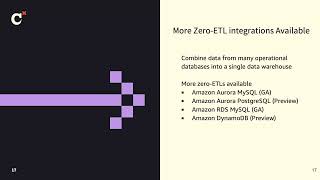
Simplify data integration with Zero-ETL features (L300) | AWS Events

Uncover the power of Zero-ETL integrations for your data in AWS. Learn firsthand how integrating Amazon Aurora with Amazon Redshift and Amazon DynamoDB with Amazon OpenSearch enables near real-time analytics and machine learning. Tailored for developers, architects, and administrators, discover key insights, best practices, and techniques for seamless integration of fully managed services, reducing latency and unlocking the full potential of your data in AWS.

Learn more: https://go.aws/3x2mha0 Learn more about AWS events: https://go.aws/3kss9CP

Subscribe: More AWS videos: http://bit.ly/2O3zS75 More AWS events videos: http://bit.ly/316g9t4

ABOUT AWS Amazon Web Services (AWS) hosts events, both online and in-person, bringing the cloud computing community together to connect, collaborate, and learn from AWS experts. AWS is the world’s most comprehensive and broadly adopted cloud platform, offering over 200 fully featured services from data centers globally. Millions of customers—including the fastest-growing startups, largest enterprises, and leading government agencies—are using AWS to lower costs, become more agile, and innovate faster.

AWSEvents #GenerativeAI #AI #Cloud #AWSAIandDataConference