talk-data.com talk-data.com

Topic

statistics

512

tagged

Activity Trend

1 peak/qtr
2020-Q1 2026-Q1

Activities

512 activities · Newest first

Perfect Simulation

This book illustrates the application of perfect simulation ideas and algorithms to a wide range of problems. The author describes numerous protocol methodologies for designing algorithms for specific problems. He first examines the commonly used acceptance/rejection (AR) protocol for creating perfect simulation algorithms. He then covers other major protocols, including coupling from the past (CFTP); the Fill, Machida, Murdoch, and Rosenthal (FMMR) method; the randomness recycler; retrospective sampling; and partially recursive AR, along with multiple variants of these protocols.

Quality of Life and Living Standards Analysis

This book is about the concept of “Quality of Life”. What is necessary for quality of life, and how can it be measured? The approach is a multicriterial scheme reduction which prevents as much information loss as possible when shifting from the set of partial criteria to their convolution. This book is written for researchers, analysts and graduate and postgraduate students of mathematics and economics.

Statistics in Toxicology Using R

The apparent contradiction between statistical significance and biological relevance has diminished the value of statistical methods as a whole in toxicology. Moreover, recommendations for statistical analysis are imprecise in most toxicological guidelines. Addressing these dilemmas, Statistics in Toxicology Using R explains the statistical analysis of selected experimental data in toxicology and presents assay-specific suggestions, such as for the in vitro micronucleus assay. Mostly focusing on hypothesis testing, the book covers standardized bioassays for chemicals, drugs, and environmental pollutants. It is organized according to selected toxicological assays, including:Short-term repeated toxicity studiesLong-term carcinogenicity assaysStudies on reproductive toxicityMutagenicity assaysToxicokinetic studiesThe book also discusses proof of safety (particularly in ecotoxicological assays), toxicogenomics, the analysis of interlaboratory studies and the modeling of dose-response relationships for risk assessment. For each toxicological problem, the author describes the statistics involved, matching data example, R code, and outcomes and their interpretation. This approach allows you to select a certain bioassay, identify the specific data structure, run the R code with the data example, understand the test outcome and interpretation, and replace the data set with your own data and run again.Supporting material for this title can be downloaded here.

Multiple Time Series Modeling Using the SAS VARMAX Procedure

Aimed at econometricians who have completed at least one course in time series modeling, Multiple Time Series Modeling Using the SAS VARMAX Procedure will teach you the time series analytical possibilities that SAS offers today. Estimations of model parameters are now performed in a split second. For this reason, working through the identifications phase to find the correct model is unnecessary. Instead, several competing models can be estimated, and their fit can be compared instantaneously.

Consequently, for time series analysis, most of the Box and Jenkins analysis process for univariate series is now obsolete. The former days of looking at cross-correlations and pre-whitening are over, because distributed lag models are easily fitted by an automatic lag identification method. The same goes for bivariate and even multivariate models, for which PROC VARMAX models are automatically fitted. For these models, other interesting variations arise: Subjects like Granger causality testing, feedback, equilibrium, cointegration, and error correction are easily addressed by PROC VARMAX.

One problem with multivariate modeling is that it includes many parameters, making parameterizations unstable. This instability can be compensated for by application of Bayesian methods, which are also incorporated in PROC VARMAX. Volatility modeling has now become a standard part of time series modeling, because of the popularity of GARCH models. Both univariate and multivariate GARCH models are supported by PROC VARMAX. This feature is especially interesting for financial analytics in which risk is a focus.

This book teaches with examples. Readers who are analyzing a time series for the first time will find PROC VARMAX easy to use; readers who know more advanced theoretical time series models will discover that PROC VARMAX is a useful tool for advanced model building.

A First Course in Statistics, 12th Edition

For courses in introductory statistics. A Contemporary Classic Classic, yet contemporary; theoretical, yet applied—McClave & Sincich’s A First Course in Statistics gives you the best of both worlds. This text offers a trusted, comprehensive introduction to statistics that emphasizes inference and integrates real data throughout. The authors stress the development of statistical thinking, the assessment of credibility, and value of the inferences made from data. This new edition is extensively revised with an eye on clearer, more concise language throughout the text and in the exercises. Ideal for one- or two-semester courses in introductory statistics, this text assumes a mathematical background of basic algebra. Flexibility is built in for instructors who teach a more advanced course, with optional footnotes about calculus and the underlying theory. Also available with MyStatLab MyStatLab™ is an online homework, tutorial, and assessment program designed to work with this text to engage students and improve results. Within its structured environment, students practice what they learn, test their understanding, and pursue a personalized study plan that helps them absorb course material and understand difficult concepts. For this edition, MyStatLab offers 30% new and updated exercises. Note: You are purchasing a standalone product; MyLab™ & Mastering™ does not come packaged with this content. Students, if interested in purchasing this title with MyLab & Mastering, ask your instructor for the correct package ISBN and Course ID. Instructors, contact your Pearson representative for more information. If you would like to purchase both the physical text and MyLab & Mastering, search for: 0134090438 / 9780134090436 * Statistics Plus New MyStatLab with Pearson eText -- Access Card Package Package consists of: 0134080211 / 9780134080215 * Statistics 0321847997 / 9780321847997 * My StatLab Glue-in Access Card 032184839X / 9780321848390 * MyStatLab Inside Sticker for Glue-In Packages

Handbook of Discrete-Valued Time Series

This handbook presents state-of-the-art methods for modeling time series of counts and incorporates frequentist and Bayesian approaches for discrete-valued spatio-temporal data and multivariate data. The book examines the advantages and limitations of the various modeling techniques and keeps probabilistic, technical details to a minimum. While the book focuses on time series of counts, some of the methods discussed can be applied to other types of discrete-valued time series, such as binary-valued or categorical time series.

Probability Methods for Cost Uncertainty Analysis, 2nd Edition

This book presents analytical methods for modeling and measuring uncertainty in the cost of engineering systems. This includes the treatment of correlation between the cost of system elements, how to present the analysis to decision-makers, and the use of bivariate probability distributions to capture joint interactions between a system's cost and schedule. Analytical techniques from probability theory are stressed, along with the Monte Carlo simulation method. Numerous examples and case discussions illustrate the practical application of theoretical concepts.

Business Forecasting

A comprehensive collection of the field's most provocative, influential new work Business Forecasting compiles some of the field's important and influential literature into a single, comprehensive reference for forecast modeling and process improvement. It is packed with provocative ideas from forecasting researchers and practitioners, on topics including accuracy metrics, benchmarking, modeling of problem data, and overcoming dysfunctional behaviors. Its coverage includes often-overlooked issues at the forefront of research, such as uncertainty, randomness, and forecastability, as well as emerging areas like data mining for forecasting. The articles present critical analysis of current practices and consideration of new ideas. With a mix of formal, rigorous pieces and brief introductory chapters, the book provides practitioners with a comprehensive examination of the current state of the business forecasting field. Forecasting performance is ultimately limited by the 'forecastability' of the data. Yet failing to recognize this, many organizations continue to squander resources pursuing unachievable levels of accuracy. This book provides a wealth of ideas for improving all aspects of the process, including the avoidance of wasted efforts that fail to improve (or even harm) forecast accuracy. Analyzes the most prominent issues in business forecasting Investigates emerging approaches and new methods of analysis Combines forecasts to improve accuracy Utilizes Forecast Value Added to identify process inefficiency The business environment is evolving, and forecasting methods must evolve alongside it. This compilation delivers an array of new tools and research that can enable more efficient processes and more accurate results. Business Forecasting provides an expert's-eye view of the field's latest developments to help you achieve your desired business outcomes.

Statistics for Economics, Second Edition

Statistics is the branch of mathematics that deals with real life problems. As such, it is an essential tool for economists. Unfortunately, the way the concept is introduced to students is not compatible with the way economists think and learn. The problem is worsened by the use of mathematical jargon and complex derivations. However, as this book demonstrates, neither is necessary. The book is written in simple English with minimal use of symbols, mostly for the sake of brevity and to make reading literature more meaningful. The second edition also incorporates Stata software for use by more technically oriented readers who have access to sophisticated software. The objective of this book is to address the fundamentals of statistical analysis in a simple and easy-to-comprehend way. Instead of covering numerous topics, the book covers interrelated subjects that are necessary for the comprehension of the presented topics. The second edition has augmented the explanations in the first to clarify the subjects even more. The examples are based on economic theory utilizing actual data. The hope is that the use of theory will prove useful in relating the subject to actual empirical applications and help with research.

Stochastic Volatility Modeling

Written by a leading contributor to volatility modeling and Risk's 2009 Quant of the Year, this book explains how stochastic volatility is used to tackle practical issues arising in the modeling of derivatives. With many unpublished results and insights, the book addresses the practicalities of modeling local volatility, local-stochastic volatility, and multi-asset stochastic volatility. It covers forward-start options, variance swaps, options on realized variance, timer options, VIX futures and options, and daily cliquets.

Using Statistics for Better Business Decisions

More and more organizations around the globe are expecting that professionals will make data-driven decisions. Employees, team leaders, managers, and executives that can think quantitatively should be in high demand. The goal of this book is to increase ability to identify a problem, collect data, organize, and analyze data that will help aid in making more effective decisions. This book will provide you with a solid foundation for thinking quantitatively within your company. To help facilitate this objective, this book follows two fictitious companies that encounter a series of business problems, while demonstrating how managers would use the concepts in the book to solve these problems and determine the next course of action. This book is for beginners and does not require prior statistical training. All computations will be completed using Microsoft Excel.

Regression Analysis

The technique of regression analysis is used so often in business and economics today that an understanding of its use is necessary for almost everyone engaged in the field. This book covers essential elements of building and understanding regression models in a business/economic context in an intuitive manner. The book provides a non-theoretical treatment that is accessible to readers with even a limited statistical background. This book describes exactly how regression models are developed and evaluated. The data used in the book are the kind of data managers are faced with in the real world. The book provides instructions and screen shots for using Microsoft Excel to build business/economic regression models. Upon completion, the reader will be able to interpret the output of the regression models and evaluate the models for accuracy and shortcomings.

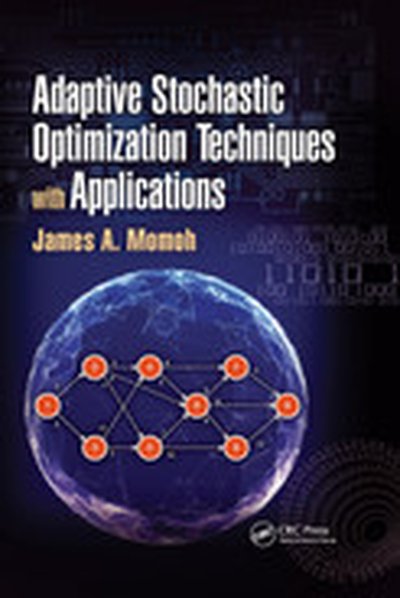
Adaptive Stochastic Optimization Techniques with Applications

This book describes state-of-the-art optimization techniques used to solve problems with adaptive, dynamic, and stochastic features. It presents modern advances in static and dynamic optimization, decision analysis, intelligent systems, evolutionary programming, heuristic optimization, stochastic and adaptive dynamic programming, and adaptive critics. It evaluates optimization methods for handling operational planning, Voltage/VAr, control coordination, vulnerability, reliability, resilience, and reconfiguration issues, providing mathematical formulations, algorithms for implementation, examples, and case studies. It also discusses the limitations of current optimization techniques in meeting the challenges of smart electric grids.

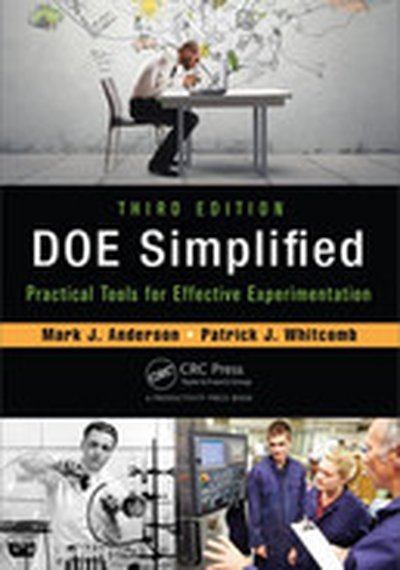
DOE Simplified, 3rd Edition

Offering a planned approach for determining cause and effect, DOE Simplified: Practical Tools for Effective Experimentation, Third Edition integrates the authors’ decades of combined experience in providing training, consulting, and computational tools to industrial experimenters. Supplying readers with the statistical means to analyze how numerous variables interact, it is ideal for those seeking breakthroughs in product quality and process efficiency via systematic experimentation. Following in the footsteps of its bestselling predecessors, this edition incorporates a lively approach to learning the fundamentals of the design of experiments (DOE). It lightens up the inherently dry complexities with interesting sidebars and amusing anecdotes. The book explains simple methods for collecting and displaying data and presents comparative experiments for testing hypotheses. Discussing how to block the sources of variation from your analysis, it looks at two-level factorial designs and covers analysis of variance. It also details a four-step planning process for designing and executing experiments that takes statistical power into consideration. This edition includes a major revision of the software that accompanies the book (via download) and sets the stage for introducing experiment designs where the randomization of one or more hard-to-change factors can be restricted. Along these lines, it includes a new chapter on split plots and adds coverage of a number of recent developments in the design and analysis of experiments. Readers have access to case studies, problems, practice experiments, a glossary of terms, and a glossary of statistical symbols, as well as a series of dynamic online lectures that cover the first several chapters of the book.

Spatial Point Patterns

This book shows scientific researchers and applied statisticians from a wide range of fields how to analyze their spatial point pattern data. Making the techniques accessible to non-mathematicians, the authors draw on their 25 years of software development experiences, methodological research, and broad scientific collaborations to deliver a book that clearly and succinctly explains concepts and addresses real scientific questions. The book uses the authors' R package spatstat throughout to process and analyze spatial point pattern data.

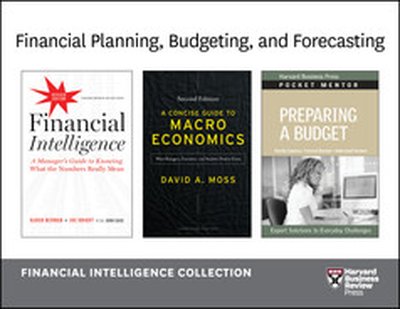
Financial Planning, Budgeting, and Forecasting: Financial Intelligence Collection (7 Books)

Don’t let your fear of finance get in the way of your success. This digital collection, curated by Harvard Business Review, brings together everything a manager needs to know about financial intelligence. It includes Financial Intelligence, called a “must-read” for decision makers without expertise in finance; A Concise Guide to Macroeconomics, which covers the essentials of macroeconomics and examines the core ideas of output, money, and expectations; Essentials of Finance and Budgeting, which explains everything HR professionals need to know to make wise financial decisions; Ahead of the Curve, Joseph H. Ellis’s forecasting method to help managers and investors understand and predict the economic cycles that control their businesses and financial fates; Beyond Budgeting; which offers a coherent management model that overcomes the limitations of traditional budgeting; Preparing a Budget, packed with handy tools, self-tests, and real life examples to help you hone critical skills; and HBR Guide to Finance Basics for Managers, which will give you the tools and confidence you need to master the fundamentals of finance.

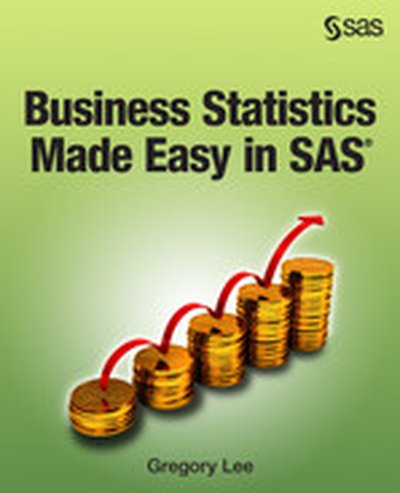
Business Statistics Made Easy in SAS

Learn or refresh core statistical methods for business with SAS® and approach real business analytics issues and techniques using a practical approach that avoids complex mathematics and instead employs easy-to-follow explanations.

Business Statistics Made Easy in SAS® is designed as a user-friendly, practice-oriented, introductory text to teach businesspeople, students, and others core statistical concepts and applications. It begins with absolute core principles and takes you through an overview of statistics, data and data collection, an introduction to SAS®, and basic statistics (descriptive statistics and basic associational statistics). The book also provides an overview of statistical modeling, effect size, statistical significance and power testing, basics of linear regression, introduction to comparison of means, basics of chi-square tests for categories, extrapolating statistics to business outcomes, and some topical issues in statistics, such as big data, simulation, machine learning, and data warehousing.

The book steers away from complex mathematical-based explanations, and it also avoids basing explanations on the traditional build-up of distributions, probability theory and the like, which tend to lose the practice-oriented reader. Instead, it teaches the core ideas of statistics through methods such as careful, intuitive written explanations, easy-to-follow diagrams, step-by-step technique implementation, and interesting metaphors.

With no previous SAS experience necessary, Business Statistics Made Easy in SAS® is an ideal introduction for beginners. It is suitable for introductory undergraduate classes, postgraduate courses such as MBA refresher classes, and for the business practitioner. It is compatible with SAS® University Edition.

Learning Bayesian Models with R

Dive into the world of Bayesian Machine Learning with "Learning Bayesian Models with R." This comprehensive guide introduces the foundations of probability theory and Bayesian inference, teaches you how to implement these concepts with the R programming language, and progresses to practical techniques for supervised and unsupervised problems in data science. What this Book will help me do Understand and set up an R environment for Bayesian modeling Build Bayesian models including linear regression and classification for predictive analysis Learn to apply Bayesian inference to real-world machine learning problems Work with big data and high-performance computation frameworks like Hadoop and Spark Master advanced Bayesian techniques and apply them to deep learning and AI challenges Author(s) Hari Manassery Koduvely is a proficient data scientist with extensive experience in leveraging Bayesian frameworks for real-world applications. His passion for Bayesian Machine Learning is evident in his approachable and detailed teaching methodology, aimed at making these complex topics accessible for practitioners. Who is it for? This book is best suited for data scientists, analysts, and statisticians familiar with R and basic probability theory who aim to enhance their expertise in Bayesian approaches. It's ideal for professionals tackling machine learning challenges in applied data contexts. If you're looking to incorporate advanced probabilistic methods into your projects, this guide will show you how.

Beginning R: An Introduction to Statistical Programming, Second Edition

Beginning R, Second Edition is a hands-on book showing how to use the R language, write and save R scripts, read in data files, and write custom statistical functions as well as use built in functions. This book shows the use of R in specific cases such as one-way ANOVA analysis, linear and logistic regression, data visualization, parallel processing, bootstrapping, and more. It takes a hands-on, example-based approach incorporating best practices with clear explanations of the statistics being done. It has been completely re-written since the first edition to make use of the latest packages and features in R version 3. R is a powerful open-source language and programming environment for statistics and has become the de facto standard for doing, teaching, and learning computational statistics. R is both an object-oriented language and a functional language that is easy to learn, easy to use, and completely free. A large community of dedicated R users and programmers provides an excellent source of R code, functions, and data sets, with a constantly evolving ecosystem of packages providing new functionality for data analysis. R has also become popular in commercial use at companies such as Microsoft, Google, and Oracle. Your investment in learning R is sure to pay off in the long term as R continues to grow into the go to language for data analysis and research.