talk-data.com talk-data.com

Event

O'Reilly Data Engineering Books

2001-10-19 – 2027-05-25 Oreilly Visit website ↗

Activities tracked

780

Collection of O'Reilly books on Data Engineering.

Filtering by: SQL ×

Sessions & talks

Showing 226–250 of 780 · Newest first

Search within this event →
Oracle R Enterprise: Harnessing the Power of R in Oracle Database

Master the Big Data Capabilities of Oracle R Enterprise Effectively manage your enterprise’s big data and keep complex processes running smoothly using the hands-on information contained in this Oracle Press guide. Oracle R Enterprise: Harnessing the Power of R in Oracle Database shows, step-by-step, how to create and execute large-scale predictive analytics and maintain superior performance. Discover how to explore and prepare your data, accurately model business processes, generate sophisticated graphics, and write and deploy powerful scripts. You will also find out how to effectively incorporate Oracle R Enterprise features in APEX applications, OBIEE dashboards, and Apache Hadoop systems. Learn to: • Install, configure, and administer Oracle R Enterprise • Establish connections and move data to the database • Create Oracle R Enterprise packages and functions • Use the R language to work with data in Oracle Database • Build models using ODM, ORE, and other algorithms • Develop and deploy R scripts and use the R script repository • Execute embedded R scripts and employ ORE SQL API functions • Map and manipulate data using Oracle R Advanced Analytics for Hadoop • Use ORE in Oracle Data Miner, OBIEE, and other applications
Spark in Action

Spark in Action teaches you the theory and skills you need to effectively handle batch and streaming data using Spark. Fully updated for Spark 2.0. About the Technology Big data systems distribute datasets across clusters of machines, making it a challenge to efficiently query, stream, and interpret them. Spark can help. It is a processing system designed specifically for distributed data. It provides easy-to-use interfaces, along with the performance you need for production-quality analytics and machine learning. Spark 2 also adds improved programming APIs, better performance, and countless other upgrades. About the Book Spark in Action teaches you the theory and skills you need to effectively handle batch and streaming data using Spark. You'll get comfortable with the Spark CLI as you work through a few introductory examples. Then, you'll start programming Spark using its core APIs. Along the way, you'll work with structured data using Spark SQL, process near-real-time streaming data, apply machine learning algorithms, and munge graph data using Spark GraphX. For a zero-effort startup, you can download the preconfigured virtual machine ready for you to try the book's code. What's Inside Updated for Spark 2.0 Real-life case studies Spark DevOps with Docker Examples in Scala, and online in Java and Python About the Reader Written for experienced programmers with some background in big data or machine learning. About the Authors Petar Zečević and Marko Bonaći are seasoned developers heavily involved in the Spark community. Quotes Dig in and get your hands dirty with one of the hottest data processing engines today. A great guide. - Jonathan Sharley, Pandora Media Must-have! Speed up your learning of Spark as a distributed computing framework. - Robert Ormandi, Yahoo! An easy-to-follow, step-by-step guide. - Gaurav Bhardwaj, 3Pillar Global An ambitiously comprehensive overview of Spark and its diverse ecosystem. - Jonathan Miller, Optensity

Securing SQL Server: DBAs Defending the Database

Protect your data from attack by using SQL Server technologies to implement a defense-in-depth strategy, performing threat analysis, and encrypting sensitive data as a last line of defense against compromise. The multi-layered approach in this book helps ensure that a single breach doesn't lead to loss or compromise of your data that is confidential and important to the business. Database professionals in today's world deal increasingly often with repeated data attacks against high-profile organizations and sensitive data. It is more important than ever to keep your company's data secure. demonstrates how administrators and developers can both play their part in the protection of a SQL Server environment. Securing SQL Server This book provides a comprehensive technical guide to the security model, and to encryption within SQL Server, including coverage of the latest security technologies such as Always Encrypted, Dynamic Data Masking, and Row Level Security. Most importantly, the book gives practical advice and engaging examples on how to defend your data -- and ultimately your job! -- against attack and compromise. Covers the latest security technologies, including Always Encrypted, Dynamic Data Masking, and Row Level Security Promotes security best-practice and strategies for defense-in-depth of business-critical database assets Gives advice on performing threat analysis and reducing the attack surface that your database presents to the outside world What You Will Learn Perform threat analysis Implement access level control and data encryption Avoid non-reputability by implementing comprehensive auditing Use security metadata to ensure your security policies are enforced Apply the latest SQL Server technologies to increase data security Mitigate the risk of credentials being stolen Who This Book Is For SQL Server database administrators who need to understand and counteract the threat of attacks against their company's data. The book is also of interest to database administrators of other platforms, as several of the attack techniques are easily generalized beyond SQL Server and to other database brands.

Microsoft SQL Server 2016: A Beginner's Guide, Sixth Edition, 6th Edition

Up-to-date Microsoft SQL Server 2016 skills made easy! Get up and running on Microsoft SQL Server 2016 in no time with help from this thoroughly revised, practical resource. The book offers thorough coverage of SQL management and development and features full details on the newest business intelligence, reporting, and security features. Filled with new real-world examples and hands-on exercises, Microsoft SQL Server 2016: A Beginner's Guide, Sixth Edition , starts by explaining fundamental relational database system concepts. From there, you will learn how to write Transact-SQL statements, execute simple and complex database queries, handle system administration and security, and use the powerful analysis and BI tools. XML, spatial data, and full-text search are also covered in this step-by-step tutorial. · Revised from the ground up to cover the latest version of SQL Server · Ideal both as a self-study guide and a classroom textbook · Written by a prominent professor and best-selling author

Big Data SMACK: A Guide to Apache Spark, Mesos, Akka, Cassandra, and Kafka

Learn how to integrate full-stack open source big data architecture and to choose the correct technology—Scala/Spark, Mesos, Akka, Cassandra, and Kafka—in every layer. Big data architecture is becoming a requirement for many different enterprises. So far, however, the focus has largely been on collecting, aggregating, and crunching large data sets in a timely manner. In many cases now, organizations need more than one paradigm to perform efficient analyses. Big Data SMACK explains each of the full-stack technologies and, more importantly, how to best integrate them. It provides detailed coverage of the practical benefits of these technologies and incorporates real-world examples in every situation. This book focuses on the problems and scenarios solved by the architecture, as well as the solutions provided by every technology. It covers the six main concepts of big data architecture and how integrate, replace, and reinforce every layer: What You'll Learn The language: Scala The engine: Spark (SQL, MLib, Streaming, GraphX) The container: Mesos, Docker The view: Akka The storage: Cassandra The message broker: Kafka What You Will Learn: Make big data architecture without using complex Greek letter architectures Build a cheap but effective cluster infrastructure Make queries, reports, and graphs that business demands Manage and exploit unstructured and No-SQL data sources Use tools to monitor the performance of your architecture Integrate all technologies and decide which ones replace and which ones reinforce Who This Book Is For Developers, data architects, and data scientists looking to integrate the most successful big data open stack architecture and to choose the correct technology in every layer

Big Data Analytics

Dive into the world of big data with "Big Data Analytics: Real Time Analytics Using Apache Spark and Hadoop." This comprehensive guide introduces readers to the fundamentals and practical applications of Apache Spark and Hadoop, covering essential topics like Spark SQL, DataFrames, structured streaming, and more. Learn how to harness the power of real-time analytics and big data tools effectively. What this Book will help me do Master the key components of Apache Spark and Hadoop ecosystems, including Spark SQL and MapReduce. Gain an understanding of DataFrames, DataSets, and structured streaming for seamless data handling. Develop skills in real-time analytics using Spark Streaming and technologies like Kafka and HBase. Learn to implement machine learning models using Spark's MLlib and ML Pipelines. Explore graph analytics with GraphX and leverage data visualization tools like Jupyter and Zeppelin. Author(s) Venkat Ankam, an expert in big data technologies, has years of experience working with Apache Hadoop and Spark. As an educator and technical consultant, Venkat has enabled numerous professionals to gain critical insights into big data ecosystems. With a pragmatic approach, his writings aim to guide readers through complex systems in a structured and easy-to-follow manner. Who is it for? This book is perfect for data analysts, data scientists, software architects, and programmers aiming to expand their knowledge of big data analytics. Readers should ideally have a basic programming background in languages like Python, Scala, R, or SQL. Prior hands-on experience with big data environments is not necessary but is an added advantage. This guide is created to cater to a range of skill levels, from beginners to intermediate learners.

PostgreSQL Development Essentials

Dive into the advanced features of PostgreSQL and master database development with 'PostgreSQL Development Essentials'. This book guides you step-by-step through topics like advanced SQL queries, database design, query optimization, and using PostgreSQL with programming languages like Java and PHP. By the end, you'll have the skills to build secure, efficient, and enterprise-ready database applications. What this Book will help me do Write powerful and complex SQL queries to harness the full potential of PostgreSQL. Create and optimize robust database designs tailored to application needs. Enhance database performance through indexing, partitioning, and query optimization. Integrate PostgreSQL seamlessly with Java and PHP for advanced application development. Utilize PostgreSQL extensions and features to expand functionality and ensure scalability. Author(s) Baji Shaik, the author of 'PostgreSQL Development Essentials', has extensive experience in database development and optimization with a focus on PostgreSQL. With his practical approach, Baji simplifies advanced concepts and provides actionable insights to empower developers. His teaching style bridges technical depth with accessibility, making this book an essential for professionals aiming to excel in PostgreSQL. Who is it for? This book is designed for software developers and database professionals who have a foundational understanding of PostgreSQL and are eager to deepen their expertise. It is ideal for those looking to enrich their skills in advanced SQL, optimizing database performance, and integrating PostgreSQL with application frameworks like Java and PHP. If you're aiming to elevate your database applications to enterprise-grade quality while ensuring both efficiency and scalability, this book is tailored for you.

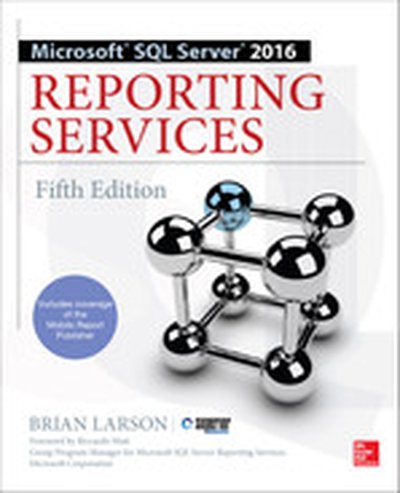
Microsoft SQL Server 2016 Reporting Services, Fifth Edition, 5th Edition

Up-to-Date Coverage of Microsoft® SQL Server® 2016 Reporting Services, Including the Mobile Report Publisher Build, publish, and maintain paginated and mobile reports using the expert tips and best practices contained in this hands-on guide. Written by a member of the original Reporting Services development team, Microsoft SQL Server 2016 Reporting Services, Fifth Edition, fully explains the process of creating and distributing reports and shows how to maximize all of the powerful, integrated SSRS capabilities, including the new and enhanced features. A detailed case study and sample reports are featured in this practical resource. • Plan for, install, configure, and customize SQL Server 2016 Reporting Services • Design and generate feature-rich reports using the Report Wizard • Work with Report Designer in Visual Studio, Report Builder, and the Mobile Report Publisher • Incorporate charts, images, gauges, and maps • Enhance your reports through summarizing, totaling, and interactivity • Build reusable report templates • Embed Visual Basic .NET functions and subreports • Enable end-user access via the Report Server and its web portal interface • Integrate SSRS reports with your own websites and custom applications • Follow along with sample reports from the book’s case study

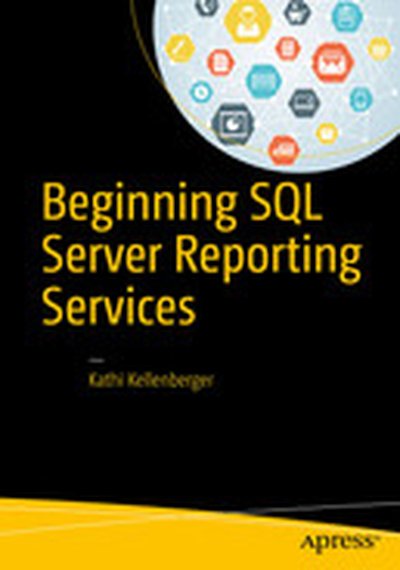
Beginning SQL Server Reporting Services

Learn SQL Server Reporting Services and become current with the 2016 edition. Develop interactive, dynamic reports that combine graphs, charts, and tabular data into attractive dashboards and reports to delight business analysts and other users of corporate data. Deliver mobile reports to anywhere and any device. Build vital knowledge of Reporting Services at a time when Microsoft's dominance in business intelligence is on the rise. turns novices into skilled report developers. The book begins by explaining how to set up the development environment. It then walks you through creating your first reports using the built-in wizard. After showing what is possible, the book breaks down and explains the skills needed to create reports from scratch. And not just reports! But also dashboards with charts, graphs, and maps. Each chapter builds on knowledge gained in the previous chapters with step-by-step tutorials. Beginning SQL Server Reporting Services boosts your skills and provides you additional career options. Don't be without those options. Grab and read this book today. Beginning SQL Server Reporting Services Build reports with and without the built-in wizard. Build interactive features such as drill-through reports. Build dashboards full of charts, graphs, and maps. Build mobile reports. What You Will Learn Set up your development environment. Organized projects and share components among reports. Create report using a wizard. Create reports from scratch, including grouping levels, parameters, and drill through features. Build interactive dashboard with graphs, charts, and maps. Deploy and manage reports for use by others in the business. Who This Book Is For Database professionals of all experience levels who have some experience in databases and want to make the leap into business intelligence reporting. The book is an excellent choice for those needing to add Reporting Services to their current list of skills, or who are looking for a skill set that is in demand for in order to break into IT.

Hadoop: Data Processing and Modelling

Unlock the power of your data with Hadoop 2.X ecosystem and its data warehousing techniques across large data sets About This Book Conquer the mountain of data using Hadoop 2.X tools The authors succeed in creating a context for Hadoop and its ecosystem Hands-on examples and recipes giving the bigger picture and helping you to master Hadoop 2.X data processing platforms Overcome the challenging data processing problems using this exhaustive course with Hadoop 2.X Who This Book Is For This course is for Java developers, who know scripting, wanting a career shift to Hadoop - Big Data segment of the IT industry. So if you are a novice in Hadoop or an expert, this book will make you reach the most advanced level in Hadoop 2.X. What You Will Learn Best practices for setup and configuration of Hadoop clusters, tailoring the system to the problem at hand Integration with relational databases, using Hive for SQL queries and Sqoop for data transfer Installing and maintaining Hadoop 2.X cluster and its ecosystem Advanced Data Analysis using the Hive, Pig, and Map Reduce programs Machine learning principles with libraries such as Mahout and Batch and Stream data processing using Apache Spark Understand the changes involved in the process in the move from Hadoop 1.0 to Hadoop 2.0 Dive into YARN and Storm and use YARN to integrate Storm with Hadoop Deploy Hadoop on Amazon Elastic MapReduce and Discover HDFS replacements and learn about HDFS Federation In Detail As Marc Andreessen has said "Data is eating the world," which can be witnessed today being the age of Big Data, businesses are producing data in huge volumes every day and this rise in tide of data need to be organized and analyzed in a more secured way. With proper and effective use of Hadoop, you can build new-improved models, and based on that you will be able to make the right decisions. The first module, Hadoop beginners Guide will walk you through on understanding Hadoop with very detailed instructions and how to go about using it. Commands are explained using sections called "What just happened" for more clarity and understanding. The second module, Hadoop Real World Solutions Cookbook, 2nd edition, is an essential tutorial to effectively implement a big data warehouse in your business, where you get detailed practices on the latest technologies such as YARN and Spark. Big data has become a key basis of competition and the new waves of productivity growth. Hence, once you get familiar with the basics and implement the end-to-end big data use cases, you will start exploring the third module, Mastering Hadoop. So, now the question is if you need to broaden your Hadoop skill set to the next level after you nail the basics and the advance concepts, then this course is indispensable. When you finish this course, you will be able to tackle the real-world scenarios and become a big data expert using the tools and the knowledge based on the various step-by-step tutorials and recipes. Style and approach This course has covered everything right from the basic concepts of Hadoop till you master the advance mechanisms to become a big data expert. The goal here is to help you learn the basic essentials using the step-by-step tutorials and from there moving toward the recipes with various real-world solutions for you. It covers all the important aspects of Hadoop from system designing and configuring Hadoop, machine learning principles with various libraries with chapters illustrated with code fragments and schematic diagrams. This is a compendious course to explore Hadoop from the basics to the most advanced techniques available in Hadoop 2.X.

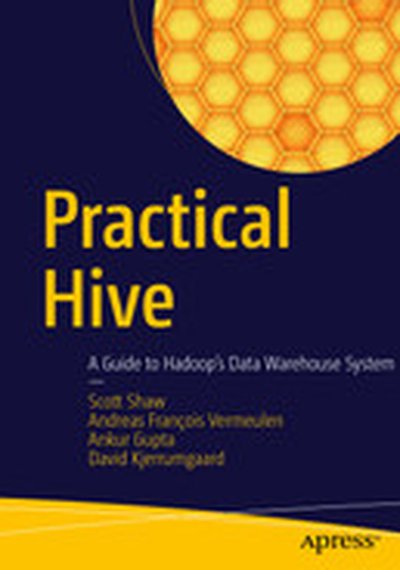
Practical Hive: A Guide to Hadoop's Data Warehouse System

Dive into the world of SQL on Hadoop and get the most out of your Hive data warehouses. This book is your go-to resource for using Hive: authors Scott Shaw, Ankur Gupta, David Kjerrumgaard, and Andreas Francois Vermeulen take you through learning HiveQL, the SQL-like language specific to Hive, to analyze, export, and massage the data stored across your Hadoop environment. From deploying Hive on your hardware or virtual machine and setting up its initial configuration to learning how Hive interacts with Hadoop, MapReduce, Tez and other big data technologies, Practical Hive gives you a detailed treatment of the software. In addition, this book discusses the value of open source software, Hive performance tuning, and how to leverage semi-structured and unstructured data. What You Will Learn Install and configure Hive for new and existing datasets Perform DDL operations Execute efficient DML operations Use tables, partitions, buckets, and user-defined functions Discover performance tuning tips and Hive best practices Who This Book Is For Developers, companies, and professionals who deal with large amounts of data and could use software that can efficiently manage large volumes of input. It is assumed that readers have the ability to work with SQL.

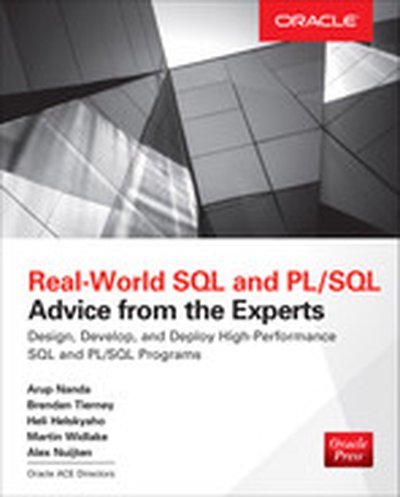
Real World SQL and PL/SQL: Advice from the Experts

Master the Underutilized Advanced Features of SQL and PL/SQL This hands-on guide from Oracle Press shows how to fully exploit lesser known but extremely useful SQL and PL/SQL features―and how to effectively use both languages together. Written by a team of Oracle ACE Directors, Real-World SQL and PL/SQL: Advice from the Experts features best practices, detailed examples, and insider tips that clearly demonstrate how to write, troubleshoot, and implement code for a wide variety of practical applications. The book thoroughly explains underutilized SQL and PL/SQL functions and lays out essential development strategies. Data modeling, advanced analytics, database security, secure coding, and administration are covered in complete detail. Learn how to: • Apply advanced SQL and PL/SQL tools and techniques • Understand SQL and PL/SQL functionality and determine when to use which language • Develop accurate data models and implement business logic • Run PL/SQL in SQL and integrate complex datasets • Handle PL/SQL instrumenting and profiling • Use Oracle Advanced Analytics and Oracle R Enterprise • Build and execute predictive queries • Secure your data using encryption, hashing, redaction, and masking • Defend against SQL injection and other code-based attacks • Work with Oracle Virtual Private Database Code examples in the book are available for download at www.MHProfessional.com. TAG: For a complete list of Oracle Press titles, visit www.OraclePressBooks.com

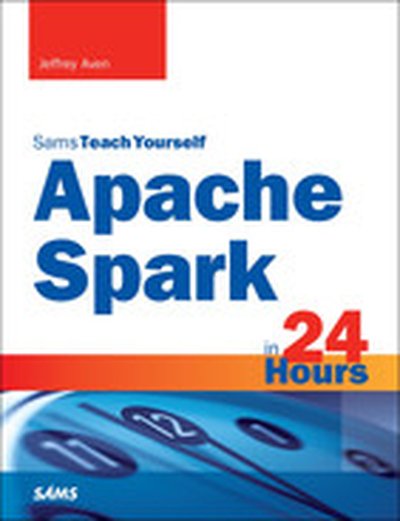
Sams Teach Yourself Apache Spark™ in 24 Hours

Apache Spark is a fast, scalable, and flexible open source distributed processing engine for big data systems and is one of the most active open source big data projects to date. In just 24 lessons of one hour or less, Sams Teach Yourself Apache Spark in 24 Hours helps you build practical Big Data solutions that leverage Spark’s amazing speed, scalability, simplicity, and versatility. This book’s straightforward, step-by-step approach shows you how to deploy, program, optimize, manage, integrate, and extend Spark–now, and for years to come. You’ll discover how to create powerful solutions encompassing cloud computing, real-time stream processing, machine learning, and more. Every lesson builds on what you’ve already learned, giving you a rock-solid foundation for real-world success. Whether you are a data analyst, data engineer, data scientist, or data steward, learning Spark will help you to advance your career or embark on a new career in the booming area of Big Data. Learn how to • Discover what Apache Spark does and how it fits into the Big Data landscape • Deploy and run Spark locally or in the cloud • Interact with Spark from the shell • Make the most of the Spark Cluster Architecture • Develop Spark applications with Scala and functional Python • Program with the Spark API, including transformations and actions • Apply practical data engineering/analysis approaches designed for Spark • Use Resilient Distributed Datasets (RDDs) for caching, persistence, and output • Optimize Spark solution performance • Use Spark with SQL (via Spark SQL) and with NoSQL (via Cassandra) • Leverage cutting-edge functional programming techniques • Extend Spark with streaming, R, and Sparkling Water • Start building Spark-based machine learning and graph-processing applications • Explore advanced messaging technologies, including Kafka • Preview and prepare for Spark’s next generation of innovations Instructions walk you through common questions, issues, and tasks; Q-and-As, Quizzes, and Exercises build and test your knowledge; "Did You Know?" tips offer insider advice and shortcuts; and "Watch Out!" alerts help you avoid pitfalls. By the time you're finished, you'll be comfortable using Apache Spark to solve a wide spectrum of Big Data problems.

In Search of Database Nirvana

The database pendulum is in full swing. Ten years ago, web-scale companies began moving away from proprietary relational databases to handle big data use cases with NoSQL and Hadoop. Now, for a variety of reasons, the pendulum is swinging back toward SQL-based solutions. What many companies really want is a system that can handle all of their operational, OLTP, BI, and analytic workloads. Could such an all-in-one database exist? This O’Reilly report examines this quest for database nirvana, or what Gartner recently dubbed Hybrid Transaction/Analytical Processing (HTAP). Author Rohit Jain takes an in-depth look at the possibilities and the challenges for companies that long for a single query engine to rule them all. With this report, you’ll explore: The challenges of having one query engine support operational, BI, and analytical workloads Efforts to produce a query engine that supports multiple storage engines Attempts to support multiple data models with the same query engine Why an HTAP database engine needs to provide enterprise-caliber capabilities, including high availability, security, and manageability How to assess various options for meeting workload requirements with one database engine, or a combination of query and storage engines

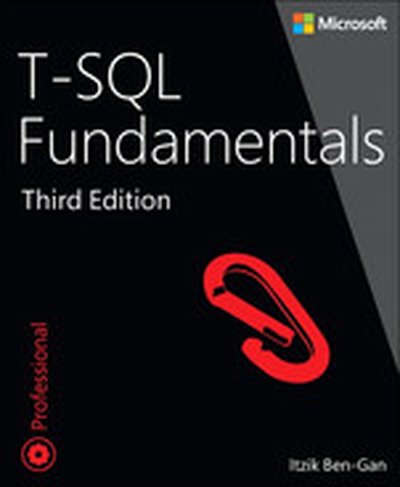
T-SQL Fundamentals, Third Edition

Effectively query and modify data using Transact-SQL Master T-SQL fundamentals and write robust code for Microsoft SQL Server and Azure SQL Database. Itzik Ben-Gan explains key T-SQL concepts and helps you apply your knowledge with hands-on exercises. The book first introduces T-SQL’s roots and underlying logic. Next, it walks you through core topics such as single-table queries, joins, subqueries, table expressions, and set operators. Then the book covers more-advanced data-query topics such as window functions, pivoting, and grouping sets. The book also explains how to modify data, work with temporal tables, and handle transactions, and provides an overview of programmable objects. Related Content Book: T-SQL Fundamentals, 4th Edition Microsoft Data Platform MVP Itzik Ben-Gan shows you how to: Review core SQL concepts and its mathematical roots Create tables and enforce data integrity Perform effective single-table queries by using the SELECT statement Query multiple tables by using joins, subqueries, table expressions, and set operators Use advanced query techniques such as window functions, pivoting, and grouping sets Insert, update, delete, and merge data Use transactions in a concurrent environment Get started with programmable objects–from variables and batches to user-defined functions, stored procedures, triggers, and dynamic SQL

Expert Scripting and Automation for SQL Server DBAs

Automate your workload and manage more databases and instances with greater ease and efficiency by combining metadata-driven automation with powerful tools like PowerShell and SQL Server Agent. Automate your new instance-builds and use monitoring to drive ongoing automation, with the help of an inventory database and a management data warehouse. The market has seen a trend towards there being a much smaller ratio of DBAs to SQL Server instances. Automation is the key to responding to this challenge and continuing to run a reliable database platform service. guides you through the process of automating the maintenance of your SQL Server enterprise. Expert Scripting and Automation for SQL Server DBAs shows how to automate the SQL Server build processes, monitor multiple instances from a single location, and automate routine maintenance tasks throughout your environment. You will also learn how to create automated responses to common or time consuming break/fix scenarios. The book helps you become faster and better at what you do for a living, and thus more valuable in the job market. Expert Scripting and Automation for SQL Server DBAs Extensive coverage of automation using PowerShell and T-SQL Detailed discussion and examples on metadata-driven automation Comprehensive coverage of automated responses to break/fix scenarios What You Will Learn Automate the SQL Server build process Create intelligent, metadata-drive routines Automate common maintenance tasks Create automated responses to common break/fix scenarios Monitor multiple instance from a central location Utilize T-SQL and PowerShell for administrative purposes Who This Book Is For is a book for SQL Server database administrators responsible for managing increasingly large numbers of databases across their business enterprise. The book is also useful for any database administrator looking to ease their workload through automation. The book addresses the needs of these audiences by showing how to get more done through less effort by implementing an intelligent, automated-processes service model using tools such as T-SQL, PowerShell, Server Agent, and the Management Data Warehouse. Expert Scripting and Automation for SQL Server DBAs

The Language of SQL, Second Edition

The Language of SQL, Second Edition Many SQL texts attempt to serve as an encyclopedic reference on SQL syntax -- an approach that is often counterproductive, because that information is readily available in online references published by the major database vendors. For SQL beginners, it’s more important for a book to focus on general concepts and to offer clear explanations and examples of what various SQL statements can accomplish. This is that book. A number of features make The Language of SQL unique among introductory SQL books. First, you will not be required to download software or sit with a computer as you read the text. The intent of this book is to provide examples of SQL usage that can be understood simply by reading. Second, topics are organized in an intuitive and logical sequence. SQL keywords are introduced one at a time, allowing you to grow your understanding as you encounter new terms and concepts. Finally, this book covers the syntax of three widely used databases: Microsoft SQL Server, MySQL, and Oracle. Special “Database Differences” sidebars clearly show you any differences in syntax among these three databases, and instructions are included on how to obtain and install free versions of the databases. This is the only book you need to gain a quick working knowledge of SQL and relational databases. Learn How To... Use SQL to retrieve data from relational databases Apply functions and calculations to data Group and summarize data in a variety of useful ways Use complex logic to retrieve only the data you need Update data and create new tables Design relational databases so that data retrieval is easy and intuitive Use spreadsheets to transform your data into meaningful displays Retrieve data from multiple tables via joins, subqueries, views, and set logic Create, modify, and execute stored procedures Install Microsoft SQL Server, MySQL, or Oracle Contents at a Glance 1 Relational Databases and SQL 2 Basic Data Retrieval 3 Calculated Fields and Aliases 4 Using Functions 5 Sorting Data 6 Selection Criteria 7 Boolean Logic 8 Conditional Logic 9 Summarizing Data 10 Subtotals and Crosstabs 11 Inner Joins 12 Outer Joins 13 Self Joins and Views 14 Subqueries 15 Set Logic 16 Stored Procedures and Parameters 17 Modifying Data 18 Maintaining Tables 19 Principles of Database Design 20 Strategies for Displaying Data A Getting Started with Microsoft SQL Server B Getting Started with MySQL C Getting Started with Oracle

Beginning SQL Queries: From Novice to Professional, Second Edition

Get started on mastering the one language binding the entire database industry. That language is SQL, and how it works is must-have knowledge for anyone involved with relational databases, and surprisingly also for anyone involved with NoSQL databases. SQL is universally used in querying and reporting on large data sets in order to generate knowledge to drive business decisions. Good knowledge of SQL is crucial to anyone working with databases, because it is with SQL that you retrieve data, manipulate data, and generate business results. Every relational database supports SQL for its expressiveness in writing queries underlying reports and business intelligence dashboards. Knowing how to write good queries is the foundation for all work done in SQL, and it is a foundation that Clare Churcher's book, , 2nd Edition, lays well. Beginning SQL Queries What You Will Learn Write simple queries to extract data from a single table Combine data from many tables into one business result using set operations Translate natural language questions into database queries providing meaningful information to the business Avoid errors associated with duplicated and null values Summarize data with amazing ease using the newly-added feature of window functions Tackle tricky queries with confidence that you are generating correct results Investigate and understand the effects of indexes on the efficiency of queries Who This Book Is For Beginning SQL Queries, 2nd Edition is aimed at intelligent laypeople who need to extract information from a database, and at developers and other IT professionals who are new to SQL. The book is especially useful for business intelligence analysts who must ask more complex questions of their database than their GUI—based reporting software supports. Such people might be business owners wanting to target specific customers, scientists and students needing to extract subsets of their research data, or end users wanting to make the best use of databases for their clubs and societies.

Relational Database Programming: A Set-Oriented Approach

Learn the best way of writing code to run inside a relational database. This book shows how a holistic and set-oriented approach to database programming can far exceed the performance of the row-by-row model that is too often used by developers who haven't been shown a better way. Two styles of programming are encountered in the database world. Classical programming as taught in many universities leads to an atomic, row-oriented, and procedural style inspired by the structured models of programming. In short, many application developers write in the relational database exactly like in the user interface. The other style of programming is holistic, data set oriented, and coded mainly in SQL. This is the style of the database developer. The set based and holistic style of development is not promoted enough in universities, and many application developers are not fully aware of it. There are many performance issues all over the world in relational databases due to the use of the atomic and inappropriate style of programming. This book compares the two styles, and promotes the holistic style of development as the most suitable one. Examples are given to demonstrate the superiority of a set-based and holistic approach. Compares the two styles of development Shows the performance advantages of set-based development Solves example problems using both approaches Who This Book Is For is aimed at application developers willing to adapt their programming styles in return for better-performing applications. It's for students and new developers wanting to position themselves as having database expertise and build a reputation for developing highly-performant database applications. Two Styles of Database Development

Introducing Microsoft SQL Server 2016: Mission-Critical Applications, Deeper Insights, Hyperscale Cloud

With Microsoft SQL Server 2016, a variety of new features and enhancements to the data platform deliver breakthrough performance, advanced security, and richer, integrated reporting and analytics capabilities. In this ebook, we introduce new security features: Always Encrypted, Row-Level Security, and dynamic data masking; discuss enhancements that enable you to better manage performance and storage: TemDB configuration, query store, and Stretch Database; review several improvements to Reporting Services; and also describe AlwaysOn Availability Groups, tabular enhancements, and R integration.

Mastering Hibernate

Mastering Hibernate is your comprehensive guide to understanding and mastering Hibernate, a powerful Object-Relational Mapping tool for Java and .Net applications. Through this book, you will dive deep into the mechanics of Hibernate, exploring its core concepts and architecture. Whether you're working with SQL or NoSQL data stores, this book ensures you can unlock Hibernate's full potential. What this Book will help me do Grasp the internal workings of Hibernate, including its session management and entity lifecycle. Optimize mapping between Java classes and relational database structures for better performance. Effectively manage relationships and collections within your data models using Hibernate features. Utilize Hibernate's caching systems to improve application performance and scalability. Handle multi-tenant database configurations with confidence using Hibernate's architectural capabilities. Author(s) None Rad is an experienced software developer and educator specializing in Java-based applications and enterprise architecture. With years of hands-on practice using Hibernate in real-world scenarios, None Rad has curated this book to serve as a clear and practical guide. Their writing reflects deep technical expertise combined with an approachable and illustrative teaching style, ensuring learning is both effective and engaging. Who is it for? This book is ideal for software developers and engineers who are familiar with Java or other similar object-oriented programming languages. Whether you're a professional looking to deepen your understanding of Hibernate's internals or a developer aiming to create more efficient ORM solutions, this book has something for you. Readers should have a basic understanding of Java and relational databases, but no prior Hibernate expertise is required. By the end, you'll be equipped to confidently apply Hibernate to sophisticated data challenges.

Apache Hive Cookbook

Apache Hive Cookbook is a comprehensive resource for mastering Apache Hive, a tool that bridges the gap between SQL and Big Data processing. Through guided recipes, you'll acquire essential skills in Hive query development, optimization, and integration with modern big data frameworks. What this Book will help me do Design efficient Hive query structures for big data analytics. Optimize data storage and query execution using partitions and buckets. Integrate Hive seamlessly with frameworks like Spark and Hadoop. Understand and utilize the HiveQL syntax to perform advanced analytical processing. Implement practical solutions to secure, maintain, and scale Hive environments. Author(s) Hanish Bansal, Saurabh Chauhan, and Shrey Mehrotra bring their extensive expertise in big data technologies and Hive to this cookbook. With years of practical experience and deep technical knowledge, they offer a collection of solutions and best practices that reflect real-world use cases. Their commitment to clarity and depth makes this book an invaluable resource for exploring Hive to its fullest potential. Who is it for? This book is perfect for data professionals, engineers, and developers looking to enhance their capabilities in big data analytics using Hive. It caters to those with a foundational understanding of big data frameworks and some familiarity with SQL. Whether you're planning to optimize data handling or integrate Hive with other data tools, this guide helps you achieve your goals. Step into the world of efficient data analytics with Apache Hive through structured learning paths.

Dynamic SQL: Applications, Performance, and Security

This book is an introduction and deep-dive into the many uses of dynamic SQL in Microsoft SQL Server. Dynamic SQL is key to large-scale searching based upon user-entered criteria. It's also useful in generating value-lists, in dynamic pivoting of data for business intelligence reporting, and for customizing database objects and querying their structure. Executing dynamic SQL is at the heart of applications such as business intelligence dashboards that need to be fluid and respond instantly to changing user needs as those users explore their data and view the results. Yet dynamic SQL is feared by many due to concerns over SQL injection attacks. Reading Dynamic SQL: Applications, Performance, and Security is your opportunity to learn and master an often misunderstood feature, including security and SQL injection. All aspects of security relevant to dynamic SQL are discussed in this book. You will learn many ways to save time and develop code more efficiently, and you will practice directly with security scenarios that threaten companies around the world every day. Dynamic SQL: Applications, Performance, and Security helps you bring the productivity and user-satisfaction of flexible and responsive applications to your organization safely and securely. Your organization's increased ability to respond to rapidly changing business scenarios will build competitive advantage in an increasingly crowded and competitive global marketplace. Discusses many applications of dynamic SQL, both simple and complex. Explains each example with demos that can be run at home and on your laptop. Helps you to identify when dynamic SQL can offer superior performance. Pays attention to security and best practices to ensure safety of your data. What You Will Learn Build flexible applications that respond fast to changing business needs. Take advantage of unconventional but productive uses of dynamic SQL. Protect your data from attack through best-practices in your implementations. Know about SQL Injection and be confident in your defenses against it Run at high performance by optimizing dynamic SQL in your applications. Troubleshoot and debug dynamic SQL to ensure correct results. Who This Book is For Dynamic SQL: Applications, Performance, and Security is for developers and database administrators looking to hone and build their T-SQL coding skills. The book is ideal for advanced users wanting to plumb the depths of application flexibility and troubleshoot performance issues involving dynamic SQL. The book is also ideal for beginners wanting to learn what dynamic SQL is about and how it can help them deliver competitive advantage to their organizations.

External Procedures, Triggers, and User-Defined Functions on IBM DB2 for i

Procedures, triggers, and user-defined functions (UDFs) are the key database software features for developing robust and distributed applications. IBM Universal Database™ for i (IBM DB2® for i) supported these features for many years, and they were enhanced in V5R1, V5R2, and V5R3 of IBM® OS/400® and V5R4 of IBM i5/OS™. This IBM Redbooks® publication includes several of the announced features for procedures, triggers, and UDFs in V5R1, V5R2, V5R3, and V5R4. This book includes suggestions, guidelines, and practical examples to help you effectively develop IBM DB2 for i procedures, triggers, and UDFs. The following topics are covered in this book: External stored procedures and triggers Java procedures (both Java Database Connectivity (JDBC) and Structured Query Language for Java (SQLJ)) External triggers External UDFs This publication also offers examples that were developed in several programming languages, including RPG, COBOL, C, Java, and Visual Basic, by using native and SQL data access interfaces. This book is part of the original IBM Redbooks publication, Stored Procedures, Triggers, and User-Defined Functions on DB2 Universal Database for iSeries, SG24-6503-02, that covered external procedures, triggers, and functions, and also SQL procedures, triggers, and functions. All of the information that relates to external routines was left in this publication. All of the information that relates to SQL routines was rewritten and updated. This information is in the new IBM Redbooks publication, SQL Procedures, Triggers, and Functions on IBM DB2 for i, SG24-8326. This book is intended for anyone who wants to develop IBM DB2 for i procedures, triggers, and UDFs. Before you read this book, you need to know about relational database technology and the application development environment on the IBM i server.

SQL Procedures, Triggers, and Functions on IBM DB2 for i

Structured Query Language (SQL) procedures, triggers, and functions, which are also known as user-defined functions (UDFs), are the key database features for developing robust and distributed applications. IBM® DB2® for i supported these features for many years, and they are enhanced in IBM i versions 6.1, 7.1, and 7.2. DB2 for i refers to the IBM DB2 family member and relational database management system that is integrated within the IBM Power operating system that is known as IBM i. This IBM Redbooks® publication includes several of the announced features for SQL procedures, triggers, and functions in IBM i versions 6.1, 7.1, and 7.2. This book includes suggestions, guidelines, and practical examples to develop DB2 for i SQL procedures, triggers, and functions effectively. This book covers the following topics: Introduction to the SQL/Persistent Stored Modules (PSM) language, which is used in SQL procedures, triggers, and functions SQL procedures SQL triggers SQL functions This book is for IBM i database engineers and data-centric developers who strive to provide flexible, extensible, agile, and scalable database solutions that meet business requirements in a timely manner. Before you read this book, you need to know about relational database technology and the application development environment on the IBM Power Systems™ with the IBM i operating system.