talk-data.com talk-data.com

Topic

Analytics

data_analysis insights metrics

395

tagged

Activity Trend

398 peak/qtr
2020-Q1 2026-Q1

Activities

Showing filtered results

Filtering by: O'Reilly Data Engineering Books ×
Managing Your Data Science Projects: Learn Salesmanship, Presentation, and Maintenance of Completed Models

At first glance, the skills required to work in the data science field appear to be self-explanatory. Do not be fooled. Impactful data science demands an interdisciplinary knowledge of business philosophy, project management, salesmanship, presentation, and more. In Managing Your Data Science Projects, author Robert de Graaf explores important concepts that are frequently overlooked in much of the instructional literature that is available to data scientists new to the field. If your completed models are to be used and maintained most effectively, you must be able to present and sell them within your organization in a compelling way. The value of data science within an organization cannot be overstated. Thus, it is vital that strategies and communication between teams are dexterously managed. Three main ways that data science strategy is used in a company is to research its customers, assess risk analytics, and log operational measurements. These all require different managerial instincts, backgrounds, and experiences, and de Graaf cogently breaks down the unique reasons behind each. They must align seamlessly to eventually be adopted as dynamic models. Data science is a relatively new discipline, and as such, internal processes for it are not as well-developed within an operational business as others. With Managing Your Data Science Projects, you will learn how to create products that solve important problems for your customers and ensure that the initial success is sustained throughout the product’s intended life. Your users will trust you and your models, and most importantly, you will be a more well-rounded and effectual data scientist throughout your career. Who This Book Is For Early-career data scientists, managers of data scientists, and those interested in entering the fieldof data science
Stream Processing with Apache Spark

Before you can build analytics tools to gain quick insights, you first need to know how to process data in real time. With this practical guide, developers familiar with Apache Spark will learn how to put this in-memory framework to use for streaming data. You’ll discover how Spark enables you to write streaming jobs in almost the same way you write batch jobs. Authors Gerard Maas and François Garillot help you explore the theoretical underpinnings of Apache Spark. This comprehensive guide features two sections that compare and contrast the streaming APIs Spark now supports: the original Spark Streaming library and the newer Structured Streaming API. Learn fundamental stream processing concepts and examine different streaming architectures Explore Structured Streaming through practical examples; learn different aspects of stream processing in detail Create and operate streaming jobs and applications with Spark Streaming; integrate Spark Streaming with other Spark APIs Learn advanced Spark Streaming techniques, including approximation algorithms and machine learning algorithms Compare Apache Spark to other stream processing projects, including Apache Storm, Apache Flink, and Apache Kafka Streams

Learning Elastic Stack 7.0 - Second Edition

"Learning Elastic Stack 7.0" introduces you to the tools and techniques of Elastic Stack, covering Elasticsearch, Logstash, Beats, and Kibana. With clear explanations and practical examples, this book helps you grasp the 7.0 version's new features and capabilities, empowering you to build and deploy robust, real-time data processing applications. What this Book will help me do Gain the necessary skills to install and configure Elastic Stack for professional use. Master the data handling capabilities of Elasticsearch for distributed search and analytics. Develop expertise in creating data pipelines with Logstash and other ingestion tools. Learn to utilize Kibana to visualize and interpret complex datasets. Acquire knowledge of deploying Elastic Stack solutions both on-premise and in cloud environments. Author(s) Pranav Shukla and Sharath Kumar M N are experienced software engineers and data professionals with a profound knowledge of databases, distributed systems, and cloud architectures. They specialize in educating developers through structured guidance and proven methodologies related to data handling and visualization. Who is it for? This book is designed for software engineers, data analysts, and technical architects interested in learning the Elastic Stack tools from the ground up. Readers familiar with database concepts but new to Elastic Stack will find this book particularly helpful. Advanced users seeking to understand the updates in Elastic Stack 7.0 are also a complementary audience. If you wish to apply Elastic Stack to real-time data processing and analytics, this book provides a strong foundation.

Data Architecture: A Primer for the Data Scientist, 2nd Edition

Over the past 5 years, the concept of big data has matured, data science has grown exponentially, and data architecture has become a standard part of organizational decision-making. Throughout all this change, the basic principles that shape the architecture of data have remained the same. There remains a need for people to take a look at the "bigger picture" and to understand where their data fit into the grand scheme of things. Data Architecture: A Primer for the Data Scientist, Second Edition addresses the larger architectural picture of how big data fits within the existing information infrastructure or data warehousing systems. This is an essential topic not only for data scientists, analysts, and managers but also for researchers and engineers who increasingly need to deal with large and complex sets of data. Until data are gathered and can be placed into an existing framework or architecture, they cannot be used to their full potential. Drawing upon years of practical experience and using numerous examples and case studies from across various industries, the authors seek to explain this larger picture into which big data fits, giving data scientists the necessary context for how pieces of the puzzle should fit together. New case studies include expanded coverage of textual management and analytics New chapters on visualization and big data Discussion of new visualizations of the end-state architecture

Elasticsearch 7.0 Cookbook - Fourth Edition

"Elasticsearch 7.0 Cookbook" is a practical guide to effectively using Elasticsearch, packed with over 100 recipes that cover everything from simple setup tasks to advanced query creation. Whether you're deploying Elasticsearch nodes or integrating with various technologies, this book will empower you to make the most out of Elasticsearch's robust search capabilities. What this Book will help me do Understand how to efficiently deploy and manage Elasticsearch architectures within your enterprise. Learn to create and optimize queries for effective analytics and data retrieval. Explore advanced indexing and mapping techniques to enhance data searchability. Monitor and scale your Elasticsearch clusters to ensure optimal performance. Integrate Elasticsearch with programming languages and big data applications. Author(s) Alberto Paro, a seasoned Elasticsearch expert, brings years of experience in designing and implementing large-scale search and analytics solutions. His practical experience in guiding teams through complex Elasticsearch deployments is evident in his clear and solution-focused writing approach. Alberto's passion for technology drives his mission to make advanced technical topics accessible. Who is it for? This book is ideal for software engineers, data professionals, and Elasticsearch developers who are looking to expand their technical capabilities in search and data analytics. It is also suited for individuals in industries like e-commerce utilizing Elastic for insights. A basic understanding of Elasticsearch will allow readers to gain deeper value from this book.

Data Science and Engineering at Enterprise Scale

As enterprise-scale data science sharpens its focus on data-driven decision making and machine learning, new tools have emerged to help facilitate these processes. This practical ebook shows data scientists and enterprise developers how the notebook interface, Apache Spark, and other collaboration tools are particularly well suited to bridge the communication gap between their teams. Through a series of real-world examples, author Jerome Nilmeier demonstrates how to generate a model that enables data scientists and developers to share ideas and project code. You’ll learn how data scientists can approach real-world business problems with Spark and how developers can then implement the solution in a production environment. Dive deep into data science technologies, including Spark, TensorFlow, and the Jupyter Notebook Learn how Spark and Python notebooks enable data scientists and developers to work together Explore how the notebook environment works with Spark SQL for structured data Use notebooks and Spark as a launchpad to pursue supervised, unsupervised, and deep learning data models Learn additional Spark functionality, including graph analysis and streaming Explore the use of analytics in the production environment, particularly when creating data pipelines and deploying code

Implementing IBM FlashSystem 900 Model AE3

Today's global organizations depend on being able to unlock business insights from massive volumes of data. Now, with IBM® FlashSystem 900 Model AE3 that is powered by IBM FlashCore® technology, they can make faster decisions that are based on real-time insights. They also can unleash the power of the most demanding applications, including online transaction processing (OLTP) and analytics databases, virtual desktop infrastructures (VDIs), technical computing applications, and cloud environments. This IBM Redbooks® publication introduces clients to the IBM FlashSystem® 900 Model AE3. It provides in-depth knowledge of the product architecture, software and hardware, implementation, and hints and tips. Also presented are use cases that show real-world solutions for tiering, flash-only, and preferred-read. Examples of the benefits that are gained by integrating the FlashSystem storage into business environments also are described. This book is intended for pre-sales and post-sales technical support professionals and storage administrators, and anyone who wants to understand how to implement this new and exciting technology.

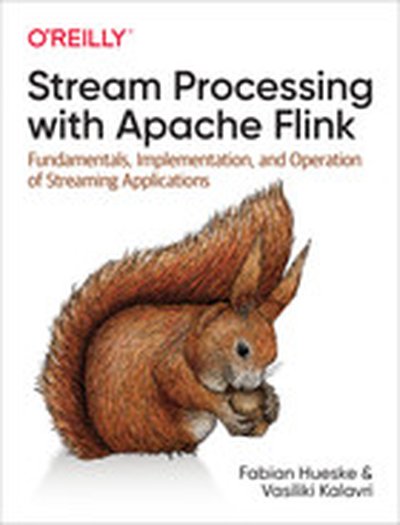
Stream Processing with Apache Flink

Get started with Apache Flink, the open source framework that powers some of the world’s largest stream processing applications. With this practical book, you’ll explore the fundamental concepts of parallel stream processing and discover how this technology differs from traditional batch data processing. Longtime Apache Flink committers Fabian Hueske and Vasia Kalavri show you how to implement scalable streaming applications with Flink’s DataStream API and continuously run and maintain these applications in operational environments. Stream processing is ideal for many use cases, including low-latency ETL, streaming analytics, and real-time dashboards as well as fraud detection, anomaly detection, and alerting. You can process continuous data of any kind, including user interactions, financial transactions, and IoT data, as soon as you generate them. Learn concepts and challenges of distributed stateful stream processing Explore Flink’s system architecture, including its event-time processing mode and fault-tolerance model Understand the fundamentals and building blocks of the DataStream API, including its time-based and statefuloperators Read data from and write data to external systems with exactly-once consistency Deploy and configure Flink clusters Operate continuously running streaming applications

Hands-On Big Data Analytics with PySpark

Dive into the exciting world of big data analytics with 'Hands-On Big Data Analytics with PySpark'. This practical guide offers you the tools and knowledge to tackle massive datasets using PySpark. By exploring real-world examples, you'll learn to unleash the power of distributed systems to analyze and manipulate data at scale. What this Book will help me do Master using PySpark to handle large and complex datasets efficiently and effectively. Develop skills to optimize Spark programs using best practices like reducing shuffle operations. Learn to set up a PySpark environment, process data from platforms like HDFS, Hive, and S3. Enhance your data analytics capabilities by implementing powerful SQL queries and data visualizations. Understand testing and debugging techniques to build reliable, production-quality data pipelines. Author(s) Authored by Rudy Lai and Bartłomiej Potaczek, both seasoned data engineers and authors in the big data field. Rudy and Bartłomiej bring their extensive experience working with distributed systems and scalable data architectures into this book. Their approach is hands-on, focusing on real-world applications and best practices. Who is it for? This book is tailored for data scientists, engineers, and developers eager to advance their big data analytics capabilities. Whether you're new to big data or experienced with other analytics frameworks, this book will equip you with practical knowledge to utilize PySpark for scalable data solutions.

Data Lake Maturity Model

Data is changing everything. Many industries today are being fundamentally transformed through the accumulation and analysis of large quantities of data, stored in diversified but flexible repositories known as data lakes. Whether your company has just begun to think about big data or has already initiated a strategy for handling it, this practical ebook shows you how to plan a successful data lake migration. You’ll learn the value of data lakes, their structure, and the problems they attempt to solve. Using Zaloni’s data lake maturity model, you’ll then explore your organization’s readiness for putting a data lake into action. Do you have the tools and data architectures to support big data analysis? Are your people and processes prepared? The data lake maturity model will help you rate your organization’s readiness. This report includes: The structure and purpose of a data lake Descriptive, predictive, and prescriptive analytics Data lake curation, self-service, and the use of data lake zones How to rate your organization using the data lake maturity model A complete checklist to help you determine your strategic path forward

AI and Big Data on IBM Power Systems Servers

Abstract As big data becomes more ubiquitous, businesses are wondering how they can best leverage it to gain insight into their most important business questions. Using machine learning (ML) and deep learning (DL) in big data environments can identify historical patterns and build artificial intelligence (AI) models that can help businesses to improve customer experience, add services and offerings, identify new revenue streams or lines of business (LOBs), and optimize business or manufacturing operations. The power of AI for predictive analytics is being harnessed across all industries, so it is important that businesses familiarize themselves with all of the tools and techniques that are available for integration with their data lake environments. In this IBM® Redbooks® publication, we cover the best practices for deploying and integrating some of the best AI solutions on the market, including: IBM Watson Machine Learning Accelerator (see note for product naming) IBM Watson Studio Local IBM Power Systems™ IBM Spectrum™ Scale IBM Data Science Experience (IBM DSX) IBM Elastic Storage™ Server Hortonworks Data Platform (HDP) Hortonworks DataFlow (HDF) H2O Driverless AI We map out all the integrations that are possible with our different AI solutions and how they can integrate with your existing or new data lake. We also walk you through some of our client use cases and show you how some of the industry leaders are using Hortonworks, IBM PowerAI, and IBM Watson Studio Local to drive decision making. We also advise you on your deployment options, when to use a GPU, and why you should use the IBM Elastic Storage Server (IBM ESS) to improve storage management. Lastly, we describe how to integrate IBM Watson Machine Learning Accelerator and Hortonworks with or without IBM Watson Studio Local, how to access real-time data, and security. Note: IBM Watson Machine Learning Accelerator is the new product name for IBM PowerAI Enterprise. Note: Hortonworks merged with Cloudera in January 2019. The new company is called Cloudera. References to Hortonworks as a business entity in this publication are now referring to the merged company. Product names beginning with Hortonworks continue to be marketed and sold under their original names.

IBM DS8880 Architecture and Implementation (Release 8.51)

Abstract * Updated for R8.51 * This IBM® Redbooks® publication describes the concepts, architecture, and implementation of the IBM DS8880 family. The book provides reference information to assist readers who need to plan for, install, and configure the DS8880 systems. The IBM DS8000® family is a high-performance, high-capacity, highly secure, and resilient series of disk storage systems. The DS8880 family is the latest and most advanced of the DS8000 offerings to date. The high availability, multiplatform support, including IBM Z, and simplified management tools help provide a cost-effective path to an on-demand and cloud-based infrastructures. The IBM DS8880 family now offers business-critical, all-flash, and hybrid data systems that span a wide range of price points: DS8882F: Rack Mounted storage system DS8884: Business Class DS8886: Enterprise Class DS8888: Analytics Class The DS8884 and DS8886 are available as either hybrid models, or can be configured as all-flash. Each model represents the most recent in this series of high-performance, high-capacity, flexible, and resilient storage systems. These systems are intended to address the needs of the most demanding clients. Two powerful IBM POWER8® processor-based servers manage the cache to streamline disk I/O, maximizing performance and throughput. These capabilities are further enhanced with the availability of the second generation of high-performance flash enclosures (HPFEs Gen-2) and newer flash drives. Like its predecessors, the DS8880 supports advanced disaster recovery (DR) solutions, business continuity solutions, and thin provisioning. All disk drives in the DS8880 storage system include the Full Disk Encryption (FDE) feature. The DS8880 can automatically optimize the use of each storage tier, particularly flash drives, by using the IBM Easy Tier® feature. Release 8.5 introduces the Safeguarded Copy feature. The DS8882F Rack Mounted is decribed in a separate publication, Introducing the IBM DS8882F Rack Mounted Storage System, REDP-5505.

Dynamic SQL: Applications, Performance, and Security in Microsoft SQL Server

Take a deep dive into the many uses of dynamic SQL in Microsoft SQL Server. This edition has been updated to use the newest features in SQL Server 2016 and SQL Server 2017 as well as incorporating the changing landscape of analytics and database administration. Code examples have been updated with new system objects and functions to improve efficiency and maintainability. Executing dynamic SQL is key to large-scale searching based on user-entered criteria. Dynamic SQL can generate lists of values and even code with minimal impact on performance. Dynamic SQL enables dynamic pivoting of data for business intelligence solutions as well as customizing of database objects. Yet dynamic SQL is feared by many due to concerns over SQL injection or code maintainability. Dynamic SQL: Applications, Performance, and Security in Microsoft SQL Server helps you bring the productivity and user-satisfaction of flexible and responsive applications to your organization safely and securely. Your organization’s increased ability to respond to rapidly changing business scenarios will build competitive advantage in an increasingly crowded and competitive global marketplace. With a focus on new applications and modern database architecture, this edition illustrates that dynamic SQL continues to evolve and be a valuable tool for administration, performance optimization, and analytics. What You'ill Learn Build flexible applications that respond to changing business needs Take advantage of creative, innovative, and productive uses of dynamic SQL Know about SQL injection and be confident in your defenses against it Address performance concerns in stored procedures and dynamic SQL Troubleshoot and debug dynamic SQL to ensure correct results Automate your administration of features within SQL Server Who This Book is For Developers and database administrators looking to hone and build their T-SQL coding skills. The book is ideal for developers wanting to plumb the depths of application flexibility and troubleshoot performance issues involving dynamic SQL. The book is also ideal for programmers wanting to learn what dynamic SQL is about and how it can help them deliver competitive advantage to their organizations.

Machine Learning with Apache Spark Quick Start Guide

"Machine Learning with Apache Spark Quick Start Guide" introduces you to the fundamental concepts and tools needed to harness the power of Apache Spark for data processing and machine learning. This book combines practical examples and real-world scenarios to show you how to manage big data efficiently while uncovering actionable insights through advanced analytics. What this Book will help me do Understand the role of Apache Spark in the big data ecosystem. Set up and configure an Apache Spark development environment. Learn and implement supervised and unsupervised learning models using Spark MLlib. Apply advanced analytical algorithms to real-world big data problems. Develop and deploy real-time machine learning pipelines with Apache Spark. Author(s) None Quddus is an experienced practitioner in the fields of big data, distributed technologies, and machine learning. With a career dedicated to using advanced analytics to solve real-world problems, Quddus brings practical expertise to each topic addressed. Their approachable writing style ensures readers can apply concepts effectively, even in complex scenarios. Who is it for? This book is ideal for business analysts, data analysts, and data scientists who are eager to gain hands-on experience with big data technologies. Whether you are new to Apache Spark or looking to expand your knowledge of its machine learning capabilities, this guide provides the tools and insights necessary to achieve those goals. Technical professionals wanting to develop their skills in processing and analyzing big data will find this resource invaluable.

Apache Spark 2: Data Processing and Real-Time Analytics

Build efficient data flow and machine learning programs with this flexible, multi-functional open-source cluster-computing framework Key Features Master the art of real-time big data processing and machine learning Explore a wide range of use-cases to analyze large data Discover ways to optimize your work by using many features of Spark 2.x and Scala Book Description Apache Spark is an in-memory, cluster-based data processing system that provides a wide range of functionalities such as big data processing, analytics, machine learning, and more. With this Learning Path, you can take your knowledge of Apache Spark to the next level by learning how to expand Spark's functionality and building your own data flow and machine learning programs on this platform. You will work with the different modules in Apache Spark, such as interactive querying with Spark SQL, using DataFrames and datasets, implementing streaming analytics with Spark Streaming, and applying machine learning and deep learning techniques on Spark using MLlib and various external tools. By the end of this elaborately designed Learning Path, you will have all the knowledge you need to master Apache Spark, and build your own big data processing and analytics pipeline quickly and without any hassle. This Learning Path includes content from the following Packt products: Mastering Apache Spark 2.x by Romeo Kienzler Scala and Spark for Big Data Analytics by Md. Rezaul Karim, Sridhar Alla Apache Spark 2.x Machine Learning Cookbook by Siamak Amirghodsi, Meenakshi Rajendran, Broderick Hall, Shuen MeiCookbook What you will learn Get to grips with all the features of Apache Spark 2.x Perform highly optimized real-time big data processing Use ML and DL techniques with Spark MLlib and third-party tools Analyze structured and unstructured data using SparkSQL and GraphX Understand tuning, debugging, and monitoring of big data applications Build scalable and fault-tolerant streaming applications Develop scalable recommendation engines Who this book is for If you are an intermediate-level Spark developer looking to master the advanced capabilities and use-cases of Apache Spark 2.x, this Learning Path is ideal for you. Big data professionals who want to learn how to integrate and use the features of Apache Spark and build a strong big data pipeline will also find this Learning Path useful. To grasp the concepts explained in this Learning Path, you must know the fundamentals of Apache Spark and Scala.

Dynamic Oracle Performance Analytics: Using Normalized Metrics to Improve Database Speed

Use an innovative approach that relies on big data and advanced analytical techniques to analyze and improve Oracle Database performance. The approach used in this book represents a step-change paradigm shift away from traditional methods. Instead of relying on a few hand-picked, favorite metrics, or wading through multiple specialized tables of information such as those found in an automatic workload repository (AWR) report, you will draw on all available data, applying big data methods and analytical techniques to help the performance tuner draw impactful, focused performance improvement conclusions. This book briefly reviews past and present practices, along with available tools, to help you recognize areas where improvements can be made. The book then guides you through a step-by-step method that can be used to take advantage of all available metrics to identify problem areas and work toward improving them. The method presented simplifies the tuning process and solves the problem of metric overload. You will learn how to: collect and normalize data, generate deltas that are useful in performing statistical analysis, create and use a taxonomy to enhance your understanding of problem performance areas in your database and its applications, and create a root cause analysis report that enables understanding of a specific performance problem and its likely solutions. What You'll Learn Collect and prepare metrics for analysis from a wide array of sources Apply statistical techniques to select relevant metrics Create a taxonomy to provide additional insight into problem areas Provide a metrics-based root cause analysis regarding the performance issue Generate an actionable tuning plan prioritized according to problem areas Monitor performance using database-specific normal ranges ​ Who This Book Is For Professional tuners: responsible for maintaining the efficient operation of large-scale databases who wish to focus on analysis, who want to expand their repertoire to include a big data methodology and use metrics without being overwhelmed, who desire to provide accurate root cause analysis and avoid the cyclical fix-test cycles that are inevitable when speculation is used

Hands-On Data Science with SQL Server 2017

In "Hands-On Data Science with SQL Server 2017," you will discover how to implement end-to-end data analysis workflows, leveraging SQL Server's robust capabilities. This book guides you through collecting, cleaning, and transforming data, querying for insights, creating compelling visualizations, and even constructing predictive models for sophisticated analytics. What this Book will help me do Grasp the essential data science processes and how SQL Server supports them. Conduct data analysis and create interactive visualizations using Power BI. Build, train, and assess predictive models using SQL Server tools. Integrate SQL Server with R, Python, and Azure for enhanced functionality. Apply best practices for managing and transforming big data with SQL Server. Author(s) Marek Chmel and Vladimír Mužný bring their extensive experience in data science and database management to this book. Marek is a seasoned database specialist with a strong background in SQL, while Vladimír is known for his instructional expertise in analytics and data manipulation. Together, they focus on providing actionable insights and practical examples tailored for data professionals. Who is it for? This book is an ideal resource for aspiring and seasoned data scientists, data analysts, and database professionals aiming to deepen their expertise in SQL Server for data science workflows. Beginners with fundamental SQL knowledge will find it a guided entry into data science applications. It is especially suited for those who aim to implement data-driven solutions in their roles while leveraging SQL's capabilities.

Apache Hadoop 3 Quick Start Guide

Dive into the world of distributed data processing with the 'Apache Hadoop 3 Quick Start Guide.' This comprehensive resource equips you with the knowledge needed to handle large datasets effectively using Apache Hadoop. Learn how to set up and configure Hadoop, work with its core components, and explore its powerful ecosystem tools. What this Book will help me do Understand the fundamental concepts of Apache Hadoop, including HDFS, MapReduce, and YARN, and use them to store and process large datasets. Set up and configure Hadoop 3 in both developer and production environments to suit various deployment needs. Gain hands-on experience with Hadoop ecosystem tools like Hive, Kafka, and Spark to enhance your big data processing capabilities. Learn to manage, monitor, and troubleshoot Hadoop clusters efficiently to ensure smooth operations. Analyze real-time streaming data with tools like Apache Storm and perform advanced data analytics using Apache Spark. Author(s) The author of this guide, Vijay Karambelkar, brings years of experience working with big data technologies and Apache Hadoop in real-world applications. With a passion for teaching and simplifying complex topics, Vijay has compiled his expertise to help learners confidently approach Hadoop 3. His detailed, example-driven approach makes this book a practical resource for aspiring data professionals. Who is it for? This book is ideal for software developers, data engineers, and IT professionals who aspire to dive into the field of big data. If you're new to Apache Hadoop or looking to upgrade your skills to include version 3, this guide is for you. A basic understanding of Java programming is recommended to make the most of the topics covered. Embark on this journey to enhance your career in data-intensive industries.

Mastering Apache Cassandra 3.x - Third Edition

This expert guide, "Mastering Apache Cassandra 3.x," is designed for individuals looking to achieve scalable and fault-tolerant database deployment using Apache Cassandra. From mastering the foundational components of Cassandra architecture to advanced topics like clustering and analytics integration with Apache Spark, this book equips readers with practical, actionable skills. What this Book will help me do Understand and deploy Apache Cassandra clusters for fault-tolerant and scalable databases. Use advanced features of CQL3 to streamline database queries and operations. Optimize and configure Cassandra nodes to improve performance for demanding applications. Monitor and manage Cassandra clusters effectively using best practices. Combine Cassandra with Apache Spark to build robust data analytics pipelines. Author(s) None Ploetz and None Malepati are experienced technologists and software professionals with extensive expertise in distributed database systems and big data algorithms. They've combined their industry knowledge and teaching backgrounds to create accessible and practical guides for learners worldwide. Their collaborative work is focused on demystifying complex systems for maximum learning impact. Who is it for? This book is ideal for database administrators, software developers, and big data specialists seeking to expand their skill set into scalable data storage using Cassandra. Readers should have a basic understanding of database concepts and some programming experience. If you're looking to design robust databases optimized for modern big data use-cases, this book will serve as a valuable resource.

IBM z14 Model ZR1 Technical Introduction

Abstract This IBM® Redbooks® publication introduces the latest member of the IBM Z platform, the IBM z14 Model ZR1 (Machine Type 3907). It includes information about the Z environment and how it helps integrate data and transactions more securely, and provides insight for faster and more accurate business decisions. The z14 ZR1 is a state-of-the-art data and transaction system that delivers advanced capabilities, which are vital to any digital transformation. The z14 ZR1 is designed for enhanced modularity, which is in an industry standard footprint. This system excels at the following tasks: Securing data with pervasive encryption Transforming a transactional platform into a data powerhouse Getting more out of the platform with IT Operational Analytics Providing resilience towards zero downtime Accelerating digital transformation with agile service delivery Revolutionizing business processes Mixing open source and Z technologies This book explains how this system uses new innovations and traditional Z strengths to satisfy growing demand for cloud, analytics, and open source technologies. With the z14 ZR1 as the base, applications can run in a trusted, reliable, and secure environment that improves operations and lessens business risk.