talk-data.com talk-data.com

Topic

Analytics

data_analysis insights metrics

4552

tagged

Activity Trend

398 peak/qtr
2020-Q1 2026-Q1

Activities

4552 activities · Newest first

Risk Scoring for a Loan Application on IBM System z: Running IBM SPSS Real-Time Analytics

When ricocheting a solution that involves analytics, the mainframe might not be the first platform that comes to mind. However, the IBM® System z® group has developed some innovative solutions that include the well-respected mainframe benefits. This book describes a workshop that demonstrates the use of real-time advanced analytics for enhancing core banking decisions using a loan origination example. The workshop is a live hands-on experience of the entire process from analytics modeling to deployment of real-time scoring services for use on IBM z/OS®. In this IBM Redbooks® publication, we include a facilitator guide chapter as well as a participant guide chapter. The facilitator guide includes information about the preparation, such as the needed material, resources, and steps to set up and run this workshop. The participant guide shows step-by-step the tasks for a successful learning experience. The goal of the first hands-on exercise is to learn how to use IBM SPSS® Modeler for Analytics modeling. This provides the basis for the next exercise "Configuring risk assessment in SPSS Decision Management". In the third exercise, the participant experiences how real-time scoring can be implemented on a System z. This publication is written for consultants, IT architects, and IT administrators who want to become familiar with SPSS and analytics solutions on the System z.

Hybrid Analytics Solution using IBM DB2 Analytics Accelerator for z/OS V3.1

The IBM® DB2® Analytics Accelerator Version 3.1 for IBM z/OS® (simply called Accelerator in this book) is a union of the IBM System z® quality of service and IBM Netezza® technology to accelerate complex queries in a DB2 for z/OS highly secure and available environment. Superior performance and scalability with rapid appliance deployment provide an ideal solution for complex analysis. In this IBM Redbooks® publication, we provide technical decision-makers with a broad understanding of the benefits of Version 3.1 of the Accelerator's major new functions. We describe their installation and the advantages to existing analytical processes as measured in our test environment. We also describe the IBM zEnterprise® Analytics System 9700, a hybrid System z solution offering that is surrounded by a complete set of optional packs to enable customers to custom tailor the system to their unique needs..

Killer Analytics: Top 20 Metrics Missing from your Balance Sheet

Learn the secrets to using analytics to grow your business Analytics continues to trend as one of the hottest topics in the business community today. With ever-growing amounts of business data and evolving performance management/business intelligence architectures, how well your business does analyzing its data will differentiate you from your competition. Killer Analytics explores how you can use the muscle of analytics to measure new business elements. Author Mark Brown introduces 20 new metrics that can drive competitive advantage for your business, including social networks, sustainability, culture, innovation, employee satisfaction, and other key business elements. Shows organizations how to use analytics to measure key elements of business performance not traditionally measured Introduces 20 new metrics that drive competitive advantage Reveals how to measure social networking, sustainability, innovation, culture, and more Aside from the science and process of analytics, businesses need to think outside the box in terms of what they are measuring and how new analytical tools can be used to measure business elements such as innovation or sustainability. Opening the doors to a powerful new way of measuring your business, Killer Analytics saves you a small fortune on consultants with dynamic, forward-thinking advice for making the most of every component of your business.

Mondrian in Action

Mondrian in Action teaches business users and developers how to use Mondrian and related tools for strategic business analysis. You'll learn how to design and populate a data warehouse and present the data via a multidimensional model. You'll follow examples showing how to create a Mondrian schema and then expand it to add basic security based on the users' roles. About the Technology Mondrian is an open source, lightning-fast data analysis engine designed to help you explore your business data and perform speed-of-thought analysis. Mondrian can be integrated into a wide variety of business analysis applications and learning it requires no specialized technical knowledge. About the Book Mondrian in Action teaches you to use Mondrian for strategic business analysis. In it, you'll learn how to organize and present data in a multidimensional manner. You'll follow apt and thoroughly explained examples showing how to create a Mondrian schema and then expand it to add basic security based on users' roles. Developers will discover how to integrate Mondrian using its olap4j Java API and web service calls via XML for Analysis. What's Inside Mondrian from the ground up -- no experience required A primer on business analytics Using Mondrian with a variety of leading applications Optimizing and restricting business data for fast, secure analysis About the Reader Written for developers building data analysis solutions. Appropriate for tech-savvy business users and DBAs needing to query and report on data. About the Authors William D. Back is an Enterprise Architect and Director of Pentaho Services. Nicholas Goodman is a Business Intelligence pro who has authored training courses on OLAP and Mondrian. Julian Hyde founded Mondrian and is the project's lead developer. Quotes A wonderful introduction to Business Intelligence and Analytics. - Lorenzo De Leon, Authentify, Inc. A great overview of the Mondrian engine that guided me through all the technical details. - Alexander Helf, veenion GmbH A significant complement to the online documentation, and an excellent introduction to how to think about designing a data warehouse. - Mark Newman, Heads Up Analytics Comprehensive ... highly recommended. - Najib Coutya, IMD Group

Modeling Techniques in Predictive Analytics: Business Problems and Solutions with R

Today, successful firms compete and win based on analytics. Modeling Techniques in brings together all the concepts, techniques, and R code you need to excel in any role involving analytics. Thomas W. Miller’s unique balanced approach combines business context Predictive Analytics and quantitative tools, appealing to managers, analysts, programmers, and students alike. Miller addresses multiple business challenges and business cases, including segmentation, brand positioning, product choice modeling, pricing research, finance, sports, text analytics, sentiment analysis, and social network analysis. He illuminates the use of cross-sectional data, time series, spatial, and even spatio-temporal data. For each problem, Miller explains why the problem matters, what data is relevant, how to explore your data once you’ve identified it, and then how to successfully model that data. You’ll learn how to model data conceptually, with words and figures; and then how to model it with realistic R programs that deliver actionable insights and knowledge. Miller walks you through model construction, explanatory variable subset selection, and validation, demonstrating best practices for improving out-of-sample predictive performance. He employs data visualization and statistical graphics in exploring data, presenting models, and evaluating performance. All example code is presented in R, today’s #1 system for applied statistics, statistical research, and predictive modeling; code is set apart from other text so it’s easy to find for those who want it (and easy to skip for those who don’t).

Big Data Analytics

Big Data Analytics will assist managers in providing an overview of the drivers for introducing big data technology into the organization and for understanding the types of business problems best suited to big data analytics solutions, understanding the value drivers and benefits, strategic planning, developing a pilot, and eventually planning to integrate back into production within the enterprise. Guides the reader in assessing the opportunities and value proposition Overview of big data hardware and software architectures Presents a variety of technologies and how they fit into the big data ecosystem

Adobe® Analytics Quick-Reference Guide: Market Reports and Analytics (formerly SiteCatalyst)

Companies face the challenge of measuring and analyzing the near-overwhelming quantities of data generated from their online businesses and then using that data to gain critical insights into their customersvto drive sales. Adobe Analytics (formerly SiteCatalyst) provides product and content managers, marketers, and analysts with real-time intelligence on customers’online behavior, helps businesses anticipate what their customers will want, personalizes their onlinev experience, and delivers relevant content across web and mobile channels. This quick lookup guide by Adobe Analytics expert Shane Closser uses clear, concise explanations and an easy-to-use format to jump in and start using Adobe’s powerful web analytics tool. You’ll learn the quickest way to: Create metrics Run and set options for reports Measure the effectiveness of marketing campaigns Engage and retain customers Track customers through the conversion funnel Share reports and set up dashboards

Segmentation and Lifetime Value Models Using SAS

Help your organization determine the value of its customer relationships with Segmentation and Lifetime Value Models Using SAS. This book contains a wealth of information that will help you perform analyses to identify your customers and make informed marketing investments. It answers core questions on customer relationship management (CRM), provides an overall framework for thinking about CRM, and offers real-world examples across a variety of industries.

Edward C. Malthouse introduces you to a number of useful models, ranging from simple to more complicated examples, and discusses their applications. You'll learn about segmentation models for identifying groups of customers and about lifetime value models for estimating the future value of the segments. You'll learn how to prepare data and estimate models using Base SAS, SAS/STAT, SAS/IML, and SQL.

Marketing analysts, CRM analysts, database managers, and anyone looking to address the challenges of allocating marketing resources to different customer groups will benefit from the concepts and exercises in this book. Analysts will learn how to approach unique business problems. Managers will gain a sense of what's possible and what to ask of their analytics departments.

This book is part of the SAS Press program.

Numbersense: How to Use Big Data to Your Advantage

How to make simple sense of complex statistics--from the author of Numbers Rule Your World We live in a world of Big Data--and it's getting bigger every day. Virtually every choice we make hinges on how someone generates data . . . and how someone else interprets it--whether we realize it or not. Where do you send your child for the best education? Big Data. Which airline should you choose to ensure a timely arrival? Big Data. Who will you vote for in the next election? Big Data. The problem is, the more data we have, the more difficult it is to interpret it. From world leaders to average citizens, everyone is prone to making critical decisions based on poor data interpretations. In Numbersense, expert statistician Kaiser Fung explains when you should accept the conclusions of the Big Data "experts"--and when you should say, "Wait . . . what?" He delves deeply into a wide range of topics, offering the answers to important questions, such as: How does the college ranking system really work? Can an obesity measure solve America's biggest healthcare crisis? Should you trust current unemployment data issued by the government? How do you improve your fantasy sports team? Should you worry about businesses that track your data? Don't take for granted statements made in the media, by our leaders, or even by your best friend. We're on information overload today, and there's a lot of bad information out there. Numbersense gives you the insight into how Big Data interpretation works--and how it too often doesn't work. You won't come away with the skills of a professional statistician. But you will have a keen understanding of the data traps even the best statisticians can fall into, and you'll trust the mental alarm that goes off in your head when something just doesn't seem to add up. Praise for Numbersense " Numbersense correctly puts the emphasis not on the size of big data, but on the analysis of it. Lots of fun stories, plenty of lessons learned—in short, a great way to acquire your own sense of numbers!" Thomas H. Davenport, coauthor of Competing on Analytics and President’s Distinguished Professor of IT and Management, Babson College "Kaiser’s accessible business book will blow your mind like no other. You’ll be smarter, and you won’t even realize it. Buy. It. Now." Avinash Kaushik, Digital Marketing Evangelist, Google, and author, Web Analytics 2.0 "Each story in Numbersense goes deep into what you have to think about before you trust the numbers. Kaiser Fung ably demonstrates that it takes skill and resourcefulness to make the numbers confess their meaning." John Sall, Executive Vice President, SAS Institute "Kaiser Fung breaks the bad news—a ton more data is no panacea—but then has got your back, revealing the pitfalls of analysis with stimulating stories from the front lines of business, politics, health care, government, and education. The remedy isn’t an advanced degree, nor is it common sense. You need Numbersense." Eric Siegel, founder, Predictive Analytics World, and author, Predictive Analytics "I laughed my way through this superb-useful-fun book and learned and relearned a lot. Highly recommended!" Tom Peters, author of In Search of Excellence

Decision Trees for Analytics Using SAS Enterprise Miner

Decision Trees for Analytics Using SAS Enterprise Miner is the most comprehensive treatment of decision tree theory, use, and applications available in one easy-to-access place. This book illustrates the application and operation of decision trees in business intelligence, data mining, business analytics, prediction, and knowledge discovery. It explains in detail the use of decision trees as a data mining technique and how this technique complements and supplements data mining approaches such as regression, as well as other business intelligence applications that incorporate tabular reports, OLAP, or multidimensional cubes.

An expanded and enhanced release of Decision Trees for Business Intelligence and Data Mining Using SAS Enterprise Miner, this book adds up-to-date treatments of boosting and high-performance forest approaches and rule induction. There is a dedicated section on the most recent findings related to bias reduction in variable selection. It provides an exhaustive treatment of the end-to-end process of decision tree construction and the respective considerations and algorithms, and it includes discussions of key issues in decision tree practice.

Analysts who have an introductory understanding of data mining and who are looking for a more advanced, in-depth look at the theory and methods of a decision tree approach to business intelligence and data mining will benefit from this book.

This book is part of the SAS Press program.

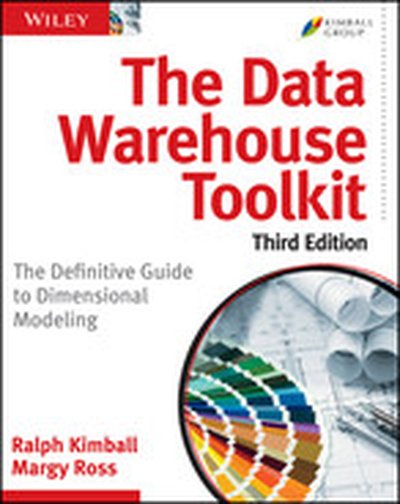
The Data Warehouse Toolkit: The Definitive Guide to Dimensional Modeling, 3rd Edition

Updated new edition of Ralph Kimball's groundbreaking book on dimensional modeling for data warehousing and business intelligence! The first edition of Ralph Kimball's The Data Warehouse Toolkit introduced the industry to dimensional modeling, and now his books are considered the most authoritative guides in this space. This new third edition is a complete library of updated dimensional modeling techniques, the most comprehensive collection ever. It covers new and enhanced star schema dimensional modeling patterns, adds two new chapters on ETL techniques, includes new and expanded business matrices for 12 case studies, and more. Authored by Ralph Kimball and Margy Ross, known worldwide as educators, consultants, and influential thought leaders in data warehousing and business intelligence Begins with fundamental design recommendations and progresses through increasingly complex scenarios Presents unique modeling techniques for business applications such as inventory management, procurement, invoicing, accounting, customer relationship management, big data analytics, and more Draws real-world case studies from a variety of industries, including retail sales, financial services, telecommunications, education, health care, insurance, e-commerce, and more Design dimensional databases that are easy to understand and provide fast query response with The Data Warehouse Toolkit: The Definitive Guide to Dimensional Modeling, 3rd Edition.

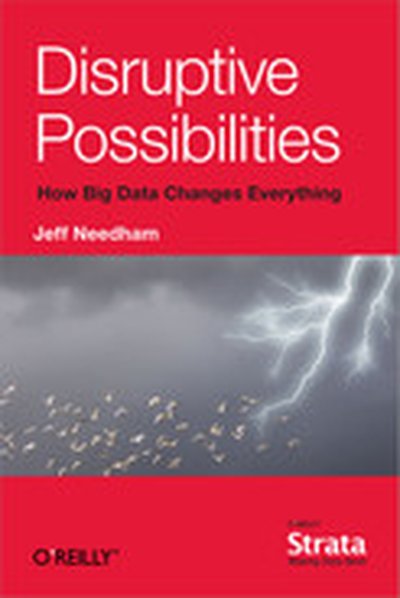
Disruptive Possibilities: How Big Data Changes Everything

Big data has more disruptive potential than any information technology developed in the past 40 years. As author Jeffrey Needham points out in this revealing book, big data can provide unprecedented visibility into the operational efficiency of enterprises and agencies. Disruptive Possibilities provides an historically-informed overview through a wide range of topics, from the evolution of commodity supercomputing and the simplicity of big data technology, to the ways conventional clouds differ from Hadoop analytics clouds. This relentlessly innovative form of computing will soon become standard practice for organizations of any size attempting to derive insight from the tsunami of data engulfing them. Replacing legacy silos—whether they’re infrastructure, organizational, or vendor silos—with a platform-centric perspective is just one of the big stories of big data. To reap maximum value from the myriad forms of data, organizations and vendors will have to adopt highly collaborative habits and methodologies.

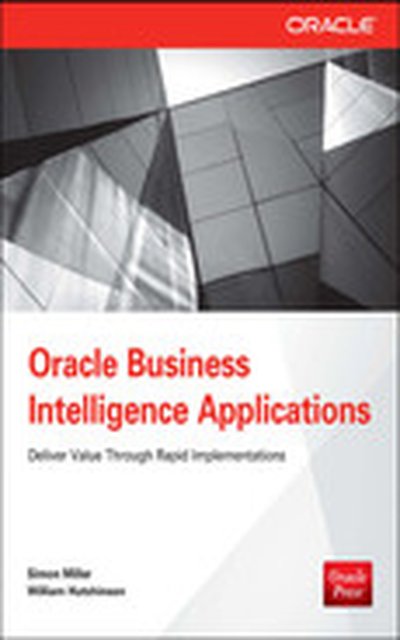
Oracle Business Intelligence Applications

Implement Oracle Business Intelligence Applications Provide actionable business intelligence across the enterprise to enable informed decision-making and streamlined business processes. Oracle Business Intelligence Applications: Deliver Value Through Rapid Implementations shows how to justify, configure, customize, and extend this complete package of BI solutions. You'll get a technical walkthrough of Oracle Business Intelligence Applications architecture--from the dashboard to the data source--followed by best practices for maximizing the powerful features of each application. You will also find out about stakeholders critical to project approval and success. Optimize performance using Oracle Exalytics In-Memory Machine Deliver timely financial information to managers with Oracle Financial Analytics Enable a streamlined, demand-driven supply chain via Oracle Supply Chain and Order Management Analytics Provide end-to-end visibility into manufacturing operations with Oracle Manufacturing Analytics Optimize supply-side performance through Oracle Procurement and Spend Analytics Use Oracle Human Resources Analytics to provide key workforce information to managers and HR professionals Track the costs and labor required to maintain and operate assets with Oracle Enterprise Asset Management Analytics Maintain visibility into project performance via Oracle Project Analytics Provide actionable insight into sales opportunities using Oracle Sales Analytics Enable superior customer service with Oracle Service Analytics

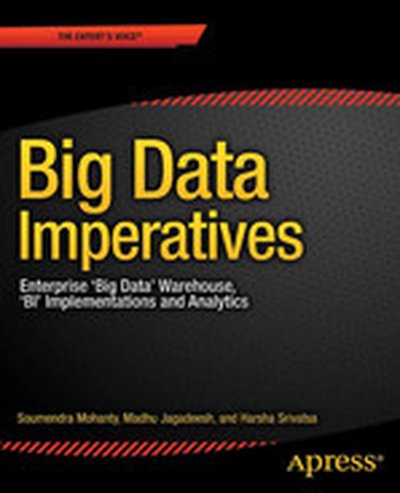
Big Data Imperatives: Enterprise 'Big Data' Warehouse, 'BI' Implementations and Analytics

Big Data Imperatives, focuses on resolving the key questions on everyone's mind: Which data matters? Do you have enough data volume to justify the usage? How you want to process this amount of data? How long do you really need to keep it active for your analysis, marketing, and BI applications? Big data is emerging from the realm of one-off projects to mainstream business adoption; however, the real value of big data is not in the overwhelming size of it, but more in its effective use. This book addresses the following big data characteristics: Very large, distributed aggregations of loosely structured data - often incomplete and inaccessible Petabytes/Exabytes of data Millions/billions of people providing/contributing to the context behind the data Flat schema's with few complex interrelationships Involves time-stamped events Made up of incomplete data Includes connections between data elements that must be probabilistically inferred Big Data Imperatives explains 'what big data can do'. It can batch process millions and billions of records both unstructured and structured much faster and cheaper. Big data analytics provide a platform to merge all analysis which enables data analysis to be more accurate, well-rounded, reliable and focused on a specific business capability. Big Data Imperatives describes the complementary nature of traditional data warehouses and big-data analytics platforms and how they feed each other. This book aims to bring the big data and analytics realms together with a greater focus on architectures that leverage the scale and power of big data and the ability to integrate and apply analytics principles to data which earlier was not accessible. This book can also be used as a handbook for practitioners; helping them on methodology,technical architecture, analytics techniques and best practices. At the same time, this book intends to hold the interest of those new to big data and analytics by giving them a deep insight into the realm of big data. What you'll learn Understanding the technology, implementation of big data platforms and their usage for analytics Big data architectures Big data design patterns Implementation best practices Who this book is for This book is designed for IT professionals, data warehousing, business intelligence professionals, data analysis professionals, architects, developers and business users.

Applying Analytics

Newcomers to quantitative analysis need practical guidance on how to analyze data in the real world yet most introductory books focus on lengthy derivations and justifications instead of practical techniques. Covering the technical and professional skills needed by analysts in the academic, private, and public sectors, Applying Analytics: A Practical Introduction systematically teaches novices how to apply algorithms to real data and how to recognize potential pitfalls. It offers one of the first textbooks for the emerging first course in analytics. The text concentrates on the interpretation, strengths, and weaknesses of analytical techniques, along with challenges encountered by analysts in their daily work. The author shares various lessons learned from applying analytics in the real world. He supplements the technical material with coverage of professional skills traditionally learned through experience, such as project management, analytic communication, and using analysis to inform decisions. Example data sets used in the text are available for download online so that readers can test their own analytic routines. Suitable for beginning analysts in the sciences, business, engineering, and government, this book provides an accessible, example-driven introduction to the emerging field of analytics. It shows how to interpret data and identify trends across a range of fields.

Practical Web Analytics for User Experience

Practical Web Analytics for User Experience teaches you how to use web analytics to help answer the complicated questions facing UX professionals. Within this book, you'll find a quantitative approach for measuring a website's effectiveness and the methods for posing and answering specific questions about how users navigate a website. The book is organized according to the concerns UX practitioners face. Chapters are devoted to traffic, clickpath, and content use analysis, measuring the effectiveness of design changes, including A/B testing, building user profiles based on search habits, supporting usability test findings with reporting, and more. This is the must-have resource you need to start capitalizing on web analytics and analyze websites effectively. Discover concrete information on how web analytics data support user research and user-centered design Learn how to frame questions in a way that lets you navigate through massive amounts of data to get the answer you need Learn how to gather information for personas, verify behavior found in usability testing, support heuristic evaluation with data, analyze keyword data, and understand how to communicate these findings with business stakeholders

A Framework for Applying Analytics in Healthcare: What Can Be Learned from the Best Practices in Retail, Banking, Politics, and Sports

In A Framework for Applying Analytics in Healthcare, Dwight McNeill shows healthcare analysts and decision-makers exactly how to adapt and apply the best analytics techniques from retail, finance, politics, and sports. McNeill describes each method in depth, presenting numerous case studies that show how these approaches have been deployed and the results that have been achieved. Most important, he explains how these methods can be successfully adapted to the most critical challenges you now face in your healthcare organization. From predictive modeling to social media, this book focuses on innovative techniques with demonstrated effectiveness and direct relevance to healthcare. You’ll discover powerful new ways to manage population health; improve patient activation, support, and experience of care; focus on health outcomes; measure what matters for team performance; make information more actionable; and build more customer-centric organizations.

Analyzing the Analyzers

Despite the excitement around "data science," "big data," and "analytics," the ambiguity of these terms has led to poor communication between data scientists and organizations seeking their help. In this report, authors Harlan Harris, Sean Murphy, and Marck Vaisman examine their survey of several hundred data science practitioners in mid-2012, when they asked respondents how they viewed their skills, careers, and experiences with prospective employers. The results are striking. Based on the survey data, the authors found that data scientists today can be clustered into four subgroups, each with a different mix of skillsets. Their purpose is to identify a new, more precise vocabulary for data science roles, teams, and career paths. This report describes: Four data scientist clusters: Data Businesspeople, Data Creatives, Data Developers, and Data Researchers Cases in miscommunication between data scientists and organizations looking to hire Why "T-shaped" data scientists have an advantage in breadth and depth of skills How organizations can apply the survey results to identify, train, integrate, team up, and promote data scientists

Real-Time Big Data Analytics: Emerging Architecture

Five or six years ago, analysts working with big datasets made queries and got the results back overnight. The data world was revolutionized a few years ago when Hadoop and other tools made it possible to getthe results from queries in minutes. But the revolution continues. Analysts now demand sub-second, near real-time query results. Fortunately, we have the tools to deliver them. This report examines tools and technologies that are driving real-time big data analytics.

Using R to Unlock the Value of Big Data: Big Data Analytics with Oracle R Enterprise and Oracle R Connector for Hadoop

The Oracle Press Guide to Big Data Analytics using R Cowritten by members of the Big Data team at Oracle, this Oracle Press book focuses on analyzing data with R while making it scalable using Oracle’s R technologies. Using R to Unlock the Value of Big Data provides an introduction to open source R and describes issues with traditional R and database interaction. The book then offers in-depth coverage of Oracle’s strategic R offerings: Oracle R Enterprise, Oracle R Distribution, ROracle, and Oracle R Connector for Hadoop. You can practice your new skills using the end-of-chapter exercises.