talk-data.com talk-data.com

Topic

API

Application Programming Interface (API)

integration software_development data_exchange

52

tagged

Activity Trend

65 peak/qtr
2020-Q1 2026-Q1

Activities

Showing filtered results

Filtering by: O'Reilly Data Science Books ×
MATLAB Recipes: A Problem-Solution Approach

Learn from state-of-the-art examples in robotics, motors, detection filters, chemical processes, aircraft, and spacecraft. With this book you will review contemporary MATLAB coding including the latest MATLAB language features and use MATLAB as a software development environment including code organization, GUI development, and algorithm design and testing. Features now covered include the new graph and digraph classes for charts and networks; interactive documents that combine text, code, and output; a new development environment for building apps; locally defined functions in scripts; automatic expansion of dimensions; tall arrays for big data; the new string type; new functions to encode/decode JSON; handling non-English languages; the new class architecture; the Mocking framework; an engine API for Java; the cloud-based MATLAB desktop; the memoize function; and heatmap charts. MATLAB Recipes: A Problem-Solution Approach, Second Edition provides practical, hands-on code snippets and guidance for using MATLAB to build a body of code you can turn to time and again for solving technical problems in your work. Develop algorithms, test them, visualize the results, and pass the code along to others to create a functional code base for your firm. What You Will Learn Get up to date with the latest MATLAB up to and including MATLAB 2020b Code in MATLAB Write applications in MATLAB Build your own toolbox of MATLAB code to increase your efficiency and effectiveness Who This Book Is For Engineers, data scientists, and students wanting a book rich in examples using MATLAB.
Hands On With Google Data Studio

Learn how to easily transform your data into engaging, interactive visual reports! Data is no longer the sole domain of tech professionals and scientists. Whether in our personal, business, or community lives, data is rapidly increasing in both importance and sheer volume. The ability to visualize all kinds of data is now within reach for anyone with a computer and an internet connection. Google Data Studio, quickly becoming the most popular free tool in data visualization, offers users a flexible, powerful way to transform private and public data into interactive knowledge that can be easily shared and understood. Hands On With Google Data Studio teaches you how to visualize your data today and produce professional quality results quickly and easily. No previous experience is required to get started right away—all you need is this guide, a Gmail account, and a little curiosity to access and visualize data just like large businesses and organizations. Clear, step-by-step instructions help you identify business trends, turn budget data into a report, assess how your websites or business listings are performing, analyze public data, and much more. Practical examples and expert tips are found throughout the text to help you fully understand and apply your new knowledge to a wide array of real-world scenarios. This engaging, reader-friendly guide will enable you to: Use Google Data Studio to access various types of data, from your own personal data to public sources Build your first data set, navigate the Data Studio interface, customize reports, and share your work Learn the fundamentals of data visualization, personal data accessibility, and open data API's Harness the power of publicly accessible data services including Google’s recently released Data Set Search Add banners, logos, custom graphics, and color palettes Hands On With Google Data Studio: A Data Citizens Survival Guide is a must-have resource for anyone starting their data visualization journey, from individuals, consultants, and small business owners to large business and organization managers and leaders.

Mining Social Media

Did fake Twitter accounts help sway a presidential election? What can Facebook and Reddit archives tell us about human behavior? In Mining Social Media, senior BuzzFeed reporter Lam Thuy Vo shows you how to use Python and key data analysis tools to find the stories buried in social media. Whether you’re a professional journalist, an academic researcher, or a citizen investigator, you’ll learn how to use technical tools to collect and analyze data from social media sources to build compelling, data-driven stories. Learn how to: •Write Python scripts and use APIs to gather data from the social web •Download data archives and dig through them for insights •Inspect HTML downloaded from websites for useful content •Format, aggregate, sort, and filter your collected data using Google Sheets •Create data visualizations to illustrate your discoveries •Perform advanced data analysis using Python, Jupyter Notebooks, and the pandas library •Apply what you’ve learned to research topics on your own Social media is filled with thousands of hidden stories just waiting to be told. Learn to use the data-sleuthing tools that professionals use to write your own data-driven stories.

Pro D3.js: Use D3.js to Create Maintainable, Modular, and Testable Charts

Go beyond the basics of D3.js to create maintainable, modular, and testable charts and to package them into a library that can be distributed as open source software or kept for private use. This book will show you how to transform regular D3.js chart code into reusable and extendable modules.You know the basics of working with D3.js, but it's time to become a professional D3.js practitioner. This book is your launching pad to refactoring code, composing complex visualizations from small components, working as a team with other developers, and integrating charts with a Continuous Integration system. You'll begin by creating a production-ready chart using D3.js v5, ES2015, and a test-driven approach and then move on to using and extending Britecharts, the reusable charting library based on Reusable API patterns. Finally, you'll see how to use D3.js along with React to document and build your charts to compose a charting library you can release into the NPM repository. With Pro D3.js, you'll become an accomplished D3.js developer in no time. What You Will Learn Create v5 D3.js charts with ES2016 and unit tests Develop modular, testable and extensible code with the Reusable API pattern Work with and extend Britecharts, a reusable charting library created at Eventbrite Use Webpack and npm to create and publish a charting library from your own chart collections Write reference documentation and build a documentation homepage for your library. Who This Book Is For Data scientists, data visualization engineers, and frontend developers with a fundamental knowledge of D3.js and some experience with JavaScript, as well as data journalists and consultants.

R Data Science Quick Reference: A Pocket Guide to APIs, Libraries, and Packages

In this handy, practical book you will cover each concept concisely, with many illustrative examples. You'll be introduced to several R data science packages, with examples of how to use each of them. In this book, you’ll learn about the following APIs and packages that deal specifically with data science applications: readr, dibble, forecasts, lubridate, stringr, tidyr, magnittr, dplyr, purrr, ggplot2, modelr, and more. After using this handy quick reference guide, you'll have the code, APIs, and insights to write data science-based applications in the R programming language. You'll also be able to carry out data analysis. What You Will Learn Import data with readr Work with categories using forcats, time and dates with lubridate, and strings with stringr Format data using tidyr and then transform that data using magrittr and dplyrWrite functions with R for data science, data mining, and analytics-based applications Visualize data with ggplot2 and fit data to models using modelr Who This Book Is For Programmers new to R's data science, data mining, and analytics packages. Some prior coding experience with R in general is recommended.

Hands-On Web Scraping with Python

This book, "Hands-On Web Scraping with Python", is your comprehensive guide to mastering web scraping techniques and tools. Harnessing the power of Python libraries like Scrapy, Beautiful Soup, and Selenium, you'll learn how to extract and analyze data from websites effectively and efficiently. What this Book will help me do Master the foundational concepts of web scraping using Python. Efficiently use libraries such as Scrapy, Beautiful Soup, and Selenium for data extraction. Handle advanced scenarios such as forms, logins, and dynamic content in scraping. Leverage XPath, CSS selectors, and Regex for precise data targeting and processing. Improve scraping reliability and manage challenges like cookies, API use, and web security. Author(s) None Chapagain is an accomplished Python programmer and an expert in web scraping methodologies. With years of experience in applying Python to solve practical data challenges, they bring a clear and insightful approach to teaching these skills. Readers appreciate their practical examples and ready-to-use guidance for real-world applications. Who is it for? This book is designed for Python developers and data enthusiasts eager to master web scraping. Whether you're a beginner looking to dep dive into new techniques or an analyst needing reliable data extraction methods, this book offers clear guidance. A basic understanding of Python is recommended to fully benefit from this text.

R Quick Syntax Reference: A Pocket Guide to the Language, APIs and Library

This handy reference book detailing the intricacies of R updates the popular first edition by adding R version 3.4 and 3.5 features. Starting with the basic structure of R, the book takes you on a journey through the terminology used in R and the syntax required to make R work. You will find looking up the correct form for an expression quick and easy. Some of the new material includes information on RStudio, S4 syntax, working with character strings, and an example using the Twitter API. With a copy of the R Quick Syntax Reference in hand, you will find that you are able to use the multitude of functions available in R and are even able to write your own functions to explore and analyze data. What You Will Learn Discover the modes and classes of R objects and how to use them Use both packaged and user-created functions in R Import/export data and create new data objects in R Create descriptive functions and manipulate objects in R Take advantage of flow control and conditional statements Work with packages such as base, stats, and graphics Who This Book Is For Those with programming experience, either new to R, or those with at least some exposure to R but who are new to the latest version.

Programming Skills for Data Science: Start Writing Code to Wrangle, Analyze, and Visualize Data with R, First Edition

The Foundational Hands-On Skills You Need to Dive into Data Science “Freeman and Ross have created the definitive resource for new and aspiring data scientists to learn foundational programming skills.” –From the foreword by Jared Lander, series editor Using data science techniques, you can transform raw data into actionable insights for domains ranging from urban planning to precision medicine. brings together all the foundational skills you need to get started, even if you have no programming or data science experience. Programming Skills for Data Science Leading instructors Michael Freeman and Joel Ross guide you through installing and configuring the tools you need to solve professional-level data science problems, including the widely used R language and Git version-control system. They explain how to wrangle your data into a form where it can be easily used, analyzed, and visualized so others can see the patterns you've uncovered. Step by step, you'll master powerful R programming techniques and troubleshooting skills for probing data in new ways, and at larger scales. Freeman and Ross teach through practical examples and exercises that can be combined into complete data science projects. Everything's focused on real-world application, so you can quickly start analyzing your own data and getting answers you can act upon. Learn to Install your complete data science environment, including R and RStudio Manage projects efficiently, from version tracking to documentation Host, manage, and collaborate on data science projects with GitHub Master R language fundamentals: syntax, programming concepts, and data structures Load, format, explore, and restructure data for successful analysis Interact with databases and web APIs Master key principles for visualizing data accurately and intuitively Produce engaging, interactive visualizations with ggplot and other R packages Transform analyses into sharable documents and sites with R Markdown Create interactive web data science applications with Shiny Collaborate smoothly as part of a data science team Register your book for convenient access to downloads, updates, and/or corrections as they become available. See inside book for details.

Matplotlib 3.0 Cookbook

Matplotlib 3.0 Cookbook is your go-to guide for mastering the Matplotlib library in Python for creating a wide range of data visualizations. Through 150+ practical recipes, you will learn how to design intuitive and detailed charts, graphs, and dashboards, navigating from simple plots to advanced interactive and 3D visualizations. What this Book will help me do Develop professional-quality data visualizations using Matplotlib. Leverage Matplotlib's API for both quick plotting and advanced customization. Create interactive and animative plots for engaging data representation. Extend Matplotlib functionalities with toolkits like cartopy and axisartist. Integrate Matplotlib figures into GUI applications for broader usage. Author(s) None Poladi and None Borkar are experienced Python developers and enthusiasts who have collaborated in creating a resourceful guide to Matplotlib. They bring extensive experience in data science visualization and Python programming. Their collaborative effort ensures clarity and an approachable learning curve for anyone delving into graphical data representation using Matplotlib. Who is it for? This book is ideal for data scientists, Python developers, and visualization enthusiasts eager to enhance their technical plotting skills. The content covers both fundamentals and advanced topics, suitable for users ranging from beginners curious about Python visualization to experts seeking streamlined workflows and advanced techniques.

D3.js Quick Start Guide

D3.js Quick Start Guide is your go-to resource for mastering D3.js, a powerful JavaScript library for creating interactive visualizations in the browser. This book walks you through core concepts, from building scatter plots to creating force-directed graphs, helping you go from beginner to creating stunning visual data representations. What this Book will help me do Create interactive scatter plots showcasing data relationships. Implement bar graphs that dynamically update from API data. Design animated pie charts for visually appealing representations. Develop force-directed graphs to represent networked data. Leverage GeoJSON data for building informative interactive maps. Author(s) None Huntington is an experienced web developer with a clear knack for turning complex topics into understandable concepts. With expertise in data visualization and web technologies, Huntington explains technical subject matter in a friendly and approachable manner, ensuring learners grasp both theoretical and practical aspects effectively. Who is it for? This book is ideal for web developers and data enthusiasts eager to learn how to represent data via interactive visualizations using D3.js. If you have a basic understanding of JavaScript and are looking to enhance your web development skillset with dynamic visualization techniques, this guide is perfect for you. Through easy-to-follow examples, you'll get up to speed quickly and start building professional-looking visualizations right away. Whether you're a data scientist, interactive news developer, or just interested in bringing data to life, this book is your key to mastering D3.js.

Web Scraping with Python, 2nd Edition

If programming is magic then web scraping is surely a form of wizardry. By writing a simple automated program, you can query web servers, request data, and parse it to extract the information you need. The expanded edition of this practical book not only introduces you web scraping, but also serves as a comprehensive guide to scraping almost every type of data from the modern web. Part I focuses on web scraping mechanics: using Python to request information from a web server, performing basic handling of the server's response, and interacting with sites in an automated fashion. Part II explores a variety of more specific tools and applications to fit any web scraping scenario you're likely to encounter. Parse complicated HTML pages Develop crawlers with the Scrapy framework Learn methods to store data you scrape Read and extract data from documents Clean and normalize badly formatted data Read and write natural languages Crawl through forms and logins Scrape JavaScript and crawl through APIs Use and write image-to-text software Avoid scraping traps and bot blockers Use scrapers to test your website

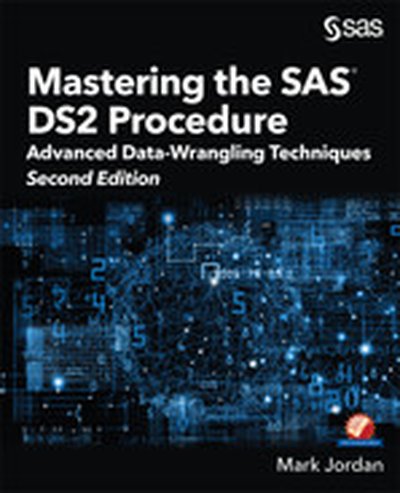
Mastering the SAS DS2 Procedure

Enhance your SAS data-wrangling skills with high-precision and parallel data manipulation using the DS2 programming language. Now in its second edition, this book addresses the DS2 programming language from SAS, which combines the precise procedural power and control of the Base SAS DATA step language with the simplicity and flexibility of SQL. DS2 provides simple, safe syntax for performing complex data transformations in parallel and enables manipulation of native database data types at full precision. It also covers PROC FEDSQL, a modernized SQL language that blends perfectly with DS2. You will learn to harness the power of parallel processing to speed up CPU-intensive computing processes in Base SAS and how to achieve even more speed by processing DS2 programs on massively parallel database systems. Techniques for leveraging internet APIs to acquire data, avoiding large data movements when working with data from disparate sources, and leveraging DS2's new data types for full-precision numeric calculations are presented, with examples of why these techniques are essential for the modern data wrangler. Here's what's new in this edition: how to significantly improve performance by using the new SAS Viya architecture with its SAS Cloud Analytic Services (CAS) how to declare private variables and methods in a package the new PROC DSTODS2 the PCRXFIND and PCRXREPLACE packages While working though the code samples provided with this book, you will build a library of custom, reusable, and easily shareable DS2 program modules, execute parallelized DATA step programs to speed up a CPU-intensive process, and conduct advanced data transformations using hash objects and matrix math operations. This book is part of the SAS Press Series.

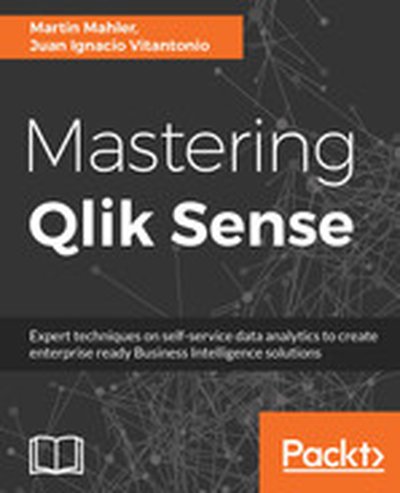
Mastering Qlik Sense

Mastering Qlik Sense is a comprehensive guide designed to empower you to utilize Qlik Sense for advanced data analytics and dynamic visualizations. This book provides detailed insights into creating seamless Business Intelligence solutions tailored to your needs. Whether you're building dashboards, optimizing data models, or exploring Qlik Cloud functionalities, this book has you covered. What this Book will help me do Build interactive and insightful dashboards using Qlik Sense's intuitive tools. Learn to model data efficiently and apply best practices for optimized performance. Master the Qlik Sense APIs and create advanced custom extensions. Understand enterprise security measures including role-based access controls. Gain expertise in migrating from QlikView to Qlik Sense effectively Author(s) Juan Ignacio Vitantonio is an experienced expert in Business Intelligence solutions and data analytics. With a profound understanding of Qlik technologies, Juan has developed and implemented impactful BI solutions across various industries. His writing reflects his practical knowledge and passion for empowering users with actionable insights into data. Who is it for? This book is perfect for BI professionals, data analysts, and organizations aiming to leverage Qlik Sense for advanced analytics. Ideal for those with a foundational grasp of Qlik Sense, it also provides comprehensive guidance for QlikView users transitioning to Qlik Sense. If you want to improve your BI solutions and data-driven decision-making skills, this book is for you.

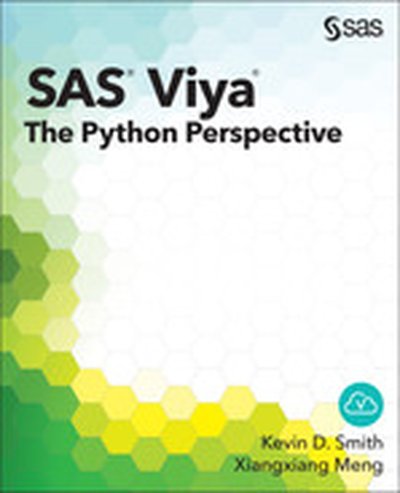
SAS Viya

Learn how to access analytics from SAS Cloud Analytic Services (CAS) using Python and the SAS Viya platform. SAS Viya : The Python Perspective is an introduction to using the Python client on the SAS Viya platform. SAS Viya is a high-performance, fault-tolerant analytics architecture that can be deployed on both public and private cloud infrastructures. While SAS Viya can be used by various SAS applications, it also enables you to access analytic methods from SAS, Python, Lua, and Java, as well as through a REST interface using HTTP or HTTPS. This book focuses on the perspective of SAS Viya from Python. SAS Viya is made up of multiple components. The central piece of this ecosystem is SAS Cloud Analytic Services (CAS). CAS is the cloud-based server that all clients communicate with to run analytical methods. The Python client is used to drive the CAS component directly using objects and constructs that are familiar to Python programmers. Some knowledge of Python would be helpful before using this book; however, there is an appendix that covers the features of Python that are used in the CAS Python client. Knowledge of CAS is not required to use this book. However, you will need to have a CAS server set up and running to execute the examples in this book. With this book, you will learn how to: Install the required components for accessing CAS from Python Connect to CAS, load data, and run simple analyses Work with CAS using APIs familiar to Python users Grasp general CAS workflows and advanced features of the CAS Python client SAS Viya : The Python Perspective covers topics that will be useful to beginners as well as experienced CAS users. It includes examples from creating connections to CAS all the way to simple statistics and machine learning, but it is also useful as a desktop reference.

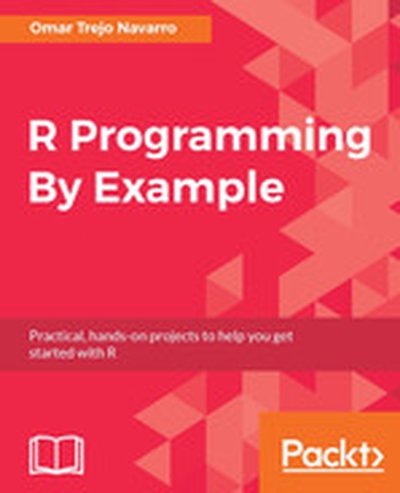
R Programming By Example

"R Programming By Example" serves as an engaging and practical introduction to the R programming language for data analysis and visualization. Through step-by-step examples and comprehensive guides, this book builds your understanding from foundational knowledge to advanced applications in R. You will master programming practices while analyzing real-world scenarios. What this Book will help me do Gain proficiency in leveraging R's versatile features and package ecosystem to tackle data analysis tasks. Learn to create and customize high-quality visualizations, including 3D graphs, for enhanced data presentation. Understand statistical modeling and descriptive analysis techniques for extracting insights from data. Discover efficient programming strategies in R, including code profiling and parallelization, to optimize performance. Acquire the skills to interface R with databases and RESTful APIs for robust data integration. Author(s) The authors, None Trejo Navarro and Omar Trejo Navarro, bring a wealth of experience in statistical programming and data analysis. Having worked extensively with R, they focus on practical and results-driven teaching. They have a passion for making complex topics accessible to learners. Who is it for? This book is aimed at aspiring data scientists, statisticians, or analysts looking to learn R. It is particularly suitable for readers familiar with basic programming concepts and who wish to apply R in practical scenarios. Whether you're analyzing data, building models, or creating visualizations, this book will guide you effectively. If you're eager to advance your R skills through hands-on projects, this is for you.

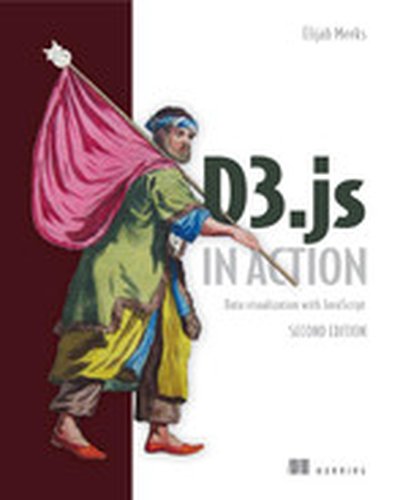
D3.js in Action, Second Edition

D3.js in Action, Second Edition is completely revised and updated for D3 v4 and ES6. It's a practical tutorial for creating interactive graphics and data-driven applications using D3. About the Technology Visualizing complex data is hard. Visualizing complex data on the web is darn near impossible without D3.js. D3 is a JavaScript library that provides a simple but powerful data visualization API over HTML, CSS, and SVG. Start with a structure, dataset, or algorithm; mix in D3; and you can programmatically generate static, animated, or interactive images that scale to any screen or browser. It's easy, and after a little practice, you'll be blown away by how beautiful your results can be! About the Book D3.js in Action, Second Edition is a completely updated revision of Manning's bestselling guide to data visualization with D3. You'll explore dozens of real-world examples in full-color, including force and network diagrams, workflow illustrations, geospatial constructions, and more! Along the way, you'll pick up best practices for building interactive graphics, animations, and live data representations. You'll also step through a fully interactive application created with D3 and React. What's Inside Rich full-color diagrams and illustrations Updated for D3 v4 and ES6 Reusable layouts and components Geospatial data visualizations Mixed-mode rendering About the Reader Suitable for web developers with HTML, CSS, and JavaScript skills. No specialized data science skills required. About the Author Elijah Meeks is a senior data visualization engineer at Netflix. Quotes From basic to complex, this book gives you the tools to create beautiful data visualizations. - Claudio Rodriguez, Cox Media Group The best reference for one of the most useful DataViz tools. - Jonathan Rioux, TD Insurance From toy examples to techniques for real projects. Shows how all the pieces fit together. - Scott McKissock, USAID A clever way to immerse yourself in the D3.js world. - Felipe Vildoso Castillo, University of Chile

Learning pandas - Second Edition

Take your Python skills to the next level with 'Learning pandas,' your go-to guide for mastering data manipulation and analysis. This book walks you through the powerful tools offered by the pandas library, helping you unlock key insights from data efficiently. Whether you're handling time-series data or visualizing patterns, you'll gain the proficiency needed to make sense of complex datasets. What this Book will help me do Understand and effectively use pandas Series and DataFrame objects for data representation and manipulation. Master indexing, slicing, and combining data to perform detailed exploration and analysis. Learn to access and work with external data sources, including APIs, databases, and files, using pandas. Develop the skills to handle and analyze time-series data, managing its unique challenges. Create informative and professional data visualizations directly using pandas capabilities. Author(s) Michael Heydt is a respected author and educator in the field of Python and data analysis. With years of experience utilizing pandas in practical and professional environments, Michael offers a unique perspective that combines deep technical insight with approachable examples. His teaching philosophy emphasizes clarity, applicability, and engaging instruction, ensuring learners easily acquire valuable skills. Who is it for? This book is ideal for Python programmers looking to enhance their data analysis capabilities, as well as data analysts and scientists wanting to leverage pandas to improve their workflows. Readers are recommended to have some familiarity with Python, though prior experience with pandas is not required. If you have a keen interest in data exploration and quantitative techniques, this book is for you.

Mastering the SAS DS2 Procedure

Enhance your SAS® data wrangling skills with high precision and parallel data manipulation using the new DS2 programming language.

This book addresses the new DS2 programming language from SAS, which combines the precise procedural power and control of the Base SAS DATA step language with the simplicity and flexibility of SQL. DS2 provides simple, safe syntax for performing complex data transformations in parallel and enables manipulation of native database data types at full precision. It also introduces PROC FEDSQL, a modernized SQL language that blends perfectly with DS2. You will learn to harness the power of parallel processing to speed up CPU-intensive computing processes in Base SAS and how to achieve even more speed by processing DS2 programs on massively parallel database systems. Techniques for leveraging Internet APIs to acquire data, avoiding large data movements when working with data from disparate sources, and leveraging DS2’s new data types for full-precision numeric calculations are presented, with examples of why these techniques are essential for the modern data wrangler.

While working through the code samples provided with this book, you will build a library of custom, reusable, and easily shareable DS2 program modules, execute parallelized DATA step programs to speed up a CPU-intensive process, and conduct advanced data transformations using hash objects and matrix math operations.

NumPy Essentials

NumPy Essentials is your guide to mastering NumPy, the powerful Python library for scientific computing. In this book, you'll discover how to manipulate arrays, perform mathematical operations, and create advanced models. With its clear examples and practical exercises, you'll build the skills needed to efficiently tackle analytical challenges. What this Book will help me do Learn to manipulate data efficiently with NumPy array objects and universal functions. Gain proficiency in solving linear algebra problems using NumPy's powerful modules. Master regression techniques and curve fitting for statistical modeling. Apply Fourier Transform and spectral analysis in solving real-world problems. Integrate and optimize Python code using Cython and the NumPy C API for higher performance. Author(s) Jaidev Deshpande, None Chin, Tanmay Dutta, and Shane Holloway are seasoned developers passionate about Python and scientific computing. With experience across diverse projects, they bring practical insights and accessible explanations to their writing. Who is it for? This book is ideal for Python developers seeking to sharpen their numerical computing skills. Prior experience with Python is expected, as the content progresses quickly to advanced topics. Whether you're working in data analysis, scientific research, or machine learning, this book will provide valuable tools and insights.

Data Wrangling with Python

How do you take your data analysis skills beyond Excel to the next level? By learning just enough Python to get stuff done. This hands-on guide shows non-programmers like you how to process information that’s initially too messy or difficult to access. You don't need to know a thing about the Python programming language to get started. Through various step-by-step exercises, you’ll learn how to acquire, clean, analyze, and present data efficiently. You’ll also discover how to automate your data process, schedule file- editing and clean-up tasks, process larger datasets, and create compelling stories with data you obtain. Quickly learn basic Python syntax, data types, and language concepts Work with both machine-readable and human-consumable data Scrape websites and APIs to find a bounty of useful information Clean and format data to eliminate duplicates and errors in your datasets Learn when to standardize data and when to test and script data cleanup Explore and analyze your datasets with new Python libraries and techniques Use Python solutions to automate your entire data-wrangling process