talk-data.com talk-data.com

Topic

Cloud Computing

infrastructure saas iaas

96

tagged

Activity Trend

471 peak/qtr
2020-Q1 2026-Q1

Activities

Showing filtered results

Filtering by: O'Reilly Data Science Books ×
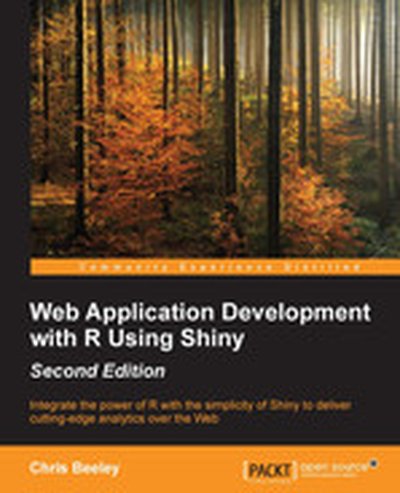
Web Application Development with R Using Shiny Second Edition - Second Edition

This book dives into the practical application of R's power combined with Shiny's simplicity to build web-based analytics and interactive data summary tools. By following this step-by-step guide, you'll go from the basics of building with R and Shiny to creating sophisticated custom dashboards and interactive web apps. What this Book will help me do Create interactive web apps and dashboards using Shiny with impressive user interfaces. Integrate Shiny applications into custom HTML and CSS-based web pages for enhanced flexibility. Produce user-friendly Shiny applications extended with JavaScript and jQuery for added functionality. Develop web solutions that include interactive graphics, maps, and data analysis summaries. Deliver and deploy web apps securely using cloud solutions or self-hosted servers. Author(s) Chris Beeley, an experienced R developer and teacher, has a robust background in statistical programming and data analysis. Chris is passionate about sharing knowledge through practical examples and hands-on exercises. As the author of this book, Chris ensures that readers receive a clear and approachable entry into web application development using Shiny. Who is it for? This book is ideal for data enthusiasts, analysts, and developers looking to transition their analytic skills to the web. It caters to readers with basic programming knowledge but does not require prior experience with R or Shiny. It is perfect for professionals and learners wanting to create interactive analytics tools, dashboards, or data-driven web applications.
Data Analysis in the Cloud

Data Analysis in the Cloud introduces and discusses models, methods, techniques, and systems to analyze the large number of digital data sources available on the Internet using the computing and storage facilities of the cloud. Coverage includes scalable data mining and knowledge discovery techniques together with cloud computing concepts, models, and systems. Specific sections focus on map-reduce and NoSQL models. The book also includes techniques for conducting high-performance distributed analysis of large data on clouds. Finally, the book examines research trends such as Big Data pervasive computing, data-intensive exascale computing, and massive social network analysis. Introduces data analysis techniques and cloud computing concepts Describes cloud-based models and systems for Big Data analytics Provides examples of the state-of-the-art in cloud data analysis Explains how to develop large-scale data mining applications on clouds Outlines the main research trends in the area of scalable Big Data analysis

2015 Data Science Salary Survey

For the third consecutive year, O’Reilly Media conducted an anonymous survey to expose the tools that successful data scientists and engineers use, and how those tool choices might relate to their salary. For the 2015 version of the Data Science Salary Survey, we heard from over 600 respondents who work in and around the data space for a variety of industries across 47 countries and 38 U.S. states. The research was based on data collected through an online 32-question survey, including demographic information, time spent on various data-related tasks, and the use or non-use of 116 software tools. Findings include: Download this free in-depth report to gain insight from these potentially career-changing findings, and plug your own variables into one of the linear models to predict your own salary. Average number of tools and median income for all respondents Distribution of responses by a variety of factors, including age, gender, location, industry, role, and cloud computing Detailed analysis of tool use, including tool clusters Correlation of tool usage and salary The survey is now open for the 2016 report, and it takes just 5 to 10 minutes to complete: http://www.oreilly.com/go/ds-salary-​survey-2016.

Emerging Trends in Computational Biology, Bioinformatics, and Systems Biology

Emerging Trends in Computational Biology, Bioinformatics, and Systems Biology discusses the latest developments in all aspects of computational biology, bioinformatics, and systems biology and the application of data-analytics and algorithms, mathematical modeling, and simu- lation techniques. • Discusses the development and application of data-analytical and theoretical methods, mathematical modeling, and computational simulation techniques to the study of biological and behavioral systems, including applications in cancer research, computational intelligence and drug design, high-performance computing, and biology, as well as cloud and grid computing for the storage and access of big data sets. • Presents a systematic approach for storing, retrieving, organizing, and analyzing biological data using software tools with applications to general principles of DNA/RNA structure, bioinformatics and applications, genomes, protein structure, and modeling and classification, as well as microarray analysis. • Provides a systems biology perspective, including general guidelines and techniques for obtaining, integrating, and analyzing complex data sets from multiple experimental sources using computational tools and software. Topics covered include phenomics, genomics, epigenomics/epigenetics, metabolomics, cell cycle and checkpoint control, and systems biology and vaccination research. • Explains how to effectively harness the power of Big Data tools when data sets are so large and complex that it is difficult to process them using conventional database management systems or traditional data processing applications. Discusses the development and application of data-analytical and theoretical methods, mathematical modeling and computational simulation techniques to the study of biological and behavioral systems. Presents a systematic approach for storing, retrieving, organizing and analyzing biological data using software tools with applications. Provides a systems biology perspective including general guidelines and techniques for obtaining, integrating and analyzing complex data sets from multiple experimental sources using computational tools and software.

Mastering Matplotlib

Mastering Matplotlib provides readers with the tools to not just create visualizations but to fully harness the capabilities of the Matplotlib library. You will explore advanced features, work on interactive visualizations, and learn to optimize plots for various platforms and datasets. By the end, you will be adept at using Matplotlib in complex projects involving data analysis and visualization. What this Book will help me do Understand the architecture and internals of Matplotlib to better utilize and extend its features. Develop visually dynamic and interactive plots that update in real-time with changes in the user interface. Leverage third-party libraries to visualize complex datasets and relationships efficiently. Create tailored styling for visualizations, meeting publication and presentation standards. Deploy and integrate Matplotlib-based visualizations into cloud environments and big data workflows seamlessly. Author(s) Duncan M. McGreggor is a seasoned software engineer with years of hands-on experience in data visualization and scientific computing. He specializes in utilizing Matplotlib for dynamic charting and advanced plotting use cases. His approach to writing focuses on empowering readers to apply and integrate visualization solutions in real-world scenarios. Who is it for? This book is ideal for scientists, software engineers, programmers, and students who have a foundational understanding of Matplotlib and are looking to take their skills to an advanced level. If you're aiming to leverage Matplotlib to handle intricate datasets or to create sophisticated visual representations, this book is for you. It caters to learners seeking practical guidance for professional or academic projects. Expand your visualization toolkit with this insightful guide.

Hands-On Mobile App Testing: A Guide for Mobile Testers and Anyone Involved in the Mobile App Business

The First Complete Guide to Mobile App Testing and Quality Assurance: Start-to-Finish Testing Solutions for Both Android and iOS Today, mobile apps must meet rigorous standards of reliability, usability, security, and performance. However, many mobile developers have limited testing experience, and mobile platforms raise new challenges even for long-time testers. Now, Hands-On Mobile App Testing provides the solution: an end-to-end blueprint for thoroughly testing any iOS or Android mobile app. Reflecting his extensive real-life experience, Daniel Knott offers practical guidance on everything from mobile test planning to automation. He provides expert insights on mobile-centric issues, such as testing sensor inputs, battery usage, and hybrid apps, as well as advice on coping with device and platform fragmentation, and more. If you want top-quality apps as much as your users do, this guide will help you deliver them. You’ll find it invaluable–;whether you’re part of a large development team or you are the team. Learn how to Establish your optimal mobile test and launch strategy Create tests that reflect your customers, data networks, devices, and business models Choose and implement the best Android and iOS testing tools Automate testing while ensuring comprehensive coverage Master both functional and nonfunctional approaches to testing Address mobile’s rapid release cycles Test on emulators, simulators, and actual devices Test native, hybrid, and Web mobile apps Gain value from crowd and cloud testing (and understand their limitations) Test database access and local storage Drive value from testing throughout your app lifecycle Start testing wearables, connected homes/cars, and Internet of Things devices

R Recipes: A Problem-Solution Approach

R Recipes is your handy problem-solution reference for learning and using the popular R programming language for statistics and other numerical analysis. Packed with hundreds of code and visual recipes, this book helps you to quickly learn the fundamentals and explore the frontiers of programming, analyzing and using R. R Recipes provides textual and visual recipes for easy and productive templates for use and re-use in your day-to-day R programming and data analysis practice. Whether you're in finance, cloud computing, big or small data analytics, or other applied computational and data science - R Recipes should be a staple for your code reference library.

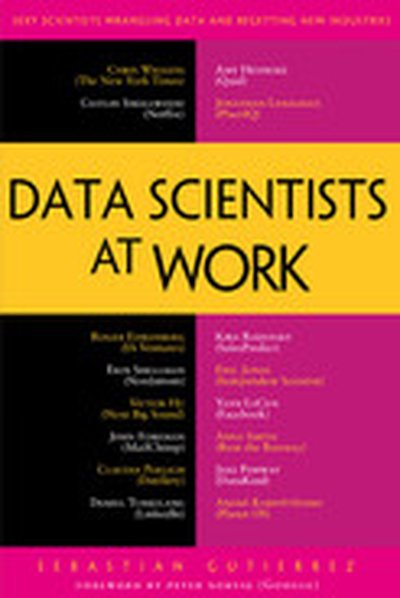
Data Scientists at Work

Data Scientists at Work is a collection of interviews with sixteen of the world's most influential and innovative data scientists from across the spectrum of this hot new profession. "Data scientist is the sexiest job in the 21st century," according to the Harvard Business Review. By 2018, the United States will experience a shortage of 190,000 skilled data scientists, according to a McKinsey report. Through incisive in-depth interviews, this book mines the what, how, and why of the practice of data science from the stories, ideas, shop talk, and forecasts of its preeminent practitioners across diverse industries: social network (Yann LeCun, Facebook); professional network (Daniel Tunkelang, LinkedIn); venture capital (Roger Ehrenberg, IA Ventures); enterprise cloud computing and neuroscience (Eric Jonas, formerly Salesforce.com); newspaper and media (Chris Wiggins, The New York Times); streaming television (Caitlin Smallwood, Netflix); music forecast (Victor Hu, Next Big Sound); strategic intelligence (Amy Heineike, Quid); environmental big data (Andre´ Karpis?ts?enkoEach of these data scientists shares how he or she tailors the torrent-taming techniques of big data, data visualization, search, and statistics to specific jobs by dint of ingenuity, imagination, patience, and passion. , Planet OS); geospatial marketing intelligence (Jonathan Lenaghan, PlaceIQ); advertising (Claudia Perlich, Dstillery); fashion e-commerce (Anna Smith, Rent the Runway); specialty retail (Erin Shellman, Nordstrom); email marketing (John Foreman, MailChimp); predictive sales intelligence (Kira Radinsky, SalesPredict); and humanitarian nonprofit (Jake Porway, DataKind). The book features a stimulating foreword by Google's Director of Research, Peter Norvig. Data Scientists at Work parts the curtain on the interviewees’ earliest data projects, how they became data scientists, their discoveries and surprises in working with data, their thoughts on the past, present, and future of the profession, their experiences of team collaboration within their organizations, and the insights they have gained as they get their hands dirty refining mountains of raw data into objects of commercial, scientific, and educational value for their organizations and clients.

Simulation Technologies in Networking and Communications

Simulation is a widely used mechanism for validating the theoretical models of networking and communication systems. Although the claims made based on simulations are considered to be reliable, how reliable they really are is best determined with real-world implementation trials. Simulation Technologies in Networking and Communications: Selecting the Best Tool for the Test Considers superefficient Monte Carlo simulations Describes how to simulate and evaluate multicast routing algorithms Covers simulation tools for cloud computing and broadband passive optical networks Reports on recent developments in simulation tools for WSNs Examines modeling and simulation of vehicular networks The book compiles expert perspectives about the simulation of various networking and communications technologies. These experts review and evaluate popular simulation modeling tools and recommend the best tools for your specific tests. They also explain how to determine when theoretical modeling would be preferred over simulation.

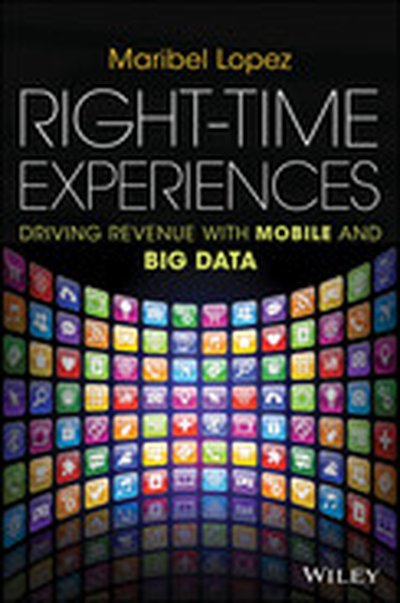
Right-Time Experiences: Driving Revenue with Mobile and Big Data

Grasp how mobile, big data, and analytics are combining to change business processes Right Experience, Right Results: Improving Profits, Margin, and Engagement with Mobile and Big Data illustrates how businesses can use mobility, big data, and analytics to enhance or change business processes, improve margins through better insight, transform customer experiences, empower employees with real-time, actionable insight, and more. The book depicts how companies can create competitive differentiation using mobile, cloud computing big data, and analytics to improve commerce, customer service, and communications with employees and consumers. In the past, the technologies used to deliver personalized and contextual services were either unavailable, unaffordable, or reserved solely for the consumer market. Today, however, the next wave of computing—mobile, cloud computing. big data, and analytics—has provided the foundation for businesses to create adaptive, personalized applications and services. Delivered point-of-need, these smarter services allow enterprise products and services to meet the burgeoning demand for always-connected, accurate, and real-time information. Right Experience, Right Results: Improving Profits, Margin, and Engagement with Mobile and Big Data is your guide to the new way of doing things. The book includes: Real world examples that illustrate how companies across various industries are creating better business processes by integrating new technologies A three step action plan for getting started and overcoming obstacles An electronic checklist with numerous actions that help get you up and running with incorporating mobile, big data, and analytics A guide to drawing insight from mobile, social, and other sources to create richer experiences If you're a CEO, chief marketing officer, marketing director, or business manager, Right Experience, Right Results gives you everything you need to harness technology to breathe new life into your business.

Discrete and Continuous Simulation

When it comes to discovering glitches inherent in complex systems—be it a railway or banking, chemical production, medical, manufacturing, or inventory control system—developing a simulation of a system can identify problems with less time, effort, and disruption than it would take to employ the original. Advantageous to both academic and industrial practitioners, Discrete and Continuous Simulation: Theory and Practice offers a detailed view of simulation that is useful in several fields of study. This text concentrates on the simulation of complex systems, covering the basics in detail and exploring the diverse aspects, including continuous event simulation and optimization with simulation. It explores the connections between discrete and continuous simulation, and applies a specific focus to simulation in the supply chain and manufacturing field. It discusses the Monte Carlo simulation, which is the basic and traditional form of simulation. It addresses future trends and technologies for simulation, with particular emphasis given to .NET technologies and cloud computing, and proposes various simulation optimization algorithms from existing literature. Includes chapters on input modeling and hybrid simulation Introduces general probability theory Contains a chapter on Microsoft ® Excel ™ and MATLAB ®/Simulink ® Discusses various probability distributions required for simulation Describes essential random number generators Discrete and Continuous Simulation: Theory and Practice defines the simulation of complex systems. This text benefits academic researchers in industrial/manufacturing/systems engineering, computer sciences, operations research, and researchers in transportation, operations management, healthcare systems, and human–machine systems.

Business Intelligence with MicroStrategy Cookbook

This comprehensive guide introduces you to the functionalities of MicroStrategy for business intelligence, empowering you to build dashboards, reports, and visualizations using hands-on, practical recipes with clear examples. You'll learn how to use MicroStrategy for the entire BI lifecycle, making data actionable and insights accessible. What this Book will help me do Install and configure the MicroStrategy platform, including setting up a fully operational BI environment. Create interactive dashboards and web reports to visualize and analyze data effectively. Learn to use MicroStrategy on mobile devices, enabling access to data-driven insights anywhere. Discover advanced analytics techniques using Visual Insight and MicroStrategy Cloud Express. Master practical skills with real-life examples to implement robust BI solutions. Author(s) Davide Moraschi, an experienced professional in business intelligence and data analytics, brings his expertise to guiding readers through the MicroStrategy platform. He has years of experience implementing and developing BI solutions in diverse industries, offering practical perspectives. Davide's approachable teaching style and clear examples make technical concepts accessible and engaging. Who is it for? This book is tailored for BI developers and data analysts who want to deepen their expertise in MicroStrategy. It's also suitable for IT professionals and business users aiming to leverage MicroStrategy for data insights. Some existing knowledge of BI concepts, such as dimensional modeling, will enrich your learning experience. You need no prior experience with MicroStrategy to benefit from this book.

Managing Data in Motion

Managing Data in Motion describes techniques that have been developed for significantly reducing the complexity of managing system interfaces and enabling scalable architectures. Author April Reeve brings over two decades of experience to present a vendor-neutral approach to moving data between computing environments and systems. Readers will learn the techniques, technologies, and best practices for managing the passage of data between computer systems and integrating disparate data together in an enterprise environment. The average enterprise's computing environment is comprised of hundreds to thousands computer systems that have been built, purchased, and acquired over time. The data from these various systems needs to be integrated for reporting and analysis, shared for business transaction processing, and converted from one format to another when old systems are replaced and new systems are acquired. The management of the "data in motion" in organizations is rapidly becoming one of the biggest concerns for business and IT management. Data warehousing and conversion, real-time data integration, and cloud and "big data" applications are just a few of the challenges facing organizations and businesses today. Managing Data in Motion tackles these and other topics in a style easily understood by business and IT managers as well as programmers and architects. Presents a vendor-neutral overview of the different technologies and techniques for moving data between computer systems including the emerging solutions for unstructured as well as structured data types Explains, in non-technical terms, the architecture and components required to perform data integration Describes how to reduce the complexity of managing system interfaces and enable a scalable data architecture that can handle the dimensions of "Big Data"

Solving Business Problems with Informix TimeSeries

The world is becoming more and more instrumented, interconnected, and intelligent in what IBM® terms a smarter planet, with more and more data being collected for analysis. In trade magazines, this trend is called big data. As part of this trend, the following types of time-based information are collected: Large data centers support a corporation or provide cloud services. These data centers need to collect temperature, humidity, and other types of Utility meters (referred to as smart meters) allow utility companies to collect information over a wireless network and to collect more data than ever before. IBM Informix® TimeSeries is optimized for the processing of time-based data and can provide the following benefits: Storage savings: Storage can be optimized when you know the characteristics of your time-based data. Informix TimeSeries often uses one third of the storage space that is required by a standard relational database. Query performance: Informix TimeSeries takes into consideration the type of data to optimize its organization on disk and eliminates the need for some large indexes and additional sorting. For these reasons and more, some queries can easily have an order of magnitude performance improvement compared to standard relational. Simpler queries: Informix TimeSeries includes a large set of specialized functions that allow you to better express the processing that you want to execute. It even provides a toolkit so that you can add proprietary algoritms to the library. This IBM Redbooks® publication is for people who want to implement a solution that revolves around time-based data. It gives you the information that you need to get started and be productive with Informix TimeSeries.

Pentaho® Kettle Solutions: Building Open Source ETL Solutions with Pentaho Data Integration

A complete guide to Pentaho Kettle, the Pentaho Data lntegration toolset for ETL This practical book is a complete guide to installing, configuring, and managing Pentaho Kettle. If you're a database administrator or developer, you'll first get up to speed on Kettle basics and how to apply Kettle to create ETL solutions—before progressing to specialized concepts such as clustering, extensibility, and data vault models. Learn how to design and build every phase of an ETL solution. Shows developers and database administrators how to use the open-source Pentaho Kettle for enterprise-level ETL processes (Extracting, Transforming, and Loading data) Assumes no prior knowledge of Kettle or ETL, and brings beginners thoroughly up to speed at their own pace Explains how to get Kettle solutions up and running, then follows the 34 ETL subsystems model, as created by the Kimball Group, to explore the entire ETL lifecycle, including all aspects of data warehousing with Kettle Goes beyond routine tasks to explore how to extend Kettle and scale Kettle solutions using a distributed "cloud" Get the most out of Pentaho Kettle and your data warehousing with this detailed guide—from simple single table data migration to complex multisystem clustered data integration tasks.

A Developer’s Guide to Amazon SimpleDB

The Complete Guide to Building Cloud Computing Solutions with Amazon SimpleDB Using SimpleDB, any organization can leverage Amazon Web Services (AWS), Amazon’s powerful cloud-based computing platform–and dramatically reduce the cost and resources associated with application infrastructure. Now, for the first time, there’s a complete developer’s guide to building production solutions with Amazon SimpleDB. Pioneering SimpleDB developer Mocky Habeeb brings together all the hard-to-find information you need to succeed. Mocky tours the SimpleDB platform and APIs, explains their essential characteristics and tradeoffs, and helps you determine whether your applications are appropriate for SimpleDB. Next, he walks you through all aspects of writing, deploying, querying, optimizing, and securing Amazon SimpleDB applications–from the basics through advanced techniques. Throughout, Mocky draws on his unsurpassed experience supporting developers on SimpleDB’s official Web forums. He offers practical tips and answers that can’t be found anywhere else, and presents extensive working sample code–from snippets to complete applications. With A Developer’s Guide to Amazon SimpleDB you will be able to Evaluate whether a project is suited for Amazon SimpleDB Write SimpleDB applications that take full advantage of SimpleDB’s availability, scalability, and flexibility Effectively manage the entire SimpleDB application lifecycle Deploy cloud computing applications faster and more easily Work with SELECT and bulk data operations Fine tune queries to optimize performance Integrate SimpleDB security into existing organizational security plans Write and enhance runtime SimpleDB clients Build complete applications using AJAX and SimpleDB Understand low-level issues involved in writing clients and frameworks Solve common SimpleDB usage problems and avoid hidden pitfalls This book will be an indispensable resource for every IT professional evaluating or using SimpleDB to build cloud-computing applications, clients, or frameworks.