talk-data.com talk-data.com

Topic

Cloud Computing

infrastructure saas iaas

4055

tagged

Activity Trend

471 peak/qtr
2020-Q1 2026-Q1

Activities

4055 activities · Newest first

Implementing IBM FlashSystem 900

Today's global organizations depend on being able to unlock business insights from massive volumes of data. Now, with IBM® FlashSystem™ 900, powered by IBM FlashCore™ technology, they can make faster decisions based on real-time insights and unleash the power of the most demanding applications, including online transaction processing (OLTP) and analytics databases, virtual desktop infrastructures (VDIs), technical computing applications, and cloud environments. This IBM Redbooks® publication introduces clients to the IBM FlashSystem® 900. It provides in-depth knowledge of the product architecture, software and hardware, implementation, and hints and tips. Also illustrated are use cases that show real-world solutions for tiering, flash-only, and preferred-read, and also examples of the benefits gained by integrating the FlashSystem storage into business environments. This book is intended for pre-sales and post-sales technical support professionals and storage administrators, and for anyone who wants to understand how to implement this new and exciting technology. This book describes the following offerings of the IBM Spectrum™ Storage family: IBM Spectrum Storage™ IBM Spectrum Control IBM Spectrum Virtualize IBM Spectrum Scale IBM Spectrum Accelerate
IBM Spectrum Scale (formerly GPFS)

This IBM® Redbooks® publication updates and complements the previous publication: Implementing the IBM General Parallel File System in a Cross Platform Environment, SG24-7844, with additional updates since the previous publication version was released with IBM General Parallel File System (GPFS™). Since then, two releases have been made available up to the latest version of IBM Spectrum™ Scale 4.1. Topics such as what is new in Spectrum Scale, Spectrum Scale licensing updates (Express/Standard/Advanced), Spectrum Scale infrastructure support/updates, storage support (IBM and OEM), operating system and platform support, Spectrum Scale global sharing - Active File Management (AFM), and considerations for the integration of Spectrum Scale in IBM Tivoli® Storage Manager (Spectrum Protect) backup solutions are discussed in this new IBM Redbooks publication. This publication provides additional topics such as planning, usability, best practices, monitoring, problem determination, and so on. The main concept for this publication is to bring you up to date with the latest features and capabilities of IBM Spectrum Scale as the solution has become a key component of the reference architecture for clouds, analytics, mobile, social media, and much more. This publication targets technical professionals (consultants, technical support staff, IT Architects, and IT Specialists) responsible for delivering cost effective cloud services and big data solutions on IBM Power Systems™ helping to uncover insights among clients' data so they can take actions to optimize business results, product development, and scientific discoveries.

IBM z13 Technical Guide

Digital business has been driving the transformation of underlying IT infrastructure to be more efficient, secure, adaptive, and integrated. Information Technology (IT) must be able to handle the explosive growth of mobile clients and employees. IT also must be able to use enormous amounts of data to provide deep and real-time insights to help achieve the greatest business impact. This IBM® Redbooks® publication addresses the new IBM Mainframe, the IBM z13. The IBM z13 is the trusted enterprise platform for integrating data, transactions, and insight. A data-centric infrastructure must always be available with a 99.999% or better availability, have flawless data integrity, and be secured from misuse. It needs to be an integrated infrastructure that can support new applications. It needs to have integrated capabilities that can provide new mobile capabilities with real-time analytics delivered by a secure cloud infrastructure. IBM z13 is designed with improved scalability, performance, security, resiliency, availability, and virtualization. The superscalar design allows the z13 to deliver a record level of capacity over the prior z Systems. In its maximum configuration, z13 is powered by up to 141 client characterizable microprocessors (cores) running at 5 GHz. This configuration can run more than 110,000 millions of instructions per second (MIPS) and up to 10 TB of client memory. The IBM z13 Model NE1 is estimated to provide up to 40% more total system capacity than the IBM zEnterprise® EC12 (zEC1) Model HA1. This book provides information about the IBM z13 and its functions, features, and associated software support. Greater detail is offered in areas relevant to technical planning. It is intended for systems engineers, consultants, planners, and anyone who wants to understand the IBM z Systems functions and plan for their usage. It is not intended as an introduction to mainframes. Readers are expected to be generally familiar with existing IBM z Systems technology and terminology.

CMDB Systems

CMDB Systems: Making Change Work in the Age of Cloud and Agile shows you how an integrated database across all areas of an organization’s information system can help make organizations more efficient reduce challenges during change management and reduce total cost of ownership (TCO). In addition, this valuable reference provides guidelines that will enable you to avoid the pitfalls that cause CMDB projects to fail and actually shorten the time required to achieve an implementation of a CMDB. Drawing upon extensive experience and using illustrative real world examples, Rick Sturm, Dennis Drogseth and Dan Twing discuss: Unique insights from extensive industry exposure, research and consulting on the evolution of CMDB/CMS technology and ongoing dialog with the vendor community in terms of current and future CMDB/CMS design and plans Proven and structured best practices for CMDB deployments Clear and documented insights into the impacts of cloud computing and other advances on CMDB/CMS futures Discover unique insights from industry experts who consult on the evolution of CMDB/CMS technology and will show you the steps needed to successfully plan, design and implement CMDB Covers related use-cases from retail, manufacturing and financial verticals from real-world CMDB deployments Provides structured best practices for CMDB deployments Discusses how CMDB adoption can lower total cost of ownership, increase efficiency and optimize the IT enterprise

IBM z13 Technical Introduction

This IBM® Redbooks® publication introduces the IBM z13™. IBM z13 delivers a data and transaction system reinvented as a system of insight for digital business. IBM z Systems™ leadership is extended with these features: Improved ability to meet service level agreements with new processor chip technology that includes simultaneous multithreading, analytical vector processing, redesigned and larger cache, and enhanced accelerators for hardware compression and cryptography Better availability and more efficient use of critical data with up to 10 TB available redundant array of independent memory (RAIM) Validation of transactions, management, and assignment of business priority for SAN devices through updates to the I/O subsystem Continued management of heterogeneous workloads with IBM z BladeCenter Extension (zBX) Model 004 and IBM z Unified Resource Manager This Redbooks publication can help you become familiar with the z Systems platform, and understand how the platform can help integrate data, transactions, and insight for faster and more accurate business decisions. This book explains how, with innovations and traditional strengths, IBM z13 can play an essential role in today's IT environments, and satisfy the demands for cloud deployments, analytics, mobile, and social applications in a trustful, reliable, and secure environment with operations that lessen business risk.

Hadoop Virtualization

Hadoop was built to use local data storage on a dedicated group of commodity hardware, but many organizations are choosing to save money (and operational headaches) by running Hadoop in the cloud. This O'Reilly report focuses on the benefits of deploying Hadoop to a private cloud environment, and provides an overview of best practices to maximize performance. Private clouds provide lower capital expenses than on-site clusters and offer lower operating expenses than public cloud deployment. Author Courtney Webster shows you what's involved in Hadoop virtualization, and how you can efficiently plan a private cloud deployment. Topics include: How Hadoop virtualization offers scalable capability for future growth and minimal downtime Why a private cloud offers unique benefits with comparable (and even improved) performance How you can literally set up Hadoop in a private cloud in minutes How aggregation can be used on top of (or instead of) virtualization Which resources and practices are best for a private cloud deployment How cloud-based management tools lower the complexity of initial configuration and maintenance

Field Guide to Hadoop

If your organization is about to enter the world of big data, you not only need to decide whether Apache Hadoop is the right platform to use, but also which of its many components are best suited to your task. This field guide makes the exercise manageable by breaking down the Hadoop ecosystem into short, digestible sections. You’ll quickly understand how Hadoop’s projects, subprojects, and related technologies work together. Each chapter introduces a different topic—such as core technologies or data transfer—and explains why certain components may or may not be useful for particular needs. When it comes to data, Hadoop is a whole new ballgame, but with this handy reference, you’ll have a good grasp of the playing field. Topics include: Core technologies—Hadoop Distributed File System (HDFS), MapReduce, YARN, and Spark Database and data management—Cassandra, HBase, MongoDB, and Hive Serialization—Avro, JSON, and Parquet Management and monitoring—Puppet, Chef, Zookeeper, and Oozie Analytic helpers—Pig, Mahout, and MLLib Data transfer—Scoop, Flume, distcp, and Storm Security, access control, auditing—Sentry, Kerberos, and Knox Cloud computing and virtualization—Serengeti, Docker, and Whirr

Hadoop MapReduce v2 Cookbook - Second Edition

Explore insights from vast datasets with "Hadoop MapReduce v2 Cookbook - Second Edition." This book serves as a practical guide for developers and system administrators who aim to master big data processing using Hadoop v2. By engaging with its step-by-step recipes, you will learn to harness the Hadoop MapReduce ecosystem for scalable and efficient data solutions. What this Book will help me do Master the configuration and management of Hadoop YARN, MapReduce v2, and HDFS clusters. Integrate big data tools such as Hive, HBase, Pig, Mahout, and Nutch with Hadoop v2. Develop analytics solutions for large-scale datasets using MapReduce-based applications. Address specific challenges like data classification, recommendations, and text analytics leveraging Hadoop MapReduce. Deploy and manage big data clusters effectively, including options for cloud environments. Author(s) The authors behind "Hadoop MapReduce v2 Cookbook - Second Edition" combine their deep expertise in big data technology and years of experience working directly with Hadoop. They have helped numerous organizations implement scalable data processing solutions and are passionate about teaching others. Their approach ensures readers gain both foundational knowledge and practical skills. Who is it for? This book is perfect for developers and system administrators who want to learn Hadoop MapReduce v2, including configuring and managing big data clusters. Beginners with basic Java knowledge can follow along to advance their skills in big data processing. Ideal for those transitioning to Hadoop v2 or requiring practical recipes for immediate application. Great for professionals aiming to deepen their expertise in scalable data technologies.

Oracle RMAN Database Duplication

RMAN is Oracle’s flagship backup and recovery tool, but did you know it’s also an effective database duplication tool? Oracle RMAN Database Duplication is a deep dive into RMAN’s duplication feature set, showing how RMAN can make it so much easier for you as a database administrator to satisfy the many requests from developers and testers for database copies and refreshes for use in their work. You’ll learn to make and refresh duplicate databases with a single command, and of course you can automate and schedule that command so that developers and testers are supplied with regular, known good databases without any manual intervention on your part. Fast and easy provisioning of databases for developers and testers is a driving force in the move to cloud computing and virtualization. RMAN’s robust database duplication feature set plays right into this growing need for ease of provisioning, enabling easy duplication of known-good databases on demand, across operating systems such as between Linux and Solaris, and even across storage environments such as when duplicating from a RAC/ASM environment to a single-node instance using regular file system storage. Oracle RMAN Database Duplication is your thorough guide to providing amazing business value to your organization by way of fast and easy provisioning of database duplicates in service of development and testing projects.

Data: Emerging Trends and Technologies

What are the emerging trends and technologies that will transform the data landscape in coming months? In this report from Strata + Hadoop World co-chair Alistair Croll, you'll learn how the ubiquity of cheap sensors, fast networks, and distributed computing have given rise to several developments that will soon have a profound effect on individuals and society as a whole. Machine learning, for example, has quickly moved from lab tool to hosted, pay-as-you-go services in the cloud. Those services, in turn, are leading to predictive apps that will provide individuals with the right functionality and content at the right time by continuously learning about them and predicting what they'll need. Computational power can produce cognitive augmentation. Report topics include: The swing between centralized and distributed computing Machine learning as a service Personal digital assistants and cognitive augmentation Graph databases and analytics Regulating complex algorithms The pace of real-time data and automation Solving dire problems with big data Implications of having sensors everywhere This report contains many more examples of how big data is starting to reshape business and change behavior, and it's just a small sample of the in-depth information Strata + Hadoop World provides. Pick up this report and make plans to attend one of several Strata + Hadoop World conferences in the San Francisco Bay Area, London, and New York.

Learning Hadoop 2

Delve into the world of big data with 'Learning Hadoop 2', a comprehensive guide to leveraging the capabilities of Hadoop 2 for data processing and analysis. In this book, you will explore the tools and frameworks that integrate with Hadoop, discovering the best ways to design and deploy effective workflows for managing and analyzing large datasets. What this Book will help me do Understand the fundamentals of the MapReduce framework and its applications. Utilize advanced tools such as Samza and Spark for real-time and iterative data processing. Manage large datasets with data mining techniques tailored for Hadoop environments. Deploy Hadoop applications across various infrastructures, including local clusters and cloud services. Create and orchestrate sophisticated data workflows and pipelines with Apache Pig and Oozie. Author(s) Gabriele Modena is an experienced developer and trained data specialist with a keen focus on distributed data processing frameworks. Having worked extensively with big data platforms, Gabriele brings practical insights and a hands-on perspective to technical subjects. His writing is concise and engaging, aiming to render complex concepts accessible. Who is it for? This book is ideal for system and application developers eager to learn practical implementations of the Hadoop framework. Readers should be familiar with the Unix/Linux command-line interface and Java programming. Prior experience with Hadoop will be advantageous, but not necessary.

Extend Microsoft Access Applications to the Cloud

Learn how to create an Access web app, and move your database into the cloud. This practical book shows you how to design an Access web app for Microsoft Office 365, and convert existing Access desktop databases to a web app as well. You’ll quickly learn your way around the web app design environment, including how to capitalize on its strengths and avoid the pitfalls. You don’t need any special web skills to get started. Discover how to: Make your desktop database compatible with web app table structures Create tables, views, and queries Customize the table selector and work with popup views to provide a navigation interface Implement business rules using the Macro Programming Tools Develop using Office 365 and SharePoint 2013 Use SQL Azure to investigate how your web app is structured Design, test, and troubleshoot Data Macros Understand how security links between a web app and Office 365 Deploy a public facing web app on your Office 365 public website

ElasticSearch Cookbook - Second Edition

The "ElasticSearch Cookbook - Second Edition" is a hands-on guide featuring over 130 advanced recipes to help you harness the power of ElasticSearch, a leading search and analytics engine. Through insightful examples and practical guidance, you'll learn to implement efficient search solutions, optimize queries, and manage ElasticSearch clusters effectively. What this Book will help me do Design and configure ElasticSearch topologies optimized for your specific deployment needs. Develop and utilize custom mappings to optimize your data indexes. Execute advanced queries and filters to refine and retrieve search results effectively. Set up and monitor ElasticSearch clusters for optimal performance. Extend ElasticSearch capabilities through plugin development and integrations using Java and Python. Author(s) Alberto Paro is a technology expert with years of experience working with ElasticSearch, Big Data solutions, and scalable cloud architecture. He has authored multiple books and technical articles on ElasticSearch, leveraging his extensive knowledge to provide practical insights. His approachable and detail-oriented style makes complex concepts accessible to technical professionals. Who is it for? This book is best suited for software developers and IT professionals looking to use ElasticSearch in their projects. Readers should be familiar with JSON, as well as basic programming skills in Java. It is ideal for those who have an understanding of search applications and want to deepen their expertise. Whether you're integrating ElasticSearch into a web application or optimizing your system's search capabilities, this book will provide the skills and knowledge you need.

Application Development for IBM CICS Web Services

This IBM® Redbooks® publication focuses on developing Web service applications in IBM CICS®. It takes the broad view of developing and modernizing CICS applications for XML, Web services, SOAP, and SOA support, and lays out a reference architecture for developing these kinds of applications. We start by discussing Web services in general, then review how CICS implements Web services. We offer an overview of different development approaches: bottom-up, top-down, and meet-in-the-middle. We then look at how you would go about exposing a CICS application as a Web service provider, again looking at the different approaches. The book then steps through the process of creating a CICS Web service requester. We follow this by looking at CICS application aggregation (including 3270 applications) with IBM Rational® Application Developer for IBM System z® and how to implement CICS Web Services using CICS Cloud technology. The first part is concluded with hints and tips to help you when implementing this technology. Part two of this publication provides performance figures for a basic Web service. We investigate some common variables and examine their effects on the performance of CICS as both a requester and provider of Web services.

Oracle Database 12c Security

Best Practices for Comprehensive Oracle Database Security Written by renowned experts from Oracle's National Security Group, Oracle Database 12c Security provides proven techniques for designing, implementing, and certifying secure Oracle Database systems in a multitenant architecture. The strategies are also applicable to standalone databases. This Oracle Press guide addresses everything from infrastructure to audit lifecycle and describes how to apply security measures in a holistic manner. The latest security features of Oracle Database 12c are explored in detail with practical and easy-to-understand examples. Connect users to databases in a secure manner Manage identity, authentication, and access control Implement database application security Provide security policies across enterprise applications using Real Application Security Control data access with Oracle Virtual Private Database Control sensitive data using data redaction and transparent sensitive data protection Control data access with Oracle Label Security Use Oracle Database Vault and Transparent Data Encryption for compliance, cybersecurity, and insider threats Implement auditing technologies, including Unified Audit Trail Manage security policies and monitor a secure database environment with Oracle Enterprise Manager Cloud Control

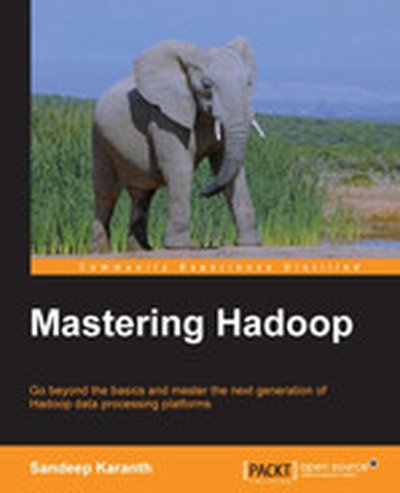
Mastering Hadoop

Embark on a journey to master Hadoop and its advanced features with this comprehensive book. "Mastering Hadoop" equips you with the knowledge needed to tackle complex data processing challenges and optimize your Hadoop workflows. With clear explanations and practical examples, this book is your guide to becoming proficient in leveraging Hadoop technologies. What this Book will help me do Optimize Hadoop MapReduce jobs, Pig scripts, and Hive queries for better performance. Understand and employ advanced data formats and Hadoop I/O techniques. Learn to integrate low-latency processing with Storm on YARN. Explore the cloud deployment of Hadoop and advanced HDFS alternatives. Enhance Hadoop security and master techniques for analytics using Hadoop. Author(s) None Karanth is an experienced Hadoop professional with years of expertise in data processing and distributed computing. With a practical and methodical approach, None has crafted this book to empower learners with the essentials and advanced features of Hadoop. None's focus on performance optimization and real-world applications helps bridge the gap between theory and practice. Who is it for? This book is ideal for data engineers and software developers familiar with the basics of Hadoop who seek to advance their understanding. If you aim to enhance Hadoop performance or adopt new features like YARN and Storm, this book is for you. Readers interested in Hadoop deployment, optimization, and newer capabilities will also greatly benefit. It's perfect for anyone aiming to become a Hadoop expert, from intermediate learners to advanced practitioners.

R Recipes: A Problem-Solution Approach

R Recipes is your handy problem-solution reference for learning and using the popular R programming language for statistics and other numerical analysis. Packed with hundreds of code and visual recipes, this book helps you to quickly learn the fundamentals and explore the frontiers of programming, analyzing and using R. R Recipes provides textual and visual recipes for easy and productive templates for use and re-use in your day-to-day R programming and data analysis practice. Whether you're in finance, cloud computing, big or small data analytics, or other applied computational and data science - R Recipes should be a staple for your code reference library.

Data Scientists at Work

Data Scientists at Work is a collection of interviews with sixteen of the world's most influential and innovative data scientists from across the spectrum of this hot new profession. "Data scientist is the sexiest job in the 21st century," according to the Harvard Business Review. By 2018, the United States will experience a shortage of 190,000 skilled data scientists, according to a McKinsey report. Through incisive in-depth interviews, this book mines the what, how, and why of the practice of data science from the stories, ideas, shop talk, and forecasts of its preeminent practitioners across diverse industries: social network (Yann LeCun, Facebook); professional network (Daniel Tunkelang, LinkedIn); venture capital (Roger Ehrenberg, IA Ventures); enterprise cloud computing and neuroscience (Eric Jonas, formerly Salesforce.com); newspaper and media (Chris Wiggins, The New York Times); streaming television (Caitlin Smallwood, Netflix); music forecast (Victor Hu, Next Big Sound); strategic intelligence (Amy Heineike, Quid); environmental big data (Andre´ Karpis?ts?enkoEach of these data scientists shares how he or she tailors the torrent-taming techniques of big data, data visualization, search, and statistics to specific jobs by dint of ingenuity, imagination, patience, and passion. , Planet OS); geospatial marketing intelligence (Jonathan Lenaghan, PlaceIQ); advertising (Claudia Perlich, Dstillery); fashion e-commerce (Anna Smith, Rent the Runway); specialty retail (Erin Shellman, Nordstrom); email marketing (John Foreman, MailChimp); predictive sales intelligence (Kira Radinsky, SalesPredict); and humanitarian nonprofit (Jake Porway, DataKind). The book features a stimulating foreword by Google's Director of Research, Peter Norvig. Data Scientists at Work parts the curtain on the interviewees’ earliest data projects, how they became data scientists, their discoveries and surprises in working with data, their thoughts on the past, present, and future of the profession, their experiences of team collaboration within their organizations, and the insights they have gained as they get their hands dirty refining mountains of raw data into objects of commercial, scientific, and educational value for their organizations and clients.

Cloud Enabling IBM CICS

This IBM® Redbooks® publication takes an existing IBM 3270-COBOL-VSAM application and describes how to use the features of IBM Customer Information Control System (CICS®) Transaction Server (CICS TS) cloud enablement. Working with the General Insurance Application (GENAPP) as an example, this book describes the steps needed to monitor both platform and application health using the CICS Explorer CICS Cloud perspective. It also shows you how to apply threshold policy and measure resource usage, all without source code changes to the original application. In addition, this book describes how to use multi-versioning to safely and reliably apply and back out application changes. This Redbooks publication includes instructions about the following topics: How to create a CICS TS platform to manage and reflect the health of a set of CICS TS regions, and the services that they provide to applications How to quickly get value from CICS TS applications, by creating and deploying a CICS TS application for an existing user application How to protect your CICS TS platform from erroneous applications by using threshold policies How to deploy and run multiple versions of the same CICS TS application on the same CICS TS platform at the same time, enabling a safer migration from one application version to another, with no downtime How to measure application resource usage, enabling a comparison of the performance of different application versions, and chargeback based on application use

Expert Oracle Database Architecture, Third Edition

" Now in its third edition, this best-selling book continues to bring you some of the best thinking on how to apply Oracle Database to produce scalable applications that perform well and deliver correct results. Tom Kyte and Darl Kuhn share a simple philosophy: "you can treat Oracle as a black box and just stick data into it, or you can understand how it works and exploit it as a powerful computing environment." If you choose the latter, then you’ll find that there are few information management problems that you cannot solve quickly and elegantly. This fully revised third edition covers the developments up to Oracle Database 12 c. Significant new content is included surrounding Oracle's new cloud feature set, and especially the use of pluggable databases. Each feature is taught in a proof-by-example manner, not only discussing what it is, but also how it works, how to implement software using it, and the common pitfalls associated with it. Don’t treat Oracle Database as a black-box. Get this book. Get under the hood. Turbo-charge your career. Revised to cover Oracle Database 12 c Proof-by-example approach: Let the evidence be your guide Dives deeply into Oracle Database’s most powerful features"